
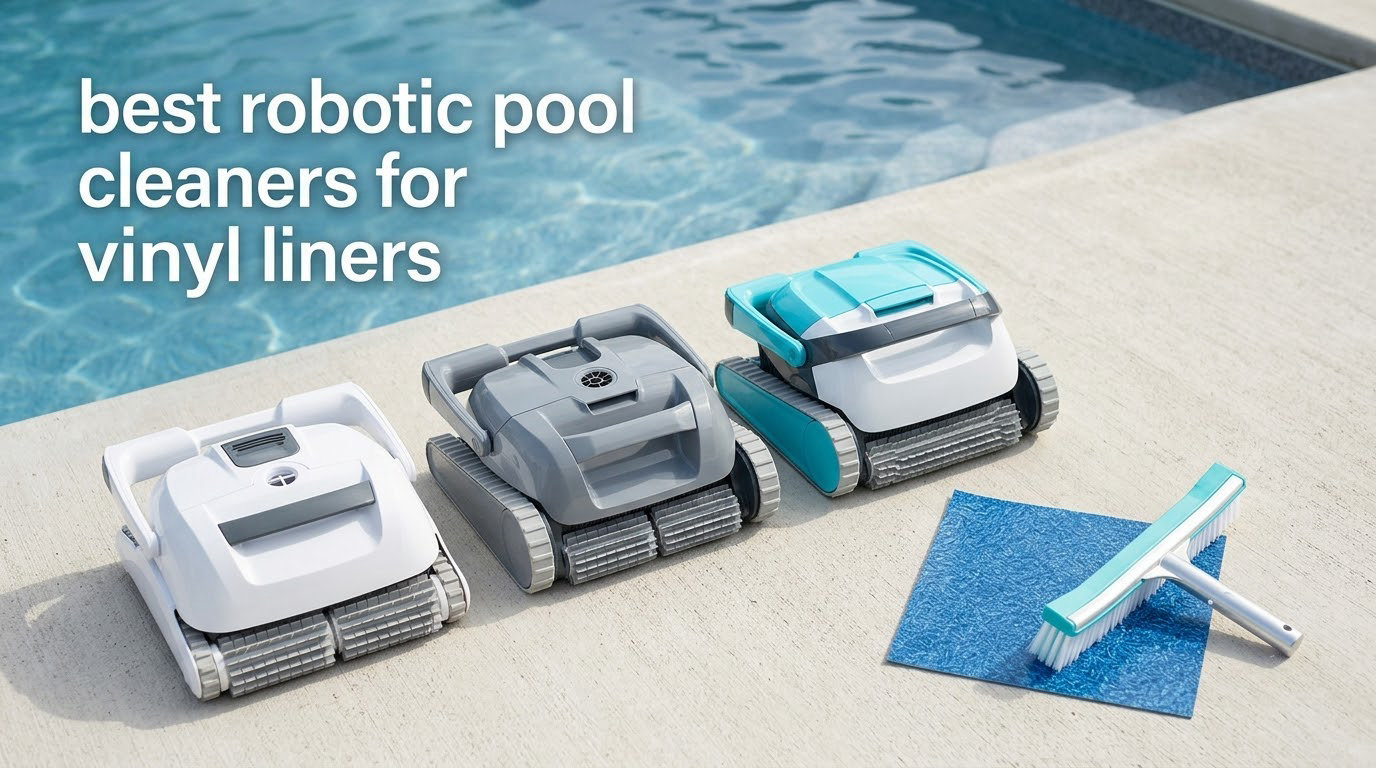
Swapping a vinyl liner runs well into the thousands, and it is the single most expensive replaceable part of most pools. That fact changes how you shop for a cleaning robot entirely. On concrete or plaster you can forgive an aggressive brush, and on fiberglass there is barely a surface to mark at all, but a vinyl liner is a soft sheet stretched inside a steel shell with a seam running down the floor and a bead caught in the coping.
That is why the best robotic pool cleaners for vinyl liners are not simply the most powerful machines on the market. They are the ones with soft contact points, rubber or composite tracks instead of hard plastic wheels, a fine enough filter to catch the dust vinyl sheds, and enough weight that you can still lift them over the bead without dragging the liner edge. We compared 12 corded and cordless robots side by side, read the owner reviews closely, and grouped them by pool type and pool size so you can find your fit in a minute rather than an afternoon.
A note on our process before we get into the list. We worked through current owner ratings, review counts, published specifications, weight, coverage area, filtration media, warranty length and warranty terms for every machine below, then filtered hard for anything that would be a poor match on a liner. Where the owner feedback is thin or the star rating has a wide spread, we say so rather than smoothing it over. If you want the general all-surface version of this research, our guide to the best robot pool cleaners tested and compared covers the machines that are not liner-specific.
Last updated for the 2026 swim season. Cleaners were assessed against published specs and aggregated owner reviews rather than a single lab bench, so treat the ratings below as the real-world signal and the specs as the specification.
Table of Contents
Top 3 Robotic Pool Cleaners for Vinyl Liners
Three machines rise above the rest for liner pools, and they do it for different reasons. The Dolphin Nautilus AG is the safest all-round buy for above-ground liners, the WYBOT C2 is the strongest performer on large in-ground vinyl with silt, and the Beatbot Sora 70 is the only one here that also cleans the water surface.

Dolphin Nautilus AG
- Active scrubbing brush
- Top-load filter basket
- Smart Navigation scan
- Corded with swivel
WYBOT C2
- 10 micron ultra-fine filter
- 180 minute runtime
- Auto-park retrieval
- Gyroscope path planning

Beatbot Sora 70
- Surface skimming with JetPulse jets
- 5 hour runtime
- 3200 sq ft coverage
- 3 year protection
All 12 Picks at a Glance
Every machine in the list, with the specs that actually decide whether it suits a vinyl liner. Pool size and coverage figures come straight from the manufacturers, and the ratings are live owner scores with the review count attached.
| Product | Specifications | Action |
|---|---|---|
| Dolphin Nautilus AG |
|
Check Latest Price |
| WYBOT C2 |
|
Check Latest Price |
| Beatbot Sora 70 |
|
Check Latest Price |
 Aiper Scuba S1 2026 Aiper Scuba S1 2026 |
|
Check Latest Price |
 WYBOT B1 WYBOT B1 |
|
Check Latest Price |
 Lodoba SAT25 Lodoba SAT25 |
|
Check Latest Price |
 Gosvor LiteVac G1 Gosvor LiteVac G1 |
|
Check Latest Price |
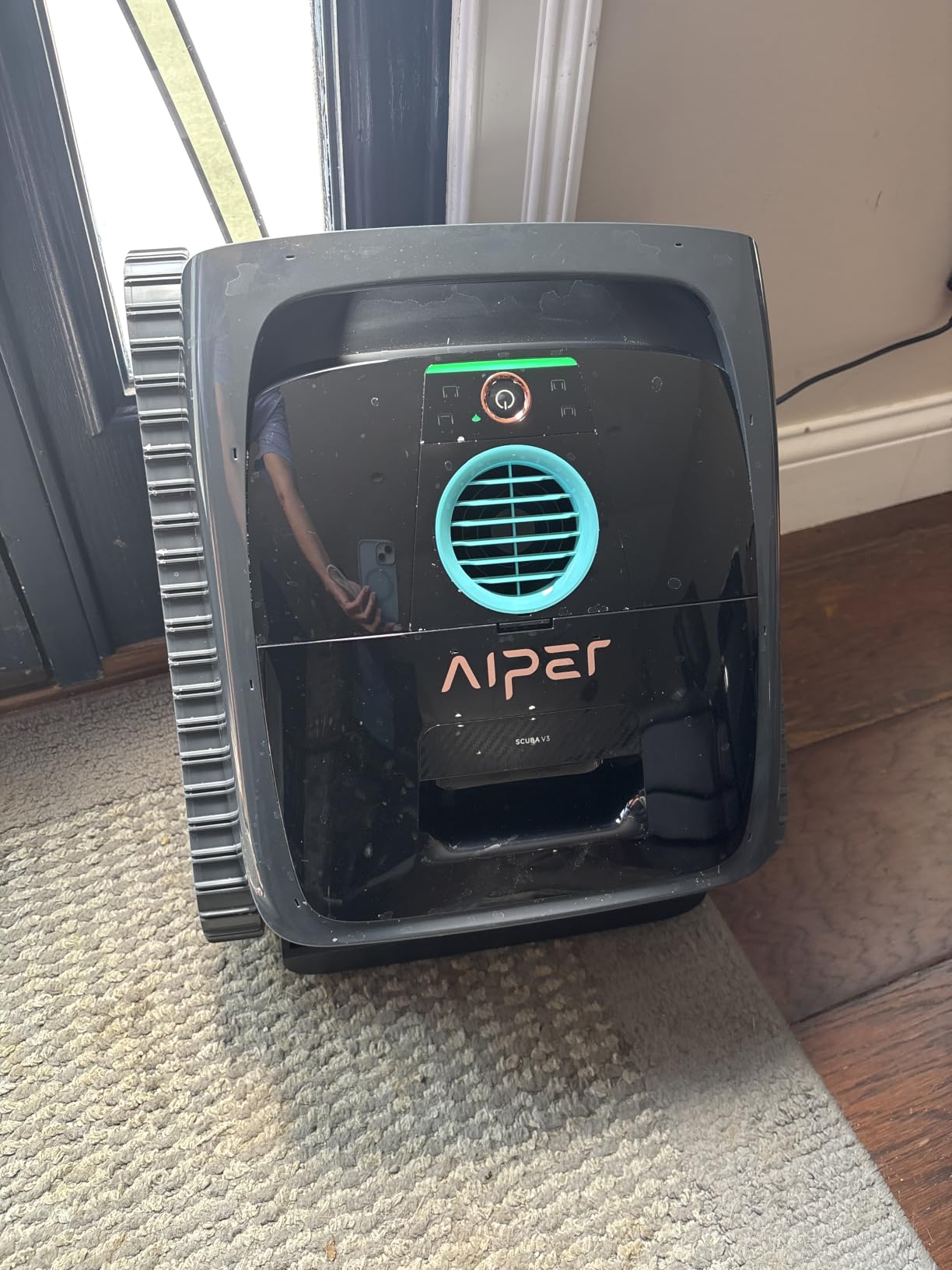
 AIPER Scuba V3 AI Vision AIPER Scuba V3 AI Vision |
|
Check Latest Price |
 WYBOT C1 WYBOT C1 |
|
Check Latest Price |
 PoolMr PoolMr |
|
Check Latest Price |
 Aiper Scuba SE Aiper Scuba SE |
|
Check Latest Price |
 BRINBO S2 BRINBO S2 |
|
Check Latest Price |
What Actually Scratches a Vinyl Liner
The brush is almost never the culprit. Owners spend months blaming the scrubbing brush and swapping machines, when the real cause is usually a single piece of debris trapped under a track or caught in a wheel well. Vinyl is soft enough that a plastic wheel riding over a coarse grain of sand, a bead, or a pine needle acts like sandpaper, and the robot drags that particle across the same stretch of liner for an entire cycle.
That is why the criterion that matters most is the track and wheel material, not bristle softness. Rubber or composite tracks spread their weight over a wide area and flex around small obstructions. Hard plastic wheels concentrate the load onto a few square millimetres and grind.
The second cause is the bead. A robot heavy enough to drag the liner edge as you lift it over the coping will pull a pleat that can stay visible. The third is corner impacts, when a wall-climbing unit reverses off a liner seam at full power. None of the 12 machines here are risk-free, but the ones built with tracks, a light curb weight and predictable navigation reduce all three causes.
How to Tell a Robot Is Vinyl-Safe: 5 Criteria
Before any product name, here is the checklist. If a machine fails two or more of these, it is a poor fit no matter how well it performs on a concrete pool.
Soft contact surfaces. Soft PVC or silicone brush plates, rubber or composite tracks, no exposed hard plastic wheels or sharp metal edges near the liner. The robot should be able to cross a seam without a hard point pressing into it.
A weight you can lift one-handed at the deep end. Above-ground liners are the most vulnerable here, because the bead is low and owners tend to drag the unit against the wall edge. Anything in the 14 to 16 lb range is a comfortable lift; 22 lb and above is a two-hand job from deep water.
A fine filtration path. Vinyl sheds a fine dust that concrete pools do not. A stock basket with a single coarse mesh will return the dust to the water, and the pool looks clean at 6 pm and cloudy by 9 pm. Look for a two-stage system, a replaceable fine element, or a filter rated in microns rather than just a capacity in liters.
Navigation that reads the pool rather than bouncing off it. Gyroscope path planning, sensor arrays or camera mapping all reduce the repeated corner reversals that stress a liner seam. A unit that stalls against the same wall for twenty minutes is a liability on vinyl.
A shallow-clean mode or a floor-only mode. On a liner with steps and a tanning ledge, letting a unit charge straight into the step riser at full power is the most common avoidable scuff. A dedicated shallow setting lets you restrict it to the floor.
Two further items matter but are not dealbreakers. Track width and ground clearance determine how well the unit crosses the wrinkled liner floor around a main drain, and a weekly timer saves you the weekly reset, though a timer that needs a manual reset each week is better than no timer at all.
You can also read our broader tested pool vacuum roundup if you want the manual side of the picture, because on many liner pools a robot and a good manual head end up sharing the workload rather than replacing each other.
Corded vs Cordless on a Vinyl Liner Pool
Top-ranking pages contradict each other on this, and the contradiction is worth settling with evidence rather than preference. One position is that cordless removes the cable-tangle risk entirely and is therefore safer for a liner. The other is that cordless batteries add a fire and failure risk and that corded suction is simply stronger. Both are partly right.
Where cordless genuinely wins for vinyl is retrieval and cable management. A cord can snag a liner seam or a ladder, and owners on pool forums describe tangling as the most repeated daily annoyance with corded units. Cordless units also tend to carry more suction, since there is no shared power supply, and several of the machines below quote runtime long enough to cover a liner pool in a single cycle.
Where corded genuinely wins is predictability. A corded robot does not stop mid-pool because the battery ran short, and it does not need a four-hour recharge before the next run. On owner-rating consistency, the highest reviewed corded machine in this group carries by a wide margin, and durability reports on corded units commonly run four to seven years. If your liner is new and still curing, a corded floor-only unit is the lower-stress choice because you can watch exactly where it goes.
The battery-safety concern is real but narrow. It applies to lithium packs that are stored long-term at full charge in a hot vehicle or a wet dock, not to ordinary nightly use. Keep the robot indoors between cycles, dry the dock, and do not leave a cordless unit sitting in a pool for weeks while you are away. Of the twelve here, cordless dominates because the category moved that way, but four of our picks are corded or floor-only, and two of those are the safest matches for a curing or delicate liner.
1. Dolphin Nautilus AG – Best Overall for Above-Ground Vinyl Liners
Dolphin (2026 Model) Nautilus AG Automatic Robotic Pool Vacuum Cleaner, Active Scrubber Brush, Top Load Filters Access, Ideal for Above-Ground Pools up to 33 FT in Length
Active scrubbing brush
Top-load filter basket
Smart Navigation
Corded 240V power
6.6 kg
Pros
- Highest owner review count in the group
- Active brush lifts settled debris
- Top-load basket lifts straight out
- Light enough to handle one-handed
Cons
- Floor only with no wall or waterline cleaning
- Corded design needs cable management
- No app or scheduling
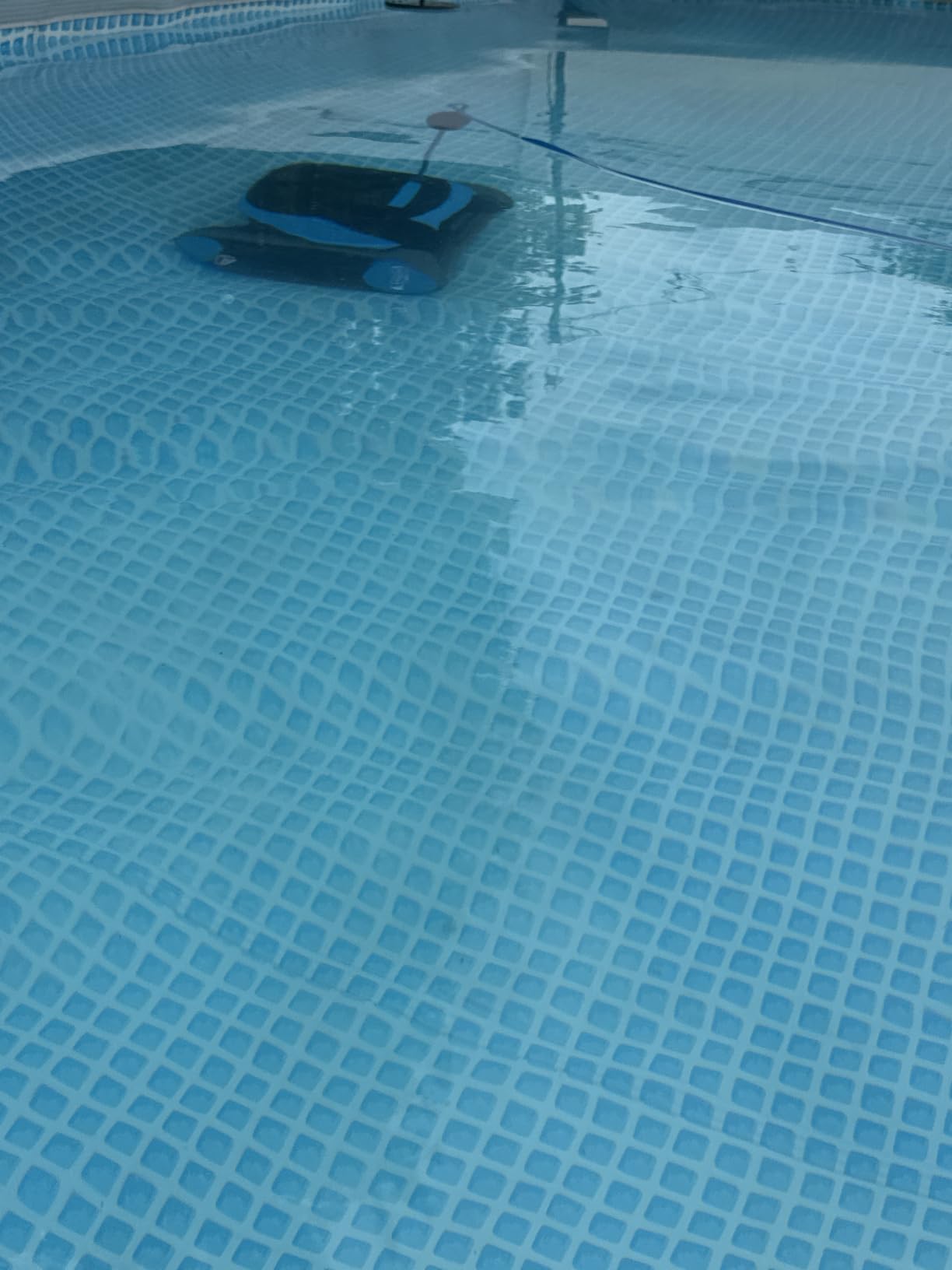
This is the machine I would put in a first-time owner’s hands. The Nautilus AG has the deepest owner-rating base of anything in the roundup, and that matters more here than a headline feature list. When a pool robot has thousands of owners running it on liner floors for years, the failure modes are already documented, and the ones described are all cosmetic rather than structural.
The active scrubbing brush is the reason it works. Passive sweepers let debris sit on the liner and drift, while an active brush physically lifts it into the suction path. On a vinyl floor, which is porous and traps grit in the texture, that difference is the whole ballgame.
The cord is long enough to reach across a typical above-ground or small in-ground pool without an extension, and the anti-tangle swivel is what keeps it from wrapping itself into a knot. Top-load filtration is the detail I appreciate most. The basket lifts out from the top, so you can rinse it against the deck hose without tipping debris back into the water or wrestling with a hatch underneath.
Being floor-only is the compromise, and it is a real one. Waterline grime, sunscreen film and wall dirt will not be touched, so you will still be working the walls with a sponge or a manual head. For most above-ground pools where the walls are shallow and the floor is the surface that actually gets dirty, the trade is worth taking.
Why it suits a vinyl liner
The active brush plate is soft rather than stiff, and the unit is light enough at 6.6 kg to lift over the bead without any real force on the liner edge. On an above-ground pool, where the liner bead is often the highest point of contact, that combination is the difference between a robot you use weekly and one you are afraid to lift out.
Because it stays on the floor, it also never reverses off a liner seam at the wall. On shallow and irregular vinyl shapes that is a genuine safety benefit.
When to skip it
Skip it if your liner is heavily stained at the waterline, because nothing in this unit touches the walls. Also skip it if you are away for weeks at a time and want unattended scheduling, since it has no app or timer to lean on.
2. WYBOT C2 – Top Rated for Large In-Ground Vinyl Pools
Wybot C2 Cordless Pool Vacuum for Inground Pools, Robotic Pool Cleaner
10 micron plus 180 micron filtration
180 minute runtime
Up to 2152 sq ft
24 lb
Auto-park
Pros
- Highest average rating in the group
- Dual filtration catches fine sand
- Three brushless motors for wall grip
- Generous runtime and coverage
Cons
- Heaviest unit here at 24 lb
- Screw-on plug instead of a charging dock
- App controls awkward on some phones
The C2 carries the highest average owner rating in the group at 4.6, and the sentiment behind that number is consistent rather than inflated. Owners on large in-ground pools with tanning ledges talk about suction power, dual filtration and wall adhesion in roughly those words, which is what you want to see in a machine that spends its life pressed against a liner wall.
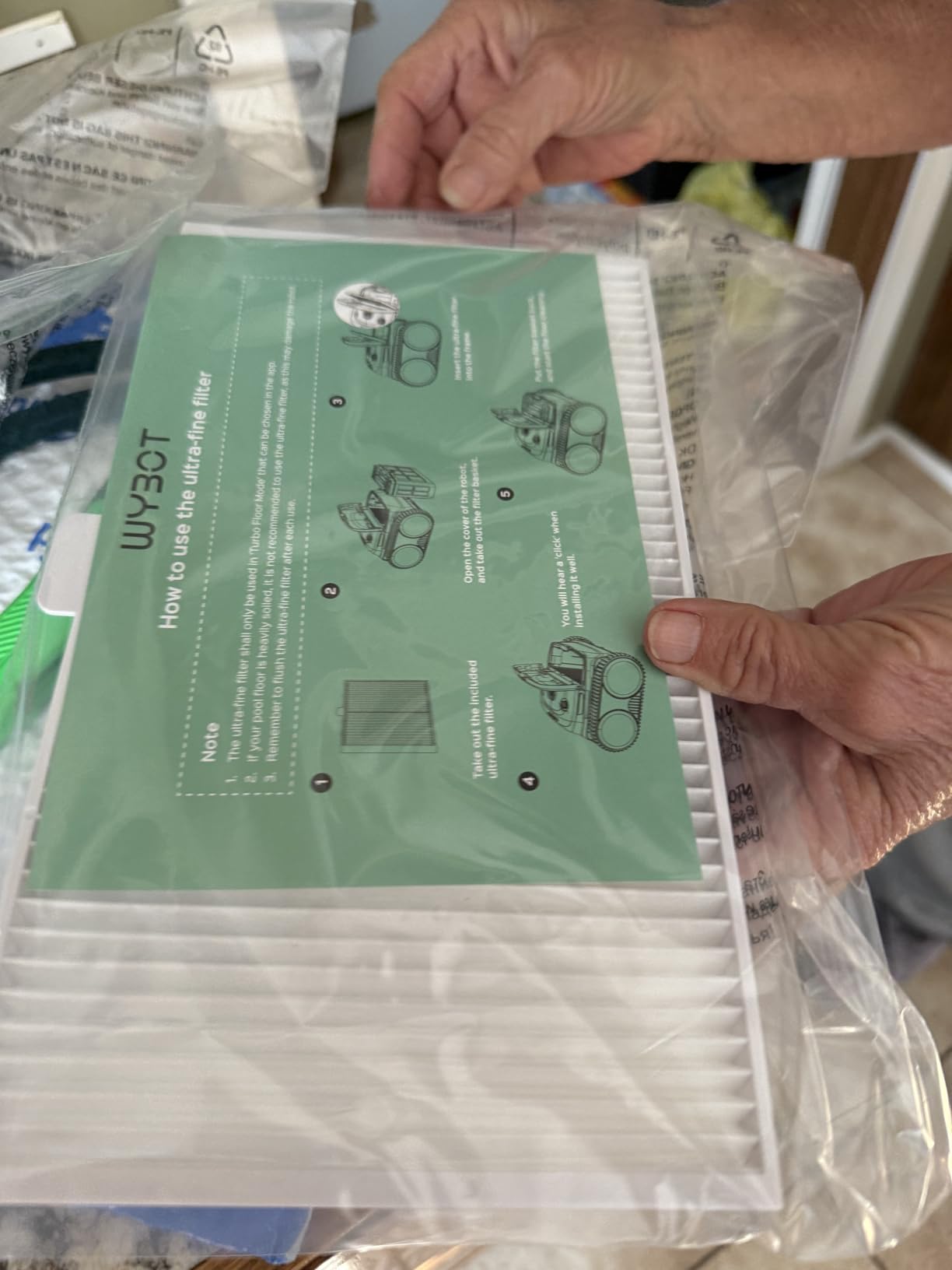
Dual filtration is the feature that matters most on vinyl. A 10 micron ultra-fine element sits alongside a 180 micron primary, and that combination is what keeps a dusty liner pool clear through an afternoon rather than clouding up by evening. Pools with dust storms, pollen or a lot of traffic see the biggest difference here.
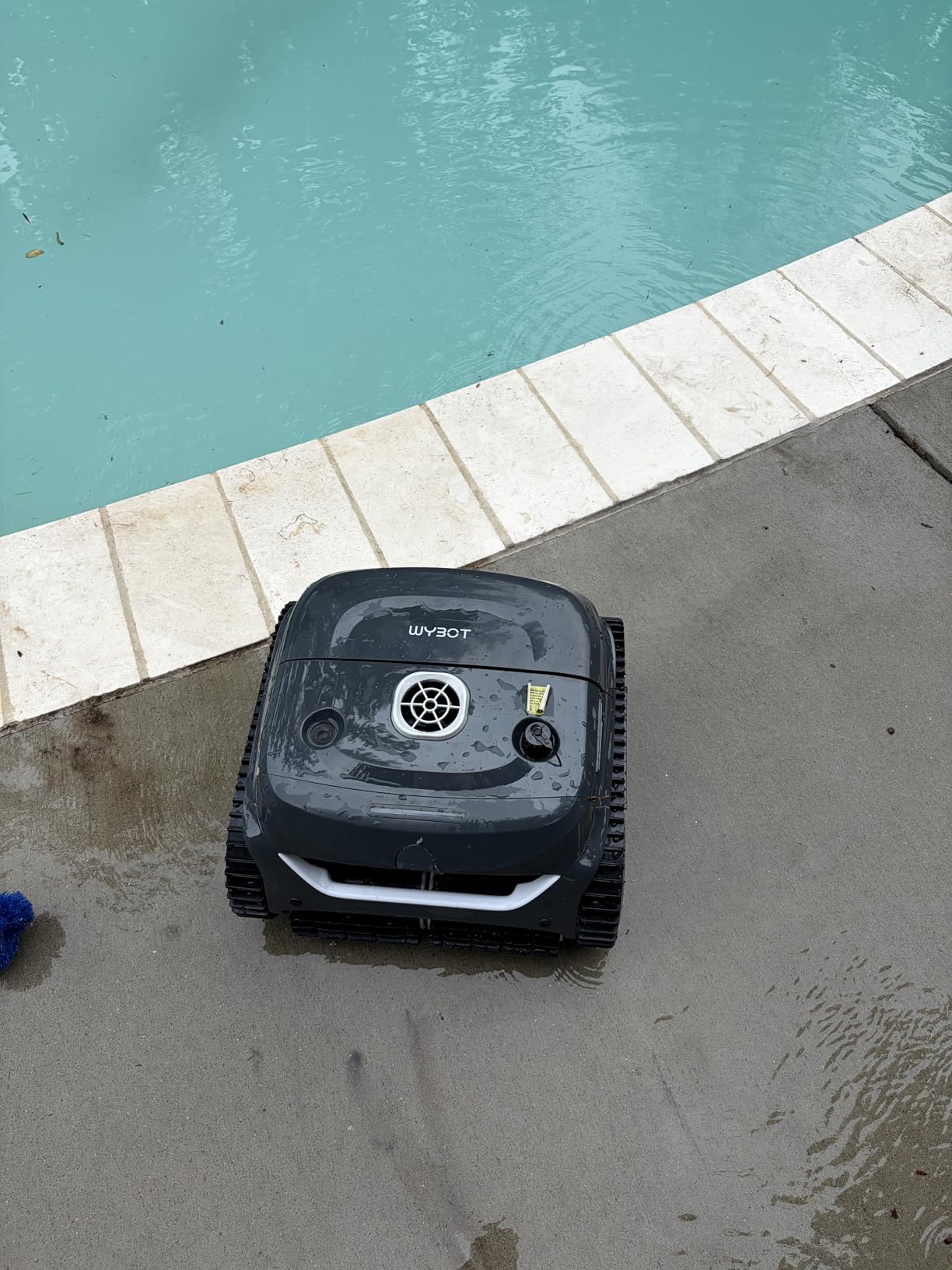
Three brushless motors give it enough torque to hold a wall and scrub the waterline rather than sliding down it, and the built-in gyroscope plans a path that reduces the repeated corner reversals that stress a seam. Runtime is listed at up to 180 minutes covering 2,152 sq ft per cycle, which comfortably covers a 40 foot pool in a single run.
Auto-park at the pool edge is a small feature that pays off every cycle, because you are not sweeping a pole around the water waiting for a battery-low beep.
Why it suits a vinyl liner
Its gyroscope-based path planning keeps it off the liner wall seams and off the main drain rather than grinding against them repeatedly. Wall adhesion from three brushless motors means it climbs and holds instead of scrabbling, and the fine filter removes the grit that would otherwise settle into the vinyl texture and become part of it.
For a large in-ground liner with a tanning ledge, this is the most complete cleaning coverage in the group outside the Beatbot.
When to skip it
Skip it if you have trouble lifting 24 lb out of deep water, since retrieval is a two-hand job and the unit does not drain itself before you lift. Also weigh it against lighter alternatives if your coping is high and awkward.
3. Beatbot Sora 70 – Premium Pick for Full-Coverage Cleaning
Beatbot Sora 70 AI Navigation Pool Vacuum Robot Full-Coverage Pool Cleaning
Surface skimming with JetPulse jets
Up to 5 hours runtime
3200 sq ft per charge
6800 GPH suction
3 year protection
Pros
- Only unit here that also cleans the water surface
- Five hour floor runtime
- Auto-drain and surface parking
- Longest warranty in the group
Cons
- Highest cost in the roundup
- 22.9 lb even after draining
- App retrieval only at close range
Every other robot in this roundup works the submerged part of the pool. The Sora 70 also works the top, using dual JetPulse water jets to push floating leaves toward the suction inlet. On a vinyl liner pool that is a real advantage, because floating debris is what blocks a skimmer and what ends up blowing sideways into the waterline band you are trying to keep clean.
The specification sheet is the most ambitious here. Up to five hours of floor cleaning and 3,200 sq ft of coverage per charge, at 6,800 GPH of HydroBalance suction, is enough headroom to run a large freeform pool twice in a week without a recharge. A 3-year protection plan is the longest warranty among these 12.
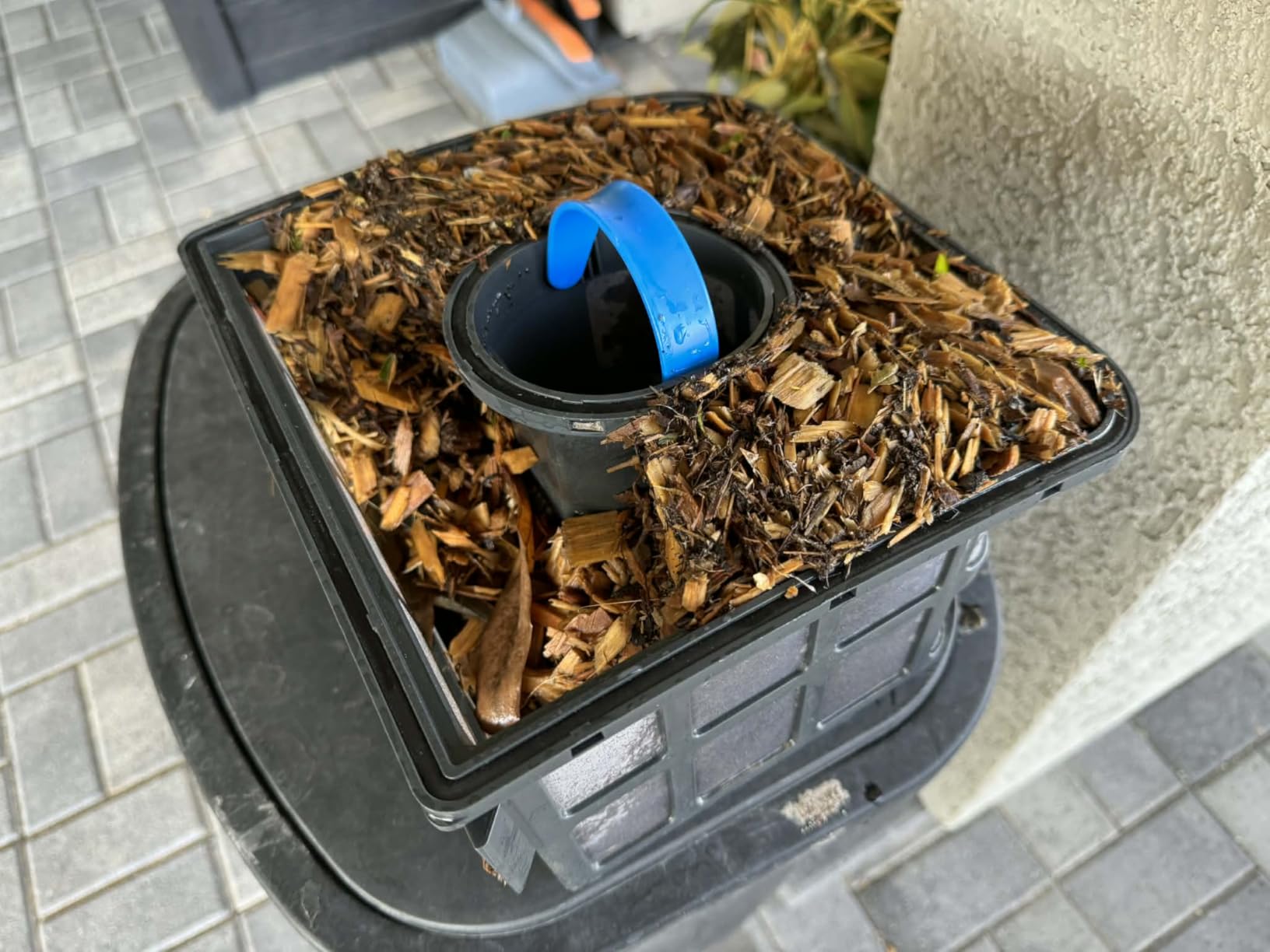
Retrieval is where the design is genuinely thoughtful. The unit auto-surfaces, parks at the edge, drains its internal water and stays afloat, so you lift one end with a single hand instead of hauling 22.9 lb of wet machine out of the deep end. On a liner pool that matters as much as the cleaning does, because awkward lifts are how people put marks on the bead.
It also cleans shallow platforms down to 8 inches, which covers tanning ledges and beach entries where debris collects on the slope of a vinyl liner.
Why it suits a vinyl liner
Keeping the surface clear stops leaves from sinking, which is what gets trapped under a track in the first place. Surface parking with auto-drain removes the risky lift entirely, and its long runtime means fewer mid-cycle battery failures that leave it stranded on the liner floor.
When to skip it
Skip it on budget grounds, because it sits at the top of this roundup by a wide margin. The 4.2 average rating with a visible cluster of three-star reviews also suggests mid-cycle performance is not perfectly consistent, so read a few reviews before committing.
4. Aiper Scuba S1 2026 – Best for Above-Ground Vinyl Liners With Walls
Aiper Scuba S1 2026 Robotic Pool Cleaner,Floor/Wall/Waterline/Shallow Area Cleaning, Double Filtration, Adaptive Navigation, High-Precision Sensors, App Support-Teal
4-zone cleaning with caterpillar treads
3 micron plus 180 micron filter
270 minutes in Eco mode
2 year warranty
Pros
- Cleans floor walls waterline and shallow areas
- Caterpillar treads grip the liner well
- Replaceable 3 micron filter
- Long Eco mode runtime
Cons
- Heavier than compact models
- Can hang up near steps
- App control is less granular
The Scuba S1 is the pick I would look at first for an above-ground liner that has a deep end, because it is the rare budget-friendly cordless unit that actually climbs a liner wall and scrubs the waterline. Caterpillar tracks give it grip on the vinyl slope where small wheels spin out, and 11 high-precision sensors with the WavePath pattern reduce the missed patches you normally get in an L-shaped or bean-shaped shell.
Dual filtration pairs a replaceable 3 micron ultra-fine filter with a 180 micron standard, which is close to the right answer for a vinyl pool that sheds fine dust. The replaceable element matters more than the headline micron figure, because a fine filter you cannot replace is a fine filter that ends up on the second season.
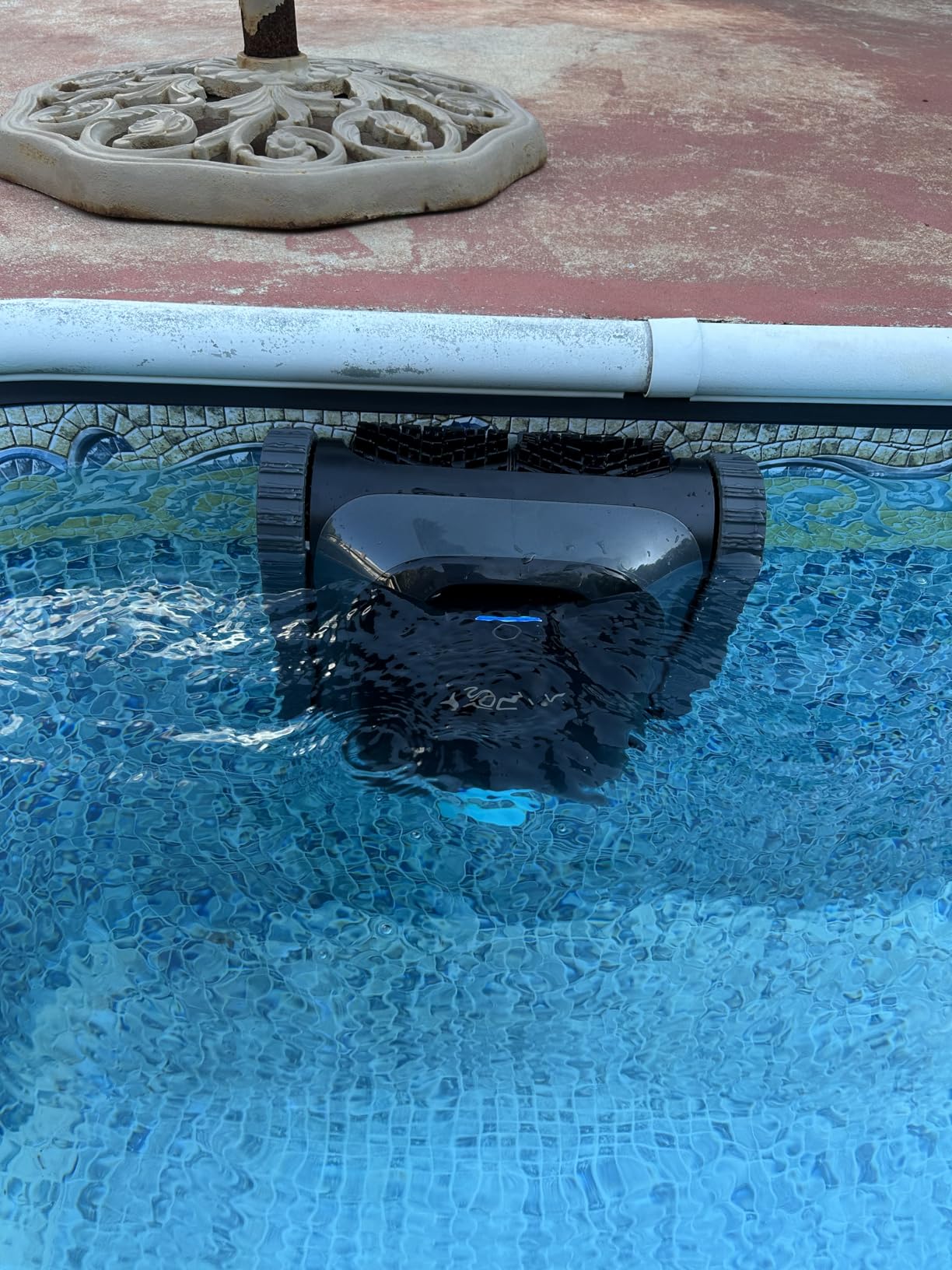
Eco mode runs up to 270 minutes, and the listing notes an above-ground vinyl liner owner confirming the unit did not damage the liner. Owner sentiment is strongly positive at 4.4 with 71 percent five-star, though the review base at 87 is small, so treat the star figure as encouraging rather than settled.
It also handles shallow areas as a distinct zone, which is useful on above-ground pools with steps that other units charge into.
Why it suits a vinyl liner
Tracks rather than wheels spread the load and flex around wrinkles in the liner floor, and the 3 micron path removes the dust that would otherwise resettle. It has a wall climbing mode without forcing a large body against the liner at low speed, which is where scuff marks usually start.
When to skip it
Skip it if retrieval from deep water is a problem, since the unit is heavy and does not drain itself. It also occasionally hangs up near steps, so on a pool with a complex entry you may still want to supervise the first few cycles.
5. WYBOT B1 – Best Lightweight Climber for Uneven Liner Floors
WYBOT B1 Cordless Robotic Pool Vacuum Pool Cleaner Robot for Inground Pools
14.3 lb unit
Quad-roller and dual side brushes
120 minutes runtime
1150 sq ft
App control
Pros
- Light enough to lift single-handed
- Glides over drains seams and slopes
- Self-parks on low battery
- Five cleaning modes
Cons
- Filter lid latch is stiff
- Wall climbing needs float blocks on some liner walls
- Only ships with a partial battery charge
The B1 is the pick for anyone whose main worry is lifting the machine rather than what it cleans. At 14.3 lb it is one of the lighter full-featured robots here, and on an above-ground liner with a low bead, the ability to lift it out one-handed without touching the liner edge removes the most common way owners accidentally mark their liner.
It is also the one owners describe most confidently around obstacles. Reports specifically mention gliding over drains, seams, slopes and uneven floors without getting stuck, and that is exactly the behaviour you want on a wrinkled liner bottom around a raised main drain.
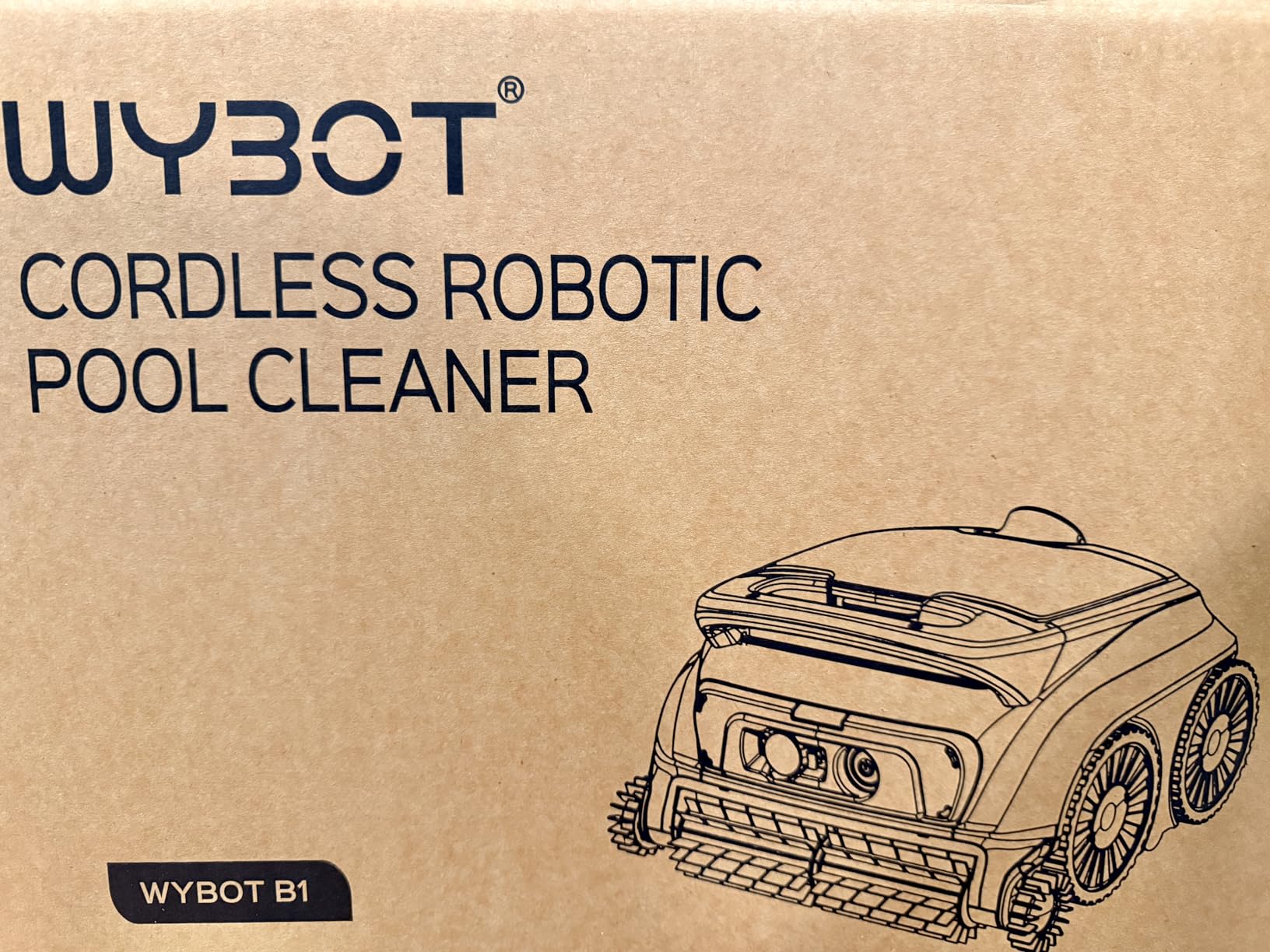
Quad-roller brushes on the bottom plus dual front side brushes handle edges and corners, where grit collects along the liner-to-coping junction on an above-ground pool. Five selectable modes, a one-hour Quick Clean option, and app scheduling with OTA firmware updates are all present at 4.6 stars across 125 reviews.
The 6 litre basket is larger than most compact units, which means fewer mid-cycle emptying stops.
Why it suits a vinyl liner
Low mass and smooth obstacle handling mean less contact force on the liner over a full cycle. The quad-roller layout is soft on the surface and does not present a hard leading edge to a seam, and the self-park function keeps it from grinding against a wall at the end of a run.
When to skip it
Skip it if your liner walls are steep above-ground walls, because owners report wall climbing can fail there unless the included buoyancy float blocks are fitted. The stiff filter lid latch is a minor annoyance but a real one when your hands are wet.
6. Lodoba SAT25 – Best for Freeform and Irregular Vinyl Pools
[2026 Release] Automatic Robotic Pool Vacuum for Inground & Above Ground Pools, Wall Climbing Pool Vacuum Cleaner, Cleans Floor, Walls, Waterline, Drain & Skimmer up to 2150 Sq. Ft., 190 Min
4800 GPH suction
190 minute runtime
2150 sq ft
Tracks climb 40 degrees
Sonar navigation
Pros
- Tracks handle slopes up to 40 degrees
- Sonar navigation reads pool shape
- Long 190 minute runtime
- Works without an app
Cons
- No app or remote control
- Needs a pole and hook for retrieval
- Can snag on raised floor drains
Freeform and bean-shaped shells defeat a lot of robots, because a rectangular path assumption leaves wedges of floor untouched. The SAT25 uses advanced 2.0 sonar navigation rather than a fixed pattern, and owners of irregular steel-frame and bean-shaped pools report a sharp drop in manual vacuuming as a result.
Dual brushless motors at 3,200 RPM with 4,800 GPH of suction handle palm fronds and heavy leaf debris, which is the realistic autumn load on a liner pool surrounded by trees. The tracks climb slopes up to 40 degrees and handle steps and deep ends, so a freeform wall transition does not strand it.
![[2026 Release] Automatic Robotic Pool Vacuum for Inground & Above Ground Pools, Wall Climbing Pool Vacuum Cleaner, Cleans Floor, Walls, Waterline, Drain & Skimmer up to 2150 Sq. Ft., 190 Min customer photo 1](https://irlentwincities.com/wp-content/uploads/2026/09/B0GK8Q2J7M_customer_1.jpg)
Runtime is listed at 190 minutes covering 2,150 sq ft on a 2.5-hour recharge, which is one of the better charge-to-runtime ratios in the group. Operation is a single touch button with floor, wall or full-coverage modes, and no app is required at all, which some owners prefer because there is nothing to fail.
Sonar navigation is specified to work across tile, vinyl, concrete and other surfaces, so the same unit transfers if you ever replace a shell.
![[2026 Release] Automatic Robotic Pool Vacuum for Inground & Above Ground Pools, Wall Climbing Pool Vacuum Cleaner, Cleans Floor, Walls, Waterline, Drain & Skimmer up to 2150 Sq. Ft., 190 Min customer photo 2](https://irlentwincities.com/wp-content/uploads/2026/09/B0GK8Q2J7M_customer_2.jpg)
Why it suits a vinyl liner
Shape-aware path planning is the advantage here. A robot that understands where the wall actually is makes fewer contact events against a liner seam, and the wide tracks distribute pressure across a freeform transition where a hard wheel would dig in.
When to skip it
Skip it if you dislike pole retrieval, because it does not rise to the surface when finished. It can also hang up on elevated floor drains and behind ladders, so on a pool with both you should expect occasional manual frees.
7. Gosvor LiteVac G1 – Best for Fine Silt and Pollen
(2026 Upgrade) Gosvor Pool Vacuum LiteVac G1, Wall & Waterline & Shallow Area Cleaning, Up to 200-Min Runtime, Ultra-fine Filter, 15.2 lbs, Smart Navigation & App, for Pools up to 2153 sq.ft, Gray
3960 GPH suction
3 micron double filtration
15.2 lb
200 minute runtime
2153 sq ft
Pros
- 3 micron filter pulls fine grit others leave
- Light at 15.2 lb for its feature set
- Wall and waterline scrubbing included
- Five app modes
Cons
- All-black housing is hard to spot underwater
- Retrieval pole not included
- Only one spare fine filter in the box
If your pool goes cloudy, this is the machine to look at. The 3 micron and 180 micron double filtration is the specific answer to fine grit and dust, and owners affected by dust storms single out exactly that ability. Pool professionals running this as a service unit report it matches costlier branded machines, which is a useful signal in this price band.
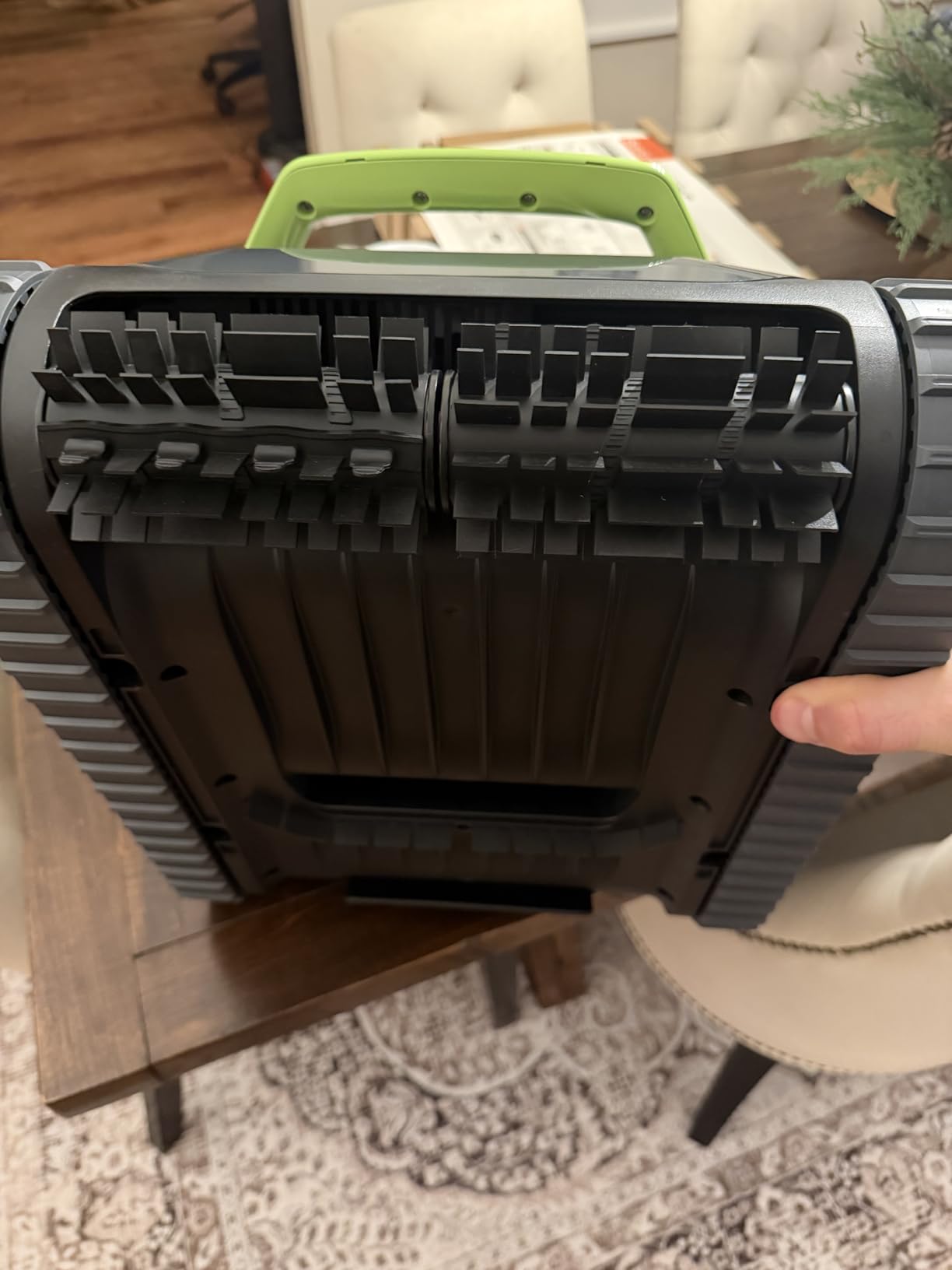
At 3,960 GPH it has real suction, and 260 mm dual roller brushes with caterpillar treads climb walls and scrub the waterline. Coverage is listed at 2,153 sq ft with up to 200 minutes in Eco mode, so a mid-size in-ground liner is covered in a single cycle.
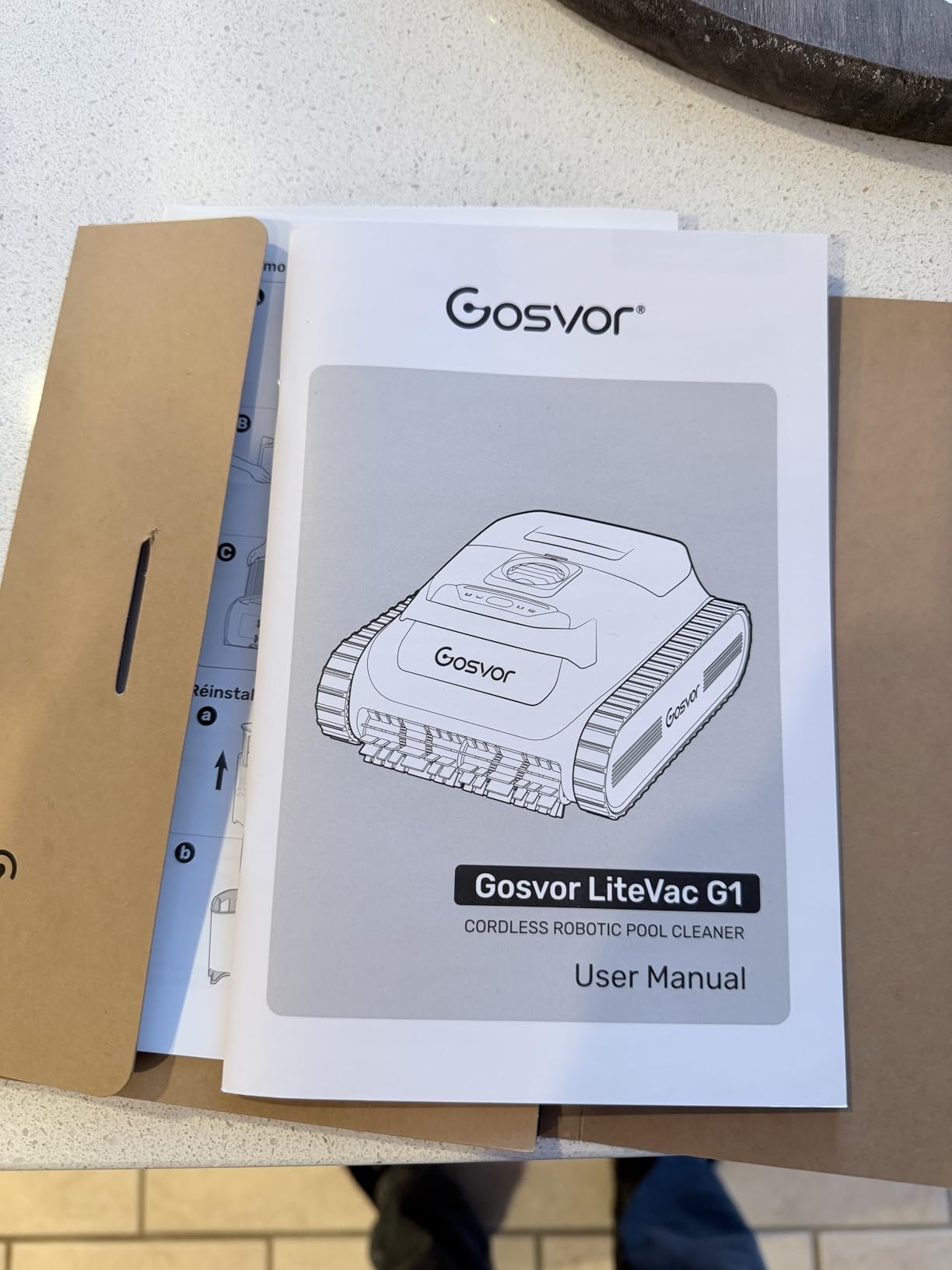
At 15.2 lb with quick drainage, it is one of the lighter units that still climbs walls, which is a good combination for a liner pool where retrieval is the risk. Cross-pattern path planning claims substantially more flat-floor coverage than a straight-line route, which matters because most of a liner pool floor is flat.
It is IPX8 rated, which is the waterproofing level you want on a unit that stays in the pool between cycles.
Why it suits a vinyl liner
Fine filtration is the argument. Vinyl texture traps dust, and a coarse basket returns that dust to the water where it resettles into the same pores. A 3 micron element with a replaceable spare is the single most effective thing you can do for a persistently cloudy liner pool.
Soft dual roller brushes and caterpillar tracks also keep the contact surface broad and flexible.
When to skip it
Skip it if you already own a pool pole, because the retrieval hook is not included. The all-black housing is genuinely hard to spot against a dark liner bottom, so budget for a bright marker tape on the handle.
8. AIPER Scuba V3 AI Vision – Best for Owners Who Want a Camera and a Dock
AIPER Scuba V3 AI Vision Cordless Robotic Pool Cleaner, Grey
AI camera debris detection
3 micron MicroMesh
Wireless charging dock
5GHz WiFi
18.1 lb
Pros
- Camera targets debris instead of random paths
- No-installation wireless dock
- MicroMesh 3 micron layer
- Handles cracked liner edges
Cons
- AI mode can skip areas and miss debris
- Waterline parking unreliable
- App required for vision mode
- 18 lb still needs manual lifting
This is the most ambitious machine in the roundup and the most polarizing. A single front camera detects more than 20 debris types and the Navium mode builds its own weekly cleaning plan, and there is a no-installation wireless charging dock so you are not running cable to the pool at all. That eliminates the cord-snagging risk entirely, which is the strongest vinyl argument for a cordless design.
Filtration is a 180 micron filter with a 3 micron MicroMesh layer, so the fine-dust problem is handled. Reviewers also report it handles cracked liner edges without catching, which is a specific and reassuring claim for an older liner.
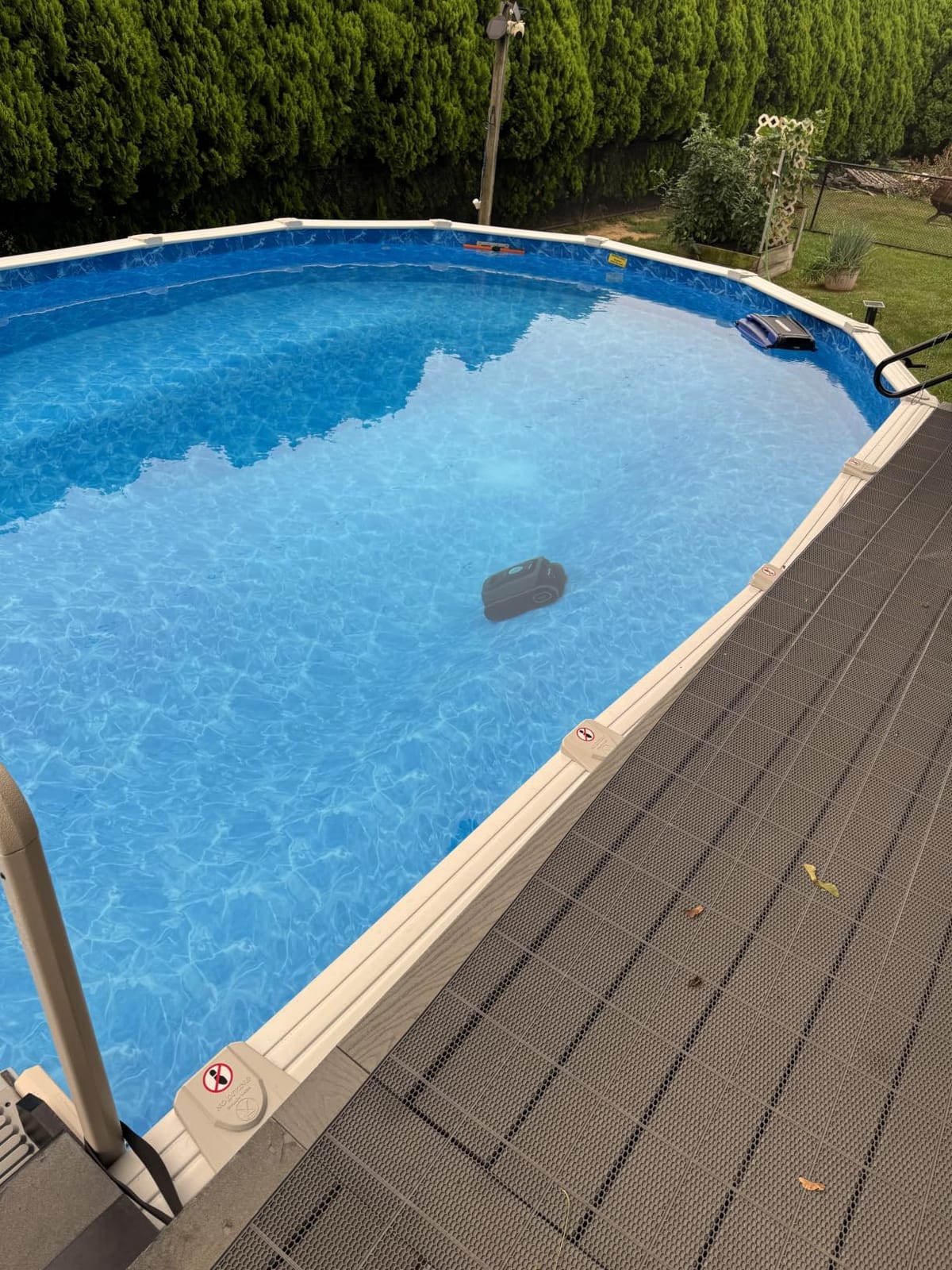
The catch is in the ratings. A 4.0 average with 63 percent five-star but 15 percent one-star is a wide spread, and the criticism concentrates on navigation and retrieval. Reviewers say AI vision mode can skip consistent areas, and that the advertised waterline parking often fails, leaving the unit to run until the battery dies and requiring a hook.
It also cannot be stopped or mode-changed once it is in the water, and firmware updates take 10 to 15 minutes, with several owners noting that updates from Aiper support materially improved results over time.
Why it suits a vinyl liner
The dock removes cables from the equation, and MicroMesh 3 micron filtration keeps the dust out. Reported behaviour around cracked liner edges is a point in its favour on older, slightly degraded liners.
When to skip it
Skip it if reliable unattended operation matters to you, because the parking and AI pathing are the least consistent parts and you cannot intervene once it is in the water. It is also the heaviest unit relative to its class at 18.1 lb, so retrieval is still a two-handed job.
9. WYBOT C1 – Best for Vinyl Pools With Steps and Deep Ends
WYBOT C1 Cordless Robotic Pool Vacuum for Inground Pools, Professional
4-in-1 floor wall waterline and steps
Triple motor 45 degree climb
160 minutes runtime
1618 sq ft
2 year warranty
Pros
- Four cleaning zones including steps
- Triple motors climb 45 degree liner slopes
- Gyroscope path planning cuts missed spots
- Two year manufacturer warranty
Cons
- 12 percent one-star rating is the weakest here
- Plug must be unscrewed each cycle
- Does not reliably self-park for retrieval
- Bulkier than compact models
The C1 is the step-and-slope specialist. Steps are where liner pools accumulate the most debris and where robots most often slam into a riser, and this unit lists steps as an explicit cleaning zone alongside floor, walls and waterline. A triple-motor system climbing up to 45 degrees is more than enough for a typical liner wall transition or a deep-end slope.
Gyroscope-guided N-Path and S-Path coverage is designed to reduce missed spots, and the listing gives 160 minutes of runtime on a 4-hour charge with coverage up to 1,618 sq ft and depths to 9.86 ft. App control with scheduling and OTA firmware updates is included, along with a 2-year manufacturer warranty.
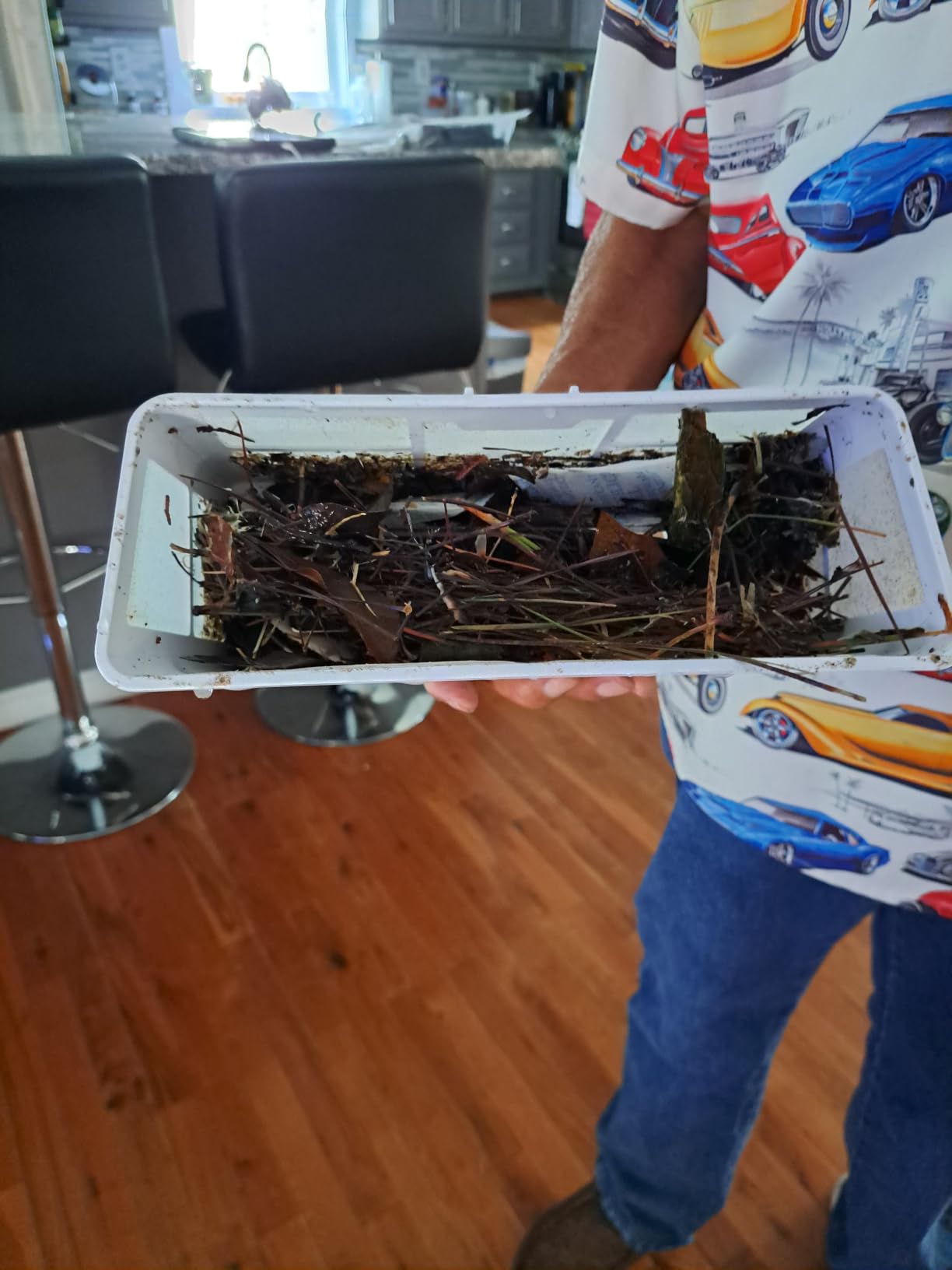
It is also one of the more compact units by dimension, at 17 by 13 by 18 inches, which helps on a small above-ground shell where storage space is tight. The 440 g battery keeps total mass manageable for a wall-climbing machine.
The rating is the caution. A 4.0 average with 62 percent five-star but 12 percent one-star points to inconsistency in retrieval, app reliability and finish quality relative to the higher-rated WYBOT models.
Why it suits a vinyl liner
Gyroscope path planning reduces the corner reversals and repeated wall contact that stress a liner seam, and the battery weight keeps total mass low for a climber. Explicit step coverage means less debris left sitting on a liner step where it can abrade under a track.
When to skip it
Skip it if you need reliable retrieval, because it does not consistently self-park and you may be fishing it out with a pole. The one-star cluster also suggests app and finish issues that the other WYBOT models in this roundup do not share.
10. PoolMr – Best Starter Robot for a Flat Above-Ground Pool
PoolMr Cordless Robot Pool Vacuum for Above Ground Pool,Grayish White
40W motor with 1 inch inlet
120 minutes runtime
1614 sq ft
180 micron mesh plus cotton sponge
Pros
- Perfect 5.0 rating across 49 reviews
- Dual-layer filtration with cotton sponge
- Anti-return backflow keeps debris in
- Light and easy to lift out
Cons
- Small wheels struggle on uneven or sloped bottoms
- Runtime falls short in cold water
- Floor and edge cleaning only
PoolMr has the highest star rating in the roundup at a perfect 5.0, but the review count behind it is 49, which is the smallest base here. We flag that because a perfect score on a small base is much easier to earn and much easier to move than a 4.6 across hundreds of reviews.
The engineering detail that stands out is anti-return backflow technology, which stops collected debris from emptying back into the pool when the unit surfaces. That is a genuine vinyl-adjacent benefit, because debris dumped back onto the liner floor is debris you will find settled into the texture again within a day.
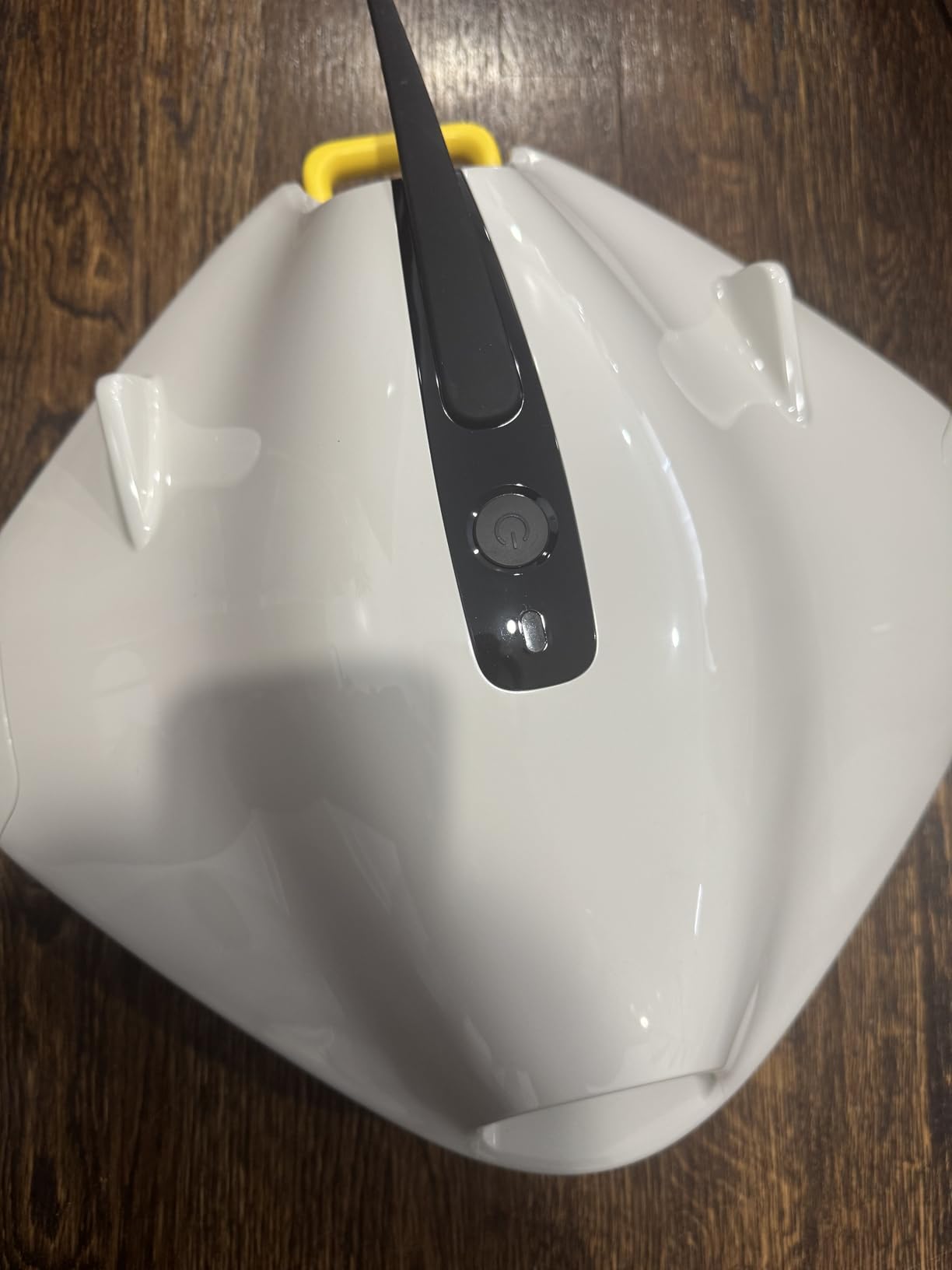
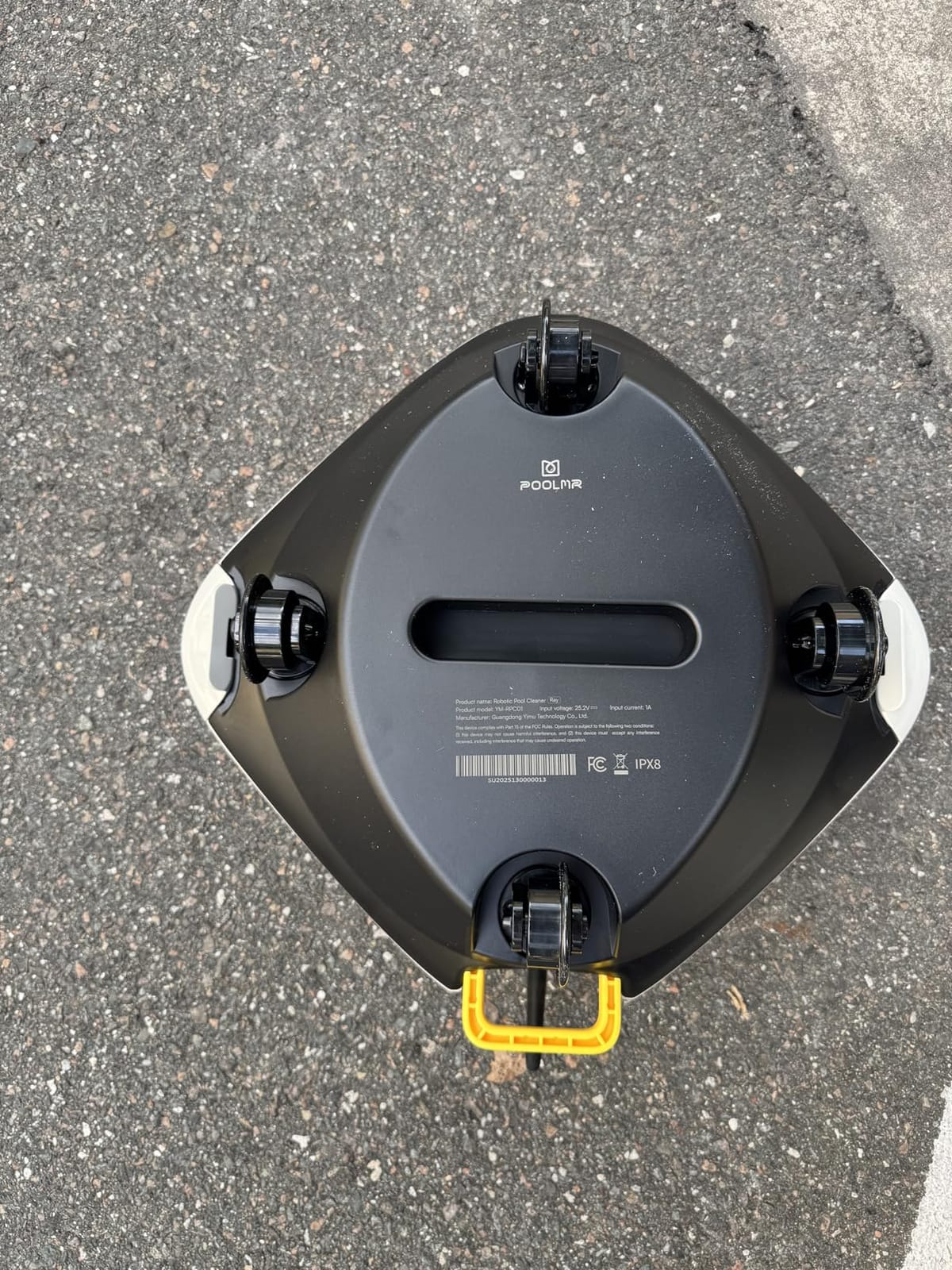
It climbs 0.2 inch wrinkles and drains and scales slopes up to 15 degrees, which covers a typical flat above-ground floor. Runtime is listed at 120 minutes covering 1,614 sq ft, and it auto-parks at the edge when the battery is low with a quick-drain for retrieval.
Dual-layer filtration pairs a 180 micron mesh with a dense cotton sponge, which is a step above a single coarse basket for dust even if it will not replace a pump sand filter on very fine particles.
Why it suits a vinyl liner
Very low mass means you lift it out without touching the bead, which is the single best habit for an above-ground liner. The backflow lock keeps debris from being redeposited on the floor, and the 40W motor with a 1 inch inlet picks up sand and small leaves before they grind under a wheel.
When to skip it
Skip it if your pool floor is bumpy, sloped or a molded liner with deep contour lines, since small wheels and jet propulsion lose grip and coverage there. It has no wall or waterline capability at all, and runtime drops noticeably in cold early-season water.
11. Aiper Scuba SE – Most Versatile for Small Above-Ground Pools
2026 Aiper Scuba SE Cordless Pool Vacuum Robot for Above Ground Pool
1820 GPH suction
1 inch inlet
860 sq ft coverage
90 minutes
1 year warranty
Pros
- Compact and light to handle
- Strong 1820 GPH suction for its size
- Auto-park with audio alert at low battery
- Simple single-button operation
Cons
- Floor only with no wall or waterline
- 860 sq ft ceiling suits small pools
- Shortest warranty here at 1 year
- No app or scheduling
The Scuba SE is the straightforward budget answer for a small above-ground vinyl pool. At 1,820 GPH with a 1 inch wide inlet, the suction figure is unusually high for a unit this small, and an inch-wide mouth is the right shape for picking up leaves whole rather than smearing them into the liner floor.
It cleans pools up to 860 sq ft with 90 minutes of runtime, which maps neatly onto a typical 24 foot round above-ground shell. Auto-parking at the pool edge with an audio alert when the battery is low means you are not sweeping a pole around a small pool waiting for it to find a wall.
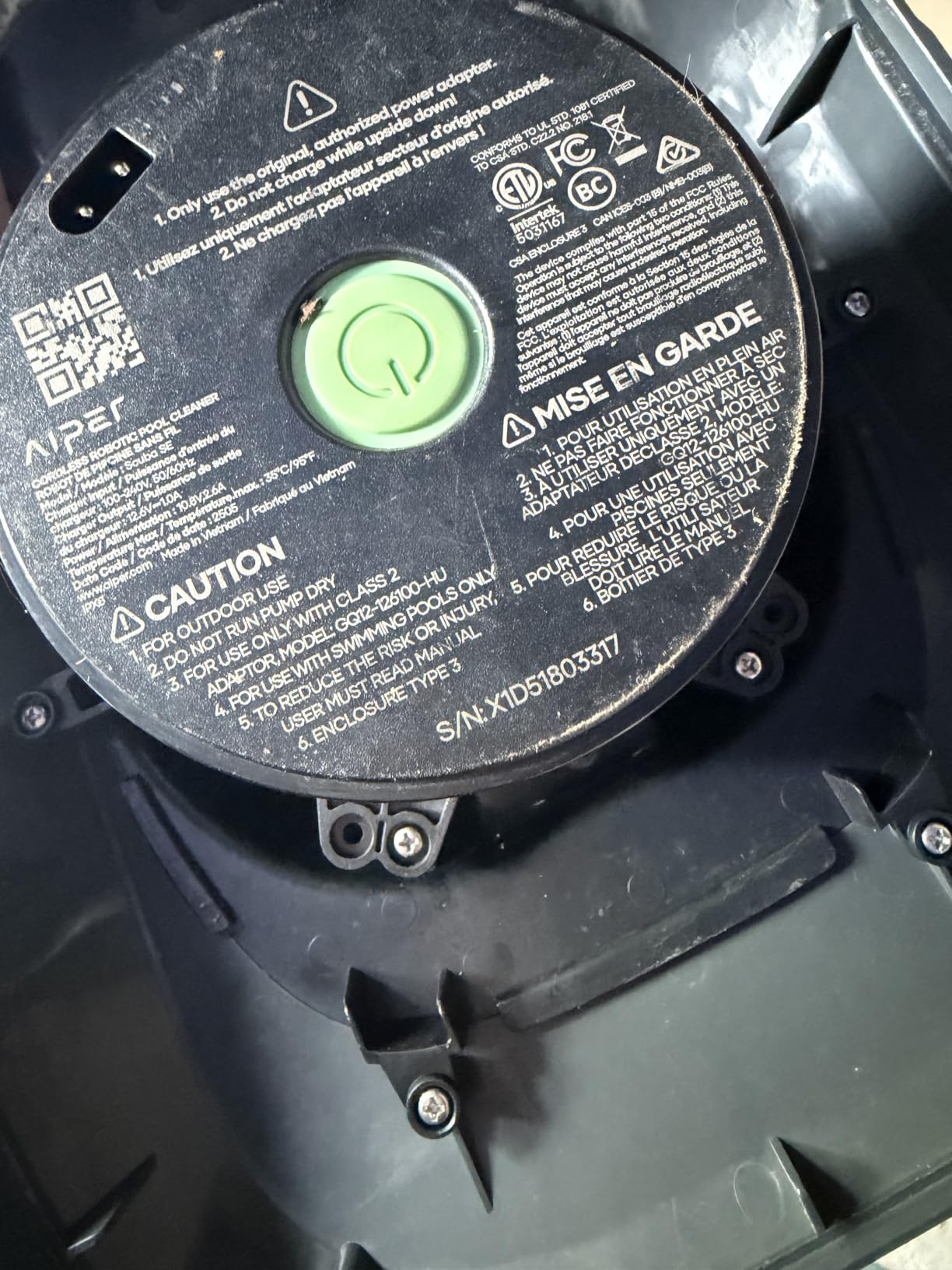
Two cleaning modes toggle with a single button press, so there is no app to pair and no firmware to update. Owners rate it at 4.2 across 240 reviews, with sentiment centred on simplicity, low effort and the auto-park retrieval.
The battery weighs 190 g, which keeps the whole machine light enough to lift with one hand and easy to store out of the sun between uses.
Why it suits a vinyl liner
Low mass and a small footprint mean almost no contact pressure on a soft liner floor, and the floor-only design means it never reverses off a wall. The 1 inch inlet captures debris before it settles into the vinyl texture.
When to skip it
Skip it on anything larger than about 860 sq ft, since the coverage ceiling leaves corners untouched on a mid-size pool. The 1 year warranty is the shortest in the group, and there is no wall or waterline coverage, so you will still handle the waterline by hand.
12. BRINBO S2 – Smallest Footprint for Compact Above-Ground Pools
S2 Pool Vacuum Robot for Above Ground Pools, 90-Min Runtime, 861 Sq.Ft Coverage, Cordless Operation, Efficient Cleaning Performance, Dual-Layer Filtration, Panda Black
90 minutes runtime
861 sq ft coverage
Dual-layer filtration
Cordless
Compact body
Pros
- Compact and easy to store between uses
- Dual-layer filtration separates leaves from fine dirt
- Fully cordless with no cable in the water
- Filter rinses easily after each cycle
Cons
- 12 percent two-star rating
- Floor only with no wall coverage
- Designed for above-ground and flat-bottom pools
- No app smart navigation or auto-park
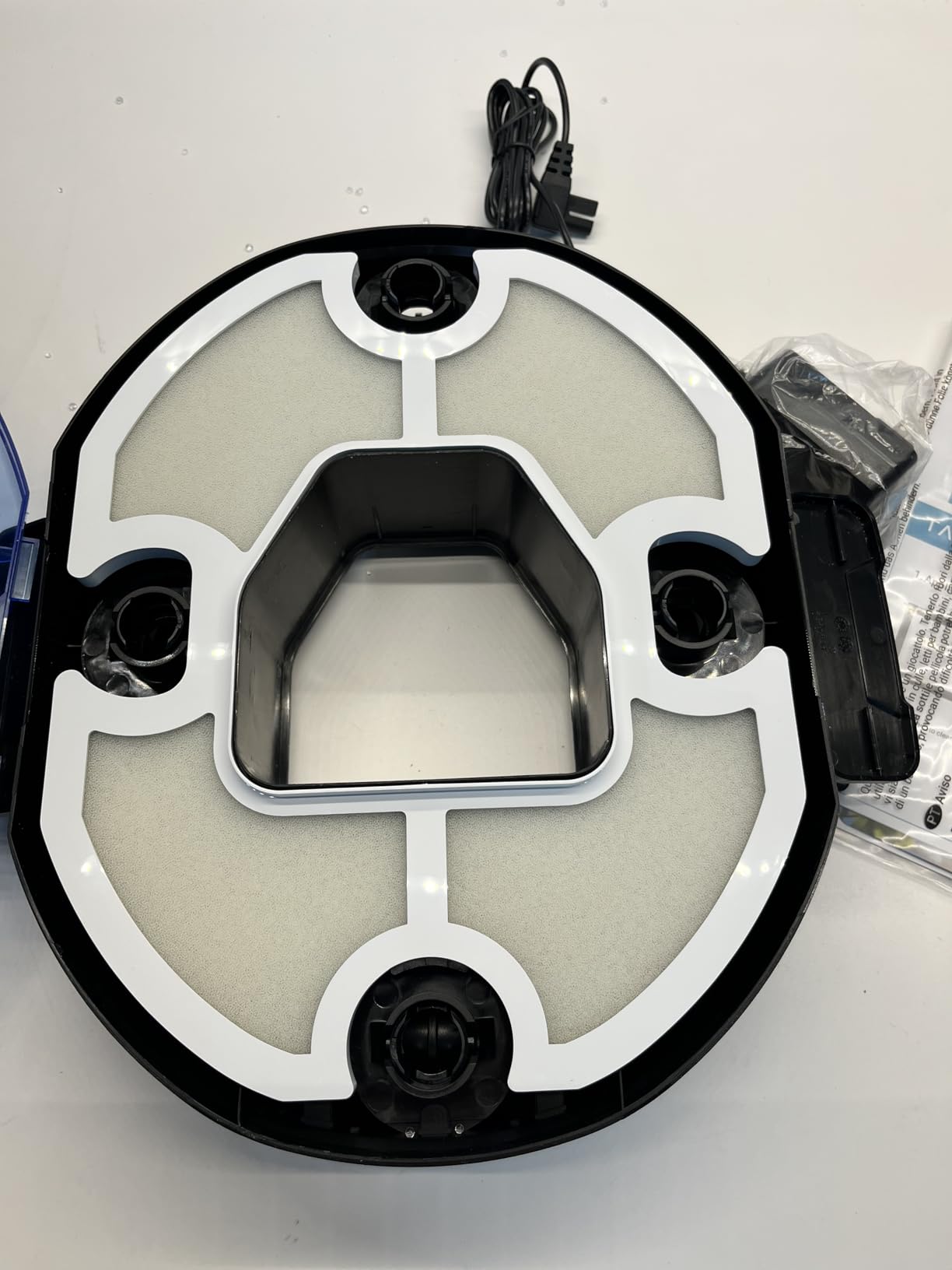
The S2 is the pick if storage is the constraint, because it is one of the smallest bodies here and stores between uses without a fuss. It runs 90 minutes on a full charge and covers pools up to 861 sq ft, which lines up with a standard above-ground frame or a compact flat-bottom in-ground pool.
Dual-layer filtration separates larger leaves from finer dirt and sand, and the filter is easy to access and rinse after a cycle. That simplicity is a real advantage on a liner pool, where the habit that keeps things clear is rinsing the basket before every run.
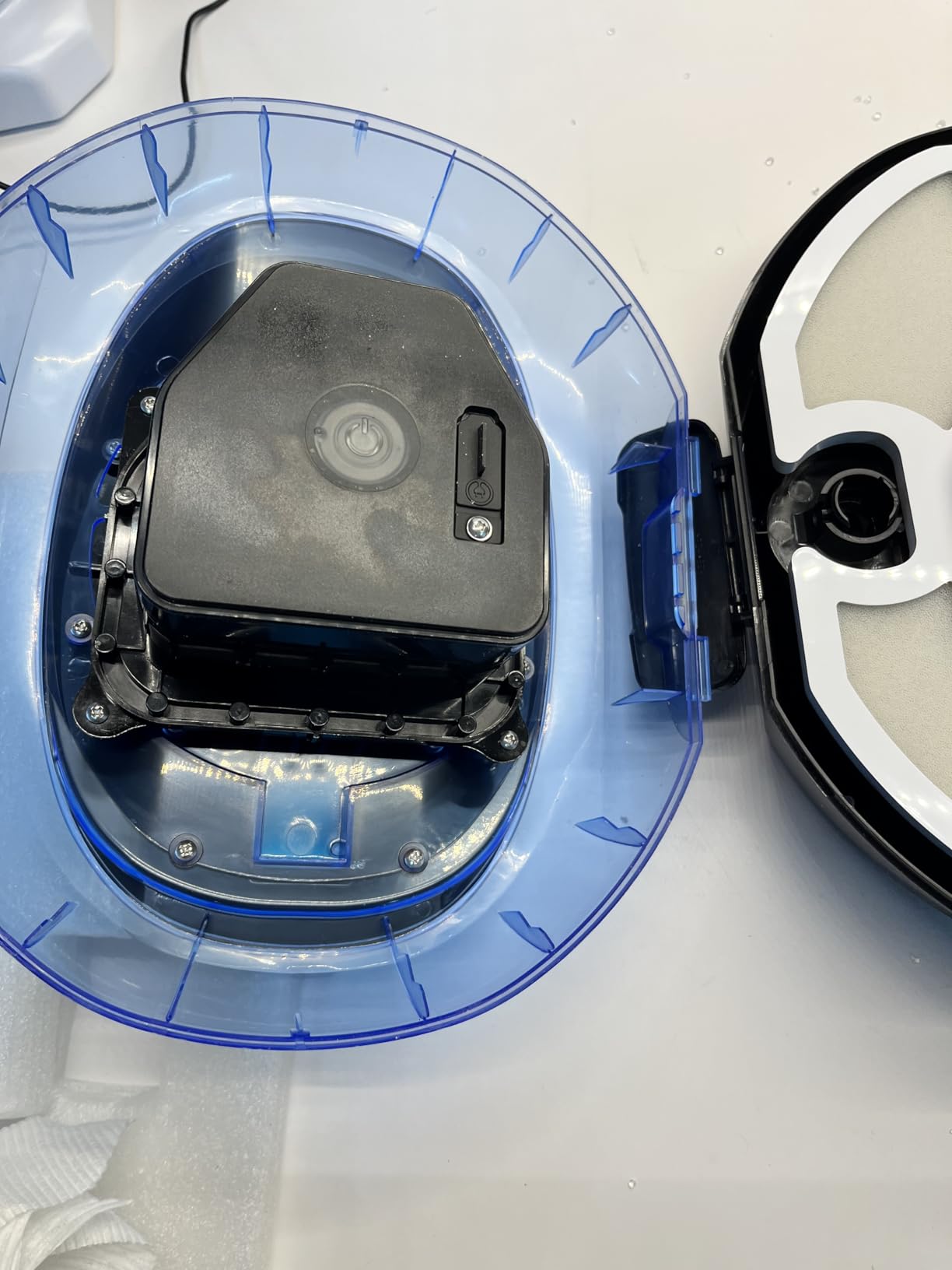
It is fully cordless, so there is no cable to manage in the water or snag on a ladder. The battery is listed at 161 g, one of the lighter packs in the roundup, and owners rate it at 4.4 across 149 reviews with mostly positive sentiment on price and simplicity.
Coverage and the flat-floor design are the limits rather than the quality. The secondary score worth noting is a 12 percent two-star cluster, which comes from owners who bought it for a larger or walled pool than it suits.
Why it suits a vinyl liner
Low weight, no cable and floor-only operation mean minimal contact events on the liner surface. On a small above-ground shell, which is where the bead is most exposed, that combination is the safest profile in the roundup.
When to skip it
Skip it if you have any walls you care about, because there is no wall or waterline coverage. There is no app, no smart navigation and no auto-park, so you will be retrieving it manually with a pole each cycle.
Which Robot Fits Your Vinyl Liner Pool
Match the machine to the pool before you match it to the feature list. The four variables that actually change the answer are pool size, above-ground versus in-ground, debris load, and how much effort you want to spend on retrieval.
By pool size
Under 33 ft, above-ground: the Dolphin Nautilus AG, the BRINBO S2, the Aiper Scuba SE and the PoolMr all cover this band. The Nautilus AG has the deepest review history and an active brush; the SE and S2 trade the brush for simplicity and low mass; the PoolMr adds anti-return backflow. All four are floor-only, which is acceptable on a shallow shell.
33 to 40 ft, in-ground with steps: the WYBOT B1 for light handling and obstacle crossing, the WYBOT C1 for explicit step and slope coverage, and the Gosvor LiteVac G1 if fine silt is your issue. Each of these climbs liner walls rather than avoiding them.
40 to 50 ft, in-ground, heavy silt or trees nearby: the WYBOT C2 with 10 micron filtration and 2,152 sq ft of coverage, the Beatbot Sora 70 if you also want surface cleaning and the longest warranty, or the AIPER Scuba V3 if you want a dock and app control. These are the only units here sized comfortably for a large pool in a single run.
Above-ground versus in-ground
Above-ground liners are the more demanding case, because the bead sits low and the liner is a thinner, more mobile sheet. Weight matters more than suction. A unit you can lift with one hand and place back gently over the coping is worth more to you than a stronger machine you dread retrieving, which is why the Nautilus AG, the B1, the PoolMr, the Scuba SE and the BRINBO S2 all sit well here.
In-ground liners are more forgiving on retrieval but more demanding on coverage, because deep ends, steps and long wall runs give a robot far more surface to miss. That is where gyroscope or sonar path planning starts earning its place, and where wall-climbing capability stops being optional.
A Weekly Routine That Protects Your Liner
No robot is self-sufficient on a vinyl pool. This six-step routine is the difference between a liner that looks new in five years and one that marks up in two.
Skim before you run. Floating leaves and bugs are what end up under a track. A five-minute skim with a net means the robot never grinds debris across the liner floor.
Empty and rinse the filter basket before every cycle, not after. Owners describe this as the habit that keeps a vinyl pool clear, and it is the cheapest step in the routine.
Run mid-morning rather than at dusk. Line the robot up so it works while the sun is up and the water is warmer, and avoid the overnight window when debris settles heaviest.
Check the liner before you start. Walk the pool and look for cracks, lifted seams, a wrinkled floor around the main drain and any debris sitting under a step. A wrinkled floor is what causes a robot to bind and gouge.
Use the floor-only or shallow mode on steps and ledges. Letting a climber charge a liner riser at full power is the most common avoidable scuff mark, and most of the units here offer a floor or shallow setting.
Keep chemistry steady off-peak. A robot running in water with unstable sanitizer and pH works harder for less result, and stable chemistry also keeps the liner material itself in better condition.
On storage, owners differ, and both patterns work if you handle the chemistry. Many people leave the robot in the pool between cycles, which is fine as long as you are not shocking during that window. If you prefer to lift it out, dry it fully and store it out of direct sun, because a damp unit in a hot shed is what degrades the cable insulation and the seals.
When Not to Use a Robot
There are three cases where a robot is the wrong tool, and skipping it saves money rather than wasting it.
A brand new liner that is still curing. Fresh liner off-gasses and is softer for the first several weeks. Curing residue comes out of the liner during that period, and a robot can press that residue into the surface or catch it against a seam. Wait until the water has been circulating and the liner has stopped shedding before the first full run.
A failing liner. If you can see a tear, a lifting seam or repeated wrinkling near a drain, the liner needs replacing, not cleaning. A robot driving over damaged liner will make the damage worse, and the diagnosis is not something a machine can give you.
One-off spot cleanups. A robot is a maintenance tool, not a rescue tool. Silt piles, a bad algae bloom, a heavy single leaf load after a storm and wall stains all need a manual head, a brush or chemistry first. Run the robot afterwards to hold the result.
Algae deserves its own note, because it is the most common expectation mismatch. Robots move debris, and some models with strong filtration pick up loose algae particles, but no robot kills an established algae colony clinging to a vinyl liner wall. Brushing and correcting sanitizer do that work, and the robot keeps the pool from re-establishing.
Frequently Asked Questions
What are the best pool cleaners for a vinyl liner pool?
A robotic cleaner is right for a vinyl liner pool when it has soft brush plates, rubber or composite tracks rather than hard plastic wheels, and a fine filtration path. Our top three here are the Dolphin Nautilus AG for above-ground liners, the WYBOT C2 for large in-ground pools with heavy silt, and the Beatbot Sora 70 for full coverage including the water surface. A robot maintains a vinyl pool between deep cleans, but it does not replace brushing or chemistry.
Will a robotic pool cleaner scratch my vinyl liner?
A good robot will not, because liner damage almost always comes from a single piece of debris trapped under a track rather than from the brush. The brush is soft on every vinyl-safe model. Choose rubber or composite tracks, skim the pool first, empty the basket before each cycle and avoid letting a wall-climbing unit reverse off a liner seam at full power.
Is a cordless pool robot better for vinyl liner pools?
It depends on the failure you care about. Cordless removes the cable-snagging and tangling risk and usually adds suction power, which suits a large liner pool with steps. Corded robots never stop mid-cycle on a flat battery and report far longer real-world durability. For a new or delicate liner, a light corded floor-only model is the lower-stress choice.
How often should I run a pool robot on a vinyl pool?
Once a week covers most liner pools, and twice a week makes sense in autumn or after heavy leaf fall. Rinse the filter basket before every run rather than after, skim first so no debris gets trapped under a track, and use floor-only mode around steps and tanning ledges where a wall-climbing unit is most likely to scuff a liner riser.
Which robotic pool cleaner is the best value for money?
The Gosvor LiteVac G1 stands out on value because its 3 micron and 180 micron double filtration matches units costing far more, at 3,960 GPH of suction and 15.2 lb. The Aiper Scuba SE is the cheapest credible option for a small above-ground pool, and the Dolphin Nautilus AG is the best value overall once you weight a 4.4 rating across more than 6,000 owner reviews.
What is the best vacuum head for a vinyl pool?
A vacuum head used on a vinyl liner pool should have a floating skimmer body, a brush roll made of soft PVC or nylon, and a wide intake that will not drag grit along the floor. Match the head to your hose diameter and lift it clear of the liner when repositioning, since the pleat pulled by a heavy head dragging across a floor is the most common manual-vacuum scuff.
Conclusion
Start with the pool, not the spec sheet. On an above-ground liner where you will be lifting the machine over a low bead every week, the Dolphin Nautilus AG is the safest all-round choice, with the deepest owner review base in the roundup at 4.4 across more than 6,000 reviews. On a large in-ground liner with fine silt and a lot of wall to cover, the WYBOT C2 pairs the highest owner rating here at 4.6 with 10 micron filtration. If your pool has steps, a tanning ledge or a freeform shape that defeats fixed path planning, the WYBOT B1, the WYBOT C1 and the Lodoba SAT25 are built for exactly those transitions.
Whatever you pick, the routine matters more than the model. Skim first, empty the basket before every run, and use floor-only mode near steps. That habit alone prevents most of the liner marks people blame on the robot. Check the current details and owner feedback for the best robotic pool cleaners for vinyl liners before you buy, since ratings and firmware both move through the season.