
A rifle shot from three feet away lands somewhere between 140 and 167 decibels. That is not a number you argue with or get used to; it is roughly 30 decibels beyond the point where a single exposure starts destroying the hair cells in your inner ear. Yet the single most common sight on a firing line is a shooter with nothing over or in their ears at all, usually because the muzzle blast from the previous shooter faded faster than the realization did.
That is why picking the best shooting ear protection for the range is not really a preference decision. Gunshots arrive as impulse noise, a very short and very loud spike, and the damage they cause is cumulative and permanent. There is no recovery with rest, no adaptation, and no weekend off that undoes an afternoon in an indoor bay where the ceiling is throwing every report straight back at you.
We spent weeks with the twelve products below, shooting in both indoor and outdoor settings, and this roundup covers the full market: slim electronic muffs, passive muffs, foam plugs, custom-molded plugs, and in-ear electronic units. We also broke down the numbers nobody prints on the box, including why a 22 dB rating behaves very differently in a reverberant indoor bay than it does on an open outdoor range. If you also need eye protection, our picks for the best shooting glasses for the range and the best sunglasses with side protection are worth a look, because muzzle blast sprays debris forward and to the side, not just back.
Table of Contents
Top 3 Picks for Shooting Ear Protection in 2026

Walker’s Razor Slim Electronic Muff
- Two hi-gain microphones
- Audio input jack
- Recessed volume knob

All 12 Picks at a Glance in 2026
Every model in this roundup, sorted the way we would sort them on a bench. The NRR figures come from the manufacturer listings, and the battery column tells you whether you are packing spare cells or remembering to charge a cable.
How We Tested Shooting Ear Protection
We ran this roundup the way we run any gear test: bring it, wear it for a full session, and write down what happened rather than what the box promises. Over six weeks we put these twelve through indoor ranges with concrete floors and low ceilings, an outdoor range with open sky, and a couple of long multi-hour sessions where comfort matters more than any spec sheet.
Four things decided every ranking, in this order.
Protection under the conditions you actually shoot in. We care less about the printed NRR than about what reaches your ear in a reverberant indoor bay, which is where most people shoot their first hundred rounds.
Can you hear the range officer? Protection that is so good you cannot hear a cease-fire command is a safety problem, not a feature. This is where electronic and passive models separate sharply.
Comfort past hour two. Hot ears, sweaty gel pads, pressure points on the headband, and ear cups that fight your stock all show up in a long session and not in a five-minute test.
Does it stay sealed? Fit problems, loose in-ear units, batteries dying mid-stage, and pads losing their seal are the recurring failure reports across buyer reviews, and we weighted them accordingly.
One note on our own limits: we are shooters, not audiologists. Nothing here is medical advice, and if you already have measurable hearing loss, talk to a hearing professional before adding attenuation to a range session, because over-protection on damaged ears is its own problem.
1. Walker’s Razor Slim Electronic Muff: Editor’s Choice for a Reason
Walker’s GWP-RSEMPAT Razor Slim Electronic Muff – Black Patriot
Weight: 12.63 oz
Audio input jack
Recessed volume knob
2 hi-gain mics
Pros
- Lightweight and comfortable for long periods
- Excellent sound amplification
- Low-profile cups clear a rifle
- Slim and folds flat for a range bag
- Audio input for phone or radio
Cons
- Noticeable latency in audio passthrough
- Digital-sounding artifacts when listening to music
- Directionality feels unnatural
The Razor Slim Electronic is the one I put on first every time I walk into a bay, and after six weeks of rotating it against eleven competitors it is still the one I reach for. At 12.63 ounces it is the lightest electronic muff in this group, and that weight matters more than any spec line once you are four hours into a class and your ears are wet.
The two hi-gain microphones give genuinely clear hearing of range commands, and the low end is tuned so voices and mechanical sounds read naturally rather than tinny. What surprised me most was how well the extra slim cups handle a rifle. The cup is thin enough at the cheekweld that I never had to shift my head position to find clearance, which is exactly what breaks with bulkier muffs.
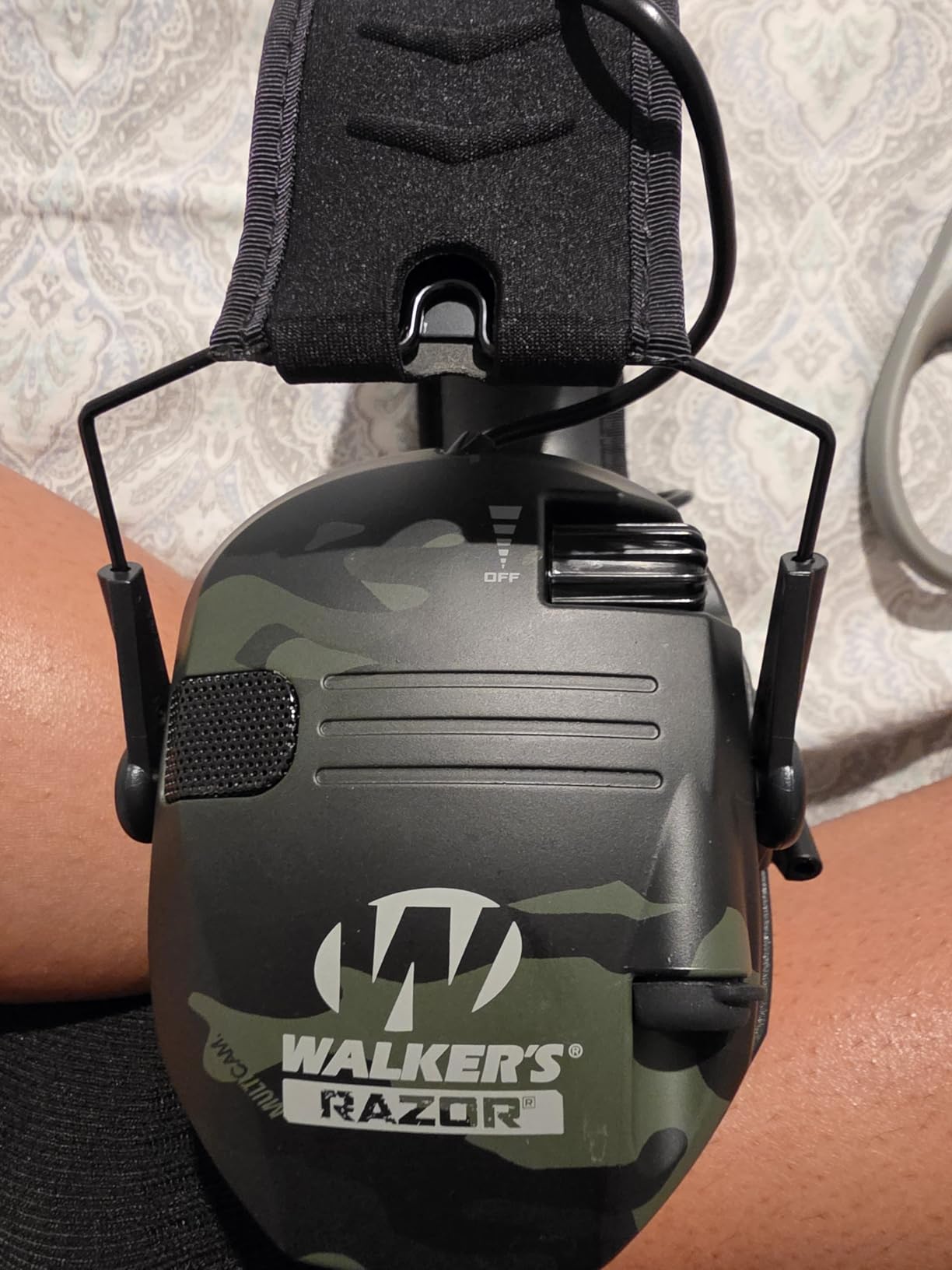
It is also the rare electronic muff I am actually willing to use as headphones. Plug a phone into the audio input jack and you get music or a range feed, though this is where the design shows its age: there is a noticeable delay between what happens in the room and what you hear, and the passthrough audio carries a faint digital edge. Reviewers report the same thing, and they report it as a mild annoyance rather than a dealbreaker.
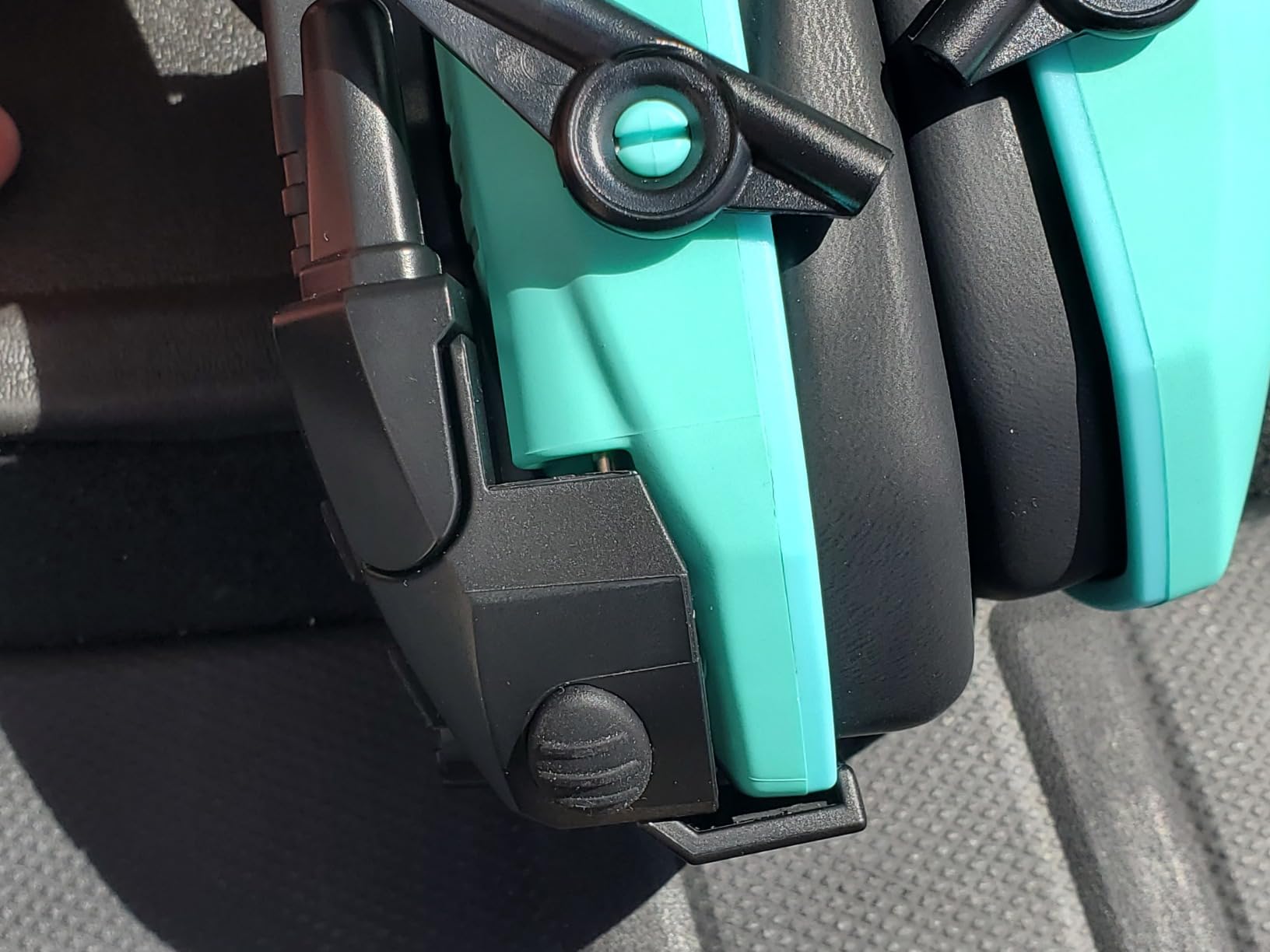
The recessed volume knob is a small, thoughtful detail. It is reachable with a gloved hand but hard to knock by brushing a rifle or a door frame, which protects your hearing in the exact situation where an accidental maximum would be worst. The battery door opens from the exterior too, so you are not unscrewing the housing in a parking lot.
Where the Razor Slim earns its place
This is the muff to buy if you shoot mostly indoors, if you wear prescription shooting glasses and need slim cups, or if you are a beginner buying your first pair. Two microphones is enough to hear a line instruction clearly at an indoor range, and at this weight you will forget you are wearing it. The audio jack also makes it the easiest way to route a scanner or phone into a bay where you cannot have a speaker.
Where the Razor Slim falls short
It is not a music muff, and anyone expecting a clean stereo signal will be disappointed. The two-microphone array also gives you less directional detail than the four-microphone designs later in this list, so if you need to localize a bird or pick up a sound at a specific direction outdoors, this is not the one. On a very loud indoor range with a suppressed rifle, I would also add a pair of foam plugs underneath.
2. Howard Leight Impact Sport: Best Value Electronic Muff
Howard Leight by Honeywell R-01526, Impact Sport Earmuffs, Olive Drab Green.
NRR: 22 dB
Safe amplification at 82 dB
350 hour battery
2 AAA included
Pros
- Amplifies range commands clearly
- Long battery life
- Folds compactly for storage
- Low-profile cups clear a rifle
- AUX input with included cord
Cons
- 22 dB is light for very loud indoor bays
- ABS plastic feels basic
- Can block commands once you add plugs
The Impact Sport is the first pair of electronic muffs most shooters ever own, and after years of range use it is still the model our local range staff reach for when a new member needs a pair that day. It is rated 22 dB NRR and caps ambient amplification at a safe 82 dB, which is the number to remember if you are comparing spec sheets.
That 82 dB ceiling is the design philosophy in one figure. The microphones will amplify your surroundings so you can hear instructions and other shooters, and they will stop amplifying the moment the environment gets loud. On the 100-yard line during a class, that meant I heard the instructor clearly at a normal speaking voice and never had to think about whether ambient noise was being pushed too hard.
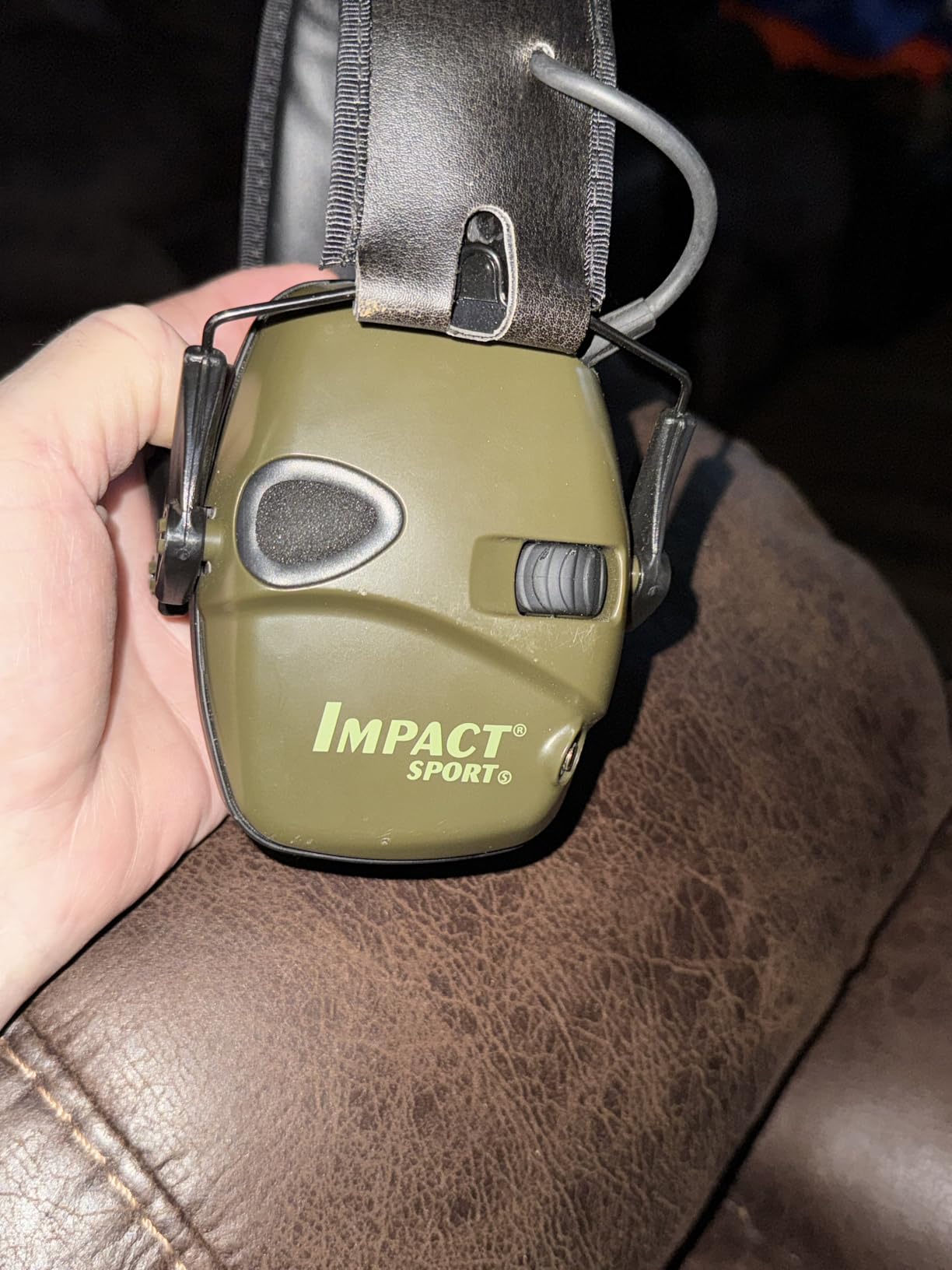
Battery life is the sleeper feature. The listing claims roughly 350 hours, and the four-hour automatic shutoff is what makes that number realistic, because most people forget to turn electronic muffs off. Combined with two included AAA batteries, this is a pair you can buy once and forget about for a year.
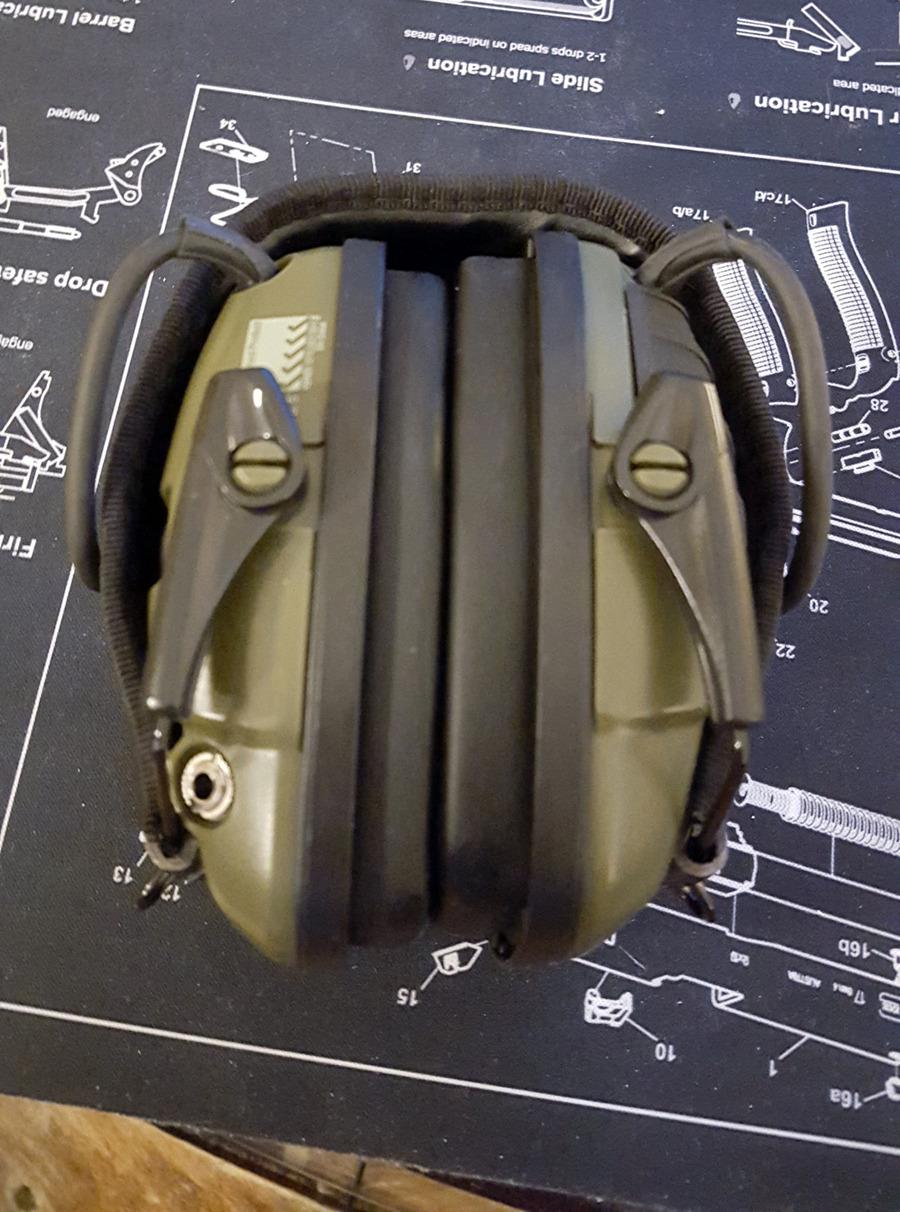
The folding design is genuinely compact, which matters if you share a vehicle with a range bag or a lockable cabinet. The low profile cups are shaped so a rifle stock clears them, and the included 3.5 mm cord plus AUX input covers the wired cases that Bluetooth handles on other models.
Who should buy the Impact Sport
Buy this one first. It suits a beginner, a weekday range session, and anyone who wants reliable amplification without managing a rechargeable battery or a Bluetooth pairing. It is also a strong second pair for a shoot house, because you can leave one unit per bag instead of sharing a single pair across a group.
Where it falls short
Twenty-two dB is a modest rating, and buyers note it does not always feel sufficient in a hard-walled indoor bay with a large-bore rifle. The plastic construction also feels one tier below the metallic premium models. And because the passive seal is only fair, this is exactly the muff most people double up under, which means you lose some of the amplification advantage that made it appealing in the first place.
3. Walker’s Razor Slim Passive Earmuff: Most Versatile

Walker’s Razor Slim Passive Earmuff for Range Shooting Hunting Hearing Protection, Unisex
NRR: 27 dB
Compact cup size
Foldable and adjustable
Pros
- 27 dB NRR at a low price
- Compact cups fit smaller heads
- Lightweight for all-day wear
- No batteries to manage
- Collapses flat for storage
Cons
- Passive only
- no sound amplification
- May fit larger heads poorly
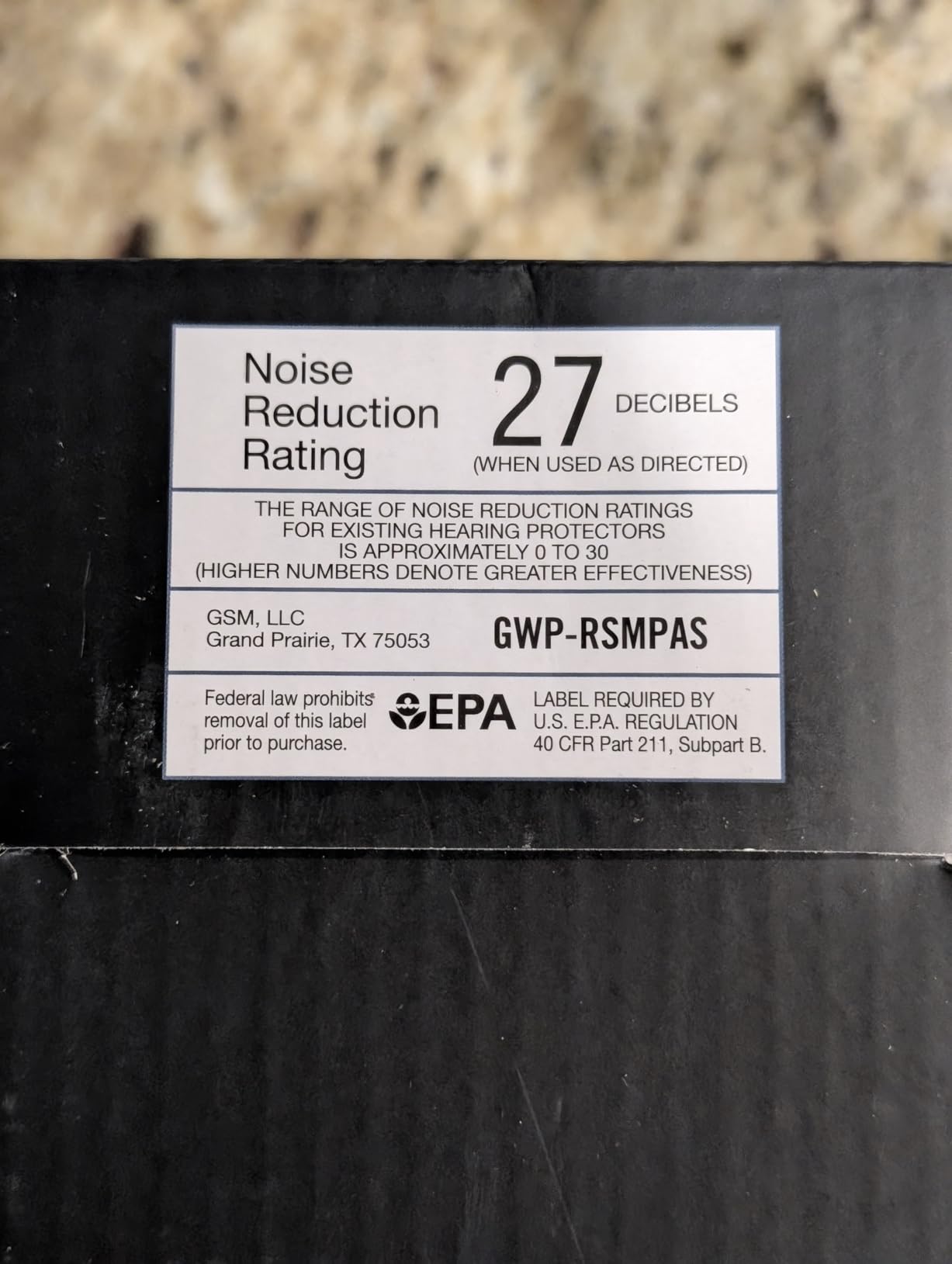
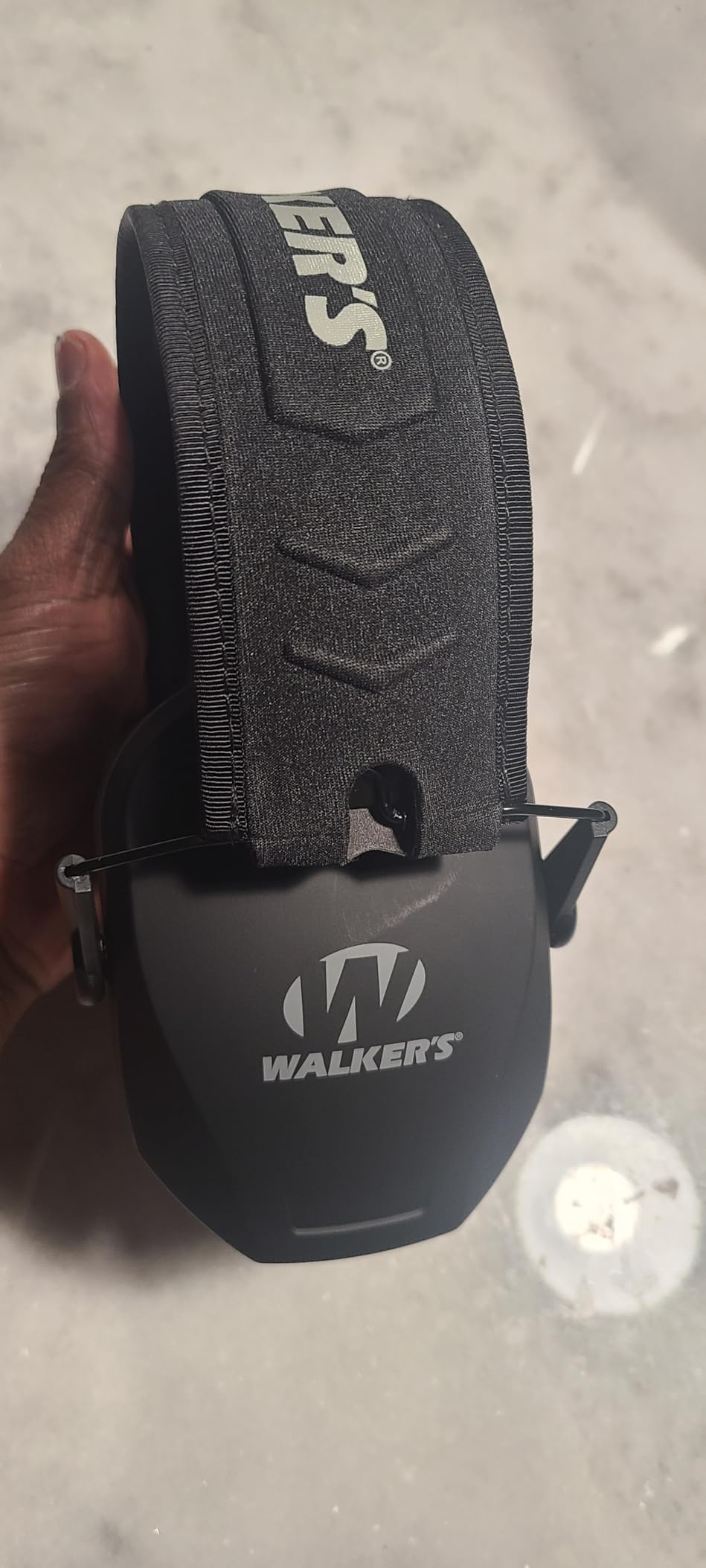
The passive Razor Slim is the simplest thing in this roundup and one of the easiest to recommend. Twenty-seven dB of passive attenuation, no electronics, no batteries, no charging cable, and nothing to fail. If you shoot outdoors on a quiet morning, this is genuinely all the protection most people need.
The compact cup sizing is the reason this one earns a place over generic safety earmuffs. It is built smaller, which works well for younger shooters and for many women, and the adjustable padded metal wire headband holds a seal without pinching. On a warm outdoor day the difference between a 27 dB muff you keep on and a bulky one you take off after an hour is the entire safety argument.
Being passive also means being dependable in a way electronics never are. There is no battery to die, no firmware, no pairing, and no failure mode other than a torn seal or a cracked cup. If you are the kind of shooter who leaves hearing protection in the truck permanently, a passive muff that works after three months of heat and dust is worth a lot.
They fold down small enough to sit in a jacket pocket between range sessions. The rubberized coating and sound-dampening housing feel solid for the price tier, and I had no problem with the wire frame flexing or the adjustment holding position across a long day.
When passive protection is the right call
Outdoor range work, trap and skeet, plinking with friends, quiet hunting mornings, and any situation where nobody is giving you live commands. It is also the sensible under-muff layer for people who already wear an electronic pair, and the honest answer for a lot of beginners on a tight budget.
When passive protection is the wrong call
Indoor concrete bays. That is the whole caveat, and it is a safety one. With no amplification and a 27 dB ceiling, you will hear very little of the range officer, and a common forum complaint is exactly this: shooters put these on indoors and realize too late that a command was given. For indoor work, choose an electronic pair or pair passive muffs with foam plugs and accept that you will be working harder to hear.
4. Peltor Sport Tactical 500: Best for Bluetooth and Dynamic Suppression

Peltor Sport Tactical 500 Bluetooth Hearing Protection Ear Muffs, 25 dB NRR
NRR: 25 dB
Dynamic suppression time
12.96 oz
Bluetooth
Pros
- Dynamic suppression time handles indoor echo well
- Independent Bluetooth and ambient volume
- Soft cushions with cutouts for long guns
- Storage bag included
- Replaceable cushions available
Cons
- Bluetooth audio is not audiophile grade
- AA batteries not included
- Overkill for casual plinking
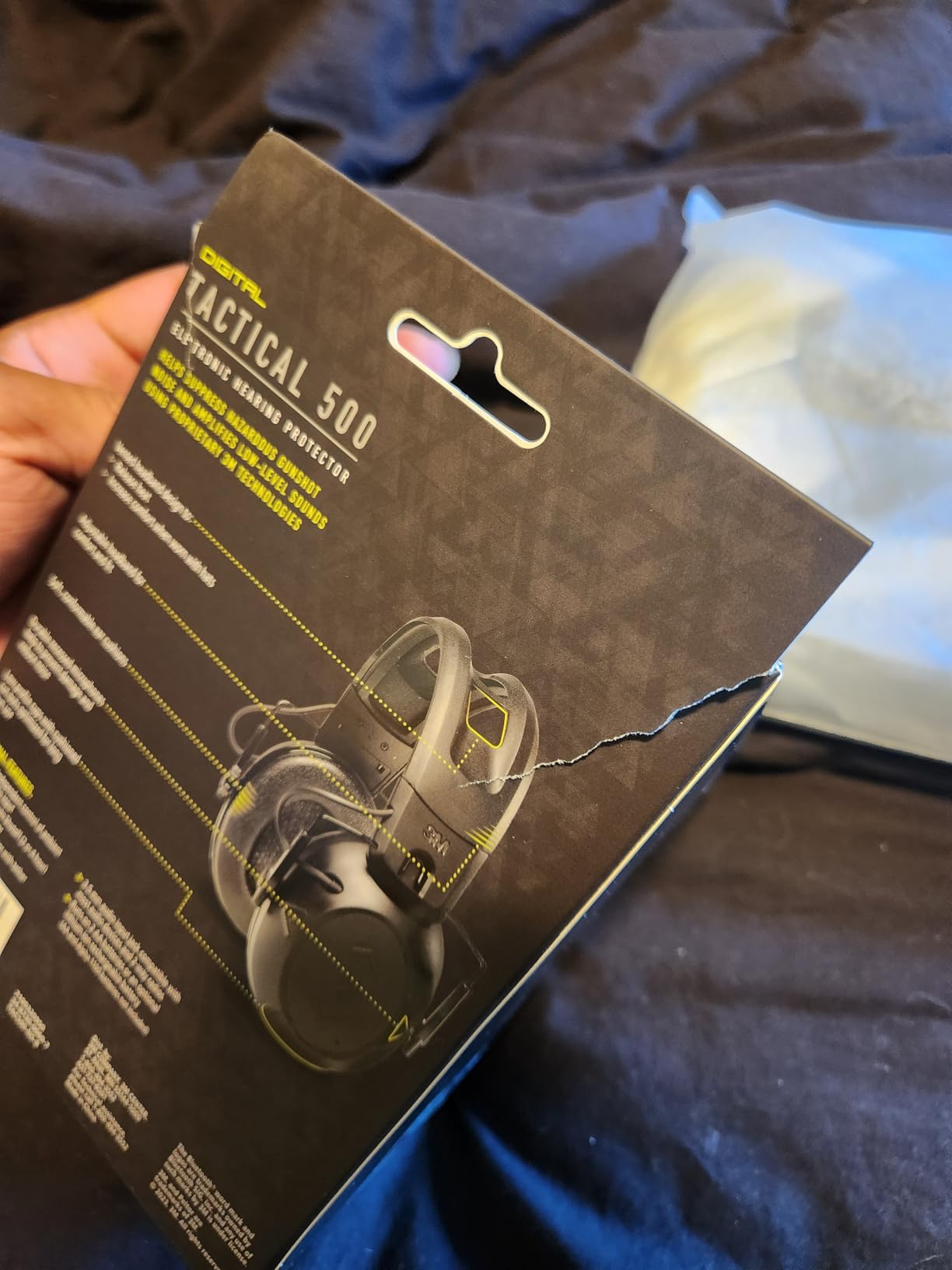
The Tactical 500 solves the two problems that stop most people from wearing Bluetooth hearing protection. The first is interior echo: in a concrete bay, a gunshot returns off the walls and ceiling as a series of reflections, and simple electronics often leave that tail ringing in your ear. Dynamic suppression time measures the energy in the noise and adjusts the suppression window to kill the echo along with the peak.
The second is the volume conflict. Many Bluetooth muffs mix your music and the ambient range feed into one control, which means turning down a podcast also blinds you to the line. The Tactical 500 runs those on independent controls, so ambient hearing stays where you set it no matter what the phone is doing.
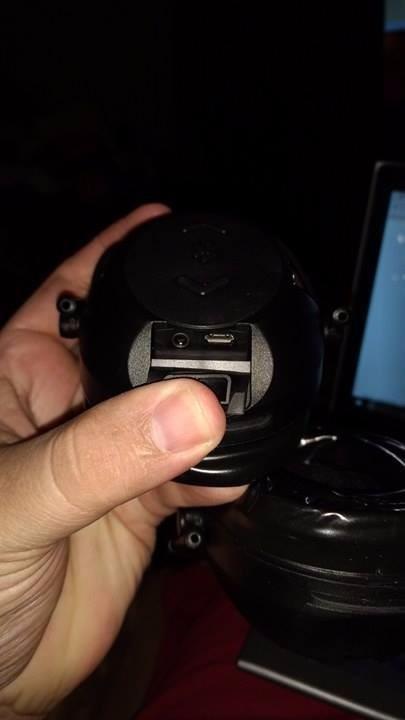
At 25 dB NRR the passive rating here is a clear step above the 22 and 23 dB muffs most shooters start with, and the cushions are cut out at the bottom with rubber bumpers that keep long guns from bumping and scratching against the cup. That detail is the difference between comfortable and not when you are working a prone position with a bolt-action rifle. Recessed microphones and Clear Voice Tracking filtering keep wind and background hiss out of the vocal range, which matters outdoors.
Power is flexible: two AA batteries, or a 3M Alpha 1100 rechargeable pack if you buy one separately. An automatic shutoff and a low battery indicator handle the failure case. The whole unit folds into the included bag, and the cushions are sold as a replaceable hygiene kit so you are not replacing the whole muff when the pads go flat.
Why this one over cheaper Bluetooth muffs
It is for the indoor shooter who wants audio and real attenuation at the same time, and for anyone who has owned Bluetooth muffs that were fine for music but felt hollow in a bay. The independent volume controls and the dynamic suppression are the two features that cheaper models skip, and they are the two you notice after the first indoor session.
Watch for these tradeoffs
The Bluetooth path is tuned for calls and podcasts, not music, which several buyers note directly. The AA batteries are not included, so budget for those or for the rechargeable pack. And at 25 dB with a full seal, some shooters find it isolates so well indoors that they add plugs underneath, which then reduces the very clarity the muff was chosen for.
5. Walker’s Razor Quad Muff: Best for 360 Degree Awareness
WALKER’S Razor Electronic Quad Muff w/ Bluetooth | 4 Mics 360-Degree Sound Capture 23dB NRR Hearing Protection Range Shooting Earmuffs w/ 2 AAA Batteries, Black
NRR: 23 dB
Four omnidirectional microphones
0.02 s compression
Pros
- Four microphones give full 360 degree pickup
- Very fast 0.02-second compression
- Independent ambient and Bluetooth volume
- Low profile works with a cheek rest
- Bluetooth with built-in mic
Cons
- Bluetooth does not follow main power state
- Original pads are not the softest
- Music quality is limited
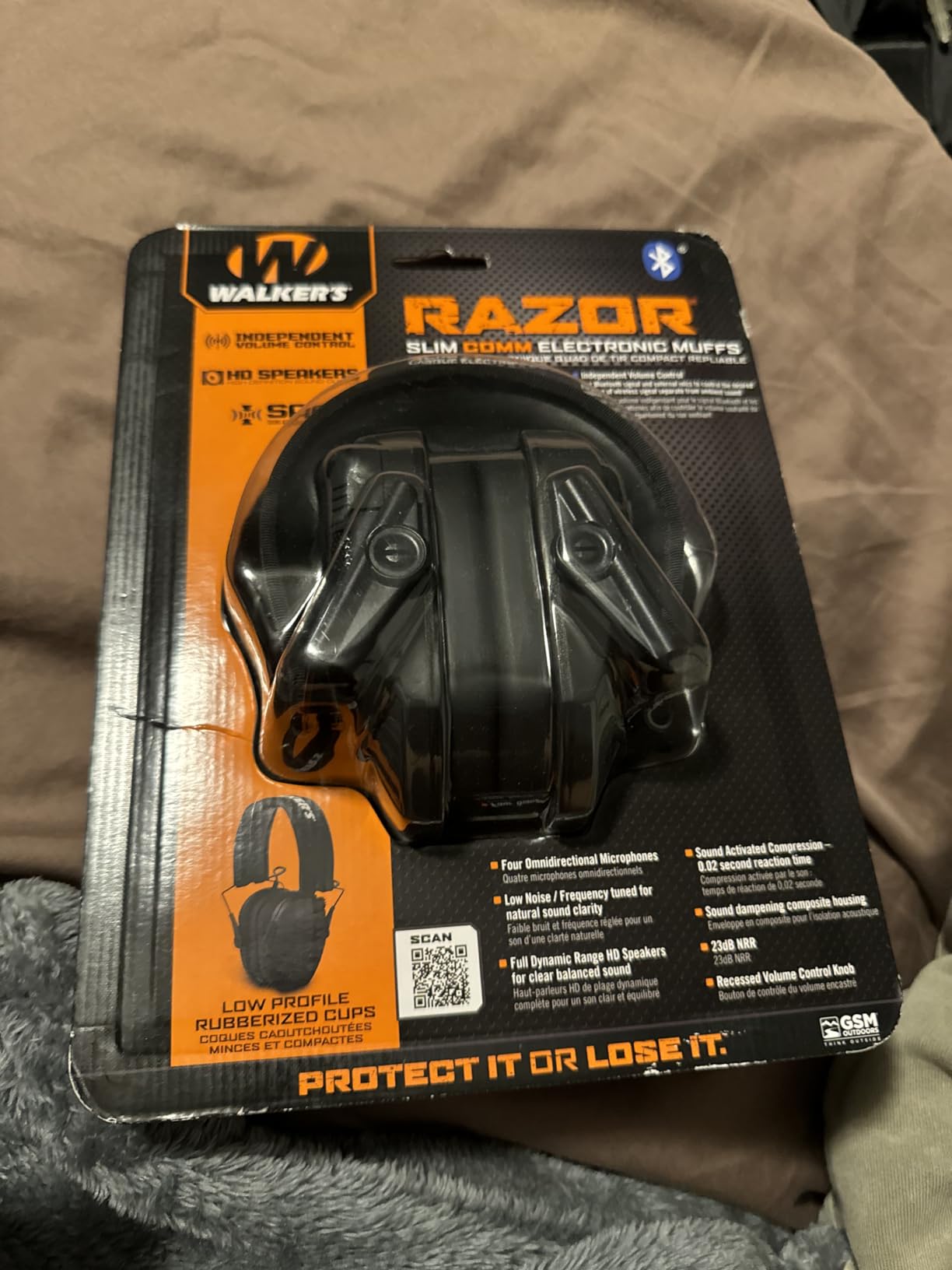
The Quad takes the two-microphone idea from the Razor Slim and doubles it, and the difference is not subtle. Two microphones give you a general sense of what is happening around you. Four omnidirectional microphones covering 360 degrees let you localize a sound, which is the difference between hearing someone talk and knowing which direction they are in.
Outdoors, that directional pickup is the whole point. Walking a field edge, sitting in a duck blind, or moving between lanes on an outdoor range, I could pick out a call behind me without turning around. It is the closest any product here comes to the awareness profile the military-grade units in this category deliver.

Compression speed is the other technical headline. Sound-activated compression kicks in at 0.02 seconds, so the loudest edge of the report is clipped almost immediately and what reaches you is the low-level shape of the shot rather than its peak. Paired with a 23 dB NRR, that produced a report that felt contained rather than numbing, even in a bay with hard surfaces.
Bluetooth is here too, with a built-in microphone for calls and independent ambient volume control. Two AAA batteries are included, which removes the most common complaint in this category, where the first thing you do at the range is wonder why nothing works.
Where the four-microphone array pays off
Outdoor shooters, hunters, and anyone who moves around rather than standing on a fixed line. The ultra-low profile cups also hold up with a cheek rest, which is why this one shows up on rifles and shotguns as often as on pistols. If Bluetooth is only for calls and podcasts, this handles it well.
The pad and power quirks
Two complaints repeat often enough to pass on. The Bluetooth module does not follow the main power state, so the light and pairing persist after you switch the muff off, and if you run the batteries down the electronics can behave oddly until you reset. The supplied ear pads are also firmer than the gel replacements most long-session shooters end up buying, so plan on a pad upgrade if you shoot long days.
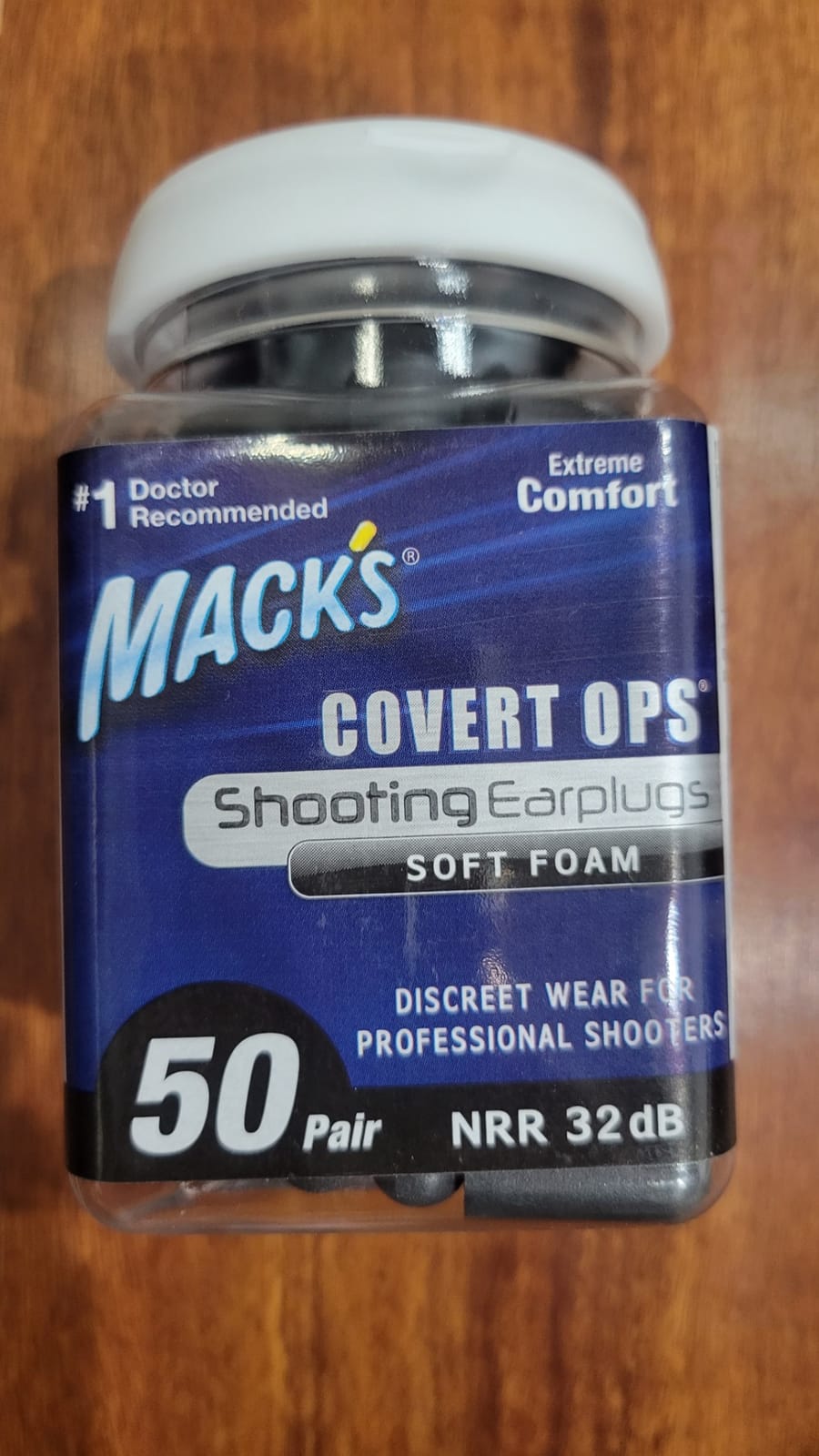
6. Mack’s Covert Ops Foam Plugs: Best for High-NRR Foam Protection
Mack’s Covert Ops Soft Foam Shooting Ear Plugs, 50 Pair – 32 dB High NRR, 37dB SNR – Comfortable Earplugs for Hunting, Tactical, Target, Skeet and Trap Shooting
NRR: 32 dB
SNR: 37 dB
50 pairs per pack
Pros
- Highest NRR in the roundup at 32 dB
- Low-pressure foam stays comfortable
- Discreet black color suits a range bag
- Fifty pairs covers a full season
- Work for hunting and trap
Cons
- Disposable
- single use only
- Fit is entirely dependent on insertion technique
At 32 dB NRR and 37 dB SNR, this pair brings more attenuation than any muff in the guide, and a fifty-pair pack is a complete protection kit you can carry in a pocket. Foam plugs are the standard layer under a muff indoors, and this is the box most of our regulars keep in the range bag.
The super low-pressure foam is the differentiator over a standard disposable plug. It expands gently enough to stay comfortable through a full class, which is where most foam plugs lose people: a plug that works but hurts gets tossed after twenty minutes, and a plug that gets tossed after twenty minutes protected you for twenty minutes. The black color is a small thing, but it keeps you from advertising at the table.
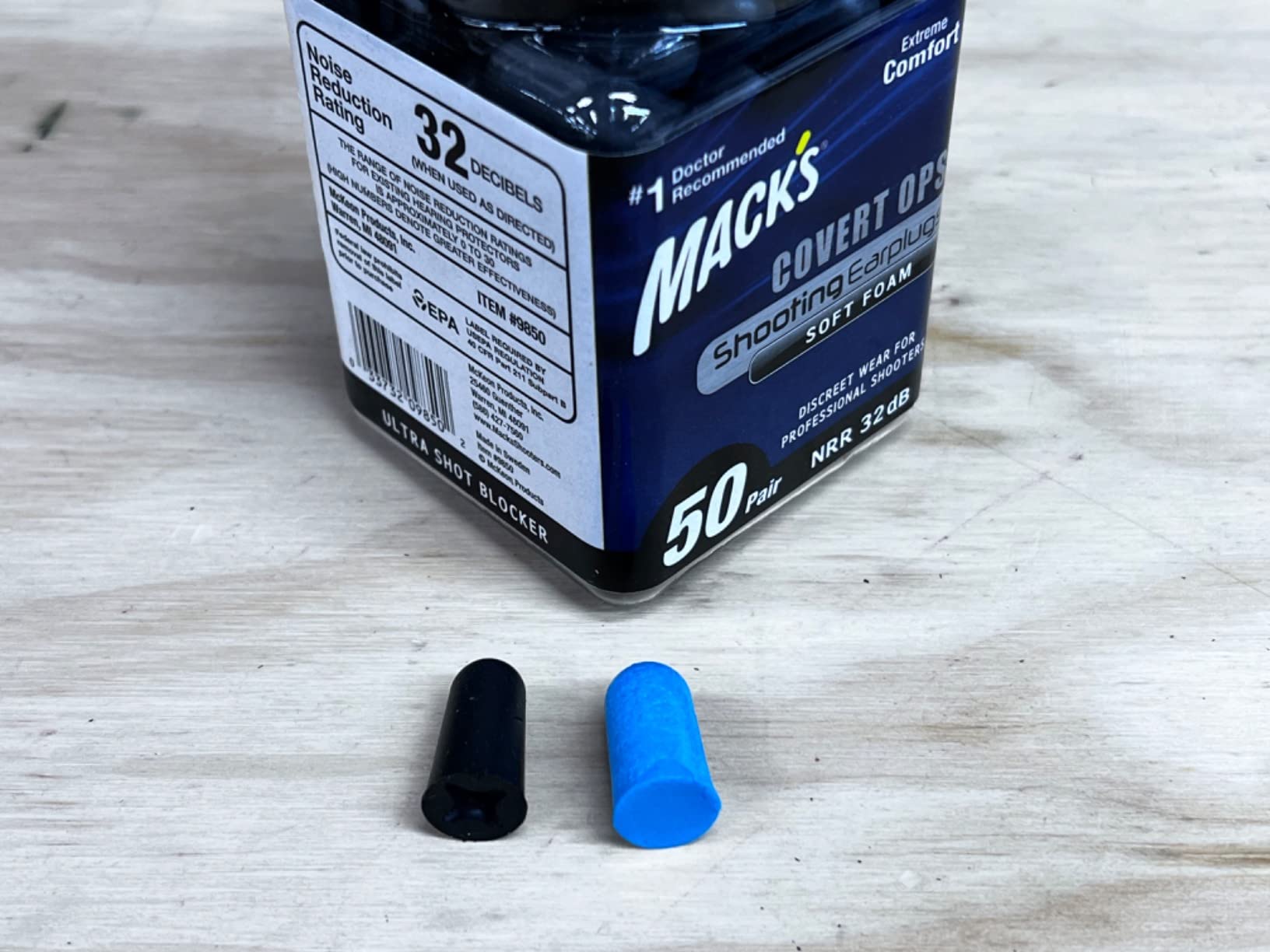
They are also honest about what they are not. These are single-use plugs, so you will go through them, and a plug that is inserted badly returns a fraction of its rated protection. That is not a flaw unique to this brand, it is a property of foam, and it is why the insertion technique later in this guide is worth two minutes of your attention.
Dozens of reviewers mention recent consistency complaints, so inspect a new pack before you rely on it. A plug that is torn, hardened, or has a partial crease in the foam will not seal, and a bad plug is worse than no plug because it gives you false confidence.
When foam plugs are the right answer
As the under-layer indoors, they are close to mandatory. Outdoors on an open range, many experienced shooters use them alone and skip the muff entirely, which is why 31 to 33 dB disposable plugs come up so often in range forums as sufficient for plinking and hunting. They are also the easiest thing to hand a brand-new shooter who has never worn any protection at all.
When they are the wrong answer
You cannot hear anything through them, which means no range commands, no instructor, and no one warning you about a hot brass casing. Alone indoors with no electronic muff, that is a real safety gap. And if you are shooting a magnum or a suppressed rifle in a hard-walled bay, 32 dB may still not be the whole answer without a muff over the top.
7. Walker’s XCEL Digital Muff: Best for Multiple Listening Modes

Walker’s XCEL Digital Electronic Hearing Protection Earmuffs with Bluetooth & Voice Clarity – Grey
NRR: 26 dB
Four listening modes
16 oz
Bluetooth
Pros
- 26 dB NRR above most muffs in this range
- Four distinct listening modes
- Voice prompts for hands-free control
- Auto shutoff and low battery warning
- Fewer cup holes improve the seal
Cons
- Heavier at 16 ounces
- Plastic construction
- Smaller review base than rivals
The XCEL is the only muff here built around user-selectable listening modes, and that turns out to be more useful than it sounds. Four modes let you shift emphasis between hearing your instructor, hearing conversation, hearing environmental sound, and suppressing background, rather than accepting whatever single tuning the manufacturer chose.
At 26 dB NRR the passive rating is at the top of the muffs in this roundup, and the design detail behind that number is the reduced cup holing. Fewer openings in the cup means a better seal around the ear, and a better seal is where most of the real attenuation comes from once the electronics are in the circuit.
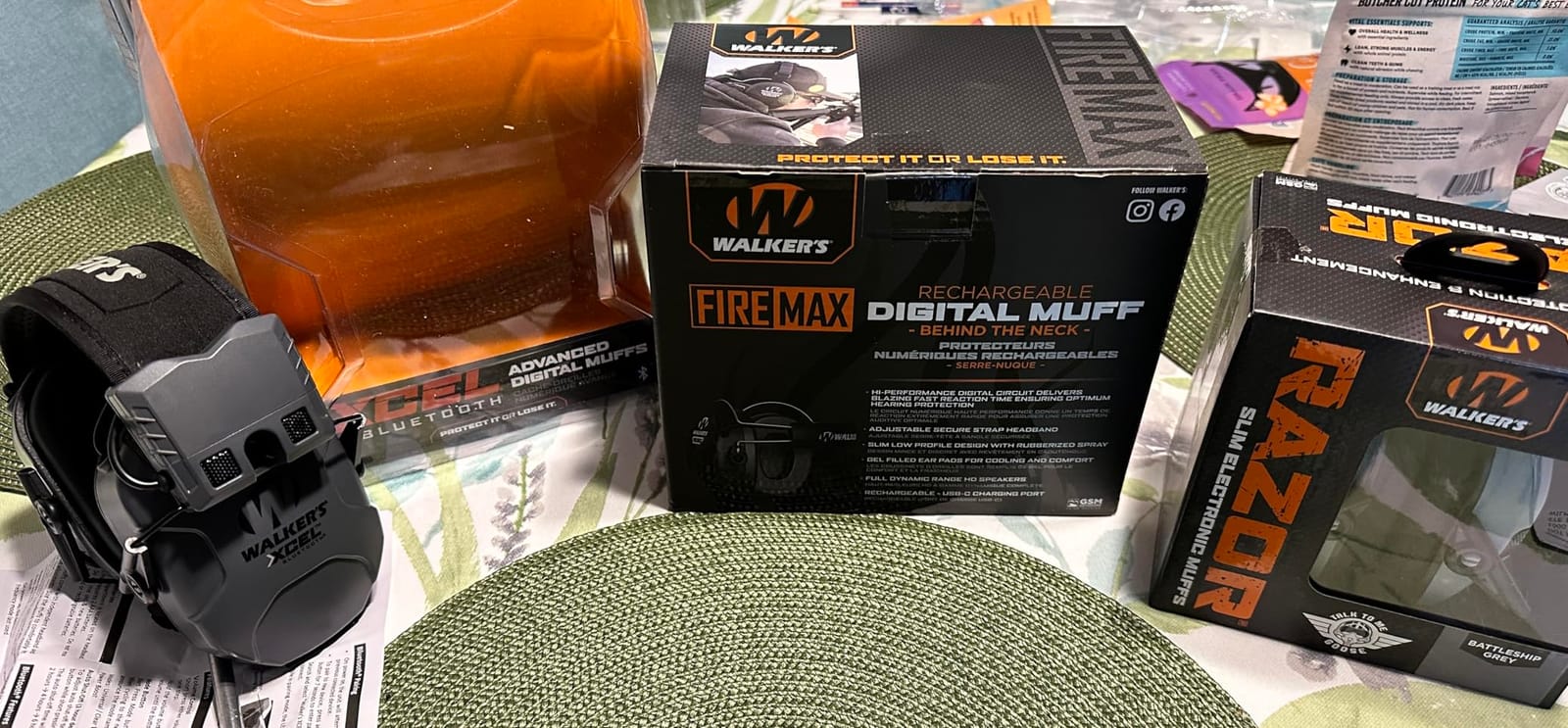
Sound-activated compression and dynamic sound suppression work together here, adjusting compression time to the noise level rather than reacting with one fixed curve. In an indoor bay that meant the tail end of the report got cleaned up instead of ringing. Bluetooth covers calls and notifications, and the noise-suppressing microphone handles the phone side.
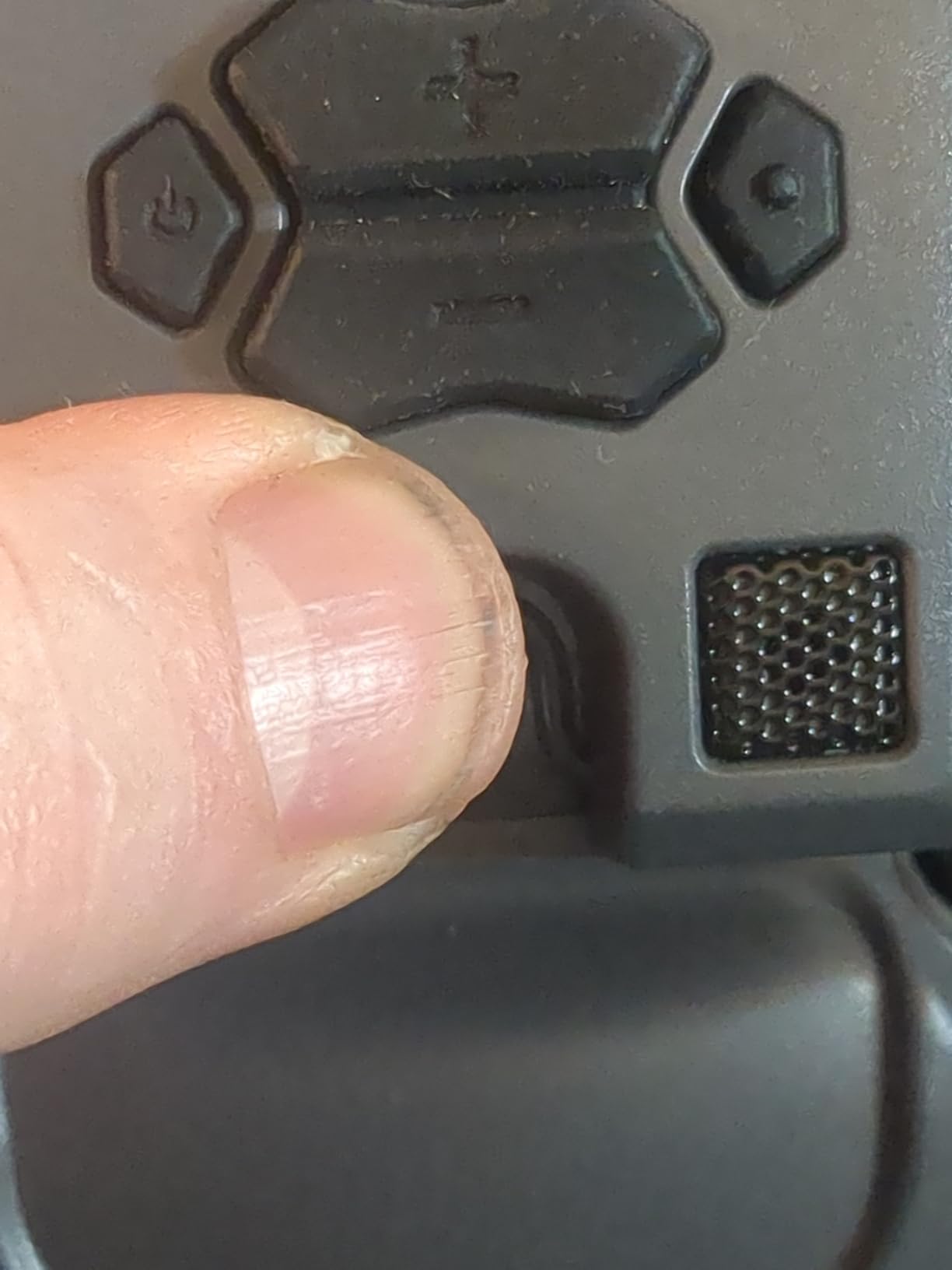
The voice prompts are a real convenience with gloves on or with a rifle in the other hand, since you can confirm the mode you just selected without looking at the control. Auto shutoff and a low battery warning cover the two ways electronic muffs typically die mid-session.
Who this suits
A shooter who moves between a loud indoor range and quiet outdoor work and wants to change behavior without swapping devices, and anyone who finds single-mode muffs too muffled or too exposed. The 26 dB rating makes it a sensible indoor pick that does not require doubling up on a normal bay day.
What to watch for
It weighs 16 ounces, the heaviest muff we tested, and on a long day that shows up as neck fatigue for some people. The construction is plastic, so it will not have the premium feel of the metallic units. And with a smaller body of owner feedback than the Walker’s and Howard Leight models, you are buying on spec rather than on a large volume of long-term user reports.
8. ISOtunes Sport Advance BT: Best for Compact In-Ear Bluetooth

ISOtunes Sport Advance Bluetooth Shooting Ear Protection for Gun Range
NRR: 26 dB
IP67 rated
10 hour rechargeable battery
Bluetooth 5.0
Pros
- Disappears under a cap or helmet
- IP67 rated against sweat water and dust
- Ten hour rechargeable battery
- Multiple ear tip sizes included
- Good Bluetooth 5.0 range
Cons
- In-ear seal varies a lot between ear shapes
- Ten hours is short for full-day events
- Lower rating than over-ear rivals
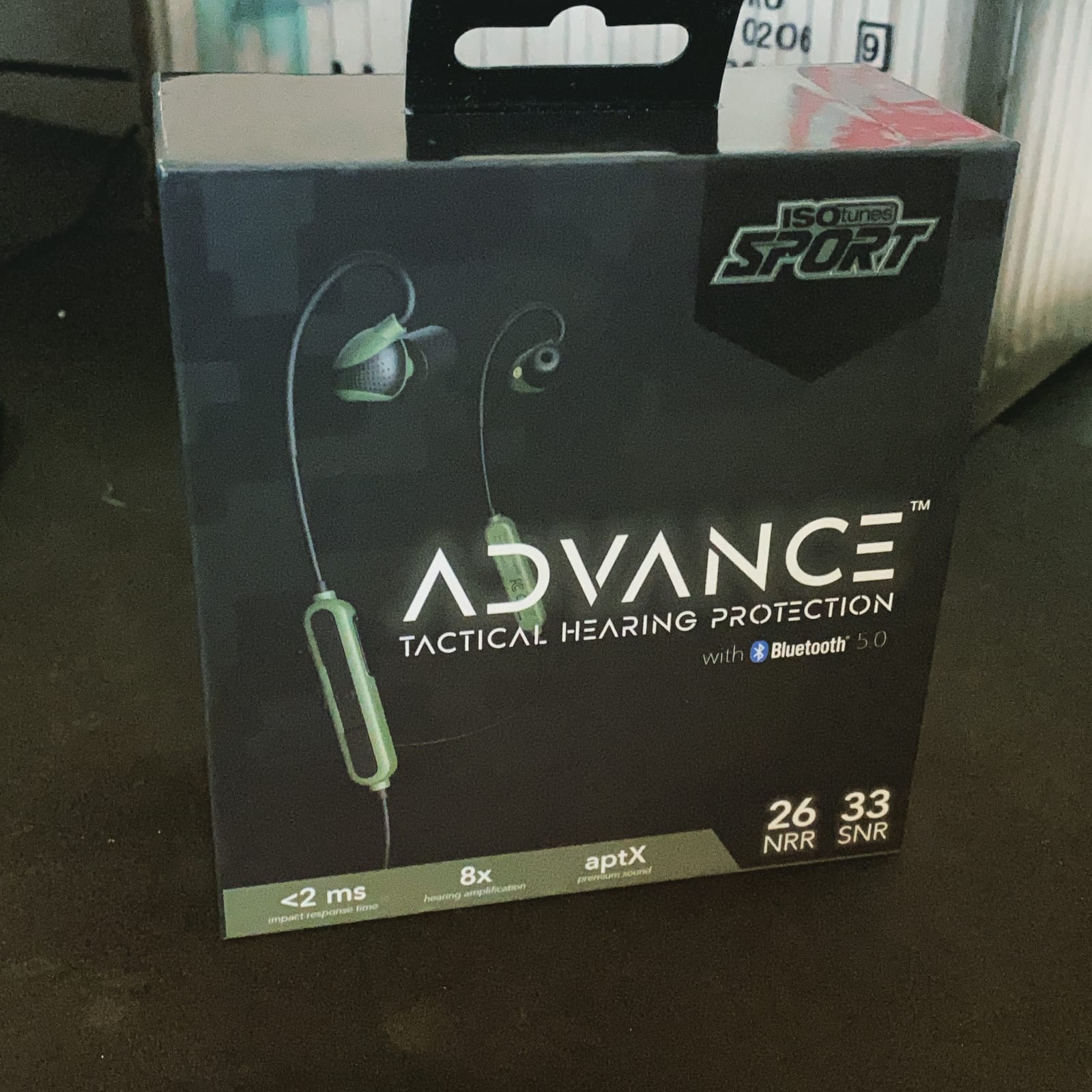
The ISOtunes Sport Advance is the most useful thing you can put on your head when a muff will not fit the situation: a helmet, a hard hat, a winter cap, a long day in a vehicle, or a shooter who simply refuses to wear cups. It sits in the ear, disappears completely, and still carries a 26 dB NRR with Tactical Sound Control filtering impact noise while letting conversation through.
Tactical Sound Control is the feature to understand. It uses audio passthrough so you can talk and hear your environment while suppressing the percussive hit of a report, which is a very different behavior from an over-ear muff. You still get environmental awareness, but the level control and the impulse handling are electronics rather than passive foam.
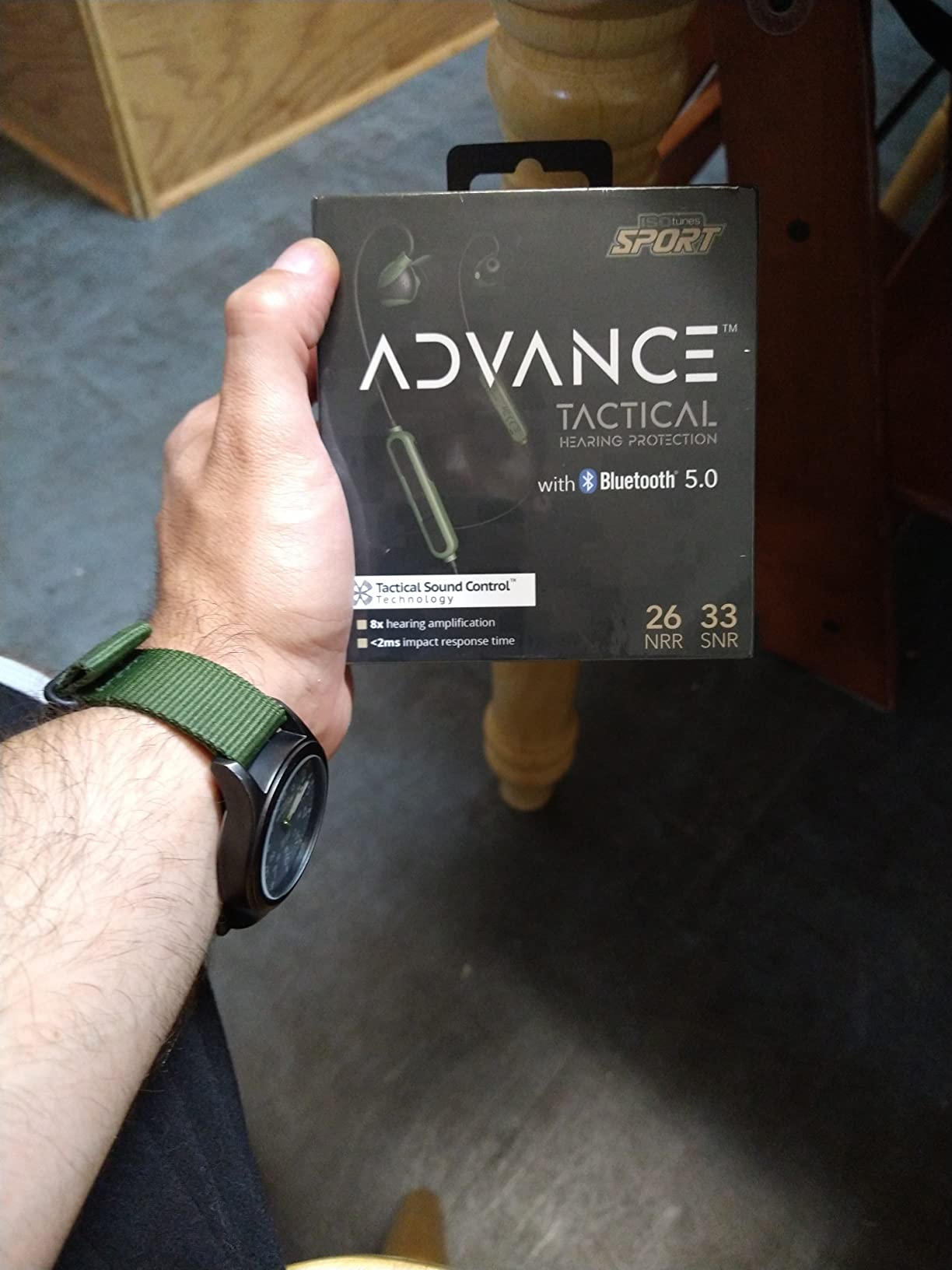
Build is the standout. An IP67 rating means sweat, rain, and dust are not a concern, and for an in-ear device that is a genuine advantage over competitors whose failure reports often trace back to moisture. Bluetooth 5.0 gives a 10-meter range with a stable connection, and the rechargeable lithium-ion battery runs about ten hours per charge, with an in-line remote included.
The balanced armature driver and noise-suppressing microphone with echo cancellation are aimed squarely at calls. Across several pairs the call quality was the strongest of any in-ear unit in this roundup, with the percussive noise of a firing line largely kept out of the microphone.
Where in-ear electronic wins
Any time an over-ear muff conflicts with your setup. Shooters on concrete lanes who wear a cap, gloved shooters who need full dexterity, people running long match days who want audio, and anyone who cannot tolerate cups pressing on glasses temples all get a real benefit here. Battery life of about ten hours covers a range day comfortably if you charge overnight.
Where it does not
The rating is the honest limitation. Twenty-six dB is a passive noise isolation figure, and in-ear seals vary enormously between ear shapes, so your real protection may be meaningfully less if the tips do not sit right. Users report fit issues, shorter battery life than AA-powered muffs, and some durability concerns. For a hard-walled indoor bay with a magnum, this is a complement to a muff, not a replacement for one.
9. Decibullz Custom Molded Ear Plugs: Best for Custom Fit
Decibullz Custom Molded Ear Plugs 31dB NRR Shooting Ear Protection (Orange)
NRR: 31 dB
Thermo-fit molding
Three tip sizes
Remoldable
Pros
- 31 dB NRR for a custom molded plug
- Re-moldable if the first attempt misses
- Includes three tip sizes
- Works for concerts and sleep
Cons
- Molding process takes practice to get right
- Fit depends heavily on user technique
- Some ear shapes do not suit the flanges
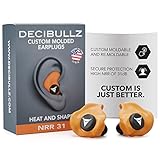
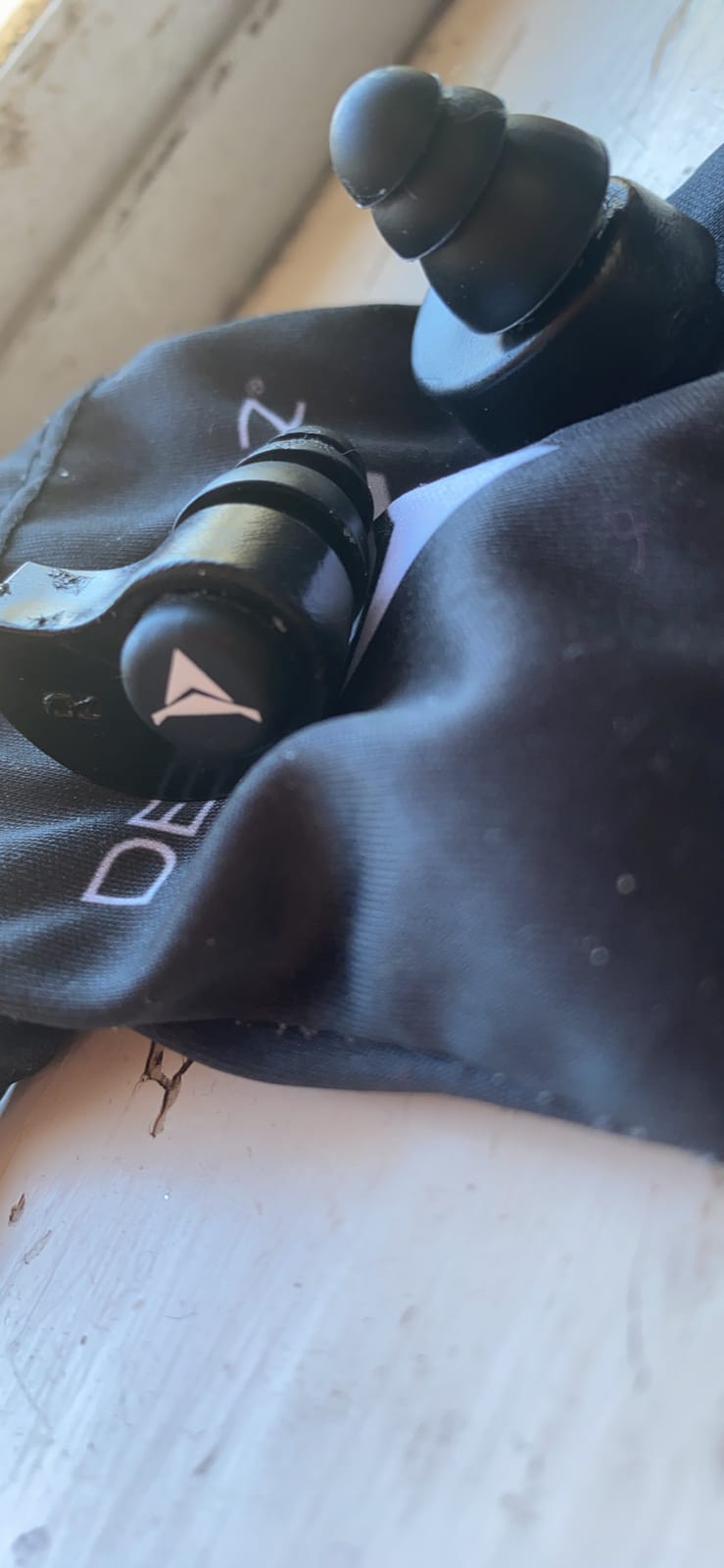
The Decibullz are the only genuinely custom option in this roundup, and the 31 dB NRR they deliver is close to the top of the field while sitting in a completely different size class from every muff here. You boil the thermoplastic molds, let them cool to a safe temperature, press them into your ear canals, and you walk away with a plug shaped to your head.
That custom geometry is the reason for both the high rating and the polarizing reviews. A molded plug fills the canal instead of sitting in it, which is why it can be comfortable for hours and stay put during movement. It is also why a bad molding session produces a poor seal, and why the product ships with three sizes of triple-flange silicone tips plus a set of foam tips to fall back on.
The re-moldable design is genuinely rare and genuinely useful. Most custom plugs are one shot; if the fit is wrong they go in a drawer. With these you heat the mold again and try a second or third time until the shape is right, which is the difference between an expensive mistake and a five-minute fix.
Reviews split sharply, and reading them is instructive. Happy owners describe a fit that never falls out and works for the range, concerts, travel, and sleep. Unhappy owners describe thin silicone flanges, a hollow core that lets some sound through, and plugs that are uncomfortable after a few hours. The pattern is almost always technique rather than product failure, which is why we would not hand this to a first-time shooter without explanation.
Who benefits most
Shooters who cannot get a seal from a straight foam plug, people with unusual ear canal shapes, and anyone who wants in-ear protection without the fit guesswork that comes with sizing a generic plug. It is also the only option here that works equally well as a daily sleep or travel plug, which is why many buyers keep them in a car rather than a range bag.
Who should skip it
Anyone who will not spend ten careful minutes on the molding. Heat the molds in boiling water, wait for them to cool enough to be safe, roll the stem between thumb and forefinger as you remove it, and press the narrow end in first. Skip those steps and the 31 dB rating becomes fiction. If you cannot commit to that, buy the foam plugs and save the effort.
10. Sordin Pro-X LED Muff: Best for Competition and Long Sessions
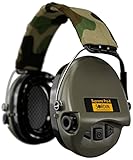
Sordin Supreme Pro-X LED Ear Defenders for Hunting & Shooting – Active & Electronic – Camo Band – Green Ear Muffs
1:4 noise amplification
EN 352 and ANSI certified
600 hour battery
Pros
- Exceptional sound quality and localization
- Articulating cups hold a seal when you move
- Metallic Swedish construction
- Waterproof microphones
- Five volume levels with auto power-off
Cons
- Highest cost in the roundup
- Battery compartment is awkward to use
- Does not fold compactly
The Sordin Pro-X is the one we would hand to a shooter who spends full match days on the line, and the reason is not the spec sheet, it is what happens after hour four. The gel pads and deep cups distribute pressure instead of clamping it, and the articulating ear cups keep the seal when your head moves in a prone position, which is where a fixed cup starts to leak and where the noise gets in.
Sound quality is the headline. The 1:4 amplification ratio with level-dependent attenuation gives you a report that is unmistakably muffled but still shaped like a gunshot, so you keep a sense of what you are shooting without the volume. Directional awareness is excellent, which is what competition shooters tell you matters most, since a stage call across a bay complex has to be understood the first time.
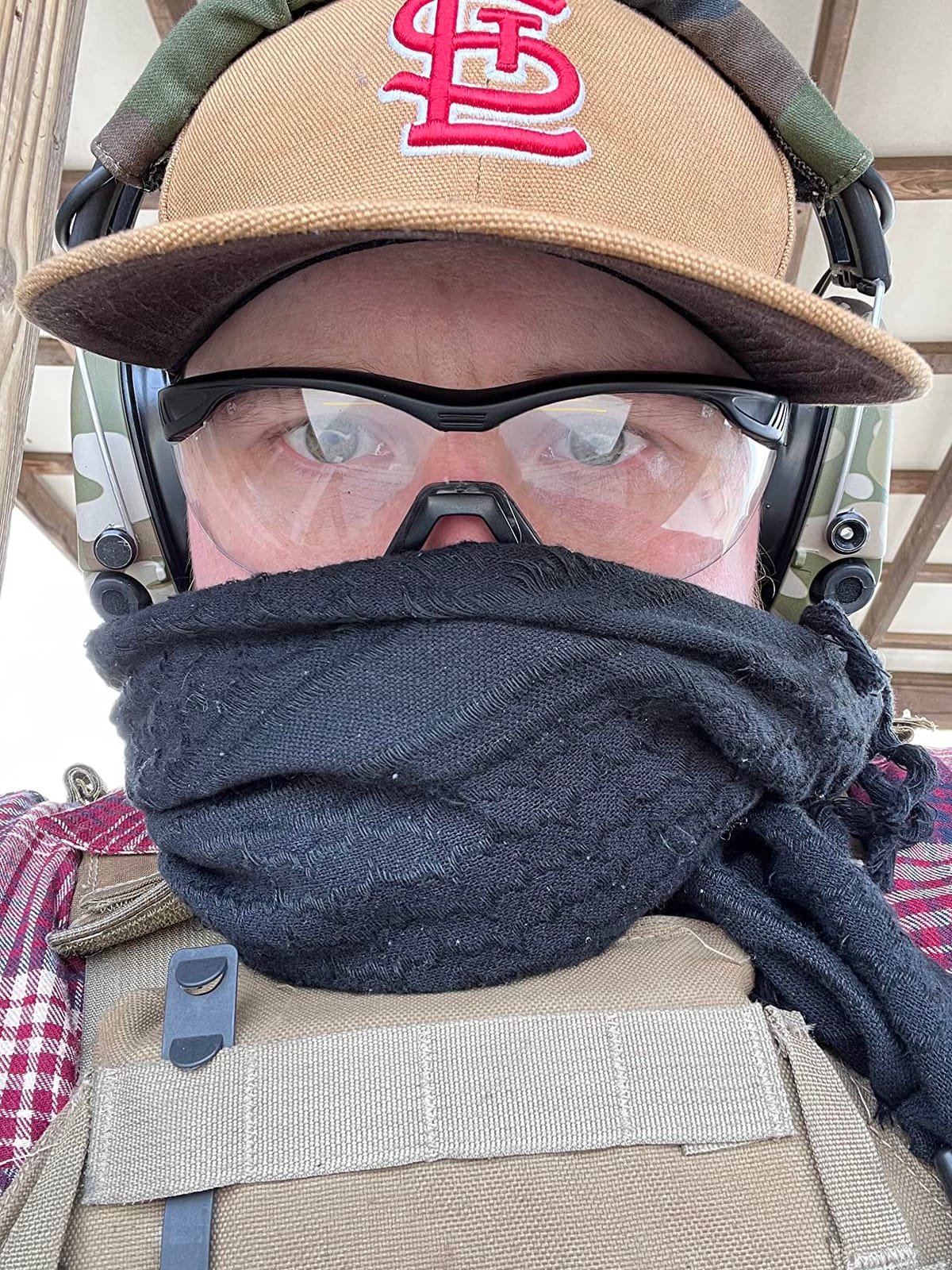
The certification is the other differentiator. It is approved to ANSI S3.19-1974 and to the European EN 352-1, EN 352-4, and EN 352-8 norms, which is the standard set that professional and military users are evaluated against. The metallic housing and waterproof microphones are built for weather and abuse rather than for a price point.
Battery life is quoted at roughly 600 hours, and auto power-off with an audio warning stops you from draining a set silently. Wires are routed through the pivot axle, so nothing snags when you move through a stage.
The case for premium competition gear
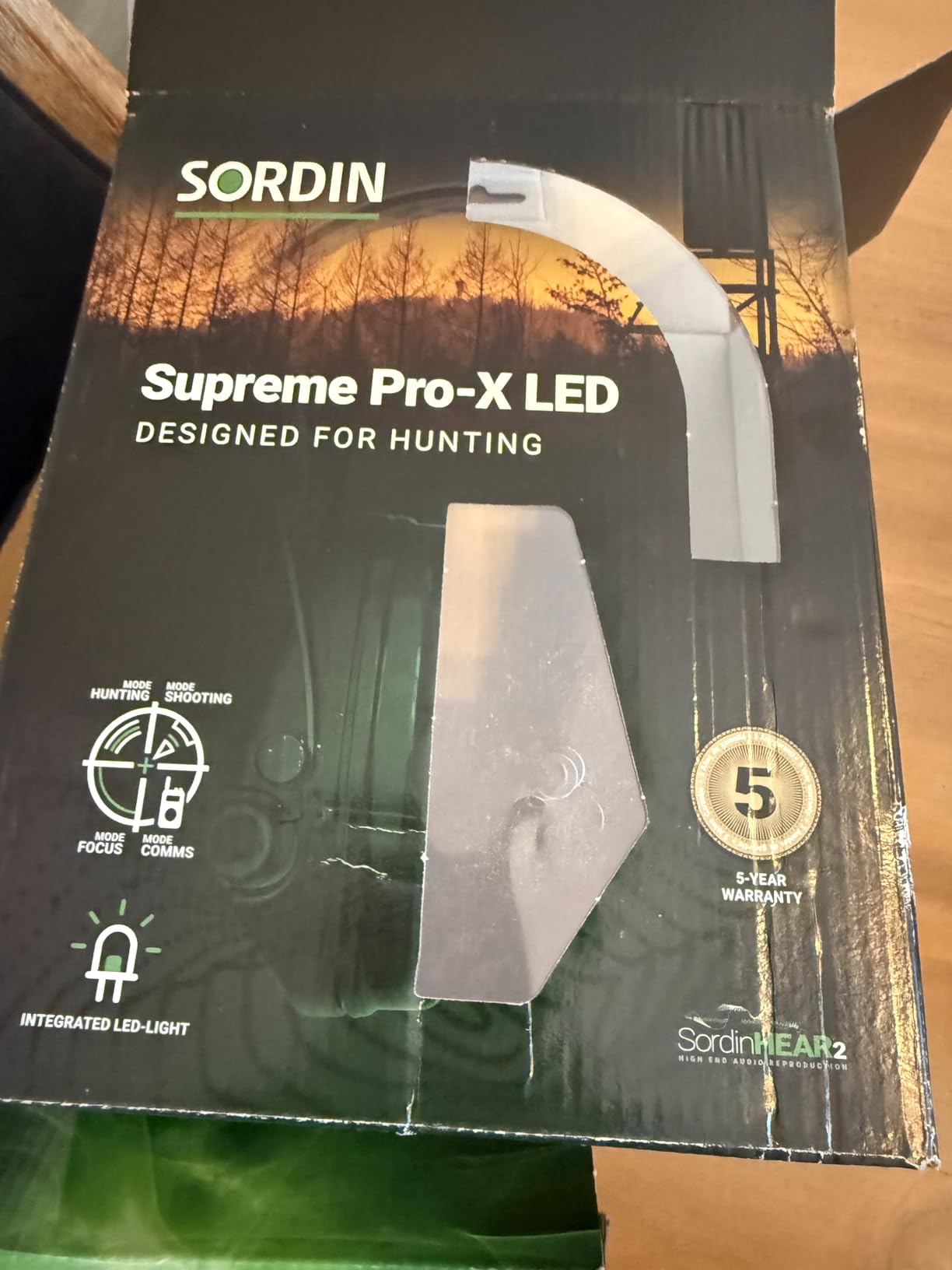
If you are a competition shooter, a match director, or a range officer wearing one pair for a full multi-day event, the Pro-X is the muff the rest of the field is generally seen wearing, and the consensus in shooting forums is that the comfort and clarity are the reasons. The articulating cups and long battery life are what make it a six-hour pair rather than a two-hour pair.
Why it is not for everyone
It costs the most of anything we tested, and that is a real barrier when a 27 dB muff does the same job for most range days. The battery compartment is awkward, the volume control steps through five fixed levels instead of a continuous dial, and the unit does not fold down, so it lives in a case rather than a pocket. A few owners also report units failing after a year or two, so check the warranty terms before committing.
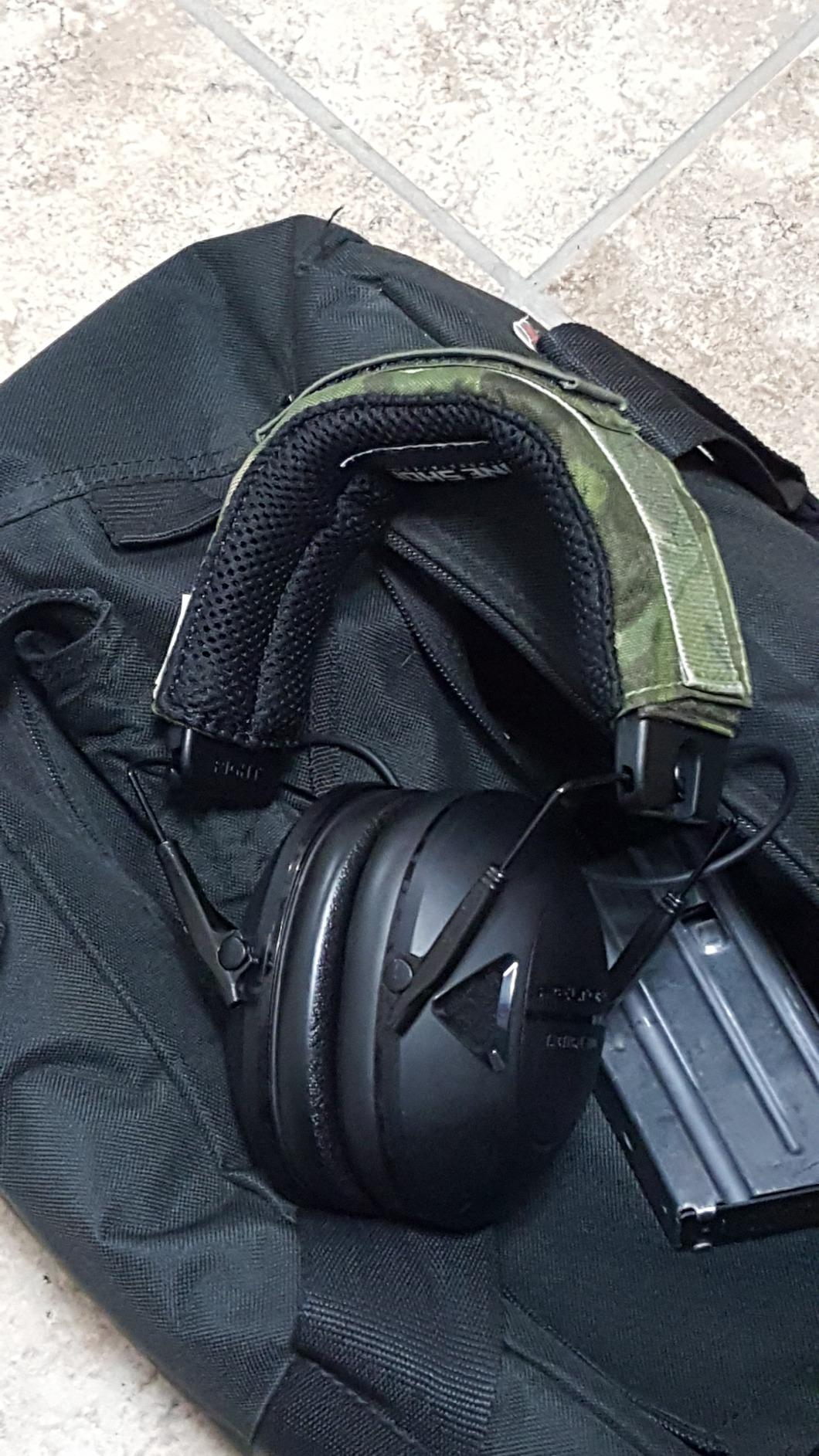
11. Peltor Sport Tactical 100: Best for Indoor Ranges

Peltor Sport Tactical 100 Electronic Hearing Protector, Ear Protection, NRR 22 dB, Ideal for the Range, Shooting and Hunting, TAC100-OTH
NRR: 22 dB
Variable suppression time
13.6 oz
2 AAA not included
Pros
- Variable suppression time reduces indoor echo
- Recessed microphones cut wind noise
- Low profile cups clear rifles and shotguns
- Auto shutoff with low battery indicator
- Backed by 3M build quality
Cons
- 22 dB is modest for hard-walled bays
- AAA batteries not included
- No Bluetooth or audio input
The Tactical 100 is the Peltor option built specifically for the indoor problem, and its variable suppression time is the feature worth understanding. On an outdoor range the sound is a single sharp report and dies immediately. In a concrete bay the report comes back off the walls and ceiling as a decaying tail, and a fixed suppression window leaves that tail ringing in your ear for the rest of the stage. The adjustment here lets you tune the window to your environment.
That makes it a strange-looking pick on paper, at 22 dB NRR alongside better-rated muffs, and an obvious one in practice. The recirculated sound in a hard bay is louder and longer than the direct report, and a 22 dB attenuator with indoor-appropriate suppression handled the environment better for us than a higher-rated unit tuned for the outdoors.
Background filtering is the other piece of the indoor story. It actively reduces ambient noise so commands and speech stay intelligible, which is the failure mode that gets people hurt in a bay, not the failure mode that shows up in product photos. Recessed microphones also cut wind noise, so the same unit behaves sensibly on an outdoor range.
At 13.6 ounces the weight is reasonable, the padded adjustable headband spreads pressure, and the low profile cups are shaped for rifle and shotgun use. It runs on two AAA batteries that are not included, and a two-hour auto shutoff with a low battery indicator means a forgotten muff will not be dead next week.
Where it beats higher-rated rivals
Indoor public ranges, indoor competition bays, and any concrete-and-steel environment where reverberation rather than raw peak level is the enemy. It is also a good match for shooters who hate Bluetooth menus and just want to turn a knob, and for anyone who values the 3M name and build quality at a mid price point.
Where you need more
Twenty-two dB is not much when a bay includes a suppressed rifle or a magnum, and reviewers note that it can feel thin in exactly that situation. There is no Bluetooth and no audio input, so if you listen to a podcast or a scanner at the range, you need a separate device. On loud days, this is the muff to double up under rather than the last line of defense.
12. Caldwell E-MAX Shadows: Best for Hunting with Bluetooth
Caldwell E-Max Shadows FDE 23 Decibels NRR – Electronic Hearing Protection with Bluetooth Connectivity for Shooting, Hunting, and Range
NRR: 23 dB
In-ear electronic
6 foam tip sizes
Charging case
Pros
- Compact in-ear format suits hunting and cold weather
- Continuous suppression without clipping
- Hard and soft cases included
- Limited lifetime warranty
- Illuminated on/off indicator
Cons
- Micro USB charging is outdated
- Bright flashing LED gives away your position
- Reported hiss and syncing issues
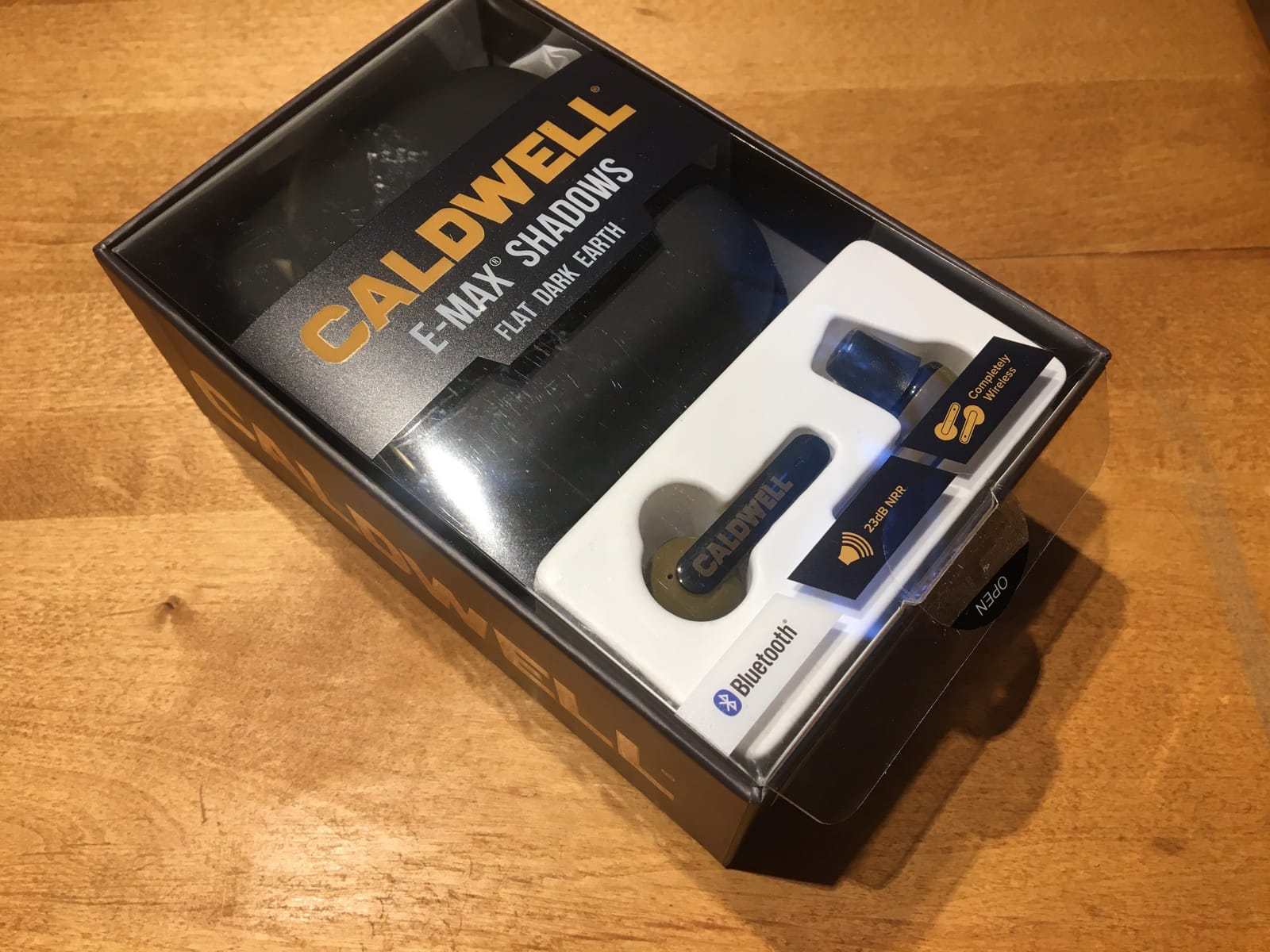
The E-MAX Shadows are the most compact electronic option here, and the reason to consider them is hunting in cold weather. Nothing about a heated blind, a cap, and a rifle-mounted optic leaves room for over-ear cups, and these do the same job in a body that fits inside a jacket pocket. Rated 23 dB NRR with continuous suppression that does not clip on a loud report.
For an outdoor shooter, the useful part is that shots get suppressed while the world around you stays audible, so you hear a buck without the muzzle blast taking your ears with it. Six sizes of foam tips are included, which is the right amount of variation to actually find a seal, and the case situation is generous with both a hard charging case and a soft storage case.
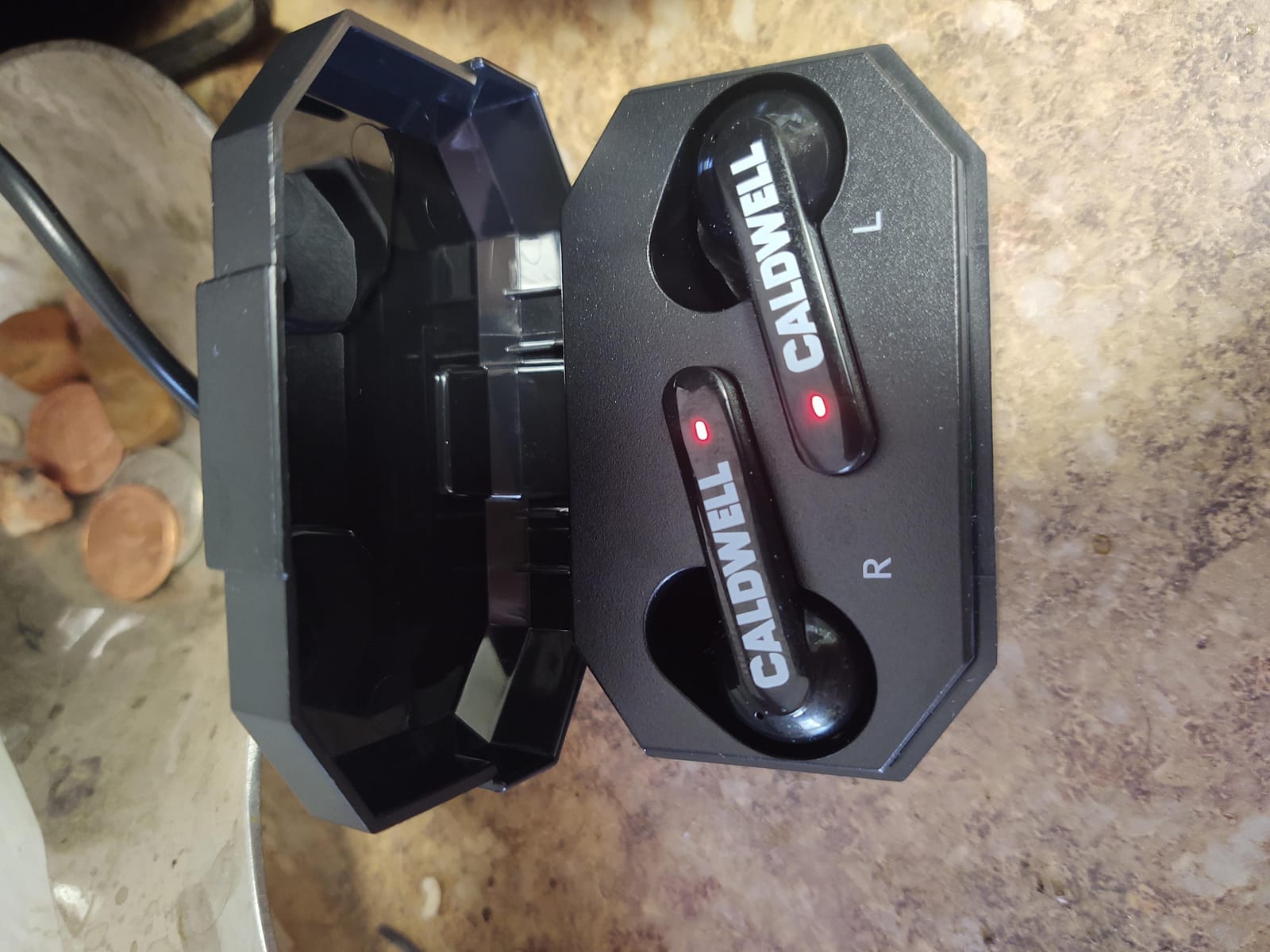
There is also a limited lifetime warranty from Caldwell and a customer service operation that owners consistently mention approving of, which matters for an electronic device with a small form factor. The illuminated on/off indicator takes the guesswork out of a device you cannot easily see once it is in your ear.
The auto shutoff after four hours of inactivity is a sensible safety net. In practice the unit pairs to a phone for music or a call and runs on a rechargeable cell rather than replaceable batteries, so charging becomes part of your range routine.
Where the Caldwell makes sense
Cold-weather hunting, any setup where cups will not fit under a cap or a helmet, and shooters who want Bluetooth on a device small enough to forget. The continuous suppression and the tip selection make it a fair choice over a generic foam plug for anyone who wants to hear game while shooting.
Where the complaints concentrate
This is the lowest-rated product we included, and the reasons are specific rather than vague. Micro USB charging is dated, the unit pairs to only one device at a time, the illuminated LED is bright enough to give away your position at dawn, and owners report hiss, syncing issues between the two earbuds, and no tether option, which makes them easy to lose in grass. We would test yours thoroughly on a quiet day before trusting it on a hunt.
How Loud Is a Gunshot and Why Hearing Damage Does Not Heal
A centerfire handgun fired indoors can measure 157 dB, a rifle can reach 167 dB, and even a suppressed weapon is loud enough to cause damage across several rounds. Every one of those numbers is far past the 85 dB level at which the occupational safety guidance says extended exposure begins to cause harm.
The mechanism is impulse noise. The peak of a gunshot lasts a fraction of a second, but the organ of Corti in the cochlea cannot survive a spike of that magnitude. The hair cells that convert vibration into electrical signal are destroyed, and they do not regenerate. The result is a notch of high-frequency hearing loss, the ringing in the ears that often comes with it, and a permanent reduction in your ability to hear speech in a noisy environment.
Two numbers matter most when you read a spec sheet. Aim for at least 25 dB NRR as a floor for range work, and remember that labeled NRR is a laboratory average measured in a perfect fit, so the real-world figure safety professionals use is roughly half of it. A 30 dB plug in a properly rolled insertion is closer to 15 dB of actual protection in a bad day, which is why doubling up matters more than picking a bigger number on a box.
How to Choose Shooting Ear Protection: Buying Guide
What NRR and SNR actually mean
NRR is the US Noise Reduction Rating, a lab-tested average of how much a device attenuates across a range of frequencies, expressed in decibels. SNR is the European Single Number Rating and typically reads a little higher than the NRR for equivalent protection. Neither is a promise about your ear, because both assume an ideal seal and, for plugs, a correct insertion.
The most common mistake is treating the number as a linear subtraction from a gunshot. It is not. A 22 dB muff does not turn a 165 dB report into a comfortable 143 dB event, because attenuation is frequency-dependent and real-world fits leak. Treat NRR as a rough ordering tool between products rather than a precise prediction of what reaches your eardrum.
How much NRR do you need for your caliber
As a practical guide, anything above about 150 dB wants 25 dB NRR or higher, and a magnum or a suppressed rifle in a hard bay deserves more than that through doubling up. Here is the shorthand table most range instructors use.
22 LR and air rifles outdoors: 25 dB is generous. A 27 dB passive muff is plenty.
9 mm and .45 indoors: 25 dB minimum. Electronic with plugs underneath is the common answer.
5.56 and .308 indoors: 25 to 31 dB. Add foam plugs under a muff in a reverberant bay.
Magnum, .338, and suppressed rifles indoors: 31 dB or better, doubled up, and consider a fit check.
Indoor range versus outdoor range
Outdoors, sound leaves and does not come back, so the direct report is the only thing reaching your ear. Indoors, a significant share of what you hear is reflected off the ceiling, walls, and backstop, arriving over a longer window at a level that is easy to underestimate. That is why a muff tuned for an outdoor range can feel thin in a bay, and why models with adjustable or dynamic suppression time exist.
It is also why forum advice tends to converge on one habit: wear both indoors. That is close to unanimous advice in shooting communities, and the people who layer foam plugs under an electronic muff report the most consistently positive results, because it adds real attenuation while the electronics keep you able to hear the range officer.
Muffs versus plugs versus doubling up
Muffs are the easiest to put on and the most likely to conflict with glasses, a cap, or a cheekweld. Plugs are the most comfortable, the most portable, and the least likely to stay in through sweat and movement, and their protection depends entirely on insertion. Both together give the most attenuation and the least ambient hearing, which is why an electronic muff on the outside is the version that still lets you hear.
If you wear prescription shooting glasses, cup shape matters more than almost anything else in this guide. Slim low-profile cups clear the frame; deep gel cups seal better and crush the temple arms. The same tension shows up with a rifle cheekweld, which is why the cutout cushions and low-profile models here score so well with long gun shooters. Our guide to the ear protection picks by use case breaks that down further if you shoot mostly rifles or shotguns.
How to insert foam plugs so they actually seal
This is the highest-leverage twenty seconds in this entire guide. Roll the foam plug into a thin cylinder between your thumb and forefinger, which condenses it to a fraction of its size. Pull the ear up and back with the opposite hand to open the canal. Insert the narrow end and hold it in place for a full thirty to forty-five seconds while the foam expands, and keep your jaw slightly open to relieve pressure.
If you did it right, you will feel pressure like a mild earplug, not a plugged head, and you will be duller to sound rather than completely isolated. Forum threads are full of shooters who thought they had 32 dB and had a badly inserted plug delivering a fraction of it. Related accessories and setup, including a steady shooting position setup that keeps your head still and makes insertion easier to do properly, are worth sorting out before your next session.
Glasses, cheekweld and battery habits
Test the muff with the glasses and the gun you actually use, at a table, before the first session. If a cup temple gets pushed outward, the seal breaks and you lose protection you thought you had. The same applies to a cheekweld: put the rifle in position and check that the cup clears without you having to lift your head.
On batteries, be deliberate. AA and AAA models can die mid-stage, so a spare set in the range bag is cheap insurance. Rechargeable in-ear units need overnight charging, and models with an auto shutoff will protect you. Whatever you choose, make turning the muff off part of putting the gun away, because a forgotten electronic unit is the single most common reason people show up unable to hear.
Care and Maintenance: Making Ear Protection Last
Most shooting ear protection does not fail from noise, it fails from sweat, wax, and dried-out pads. Foam plugs are single use by design, so replace them the moment they lose their rebound rather than reusing a worn plug, and check a new pack for torn foam or a bad crease. If you prefer a reusable option, wash the tips in warm soapy water and let them dry fully before they go back in.
Ear cups need more attention than people give them. Gel pads pick up skin oils and sweat and stop sealing properly within months, which reduces the effective NRR of an otherwise fine muff. Wipe them down after a session, let them air out rather than storing them compressed in a hot car, and replace them through the manufacturer’s hygiene kit when they feel hard or cracked.
For electronics, remove the batteries if you are storing a unit for more than a few weeks, and keep a charge on the rechargeable models so the cell does not sit empty in a vehicle. Check the battery contacts for corrosion if a unit suddenly stops responding, and treat a rattle in an electronic muff as a reason to stop using it. Our air rifle picks for target shooting are the quietest setup we shoot, and even there a decent plug is good habit.
Frequently Asked Questions
What are the best ear protectors for gun shooting?
The best shooting ear protection depends on where you shoot. Indoor ranges call for electronic muffs with at least 25 dB NRR, worn over foam plugs, so you keep hearing range commands. Outdoor work is fine with a 27 dB passive muff or a 31 to 33 dB disposable foam plug alone. In-ear electronic units win when a cap, helmet or cold weather rules out cups. Our top overall pick is the Walker’s Razor Slim Electronic Muff.
What do navy seals use for ear protection?
Military and law enforcement units generally use level-dependent electronic hearing protection approved to standards such as EN 352 and ANSI, which pass quiet ambient sound and shut the audio path off in under a millisecond when a gunshot hits. In practice that means models like the Sordin Supreme Pro-X, the Peltor ComTac line, and similar tactical muffs. Newer units add a radio connection so a comms boom mic works through the same headset.
Is 23 dB reduction enough for shooting?
Twenty-three dB is a reasonable floor for outdoor range work and for indoor bays with lighter calibers, but it is thin for a hard-walled indoor range with a rifle or a suppressed firearm. Because real-world protection is roughly half the labeled NRR once fit and method are counted, treat 23 dB as a minimum and aim for 25 dB or higher. Pairing foam plugs under a muff adds a further 10 to 15 dB.
Which is better for shooting, earmuffs or earplugs?
Earmuffs are easier to put on, seal more reliably, and stay put during movement, but they can conflict with glasses, caps, helmets and a rifle cheekweld. Earplugs are more comfortable, more portable and quieter for everyone around you, but their protection depends entirely on correct insertion and they block range commands completely. The forum consensus is to use both indoors, with the electronic muff on the outside so you can still hear.
What are the top 10 ear protection products for shooting?
Our top ten are the Walker’s Razor Slim Electronic, Howard Leight Impact Sport, Walker’s Razor Slim Passive, Peltor Sport Tactical 500, Walker’s Razor Quad Muff, Mack’s Covert Ops Foam Plugs, Walker’s XCEL Digital, ISOtunes Sport Advance BT, Decibullz Custom Molded plugs, and the Sordin Pro-X LED. Each covers a different environment, from indoor bays to hunting, and the buying guide explains which one to pair.
Final Thoughts on the Best Shooting Ear Protection
If you take one thing from this roundup, take the doubling-up habit. The near-universal advice from shooters on forums and at public ranges is to wear foam plugs under an electronic muff indoors, and it works because the plugs add attenuation while the electronics keep you able to hear the range officer.
Our pick for most people is the Walker’s Razor Slim Electronic Muff, which is the lightest electronic unit we tested, clears a rifle cheekweld, and carries an audio input jack. The Howard Leight Impact Sport remains the value entry point, the Peltor Sport Tactical 500 is the one to buy for indoor echo and Bluetooth, and the Mack’s Covert Ops plugs are the layer to keep in the bag year round.
Whichever you choose, buy once and use it every session. Gunshot damage is cumulative and it does not heal, and the cheapest fix in this entire guide is simply putting the same pair on every time you step to the line. Our complete rundown of the best shooting ear protection for the range is updated as the market changes, and it is worth re-reading if your setup, glasses, or hearing needs shift.