
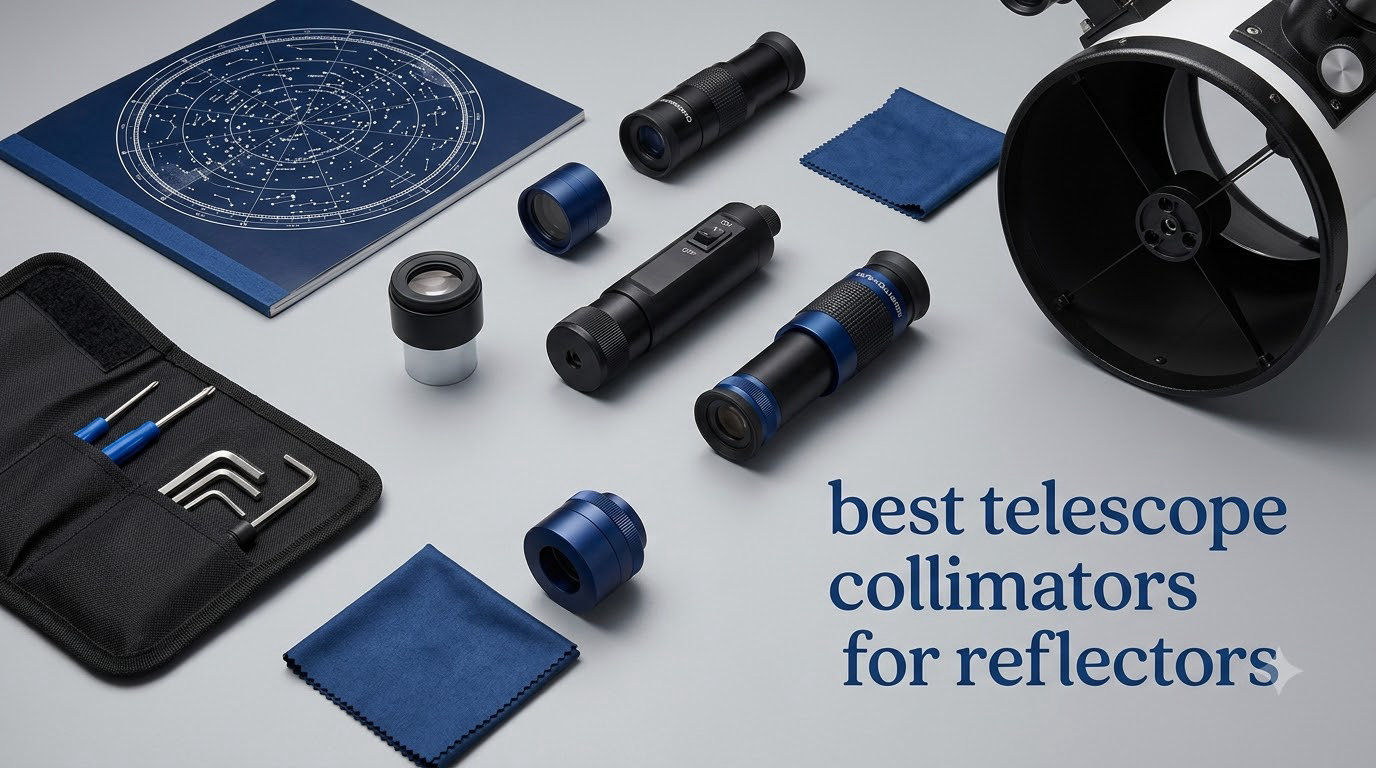
A telescope collimator is a small sighting tool that goes in the focuser of a Newtonian or Dobsonian so you can line its primary and secondary mirrors back up with each other. Transport, bumps and temperature swings knock mirrors out of alignment, and once they are off, star images soften and go lopsided. There are three families of tool: a sight tube or Cheshire that you look through, a laser that returns a beam to a target, and an electronic autocollimator that does the light-measuring for you.
The single question that decides what you should buy is whether your primary mirror has a center mark. Most scopes from the last few years ship with a small dot, a ring or a cross on the primary. If yours has one, a laser collimator works. If it does not, a laser is nearly useless because it has nothing to bounce off, and you want a Cheshire or a sight tube instead. That is the whole decision in one sentence.
Our team pulled together ten collimators that cover every budget and every telescope type, from sub-50 gram plastic-adjacent gadgets to a self-centering crosshair laser built for imaging. We ranked them on the things that actually bite owners: whether the tool itself stays in calibration, how it fits the focuser, how much light the viewing chamber needs, and whether the instructions make sense. If you are still choosing a telescope, start with our reflector buying guide first, then come back here.
All product details below were checked against manufacturer listings and owner reviews in September of 2026. We earn a commission when you buy through the links on this page, which does not change our rankings.
Table of Contents
Top 3 Collimator Picks for Reflectors in 2026


All 10 Collimators Compared Side by Side in 2026
Every pick is a collimation tool for a reflector. The practical differences are the tool type, whether your primary needs a center mark, what barrel it fits, and how much of the job it will actually do on its own.
| Product | Specifications | Action |
|---|---|---|
| SVBONY Laser Collimator 1.25/2 inch |
|
Check Latest Price |
| Astromania Laser Collimator 1.25 inch |
|
Check Latest Price |
| Celestron Cheshire Collimation Eyepiece |
|
Check Latest Price |
 Astromania Cheshire Short Version Astromania Cheshire Short Version |
|
Check Latest Price |
 SVBONY SV197 Cheshire Eyepiece SVBONY SV197 Cheshire Eyepiece |
|
Check Latest Price |
 Alstar Laser Collimator 1.25 inch Alstar Laser Collimator 1.25 inch |
|
Check Latest Price |
 XCCYG Laser Collimator With 2 inch Adapter XCCYG Laser Collimator With 2 inch Adapter |
|
Check Latest Price |
 Tydeux Cheshire Collimation Eyepiece Tydeux Cheshire Collimation Eyepiece |
|
Check Latest Price |
 HoTech SCA-2C Crosshair Laser HoTech SCA-2C Crosshair Laser |
|
Check Latest Price |
 Alstar Cheshire Short Version Alstar Cheshire Short Version |
|
Check Latest Price |
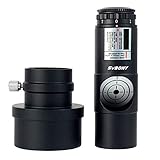
1. SVBONY Laser Collimator – the All-Rounder With the Most Owners
SVBONY Laser Collimator, for Newtonian Marca Telescope Alignment, 1.25/2″
Red laser for 1.25 inch and 2 inch reflectors
7 brightness levels
Solid metal body with triple-cemented lens
Battery powered
Pros
- Collimates a 1.25 inch or 2 inch reflector in a few minutes
- 7 adjustable brightness levels for daylight or dark skies
- Solid metal body and triple-cemented lens
- Removable 2 inch adapter covers both focuser sizes
- Step-by-step printed instructions
Cons
- Focuser fit can be loose in some 1.25 inch adapters
- Laser needs a manual calibration check before you trust it
This is the tool we reach for first, and it earns the top spot on the strength of owner numbers rather than clever features. It carries a 4.5 star average across more than three thousand ratings, and that volume matters here because collimators live or die on consistent machining. The plastic-lens bargain collimators that fail are the ones nobody reviews twice.
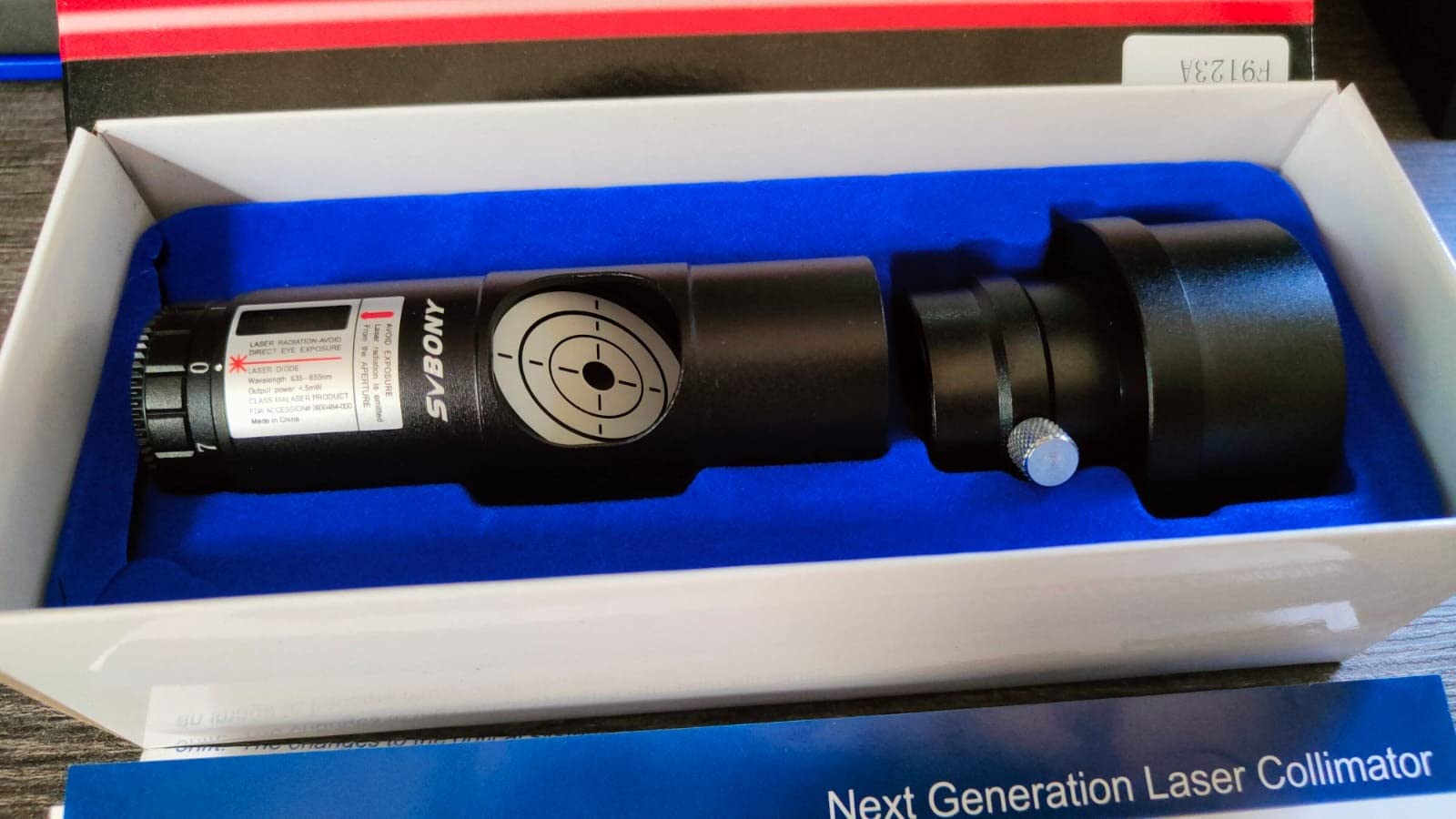
The body is solid metal with a triple-cemented lens, and the beam brightness steps through seven levels. That brightness control is the feature we did not expect to matter as much as it does. On a tabletop Dob in a lit room the lowest setting is enough, and at a dark site the higher settings let you see the return dot without straining.
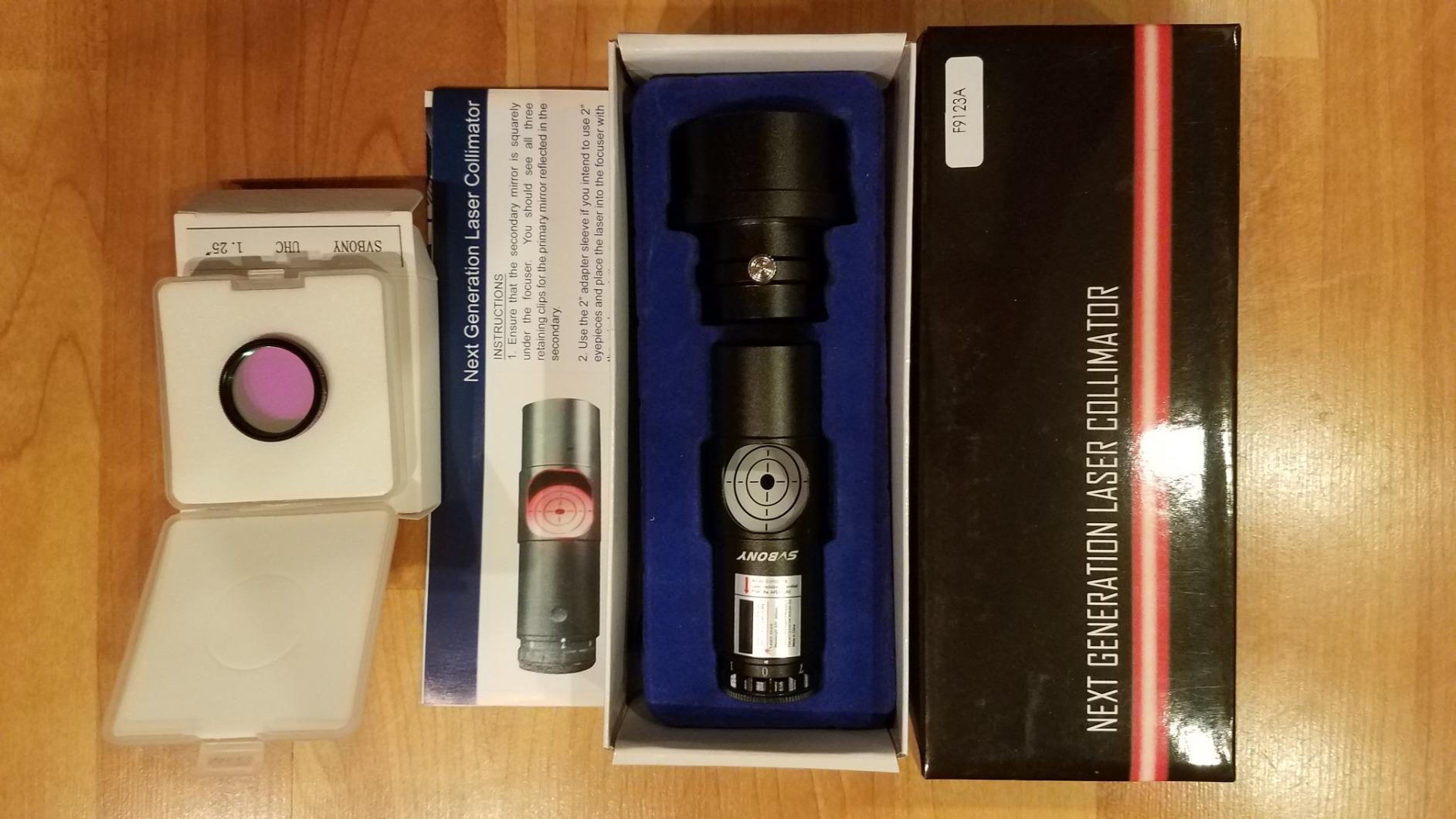
The removable 2 inch adapter is what makes this a one-tool solution. If you own a 6 inch Dob with a 2 inch focuser and a small tabletop Newtonian with a 1.25 inch focuser, one collimator covers both. Weights and dimensions are unremarkable in a good way: 224 grams and a body that slides into a focuser without feeling like a toy.
The honest drawback is that the laser needs checking before you trust it, and the fit in some 1.25 inch adapters is loose enough to introduce slop. If your primary has no center mark, none of this matters, but if it does have one this is the safest first purchase. We have used it on a truss Dob and a 5 inch tabletop and it settled both quickly.
What we checked before trusting the beam
Roll the collimator on a flat surface and watch the return spot. If it walks in a circle, the laser is off and every screw turn you make afterwards is meaningless. A few minutes of that check saves an afternoon of adjusting a scope against a bad reference.
Where it falls short
A loose fit in the focuser is the recurring complaint, and it is the reason the self-centering laser at number nine exists. A hoop-style adapter or a self-centering barrel removes that variable entirely, and if your focuser is particularly sloppy, budget for one of those instead of fighting the fit.
2. Astromania Laser Collimator 1.25 inch – Compact, Battery Included
Astromania Laser Collimator 1.25″ for Newtonian Marca Telescope Alignment
Red laser for 1.25 inch reflectors
635-655 nm at 3.8 mW Class 3R
CR2032 lithium cell included
45 degree viewing window
Pros
- Compact anodized aluminum body that fits 1.25 inch focusers
- 45 degree viewing window plus three sealed 120 degree adjustment ports
- 7 adjustable brightness levels for indoor or outdoor use
- Battery included with instructions in German and English
Cons
- 1.25 inch focusers only so 2 inch scopes need an adapter
- Rear screw cap must be removed before first use
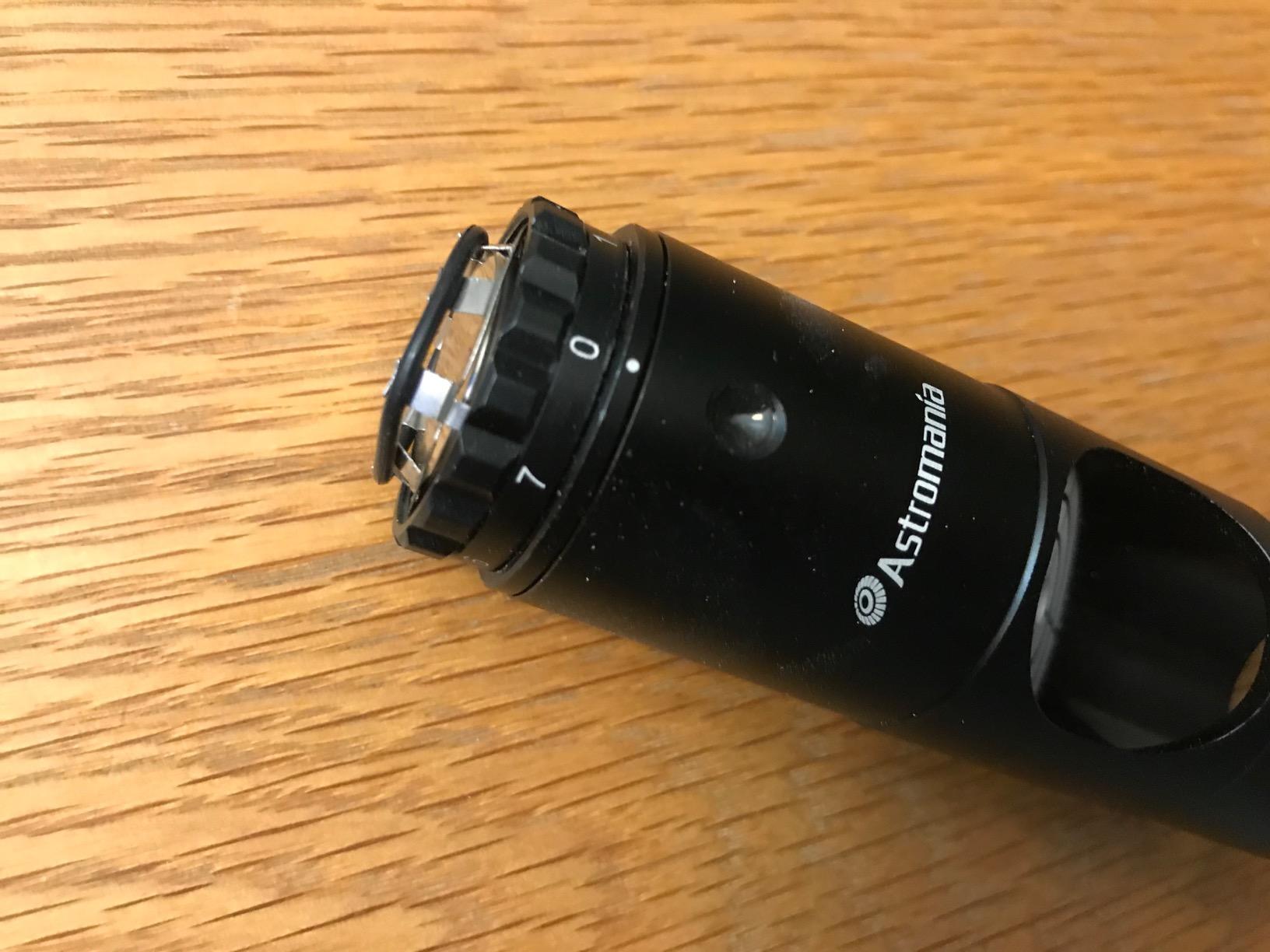
This is the pick when you want a laser and nothing else to think about. At 3 ounces and just over 5 inches long, it is small enough to live in an accessory pouch permanently, and the CR2032 cell comes in the box so there is no waiting on a package of batteries before your first collimation session.
Three sealed adjustment openings spaced 120 degrees apart let you re-align the laser itself without worrying about which screw is which in the dark. The 45 degree side viewing window is a flat disc with a center hole, which means you can watch the return beam while your hands are on the mirror cell screws. That sounds minor until you have tried to do it blind.
The output is listed at 635-655 nm with 3.8 mW, classed as 3R. That is a real laser, not a toy, so treat it accordingly and never look down the barrel or into the return beam. More on eye safety further down.
The limitation is scope size. This is a 1.25 inch unit with no 2 inch adapter, so a Dob with a 2 inch focuser means carrying both tools or buying an adapter separately. Otherwise it is an easy recommendation for anyone collimating a small or mid-size Newtonian by daylight.
Best for a first collimation session
Pair it with a bright wall or a window shade. Because there is no beam brightness issue outdoors and the viewing window is easy to read, this is the laser we hand to friends who have never collimated a telescope before. The included German and English instructions are more complete than most in this category.
Where it falls short
Two-inch focusers. If your telescope takes 2 inch barrels, this is the wrong shape of tool and you should look at the units that include an adapter or the self-centering crosshair model. Also remove the rear screw cap before first use, because owners routinely report being confused by a dark beam on day one.
3. Celestron Cheshire Collimation Eyepiece – the Steady Beginner Choice
Celestron Cheshire Collimation Eyepiece for Reflector & SCT Telescopes
Cheshire collimating eyepiece in 1.25 inch format
25 mm objective
No batteries or calibration needed
One year limited warranty
Pros
- Collimates the secondary
- primary and focuser with one tool
- Non-laser method cannot lose calibration in shipping or over time
- Owners report visibly sharper images after aligning
- Useful on Bird-Jones style scopes where a laser is impractical
Cons
- Instructions are thin so first-time users research the process online
- Needs daylight or a bright side light
- Some units arrive with the cross-wire X slightly off center
Long-standing consensus on astronomy forums is that you should start with a Cheshire, because it is cheap, unforgiving and cannot drift out of calibration in transit. This is the version most of those conversations are describing, and with 627 owner ratings at 4.5 stars it is the most proven sight-tube style option in this group.
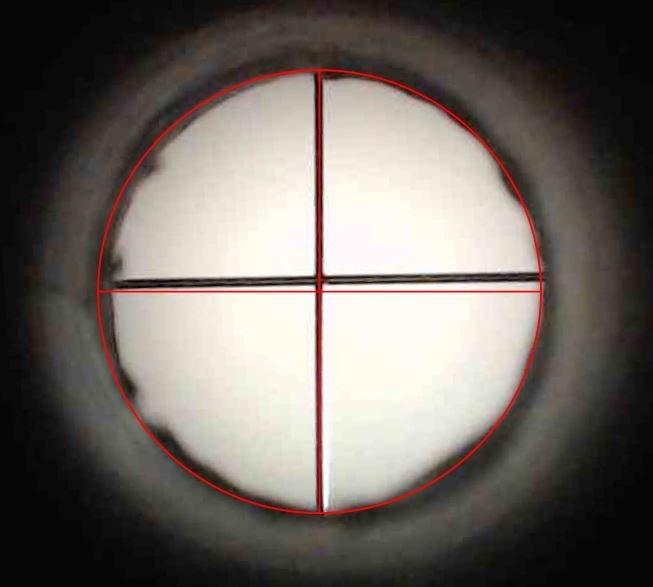
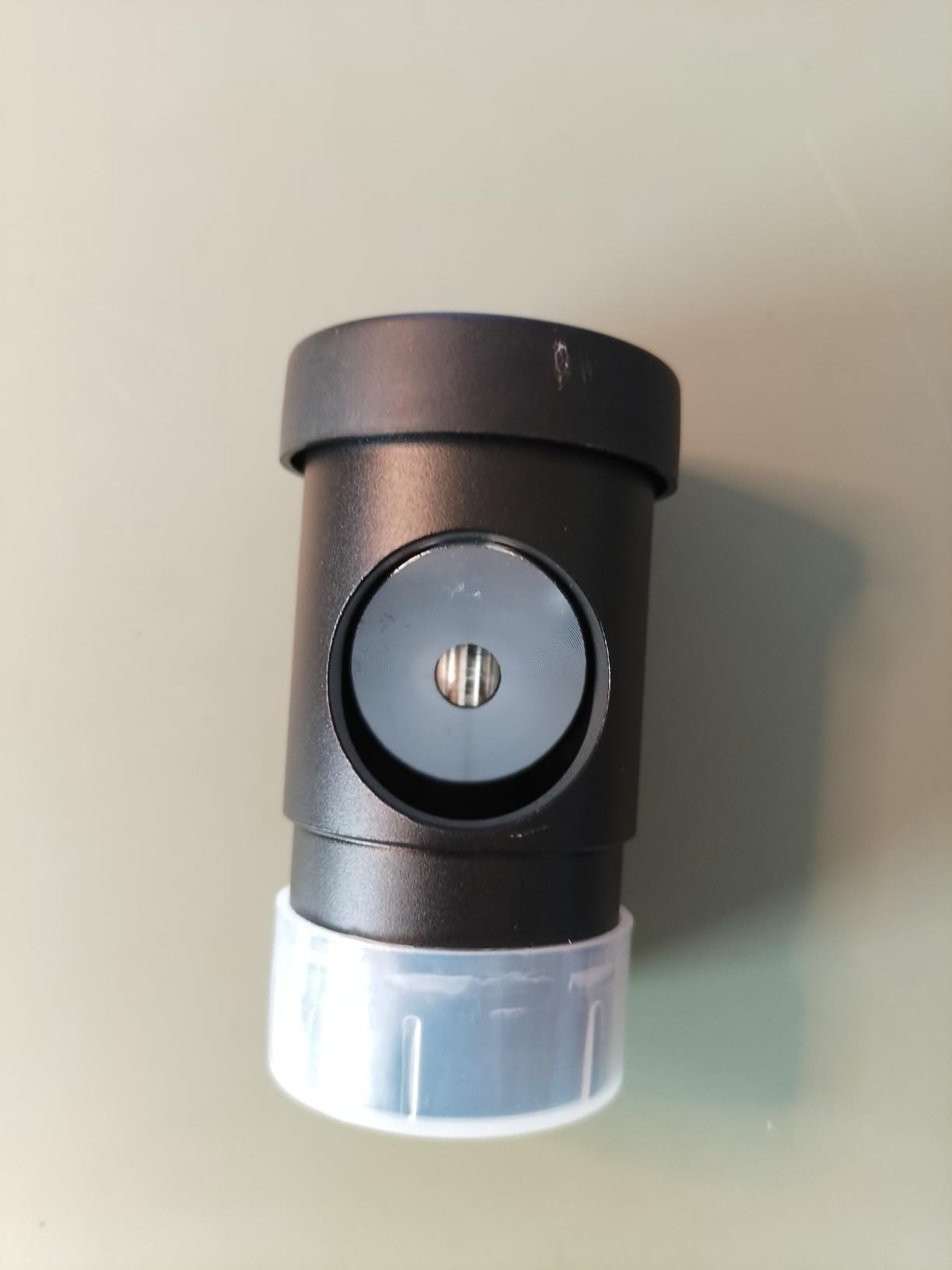
A Cheshire is a 1.25 inch eyepiece with a 45 degree reflective plate near the top and a crosshair window at the bottom. You cap the top of the telescope tube, remove the diagonal, drop the eyepiece in, and then adjust screws until the reflection of the crosshair sits in the window. The geometry of the telescope itself supplies the accuracy.
The real advantage over a laser is honesty. There is no calibration to check, no battery, no target on a wall, and no center mark needed on the primary. That makes it the right tool for an older Newtonian, a Bird-Jones design with an awkward secondary, or any scope where you are not sure the laser approach will even work.
Reviewers consistently mention the same thing after using it: planetary images that were fuzzy went sharp. The recurring complaint is the paperwork, which is thin enough that most first-time owners end up looking up the procedure online anyway.
How to get a clean view
Work in daylight or point a bright lamp down the tube from above. The chamber needs ambient light, and a dim room gives you a faint reflection that is hard to read. Rotate the eyepiece until the crosshair X sits as close to center as it will go before you start adjusting anything.
Where it falls short
You cannot use it at night without a light source, and some units arrive with the cross-wire X slightly off center. Check the X on a flat surface against a straight edge first, because aligning your telescope to a crooked reference is exactly the trap this tool is supposed to avoid.
4. Astromania Cheshire Short Version – Built for Fast Dobsonians
Astromania 1.25 Inch Collimating Cheshire Telescope Eyepiece Short Version
Cheshire eyepiece with a short barrel
31.75 mm objective
StarBright XLT coating
Ships in a short or long version
Pros
- Solid aluminum body with accurately centered crosshairs
- Short barrel gives better clearance and eye relief in fast Newtonians and Dobsonians
- 45 degree plate shows the crosshair and primary reflection together
- Reflective bullseye surface with a pop-up eye cup
- Cannot drift out of calibration like a laser unit
Cons
- Short barrel can make the crosshairs hard to see for some users
- Ships without instructions
- Needs plenty of ambient light so daytime use
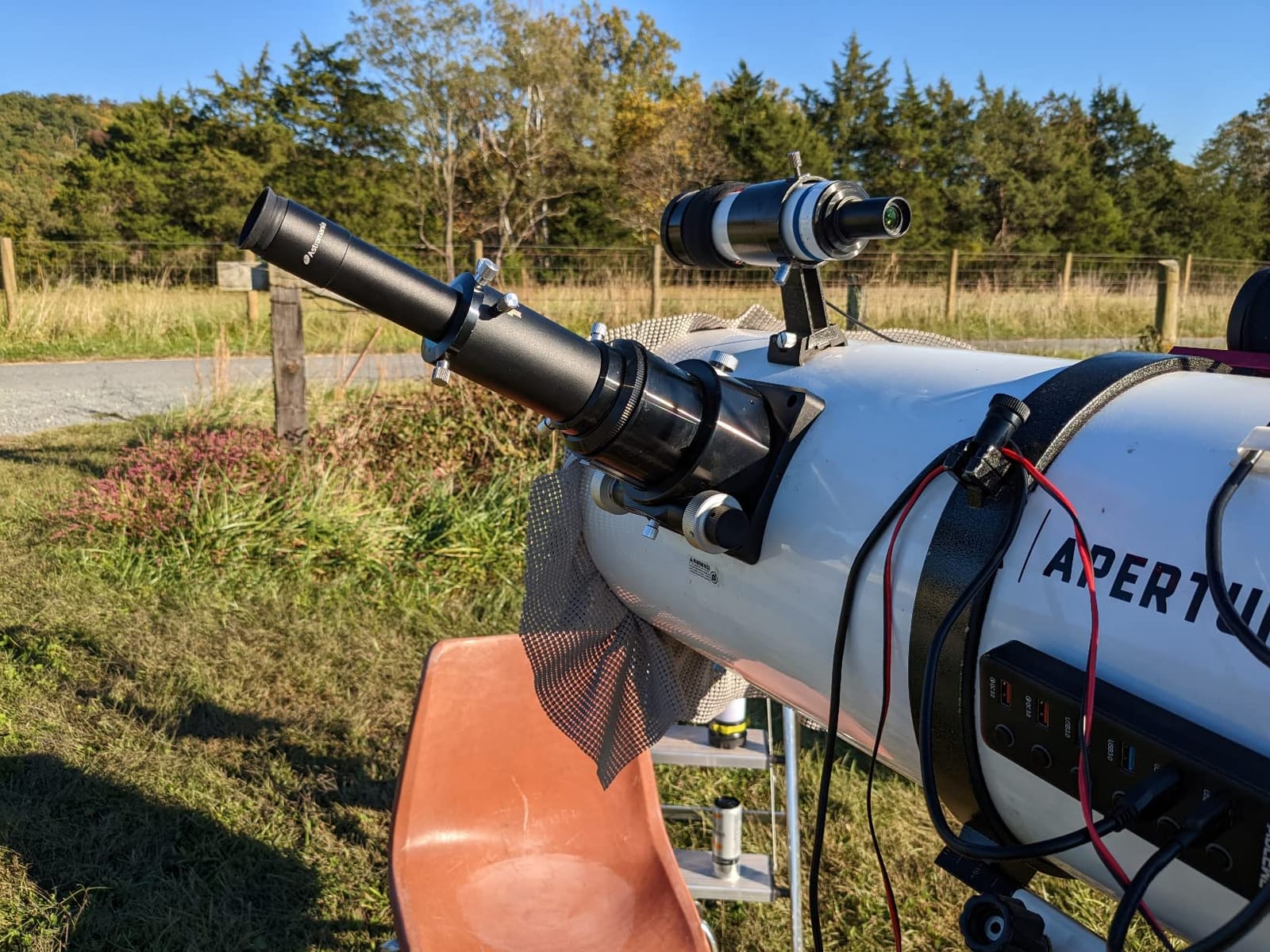
The short barrel is the entire point of this one. In a fast Newtonian, a long eyepiece can sit so deep that you are looking down a tunnel and struggling to see the crosshair at the bottom. Pull the working distance shorter and the view opens up. Owners of fast Dobsonians pick this version for exactly that reason.
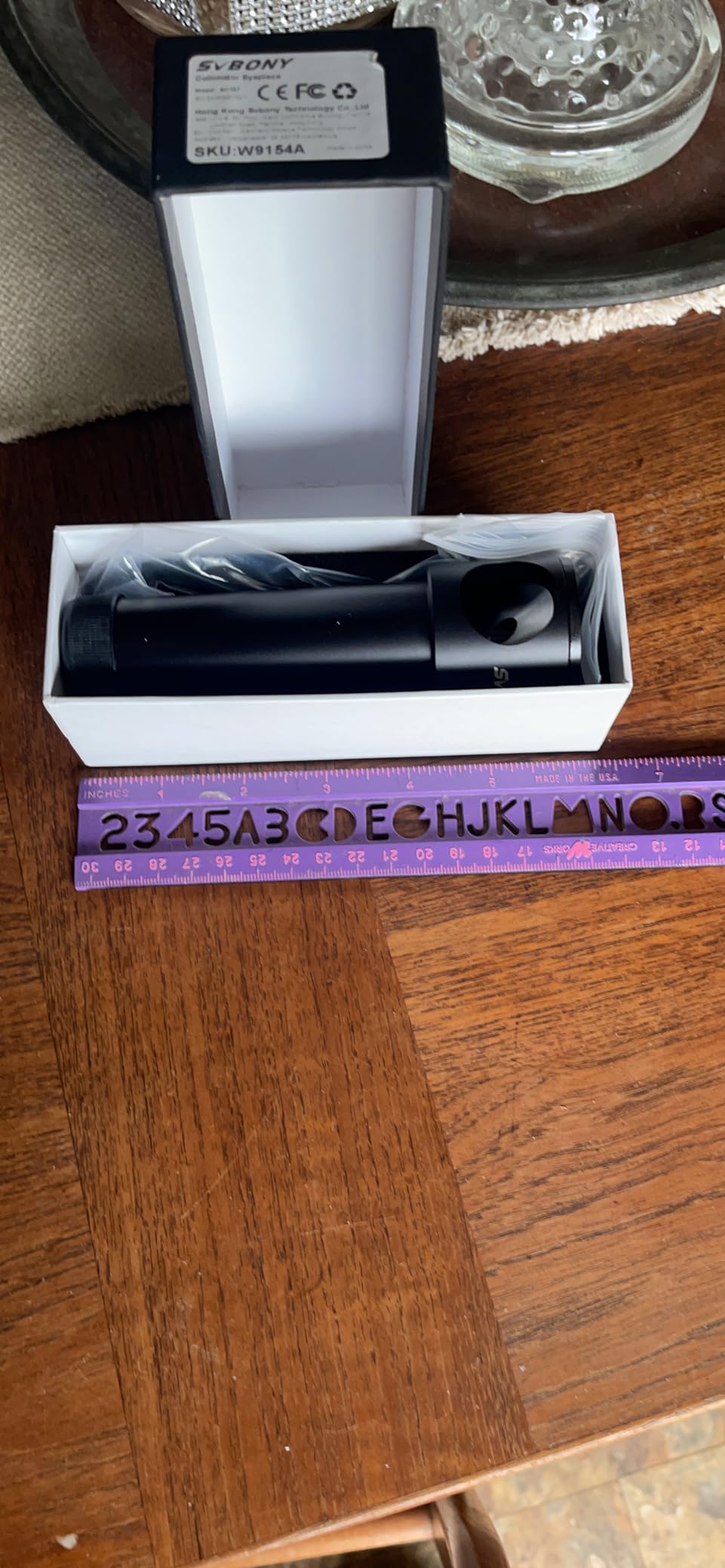
At 3.1 ounces with a 6 inch by 1.3 inch footprint it is a small aluminum tube, and the crosshairs are reported as close to true by reviewers. The reflective bullseye surface and pop-up eye cup make it comfortable to use at a bright window, which is where you should be using it.
Many people choose a Cheshire deliberately over a laser because nothing can go wrong with it. There is no calibration to lose in transit, no battery to drain, and no requirement for a center mark on the primary. If you only ever collimate by daylight, a Cheshire is a completely closed system.
The trade is real though. This unit scores 4.4, the second-lowest among the Cheshire options here, and a minority of owners find the short barrel cramped. It also arrives with no instructions, so budget a few minutes of research before your first attempt.
Short version or long version
Choose short for fast focal ratios and deep focusers where clearance is tight. Choose the long version if you have trouble reading the crosshairs in the short one, since eye position matters more than barrel length when you are new to this.
Where it falls short
No paperwork in the box and daylight-only use. If you plan to collimate after a late-night session in the field, this is the wrong tool and the laser options below suit that better.
5. SVBONY SV197 Cheshire Eyepiece – the Most Precisely Machined Crosshairs
SVBONY SV197 Collimating Cheshire Eyepiece, 1.25 Inch Collimation Eyepiece, for Newtonian Reflector Telescope
Cheshire collimating eyepiece for Newtonian and SCT
Billet aluminum with steel crosshairs
Peephole in the top
One year warranty
Pros
- Highest-rated Cheshire in this group at 4.6 stars
- Billet aluminum body with steel crosshairs that stay true
- Peephole in the top lets you check the result without removing the eyepiece
- Un-threaded barrel lets you set the working distance yourself
Cons
- No instructions included
- Bare barrel can rattle or fit loosely in some focusers
- Daylight use only
This is the highest-rated Cheshire in the group at 4.6 stars, and the rating comes from a specific detail rather than general goodwill: the crosshairs are steel, set into a billet aluminum body, and reviewers confirm they stay true. A sloppy crosshatch is the classic reason a Cheshire gives you a bad result, so this is the spec that matters.
The peephole in the top is a small convenience that changes the workflow. Once you are close, you can check whether the reflection is centered without pulling the eyepiece out and looking again from a different angle. Several people use this unit specifically to settle arguments between a cap and a laser.
Because the barrel is un-threaded, you can pull it up to whatever height suits your focuser, which is how you adapt it to a fast tube or a deep focuser. There is a one year warranty, and no batteries or calibration to think about at all.
Where it falls short is paperwork and finish. It arrives with no instructions, and the bare barrel can sit loosely in a focuser with a lot of play. The review base is smaller than the Celestron and Astromania Cheshires, so treat the 4.6 as a good signal rather than a certainty.
Best for cross-checking another tool
If you own a laser and want to know whether the laser itself is honest, this is the right referee. Collimate with the laser, then drop the Cheshire in and look at the peephole. If the two agree, your collimation is genuinely good.
Where it falls short
Check the barrel fit before you start. A loose 1.25 inch fit adds slop, and slop on a Cheshire shows up as a crosshair image that shifts every time you touch the focuser. Daylight is also a hard requirement, since the reflection needs light to read.
6. Alstar Laser Collimator 1.25 inch – Light Metal Build, Seven Brightness Steps
Alstar Laser Collimator Alignment for Marca Newtonian Telescopes 1.25 Inch
Red laser for 1.25 inch Newtonian focusers
Under 5 mW at 635-655 nm
7 brightness levels
45 degree adjusting disk
Pros
- Lightweight aluminum housing that suits small portable setups
- 7 brightness levels and a 45 degree side viewing window
- Ships factory adjusted with three 120 degree adjustment ports
- German and English step-by-step instructions included
Cons
- Listing says the CR2032 battery is not included though owners report receiving one
- Instructions do not cover how to collimate the collimator itself
- 1.25 inch focusers only
At just under 4 ounces this is one of the lightest collimators we tested, and for anyone carrying a small tabletop Dob to a star party that weight is a genuine benefit. The 45 degree side disk has a central hole so you can watch the return spot while adjusting the mirror cell screws.
Seven brightness levels and three sealed adjustment openings at 120 degree intervals cover the same ground as the other budget lasers, and owners confirm the unit’s own calibration checked out when rolled on a flat surface. That is the acceptance test you should run on any laser before trusting it.
Two things keep it from the top spot. The instructions cover using the laser on a telescope but not how to collimate the laser itself, so you will need another source for that step. And the listing disagrees with owners about whether the CR2032 cell is included, so check the box before you walk out to a dark site.
Best for a small portable Dob
The combination of low weight, a battery cell and a compact 5 inch body makes this a good permanent resident in a small accessory case. It does the job on tabletop and mid-size Dobsonians without any fuss.
Where it falls short
It is a 1.25 inch tool with no 2 inch adapter, and it will not help at all if your primary has no center mark. Confirm that dot first, because it is the deciding factor for the entire budget laser group.
7. XCCYG Laser Collimator With 2 inch Adapter – Metal Body, Small Review Base
Laser Collimator for Telescopes 1.25” with 2″ Adapter,7 Levels of Bright for Reflector Telescope Collimation- Collimate Lens Metal Material
Red laser with a removable 2 inch adapter
1.25 inch barrel
Solid metal body
150 g
Pros
- Only 1.25 inch laser unit here that includes a 2 inch adapter
- Precision-machined solid metal body
- 7 adjustable brightness levels for different light conditions
- Battery powered with low consumption
Cons
- Smallest and thinnest review base in the set at 23 ratings
- Lowest average rating among the laser units here at 4.2 stars
- Thin documentation compared with the branded alternatives
Including a 2 inch adapter is unusual at this end of the price range, and it is the reason this unit is worth considering. If you own one telescope with a 1.25 inch focuser and a second with a 2 inch focuser, this covers both without a separate purchase. The metal body is a step up from plastic shells at similar prices.
Owners who have used it call it good value and report that it worked on their Newtonian reflectors. Seven brightness levels give you the usual range between a bright room and full darkness, and the low power draw means the batteries last through a whole session.
Be honest about the evidence though. At 23 ratings and a 4.2 average, this is the thinnest sample and the lowest-scoring laser in the group, with 10 percent one-star reviews. Generic-brand listings with minimal instructions are exactly where quality varies between units, so inspect it on arrival and check the beam on a flat surface first.
Best for a mixed telescope collection
The bundled adapter is what sets it apart. If you only own one scope with a 2 inch focuser, the bundled adapter saves a separate accessory and the metal body is the more important consideration.
Where it falls short
Thin documentation means you will be looking up the procedure, and the small review base makes the average rating less trustworthy. It also needs a center-marked primary, like every other laser on this list.
8. Tydeux Cheshire Collimation Eyepiece – Entry Level Collimating Eyepiece
Tydeux Cheshire Collimation Eyepiece for Reflector & SCT Telescopes 1.25″
Cheshire collimation eyepiece for Newtonian and SCT
32 mm objective
Fully coated
Short or long version available
Pros
- Entry level cost compared with branded Cheshire eyepieces
- Metal body with a well-centered reference hole
- Users report results equal to or better than a laser collimator
- 45 degree plate aids visual alignment
- Two-year manufacturer warranty
Cons
- Short barrel gives limited eye relief making the crosshairs hard to see
- Several buyers recommend the long version instead
- Needs a bright ambient light source
This is the most affordable tool in the group and one of the few with a two-year manufacturer warranty attached, which is unusual for an entry-level astronomy accessory. Owners who are used to premium Cheshire tools report that it collimates as well as a laser, and several use it as a cross-check alongside other methods.
The reference hole is well centered in the metal body, and the 45 degree plate gives a clean view of the primary reflection. Because it needs no batteries, no calibration and no center mark on the primary, it works on any reflector including older and non-standard designs.
The consistent complaint is the short barrel. Eye relief is limited, and several buyers suggest the long version instead. With only 22 ratings, the 4.5 average is encouraging but thin, so treat it as a capable budget tool rather than a proven one.
Best as a first collimator
If the goal is to learn collimation without spending much, this does the job. The warranty also makes it a reasonable backup for a star party, where a dropped tool in the dark would be annoying.
Where it falls short
Pick the long version if you have any trouble reading the crosshairs, and keep a lamp nearby because the reflective plate needs ambient light. Do not expect to use it after dark in the field.
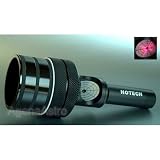
9. HoTech SCA-2C Crosshair Laser – Built to Cancel Focuser Slop
HoTech 2″ & 1.25″ SCA Laser Collimator for Newtonian Telescope – Crosshair Model # SCA-2C
Crosshair laser for Newtonian telescopes
Self-centering barrel
Fits 2 inch and 1.25 inch focusers
Battery powered
Pros
- Highest average rating in the set at 4.7 stars
- Self-centering barrel removes focuser slop a common source of error
- Crosshair faceplate lets you fine-tune the primary precisely
- Side viewing face lets you watch alignment while adjusting screws
- Machining and anodizing described as high quality
Cons
- The most expensive option in this set by a wide margin
- Not self-centering in every focuser which one reviewer sees as a design flaw
- Requires periodic re-collimation as batteries drain
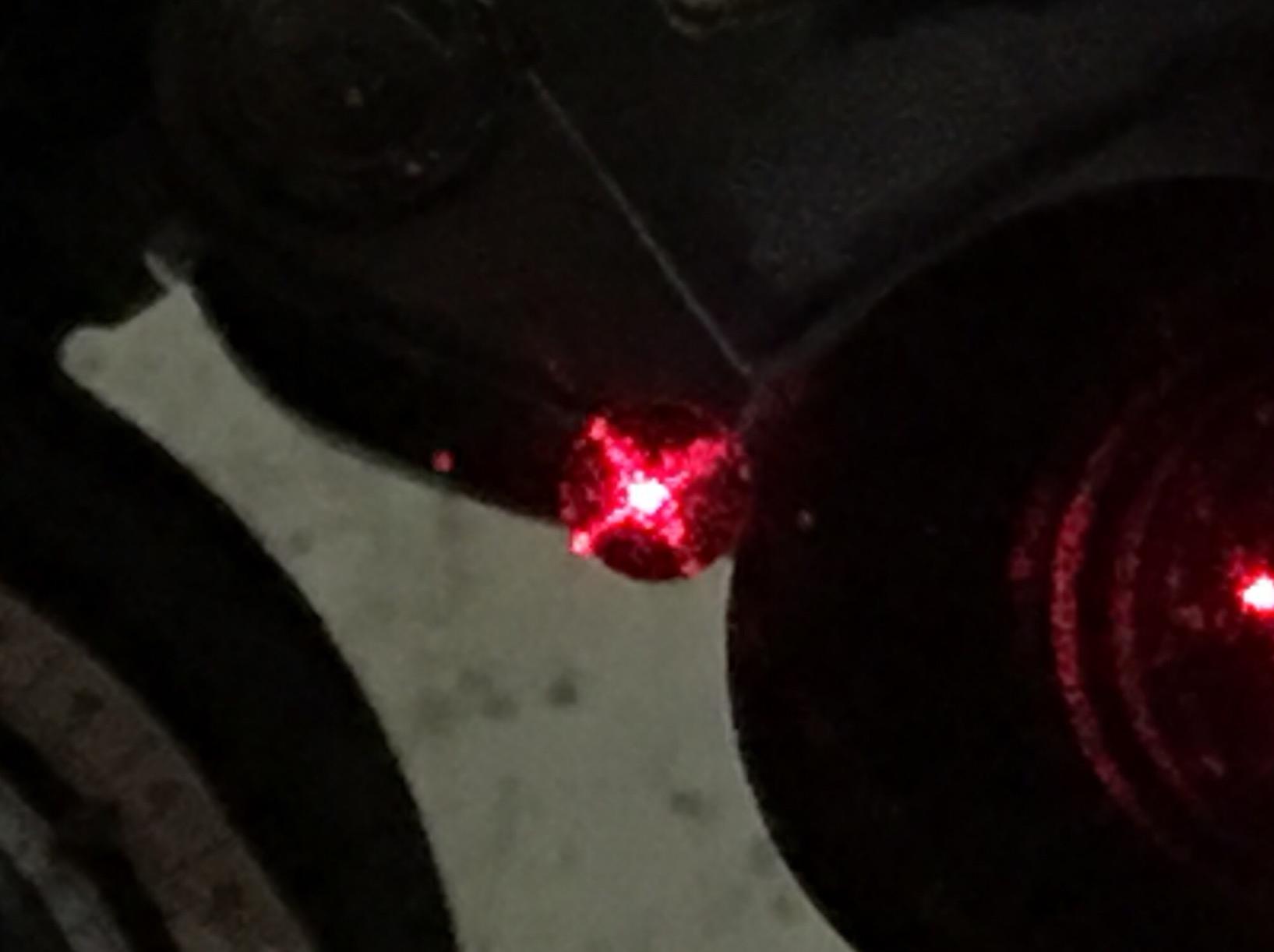
This is the most expensive tool here and the highest rated at 4.7 stars, and the reason is a specific mechanical idea rather than a better laser. The barrel is self-centering, so once it is in the focuser it does not shift when you touch the knobs. Slop in a 1.25 inch focuser is the single most common reason a perfectly adjusted scope still looks off, and this design removes that variable.
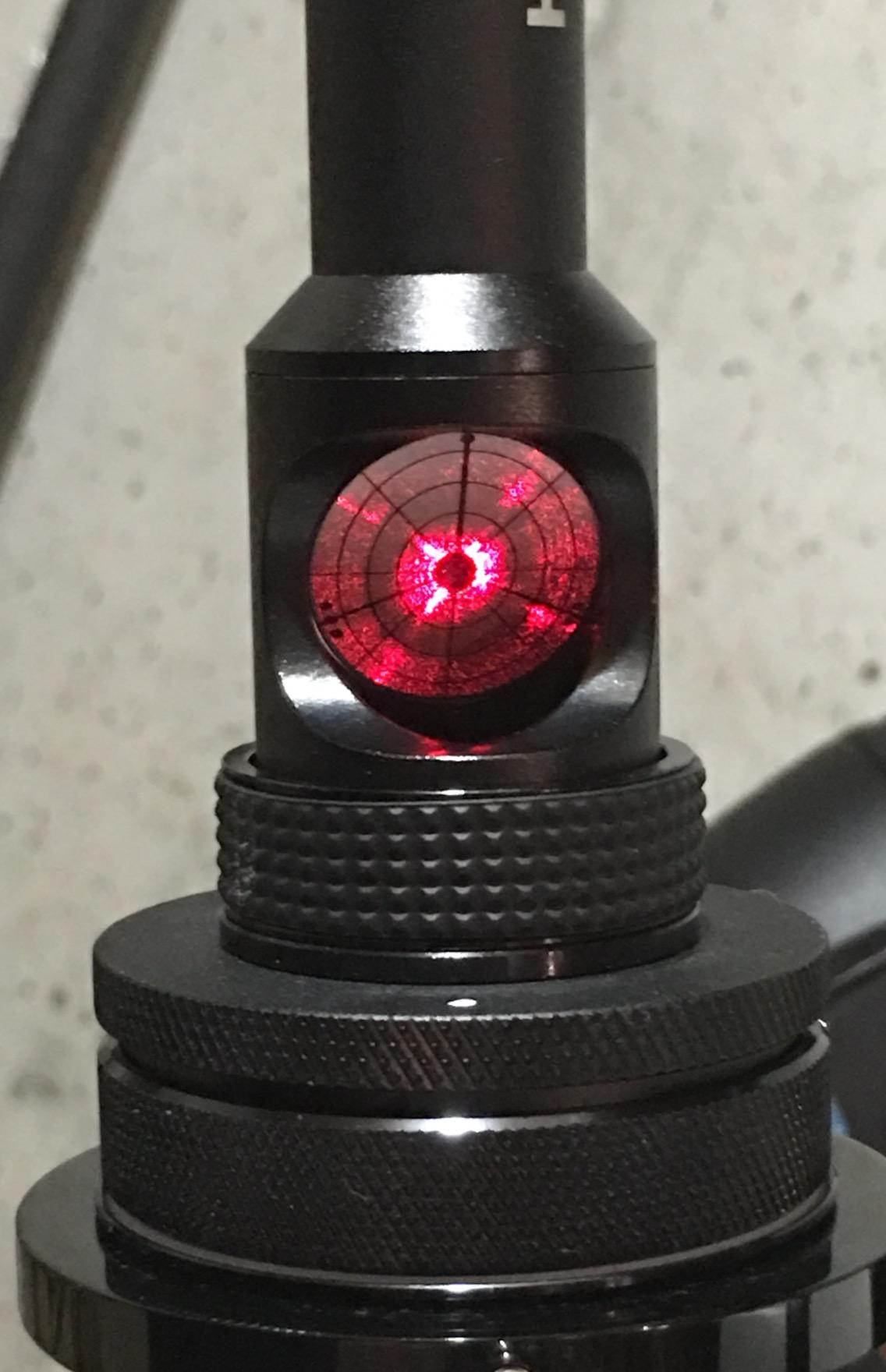
It is also a crosshair model rather than a single beam. Where a single-beam laser gives you one dot to bring back to one dot, a crosshair gives you a horizontal and vertical line meeting at a target. Aligning two axes against a crosshair is noticeably easier, and the side viewing faceplate lets you watch the whole thing while your hands are on the screws.
Imaging users with fast focal ratios credit it with making collimation fast and repeatable, and long-time owners describe upgrading to it as transformative for image sharpness. If you are chasing coma in the corners of a frame, repeatable collimation is the part of the system you can control, and this is the tool that improves it most.
Two caveats. It needs periodic re-collimation as the batteries drain, which means a flat-surface check before every imaging session. And one reviewer argues the self-centering concept fights ordinary focusers rather than accommodating them, so if your focuser is unusual, check that it seats properly before you rely on it.
When the extra spend makes sense
If you own a 2 inch focuser with noticeable play, or you image fast Newtonians where coma shows up quickly, the slop cancellation is the reason to step up. It is the clearest accuracy trade-off on this list: you are paying for repeatability, not for a brighter beam.
Where it falls short
Cost is the obvious answer, and the 23-rating review base is small for a premium tool. Check that the barrel seats and centers in your specific focuser, and keep a battery on hand because the beam dims as the cells drain.
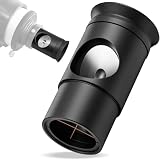
10. Alstar Cheshire Short Version – A Very Small Tube With Mixed Reports
Alstar Collimating Cheshire Eyepiece, Collimation Telescope Eyepiece Metal
Short Cheshire collimation eyepiece
Alloy body with a crosshair at the bottom
45 degree plate
Laser-free alignment
Pros
- Metal build that owners describe as solid and unlikely to break apart
- Works directly in 1.25 inch focusers by capping the tube and removing the diagonal
- 45 degree plate improves visual alignment accuracy
- No calibration that can drift
- Useful for builders checking collimation after mirror changes
Cons
- Lowest average rating in the set at 4.0 stars
- One unit arrived with grossly misaligned crosshairs and a twisted metal insert
- Very short barrel reported as difficult to use
- No instructions included
We are including this one because the physical size is genuinely useful, not because the ratings are good. At 1.58 ounces and 2.6 inches long it disappears into a pocket, which makes it a sensible backup to carry alongside a laser. Most owners find it functional and well made for the price.
The workflow is the standard Cheshire one: cap the top of the tube, remove the diagonal, insert the eyepiece and adjust until the reflection centers. No batteries, no calibration, and no requirement for a center mark on the primary. Builders working on a reflector find it handy for checking alignment after a mirror change.
The rating is the problem. This is the lowest-scoring product in the set at 4.0 stars across 17 ratings, with 52 percent five-star and 11 percent one-star. The one-star report is specific and worth heeding: a unit arrived with grossly misaligned crosshairs and a twisted metal insert. If you buy this one, verify the crosshairs against a straight edge on a flat surface before you touch your telescope.
Best as a pocket backup
The weight and the total absence of batteries make it a good thing to keep in a case alongside your main tool. It costs little enough that a spare is reasonable, especially if you observe away from power.
Where it falls short
The barrel is very short and reported as difficult to use by some owners, there are no instructions, and the crosshair alignment is not reliable enough to skip the arrival check. The Astromania short version at number four is the better-made alternative at nearly the same size class.
How to Choose a Collimator for Your Reflector
If your primary mirror has no center mark, skip laser collimators. Use a Cheshire or a sight tube. A laser needs something to bounce off at the center of the primary, and a bare mirror surface with a slightly different coating in the middle will send the return beam wandering. Every laser on this list is useless on an unmarked primary unless you add a target yourself, which puts you back to using a Cheshire.
From there, the choice narrows quickly. Think about four things in order.
Barrel size. Check whether your focuser takes 1.25 inch or 2 inch barrels. Most small and mid-size Newtonians use 1.25 inch, while many Dobsonians and larger Newtonians use 2 inch. A 1.25 inch laser like the Astromania at number two will not enter a 2 inch focuser without an adapter, and adapters add their own fit problems.
Tool type. A Cheshire or sight tube needs daylight or a bright lamp and no power, and it works on any reflector. A single-beam laser works in the dark and needs a center mark. A crosshair laser is easier to align precisely and often self-centers, which removes focuser slop. An electronic autocollimator senses the return light and removes the judgement call entirely, at a much higher price and with a learning curve attached.
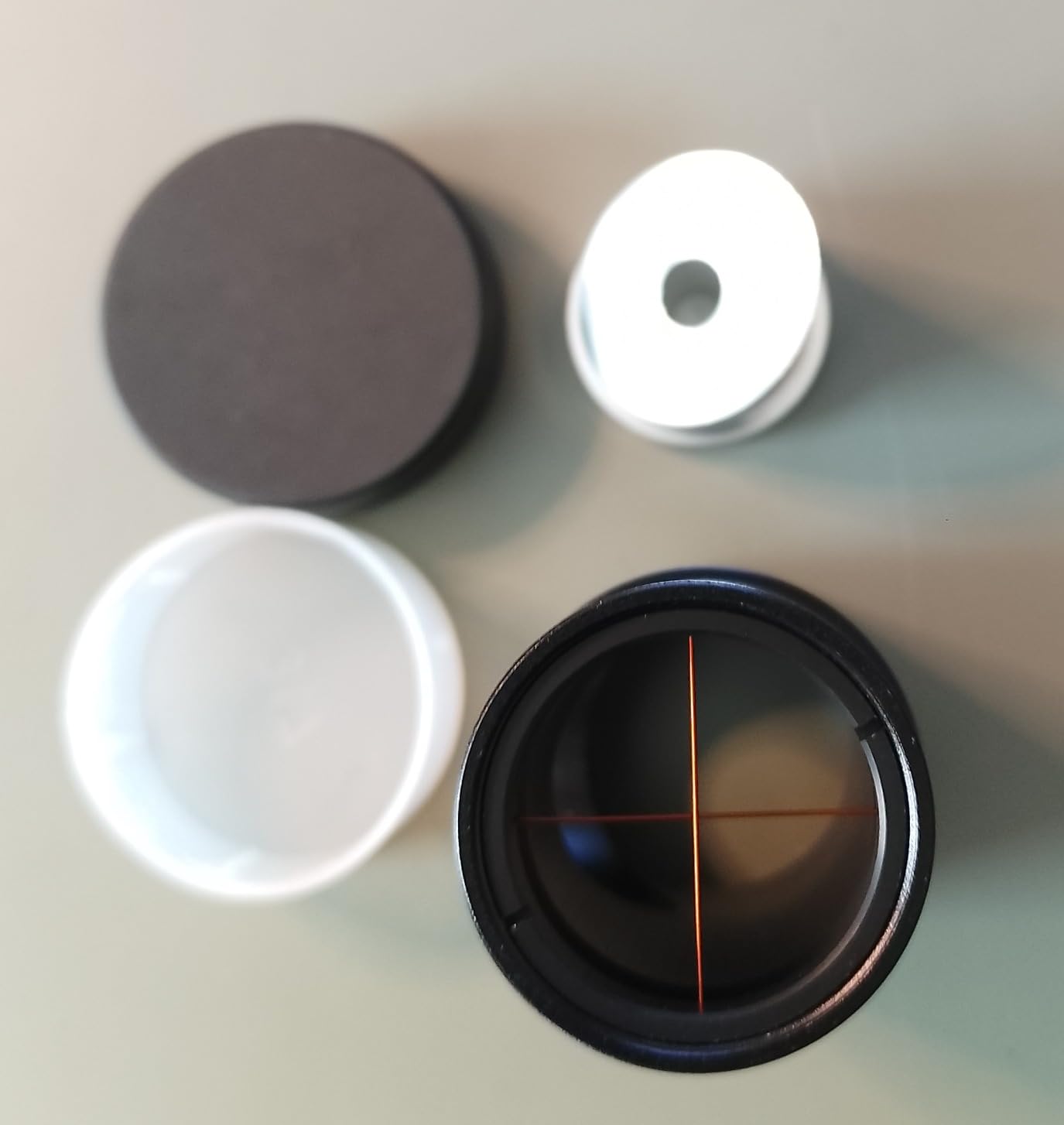
When the plastic cap is enough. The collimation cap that ships with budget Dobsonians is a plastic disc with a peephole and a 45 degree reflective face. It gets the secondary centered, and it is genuinely useful for a first pass. It is not accurate enough to finish the job on a scope you care about, because the plate has no crosshair reference and the marks are crude. Use it to get close, then finish with a Cheshire.
Imaging or visual. If you photograph with the scope, coma at the frame edges is largely a collimation problem, and a self-centering crosshair laser like the HoTech at number nine is the clearest step up. If you observe visually, the difference between a well-machined Cheshire and a cheap one matters far more than anything else. More on coma and image sharpness in our reflector photography guide.
Laser safety. The lasers in this group put out close to 5 mW of red light around 635 to 655 nm, which is classed in the 3R range. Never look into the front of the collimator, never stare at the return beam, and keep the beam away from eyes at a star party. Point it at a wall or a ceiling, not across a field where somebody is walking.
How to Collimate a Reflector With Your Chosen Tool
Before any of this, do a star test and decide whether you need to collimate at all. Pick a bright star, defocus it slightly, and look at the diffraction pattern. Concentric rings that sit off-center or look lopsided mean the collimation needs work. Clean rings that are centered mean the optics are fine and the problem is seeing, dew, or the eyepiece.
With a Cheshire or sight tube:
- Level the telescope on a flat surface and let it sit for a few minutes.
- Cap or cover the open top of the tube, and remove the diagonal from the focuser.
- Insert the Cheshire and rotate it until the crosshair sits as close to center as it will go. Check the crosshair on a flat surface first if the tool is new.
- Adjust the three secondary mirror screws until the reflection of the crosshair is concentric in the viewing chamber.
- Remove the Cheshire, replace the diagonal, and look down the focuser. The secondary should be a complete circle of even width, centered in the focuser drawtube.
- Adjust the primary mirror cell screws until the primary reflection is concentric with the secondary outline, again viewed down the focuser.
- Repeat steps 3 through 6 until the reflection sits centered without further adjustment.
With a laser collimator:
- Verify your primary has a center mark. Without one, stop and use a Cheshire.
- Collimate the laser itself first. Set it on a flat surface with the beam at a shallow angle, aim at a wall, and adjust the laser screws until the return dot returns to the same aperture you are aiming at.
- Place the laser in the focuser and point it at the center mark on the primary. Aim through the secondary by rotating the laser until the beam passes cleanly through the hole in the secondary mirror.
- Adjust the secondary screws until the return beam is centered on the laser’s target face.
- Adjust the primary cell screws until the return beam lands exactly on the target.
- Re-check the beam path through the secondary after every primary adjustment, since the two interact.
- Confirm the return spot is centered without touching a screw. If it drifts, the laser or the focuser fit is the problem.
The barlowed laser method. Place a Barlow or a high-power eyepiece in the focuser in front of the laser. The beam now expands before it reaches the primary and comes back as a much larger spot, so the alignment you need to see is a big visible pattern instead of a small dot. Forum users repeatedly describe this as the most accurate practical method for the primary on fast Newtonians and large Dobs, and it is the reason a scope that looked good with a plain laser can still be refined with one.
Troubleshooting When Your Collimator and Your Telescope Disagree
The laser says collimated but the Cheshire disagrees. Almost always one of two things. Either the laser itself is out of calibration, which you check by rolling it on a flat surface, or the focuser fit has slop and the beam is landing somewhere different every time you touch the scope. The long-standing community advice is to trust the Cheshire until you have proven your laser is honest.
The Cheshire donut will not sit perfectly centered. This is normal. Members on astronomy forums point out repeatedly that the reflection rarely centers perfectly in the shadow of the secondary, and chasing that last sliver of offset leads to over-tightening the adjustment screws. Tighten small amounts and stop when it stops improving.
Crosshairs that are not centered in a new Cheshire. Lay the eyepiece on a flat surface against a straight edge and check the X. A crooked reference makes every subsequent adjustment wrong, and one of the products here arrived with exactly that fault.
Beams that wander after a good alignment. That is slop. A self-centering barrel or an adapter that grips the barrel removes it, and no amount of careful adjustment will fix a barrel that moves inside the focuser.
Stars still look soft after a clean collimation. Check the secondary is a full circle of even width down the focuser, and consider whether the problem is a diagonal or eyepiece instead. A star test at high power tells you quickly which end of the optical train is responsible.
Frequently Asked Questions
What is the best collimation tool for a telescope?
For a reflector, the best general tool is a laser collimator if your primary mirror has a center mark, and a Cheshire collimating eyepiece if it does not. Our top pick is the SVBONY laser at number one, which handles both 1.25 inch and 2 inch focusers and has the largest owner base we found.
Which is better for collimation, a Cheshire eyepiece or a laser collimator?
A Cheshire is better when your primary has no center mark, when you work in daylight, and when you want a tool that cannot lose calibration. A laser is better at night, in the dark, and when your primary is center-marked. Many owners use a Cheshire first to set the secondary and a laser to finish the primary.
How to collimate a reflector telescope?
With a laser, first collimate the laser itself on a flat surface, then aim it through the hole in the secondary at the center mark on the primary. Adjust the secondary screws until the return beam centers, then adjust the primary cell screws until the beam lands on the target. With a Cheshire, cap the tube, remove the diagonal, and adjust until the crosshair reflection is concentric.
How often do you need to collimate a telescope?
Collimate after any transport in a car, after moving the scope between rooms, and whenever you notice lopsided diffraction rings in a star test. A scope that stays in one dry location and is handled gently can go a year or more between checks, and quick visual observing needs far less frequent attention than imaging.
What is the best laser collimator for Newtonian scopes?
The SVBONY laser at number one is the strongest all-round choice, with seven brightness levels and an included 2 inch adapter. The Astromania laser at number two is the best value option for 1.25 inch focusers, and the HoTech crosshair model at number nine is the most accurate because its self-centering barrel cancels focuser slop.
How much does collimation really affect astrophotography?
A lot, especially at the frame edges. Miscollimation produces coma, which shows up as out-of-focus or streaked stars in the corners of a wide-field image while the center looks fine. Since most of your field is corner, repeated and accurate collimation matters more for imaging than any single eyepiece upgrade.
The Best Telescope Collimators for Reflectors in 2026: Final Verdict
The SVBONY laser at number one is our pick for most people. It has the largest owner base in the group, a solid metal body, seven brightness levels and an adapter that covers both focuser sizes, which makes it the tool we would put in the hands of anyone asking which telescope collimator to buy. Check that your primary has a center mark first, because that single detail rules out every laser we list here.
If the primary is unmarked, or you work in daylight, or you simply do not want a tool that can drift out of calibration, take the Celestron Cheshire at number three. The SV197 at number five is the better-machined version if you want the most accurate crosshairs, and the Astromania short version at number four is the better choice in a fast Dobsonian.
For imaging, step up to the HoTech crosshair laser. Its self-centering barrel removes focuser slop, which is the error that most often survives a careful collimation, and repeatability is what coma control is built on. Run a star test before you buy anything, and re-check your tool on a flat surface every time you suspect something is off.