
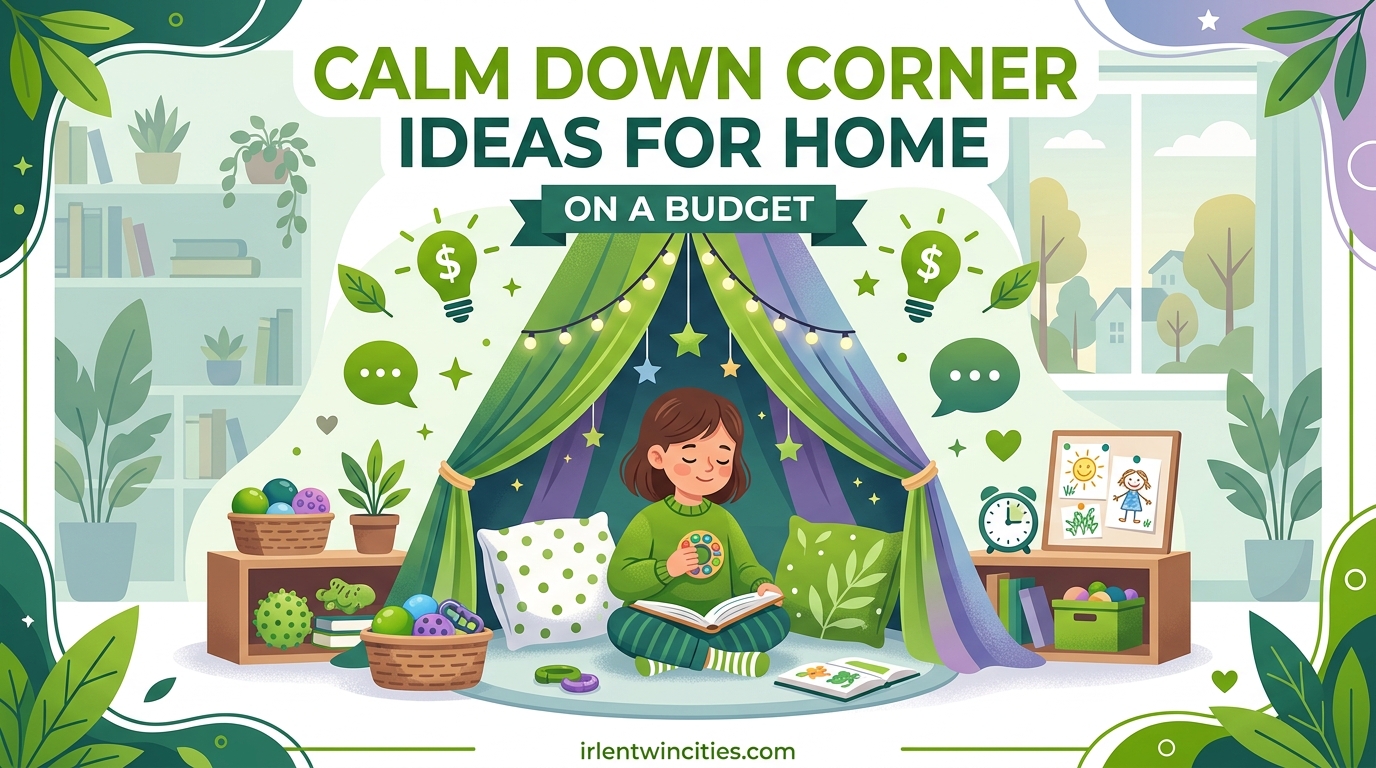
Your child is melting down in the middle of the living room. Toys are everywhere. The noise level keeps rising. You feel that familiar tension building in your own chest.
I have been there more times than I can count. After years of working with families and testing different approaches in my own home, I discovered that creating a dedicated calm down corner changes everything. Not just for children, but for adults too.
This guide will show you exactly how to build an effective calm down corner without spending much money. Most of the ideas here cost under $50 total. Some require nothing but items you already own.
Table of Contents
What Is a Calm Down Corner?
A calm down corner is a designated space in your home where anyone can go to reset emotionally. Think of it as a personal retreat spot that helps with self-regulation and emotional processing.
Unlike a time-out, which is often used as punishment, a calm down corner is a positive tool. The person chooses to go there. They learn to recognize their own emotional state and take steps to feel better.
Our family started using one three years ago when my youngest was struggling with big emotions. Within weeks, we saw fewer meltdowns and faster recovery times. The space became a tool for empowerment rather than isolation.
These spaces work for everyone. Toddlers, school-age children, teenagers, adults, and neurodivergent individuals all benefit from having a sensory-friendly retreat available.
Calm Down Corner Ideas for Home on a Budget: Essential Items
Building an effective space does not require expensive equipment. Focus on three categories: comfort, sensory input, and visual guidance. Here is what actually matters.
Comfort Items
Start with seating that feels enveloping and safe. Bean bag chairs work perfectly because they mold to the body and provide gentle pressure. Floor pillows stacked in a corner create a nest-like feeling. An old yoga mat topped with blankets offers a budget-friendly base.
Look around your home before buying anything. Couch cushions, sleeping bags, and even folded comforters can become cozy seating. I used a pet bed we no longer needed as the base for our first calm down corner. My daughter loved it.
Weighted blankets provide deep pressure stimulation that naturally calms the nervous system. If buying one is not in your budget, try filling a pillowcase with dried rice or beans. A heavy quilt folded in thirds works surprisingly well too.
Sensory Tools
Fidget toys keep hands busy and minds focused. Simple options include stress balls, putty, or even a bag of dried beans to run through fingers. These provide tactile input that helps ground overwhelming emotions.
Sensory bottles are easy to make at home. Fill a clear water bottle with water, glitter glue, and small beads. When shaken, the glitter slowly settles, creating a visual focal point for breathing exercises. Make several with different colors and settling speeds.
Consider adding items with different textures. A piece of faux fur, a mesh bag filled with textured balls, or even a brush with soft bristles can provide the sensory input some people need to regulate.
Visual Aids
Hang simple posters showing breathing techniques. A basic square breathing guide helps anyone slow their heart rate. Count to four while breathing in, hold for four, breathe out for four, hold for four. Repeat until calm returns.
Emotion charts help younger children identify what they are feeling. A simple wheel with faces showing happy, sad, angry, worried, and calm gives them words for their internal state. You can draw this yourself or print free versions from parenting websites.
Visual timers help with transitions. Sand timers work without batteries and create a gentle visual as time passes. Start with five-minute intervals. Knowing the limit is concrete helps children relax into the experience.
DIY vs. Store-Bought: Smart Budget Comparison
Some items are worth buying. Others are easy to make. Here is the breakdown based on our testing and cost analysis.
Make these yourself: sensory bottles, breathing posters, emotion charts, floor cushions from old pillows, weighted lap pads, and fidget bundles using household items. Each DIY project costs between $0 and $5.
Buy these if possible: a quality bean bag chair ($30-50), a small tent or canopy ($20-40), battery-operated fairy lights ($8-15), and a basic white noise machine or Bluetooth speaker ($15-25). These items are harder to replicate effectively at home.
Hit the dollar store for surprising finds. Stress balls, small stuffed animals, storage bins, poster boards for visual aids, and battery-operated candles all cost $1.25 each. I built an entire sensory toolkit for under $20 using Dollar Tree items.
Repurpose before purchasing. Old phone chargers power those fairy lights. Towels become weighted lap pads. Shoeboxes transform into fidget storage. Picture frames hold printed breathing exercises. Get creative with what you already own.
Small Space Solutions for Any Home
Not everyone has a spare room for a dedicated calm down corner. Small spaces work just as well with thoughtful planning.
Convert a closet by removing the door and adding cushions inside. The enclosed walls naturally block visual clutter and create instant coziness. Add battery lights since outlets might be limited. We transformed a hallway closet into a reading nook that doubles as a calm space.
Use the area under stairs if you have it. That awkward triangular space becomes magical with a small tent, some cushions, and string lights. The unique shape feels like a secret hideaway.
Create a portable calm down kit for homes without permanent space options. A storage bin with a lid holds all the essentials. When someone needs a break, they grab the bin and find any quiet corner. The kit includes a small blanket, fidgets, a sensory bottle, and headphones.
Tents and teepees work anywhere. A pop-up tent in the living room corner takes up minimal floor space and creates instant boundaries. When not in use, it folds flat. Look for play tents at thrift stores or ask friends if they have outgrown ones.
How to Create a Sensory-Friendly Atmosphere
The environment matters as much as the items in it. Sensory processing works through multiple channels. Address each one for maximum effectiveness.
Lighting Ideas
Harsh overhead lighting increases stress. Replace it with soft, warm options. Fairy lights provide gentle illumination without overwhelming the eyes. Drape them around the space or stuff them in a jar for a glowing effect.
Lava lamps and bubble tubes offer slow-moving visual interest that naturally lowers heart rate. These cost between $15 and $40 but last for years. If that is outside your budget, try a small fish tank with a single betta fish. The movement is mesmerizing.
Consider color temperature. Blue light keeps people alert. Warm yellow and orange tones signal relaxation to the brain. Look for lights labeled warm white or soft white. Avoid anything labeled daylight or cool white.
Sound Elements
White noise masks household sounds that might interrupt calming. A simple phone app plays brown noise, rain sounds, or ocean waves for free. If you prefer dedicated hardware, basic sound machines start at $20.
Noise-canceling headphones work wonders in busy homes. You do not need expensive ones. Basic over-ear headphones block enough sound to help concentration. Add a calming playlist and the effect multiplies.
Consider the acoustic properties of your chosen space. Corners with soft surfaces absorb sound better than empty walls. Adding pillows, blankets, and curtains helps dampen noise naturally.
Textures and Tactile Input
Mix different textures throughout the space. Smooth satin, rough burlap, soft fleece, and cool cotton each provide different sensory feedback. Let the person choose what feels right in the moment.
Weighted items offer deep pressure that triggers the parasympathetic nervous system. DIY options include rice-filled socks, heavy quilts, or even a bag of books placed on the lap. Commercial weighted blankets work best but cost $50 to $150. Start with homemade versions to see if the sensation helps.
Include fidget tools with various resistance levels. Stress balls, therapy putty, and tangle toys each work different muscle groups. Some people prefer repetitive smooth motions. Others need more vigorous manipulation to release tension.
Mindfulness Activities for Your Calm Down Corner
A calm down corner needs more than just comfortable seating. Activities guide the mind toward peace. These techniques work for children and adults alike.
Start with breathing exercises. Box breathing helps regulate the nervous system quickly. Inhale for four counts, hold for four, exhale for four, hold for four. Repeat five times. The pattern interrupts anxiety cycles.
Simple yoga poses release physical tension. Childs pose stretches the back while feeling protective. Legs up the wall position reverses blood flow and calms the mind. Print free yoga cards showing these poses and keep them laminated in the corner.
Guided meditation scripts help beginners. Read a simple visualization about floating on a cloud or walking through a forest. Record yourself reading these on your phone for instant access. Five minutes of guided imagery reduces cortisol significantly.
Coloring engages both sides of the brain and induces a meditative state. Keep a few coloring books and colored pencils in the space. Mandala designs work particularly well because the circular patterns are naturally soothing to complete.
Calm Down Corner Ideas for Adults
These spaces are not just for children. Adults need emotional regulation tools too. A dedicated calm corner in your bedroom or office provides essential stress relief.
Create a meditation nook in your bedroom corner. A floor cushion, small side table for tea, and a few candles set the mood. Add a meditation app subscription or guided audio tracks. Fifteen minutes here before bed improves sleep quality dramatically.
Office calm corners address workplace stress. If you work from home, designate a chair near a window as your reset spot. Keep a stress ball, a small plant, and a journal there. When tension builds, step away for five minutes of breathing and reflection.
Adult-friendly items differ slightly from children’s versions. Consider a small fountain for water sounds, an essential oil diffuser with lavender, adult coloring books with complex patterns, and guided journals for processing emotions. These feel more mature while providing the same regulation benefits.
I created a reading corner in my bedroom that serves double duty. A comfortable chair, good lamp, and small bookshelf create an instant escape. When work stress overwhelms me, twenty minutes with a novel resets my entire day.
Where Should a Calm Down Corner Go?
Location affects how often the space gets used. Choose wisely based on your home layout and family needs.
Find a quiet area away from high-traffic zones. Kitchens and main hallways rarely work because of constant foot traffic. Bedrooms, unused corners of living rooms, or converted closet spaces provide better isolation.
Consider accessibility. The space needs to be easy to reach during emotional moments. A corner in the basement might be too far when a child is already escalating. Ground floor locations work best for younger children.
Ensure some visibility for supervision. Complete isolation is not the goal. A corner visible from the main living area allows parents to check in without interrupting. Use partial barriers like screens or plants rather than full walls.
Natural light helps but is not essential. If your only available space is dim, add those fairy lights and battery lamps. The warm glow creates its own peaceful atmosphere regardless of windows.
How to Use a Calm Down Corner Effectively
Building the space is only half the work. Teaching proper use ensures it becomes a tool rather than a hiding spot.
Introduce the calm down corner when everyone is already feeling good. Let children explore it as a fun new space first. Explain that this is their special place to feel better when emotions get big.
Teach the signals that mean it is time to use the space. Frustration, anger, overwhelm, or sadness are all valid reasons. Practice walking to the corner together when you notice these feelings building. Eventually, they will go independently.
Use timers to prevent the space from becoming avoidance. Five to ten minutes is usually enough for a reset. A visual timer helps children understand when to rejoin activities. The goal is regulation, not permanent escape.
Never use the calm down corner as punishment. This destroys its effectiveness. If a child associates the space with being sent there as consequence, they will resist using it voluntarily. Keep it positive and optional always.
Model the behavior yourself. When you feel stressed, announce that you are taking five minutes in the calm down corner. Children learn by watching. Seeing adults use the space normalizes emotional regulation.
Frequently Asked Questions
How can I create a relaxing corner on a budget?
Start with items you already own like pillows, blankets, and cushions. Add DIY sensory bottles made from water bottles and glitter. Use dollar store finds for fidget toys and storage. Focus on soft lighting from fairy lights and create breathing posters yourself. A functional calm down corner can cost under $30 using household items and creative repurposing.
What can you put in a calming corner at home?
Essential items include comfortable seating like bean bags or floor cushions, sensory tools such as fidget toys and stress balls, visual aids like breathing exercise posters, soft lighting from fairy lights or lamps, and calming activities like coloring books. Weighted blankets, sensory bottles, and white noise machines add extra sensory support for deeper relaxation.
What should be in a calm down corner?
A well-stocked calm down corner needs three categories of items: comfort items for physical ease, sensory tools for tactile and visual input, and mindfulness activities for emotional regulation. Include seating, blankets, fidget toys, breathing guides, soft lighting, and calming activities. The specific items should match the preferences of the person using the space.
Where should calm corner go in the house?
Place a calm down corner in a quiet location away from high-traffic areas like kitchens and hallways. Bedrooms, living room corners, or converted closets work well. Ensure it is accessible enough to reach during emotional moments but visible enough for supervision of children. Natural light is nice but not required.
Can calm down corners be used for adults?
Absolutely. Adults benefit from calm down corners just as much as children. Create a meditation nook in your bedroom, a reading corner with comfortable seating, or a stress-relief spot in your home office. Adult versions might include journals, essential oil diffusers, and more sophisticated lighting options. The principles of self-regulation and emotional reset apply at any age.
How much does it cost to create a calm down corner?
A basic calm down corner costs between $0 and $50 depending on what you already own. Using household items like old pillows, blankets, and repurposed containers keeps costs at zero. A moderate setup with bean bags, fairy lights, and sensory items from the dollar store runs $30-50. Even elaborate setups with weighted blankets and sound machines typically stay under $150.
Conclusion
Creating a calm down corner does not require a big budget or a dedicated room. Start with what you have. Add a few inexpensive items from the dollar store. Focus on comfort, sensory input, and peaceful atmosphere.
Remember that the space is only a tool. The real magic happens when you teach emotional regulation skills and model their use yourself. A $20 calm down corner used consistently brings more benefit than a $500 setup that sits unused.
Pick one corner of your home this week. Gather some cushions, print a breathing guide, and add a soft light. Your family will thank you for creating this sanctuary of peace in a busy world.