
Table of Contents
Understanding Irlen Syndrome
Irlen Syndrome, also known as Scotopic Sensitivity Syndrome or Meares-Irlen Syndrome, is a visual processing disorder that affects how the brain interprets light and visual information. Unlike eye problems that involve the physical structures of the eye, Irlen Syndrome originates in the brain’s ability to efficiently process visual stimuli.
When someone has Irlen Syndrome, their brain overreacts to certain wavelengths of light, particularly fluorescent lighting and high-contrast colors. This neurological response can cause a range of symptoms, from mild discomfort to significant impairment in daily activities like reading, driving, and working on computers.
The condition is often identified in childhood, particularly when children struggle with reading, attention, or light sensitivity. However, growing awareness and understanding mean that more adults are now recognizing their own symptoms and seeking evaluation. Some individuals have lived for decades without understanding why ordinary visual tasks felt so exhausting or painful.
Can Symptoms Develop in Adulthood?
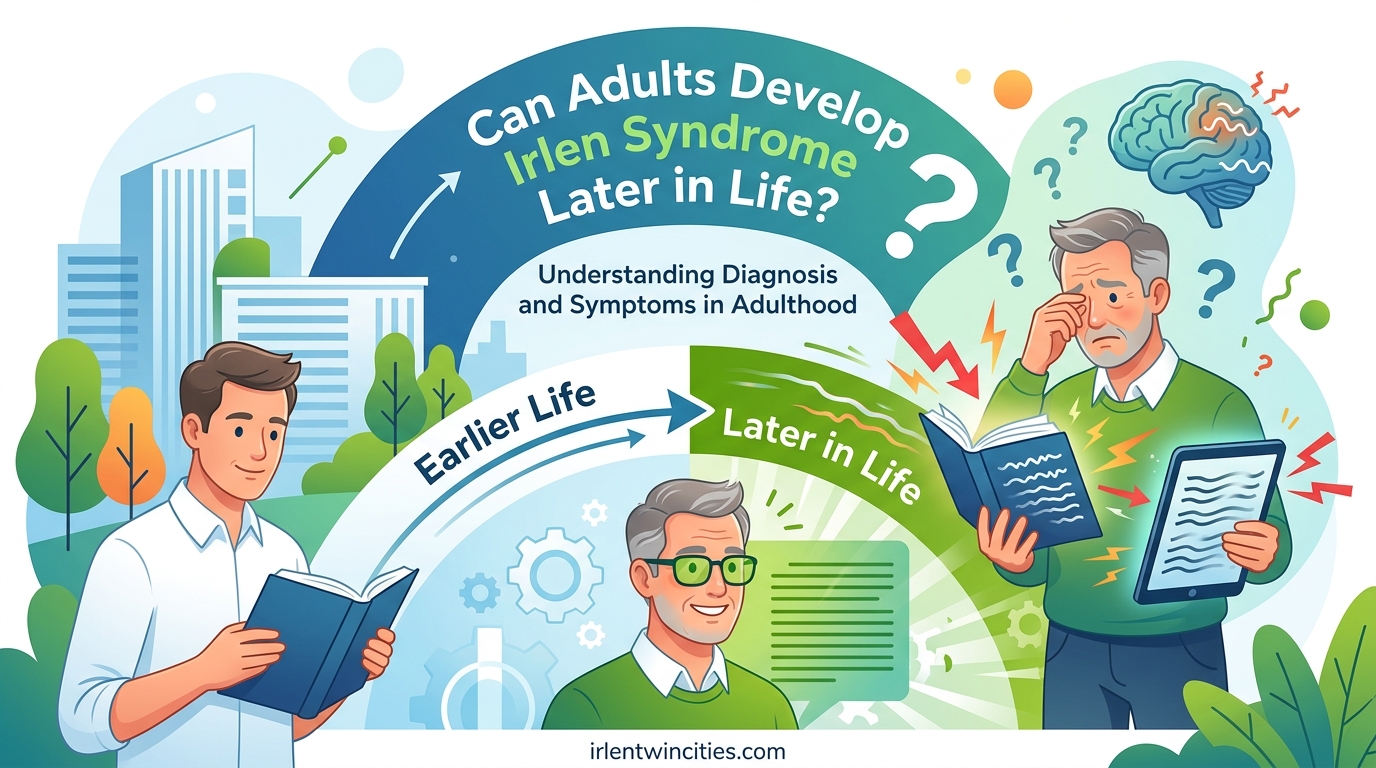
Absolutely. While the most common scenario involves children who have always had subtle symptoms, many adults discover they have Irlen Syndrome for the first time later in life. There are two primary ways this happens:
Congenital Irlen Syndrome Identified in Adulthood
Many adults have had Irlen Syndrome their entire lives, but the condition went unrecognized during childhood. In decades past, the syndrome was not well understood, and many individuals simply accepted their difficulties as normal. These adults may have developed coping strategies without ever understanding why reading was so challenging or why fluorescent lights caused headaches.
Looking back, they often realize that symptoms were present all along. Perhaps they avoided reading, struggled in school, or experienced chronic light sensitivity. For these individuals, an adult diagnosis provides validation and relief, explaining lifelong challenges that previously had no name.
Acquired Irlen Syndrome
Some adults genuinely develop Irlen Syndrome symptoms for the first time in adulthood due to specific triggering events or gradual changes. This acquired form is less discussed but increasingly recognized by researchers and clinicians.
Important Discovery
Unlike conditions that are purely genetic or congenital, Irlen Syndrome appears to have both lifelong and acquired forms. Brain injuries, certain medications, hormonal changes, and cumulative visual stress may trigger symptoms in adulthood.
Why Symptoms May Appear in Adulthood
Several factors can contribute to the emergence or worsening of Irlen Syndrome symptoms in adulthood. Understanding these triggers can help you recognize whether your own experiences might be related.
Traumatic Brain Injury (TBI) and Concussions
Head injuries are increasingly recognized as a trigger for Irlen Syndrome symptoms. When the brain experiences trauma, the visual processing centers can be affected, potentially causing or exacerbating light sensitivity and perceptual processing difficulties. Many adults first notice symptoms after experiencing a concussion, car accident, or sports-related head injury.
Hormonal Changes
Significant hormonal shifts can impact neurological processing, including visual processing. Women may first notice symptoms during pregnancy, perimenopause, or menopause. Puberty, while typically considered a childhood time, can also trigger new symptoms in teenagers. These hormonal fluctuations appear to affect how the brain processes visual information.
Chronic Stress and Cumulative Visual Strain
Modern life places enormous demands on our visual systems. Years of extended computer work, smartphone use, and exposure to artificial lighting may gradually overwhelm the visual processing system. For some individuals, there comes a tipping point where coping mechanisms fail and symptoms become undeniable.
Medications and Medical Treatments
Certain medications have been reported to trigger or worsen Irlen Syndrome symptoms. Forum discussions mention medications for bipolar disorder (such as lithium), antidepressants, and other psychiatric medications as potential triggers. If you have noticed symptom changes after starting a new medication, this could be relevant.
Other Medical Conditions
Conditions that affect the brain or neurological system may co-occur with or trigger Irlen Syndrome symptoms. Fibromyalgia, chronic fatigue syndrome, migraine disorders, and autoimmune conditions have all been mentioned by adults describing their diagnosis journeys.
Signs and Symptoms of Irlen Syndrome in Adults
Recognizing Irlen Syndrome in adults can be challenging because symptoms often overlap with other conditions. Here are the hallmark signs to watch for:
Light Sensitivity
Discomfort or pain from fluorescent lights, sunlight, headlights, or bright screens. You may need to squint or shield your eyes frequently.
Reading Difficulties
Text may appear to move, blur, or double. Reading fatigue sets in quickly, and you may lose your place often or skip lines accidentally.
Headaches and Eye Strain
Chronic headaches, particularly after reading or exposure to certain lighting conditions. Eye strain and general fatigue from visual tasks.
Attention and Concentration Issues
Difficulty focusing on visual tasks, particularly sustained reading or computer work. Your mind may wander despite your best efforts.
Print Distortion
Words or lines on a page may appear distorted, wavy, or unstable. White paper may appear uncomfortably bright or cause glare.
Depth Perception Problems
Difficulty judging distances, navigating stairs, or experiencing clumsiness. Problems with eye-hand coordination.
If you recognize several of these symptoms, particularly if they have been worsening or if you can trace them to a specific event like a head injury, it may be worth pursuing an Irlen assessment.
The Adult Diagnosis Experience
For many adults, receiving an Irlen Syndrome diagnosis later in life is a profound and emotional experience. Forum discussions and personal stories reveal common themes in the adult diagnosis journey.
“Looking back, it was clear I had severe Irlen Syndrome all along, but it’s very unknown still. Getting diagnosed at 35 was like finally having an explanation for decades of struggle. I thought everyone saw text move on the page like that.”
Reddit user, r/irlensyndrome community
The path to diagnosis often involves years of uncertainty. Many adults report visiting multiple professionals, including optometrists, ophthalmologists, and general practitioners, who may not be familiar with Irlen Syndrome. Some adults were misdiagnosed with conditions like ADHD, dyslexia, or simply told their symptoms were stress-related.
“I was diagnosed with autism in my late 30s, and during the assessment process, the psychologist suggested I might also have Irlen Syndrome. It was like pieces of a puzzle finally coming together. The light sensitivity I thought was just part of being autistic turned out to be something that could be treated.”
Community forum member, mentalhealthforum.net
Common feelings associated with late diagnosis include:
- Relief and validation: Finally having an explanation for lifelong struggles
- Grief: Processing the realization that years of difficulty could have been addressed earlier
- Hope: Learning that treatment options exist and symptoms can be managed
- Frustration: Anger at the lack of awareness among medical professionals
How Irlen Syndrome Is Diagnosed in Adults
The diagnostic process for adults involves a comprehensive evaluation by a certified Irlen diagnostician. Unlike standard eye exams, Irlen assessments specifically evaluate visual processing and how different colors of light affect comfort and function.
Finding a Qualified Diagnostician
The first step is finding a certified Irlen tester or diagnostician. The Irlen Institute maintains a directory of trained professionals worldwide. It’s important to seek someone specifically trained in Irlen Syndrome assessment, as general eye care professionals may not have this specialized training.
The Assessment Process
A typical Irlen assessment involves several components:
- Initial consultation: Discussion of symptoms, history, and how difficulties affect daily life
- Visual processing evaluation: Testing that measures comfort with different visual tasks under various lighting conditions
- Colored filter testing: Trial with different colored overlays and lenses to identify which colors improve visual processing
- Reading assessment: Evaluation of reading fluency, accuracy, and comfort with and without color interventions
- Determination of optimal color: Identification of the specific colored lens or overlay that provides maximum benefit
What to Expect
The assessment can take several hours and is generally painless, though it may be fatiguing. Many adults report that the process itself is illuminating, as they begin to notice which conditions provide relief. Some diagnosticians offer remote or hybrid assessments, particularly following changes in service delivery during recent years.
Treatment Options for Adults
The good news for adults with late-onset or newly identified Irlen Syndrome is that effective treatment options exist. While there is no cure, the condition can be managed very successfully with the right interventions.
Colored Lenses and Filters
The primary treatment for Irlen Syndrome involves wearing colored lenses specifically prescribed to filter out the wavelengths of light that cause discomfort. These are not ordinary tinted glasses but precision-made lenses based on your individual color needs. Some individuals need very specific colors that differ from common perceptions of what might seem intuitive.
Colored overlays for reading materials can also be helpful. These transparent plastic sheets placed over text can reduce visual distortion and fatigue. Many adults find that using a specific color overlay for reading makes a remarkable difference in comfort and comprehension.
Environmental Modifications
Simple changes to your environment can significantly reduce symptoms:
- Using full-spectrum or natural lighting instead of fluorescent lights
- Adjusting computer screen settings or using screen filter applications
- Wearing hats or sunglasses outdoors to reduce glare
- Choosing reading materials with less contrast or cream-colored pages
- Taking frequent breaks during extended visual tasks
Accommodations at Work
Adults with Irlen Syndrome may be entitled to workplace accommodations under disability legislation. These might include lighting modifications, permission to use colored filters on screens, extended time for reading-intensive tasks, or modified work schedules to reduce visual fatigue.
Treatment Is Available
Unlike some conditions that require years of treatment before improvement, many adults experience significant relief immediately upon finding the right colored lenses or overlays. The assessment process itself often provides answers and strategies that begin helping right away.
Frequently Asked Questions
Irlen Syndrome is considered a lifelong condition, meaning it does not typically resolve on its own. However, this does not mean symptoms cannot be effectively managed. With appropriate colored lens filters and environmental modifications, most individuals experience significant and sometimes dramatic improvement in their symptoms and quality of life.
While Irlen Syndrome and ADHD can share overlapping symptoms such as difficulty concentrating and problems with reading, they are distinct conditions. Many individuals have both diagnoses, and researchers believe there may be some connection between them. Irlen Syndrome is specifically a visual processing disorder, while ADHD is a neurodevelopmental condition affecting executive function, attention regulation, and impulse control.
Irlen Syndrome is classified as a perceptual processing disorder, which originates in how the brain processes visual information. It involves neurological pathways and brain function rather than problems with the physical structures of the eye. While not always categorized under traditional neurological disorder classifications, it fundamentally involves brain-based processing differences.
Irlen Syndrome can qualify as a disability when it significantly impacts daily functioning, particularly reading and visual tasks required for work or education. In many jurisdictions, individuals with Irlen Syndrome may be eligible for accommodations under disability legislation. However, eligibility varies by location and individual circumstances. An official diagnosis can help establish eligibility for accommodations in educational and workplace settings.
Yes, Irlen Syndrome can be professionally diagnosed. Diagnosis is conducted by certified Irlen diagnosticians who specialize in visual processing assessment. The evaluation involves testing visual processing abilities with and without colored filters, assessing reading efficiency, and determining the specific colored lenses that provide optimal benefit. It is important to seek a qualified professional rather than attempting self-diagnosis.
Absolutely. While often identified in childhood, Irlen Syndrome affects adults of all ages. Some adults have lived with symptoms their entire lives without understanding the cause, while others may develop symptoms later in life due to factors such as brain injury, hormonal changes, or cumulative visual stress. It is never too late to seek evaluation and treatment.
Key Takeaways
If you are an adult experiencing unexplained light sensitivity, reading difficulties, visual fatigue, or related symptoms, Irlen Syndrome may be the explanation you have been seeking. The condition can genuinely develop or worsen in adulthood due to various factors including traumatic brain injury, hormonal changes, medication effects, and cumulative visual strain.
Getting diagnosed as an adult, whether for symptoms that emerged recently or symptoms you have had your whole life, can be transformative. While the journey may involve finding the right professional and navigating a healthcare system that does not always recognize the condition, treatment options are available and effective.
Many adults who receive late diagnoses describe the experience as life-changing. Understanding why certain visual experiences have always been uncomfortable, or why reading has always felt like hard work, can bring profound relief and validation. With appropriate colored lenses and environmental modifications, significant improvement is often possible.
If this article resonates with your experiences, consider reaching out to a certified Irlen diagnostician to explore whether Irlen Syndrome might be affecting your life. You deserve answers, and effective help is available.
Ready to Learn More?
If you suspect you or a loved one may have Irlen Syndrome, professional assessment is the first step toward finding relief.