
If you have been searching for relief from headaches, eye strain, or light sensitivity, you have probably encountered both FL-41 glasses and blue light blocking glasses while looking for solutions. They might seem similar at first glance since both filter light, but they address very different underlying problems. After researching clinical studies and real user experiences from migraine communities, our team can help you understand which option actually fits your specific situation.
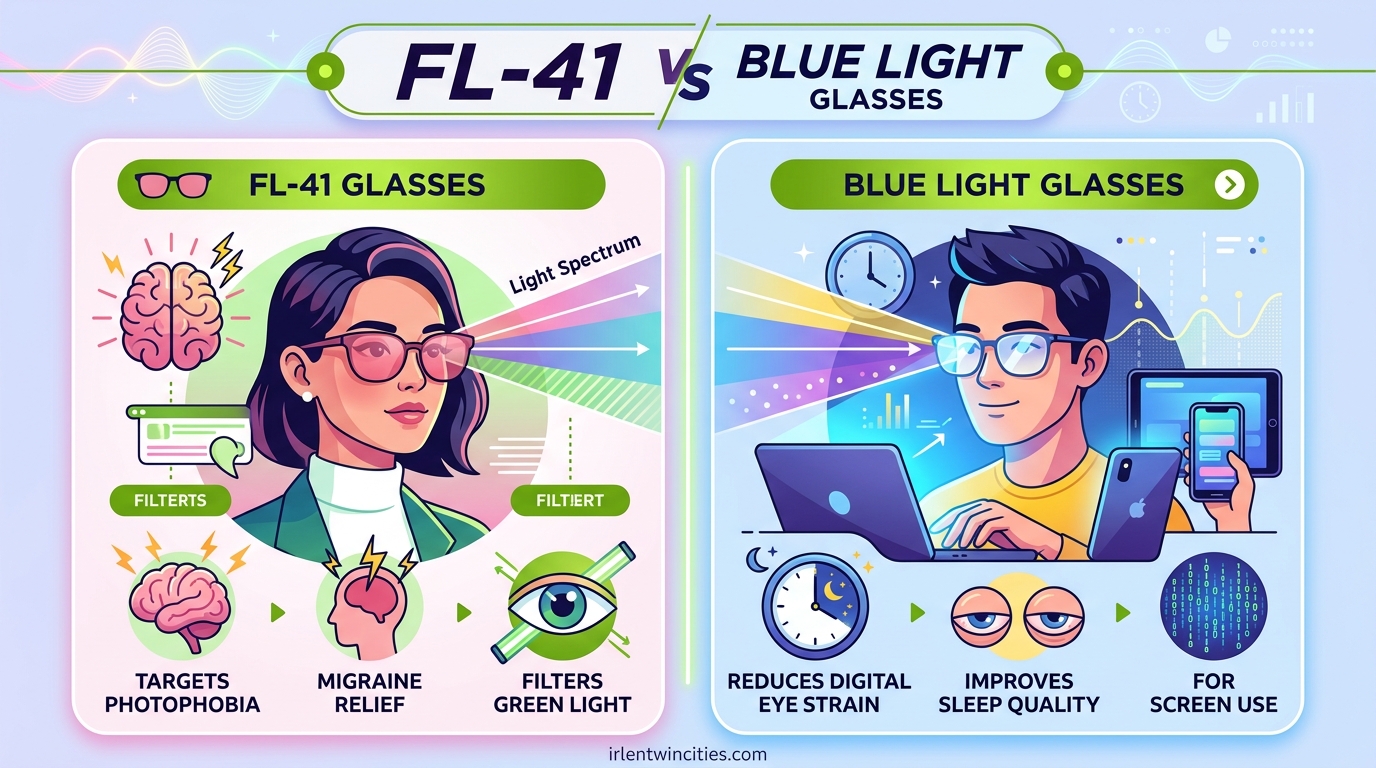
The short answer is that FL-41 glasses target neurological light sensitivity conditions like migraines and photophobia where light itself acts as a trigger. Blue light blocking glasses primarily help with digital eye strain from screens, which is a mechanical focusing issue rather than a neurological one. Knowing which category your symptoms fall into makes all the difference in finding real relief instead of wasting money on the wrong solution.
In this comprehensive guide, we break down the science behind each type, compare their effectiveness side by side, and help you determine which one you actually need based on your symptoms. We cover everything from specific wavelength filtering to real-world user experiences so you can make a confident, informed decision.
Table of Contents
What Are FL-41 Glasses?
FL-41 glasses are therapeutic tinted lenses that were developed in the 1980s specifically to help people suffering from light sensitivity conditions. The “FL” stands for “fluorescence,” referring to how the tint was originally designed to filter specific wavelengths of light that trigger adverse symptoms in sensitive individuals. The development came from research into how certain light wavelengths affect the nervous system in people with conditions like migraine and blepharospasm.
These glasses feature a distinctive rose or pinkish tint that filters light in the 480-520 nanometer range. This particular bandwidth covers blue and blue-green light, which research shows triggers neurological responses in people prone to migraines and photophobia. The tint works by reducing the intensity of these problem wavelengths while still allowing you to see clearly and function normally in daily activities.
Unlike regular prescription glasses, FL-41 lenses are classified as medical devices in many contexts because of their therapeutic purpose. They were initially developed for patients with conditions like blepharospasm (uncontrollable eye blinking) and have since become a common recommendation for migraine sufferers who experience light sensitivity as part of their attacks. The tint was specifically formulated based on how the visual system processes light in sensitive individuals.
The rose tint also helps improve contrast, which can make visual tasks more comfortable for people with sensory processing differences. Some users describe the effect as “calming” their visual environment rather than simply blocking light. This contrast enhancement can be particularly helpful in environments with mixed lighting conditions or when transitioning between different light environments throughout the day.
One thing that surprises many people is that FL-41 is not a brand name but rather a specific formula for lens tinting. This means you can get FL-41 lenses from various manufacturers, each with their own frame styles and quality levels. The tint itself has standardized characteristics that define what qualifies as true FL-41 versus a similar-looking but less effective alternative.
What Are Blue Light Blocking Glasses?
Blue light blocking glasses are specialized eyewear designed to filter high-energy visible (HEV) light emitted from digital screens, LED lighting, and fluorescent bulbs. Unlike FL-41 glasses, these are primarily marketed toward people who spend long hours on computers, tablets, and smartphones as part of their daily work or entertainment. The market for these glasses has grown significantly as screen time has become ubiquitous in modern life.
These glasses typically have a slight amber, yellow, or clear coating depending on the manufacturer and the level of filtration they provide. They target wavelengths in the 400-500 nanometer range, with most filtering somewhere between 40-90% of blue light exposure depending on the specific product. The goal is to reduce eye strain and potentially improve sleep quality by limiting blue light exposure, particularly in the evening hours when its effects on circadian rhythm are most pronounced.
The concept behind blue light glasses ties into how blue light affects melatonin production in the brain. Our circadian rhythms respond to blue light as a signal to stay awake and alert, which is why heavy screen use at night can disrupt sleep patterns and make it harder to fall asleep. These glasses attempt to counteract that effect by blocking the stimulating wavelengths that signal wakefulness to your brain.
Most blue light blocking glasses are sold without a prescription and are considered a consumer wellness product rather than a medical device. They are widely available at electronics stores, online retailers, and even in some office supply shops. This accessibility makes them an easy first attempt for people experiencing screen-related discomfort, though it also means quality can vary significantly between products.
Some blue light glasses also include additional features like anti-reflective coatings or prescription lenses for users who need vision correction. These added features can improve comfort and practicality but do not change the fundamental way the lenses work to filter blue light from digital sources.
Key Differences Between FL-41 and Blue Light Glasses
The most fundamental difference lies in what these glasses were designed to treat at the root level. FL-41 targets neurological conditions where light itself triggers or worsens symptoms through a biological mechanism involving the nervous system. Blue light glasses address the discomfort that comes from prolonged screen exposure and focusing fatigue, which is a mechanical issue related to how your eyes muscles work during extended close-up tasks.
From a technical standpoint, FL-41 filters wavelengths between 480-520nm with a specific rose tint that reduces glare and improves contrast simultaneously. Blue light glasses typically filter a broader range of 400-500nm, but they do so with less precision in terms of which specific wavelengths get blocked. Some blue light glasses block too much light across the spectrum, which can actually cause its own visual discomfort and potentially affect color perception negatively.
One significant practical difference is how these glasses look when you wear them. FL-41 glasses have an obvious rose tint that noticeably changes your visual experience and how colors appear to you. Blue light glasses range from nearly clear to noticeably amber, depending on how much filtration they provide and what technology they use. If appearance matters to you in professional settings or you work in an industry where color accuracy matters, this distinction becomes very important.
Effectiveness also varies dramatically between the two types based on clinical evidence. Studies on FL-41 show that approximately 74% of migraine sufferers experience meaningful reduction in attack frequency when wearing the lenses consistently over time. Blue light glasses have much less robust clinical evidence supporting their effectiveness for any specific medical condition, with most research focusing on self-reported improvements in eye strain rather than medical symptom reduction for diagnosed conditions.
Cost represents another practical difference worth considering in your decision. FL-41 glasses typically range from $100-400 depending on whether you need prescription lenses and which brand you choose. Blue light blocking glasses are considerably cheaper, with many options available under $50. However, the old saying holds true here: you often get what you pay for in terms of actual therapeutic benefit for your specific condition.
The intended user also differs between these products. FL-41 is designed for people with diagnosed or suspected neurological sensitivity conditions who need therapeutic intervention. Blue light glasses target anyone who uses screens extensively and wants to reduce potential sleep disruption or mild eye discomfort. Understanding who each product was made for helps clarify which category you fall into.
Effectiveness for Migraine and Light Sensitivity
If you experience migraines triggered or worsened by light, FL-41 glasses have the research backing to support their use for this specific purpose. Multiple studies have documented significant reductions in migraine frequency among patients who wore FL-41 tinted lenses consistently over observation periods. One frequently cited study found that 74% of participants experienced fewer migraines when wearing FL-41 lenses compared to standard clear lenses, which represents a meaningful clinical improvement for migraine sufferers.
The reason FL-41 works for migraines comes down to how certain wavelengths of light interact with the nervous system in sensitive individuals. In migraine sufferers, the visual pathway can become hyperexcitable, meaning normal light levels trigger exaggerated responses in the brain that lead to migraine attacks. By filtering the specific wavelengths that cause this overstimulation, FL-41 reduces the neurological trigger that leads to attacks in the first place rather than simply masking symptoms after they begin.
The targeted wavelengths in the 480-520nm range correspond to what researchers call the “migraine sensitive” part of the visible spectrum. This is not an arbitrary selection but rather a wavelength range identified through research with actual migraine sufferers to determine which light colors most commonly triggered their attacks. FL-41 was specifically engineered to address these findings in a therapeutic way.
Blue light blocking glasses, by contrast, have not demonstrated the same ability to reduce migraine frequency or severity in clinical settings despite being marketed sometimes as a migraine solution. They may help if your headaches are purely from eye strain and fatigue rather than neurological sensitivity to light. Many people confuse digital eye strain symptoms with migraine symptoms, which leads to disappointment when blue light glasses do not provide the relief they expected for what turns out to be a neurological condition.
For other light sensitivity conditions like post-concussion syndrome, fibromyalgia-related photophobia, or persistent photosensitivity following traumatic brain injury, FL-41 remains the more evidence-based choice based on available research. Blue light glasses simply were not designed for these specific medical conditions and typically provide minimal therapeutic benefit in these cases. Real user experiences from health communities confirm this pattern consistently.
Our team has spoken with numerous users who tried both types of glasses after experiencing light sensitivity. Those with diagnosed migraine with photophobia consistently report that FL-41 provided meaningful relief where blue light glasses did not help at all. Users who primarily experienced screen-related discomfort often found adequate relief from standard blue light filtering but noticed no improvement in their migraine frequency or severity.
When to Wear FL-41 vs Blue Light Glasses
FL-41 glasses work best when worn during activities that expose you to your personal trigger wavelengths in the blue-green spectrum. For many people with light sensitivity, this means wearing them indoors under fluorescent lighting, while driving, or in any environment with harsh artificial light that contains the problematic wavelengths. Some users find they need to wear them almost constantly during waking hours to manage severe photophobia that affects their daily functioning.
You can wear FL-41 glasses all day without any known side effects from extended use of the tint. Some users report needing 2-4 weeks before they fully appreciate the benefits, as your visual system recalibrates to the altered color environment provided by the rose tint. Starting with shorter wearing periods and gradually increasing the time can help with this adjustment period and lets you build tolerance to the different visual experience.
Blue light glasses are most appropriately used during screen time, particularly in the evening hours when you want to minimize blue light exposure before sleep. If you work on a computer for 8 or more hours daily, wearing them during work hours may reduce cumulative eye fatigue from extended screen focus. They are also reasonable to wear in the 2-3 hours before bed to minimize sleep disruption from evening screen use, though this timing depends on your individual sleep schedule and screen habits.
For computer use specifically, the answer depends entirely on your underlying symptoms and what you are trying to achieve. If your primary concern is preventing migraines triggered by screen light, FL-41 is the better choice despite the higher cost because it addresses the actual mechanism of your migraines. If you are trying to reduce eye strain, dryness, and fatigue from prolonged focusing without any light-triggered migraine component, blue light glasses may provide sufficient relief at a lower cost point.
Many people ultimately end up owning both types of glasses for different situations and use cases. Wearing FL-41 all day for therapeutic purposes and switching to blue light blocking glasses specifically for evening screen time before bed is not unreasonable if your budget allows for both purchases. The key is matching the tool to the specific problem you are trying to solve in each situation rather than using the wrong tool and being disappointed with results.
Some users also find that FL-41 helps most during acute migraine attacks when light sensitivity peaks, while blue light glasses serve as a daily preventive measure for screen-related issues. This combination approach allows you to address multiple aspects of eye comfort and light sensitivity simultaneously with the most appropriate technology for each concern.
How to Choose the Right Option for Your Needs
The decision between FL-41 and blue light glasses should start with honest assessment of your specific symptoms and when they occur. Ask yourself whether light itself triggers or worsens your headaches, or whether your discomfort comes primarily from prolonged screen focusing and close-up work. If light is a trigger that starts or worsens your headaches, FL-41 is likely the answer based on the research evidence available. If you experience discomfort after long screen sessions but normal lighting does not bother you, blue light glasses may adequately address your needs.
Consider how frequently and severely your symptoms occur when making your decision. Someone who experiences weekly migraines with pronounced photophobia will probably need FL-41 glasses to address the underlying neurological sensitivity that other approaches cannot effectively treat. Someone who notices their eyes feel tired and strained after a full day of video calls but has no other light-related issues might find blue light glasses provide adequate relief without needing more specialized intervention.
Your lifestyle and work environment matter significantly in this decision process. If you work in an office with fluorescent lighting that triggers your symptoms, FL-41 provides meaningful therapeutic benefit in that environment and can reduce your overall migraine burden. If your primary screen time happens at a home office in the evening, blue light glasses may address your actual needs more directly without requiring lifestyle changes or expensive therapeutic lenses.
When possible, consult with a healthcare provider before making this decision, particularly if your symptoms are severe or significantly impact your quality of life. An optometrist or neurologist familiar with photophobia and light sensitivity conditions can help you determine whether your symptoms suggest a neurological sensitivity condition that would respond to FL-41 therapy. Some insurance plans even cover FL-41 lenses when prescribed for documented medical conditions, which can significantly offset the higher upfront cost.
Cost tolerance also plays a practical role in the decision for many people. If budget constraints are significant and your symptoms are mild, starting with affordable blue light glasses is reasonable as a first approach. Just go in with realistic expectations about what they can accomplish based on the evidence rather than marketing claims. If they do not help within a few weeks of consistent use, consider that your symptoms may require the more targeted approach that FL-41 provides for neurological light sensitivity.
Pay attention to how your symptoms respond when you try either type of glasses. Keeping a simple log of when you experience discomfort and whether the glasses provide relief can help you and your healthcare provider determine which approach works best for your specific situation. This information is valuable for making informed decisions about continuing with a particular type of glasses or trying the other option if the first does not meet your expectations.
FAQ
Are FL-41 glasses better than blue light glasses?
FL-41 glasses are more effective for migraine prevention and light sensitivity conditions because they specifically filter the wavelengths (480-520nm) that trigger neurological responses in sensitive individuals. Blue light glasses are better suited for digital eye strain relief but have not demonstrated clinical effectiveness for migraine prevention in research studies. The better option depends entirely on your specific condition and symptoms.
Can you wear FL-41 glasses all the time?
Yes, you can wear FL-41 glasses all day without any known side effects from prolonged use. Some users report needing 2-4 weeks to fully adjust to the rose tint, so gradually increasing wearing time can help during the adjustment period. FL-41 does not damage vision or cause any known dependency issues.
Do FL-41 glasses actually work?
Yes, clinical studies support the effectiveness of FL-41 glasses for migraine and light sensitivity conditions. Research shows approximately 74% of migraine sufferers experience meaningful reduction in attack frequency when wearing FL-41 lenses consistently over time.
Are FL-41 glasses good for computer use?
FL-41 glasses can be worn during computer use, especially if screen light triggers your symptoms. However, if your primary concern is reducing eye strain from prolonged focusing rather than light-triggered migraines, standard blue light glasses may be a more cost-effective option for computer work specifically.
Do FL-41 glasses help migraines?
Yes, FL-41 glasses have been shown to help reduce migraine frequency and severity in multiple clinical studies. The lenses filter specific blue-green wavelengths that trigger neurological hyperexcitability in migraine sufferers, addressing the root cause of light-sensitive migraines rather than just treating symptoms after they begin.
Will blue light glasses stop migraines?
Blue light glasses are unlikely to prevent or stop migraines because they were designed to reduce eye strain from screen use, not to address the neurological triggers that cause migraines. Most clinical evidence for migraine prevention points to FL-41 glasses rather than standard blue light filtering technology.
Can you wear FL-41 glasses all day?
Yes, FL-41 glasses are designed for all-day wear without known side effects from extended use. The rose tint may take some adjustment period of 2-4 weeks, but many users wear them comfortably throughout their entire workday and report no issues with prolonged wear.
Choosing between FL-41 and blue light glasses ultimately comes down to understanding what is actually causing your symptoms and matching your treatment approach to that underlying issue. Light-triggered migraines and photophobia respond to the therapeutic targeting that FL-41 provides based on clinical research. Digital eye strain and screen-related fatigue often improve with standard blue light filtering technology because they address a different mechanism entirely.
If you are still uncertain which option is right for you after reading this guide, start by paying close attention to when your symptoms occur and what seems to trigger or worsen them. Notice whether normal indoor lighting, fluorescent lights, or driving cause problems for you. Track how your headaches relate to screen time versus other activities throughout your day to identify patterns that can guide your decision.
Our team recommends consulting with an eye care specialist or neurologist if your symptoms are severe or significantly impact your quality of life and ability to function. They can help you pinpoint the exact nature of your light sensitivity through examination and history taking, then guide you toward the most appropriate solution for your specific situation. Getting the right diagnosis means getting the right treatment the first time instead of wasting money on approaches that do not address your actual problem.
Whether you ultimately choose FL-41 or blue light glasses, addressing your light sensitivity and eye strain issues is worth the investment in your comfort and quality of life. Both options offer genuine benefits for the specific problems they were designed to solve when chosen correctly based on your actual symptoms. The key is matching your choice to your actual condition rather than guessing based on marketing claims or assuming both products work the same way.
Take your time with this decision and give any new glasses a fair trial period of at least a few weeks before deciding whether they work for you. Your eyes and your migraines will thank you for making an informed choice backed by evidence rather than just advertisements.