
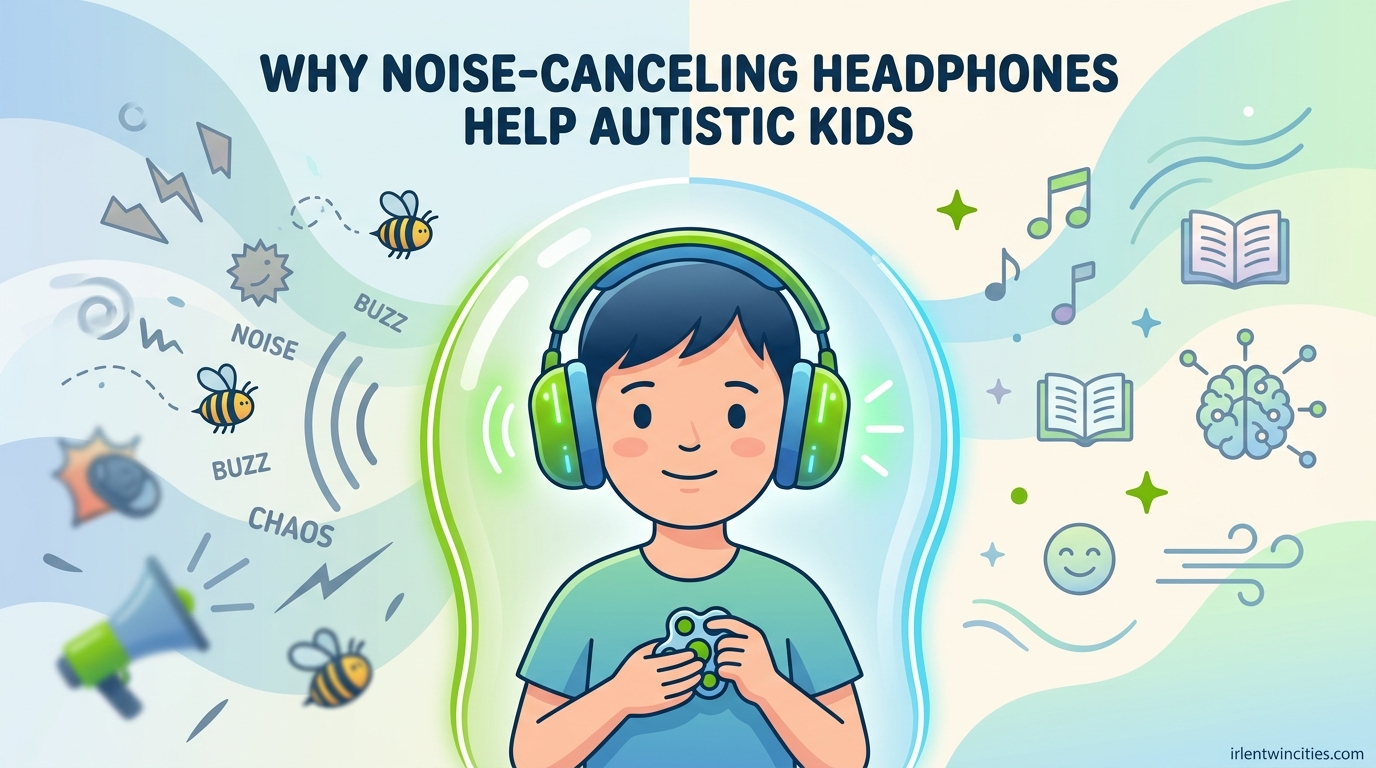
Noise-canceling headphones help autistic kids by reducing sensory overload, blocking overwhelming background noise, improving focus and concentration, decreasing anxiety and stress, and preventing meltdowns in challenging environments.
If you’re a parent of an autistic child, you’ve probably witnessed the distress that everyday sounds can cause. The hum of fluorescent lights, the chatter of a busy classroom, or the rumble of a vacuum cleaner can trigger intense reactions. I’ve spoken with dozens of parents and autistic individuals who describe these moments as physically painful.
In this guide, I’ll explain why noise-canceling headphones have become such a valuable tool for autistic children. You’ll learn how these devices work, the science behind their benefits, and practical tips for choosing and introducing them to your child. Whether you’re new to this topic or looking to deepen your understanding, this article covers everything you need to know.
Table of Contents
Understanding Sensory Processing in Autism
Autistic children process sensory information differently than neurotypical children. Their brains may amplify certain sounds while filtering out others, creating a chaotic auditory experience. This difference isn’t a deficit—it’s a different way of experiencing the world.
Sensory processing refers to how the nervous system receives messages from the senses and turns them into responses. For autistic individuals, this system can be hyper-responsive, meaning everyday sounds feel amplified and overwhelming. A sound that you barely notice might feel like a jackhammer to an autistic child.
The research backs this up. A study published in PMC found that children with autism spectrum disorder show heightened physiological responses to environmental noise. Their heart rates increase, their skin conductance changes, and their stress levels spike when exposed to sounds that others tolerate easily.
Sensory overload occurs when the brain receives more sensory input than it can process. For autistic children, this happens frequently in environments most people consider normal. Shopping centers, school cafeterias, and even family gatherings can become unbearable.
Common Signs of Sensory Overload
Recognizing sensory overload is the first step toward helping your child. The signs vary from child to child, but several patterns emerge consistently.
Physical signs include covering ears, squinting or closing eyes, pacing or rocking, and complaining of headaches or stomach aches. Some children become physically aggressive or seek deep pressure by hugging themselves tightly.
Behavioral signs are equally telling. A child might withdraw completely, refuse to speak, or become increasingly agitated. They may try to escape the environment or melt down entirely. These aren’t tantrums—they are responses to genuine physical distress.
Emotional signs include sudden anxiety, crying without an obvious cause, or expressing that everything is “too much.” Older children and teens might articulate that certain sounds physically hurt them.
Understanding these signs helps parents intervene before a full meltdown occurs. Noise-canceling headphones can be that intervention tool, providing immediate relief when sensory input becomes overwhelming.
How Noise-Canceling Headphones Work
Noise-canceling headphones use sophisticated technology to create a quieter auditory environment. They don’t just block sound—they actively work to neutralize it. Understanding how they work helps parents make informed decisions about which type suits their child best.
The technology comes in two main forms: active noise cancellation and passive noise isolation. Both reduce unwanted sound, but they do so through different mechanisms. Each has advantages depending on your child’s specific needs and preferences.
Active Noise Cancellation (ANC)
Active noise cancellation uses advanced electronics to eliminate sound waves. Tiny microphones inside the headphones detect incoming ambient noise. The headphones then generate sound waves that are exactly opposite to the detected noise.
These opposite waves are called anti-phase waves. When they meet the original sound waves, they cancel each other out through a process called destructive interference. The result is silence—or at least a significant reduction in perceived noise.
ANC works best on consistent, low-frequency sounds. The rumble of an airplane engine, the hum of an air conditioner, or the drone of traffic are all effectively reduced. Higher frequency sounds like sudden shouts or high-pitched alarms are less affected.
Some autistic users report feeling slight pressure in their ears when ANC is active. This sensation is similar to the feeling during altitude changes and usually fades as the ears adjust. For most users, the relief from overwhelming noise far outweighs this temporary sensation.
Passive Noise Isolation (PNI)
Passive noise isolation doesn’t use electronics. Instead, it relies on physical barriers to block sound. Thick ear cups, snug fits, and sound-absorbing materials prevent noise from reaching the ear in the first place.
Over-ear headphones with memory foam cushions excel at passive isolation. The foam conforms to the head, creating a seal that blocks external sound. In-ear headphones with proper-fitting tips also provide excellent isolation by sealing the ear canal.
PNI works across all frequency ranges, including sudden high-pitched sounds that ANC might miss. It doesn’t require batteries, making it reliable for all-day use. Many parents prefer PNI for younger children because there’s no pressure sensation to adapt to.
The downside is that PNI alone doesn’t reduce noise as dramatically as high-quality ANC. For extremely sensitive children, combining both technologies provides the most effective solution.
| Feature | Active Noise Cancellation (ANC) | Passive Noise Isolation (PNI) |
|---|---|---|
| Technology | Electronic sound wave cancellation | Physical sound blocking |
| Power Required | Yes (battery) | No |
| Best For | Consistent low-frequency sounds (engines, humming) | All frequencies, sudden sounds |
| Comfort Factor | May cause slight pressure sensation | Physical seal required for effectiveness |
| Portability | Heavier due to electronics | Can be very lightweight |
Key Benefits of Noise-Canceling Headphones for Autistic Children
The benefits of noise-canceling headphones extend far beyond simply reducing volume. For autistic children, these devices can transform daily experiences from overwhelming to manageable. Parents consistently report dramatic improvements in their children’s quality of life.
The research supports these observations. Studies measuring physiological responses show that noise-attenuating headphones reduce heart rate variability and electrodermal activity in autistic children. These measurements indicate lower stress levels and calmer nervous systems.
Reducing Sensory Overload
Sensory overload is one of the most challenging aspects of autism for many families. When a child’s brain can’t filter background noise, everything becomes foreground. The refrigerator hum, footsteps in the hall, and distant traffic all demand equal attention.
Noise-canceling headphones act as a filter, dramatically reducing the amount of auditory information the brain must process. This reduction allows the child’s nervous system to settle. Many children describe the feeling as finally being able to breathe.
One parent I spoke with described her daughter’s transformation. Before headphones, grocery shopping ended in tears within ten minutes. With noise-canceling headphones, her daughter now participates in choosing items and even enjoys the experience. The reduction in sensory input made the impossible possible.
The effect is physiological, not just psychological. When sensory input decreases, the sympathetic nervous system—the body’s alert system—calms down. Heart rate slows, muscles relax, and the child can engage with their environment rather than fighting against it.
Improving Focus and Concentration
Classroom environments are notoriously challenging for autistic students. The scraping of chairs, whispered conversations, and shuffling papers create a constant barrage of distraction. For a child with sound sensitivity, concentrating on lessons becomes nearly impossible.
Noise-canceling headphones change the equation. By removing these distractions, they create an acoustic bubble where learning can happen. Teachers report that students who previously couldn’t focus for more than five minutes can now engage for entire lessons.
The benefits extend beyond school. Homework time, reading sessions, and even play become more focused. One mother noted that her son could finally complete puzzles without becoming frustrated by household noises. The headphones didn’t just help him hear less—they helped him concentrate more.
For older students and teens, noise-canceling headphones enable studying in environments that were previously off-limits. Coffee shops, libraries, and shared family spaces become viable workspaces. This flexibility matters for developing independence.
Decreasing Anxiety and Stress
Living in a world of overwhelming sound creates chronic stress. Autistic children often exist in a state of hypervigilance, bracing for the next startling noise. This constant tension manifests as anxiety, sleep problems, and emotional volatility.
Noise-canceling headphones provide a sense of control. When a child feels overwhelmed, they can put on their headphones and immediately improve their situation. This control is empowering—it transforms them from victims of their environment to managers of their experience.
The physiological research confirms this effect. Studies measuring cortisol levels show decreases when children use noise-attenuating headphones regularly. Lower cortisol means less stress, better sleep, and improved overall health.
An autistic teen named Jonas described the experience perfectly. He said the headphones helped him “relax and not be overwhelmed.” He found it cool and relaxing that they even removed distracting sounds from a fan. This kind of testimonial reflects what many autistic individuals report.
Preventing Meltdowns
Meltdowns are not tantrums. They are intense responses to overwhelming situations where the nervous system essentially shuts down. For autistic children, sensory overload is one of the most common meltdown triggers.
Noise-canceling headphones serve as a preventative tool. When parents notice early signs of overload—covering ears, increased rocking, verbal expressions of distress—headphones can interrupt the escalation. They provide immediate relief that can stop a meltdown before it starts.
Many families now include headphones as part of their meltdown prevention toolkit. They keep a pair in the car, at school, and at relatives’ homes. Having this tool available everywhere provides security for both the child and the family.
Even when a meltdown has already begun, headphones can help shorten its duration. By reducing sensory input, they allow the nervous system to recover more quickly. Parents report that meltdowns resolve faster when their child has access to noise reduction.
Choosing the Right Headphones for Your Child
Selecting the right headphones requires understanding your child’s specific needs and preferences. What works for one autistic child may not work for another. Comfort, fit, and features all play crucial roles in finding the perfect match.
Forum discussions with autistic individuals and parents reveal consistent preferences. Over-ear designs are generally preferred over in-ear options. Wireless connections are favored for freedom of movement. Volume limiting is considered essential for children.
Over-Ear vs In-Ear Options
Over-ear headphones sit around the ear rather than inside it. They typically provide better passive noise isolation due to their larger size and sealing capability. For most autistic children, over-ear designs are the preferred choice.
The advantages of over-ear headphones include superior comfort for extended wear, better noise isolation, and no insertion into the ear canal. Many sensory-sensitive children cannot tolerate earbuds or in-ear monitors. The pressure and sensation of something inside the ear triggers discomfort.
However, over-ear headphones have drawbacks. They can feel heavy or hot during extended use. Some children find the pressure of the headband uncomfortable. Bulky designs may not be practical for active play or sports.
In-ear options work well for some children, particularly those who find over-ear designs too constricting. Modern wireless earbuds are lightweight and discreet. However, finding a comfortable fit can be challenging, and they provide less effective noise reduction.
Bone conduction headphones represent another option, though forum feedback suggests mixed results. Some users love that they don’t cover the ears at all, allowing environmental awareness. Others report that the vibration triggers sensory issues. These may be worth trying if traditional options fail.
Key Features to Look For
Volume limiting is non-negotiable for children. The maximum safe listening level for kids is 85 decibels. Quality children’s headphones include hard volume limits that cannot be overridden. This protection prevents hearing damage from extended use.
Adjustable headbands accommodate growing children and different head sizes. Look for padded headbands that distribute pressure evenly. Memory foam ear cushions conform to the head shape for better comfort and isolation.
Durability matters, especially for younger children. Reinforced hinges, braided cables for wired options, and sturdy construction extend headphone lifespan. Some manufacturers design specifically for children with stronger materials and flexible components.
Transparency or hearing mode allows ambient sound through when needed. This feature lets children hear important announcements or conversations without removing the headphones. It’s particularly valuable in school settings where safety announcements may occur.
Battery life is crucial for wireless ANC headphones. Look for minimum 20-hour battery life to avoid daily charging. Quick-charge capabilities provide several hours of use from just a few minutes of charging—ideal for forgotten overnight charges.
Age-Specific Considerations
Toddlers and preschoolers need the most durable, simple designs. Look for volume-limited options with no small parts. Soft, flexible materials prevent injury during rough play. Many parents find that simple ear defenders work better than electronic headphones for very young children.
School-age children benefit from features that support independence. Easy-to-use controls, clear power indicators, and sturdy construction matter. At this age, children can often manage their own headphones and recognize when they need them.
Tweens and teens become conscious of appearance. Bulky, childish designs may be rejected even if functional. Fortunately, many adult-sized headphones work well for this age group while looking more mature. Style matters for compliance—if a teen won’t wear them, they can’t help.
Adults newly diagnosed with autism may be exploring noise-canceling options for the first time. They often have specific preferences developed over years of sensory challenges. The autistic community online offers extensive peer recommendations for adult users.
Real-World Applications and Scenarios
Understanding where and when to use noise-canceling headphones helps parents and children integrate them into daily life. Different environments present different challenges, and having strategies for each situation maximizes benefit.
Classroom and School Settings
Schools are among the most challenging environments for sound-sensitive children. Classrooms contain 25-30 students, each generating noise. Chairs scrape, pencils tap, and conversations create constant background chatter.
Many schools now accommodate noise-canceling headphones as part of IEPs or 504 plans. These accommodations recognize that headphones are not distractions—they’re tools that enable learning. Parents should work with teachers to establish protocols for appropriate use.
Transparency mode becomes valuable in classrooms. Children can hear teacher instructions while filtering out peer noise. Some teachers use signals to indicate when students should switch to full transparency for direct instruction.
Headphones also help during transitions and unstructured times. Hallways between classes, cafeterias, and assemblies are often the most overwhelming parts of the school day. Having headphones available for these specific periods provides targeted relief.
Public Spaces and Travel
Shopping centers, restaurants, and public transportation test even the most capable autistic individuals. The combination of crowds, announcements, music, and ambient noise creates an overwhelming sensory stew.
Travel specifically benefits from ANC technology. The low-frequency rumble of airplanes, trains, and buses is exactly what ANC handles best. Many autistic individuals who previously avoided travel now enjoy it with proper headphones.
Restaurants present a particular challenge. The clatter of dishes, multiple conversations, and background music create an environment that excludes many autistic people. Noise-canceling headphones can make family dining possible.
One parent described finally being able to eat at a food court with her autistic son. Before headphones, the environment caused immediate distress. With headphones, he could focus on his meal and even enjoy the experience. Simple pleasures like this matter enormously for quality of life.
Home and Relaxation
Home should be a sanctuary, but for sound-sensitive individuals, even home environments can be overwhelming. Siblings playing, appliances running, and neighborhood sounds intrude on peace.
Many families establish headphone protocols for homework and quiet time. Children learn to put on headphones when they need to focus or calm down. This self-regulation skill serves them throughout life.
Sleep represents another application. Some autistic children struggle to fall asleep due to environmental noise. Noise-canceling headphones or sleep-specific headbands with speakers can provide the quiet needed for rest.
Gaming and screen time also benefit from headphones. They allow immersive experiences without environmental interference. Volume limiting remains important, as children may increase volume to unsafe levels without protection.
Potential Drawbacks and Important Considerations
Noise-canceling headphones are powerful tools, but they aren’t perfect solutions. Understanding potential drawbacks helps parents make informed decisions and address concerns proactively.
Safety is the primary concern. Headphones that block all sound prevent children from hearing important auditory information. Car horns, fire alarms, and calls for help must still be audible. Transparency mode or partial noise reduction may be safer than full cancellation in some environments.
Some autistic individuals report discomfort with ANC technology. The pressure sensation bothers some users. Others find the sensation of isolation unsettling. Trying different technologies helps identify what works for each individual.
Social interaction concerns arise in some families. Headphones create a visible barrier between the wearer and others. Some parents worry this increases isolation. However, most autistic individuals report that the ability to participate in overwhelming environments actually increases social engagement.
Dependency concerns surface regularly in parent forums. Some worry that children won’t develop resilience if they rely on headphones. Research and experienced parents suggest this concern is largely unfounded. Headphones enable participation that builds confidence and skills. They’re tools, not crutches.
Cost represents a practical barrier. Quality noise-canceling headphones range from moderate to expensive prices. Budget options exist, but effectiveness varies. Some insurance plans or school districts may help with costs—worth investigating.
Tips for Successfully Introducing Headphones
Introducing noise-canceling headphones requires patience and strategy. Some children take to them immediately. Others need gradual exposure to accept this new tool.
Start with short sessions in comfortable environments. Let the child explore the headphones without pressure. Five minutes of wear while doing a preferred activity creates positive associations.
Gradually increase wear time as comfort grows. Move from quiet home environments to slightly more challenging situations. Celebrate successes and never force wear when a child resists.
Demonstrate the technology when possible. Put the headphones on yourself and describe what you hear. Let the child see that you understand and value what they’re experiencing.
Recognize signs that headphones are helping. Look for longer attention spans, reduced anxiety behaviors, and increased participation in previously avoided activities. These positive changes confirm the investment is worthwhile.
Have backup plans for when headphones fail or are forgotten. Earplugs, ear defenders, or simply having an exit strategy from overwhelming environments provide alternatives.
Work with your child to identify when headphones are needed. Building self-awareness and self-advocacy skills serves them beyond childhood. They learn to recognize their own sensory needs and request accommodations.
Frequently Asked Questions
Are noise-cancelling headphones good for autistic kids?
Yes, noise-cancelling headphones are excellent tools for autistic kids. They reduce sensory overload by blocking overwhelming background noise, decrease anxiety and stress, improve focus and concentration, and help prevent meltdowns. Research published in PMC shows that noise-attenuating headphones reduce physiological stress responses in children with autism spectrum disorder.
How does ANC feel?
Active noise cancellation creates a sense of quiet and calm by generating anti-phase sound waves that cancel out ambient noise. Most users describe the sensation as being similar to the silence immediately after a loud concert ends. Some people feel slight pressure in their ears initially, similar to altitude changes, but this typically fades as the ears adjust. Most autistic users report that the relief from overwhelming noise far outweighs any temporary sensation.
Are noise cancelling headphones good for kids with ADHD?
Yes, noise cancelling headphones benefit many children with ADHD. They minimize distracting background sounds that fragment attention, creating a quieter environment that supports sustained focus. Many parents and teachers report improved concentration during homework, reading, and classroom activities. The headphones don’t treat ADHD but provide an accommodation that helps children better utilize their capabilities.
How to calm sensory overload in autism?
To calm sensory overload in autism: 1) Remove the person from the overwhelming environment if possible, 2) Use noise-canceling headphones to reduce auditory input, 3) Apply deep pressure through weighted blankets, compression clothing, or firm hugs if the person desires touch, 4) Move to a quiet, dimly lit space, 5) Allow stimming behaviors which help self-regulate, 6) Use other sensory tools like fidget toys or chewable items, 7) Remain calm yourself as your energy affects theirs, 8) Give recovery time without rushing the process.
Is it common for autistic people to wear headphones?
Yes, it is very common for autistic people to wear headphones. They are widely used throughout the autism community as an accommodation for sensory sensitivities. Many autistic children, teens, and adults regularly use noise-canceling headphones, ear defenders, or earbuds in public spaces, schools, and workplaces. This practice is well-understood and accepted within autism support communities.
What are the symptoms of sensory overload?
Symptoms of sensory overload include: covering ears or eyes, increased anxiety or visible distress, withdrawal from interaction, rocking, pacing, or other repetitive movements, meltdowns or shutdowns, physical complaints like headaches, attempts to escape the environment, increased stimming behaviors, difficulty communicating, irritability or agitation, and physical tension. These symptoms indicate the nervous system is receiving more sensory input than it can process effectively.
Why Noise-Canceling Headphones Help Autistic Kids: A Summary
Noise-canceling headphones offer autistic children a powerful tool for managing sensory challenges. By reducing overwhelming auditory input, they decrease stress, improve focus, prevent meltdowns, and expand where children can comfortably participate.
The science supports what parents and autistic individuals have observed. Research shows measurable reductions in physiological stress when these headphones are used. The benefits extend beyond comfort to improved learning, better social participation, and enhanced quality of life.
If you’re considering noise-canceling headphones for your autistic child, start by understanding their specific sensory needs. Try different technologies to find what works best. Be patient with the introduction process and celebrate small victories.
Remember that headphones are tools, not cures. They enable participation in a world that isn’t always designed for sensory differences. Combined with understanding, accommodation, and support, they help autistic children thrive in their own unique ways.