
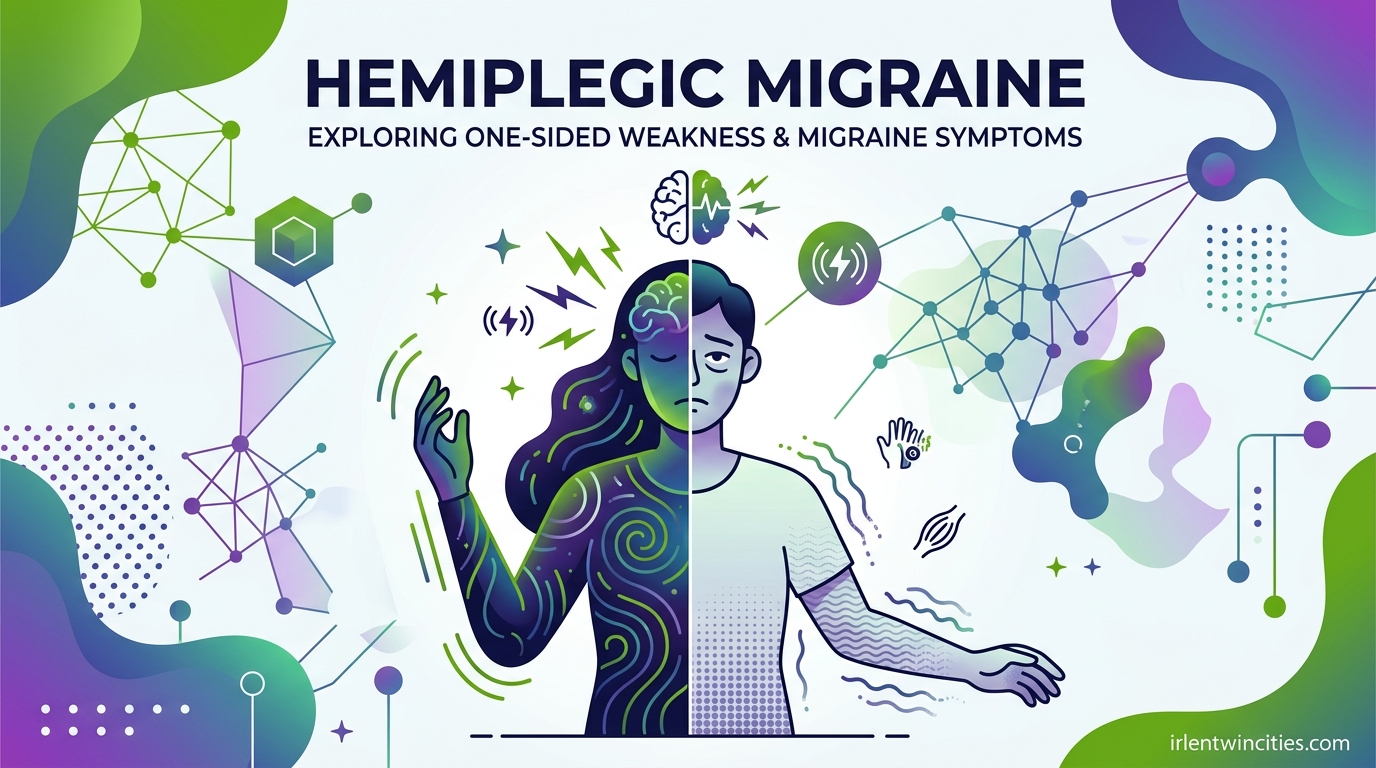
Imagine waking up to find one side of your body numb and weak, your speech slurred, and your vision filled with zig-zag patterns. Your first thought might be terrifying: “Am I having a stroke?” For thousands of people experiencing their first hemiplegic migraine attack, this is exactly the reality they face. Understanding hemiplegic migraine warning signs could mean the difference between unnecessary panic and getting the right medical care when you need it most.
Our team has spent months researching this rare but serious condition, speaking with patients, and analyzing the latest medical literature to bring you the most comprehensive guide available. In this article, you will learn exactly what hemiplegic migraine is, the critical warning signs to watch for, how to distinguish it from a stroke, when to seek emergency care, and practical strategies for living with this condition.
Hemiplegic migraine affects only about 0.01% of the population, making it one of the rarest migraine subtypes. Despite its rarity, the symptoms can be frightening and potentially dangerous if not properly recognized. Whether you are experiencing these symptoms yourself, caring for someone who does, or simply seeking information, this guide will give you the knowledge you need to recognize the warning signs and take appropriate action.
Table of Contents
What Is Hemiplegic Migraine?
Hemiplegic migraine is a rare type of migraine with aura that causes temporary muscle weakness, numbness, or paralysis on one side of the body. The term “hemiplegic” comes from Greek words meaning “half” and “stroke,” which accurately describes the one-sided nature of the symptoms. Unlike typical migraines that primarily cause head pain, hemiplegic migraine produces neurological symptoms that can mimic a stroke.
During a hemiplegic migraine attack, the electrical activity in your brain changes dramatically. Medical professionals call this phenomenon “cortical spreading depression” – a wave of altered brain activity that moves slowly across the cortex. This explains why symptoms often progress gradually rather than appearing all at once. The changes affect nerve cells and blood vessels, producing the characteristic weakness and sensory disturbances.
What makes hemiplegic migraine particularly challenging is its ability to imitate life-threatening conditions. The one-sided weakness, speech difficulties, and vision changes overlap significantly with stroke symptoms. This overlap sends many patients to emergency rooms, which is often the right decision when symptoms first appear. Only medical professionals can definitively distinguish between hemiplegic migraine and stroke in the moment.
The rarity of this condition means many healthcare providers have limited experience with it. Patients frequently report being misdiagnosed initially or having to explain their condition repeatedly during emergency visits. This reality makes patient education and self-advocacy skills essential for anyone living with hemiplegic migraine.
Hemiplegic Migraine Warning Signs and Symptoms
Recognizing hemiplegic migraine warning signs early can help you prepare for attacks and seek appropriate care. The symptoms typically progress through phases, with each new symptom adding to the overall picture. Here are the key warning signs you need to know.
Muscle Weakness and Temporary Paralysis
The hallmark symptom of hemiplegic migraine is muscle weakness or temporary paralysis on one side of the body. This might start as a heavy feeling in your arm or leg, then progress to difficulty moving that limb. Some patients describe it as their limb feeling “disconnected” from their brain. The weakness can range from mild difficulty with fine motor tasks to complete inability to move the affected side.
The one-sided nature is crucial. If both sides of your body are affected equally, doctors will look for other causes. The weakness typically spreads gradually over 20-30 minutes, following a pattern from the face down to the arm and leg on one side. This progression, known as a “march” of symptoms, is one feature that helps distinguish migraine from stroke.
During my research, I spoke with patients who described their first experience with this symptom. One woman told me her hand “just stopped working” while she was typing at work. She watched her fingers curl and become useless while her mind remained completely clear. The terror of that moment stayed with her for years, even after she received her diagnosis.
Visual Disturbances and Aura
Most hemiplegic migraine attacks begin with visual disturbances known as aura. These symptoms affect both eyes and can include flashing lights, zig-zag patterns, blind spots, colored spots, or shimmering effects in your vision. The classic description is seeing “fortification spectra” – patterns that resemble the walls of ancient forts with zig-zag lines.
Visual aura typically lasts 20-60 minutes before other symptoms develop. Some patients experience complete vision loss in one eye or portions of their visual field. These changes are temporary but can be frightening, especially when combined with other neurological symptoms. The visual disturbances provide an important warning that the attack is progressing.
Not everyone with hemiplegic migraine experiences visual aura before other symptoms. Some patients report that weakness or sensory changes begin simultaneously with or before visual symptoms. This variation in symptom order is one reason why medical evaluation is essential, especially for first-time episodes.
Speech and Communication Difficulties
Speech problems are common during hemiplegic migraine attacks and can take several forms. You might experience slurred speech where words sound mumbled or drunken. Some patients develop aphasia – difficulty finding the right words or understanding language. Others can understand speech perfectly but cannot produce coherent sentences themselves.
Forum discussions reveal how distressing these symptoms can be. One patient described “knowing exactly what I wanted to say but hearing gibberish come out of my mouth.” Another mentioned that writing became impossible even though she could think clearly. These dissociations between thought and expression create intense anxiety during attacks.
The communication difficulties extend beyond speaking. Some patients cannot write legibly, type accurately, or use sign language effectively during attacks. Preparing alternative communication methods, such as picture boards or smartphone apps, can help bridge this gap when traditional communication fails.
Sensory Symptoms: Numbness and Tingling
Numbness and tingling sensations, medically called paresthesia, typically follow the same one-sided pattern as muscle weakness. You might feel pins and needles in your face, arm, or leg on one side. Some patients describe it as their limb “falling asleep” but without the normal restoration of feeling when you change position.
These sensory symptoms often spread gradually, moving from the face down the arm to the leg. This spreading pattern mirrors the cortical spreading depression in the brain. The sensations can be painful for some patients, while others experience purely numb areas with no sensation at all.
The combination of numbness with weakness creates a dangerous situation for safety. One patient told me she burned her hand on a hot stove because she could not feel the heat through the numbness. Another fell because his leg gave way without warning. Taking precautions during attacks, such as avoiding hot surfaces and staying seated, becomes essential.
Other Neurological Warning Signs
Hemiplegic migraine produces several other neurological symptoms that deserve attention. Confusion and disorientation are common, with some patients describing a “brain fog” that makes thinking clearly impossible. Memory problems may occur during attacks, with patients unable to recall basic information or recent events.
Dizziness and vertigo affect many patients during attacks. The sensation of spinning or losing balance can be severe enough to prevent standing or walking safely. Some patients experience true vertigo where the room appears to rotate around them. These balance problems increase fall risk during attacks.
Fever occasionally accompanies hemiplegic migraine, particularly in familial cases with specific genetic mutations. Impaired consciousness ranges from mild drowsiness to severe unresponsiveness. In rare cases, patients may experience seizures or prolonged confusion lasting days. These severe symptoms require immediate emergency evaluation.
Hemiplegic Migraine vs Stroke: Critical Differences
The similarity between hemiplegic migraine and stroke creates one of the most challenging aspects of this condition. When someone develops sudden one-sided weakness, medical professionals must rule out stroke before considering migraine. Understanding the key differences can help you communicate effectively with healthcare providers while ensuring you get appropriate emergency care.
Stroke vs Hemiplegic Migraine Comparison
| Feature | Hemiplegic Migraine | Stroke |
|---|---|---|
| Onset | Gradual over 20-30 minutes | Sudden, immediate |
| Headache | Severe headache often present | May or may not have headache |
| Symptom Progression | Positive symptoms (tingling, flashing lights) | Negative symptoms (loss of function only) |
| Duration | Hours to days, then resolves | Permanent damage without treatment |
| History | Similar episodes may have occurred | Usually first-time event |
| Age | Can occur at any age, often younger | More common in older adults |
The pattern of symptom progression offers the most reliable clue. Hemiplegic migraine symptoms typically develop gradually over 20-30 minutes, with each new symptom appearing sequentially. You might notice visual changes first, then tingling in your hand, then weakness in your arm. This gradual march differs from stroke, where symptoms appear suddenly and simultaneously.
Another distinguishing feature involves what doctors call “positive” versus “negative” symptoms. Hemiplegic migraine often produces positive phenomena – you see flashing lights, feel tingling sensations, or experience zig-zag patterns. Stroke typically causes purely negative symptoms – loss of vision, loss of sensation, or loss of movement without any added sensations. The presence of these positive symptoms suggests migraine rather than stroke.
Despite these differences, no layperson should attempt to self-diagnose during an acute episode. The consequences of missing a stroke are catastrophic, while the risks of emergency evaluation are minimal. When in doubt, always call emergency services. Medical professionals have the tools and expertise to distinguish between these conditions definitively.
Critical Warning: Never attempt to drive yourself to the hospital if you experience one-sided weakness, speech difficulties, or sudden vision changes. Call 911 immediately. Only medical professionals can definitively distinguish between hemiplegic migraine and stroke. Time is brain tissue when stroke is involved.
Types and Causes of Hemiplegic Migraine
Hemiplegic migraine exists in two main forms, each with distinct characteristics and implications for treatment. Understanding which type you have affects everything from genetic counseling to treatment choices.
Familial Hemiplegic Migraine (FHM)
Familial hemiplegic migraine runs in families and has a clear genetic basis. If you have FHM, at least one first- or second-degree relative also experiences hemiplegic migraine attacks. This family connection helps doctors distinguish familial from sporadic cases during diagnosis.
Scientists have identified specific gene mutations associated with FHM. The most common involve the CACNA1A gene on chromosome 19, the ATP1A2 gene on chromosome 1, and the SCN1A gene on chromosome 2. These genes encode ion channels – proteins that control the flow of charged particles into and out of nerve cells. When these channels malfunction, the brain becomes hypersensitive and prone to the cortical spreading depression that produces migraine symptoms.
Some genetic subtypes produce additional symptoms beyond typical hemiplegic migraine. The CACNA1A mutation can cause episodic ataxia – periods of poor coordination and balance. Severe mutations in this gene cause progressive neurological decline. Genetic testing can identify these mutations and help predict prognosis and guide family planning decisions.
Sporadic Hemiplegic Migraine (SHM)
Sporadic hemiplegic migraine produces identical symptoms without any family history. If you are the first person in your family to experience these attacks, doctors classify your condition as sporadic. This diagnosis does not rule out genetic factors entirely – you might carry a new mutation or have incomplete family history information.
The causes of SHM remain less understood than FHM. Some cases involve spontaneous genetic mutations that were not inherited. Others may result from complex interactions between multiple genes and environmental factors. Research continues to explore the mechanisms behind sporadic cases, with some evidence suggesting channel dysfunction even without identified mutations.
From a practical standpoint, the distinction between familial and sporadic types matters less than recognizing the condition and managing it appropriately. Both types respond to similar treatments, and both require the same emergency precautions. The main difference involves genetic counseling for family planning in familial cases.
Common Triggers to Avoid
Like other migraine types, hemiplegic migraine attacks often have triggers that patients can identify and potentially avoid. Common triggers include stress, both acute episodes and chronic tension. Sleep disruptions – too much or too little sleep – frequently precipitate attacks. Hormonal changes, particularly around menstruation, trigger attacks in many women.
Environmental factors play a significant role for many patients. Bright lights, loud noises, strong smells, and weather changes all appear frequently in patient reports. Physical exertion, especially sudden intense exercise, can trigger attacks. Certain foods and beverages, including alcohol and caffeine, affect some patients.
Keeping a detailed symptom diary helps identify your personal triggers. Record not just what you ate or did, but your sleep patterns, stress levels, menstrual cycle, and environmental exposures. Over time, patterns emerge that guide lifestyle modifications. While you cannot eliminate all attacks, reducing trigger exposure often decreases frequency and severity.
When to Seek Emergency Care for Hemiplegic Migraine
Knowing when to call 911 versus when to manage at home is one of the most critical decisions for anyone with hemiplegic migraine. This section provides clear guidance for emergency situations.
Always Call 911 If:
- This is your first episode of one-sided weakness, speech problems, or vision changes
- Your symptoms are different from your typical pattern
- Symptoms develop suddenly rather than gradually
- You have no headache but do have neurological symptoms
- You lose consciousness or have a seizure
- You have fever with severe headache and stiff neck
- You cannot stay awake or are extremely confused
First-time symptoms always require emergency evaluation. Only brain imaging and professional examination can distinguish hemiplegic migraine from stroke, brain tumor, infection, or other serious conditions. Do not let previous diagnoses of “regular migraine” prevent you from seeking care if new neurological symptoms appear.
Even experienced patients with established diagnoses should seek emergency care when their typical pattern changes. If your symptoms usually last 6 hours but this one is going past 12 hours, go to the emergency room. If your weakness normally affects your arm but now involves your leg too, get evaluated. These changes could indicate something other than your usual migraine.
Preparing an emergency care statement helps communication during attacks when speaking is difficult. Write a concise summary including your diagnosis, typical symptoms, medications you take, emergency contacts, and what helps during attacks. Keep copies in your wallet, on your phone, and with family members. Some patients wear medical alert bracelets stating their diagnosis.
Forum insights reveal how stressful emergency room visits can be for hemiplegic migraine patients. Many report having to repeatedly explain that they are not drug-seeking while in distress. Having your emergency care statement ready, asking for a neurologist consultation if available, and remaining calm despite the frustration can improve these experiences. Remember that emergency physicians see stroke mimics regularly and must rule out the most dangerous possibilities first.
Diagnosis and Treatment Options
Receiving an accurate diagnosis of hemiplegic migraine requires persistence and often multiple medical evaluations. Once diagnosed, treatment focuses on both stopping acute attacks and preventing future episodes.
How Hemiplegic Migraine Is Diagnosed
The diagnostic process begins with a thorough medical history. Your doctor will ask detailed questions about your symptoms, including their onset, progression, duration, and associated features. Family history receives particular attention, as relatives with similar symptoms suggest familial hemiplegic migraine.
Neurological examination during or shortly after an attack helps confirm the diagnosis. Your doctor assesses muscle strength, reflexes, coordination, sensation, and cognitive function. These examinations document the one-sided nature of symptoms and rule out other neurological conditions.
Brain imaging is essential, particularly for first-time episodes or atypical presentations. MRI scans can rule out stroke, tumor, or structural abnormalities. CT scans may be used in emergency settings where speed matters. These imaging studies are typically normal in hemiplegic migraine, but ruling out other causes is crucial.
Genetic testing confirms familial hemiplegic migraine when mutations are found. Testing for the known FHM genes (CACNA1A, ATP1A2, SCN1A) identifies the specific subtype in some families. However, not all familial cases have identifiable mutations, and genetic testing is not required for diagnosis when clinical criteria are met.
Acute Treatment During Attacks
Treating hemiplegic migraine attacks requires caution because some standard migraine medications can be dangerous in this condition. Non-steroidal anti-inflammatory drugs (NSAIDs) like ibuprofen or naproxen provide pain relief and are generally safe. Anti-nausea medications help with the vomiting that often accompanies severe attacks.
Triptans, the most common class of migraine medications, require special consideration in hemiplegic migraine. These drugs constrict blood vessels, which theoretically could be dangerous when neurological symptoms suggest vascular involvement. Many doctors avoid triptans in hemiplegic migraine, particularly during the aura phase. Discuss this specifically with your neurologist rather than assuming standard migraine treatments are appropriate.
Rest in a dark, quiet room remains the cornerstone of acute management. Sleep often terminates migraine attacks, so allowing yourself to rest even during the day can help. Hydration is important, especially if vomiting occurs. Some patients find that cold compresses on the head or neck provide relief.
Preventive Treatment Strategies
Preventive medications reduce attack frequency and severity for patients with frequent hemiplegic migraines. Several drug classes have proven effective. Beta-blockers like propranolol help many patients. Calcium channel blockers such as verapamil are particularly favored for hemiplegic migraine. Anti-seizure medications including topiramate and valproic acid provide preventive benefits.
The newer CGRP monoclonal antibodies represent a significant advance in migraine prevention. These medications target the calcitonin gene-related peptide involved in migraine pathways. They have shown effectiveness in hemiplegic migraine patients who do not respond to traditional preventive medications. However, insurance coverage and cost can be barriers to access.
Lifestyle modifications complement medication prevention. Regular sleep schedules, stress management techniques, and trigger avoidance all contribute to fewer attacks. Some patients benefit from supplements like magnesium or riboflavin, though evidence for these is stronger in typical migraine than specifically in hemiplegic types. Work with your doctor to develop a comprehensive prevention plan tailored to your situation.
Living With Hemiplegic Migraine
Beyond medical treatment, successful management of hemiplegic migraine requires practical strategies for daily life. Communication challenges, work accommodations, and emotional support all play important roles.
Developing a communication system for use during attacks helps reduce anxiety for both patients and caregivers. Some patients create cards with pre-written explanations of their condition that they can hand to medical personnel. Smartphone apps allow typing messages when speech fails. Picture-based communication boards work when writing becomes impossible. Preparing these tools before an attack occurs ensures they are available when needed.
Workplace and school accommodations may be necessary depending on attack frequency and severity. The Americans with Disabilities Act protects people with hemiplegic migraine from discrimination. Reasonable accommodations might include flexible scheduling, the ability to work from home during recovery periods, or access to a quiet space during attacks. Documentation from your neurologist supports these requests.
Support from others who understand the condition proves invaluable. Online communities like Reddit’s r/HemiplegicMigraines and various Facebook groups connect patients with shared experiences. The Migraine Trust and Migraine Disorders Society offer educational resources and advocacy. Family members and close friends who learn about the condition can provide better support during attacks.
Emotional health deserves attention when living with any chronic condition. The fear of attacks, the stress of emergency room visits, and the frustration of misunderstood symptoms take a psychological toll. Many patients benefit from counseling or therapy to develop coping strategies. Anxiety about future attacks can actually trigger attacks, creating a cycle that professional support can help break.
Frequently Asked Questions
When to worry about hemiplegic migraines?
Worry and seek emergency care if this is your first episode with one-sided weakness, speech problems, or vision changes. Also seek immediate care if symptoms develop suddenly rather than gradually, if you lose consciousness, have a seizure, or if your symptoms differ from your typical pattern. First-time neurological symptoms always require professional evaluation to rule out stroke.
Should I go to the ER for a hemiplegic migraine?
Yes, go to the emergency room for your first episode or any episode with new or different symptoms. Only medical professionals can definitively distinguish hemiplegic migraine from stroke using brain imaging. Once you have an established diagnosis and recognize your typical pattern, you may be able to manage at home, but any deviation from normal warrants emergency evaluation.
How to stop a hemiplegic migraine attack?
Take prescribed acute medications at the first sign of symptoms. Rest immediately in a dark, quiet room and try to sleep. Use NSAIDs for pain if safe for you. Stay hydrated and use anti-nausea medication if vomiting occurs. Avoid triptans unless specifically approved by your neurologist. Some patients find cold compresses helpful. The attack will usually resolve on its own within hours to days.
What can trigger hemiplegic migraines?
Common triggers include stress, sleep disruptions (too much or too little), hormonal changes, bright lights, loud noises, strong smells, weather changes, physical exertion, and certain foods or alcohol. Individual triggers vary significantly. Keeping a detailed symptom diary helps identify your personal triggers so you can avoid or minimize them.
How long do hemiplegic migraines last?
Hemiplegic migraine attacks typically last from several hours to 2-3 days. The aura and neurological symptoms usually resolve within 24 hours, though weakness can occasionally persist for days. The headache phase may continue after neurological symptoms resolve. In rare cases, prolonged attacks lasting weeks have been reported. Any symptoms lasting longer than 72 hours require medical evaluation.
Is hemiplegic migraine dangerous?
Hemiplegic migraine itself is not typically life-threatening, and symptoms usually resolve completely. However, it can be dangerous because it mimics stroke, requiring emergency evaluation to rule out more serious conditions. Complications like prolonged impaired consciousness or seizures require immediate care. The condition significantly impacts quality of life and may increase stroke risk slightly, making proper management important.
Can hemiplegic migraine cause permanent damage?
Most hemiplegic migraine attacks resolve completely without permanent damage. However, some patients report lasting effects including memory problems, difficulty concentrating, or mild persistent weakness between attacks. Rarely, severe or prolonged attacks may cause lasting neurological deficits. Regular follow-up with a neurologist helps monitor for any concerning changes.
How is hemiplegic migraine different from regular migraine?
Unlike regular migraine, hemiplegic migraine causes temporary muscle weakness, numbness, or paralysis on one side of the body. It also produces more pronounced neurological symptoms including speech difficulties, vision changes, confusion, and sometimes impaired consciousness or fever. Regular migraine typically causes head pain with possible aura but no motor weakness. Hemiplegic migraine is much rarer than typical migraine.
Conclusion
Understanding hemiplegic migraine warning signs empowers you to recognize this rare but serious condition and seek appropriate care when needed. The key warning signs to remember include one-sided muscle weakness or paralysis, visual disturbances like zig-zag patterns and blind spots, speech difficulties, numbness and tingling, confusion, dizziness, and occasionally fever or impaired consciousness.
The most important takeaway from this guide is that first-time neurological symptoms always require emergency evaluation. While hemiplegic migraine itself is not typically life-threatening, it mimics stroke so closely that only medical professionals can distinguish between them. Never hesitate to call 911 when you or someone you care about develops sudden one-sided weakness, speech problems, or vision changes.
If you have received a diagnosis of hemiplegic migraine, work closely with a neurologist experienced in migraine disorders to develop a comprehensive management plan. Keep a symptom diary to identify your personal triggers. Prepare emergency communication tools and medical information for use during attacks. Connect with support communities who understand your experiences.
Knowledge truly is power when dealing with hemiplegic migraine. By understanding the warning signs, knowing when to seek emergency care, and implementing effective management strategies, you can live fully despite this challenging condition. Stay informed, stay prepared, and never hesitate to advocate for the care you need.