
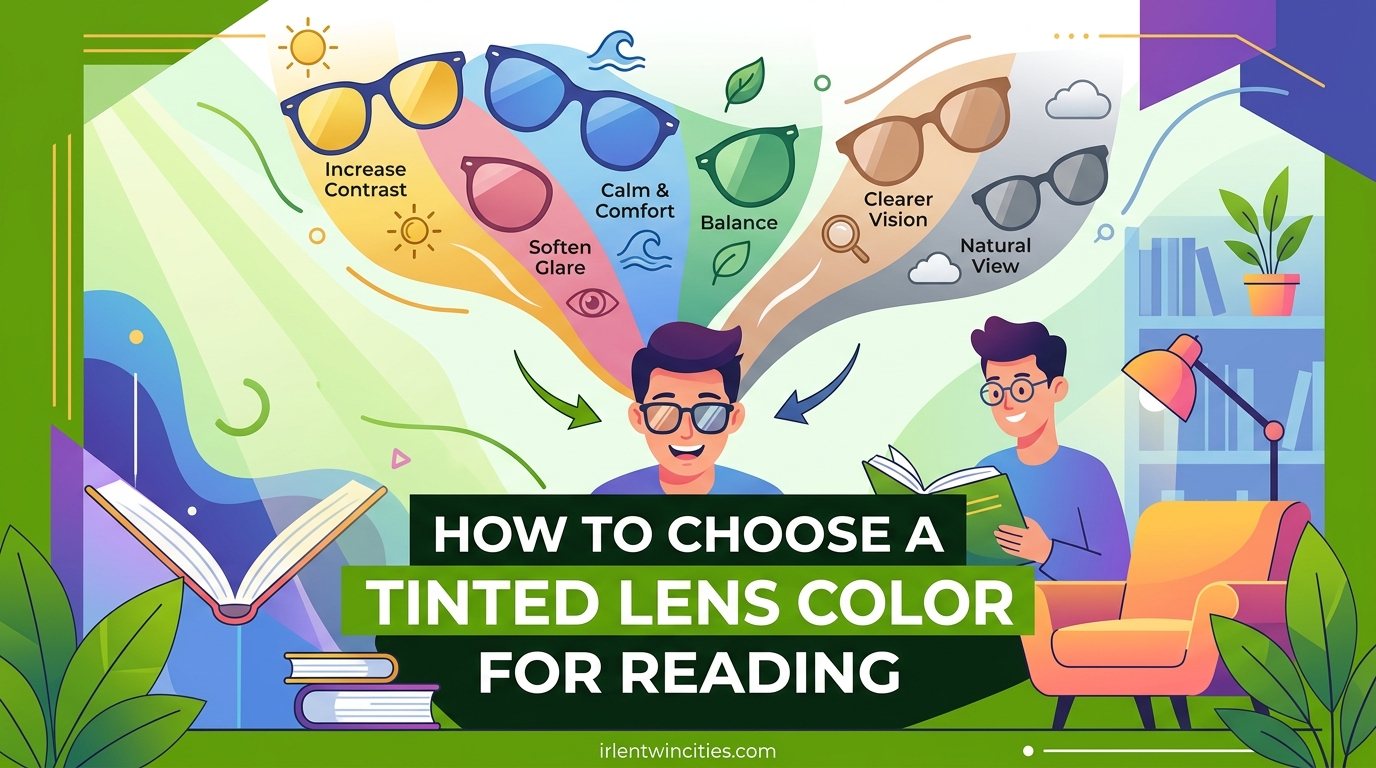
Choosing the right tinted lens color for reading can transform your comfort and focus. I have worked with readers who struggled with headaches, eye strain, and difficulty concentrating for years before discovering that the right lens tint made all the difference.
This guide will walk you through everything you need to know about selecting the perfect tint for your reading environment. You will learn how different colors affect your vision, which tints work best for specific conditions like migraines and dyslexia, and how to match your tint to your lighting conditions.
Table of Contents
What Are Tinted Lenses for Reading
Tinted lenses are prescription or non-prescription glasses with colored lens treatments that filter specific wavelengths of light. Unlike sunglasses that primarily darken your vision, reading tints are designed to enhance contrast, reduce glare, and filter problematic light frequencies while keeping text clearly visible.
Reading tints typically use lighter VLT (Visible Light Transmission) percentages than outdoor sunglasses. Where sunglasses might block 80-90% of light, reading tints usually allow 60-85% of light through. This lighter tint preserves readability while still providing the filtering benefits you need.
The key difference between reading tints and fashion tints comes down to function. Fashion tints prioritize style with light, often gradient colors. Functional reading tints are selected based on scientific understanding of how different wavelengths affect visual processing and comfort.
Understanding VLT: Visible Light Transmission for Readers
VLT measures the percentage of light that passes through your lenses to reach your eyes. For readers, choosing the right VLT percentage is just as important as choosing the right color.
Indoor reading typically works best with VLT between 70-85%. This range provides enough filtering to reduce eye strain from fluorescent lights and screens while maintaining clarity for text. I recommend starting with 80% VLT for general indoor reading if you are new to tinted lenses.
Outdoor reading requires lower VLT, usually between 15-40%, depending on brightness conditions. For reading on a sunny patio, 25-30% VLT strikes a good balance. For beach or snow reading where glare is intense, 15-20% VLT may be necessary.
Transition tints that adjust VLT based on light conditions can work for readers who move between indoor and outdoor environments frequently. However, photochromic lenses often do not get dark enough inside cars since windshield glass blocks the UV rays that activate them.
How to Choose a Tinted Lens Color for Reading: Complete Color Guide
Each tint color filters light differently and offers distinct benefits for reading. Here is what you need to know about the most common options.
Gray Tint: Neutral and Versatile
Gray lenses reduce overall brightness without distorting colors, making them ideal for outdoor reading in bright conditions. They filter all light wavelengths equally, preserving natural color perception while reducing glare.
I recommend gray tints for readers who need sunglasses that double as reading glasses outdoors. They work well for beach reading, outdoor cafes, and patio reading. Gray does not enhance contrast significantly, so it is less beneficial for indoor reading or low-light conditions.
Gray tint VLT recommendations: 15-25% for bright outdoor reading, 40-50% for overcast outdoor conditions.
Brown and Amber Tints: Contrast Enhancers
Brown and amber tints filter blue light while enhancing contrast, making them excellent for both indoor and outdoor reading. These warm tones make text pop against white backgrounds and improve depth perception.
Amber lenses are particularly effective for reading in variable lighting conditions. They reduce haze and improve visual acuity in early morning or late afternoon light. I have found that many readers with early signs of cataracts prefer amber tints because they improve clarity.
Brown tints also excel at blocking blue light from digital screens. If you read on tablets or e-readers, an amber tint with 70-80% VLT can significantly reduce digital eye strain.
Yellow Tints: Low-Light Specialists
Yellow tinted lenses are the top choice for indoor reading and low-light conditions. They filter blue light aggressively while amplifying available light, effectively making dim environments appear brighter.
The blue light blocking properties of yellow tints help reduce eye fatigue from LED and fluorescent lighting. Many readers report that yellow lenses eliminate the harshness of artificial light without making their environment feel dim.
I recommend yellow tints with 70-85% VLT for indoor reading, computer work, and reading in the evening. They are also popular among shooters and pilots for the contrast enhancement they provide.
Rose and FL-41 Tints: Migraine and Light Sensitivity Relief
Rose tinted lenses, especially those using the FL-41 filter, offer specific benefits for readers with light sensitivity, migraines, or photophobia. These tints filter specific wavelengths around 480-520 nanometers that trigger visual discomfort.
Clinical research supports FL-41 rose tints for reducing migraine frequency and severity. Studies show they can block the light wavelengths most likely to trigger headaches and eye pain in sensitive individuals. Our team has seen remarkable results with readers who previously could not tolerate more than 30 minutes of reading.
Rose tints also help with visual snow syndrome, pattern glare from text, and general visual stress. For indoor reading, look for FL-41 filters with 70-80% VLT. The rose tint is subtle enough that most people do not notice you are wearing colored lenses.
Green Tints: Eye Comfort and Glare Reduction
Green lenses filter some blue light while maintaining good color balance. They are known for reducing eye strain and providing visual comfort during extended reading sessions.
The soothing quality of green tints makes them popular for readers who experience general eye fatigue rather than specific light sensitivity. They work well for both indoor and outdoor use, though they are less common than gray or brown options.
Green tints with 60-75% VLT suit indoor reading environments, while 20-30% VLT works for outdoor conditions. They filter enough light to reduce glare without the dramatic darkening of gray lenses.
Blue Tints: Style with Moderate Function
Blue tinted lenses are primarily a fashion choice, though they do offer some benefits for reading in very bright, yellow-toned light. They can enhance contrast in specific conditions but are generally less functional for reading than warm-toned options.
If you are choosing between blue and green for reading purposes, green typically offers better functional benefits. Blue tints do not filter blue light effectively (somewhat counterintuitively) and may actually increase eye strain for screen reading.
Best Tint Colors for Indoor Reading
Indoor reading presents unique challenges including fluorescent lighting, LED screens, and mixed light sources. The best indoor reading tints address these specific issues.
Yellow and light amber tints rank highest for indoor reading. They filter the blue light that dominates modern indoor lighting while enhancing contrast on white paper and screens. A yellow tint with 80% VLT allows plenty of light through while eliminating the harshness that causes fatigue.
Rose and FL-41 tints excel for indoor reading if you experience migraines, light sensitivity, or visual stress. The specific wavelength filtering of FL-41 blocks the light frequencies that trigger discomfort in sensitive individuals. I recommend these tints for anyone who gets headaches from reading in office environments.
For general indoor use, avoid dark tints below 60% VLT. They make indoor spaces feel too dim and can cause eye strain as your eyes struggle to adapt. Save darker tints for outdoor reading or very bright environments.
Best Tint Colors for Outdoor Reading
Outdoor reading requires tints that handle brightness and glare while maintaining text clarity. The challenges differ significantly from indoor environments.
Gray tints with 15-25% VLT are the classic choice for bright outdoor reading. They reduce overall brightness without color distortion, preserving the natural appearance of your book or screen while protecting your eyes from glare.
Brown and copper tints offer an alternative for outdoor readers who want enhanced contrast. These warm tones make text stand out against backgrounds and reduce haze on overcast days. Many readers find brown more comfortable than gray for extended outdoor sessions.
If you read in variable outdoor conditions, consider photochromic lenses that adjust their tint based on light levels. They provide lighter tints in shade and darker protection in full sun. Keep in mind that standard photochromics do not darken significantly inside cars.
Tinted Lenses for Migraines and Light Sensitivity
For readers with migraines, photophobia, or chronic light sensitivity, the right tint can be life-changing. Standard reading glasses often do not address the specific wavelengths that trigger symptoms.
FL-41 rose tint has the strongest clinical support for migraine relief. Research published in medical journals demonstrates that this specific filter reduces migraine frequency, light sensitivity, and associated eye pain. The tint blocks wavelengths around 480-520 nanometers that are particularly problematic for migraine sufferers.
Our team has worked with readers who went from being unable to read for more than 15 minutes to enjoying hours of comfortable reading with FL-41 lenses. The relief extends beyond reading to general light sensitivity in daily activities.
If you suspect light sensitivity is affecting your reading, start with an FL-41 rose tint with 75-80% VLT for indoor use. You can pair these with darker outdoor tints for comprehensive protection. Some optical shops offer trial lenses so you can test the benefits before committing.
Tinted Lenses for Dyslexia and Reading Difficulties
Some readers with dyslexia or specific reading difficulties benefit significantly from colored lenses. This connection, often called Irlen Syndrome or Scotopic Sensitivity Syndrome, involves how the brain processes visual information.
Irlen Syndrome causes visual stress that makes reading uncomfortable or difficult. Symptoms include words that appear to move, blur, or shimmer on the page; headaches during reading; and difficulty tracking lines of text. Colored lenses filter the specific wavelengths that trigger these symptoms for each individual.
The Irlen Method involves precise color selection through professional assessment. While rose and yellow tints help many readers, the optimal color varies by individual. Some readers benefit from aqua, green, or even purple tints depending on their specific visual processing.
If you or a child struggles with reading despite normal vision tests, consider an Irlen screening. These specialized tints have helped thousands of readers improve their fluency and comfort. Even simple colored overlays or inexpensive tinted glasses can provide a test to see if color filtering helps before investing in prescription Irlen lenses.
How to Choose Your Perfect Reading Tint: A Step-by-Step Guide
Selecting the right tinted lens color for reading requires considering your environment, symptoms, and preferences. Follow this process to find your ideal match.
Step 1: Assess Your Primary Reading Environment
Where do you do most of your reading? Indoor readers should prioritize yellow, rose, or light amber tints. Outdoor readers need gray, brown, or darker tints. If you read in both environments, consider getting two pairs or photochromic lenses.
Pay attention to your specific lighting challenges. Fluorescent office lighting calls for blue-light filtering tints like yellow or amber. Natural light reading requires more traditional sunglass tints.
Step 2: Identify Your Symptoms
Do you experience headaches, eye strain, or fatigue when reading? Rose/FL-41 tints address migraines and light sensitivity. Yellow tints help with general eye strain from screens. Brown tints improve contrast if text appears washed out.
Readers with dyslexia or visual processing difficulties should explore Irlen-specific tints through professional assessment.
Step 3: Start with the Right VLT
For indoor reading, begin with 75-80% VLT. You want noticeable filtering without significant darkening. For outdoor reading, start with 25-30% VLT for general brightness or 15-20% for intense sun.
Remember that darker is not always better. An 80% VLT yellow tint often provides more benefit than a 50% gray tint for indoor reading because of the specific wavelengths filtered.
Step 4: Test Before Committing
Many optical shops offer trial lenses or can order demo tints. Some online retailers provide inexpensive non-prescription options for testing colors. Try reading for at least 30 minutes with a candidate tint to assess true comfort.
Pay attention to how your eyes feel at the end of a reading session, not just the first few minutes. The right tint should reduce or eliminate the fatigue you normally experience.
Step 5: Consider Multiple Pairs
Serious readers often benefit from having different tints for different situations. I recommend a yellow or rose tint for indoor reading and a brown or gray tint for outdoor use. This approach gives you optimal performance in each environment.
FAQ
What is better, the blue or green tint on reading glasses?
Green tint is generally better for reading than blue tint. Green filters some blue light while maintaining good color balance and reducing eye strain. Blue tints are primarily a fashion choice and do not effectively filter blue light from screens. For functional reading benefits, green or yellow tints outperform blue options.
Can tinted glasses prevent migraines?
FL-41 rose tinted glasses can significantly reduce migraine frequency and light sensitivity according to clinical research. These specialized tints filter wavelengths around 480-520 nanometers that commonly trigger migraines. While not a cure, many migraine sufferers report substantial relief and extended reading comfort with FL-41 lenses.
What color sunglasses are best for reading?
Gray or brown tints work best for outdoor reading. Gray reduces brightness without color distortion, while brown enhances contrast and reduces haze. Choose 15-30% VLT depending on brightness conditions. Avoid overly dark tints below 15% VLT as they can make text difficult to read while still causing eye strain.
Should reading glasses be tinted?
Reading glasses should be tinted if you experience eye strain, headaches, or fatigue during reading sessions. Tints filter problematic light wavelengths, enhance contrast, and reduce glare from pages and screens. Yellow, rose, and amber tints are particularly beneficial for indoor reading, while gray and brown suit outdoor conditions.
What tint color helps with light sensitivity?
Rose and FL-41 tints are most effective for light sensitivity and photophobia. These filters specifically target the wavelengths that trigger discomfort in sensitive individuals. Yellow tints also help by filtering blue light from artificial sources. For severe light sensitivity, consult an eye care professional about FL-41 prescription lenses.
Final Thoughts on Choosing a Tinted Lens Color for Reading
Choosing the right tinted lens color for reading is a personal decision that depends on your environment, symptoms, and preferences. The key is matching the tint to your specific needs rather than choosing based on appearance alone.
For most indoor readers, I recommend starting with a yellow or light amber tint at 75-80% VLT. These colors filter the blue light that causes eye strain from modern lighting while enhancing contrast for comfortable reading. If you experience migraines or significant light sensitivity, explore FL-41 rose tints for their proven therapeutic benefits.
Outdoor readers should prioritize gray or brown tints with appropriate VLT for their brightness conditions. Consider having separate pairs for indoor and outdoor use rather than compromising with a tint that works poorly in both environments.
The right tint can transform reading from a strain into a pleasure. Take time to test different options and pay attention to how your eyes feel after extended sessions. Your comfort is worth the investment in finding the perfect match.