
Table of Contents
Understanding Dyslexia: What Parents Need to Know
Receiving a dyslexia diagnosis for your child can feel overwhelming, but understanding the process is the first step toward getting your child the support they need. This comprehensive guide will walk you through every stage of obtaining a dyslexia diagnosis, from recognizing the early signs to understanding what happens after the evaluation is complete.
Dyslexia is one of the most common learning differences affecting children worldwide. Research indicates that approximately 5-10% of the population has dyslexia, making it likely that you know a child or adult who navigates the challenges this condition presents. Despite its prevalence, many parents feel unprepared when they first suspect their child might have dyslexia. This guide aims to change that by providing clear, actionable information that empowers you to advocate effectively for your child.
It is important to understand that dyslexia is not a problem with intelligence or vision. Rather, dyslexia is a neurological condition that affects how the brain processes written language. Children with dyslexia may have difficulty connecting letters to sounds, recognizing words quickly, spelling words correctly, and understanding what they read. The good news is that with proper identification, appropriate teaching methods, and supportive interventions, children with dyslexia can become confident readers and successful learners.
Getting a formal diagnosis is valuable because it opens doors to specialized instruction, classroom accommodations, and resources that can make a significant difference in your child’s academic journey and self-esteem. Whether you are just starting to notice reading difficulties or have suspected dyslexia for some time, this guide will provide you with the knowledge and steps you need to navigate the diagnostic process with confidence.
Recognizing the Warning Signs of Dyslexia
Early identification of dyslexia can lead to earlier intervention, which is why recognizing the warning signs is so important. While every child develops at their own pace, certain indicators may suggest that a child is struggling with dyslexia rather than simply being a late reader or a visual learner. Understanding these signs can help you determine when to seek professional guidance.
Signs in Preschool-Aged Children (3-5 years)
While a formal dyslexia diagnosis typically cannot be made before a child begins formal reading instruction, early indicators can appear well before kindergarten. Parents may notice that their preschooler has difficulty:
- Learning and remembering nursery rhymes or simple songs
- Recognizing letters in their name or on signs and toys
- Speaking using words that rhyme or recognizing rhyming patterns
- Putting words together that start with the same sound (alliteration)
- Remembering sequences like days of the week, months, or colors
- Mispronouncing words or using baby talk beyond typical developmental stages
- Difficulty following multi-step directions
- Trouble with fine motor skills such as holding a crayon correctly or using scissors
These signs do not guarantee that a child has dyslexia, but they may indicate underlying phonological processing difficulties that warrant monitoring and early intervention.
Signs in Early Elementary (Grades K-2, ages 5-8)
Once children begin formal reading instruction, the signs of dyslexia often become more apparent. During kindergarten through second grade, parents and teachers may observe:
- Difficulty learning letter names and sounds
- Confusing letters that look similar, such as b and d, p and q, or m and w
- Reversing letters when writing, such as writing “was” as “saw”
- Struggling to sound out unfamiliar words, even with repeated instruction
- Reading slowly and haltingly, without fluency or expression
- Avoiding reading aloud or becoming highly anxious about reading assignments
- Having strong oral comprehension but weak reading comprehension
- Difficulty remembering high-frequency words (sight words) like “the,” “and,” “said”
- Poor spelling that seems inconsistent with reading ability
- Putting off homework or becoming emotional about reading tasks
Signs in Upper Elementary and Middle School (Grades 3-8, ages 8-14)
As academic demands increase, children with undiagnosed dyslexia may struggle more noticeably. Signs in older children include:
- Reading below grade level despite receiving reading instruction
- Needing excessive time to complete reading assignments
- Difficulty with reading comprehension, especially of fiction or unfamiliar topics
- Poor spelling and reluctance to write assignments
- Trouble summarizing stories or remembering details from text
- Difficulty with word problems in math due to reading demands
- Problems learning foreign languages
- Poor note-taking because writing is too slow
- Avoiding any task that requires sustained reading or writing
- Developing strong strategies to hide reading difficulties
Red Flags That Should Prompt Immediate Action
While some children may show gradual signs of dyslexia, certain red flags indicate that you should seek evaluation sooner rather than later. Contact your pediatrician or request a school evaluation if your child:
- Has a family history of reading or learning difficulties
- Shows significant frustration or emotional distress around reading and schoolwork
- Has been receiving reading intervention but continues to struggle after 6-12 months
- Was early to speak but is now significantly behind in reading skills
- Seems to lose information immediately after learning it
- Cannot remember sequences like phone numbers, addresses, or multi-step directions
- Experiences a sudden drop in grades or school motivation
The Step-by-Step Process to Get a Dyslexia Diagnosis
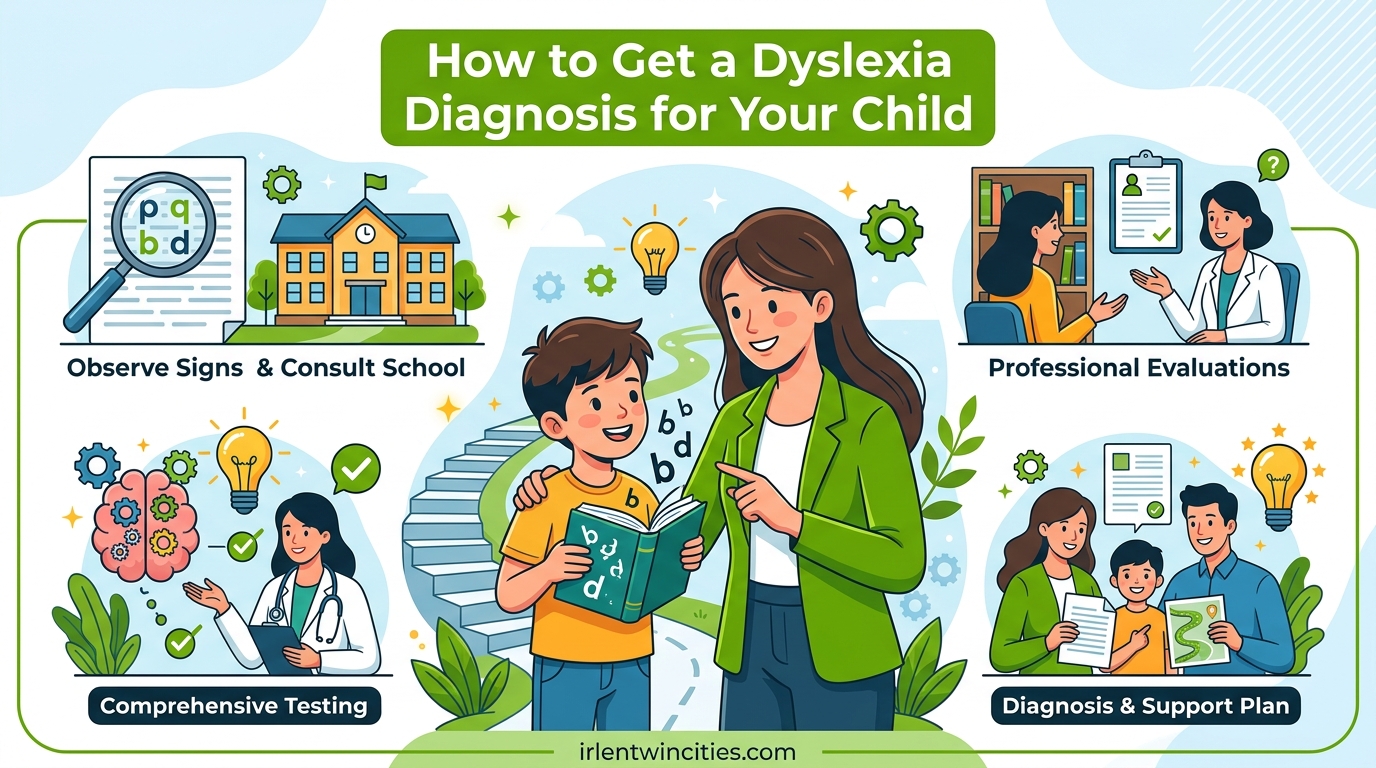
Understanding the pathway to a dyslexia diagnosis can transform an overwhelming journey into manageable steps. Here is a comprehensive guide to help you move from initial concern to formal diagnosis.
Step 1: Document Your Observations
Before seeking professional help, begin keeping detailed records of your concerns. Write down specific examples of times when your child struggled with reading, spelling, or language tasks. Note the dates, the specific challenges observed, and how your child responded to these difficulties. This documentation will be invaluable when speaking with teachers, doctors, and evaluators because it provides concrete evidence of patterns you have noticed over time.
Consider maintaining a simple log that includes:
- Specific instances of reading or spelling difficulties
- Homework struggles or avoidance behaviors
- Comments from teachers about reading or writing performance
- Times when your child seems frustrated or loses confidence
- Successful strategies your child uses to cope with challenges
Step 2: Talk to Your Child’s Teacher
Your child’s teacher can provide valuable insight into their classroom performance and may have noticed similar challenges. Schedule a meeting to discuss your concerns specifically and ask:
- How does my child compare to peers in reading fluency and comprehension?
- Have you noticed any signs of frustration or avoidance around reading?
- What specific interventions or supports has the school provided?
- Can we discuss the results of any reading assessments?
Teachers can be excellent advocates and may help initiate the formal evaluation process through the school system. Many schools have intervention teams that review student progress and determine whether further evaluation is warranted.
Step 3: Request a School-Based Evaluation
If your child is enrolled in public school, you have the right to request a comprehensive evaluation under the Individuals with Disabilities Education Act (IDEA). This evaluation, often called a special education evaluation, assesses whether your child qualifies for special education services under specific disability categories, including specific learning disability.
To request a school evaluation, write a formal letter to your child’s school principal or special education director. Keep a copy of this letter for your records and note the date you submitted it. The school must respond within a reasonable time (typically 30-60 days depending on your state) and either conduct the evaluation or provide a written explanation for why they believe evaluation is not necessary.
A school-based evaluation for dyslexia typically includes assessments of:
- Intelligence and cognitive abilities
- Academic achievement in reading, writing, and math
- Phonological processing and awareness
- Oral language skills
- Visual and auditory processing (to rule out other causes)
- Behavior and social-emotional functioning
Step 4: Consider a Private Evaluation
While school evaluations are valuable and free, they sometimes lack the depth needed to fully understand a child’s profile or to diagnose dyslexia specifically. Private evaluations conducted by psychologists or neuropsychologists offer more comprehensive assessments and may provide additional diagnostic insights.
Consider seeking a private evaluation if:
- The school evaluation did not find your child eligible for services but you believe difficulties persist
- You want a more comprehensive understanding of your child’s strengths and challenges
- Your child needs documentation for accommodations on college entrance exams
- You suspect co-occurring conditions like ADHD, anxiety, or memory disorders
- Your insurance or financial situation allows for private evaluation
Step 5: Attend the Evaluation
Whether you pursue school-based or private evaluation, the actual assessment process typically involves multiple sessions and various tests. Prepare your child by explaining that the evaluator wants to understand how they learn best, not that they are looking for problems. Emphasize that trying their best is all that is needed.
Before the evaluation, gather and bring:
- Report cards and previous test scores
- Any prior evaluation reports or IEP/504 documents
- Examples of schoolwork showing difficulties
- List of questions you want the evaluator to address
- Your documented observations and concerns
Step 6: Review the Results
After the evaluation is complete, you will receive a comprehensive report explaining your child’s assessment results. Schedule a meeting to review the findings and ask clarifying questions. The report should explain:
- Whether your child meets criteria for a dyslexia diagnosis
- Specific areas of strength and challenge
- How your child’s reading skills compare to same-age peers
- Recommendations for intervention and support
- Whether your child qualifies for special education services
Who Can Diagnose Dyslexia in Children?
Understanding the different professionals who can diagnose dyslexia helps you make informed decisions about where to seek evaluation. Each type of evaluator brings different expertise and perspectives to the assessment process.
Educational Psychologists
Educational psychologists specialize in assessing learning differences and understanding how children process information. They are trained to administer and interpret standardized tests that measure cognitive abilities, academic achievement, and specific learning disabilities. Educational psychologists often work in school settings but also provide private evaluations. Their assessments typically focus on how children learn, process information, and demonstrate knowledge, making them well-suited to diagnose dyslexia and recommend appropriate interventions.
Neuropsychologists
Neuropsychologists focus on how brain function relates to behavior, learning, and cognition. A neuropsychological evaluation provides the most comprehensive assessment of a child’s cognitive profile, examining attention, memory, processing speed, language skills, visual-spatial abilities, and executive functioning. These evaluations are particularly valuable when there are concerns about multiple learning challenges or when co-occurring conditions like ADHD, anxiety, or autism spectrum disorder need to be considered. Neuropsychologists can diagnose dyslexia and provide detailed recommendations for treatment and accommodations.
School Psychologists
School psychologists work within the educational system to assess students for special education services. They evaluate children for learning disabilities, behavioral concerns, and eligibility for individualized education programs (IEPs). While they can identify dyslexia as part of a comprehensive evaluation, their assessments may focus more on educational impact and eligibility rather than detailed neuropsychological profiles. School-based evaluations are free but may have longer wait times and less comprehensive reporting than private evaluations.
Reading Specialists and Learning Disability Specialists
Reading specialists and learning disability specialists have expertise in teaching methods for dyslexia, such as Orton-Gillingham, Wilson, or Lindamood-Bell programs. While they may conduct informal assessments and progress monitoring, they typically cannot provide a formal medical or psychological diagnosis. However, their expertise in structured literacy approaches makes them valuable partners in treatment once a diagnosis is established. Some states allow them to qualify students for special education services under specific learning disability categories.
Developmental Pediatricians
Developmental pediatricians are medical doctors who specialize in developmental delays and disabilities. They can rule out other medical causes of reading difficulties, such as vision or hearing problems, and may coordinate with psychologists for comprehensive evaluation. While developmental pediatricians can refer for dyslexia assessment and recommend treatments, a formal dyslexia diagnosis often comes from educational or neuropsychological evaluation rather than medical diagnosis alone.
What to Expect During a Dyslexia Evaluation
The prospect of having your child evaluated can feel intimidating, but understanding what happens during the process can ease anxiety for both you and your child. Here is what you can expect from a comprehensive dyslexia evaluation.
Types of Tests Used
A comprehensive dyslexia evaluation uses standardized tests to assess multiple areas of functioning. These may include:
- Intelligence testing: Measures cognitive abilities to understand how your child processes information and learns. Tests like the WISC-V or Stanford-Binet assess verbal reasoning, visual-spatial reasoning, fluid reasoning, working memory, and processing speed.
- Phonological processing tests: Assess awareness of sounds in language, including rhyming, segmenting words into sounds, blending sounds together, and rapid naming of letters or digits.
- Word recognition and decoding tests: Measure ability to read single words and decode unfamiliar words, showing accuracy and fluency.
- Reading fluency tests: Assess how quickly and accurately your child reads connected text.
- Spelling tests: Evaluate both dictated spelling and writing abilities.
- Reading comprehension tests: Measure understanding of written passages at appropriate grade levels.
- Oral language tests: Assess vocabulary, listening comprehension, and verbal reasoning abilities to ensure difficulties are specific to written language rather than general language impairment.
- Processing speed tests: Measure how quickly your child can complete simple cognitive tasks.
How Long the Evaluation Takes
The length of a dyslexia evaluation varies depending on the comprehensiveness of the assessment and the professional conducting it. School-based evaluations may be completed in one to three sessions totaling 3-6 hours. Private neuropsychological evaluations are more comprehensive and typically require 8-12 hours of testing spread across multiple appointments. Most evaluations can be completed within 2-4 weeks from start to finish, including the time needed to score tests, interpret results, and write the report.
What Happens During the Assessment
Your child will work one-on-one with the evaluator in a quiet, distraction-free environment. The evaluator will administer tests that may feel like games to younger children but become more test-like as children get older. Breaks are provided as needed, and evaluators are trained to recognize when a child is fatigued or frustrated.
Parents typically complete questionnaires about their child’s development, behavior, and concerns but are not present during testing sessions. This allows your child to demonstrate their true abilities without parent assistance or interference.
During testing, the evaluator may observe:
- How your child approaches new and challenging tasks
- Frustration tolerance and persistence
- Attention and focus during sustained tasks
- Reaction to making mistakes
- Use of strategies when encountering difficult items
Understanding the Scores and Report
After the evaluation, you will receive a written report containing various scores and interpretations. Standard scores typically have a mean of 100 and standard deviation of 15, meaning most children score between 85 and 115. Scores below 90 may indicate weakness, while scores below 80 often indicate significant difficulty.
A dyslexia diagnosis is typically made when:
- Reading achievement is significantly below what would be expected given the child’s age and cognitive abilities
- The reading difficulty has persisted for at least six months despite appropriate intervention
- The difficulties begin in childhood and are not attributable to other conditions
- The pattern of strengths and weaknesses is consistent with dyslexia
The report should explain findings in clear language and provide specific, actionable recommendations for supporting your child’s learning. Do not hesitate to ask for clarification on any section that is confusing or to request examples of how to implement recommended strategies at home.
School-Based vs. Private Evaluation: Making the Right Choice
Parents often face a decision between pursuing evaluation through the school system and seeking private assessment. Understanding the pros and cons of each option can help you choose the path that best fits your child’s needs and your family’s circumstances.
School-Based Evaluation Pros and Cons
Advantages:
- Free of charge under IDEA and Section 504
- Evaluators understand educational context and classroom implications
- Results directly determine eligibility for school-based services
- Leads directly to IEP or 504 plan development
- No insurance claims or out-of-pocket costs
Disadvantages:
- May have long wait times due to demand and limited staff
- May focus more on eligibility determination than comprehensive profile
- May not include all areas relevant to diagnosis (e.g., ADHD assessment)
- Recommendations may focus on school-based interventions only
- Results may not be comprehensive enough for outside accommodations
Private Evaluation Pros and Cons
Advantages:
- More comprehensive assessment of cognitive and academic abilities
- Can diagnose co-occurring conditions like ADHD, anxiety, or processing disorders
- Often provides more detailed recommendations for home and school
- Documentation may be more detailed for accommodations (e.g., SAT/ACT, college)
- Shorter wait times typically available
- Can help when school denies evaluation or eligibility
Disadvantages:
- Significant out-of-pocket cost ($1,500-$5,000+ depending on comprehensiveness)
- May not directly lead to school services without additional steps
- Insurance coverage varies and may not cover all costs
- May require more parent effort to find qualified evaluator
- Report may contain recommendations school is not obligated to follow
Which Option Is Right for Your Child
Many families pursue both paths: requesting a school evaluation while also seeking private assessment for more comprehensive understanding. This dual approach can be especially valuable when:
- School evaluation results are inconclusive
- Your child needs documentation beyond school setting (college, workplace)
- You suspect multiple learning differences
- The school has denied services despite your concerns
If cost is a significant concern, start with the school evaluation and request comprehensive assessment. If the school denies evaluation or you disagree with eligibility decisions, private evaluation may be worth the investment to get answers and appropriate support.
The Cost of Dyslexia Diagnosis and Insurance Coverage
Financial concerns often prevent parents from seeking dyslexia evaluation, but understanding your options can help you find affordable pathways to diagnosis and support. Here is what you need to know about costs and coverage.
School-Based Evaluation Costs
School-based evaluations provided through special education are free of charge to families under federal law. If your child qualifies for services under IDEA or Section 504, the school district bears the cost of assessment. Even if your child does not qualify for special education, schools may provide screening and intervention at no cost through Response to Intervention (RTI) or Multi-Tiered System of Supports (MTSS) frameworks. The limitation is that school-based services focus on educational eligibility rather than comprehensive diagnosis, and they do not typically assess for medical conditions or provide documentation outside the school setting.
Private Evaluation Costs
Private dyslexia evaluations vary significantly in cost depending on the type of professional, comprehensiveness of assessment, and geographic region. Here is a general breakdown:
- Educational testing by a psychologist: $1,200-$3,000
- Comprehensive neuropsychological evaluation: $3,000-$6,000
- Specialized dyslexia assessment by a reading specialist: $800-$2,000
- Developmental pediatrician consultation: $300-$600 per visit
While these costs may seem high, many evaluators offer payment plans, and some community organizations provide low-cost or sliding-scale assessments. University psychology clinics often provide supervised evaluations at reduced costs as training opportunities for graduate students.
Insurance Coverage for Dyslexia Testing
Health insurance may cover portions of dyslexia evaluation, but coverage varies significantly by plan and state requirements. Key points to understand:
- Medical vs. educational diagnosis: Health insurance typically covers evaluations that assess medical conditions but may not cover educational testing for learning disabilities. Dyslexia is often classified as educational rather than medical, limiting coverage.
- Pre-authorization requirements: Many insurance plans require pre-authorization for psychological or neuropsychological testing. Check with your insurer before scheduling.
- Network restrictions: Your plan may only cover evaluations by in-network providers, so verify provider credentials with your insurance before proceeding.
- Out-of-network options: Some plans offer partial reimbursement for out-of-network evaluators. Request an out-of-network exception or claim submission for reimbursement.
- Documentation requirements: Insurers often require physician referral and documentation of medical necessity for coverage.
Contact your insurance company directly to ask about coverage for:
- Psychological or neuropsychological evaluation
- Testing for learning disabilities or ADHD
- Developmental pediatrician visits
- Medical records required for prior authorization
Financial Assistance and Resources
Several resources may help reduce the cost of dyslexia evaluation:
- Early intervention programs: Children under 3 years old may qualify for free evaluation and services through Early Intervention (Part C of IDEA).
- State Vocational Rehabilitation agencies: May provide assessment and funding for individuals with learning disabilities seeking higher education or employment.
- Decoding Dyslexia chapters: Some state Decoding Dyslexia organizations maintain lists of low-cost evaluation resources.
- University training clinics: Many university psychology, speech-language pathology, and education programs offer supervised evaluation at reduced costs.
- Nonprofit organizations: Some organizations like the International Dyslexia Association offer resources and may know of pro-bono evaluation opportunities.
What Happens After the Diagnosis: Next Steps for Parents
Receiving a dyslexia diagnosis is a beginning, not an ending. Understanding what comes next helps you take decisive action to support your child’s learning and emotional well-being. Here is a roadmap for navigating the post-diagnosis journey.
Understanding the Evaluation Report
Take time to thoroughly review the evaluation report with the evaluator. Ask questions such as:
- What are my child’s specific areas of strength and challenge?
- How severe is the dyslexia and what does that mean for learning?
- What evidence-based interventions are recommended?
- Should we consider any co-occurring conditions like ADHD?
- What accommodations would help my child succeed?
- What follow-up evaluations or monitoring are recommended?
Request that the evaluator explain technical terms and scores in plain language. A good report should give you a clear picture of your child and actionable recommendations for support.
Developing an Intervention Plan
Evidence-based intervention is the most effective way to address dyslexia. Research consistently shows that structured, systematic, multisensory reading instruction produces the best outcomes for children with dyslexia. Look for programs that are:
- Explicitly taught (direct instruction of phonics rules)
- Systematic (follows a logical sequence from simple to complex)
- Multisensory (engages visual, auditory, and kinesthetic learning)
- Based on the Orton-Gillingham approach or similar methodologies
Popular programs include Wilson Reading System, Orton-Gillingham-based approaches, Barton Reading and Spelling, LiPS (Lindamood Phonological Sequencing), and RAVE-O. Your evaluator or local dyslexia association can recommend programs available in your area.
IEP and 504 Plans Explained
These are two different mechanisms for providing accommodations and services to students with dyslexia:
Individualized Education Program (IEP): A legally binding document under IDEA that outlines special education services for students who qualify. An IEP includes specific goals, services, accommodations, and progress monitoring. To qualify, the student’s disability must adversely affect educational performance and require special education. The IEP team includes parents, teachers, specialists, and administrators who collaborate to design and implement the educational program.
Section 504 Plan: A plan under the Rehabilitation Act that provides accommodations in regular education settings for students with disabilities that substantially limit a major life activity, including reading. 504 plans do not provide specialized instruction but ensure equal access to education through accommodations like extended time, audio books, or alternative testing formats.
Both plans can provide valuable support, but IEPs offer more comprehensive services including specialized instruction, while 504 plans focus on accommodations and access. Your child’s needs and eligibility will determine which (or both) is appropriate.
Finding the Right Treatment and Support
Beyond formal education plans, you may explore:
- Private tutoring with a trained dyslexia instructor
- Intensive summer reading programs
- Assistive technology like text-to-speech software
- Audio books and reading supports through services like Learning Ally or Bookshare
- Occupational therapy if sensory or motor concerns are present
- Counseling to address the emotional impact of learning challenges
Supporting Your Child Emotionally Through the Diagnosis Process
The journey to dyslexia diagnosis affects the entire family. Supporting your child’s emotional well-being throughout this process is just as important as addressing academic needs. Here is guidance for nurturing your child’s confidence and resilience.
Talking to Your Child About Dyslexia
How you talk about dyslexia with your child shapes their understanding and attitude toward their learning difference. Choose language that is positive and empowering rather than deficit-focused. Explain that dyslexia means their brain learns reading differently, not that they are less intelligent or capable. Emphasize that many successful people have dyslexia and that it is simply a different way of processing information.
Consider saying things like:
- “Your brain is wired differently for reading, but that does not make you less smart.”
- “Dyslexia just means you need different kinds of help to learn reading, and that is available.”
- “There are tricks and strategies that can help you become a great reader.”
- “Some of the most successful people in the world have dyslexia, including inventors and entrepreneurs.”
Involve your child in discussions about their diagnosis at an age-appropriate level, and ask what kind of support they feel would help. When children understand and accept their dyslexia, they become better self-advocates.
Building Your Child’s Self-Esteem
Children with undiagnosed dyslexia often develop negative self-perceptions, believing they are “stupid” or “lazy” when they struggle with reading. After diagnosis, actively work to build confidence by:
- Celebrating effort and progress, not just outcomes
- Identifying and nurturing areas of strength and passion
- Providing opportunities for success in non-academic areas
- Avoiding negative comparisons with siblings or peers
- Teaching them about famous people with dyslexia
- Encouraging them to participate in activities where they excel
Be alert for signs of anxiety, depression, or withdrawal, and seek professional support if your child’s emotional well-being is affected. Counseling can provide valuable tools for building resilience and self-esteem.
Finding Support for Yourself
Parenting a child with dyslexia can be emotionally challenging. You may experience grief, guilt, frustration, or anxiety about your child’s future. Finding support for yourself helps you be a more effective advocate and parent. Consider:
- Connecting with other parents through local or online dyslexia support groups
- Attending workshops or conferences about dyslexia (IDA, Decoding Dyslexia, state-specific organizations)
- Reading books about parenting children with learning differences
- Working with a therapist or counselor if you are experiencing significant stress
- Taking breaks and practicing self-care to prevent burnout
Remember that you are your child’s most important advocate. By caring for yourself, you build the capacity to fight for the services and supports your child needs.
Frequently Asked Questions About Dyslexia Diagnosis
At what age can dyslexia be diagnosed?
Dyslexia can be reliably identified around ages 5-6 when children begin receiving formal reading instruction. However, early indicators may be present before kindergarten. By first grade, a trained evaluator can typically identify if a child has significant phonological processing difficulties that put them at risk for dyslexia. For children with family history of dyslexia or obvious warning signs, early screening at ages 4-5 is appropriate and can lead to early intervention before formal reading instruction begins.
Can girls have dyslexia too?
Yes, absolutely. Dyslexia affects both boys and girls equally. However, because dyslexia has historically been more frequently identified in boys, and because girls may sometimes present differently or mask their difficulties more effectively, girls are sometimes underdiagnosed. Some research suggests girls may use compensation strategies that hide their reading struggles, leading to later identification. Parents should be aware that girls can have dyslexia and should seek evaluation if warning signs are present regardless of gender.
What is the difference between a screening and a full evaluation?
A screening is a brief check to determine whether a child might need more comprehensive assessment. Screenings identify potential risk factors but do not provide a diagnosis or detailed understanding of a child’s profile. Schools often conduct reading screenings to identify students who may need intervention. A full evaluation is comprehensive, provides diagnostic information, assesses multiple areas of functioning, and yields detailed recommendations. Screenings can be conducted by teachers or aides, while full evaluations must be conducted by qualified professionals such as psychologists or neuropsychologists.
How long does a dyslexia evaluation take?
A school-based evaluation for special education eligibility typically requires 3-6 hours of testing spread across one to three sessions. A private neuropsychological evaluation is more comprehensive and usually requires 8-12 hours of assessment across multiple appointments, often spanning several weeks. The time from initial request to final report delivery may be 4-8 weeks for school evaluations and 4-12 weeks for private evaluations, depending on scheduling and report writing timelines.
Is dyslexia a medical diagnosis or an educational diagnosis?
Dyslexia can be identified through both educational and medical pathways. Educational diagnoses are made by school psychologists or educational evaluators and focus on how dyslexia affects school performance and eligibility for special education services. Medical diagnoses may be provided by neuropsychologists, developmental pediatricians, or neurologists and may consider broader neurological factors. Both types of diagnosis are valid and may qualify your child for different types of services. An educational diagnosis is typically required for school-based services (IEP or 504), while a medical or neuropsychological diagnosis may be needed for certain insurance coverage or accommodations outside the school setting.
What if the school says my child does not qualify for testing?
If the school refuses your request for evaluation, you have several options. First, put your request in writing and keep copies for your records. Second, request a meeting with school administrators to discuss your concerns and understand their reasoning. Third, contact your state’s Parent Training and Information Center (PTI) for guidance on your rights and how to advocate effectively. Fourth, if you believe your child truly needs evaluation, you can pursue private assessment at your own expense. Finally, if the school is violating your child’s rights under IDEA, you may file a complaint with your state’s education agency or request mediation or due process hearings to resolve disputes.
Conclusion: Your Role as Your Child’s Advocate
Navigating the path to a dyslexia diagnosis requires persistence, patience, and knowledge, but you do not have to walk it alone. By understanding the warning signs, knowing who can diagnose dyslexia, familiarizing yourself with the evaluation process, and exploring your options for support, you are building a foundation for your child’s success.
Remember that early identification and intervention make a significant difference in outcomes for children with dyslexia. The brain is most adaptable in the early years, and research shows that intensive, evidence-based reading instruction can produce remarkable progress. Every step you take toward getting a diagnosis is a step toward unlocking your child’s potential.
As your child’s primary advocate, you will likely need to communicate with teachers, administrators, evaluators, doctors, and insurance companies. Keep detailed records, follow up consistently, and never hesitate to ask questions or request clarification. Your persistence today will create opportunities for your child tomorrow.
The journey may have challenges, but it also has hope. Children with dyslexia who receive appropriate support grow into successful adults who contribute their unique strengths to the world. With your love, guidance, and advocacy, your child can navigate the challenges of dyslexia and emerge as a confident learner who knows that their worth is not determined by how quickly they read but by who they are as a person.
Take the first step today: document your observations, schedule a conversation with your child’s teacher, and begin exploring the evaluation options available in your community. Your child’s future starts with the actions you take right now.