
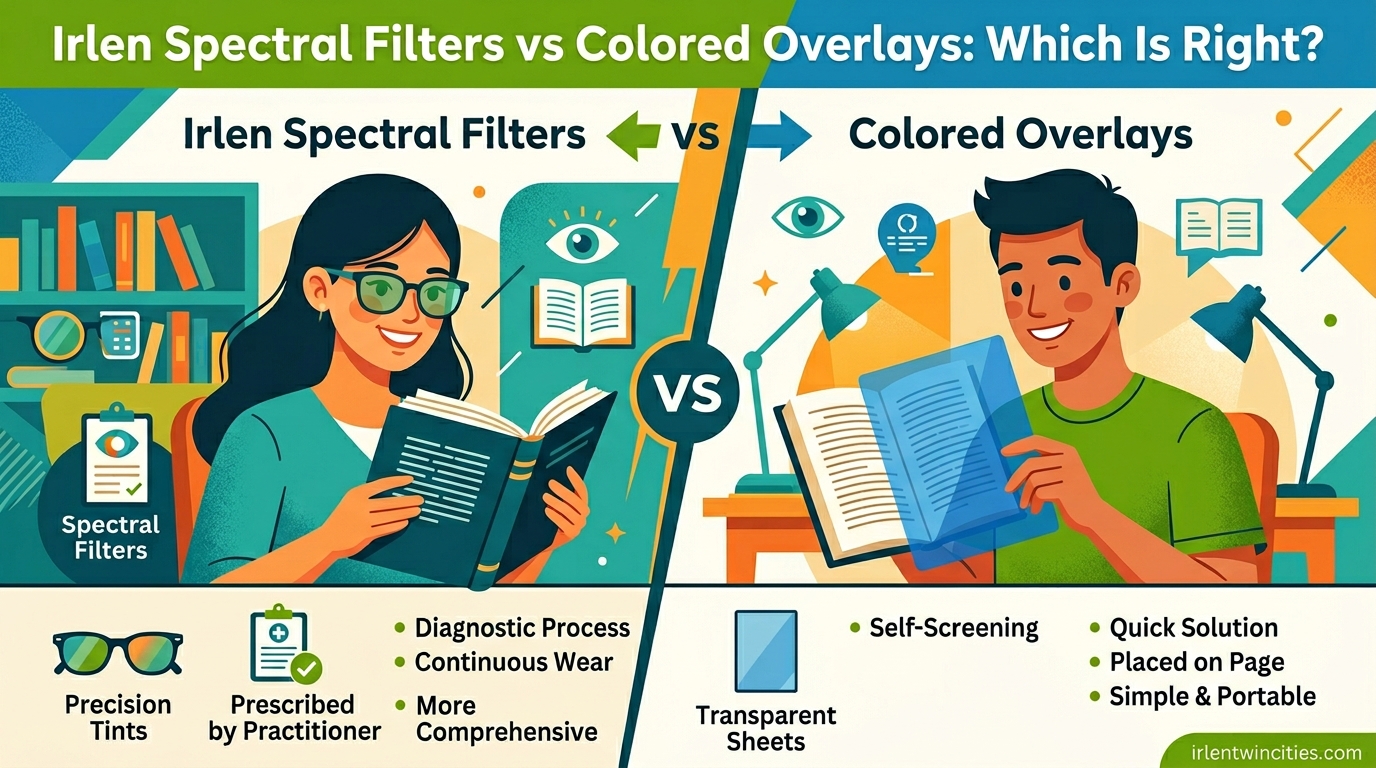
Choosing between Irlen Spectral Filters and colored overlays can feel overwhelming when you are trying to address reading difficulties or visual stress. Both options use color to help your brain process visual information more effectively, but they work in fundamentally different ways. Understanding these differences is essential for making the right choice for your specific needs.
In this guide, you will learn exactly how Irlen Spectral Filters differ from colored overlays, which option suits different situations, and how to determine what might work best for you or your child. We will cover the science behind each approach, the costs involved, and what real users say about their experiences with both options.
Table of Contents
What Are Irlen Spectral Filters?
Irlen Spectral Filters are precision-tinted lenses designed to filter specific wavelengths of light that cause perceptual processing difficulties. Unlike regular colored glasses, these filters are customized for each individual from over 100,000 possible color combinations to address your unique visual processing needs.
The technology works by removing the exact wavelength of light that triggers your brain’s struggle with visual processing. This allows your visual cortex to function normally while still perceiving colors accurately. The filters are worn as glasses or contact lenses throughout your entire day, not just during reading activities.
Only certified Irlen practitioners can determine your precise color formula through a specialized diagnostic protocol. This assessment process identifies the specific light wavelengths causing your symptoms and matches you with the exact filter combination needed to normalize your neurological functioning.
What Are Colored Overlays?
Colored overlays are transparent sheets of colored acetate placed over written text to reduce visual stress and improve reading comfort. These overlays come in 10 standard colors and are positioned between your eyes and the reading material to alter how light reaches your visual system.
Most people try colored overlays first because they are readily available, affordable, and easy to experiment with. You can hold different colored sheets over text to see which color reduces glare, stops words from moving, or minimizes eye strain. Overlays work specifically for reading tasks but do not address other visual processing challenges in your environment.
Many teachers and dyslexia assessors use overlays as an initial screening tool. If you find a color that helps with reading, this information can guide further assessment for precision-tinted lenses if needed.
Key Differences Between Irlen Spectral Filters and Colored Overlays
Understanding the fundamental differences between these two interventions helps clarify why one might work better than the other for your situation. The distinctions go far beyond simply wearing glasses versus placing a sheet over text.
| Feature | Irlen Spectral Filters | Colored Overlays |
|---|---|---|
| Color Options | 100,000+ precision-tinted combinations | 10 standard colors |
| Usage | All-day wear for all activities | Reading only |
| Customization | Individual diagnostic assessment required | Self-selection or basic screening |
| Light Protection | Protects brain from fluorescent, sunlight, LED, and dim light | Only affects reading material lighting |
| Symptom Relief | Headaches, migraines, depth perception, light sensitivity, eye strain | Reading-specific visual stress |
| Cost | Higher (includes assessment + lenses) | Low (sheets cost under $20) |
| Professional Requirement | Must use certified Irlen practitioner | No professional required |
The color count difference is particularly significant. With only 10 overlay colors available, the chances of finding your exact optimal color are statistically low. Irlen Spectral Filters offer over 100,000 unique color possibilities, allowing for precise matching to your brain’s specific needs. Research shows that approximately 70% of people who need color intervention require a color that does not match any of the 10 standard overlay options.
Another key distinction is that your overlay color and your spectral filter color will almost certainly be different. Many people become confused when their glasses do not match their overlay color. This happens because overlays work by changing the background color of what you read, while spectral filters work by filtering light entering your eyes. These are fundamentally different mechanisms requiring different color solutions.
How Each Works for Reading Difficulties
The science behind color interventions for reading difficulties centers on how your brain processes light wavelengths. For people with Irlen Syndrome or visual stress, certain wavelengths of light trigger hyperactivity in the brain’s visual cortex. This creates perceptual distortions that make reading difficult or uncomfortable.
Irlen Spectral Filters work by selectively filtering out the specific wavelengths causing your neurological dysfunction. When these problematic wavelengths are removed, your brain can process visual information normally. The filters are worn all day because the problematic light exists everywhere, not just on reading material. Fluorescent lights, sunlight, LED screens, and even dim lighting can all trigger symptoms.
Colored overlays work differently by placing a colored barrier between your eyes and the text. The overlay color absorbs certain wavelengths reflecting off the white page while allowing others through. This changes the visual appearance of the text and background, which can reduce glare and improve contrast for some readers. However, overlays only address the light coming from your reading material, not from your surrounding environment.
Think of it this way: overlays treat the symptoms during one specific activity, while spectral filters address the underlying cause throughout your entire visual experience. This explains why many people find overlays helpful but not sufficient for complete symptom relief.
Who Benefits from Each Option
Colored overlays work best for individuals with mild visual stress or general reading discomfort. If you experience occasional eye strain while reading, find white pages too bright, or notice text seems to shimmer slightly, an overlay might provide adequate relief. Children in classroom settings often use overlays successfully because they primarily need reading support during schoolwork.
People with ADHD, autism, or general light sensitivity sometimes find overlays helpful for focused reading tasks. The lower cost makes overlays a sensible first step before investing in precision-tinted lenses. Many users report that overlays reduce headaches associated with extended reading sessions.
Irlen Spectral Filters become necessary when symptoms extend beyond reading activities. If you experience headaches or migraines from fluorescent lighting, struggle with depth perception, find sunlight or bright lights physically uncomfortable, or have symptoms across multiple environments, spectral filters are likely the better solution. Brain injury survivors and people with diagnosed Irlen Syndrome typically require the precision that spectral filters provide.
Based on forum discussions from real users, overlays help significantly with preventing dizziness from light for some individuals, while others report that only precision-tinted glasses provide the specific filtering their brains need. One user noted that their Irlen tinting felt completely different from regular colored sunglasses, emphasizing the importance of the personalized approach.
Cost and Assessment Process
Understanding the financial and logistical requirements helps set realistic expectations for each intervention path. Many people become frustrated when they discover the true costs after starting the process.
Colored overlays cost between $10 and $20 for a set of 10 colors. You can purchase these online or through educational suppliers without any professional assessment. Some schools and dyslexia centers provide overlay screening at no cost. This makes overlays accessible for virtually anyone wanting to try color intervention.
Irlen Spectral Filters require a certified practitioner assessment, which typically costs between $150 and $400 depending on your location and whether you choose a screening or full diagnostic session. The lenses themselves add several hundred dollars to the total cost, with complete systems often ranging from $500 to $1000. Some insurance plans cover portions of this expense, though coverage varies significantly.
The assessment process for overlays involves simply trying different colors while reading to see which feels most comfortable. For spectral filters, a certified Irlen practitioner conducts a comprehensive evaluation using specialized colored lenses to determine your exact filtering needs. This process can take one to two hours and involves testing your response to various light wavelengths under controlled conditions.
Users report that NHS assessments in the UK sometimes yield different results than private Irlen assessments, which can cause confusion. If you pursue spectral filters, working with a certified Irlen practitioner ensures you receive the full diagnostic protocol rather than a simplified color matching process.
How to Choose the Right Option for You
Start with colored overlays if you are unsure where to begin. They provide an affordable way to test whether color intervention helps your reading without committing to a significant financial investment. Purchase a set of 10 colors and try each one during reading tasks over several days.
If you find an overlay color that helps significantly, you have two paths forward. You can continue using overlays for reading and accept their limitations for other activities. Alternatively, you can pursue an Irlen assessment to determine if precision-tinted lenses would provide more comprehensive benefits.
Consider spectral filters directly if you experience symptoms beyond reading difficulties. Headaches from lighting, discomfort in bright environments, depth perception problems, or visual stress across multiple daily activities indicate you need all-day protection that only glasses can provide.
Signs that you should skip overlays and pursue spectral filters include: migraines triggered by fluorescent lights, inability to tolerate bright sunlight, visual distortions that affect driving or sports, and symptoms that persist even with overlay use during reading. A professional Irlen screening can definitively determine whether you are a candidate for spectral filters.
Frequently Asked Questions
What is a coloured overlay for Irlen Syndrome?
A coloured overlay is a transparent sheet of colored acetate placed over reading material to reduce visual stress. For Irlen Syndrome specifically, overlays provide preliminary color screening from 10 standard colors. They help determine if color intervention might be beneficial before investing in precision-tinted spectral filters. Overlays only work during reading and do not address other light sensitivity symptoms.
Do colored overlays work for dyslexia?
Colored overlays can help some people with dyslexia, but effectiveness varies significantly. Research from British trials involving 400 children showed that 90% reported some improvement with color interventions. However, overlays primarily address visual stress components rather than the phonological processing issues at the core of dyslexia. They work best for individuals whose reading difficulties stem from visual perceptual problems rather than language processing deficits.
What are Irlen spectral filters?
Irlen Spectral Filters are precision-tinted lenses customized for each individual from over 100,000 color combinations. They filter specific wavelengths of light that cause perceptual processing difficulties and brain dysfunction. Unlike regular colored glasses, these filters are determined through a certified diagnostic protocol and worn all day to protect the brain from problematic lighting in all environments including fluorescent lights, sunlight, and screens.
What color filter is best for dyslexia?
There is no single best color filter for dyslexia because each person’s visual system responds differently to specific wavelengths. What helps one person might not help another. The only way to determine your optimal color is through systematic testing with various color options. For overlays, try all 10 standard colors during reading to find what feels most comfortable. For precision intervention, a certified Irlen assessment tests your response to thousands of color combinations to find your exact match.
Conclusion
Irlen Spectral Filters and colored overlays serve different purposes for people with visual processing difficulties. Colored overlays offer an affordable entry point for testing whether color helps your reading, while Irlen Spectral Filters provide comprehensive, all-day protection customized to your exact neurological needs.
If you experience symptoms beyond reading discomfort, investing in a professional Irlen assessment and precision-tinted lenses will likely provide better long-term results than overlays alone. The 100,000 color options available through spectral filters address the statistical likelihood that none of the 10 overlay colors match your specific requirements.
Start with overlays to explore color intervention, but do not hesitate to pursue a certified Irlen assessment if your symptoms persist or extend into daily activities beyond reading. Your brain deserves precise protection tailored to its unique needs.