
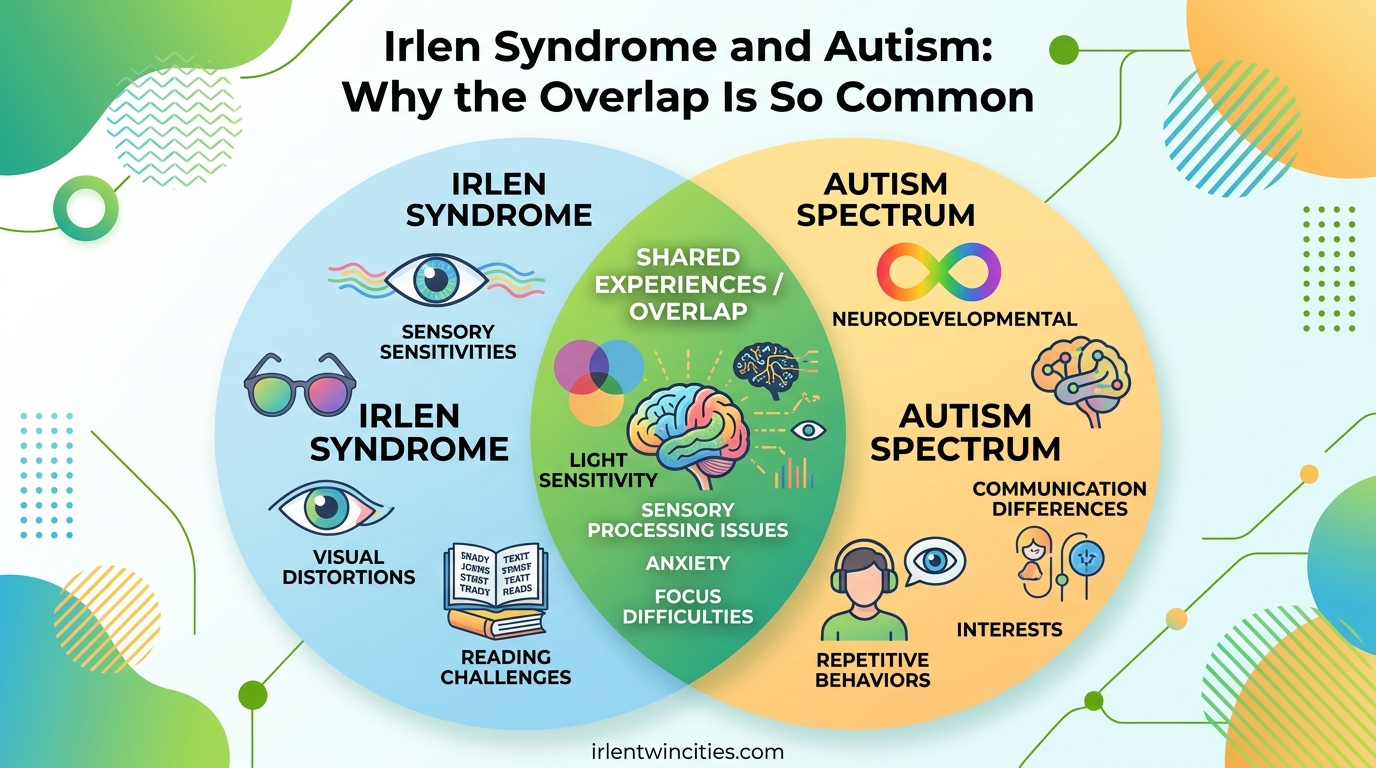
Irlen Syndrome is a light-based visual processing disorder where the brain struggles to efficiently process visual stimuli, particularly in relation to light, contrast, and color. For reasons that are only recently being understood at a neurological level, this condition shows a remarkably high overlap with autism spectrum disorder. If you are autistic, or love someone who is, understanding this connection could explain challenges that have felt unexplained for years.
Many autistic individuals experience sensory processing differences that extend beyond what neurotypical people encounter. Some of these difficulties trace back to how the brain handles visual information. When someone with autism also has Irlen Syndrome, everyday activities like reading, navigating bright spaces, or focusing on screens can become exhausting, overwhelming, or simply impossible without intervention.
Table of Contents
What Is Irlen Syndrome?
Irlen Syndrome, also called Scotopic Sensitivity Syndrome or a perceptual processing disorder, was first described by Olive Meares in 1980 and later expanded by Helen Irlen. The condition affects how the brain processes visual information, particularly light and contrast. Unlike vision problems that stem from eye structure, Irlen Syndrome originates in the brain’s visual cortex and related neural pathways.
People with Irlen Syndrome often describe their visual experience as fundamentally different from what others see. Text might appear to shift, blur, or create visual static. Colors can feel overwhelming or physically painful. Bright lights, fluorescent lighting, and high-contrast patterns may cause discomfort, headaches, or fatigue that builds over time.
The condition exists on a spectrum, meaning individuals can experience mild to severe symptoms. It tends to run in families, affecting males and females equally. Importantly, Irlen Syndrome often co-occurs with other neurodevelopmental conditions, including dyslexia, ADHD, and autism spectrum disorder.
Symptoms of Irlen Syndrome
Recognizing Irlen Syndrome requires understanding its range of symptoms, which can vary significantly from person to person. These symptoms typically fall into several categories.
Light and Visual Sensitivity
Light sensitivity stands as one of the most common and recognizable symptoms. Individuals may find themselves squinting, rubbing their eyes, or shielding their vision in response to ordinary lighting conditions. Fluorescent lights often prove particularly problematic, creating a harsh, pulsing quality that others may not notice.
Bright sunlight, LED lights, and even some LED screens can trigger discomfort. Some people describe needing to close one eye in bright environments or finding relief only in dimly lit spaces.
Reading and Academic Challenges
Reading difficulties frequently bring Irlen Syndrome to attention. Individuals may skip lines repeatedly, lose their place frequently, or experience text that appears to move, wiggle, or blur on the page. Some read slowly and laboriously while others experience such severe visual distortions that sustained reading becomes impossible.
These challenges often get misidentified as dyslexia or simple reading reluctance. However, the underlying cause differs, and standard reading interventions may produce limited results without addressing the visual processing component.
Physical Symptoms
The physical toll of Irlen Syndrome manifests as eye strain, headaches, fatigue, and sometimes nausea. After spending time in triggering visual environments, individuals may need significant recovery time. Concentration difficulties often accompany these physical symptoms, creating a cycle of effort and exhaustion.
Environmental Reactions
Certain visual patterns, high-contrast spaces, and busy visual environments can trigger strong negative reactions. Some individuals develop avoidance behaviors around specific lighting types, patterned surfaces, or visual complexity that others find unremarkable.
The Connection Between Irlen Syndrome and Autism
Research consistently documents that Irlen Syndrome occurs with significantly higher frequency among autistic individuals compared to the general population. Studies suggest that a substantial proportion of autistic people experience visual processing difficulties that align with Irlen Syndrome criteria.
This connection does not mean Irlen Syndrome causes autism or vice versa. Instead, both conditions appear to involve overlapping neurological pathways related to sensory processing. The autistic brain often processes sensory information differently, and for many individuals, visual processing represents a significant area of difference.
Autism traits like difficulty filtering sensory input, challenges with visual attention, and heightened sensitivity to environmental stimuli can compound with Irlen symptoms. When an autistic person also has Irlen Syndrome, the combined effect may create challenges far more severe than either condition alone.
For parents and professionals, recognizing this overlap matters because addressing Irlen symptoms can sometimes reduce autistic individuals distress in ways that other interventions cannot. A person struggling with visual processing difficulties from Irlen may appear irritable, avoidant, or unable to focus when the real issue involves how their brain processes what they see.
Why the Overlap Is So Common
Understanding why Irlen Syndrome and autism so frequently occur together requires examining the neurological foundations of both conditions. This question represents one of the most significant gaps in competitor content, which tends to state the overlap without explaining it.
The Magnocellular Pathway Connection
Research increasingly points to the magnocellular pathway as a key link. This neural system handles rapid processing of visual information, particularly motion detection, contrast sensitivity, and peripheral vision. The magnocellular pathway feeds into broader networks governing attention, sensory filtering, and sensory processing.
Both autism and Irlen Syndrome appear to involve differences in magnocellular function. When this pathway does not filter and process visual information efficiently, individuals experience sensory overload, difficulty focusing, and visual distortions. Autism involves atypical sensory processing broadly, and magnocellular differences may represent a specific component of that broader pattern.
Shared Brain Regions and Networks
Visual processing differences in autism extend beyond the magnocellular system. Functional brain imaging studies show that autistic individuals often display altered activity in visual processing regions, including areas responsible for face recognition, biological motion detection, and visual attention. Irlen Syndrome similarly involves differences in how the visual cortex responds to light, contrast, and color.
These shared neurological features suggest that what appears as two separate conditions may represent overlapping expressions of underlying neurodevelopmental differences. The autism diagnosis captures a cluster of traits, some of which involve visual processing pathways that also happen to be affected in Irlen Syndrome.
Genetic and Developmental Factors
Both conditions show hereditary patterns. Irlen Syndrome runs in families, and autism has strong genetic components. While specific shared genes remain under investigation, the observation that both conditions cluster in families suggests overlapping genetic vulnerabilities.
Early developmental factors may also play a role. Some researchers propose that atypical neural development affecting sensory processing pathways could contribute to both autism characteristics and Irlen symptoms appearing together more often than chance would predict.
What Research Says About the Overlap
Scientific investigation into the Irlen-autism connection continues to evolve. Several research threads contribute to our understanding.
Case studies have documented identical concomitant symptoms between autism spectrum disorders and Meares-Irlen Syndrome, suggesting the two conditions may share more than just coincidental overlap. Research examining visual processing in autism consistently finds elevated rates of visual difficulties that map onto Irlen diagnostic criteria.
Functional imaging studies show visible differences in how autistic individuals process visual information. Some advocates point to these imaging findings as evidence that Irlen Syndrome represents a legitimate neurobiological condition rather than a subjective complaint. Critics in mainstream medicine maintain that evidence remains insufficient to establish Irlen Syndrome as a distinct clinical entity.
This tension between different perspectives on Irlen Syndrome reflects broader debates about how to understand and classify neurodevelopmental conditions. Regardless of where one falls on the medical recognition question, the lived experience of autistic individuals with Irlen-type symptoms remains real and deserving of attention.
Important Considerations and Controversies
Balanced coverage of Irlen Syndrome requires acknowledging the controversies surrounding it. The condition occupies a complicated position within mainstream medicine.
The Medical Recognition Debate
Major ophthalmology organizations, including the American Academy of Ophthalmology, have stated that evidence supporting Irlen lenses as treatment remains insufficient. They note that benefits may stem from placebo effects or from the colored overlays helping with reading through mechanisms unrelated to a distinct Irlen Syndrome.
On the other hand, individuals who experience meaningful improvement from Irlen intervention often describe life-changing benefits. Forum discussions reveal countless accounts from autistic people who found significant relief through tinted lenses after years of struggling with unexplained difficulties.
This disagreement reflects genuine scientific uncertainty. High-quality longitudinal studies with proper controls remain limited. Meanwhile, the lived experience of affected individuals provides a different kind of evidence that deserves consideration alongside clinical research.
Cost and Accessibility Considerations
A significant barrier for many families involves the cost of Irlen assessment and lenses. Comprehensive assessment by an Irlen Specialist can cost several hundred dollars, and the tinted lenses themselves represent an additional expense. Some families report spending around $700 total for assessment and initial lenses.
Insurance coverage varies widely. Some Canadian users report that Irlen is recognized as a disability covered by certain insurance plans, while others in different regions find no coverage available. This geographic variability in recognition and accessibility adds another layer of complexity to accessing help.
Getting Assessed: Practical Guidance
For those considering assessment, several approaches exist. Certified Irlen Specialists offer comprehensive evaluations that include determining whether colored lenses might help and identifying the specific tints needed. Some individuals prefer to start with simpler interventions like colored overlays for reading, which cost less and carry no risk.
Approaching assessment with realistic expectations matters. Not everyone who suspects they have Irlen Syndrome will benefit from intervention. Testing can help identify who falls into the group likely to benefit, allowing families to make informed decisions about whether the investment makes sense for their situation.
Frequently Asked Questions
What is Irlen Syndrome?
Irlen Syndrome is a light-based visual processing disorder where the brain struggles to efficiently process visual stimuli. It causes symptoms like light sensitivity, reading difficulties, visual distortions, and fatigue when viewing certain colors or brightness levels.
Why is Irlen Syndrome common with autism?
The overlap is common because both conditions involve differences in sensory processing. Research suggests the magnocellular pathway, which handles rapid visual processing and contrast sensitivity, may be affected in both autism and Irlen Syndrome. This shared neurological foundation explains why many autistic individuals also experience Irlen symptoms.
How does Irlen Syndrome affect autistic people?
Autistic individuals with Irlen Syndrome may experience intensified visual processing difficulties, including increased light sensitivity, difficulty reading text that appears to move or blur, eye strain, headaches, and fatigue in bright or fluorescent lighting. These challenges can compound autism-related sensory issues.
Is Irlen Syndrome recognized by the medical community?
Irlen Syndrome remains controversial within mainstream medicine. While some healthcare professionals recognize it as a legitimate perceptual processing disorder, others consider it unproven or a variation of other conditions. The American Academy of Ophthalmology states there is insufficient evidence to support Irlen lenses as a treatment.
What are the symptoms of Irlen Syndrome?
Core symptoms include light sensitivity, reading difficulties such as skipping lines or losing place, visual distortions where text appears to move or blur, eye strain, headaches, fatigue in bright environments, and difficulty with depth perception. Symptoms vary by individual and environmental conditions.
Conclusion
The overlap between Irlen Syndrome and autism reflects shared neurological foundations in how the brain processes visual information. The magnocellular pathway appears central to understanding why these conditions so frequently occur together in autistic individuals. For those affected, recognizing this connection can transform how they understand their own or their loved ones challenges.
Whether or not one accepts Irlen Syndrome as a distinct clinical entity, the lived experience of autistic individuals with visual processing difficulties remains valid and worthy of attention. Understanding that visual processing differences often accompany autism allows families and professionals to approach difficulties with greater compassion and targeted intervention strategies.
If you suspect Irlen Syndrome may be affecting an autistic person in your life, seeking assessment from a qualified specialist provides a starting point. With proper understanding and appropriate support, many individuals find meaningful relief from the visual processing challenges that have made school, work, and daily life unnecessarily difficult.