
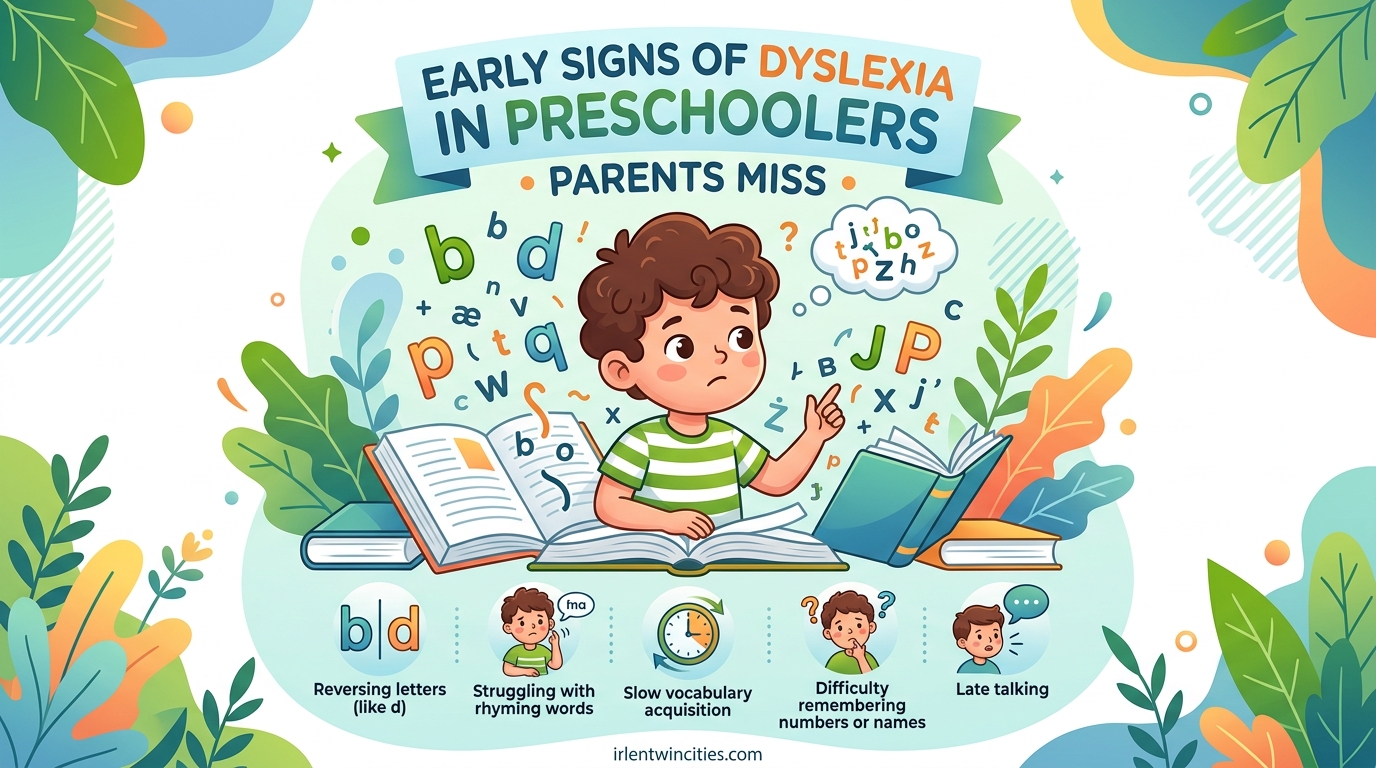
As a parent, you spend countless hours watching your child grow and develop. You notice every new word, every milestone, every adorable moment. But when it comes to learning differences like dyslexia, many parents tell me they had no idea their child was showing signs until years later. The early signs of dyslexia in preschoolers can be surprisingly subtle, easy to dismiss as “just being young” or “a phase they’re going through.” Our team has spoken with hundreds of parents who missed these early indicators, and they all say the same thing: they wish they had known what to look for. This guide will help you recognize the warning signs that many parents and even some teachers overlook during the preschool years.
Dyslexia affects approximately 5-10% of the population, making it the most common learning difference in the United States. It is a language-based processing disorder that impacts how the brain connects sounds with letters and words. Crucially, dyslexia has nothing to do with intelligence. Children with dyslexia are just as smart as their peers; their brains simply process language differently. Research from the Yale Center for Dyslexia and Creativity emphasizes that early identification leads to significantly better outcomes. When we catch dyslexia before kindergarten, we can start intervention when the brain is most adaptable. The goal of this article is to give you concrete, actionable information so you can feel confident about your child’s development or know exactly when to seek further support.
Table of Contents
What Is Dyslexia and How Does It Affect Preschoolers?
Let me start by clarifying what dyslexia actually is, because the misconceptions are widespread. Dyslexia is a neurological condition that affects phonological processing, which means it impacts how the brain breaks down and manipulates sounds in language. When a child with dyslexia hears the word “cat,” their brain may not automatically connect the /c/ sound with the letter C, the /a/ sound with the letter A, and the /t/ sound with the letter T. This connection, which seems automatic to most readers, requires extra effort and conscious processing for someone with dyslexia.
For preschoolers, this does not yet mean struggling with reading. Most children between ages 3 and 5 have not begun formal reading instruction. Instead, the signs show up in pre-reading skills. A preschooler with dyslexia might struggle with rhyming games, have difficulty remembering the names of letters, or mix up similar-sounding words. These challenges often seem minor on their own. A parent might think “she’s just not interested in letters yet” or “he talks so cute when he mixes up those sounds.” This is exactly why early signs of dyslexia in preschoolers go missed. The behaviors are woven into normal childhood development, making them hard to distinguish from typical variation.
One important point from our research and parent interviews: dyslexia often runs in families. If you, your partner, or any close family member struggled with reading or spelling, your preschooler has a higher likelihood of showing similar patterns. This genetic component does not mean your child will definitely have dyslexia, but it does mean paying extra attention to the signs becomes even more important.
Warning Signs Parents Commonly Miss
After reviewing forum discussions and talking with parents who later discovered their child’s dyslexia, I noticed a pattern. The signs that seemed most commonly missed were the ones that felt like personality quirks or temporary stages. Let me walk you through the specific indicators that many parents look back on and realize they had overlooked.
Using vague words instead of names. Does your child say “thing” or “stuff” when they cannot remember the specific word for an object? This shows up long before formal reading instruction begins. Rather than saying “pass me the cup,” a preschooler with dyslexia might say “pass me that thing.” This happens because retrieving specific words requires phonological processing, which is exactly where dyslexic brains work differently. Parents often find this endearing, sometimes even funny, but it can be an early signal worth noting.
Persistent mispronunciations. We have all laughed at cute kid mispronunciations. “Beddy tear” for “teddy bear” or “sketti” for “spaghetti” are part of charming childhood memories. But when these persist beyond the typical age, they can indicate phonological processing challenges. The Child Mind Institute notes that while some sound errors are completely normal through age 5 or 6, consistent difficulty producing certain sounds or substituting similar sounds (like “f” for “th”) beyond expected ages warrants professional discussion.
Sequencing difficulties. Can your child recite the days of the week, count to 20, or sing the alphabet song? For many preschoolers with dyslexia, these sequences prove surprisingly difficult. They might know the parts but not the order. Parents frequently mention in forums that their child could count to 20 if you started from any number other than one, or that the alphabet song came out as a jumbled mess of letters in wrong positions.
Confusion with left and right. This sign frequently appears in parent discussions but rarely makes it into formal articles. By age 5 or 6, most children have a solid grasp of left and right. Preschoolers with dyslexia often show delayed hand dominance or persistent confusion about which hand is which. If your 4 or 5 year old still regularly mixes up left and right, this warrants attention alongside other signs.
Physical signs during concentration. Several parents in online communities describe noticing “jittery eyes” or unusual eye movements when their children tried to focus on letters or books. While this is not a diagnostic criterion on its own, combined with other signs, it can indicate the visual processing strain that some children with dyslexia experience.
Speech and Language Development Red Flags
Speech and language development provides some of the earliest windows into potential dyslexia. The connection between spoken language difficulties and later reading challenges is well-established in research. Let me break down the specific speech and language patterns that should catch your attention.
Late Talker Indicators
A “late talker” is a child between 18 and 30 months who has fewer words than expected for their age, but whose comprehension and social skills seem typical. While not all late talkers develop dyslexia, research indicates a significant overlap. If your child was a late talker and is now showing continued speech or language difficulties in the preschool years, this combination deserves professional attention.
Watch for these specific late talker residual patterns: limited vocabulary for age, difficulty learning new words, avoiding words they cannot pronounce rather than attempting them, and delayed emergence of two-word combinations. A child who mostly communicates through gestures and pointing rather than verbal expression, even as they approach age 4 or 5, may be compensating for phonological processing challenges.
Word Confusion Patterns
Children with dyslexia frequently confuse words that sound alike. This goes beyond typical childhood “slips of the tongue.” Watch for consistent substitution of similar-sounding words, inability to distinguish between words like “bat” and “pat,” and frequent requests for repetition because “I said the right thing but you did not understand me.”
Forum discussions revealed a particularly telling pattern: children who called a horse a “cowboy” or similar category-based substitution rather than the specific word. These word retrieval struggles reflect the underlying phonological processing difficulty that characterizes dyslexia. Most children outgrow simple sound substitutions by age 4 or 5, but children with dyslexia continue to struggle with these distinctions.
Rhyming and Phonological Awareness Difficulties
Phonological awareness is the ability to recognize and manipulate sounds in language. It is the foundational skill that makes reading possible. For preschoolers, we are not talking about reading yet; we are talking about the pre-literacy skills that predict later reading success. Difficulties in this area often represent some of the earliest detectable signs of dyslexia.
Nursery Rhyme Struggles
Most children love nursery rhymes by age 3 or 4. They enjoy the rhythm, the repetition, the silly sounds. If your preschooler shows no interest in rhyming games or consistently fails to recognize when words rhyme, this is a significant flag. The Child Mind Institute specifically notes difficulty learning nursery rhymes as a classic warning sign of dyslexia.
Try this simple test at home: say “cat, hat, book” and ask your child which one does not rhyme. Most 4-year-olds can answer this correctly even if they cannot yet read. A child with dyslexia might say all three rhyme, or none of them rhyme, because the sound patterns are not registering in the typical way. This is not about intelligence; it is about auditory processing of phonological patterns.
Letter Recognition Challenges
Between ages 3 and 5, most children begin showing interest in letters. They might know some letters, especially the ones in their name, or point out letters they see on signs. Children with dyslexia often show a curious pattern: they may learn a letter one day and completely forget it the next, or they can recognize letters in isolation but cannot tell you the sounds those letters make.
The Yale Center for Dyslexia and Creativity specifically notes that trouble remembering letter names and letter sounds is a hallmark of preschool dyslexia. Parents in our forum research described spending weeks trying to teach their child the letters in their name with minimal progress, while the child seemed genuinely uninterested or frustrated rather than simply distracted.
Early Signs by Age: 3, 4, and 5 Year Olds
Developmental milestones vary, and every child develops at their own pace. What matters is not whether your child is slightly ahead or behind in one isolated area, but whether you see a pattern of difficulties across multiple areas over time. Here is what the research tells us about age-specific indicators.
Signs in 3-Year-Olds
At age 3, most children are rapidly expanding their vocabulary and beginning to put sentences together. Warning signs to watch for include extremely limited vocabulary compared to peers, little to no attempt to rhyme or play sound games, persistent difficulty with direction words like “in,” “on,” “under,” and persistent drooling or articulation issues beyond what your pediatrician considers normal.
Three-year-olds with dyslexia may also show unusual frustration when trying to communicate, avoidance of story time or alphabet games, and reliance on siblings or parents to “translate” what they are trying to say. These behaviors alone do not indicate dyslexia, but when multiple signs cluster together, professional consultation becomes worthwhile.
Signs in 4-Year-Olds
By age 4, children should be able to follow two-step directions, engage in simple conversations, and show growing interest in letters and numbers. Red flags at this age include inability to recognize any letters in their name after several months of exposure, mixing up very similar-sounding words in conversation, difficulty grasping the concept of rhyming even after repeated exposure, and continued significant difficulty with expressive communication.
Four-year-olds with dyslexia often resist activities involving sounds and letters, not because they are oppositional, but because these activities feel confusing or frustrating. This avoidance behavior frequently gets mislabeled as “not trying hard enough” or “being stubborn” when it is actually a neurological processing difference making the task feel impossibly hard.
Signs in 5-Year-Olds
At 5, most children are approaching kindergarten and typically show strong interest in reading-related activities. They might pretend to read books, ask about words on signs, or try to sound out their name. Warning signs at this age include no recognition of letters besides perhaps their name, inability to write their name legibly despite repeated practice, persistent reversal of common words or letters (beyond what is developmentally typical for this age), and significant difficulty with pre-reading skills like identifying first sounds in words.
Five-year-olds who are showing early signs of dyslexia may also display avoidance of reading-related activities that was not present with other activities, increasing frustration around school-related tasks, and physical signs like squinting or moving closer to books more than typical.
The Role of Family History
Understanding your family history with reading and language provides crucial context for interpreting your child’s development. Dyslexia has strong genetic components. If someone in your immediate family struggled with reading, spelling, or language processing, your child has a statistically higher likelihood of showing similar patterns.
Several parents in our research described realizing their own childhood reading struggles when watching their child navigate similar difficulties. This “aha moment” helped them get their child evaluated sooner because they recognized the patterns from their own experience. If you suspect you might have undiagnosed dyslexia, observing your preschooler with this knowledge can be eye-opening.
The Scottish Rite for Children emphasizes that family history is one of the most reliable predictors of dyslexia risk. When combined with observed difficulties in speech, language, or pre-reading skills, family history creates a compelling case for early evaluation even before kindergarten begins.
When to Seek Professional Evaluation
One of the most common questions parents have is: “When should I actually be worried?” The answer depends on how many signs you are seeing, how significantly they impact daily life, and whether you see a persistent pattern rather than an occasional blip.
General guidelines suggest seeking professional consultation if your preschooler shows three or more of the warning signs described in this article, if speech or language difficulties persist beyond expected ages, if you notice increasing frustration around communication or pre-reading activities, or if you have a strong family history of dyslexia combined with any developmental concerns.
What Professionals to See
The evaluation process for young children may involve several types of professionals. Developmental pediatricians specialize in early childhood development and can provide comprehensive screening. Speech-language pathologists assess speech sound production and language skills. Reading specialists and dyslexia experts can evaluate phonological processing and pre-reading skills.
Our research shows parents often face confusion about where to start. Your pediatrician can be a good first contact and may provide referrals to specialists. For families interested in comprehensive evaluation, developmental pediatricians and university-based dyslexia centers often offer the most thorough assessments for preschoolers.
What Early Intervention Looks Like
Early intervention for dyslexia in preschoolers does not involve formal reading instruction. Instead, it focuses on building foundational phonological awareness skills through play-based activities. Effective programs often include rhyming games, sound identification activities, letter introduction through multi-sensory approaches, and vocabulary building exercises.
The goal of early intervention is to strengthen the neural pathways that reading depends on before formal reading instruction begins. Research consistently shows this approach produces better outcomes than waiting until a child has already fallen behind. Early intervention does not “overwhelm” young children; when delivered appropriately, it feels like fun play that happens to build critical skills.
Parents who pursued early evaluation and intervention consistently report that knowing what their child was facing transformed their approach to parenting. Instead of frustration about why “they are not trying,” they gained understanding of what their child actually needed. Early identification opens doors to support, accommodations, and targeted help that make a profound difference in academic and emotional outcomes.
FAQ
How can I tell if my 4 year old is dyslexic?
Look for a combination of signs including trouble rhyming, difficulty learning letter names or sounds, persistent mispronunciations beyond age 4, limited vocabulary, confusion with similar-sounding words, and difficulty following multi-step directions. If your 4-year-old shows three or more of these signs consistently, consider discussing screening with your pediatrician or a developmental specialist. Family history of reading difficulties increases the likelihood.
How do dyslexic people see words?
Dyslexia does not typically cause visual distortions where letters appear backwards. Instead, the challenge is linguistic: the brain has difficulty connecting sounds with letters and processing phonological information. Some individuals with dyslexia report that letters seem to swim or move on the page, particularly when tired or stressed, but this is not universal. The core difficulty is in decoding and word retrieval rather than visual perception.
What are the red flags for dyslexia in preschoolers?
Key red flags include delayed speech or late talking, persistent difficulty with rhyming games, inability to recognize or remember letters after repeated exposure, using vague words like ‘thing’ instead of specific names, confusion with left and right beyond age 5, difficulty with sequences like the alphabet or days of the week, and significant family history of reading difficulties. Watch for increasing frustration around language activities and avoidance of pre-reading tasks.
What age does dyslexia start to show?
Dyslexia can show signs as early as age 3, though formal diagnosis typically comes later. The earliest indicators often appear in speech and language development, particularly late talking and difficulty with sound-based activities. Most professionals can identify risk factors by age 4 or 5, which is why preschool screening is so valuable. The preschool years represent the ideal window for early intervention because the brain is most responsive to targeted support.
Next Steps for Concerned Parents
If you have read through this article and recognized multiple early signs of dyslexia in preschoolers in your own child, take a deep breath. Recognizing potential signs does not mean your child definitely has dyslexia. It means you now have information that empowers you to seek further guidance if appropriate.
Your next step does not need to be drastic. Start by making an appointment with your child’s pediatrician. Share your observations using specific examples: “My child has been in preschool for six months and still cannot remember any letters” or “Our family has strong reading difficulties and I notice my 4-year-old does not seem to hear rhyming patterns.” Specific observations help pediatricians take your concerns seriously and make appropriate referrals.
Between now and your appointment, you can support your child through low-pressure language activities. Read aloud together every day, play rhyming games in the car, sing songs with repeating patterns, and celebrate any interest your child shows in letters without turning it into a stressful teaching session. The goal is to build positive associations with language and learning while you gather more information.
Remember that early identification of dyslexia leads to early intervention, and early intervention leads to better outcomes. Whether your child needs specialized support or simply extra practice with certain skills, you are now equipped with knowledge that helps you be a more effective advocate. The signs of dyslexia in preschoolers may be subtle, but with attention and action, you can ensure your child gets the support they need at the time when help is most effective.