
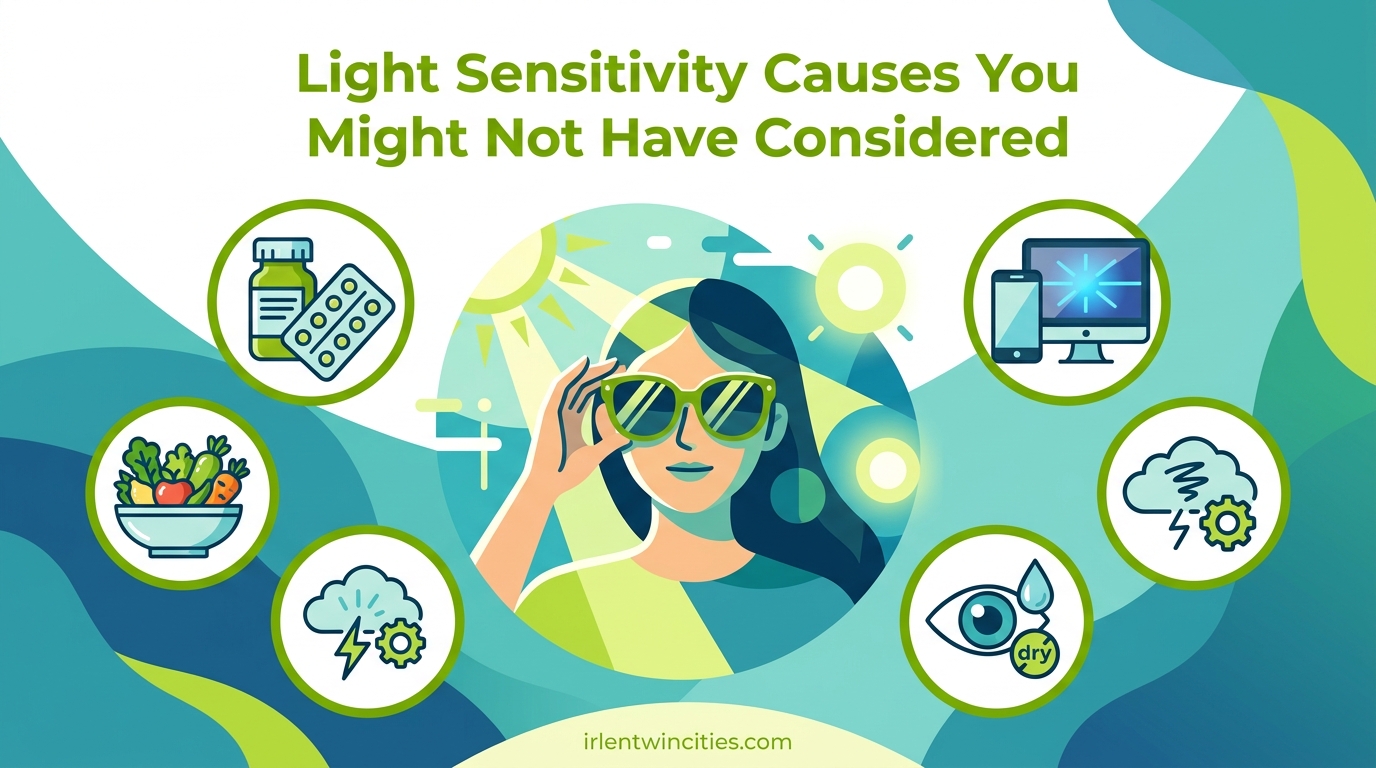
Light sensitivity affects millions of people, yet the causes often remain misunderstood. If you find yourself squinting in bright rooms, avoiding sunny days, or getting headaches from fluorescent lights, you are not alone. Many people assume their photophobia is simply due to migraines or eye strain. However, several lesser-known conditions can trigger this uncomfortable symptom.
In this guide, I will explore light sensitivity causes you might not have considered. From neurological conditions to nutritional deficiencies, understanding these hidden triggers can help you find relief. I will also discuss how visual processing disorders like Irlen Syndrome play a role, which is particularly relevant for those seeking specialized evaluation.
Table of Contents
What Is Light Sensitivity?
Light sensitivity, medically known as photophobia, is a condition where normal light levels cause discomfort or pain. Your eyes may water, squint involuntarily, or feel a burning sensation. Some people experience accompanying headaches, while others simply feel the need to wear sunglasses constantly, even indoors.
Photophobia is rarely a standalone condition. It typically signals an underlying issue with your eyes, nervous system, or brain’s light-processing pathways. The severity ranges from mild irritation during bright days to debilitating sensitivity that affects daily activities like driving or working on a computer.
Doctors distinguish between temporary and chronic photophobia. Temporary sensitivity might follow an eye exam with dilation drops or occur during a migraine attack. Chronic photophobia persists for weeks or months and often indicates a more serious underlying condition requiring medical attention.
Common Causes You Probably Already Know
Before exploring the lesser-known triggers, let us briefly cover the familiar culprits. These common causes appear in most medical literature and are well-understood by healthcare providers.
Migraines rank as the most frequent cause of light sensitivity. During an attack, even normal indoor lighting feels unbearable. Ocular migraines, which affect vision without causing head pain, also trigger significant photophobia. Many migraine sufferers retreat to dark rooms until symptoms pass.
Eye conditions like dry eye syndrome, corneal abrasions, and infections such as conjunctivitis frequently cause light sensitivity. Inflammation inside the eye, known as uveitis, creates particular discomfort in bright conditions. These conditions typically resolve once the underlying eye problem heals.
Excessive sun exposure without UV protection can damage the cornea, leading to temporary but intense light sensitivity. Certain medications, including some antibiotics, antihistamines, and blood pressure drugs, list photophobia as a known side effect.
Light Sensitivity Causes You Might Not Have Considered
Now let us explore the overlooked triggers that might explain your persistent symptoms. These conditions often escape detection during routine eye exams because they require specialized evaluation or fall outside traditional ophthalmology.
Irlen Syndrome and Visual Processing Disorders
Irlen Syndrome represents one of the most underdiagnosed causes of light sensitivity. This perceptual processing disorder affects how the brain interprets visual information, particularly light. Unlike eye diseases that damage physical structures, Irlen Syndrome involves neurological processing differences.
People with Irlen Syndrome often describe fluorescent lights as pulsing or flickering. Reading under bright lights creates strain and fatigue. Computer screens feel unbearable after short periods. These symptoms persist even with 20/20 vision and healthy eyes.
Visual stress from Irlen Syndrome extends beyond simple discomfort. Many affected individuals develop headaches, difficulty concentrating, and reading comprehension problems. The condition frequently coexists with learning disabilities, ADHD, and autism spectrum disorders.
Specialized colored filters, often worn as glasses or overlays, provide significant relief for Irlen Syndrome. The specific color tint varies by individual and requires professional assessment. This treatment approach differs fundamentally from traditional eye care, explaining why standard eye exams miss the diagnosis.
ADHD and Light Sensitivity Connection
Research and community reports reveal a striking connection between ADHD and photophobia. According to discussions in ADHD support communities, approximately 80 percent of individuals with ADHD report experiencing light sensitivity. This far exceeds the general population rate.
The connection stems from neurological differences in sensory processing. ADHD involves atypical dopamine regulation and altered brain pathways for filtering stimuli. Bright lights overwhelm these already taxed filtering systems, creating discomfort and distraction.
Sensory processing differences in ADHD extend beyond light. Many individuals also report sound sensitivity, texture aversions, and difficulty with busy visual environments. Light sensitivity fits within this broader pattern of heightened sensory awareness.
Addressing ADHD-related photophobia often requires a multi-pronged approach. Environmental modifications help, including adjustable lighting and anti-glare screens. Some individuals benefit from tinted lenses designed for visual stress. Managing underlying ADHD symptoms through appropriate treatment may also reduce sensory sensitivities.
Anxiety and Pupil Dilation
Anxiety creates a surprising physical pathway to light sensitivity through pupil dilation. During anxiety or panic episodes, the body’s fight-or-flight response activates. This triggers the sympathetic nervous system, which dilates pupils to gather more visual information about potential threats.
Dilated pupils allow more light to enter the eye. In already bright environments, this extra light creates discomfort or pain. The effect creates a vicious cycle: anxiety causes pupil dilation, increased light sensitivity triggers more anxiety, and symptoms escalate.
Chronic anxiety maintains this state of heightened physiological arousal. Even when not experiencing active panic, anxious individuals may maintain slightly dilated pupils. This explains why some people with anxiety disorders report persistent baseline light sensitivity rather than episodic symptoms.
Breaking this cycle requires addressing both the anxiety and the light sensitivity. Relaxation techniques that reduce sympathetic nervous system activation can help. Some individuals find relief through lightly tinted glasses that reduce light input without the social awkwardness of sunglasses indoors.
Long COVID and Post-Viral Photophobia
Long COVID has emerged as a significant cause of persistent light sensitivity that doctors initially dismissed or misunderstood. Many post-COVID patients report developing photophobia that lasts for months after the initial infection clears.
Research suggests corneal neuropathy as one mechanism. The virus or the body’s immune response damages nerves in the cornea, creating ongoing pain signals and sensitivity to light. This condition, sometimes called corneal neuralgia, does not appear on standard eye exams that focus on physical structures.
Post-viral inflammation provides another pathway. COVID-19 triggers widespread inflammatory responses that can affect the eyes, optic nerves, and brain regions processing visual information. This inflammation may persist long after the active infection resolves.
Patients with Long COVID photophobia often describe their symptoms as constant and severe. Many report needing to wear dark glasses indoors and avoiding screens entirely. Traditional treatments for eye conditions provide limited relief, suggesting the root cause lies in neurological rather than ocular dysfunction.
Nutritional Deficiencies
Vitamin and mineral deficiencies create light sensitivity through their effects on nerve function and eye health. Two deficiencies in particular deserve attention: vitamin B12 and magnesium.
Vitamin B12 deficiency damages the myelin sheath protecting nerves, including those involved in visual processing. Optic nerve dysfunction from B12 deficiency can cause light sensitivity alongside other vision problems. This deficiency often goes undiagnosed for years, particularly in vegetarians, vegans, and individuals with digestive absorption issues.
Magnesium deficiency affects muscle relaxation and nerve signaling. In the eye, this can lead to increased tension in the small muscles controlling pupil response and focusing. The result is heightened sensitivity to light changes and difficulty adapting to bright conditions.
Other nutritional factors may contribute. Omega-3 fatty acid deficiencies affect tear quality and eye surface health. Vitamin A deficiency damages the retina’s light-processing abilities. Addressing these deficiencies through diet or supplementation sometimes resolves unexplained photophobia.
Neck Muscle Tension and Cervical Issues
Tight muscles in the neck and upper back create an unexpected connection to light sensitivity. The cervical spine houses nerves that influence eye function, pupil response, and visual processing. When these nerves become compressed or irritated, photophobia can result.
Poor posture during computer work exacerbates this issue. Hours spent leaning forward with the head tilted down strain the cervical muscles. The resulting tension compresses nerves and restricts blood flow to structures affecting vision.
Tension headaches, which often accompany neck muscle problems, frequently include light sensitivity as a symptom. The trigeminal nerve, involved in both head and neck sensation, connects headache pathways with light processing. Treating the cervical tension sometimes resolves both the headaches and the photophobia.
Physical therapy, ergonomic adjustments, and posture correction offer potential relief. Some individuals report significant improvement in light sensitivity after addressing chronic neck tension through massage, chiropractic care, or targeted exercises.
Histamine Intolerance and Mast Cell Activation Syndrome
Mast Cell Activation Syndrome (MCAS) and histamine intolerance represent emerging explanations for unexplained light sensitivity. These conditions involve inappropriate immune responses that create inflammation throughout the body, including the eyes and nervous system.
In MCAS, mast cells release excessive histamine and other inflammatory chemicals in response to triggers. These triggers vary widely between individuals and may include foods, temperature changes, stress, or environmental chemicals. Eye symptoms include redness, watering, and heightened light sensitivity.
Histamine intolerance occurs when the body cannot break down histamine efficiently. This creates a buildup that triggers inflammatory symptoms. The eyes contain high concentrations of histamine receptors, making them particularly vulnerable to these effects.
Some individuals report improvement in light sensitivity after adopting low-histamine diets or taking antihistamine medications. However, MCAS remains poorly understood and often requires specialized immunological evaluation for proper diagnosis.
When to See a Doctor
Certain symptoms accompanying light sensitivity require immediate medical attention. Sudden onset photophobia, particularly in one eye, may indicate serious conditions like uveitis, corneal infection, or acute glaucoma. Seek emergency care if light sensitivity comes with severe eye pain, vision changes, or headache.
Persistent light sensitivity lasting more than a few days warrants professional evaluation even without other symptoms. This is especially true if you have not identified an obvious cause like recent eye dilation or sun exposure. An optometrist or ophthalmologist can examine eye structures for inflammation, infection, or damage.
Neurological symptoms alongside light sensitivity suggest brain or nerve involvement. These include double vision, weakness, numbness, confusion, or difficulty speaking. Such combinations require urgent evaluation to rule out conditions like meningitis, optic neuritis, or increased intracranial pressure.
If standard eye exams find no physical cause, consider specialized evaluations. Neurological assessment may identify conditions like migraine variants or post-viral syndromes. Irlen Syndrome screening requires assessment by a certified specialist using specific diagnostic methods.
Management and Relief Strategies
Finding relief from light sensitivity requires addressing the underlying cause while managing daily symptoms. The right approach depends on your specific diagnosis, but several strategies help most people with photophobia.
Specialized tinted lenses provide significant relief for many causes of light sensitivity. For Irlen Syndrome, precision-tinted filters calibrated to individual needs work better than generic sunglasses. FL-41 tinted lenses specifically block wavelengths problematic for migraine-related photophobia.
Be cautious with extremely dark sunglasses. While they provide immediate comfort, prolonged use can worsen light sensitivity over time. Dark lenses cause pupils to dilate, allowing more light to enter when you remove the glasses. Graduated tints or lighter indoor options often work better for chronic conditions.
Environmental modifications reduce daily strain. Adjust computer and phone screens to lower brightness with warmer color temperatures. Use anti-glare filters on monitors. Replace fluorescent bulbs with natural spectrum LED alternatives. Position workspaces to avoid direct window glare.
Address underlying conditions for lasting improvement. Treat dry eye with appropriate drops or lifestyle changes. Manage migraines through trigger identification and preventive strategies. Consider nutritional testing for deficiencies. Address anxiety through therapy or medication if appropriate.
Frequently Asked Questions
What does light sensitivity cause?
Light sensitivity causes eye discomfort, pain, squinting, headaches, and difficulty functioning in bright environments. Severe cases may lead to social isolation, inability to drive, and reduced work productivity. Photophobia can also cause anxiety about leaving the house or attending events with bright lighting.
What is the condition when you’re sensitive to light?
The medical term for light sensitivity is photophobia. It describes an abnormal intolerance to light that causes discomfort or pain. Photophobia is usually a symptom of an underlying condition rather than a standalone disease. It can result from eye problems, neurological conditions, brain disorders, or sensory processing differences.
Is light sensitivity an ADHD thing?
Yes, light sensitivity is commonly associated with ADHD. Research and community reports suggest approximately 80% of individuals with ADHD experience photophobia. The connection relates to neurological differences in sensory processing and dopamine regulation. Many people with ADHD also have broader sensory sensitivities including sound and texture aversions.
What vitamin deficiency causes sensitivity to light?
Vitamin B12 deficiency and magnesium deficiency can both cause light sensitivity. B12 deficiency damages the myelin sheath protecting nerves including those involved in vision. Magnesium deficiency affects muscle relaxation and nerve signaling in the eye. Other deficiencies that may contribute include omega-3 fatty acids and vitamin A. Testing and supplementation often help resolve photophobia caused by nutritional gaps.
Conclusion
Light sensitivity causes extend far beyond the commonly cited migraines and eye infections. Understanding these lesser-known triggers, from Irlen Syndrome and ADHD to Long COVID and nutritional deficiencies, opens pathways to proper diagnosis and effective treatment.
If you experience persistent photophobia that standard eye exams cannot explain, consider these overlooked causes. Seek specialized evaluation when necessary, particularly for visual processing disorders like Irlen Syndrome that require specific assessment methods. With the right approach, most people find significant relief and regain comfort in everyday lighting environments.