
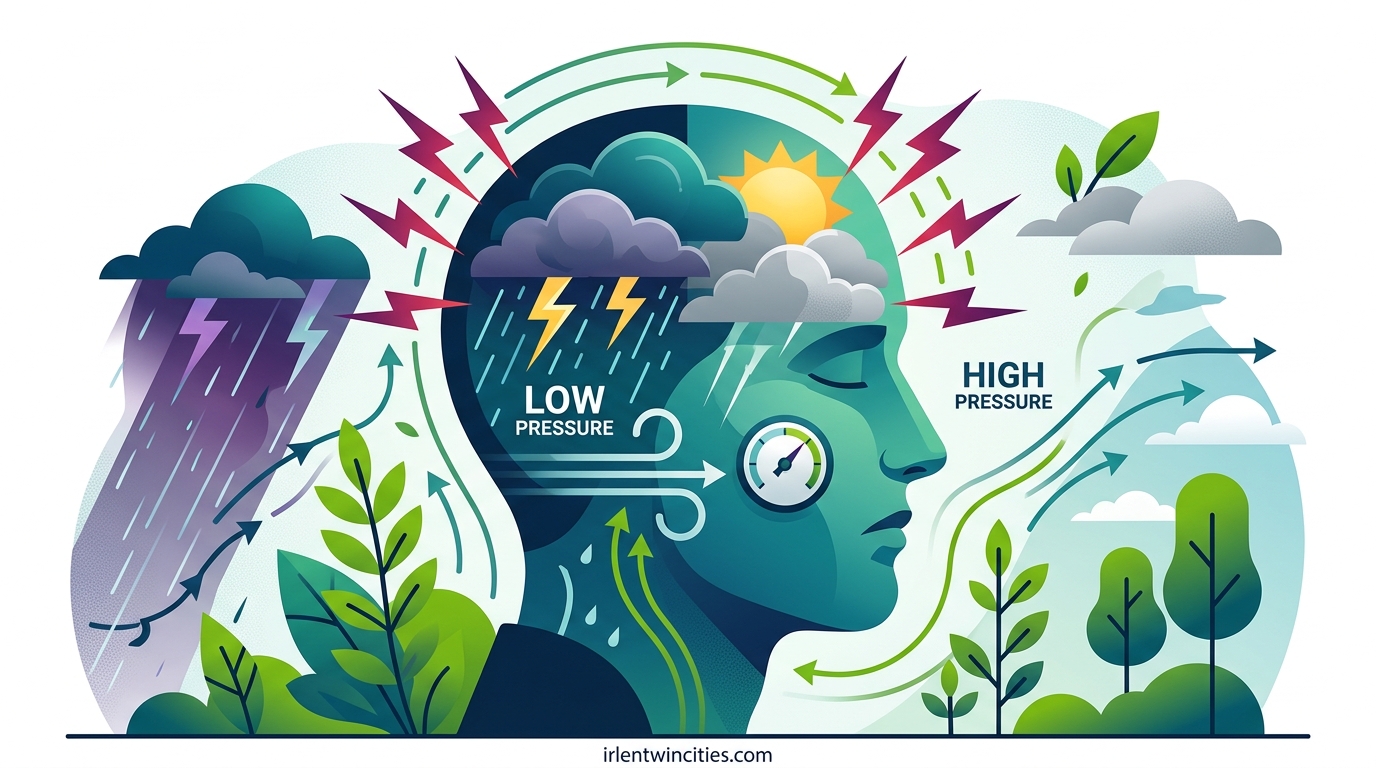
If you have ever wondered why your head starts pounding right before a storm rolls in, you are not alone. Changes in barometric pressure cause headaches and migraines for millions of people, yet this connection remains poorly understood by many doctors and patients alike.
A barometric pressure headache is a type of headache or migraine triggered by shifts in atmospheric pressure, often occurring during weather changes like storms, temperature swings, or shifts in humidity. These pressure-related headaches can be debilitating, sometimes striking hours before any clouds appear in the sky.
Understanding how weather affects your head can help you predict, prevent, and treat these episodes more effectively. This guide covers the science behind barometric pressure migraines, specific symptoms to watch for, and actionable strategies to minimize their impact on your life.
Table of Contents
What Is Barometric Pressure and How Does It Cause Headaches?
Barometric pressure, also called atmospheric pressure, is the weight of the air pressing down on the Earth’s surface. This pressure constantly fluctuates based on weather systems, altitude, and temperature changes.
When barometric pressure drops, it creates a pressure imbalance between the air around us and the air trapped in our sinus cavities, inner ear, and blood vessels. Your body attempts to equalize this pressure, causing tissues to swell and fluid to shift into surrounding tissues.
Research published in scientific journals shows that small decreases of 6-10 hPa relative to the standard atmospheric pressure of 1013 hPa induce migraine attacks most frequently. For reference, a drop of just 1 hPa can be noticeable to sensitive individuals.
The trigeminal nerve, which controls sensation in your face and head, becomes activated during these pressure changes. This triggers pain signals and can cause the release of brain chemicals like serotonin, which is linked to migraine episodes.
Weather-related headaches are not just about storms. High humidity, rapid temperature changes, and even bright sunlight can trigger symptoms in susceptible individuals. Many people report getting headaches when it rains, during seasonal transitions, or when traveling to higher altitudes.
Symptoms of Barometric Pressure Headaches and Migraines
Barometric pressure headaches share many symptoms with other types of headaches, but certain signs point specifically to weather-related triggers.
Common Symptoms Include
Dull, throbbing pain that starts in the temples or behind the eyes often characterizes these headaches. The pain may shift to the forehead, sinus area, or the back of the head depending on the individual.
Facial pressure and sinus discomfort frequently accompany weather-related headaches. You might notice increased sinus pain, postnasal drip, or a feeling of fullness in your ears similar to what you experience on an airplane.
Many sufferers report teary eyes, nasal congestion, and sensitivity to light during episodes. Nausea and vomiting can occur, especially in true migraine episodes rather than standard tension headaches.
Fatigue and mood changes often precede or follow weather-related headaches. Some people experience unusual drowsiness, difficulty concentrating, or irritability before the headache fully develops.
Sinus Headache vs. Migraine: How to Tell the Difference
Distinguishing between a sinus headache and a migraine is challenging because both cause facial pain and pressure. However, key differences can help you identify which type you are experiencing.
Sinus headaches typically worsen when you bend forward or lie down, and they often accompany cold symptoms, seasonal allergies, or sinus infections. The pain is usually concentrated around the cheeks, forehead, and bridge of the nose.
Migraines, including barometric pressure migraines, often come with nausea, vomiting, and extreme sensitivity to light and sound. Visual disturbances called auras can precede migraines in some individuals. The pain is frequently one-sided and pulsating.
Many people have both sinus issues and migraines, which complicates diagnosis. Some migraine specialists note that weather changes can worsen sinus symptoms while simultaneously triggering migraines, creating a perfect storm of discomfort.
If over-the-counter sinus medications do not provide relief, your headaches may be migraine-based rather than sinus-based, and you should consult a healthcare provider for proper diagnosis and treatment.
Why Am I Suddenly Sensitive to Barometric Pressure?
Developing sensitivity to barometric pressure later in life is more common than you might think. Several factors can contribute to this increased sensitivity.
Hormonal changes, aging, stress levels, and underlying health conditions can all increase your susceptibility to weather-related headaches. Women going through menopause often report new or worsening migraine symptoms related to weather changes.
Previous head injuries, sinus surgeries, or chronic sinus problems can make you more sensitive to pressure changes. Your inner ear and sinus tissues become more reactive over time, especially if they have been traumatized.
Some research suggests that repeated migraine episodes can lower your threshold for various triggers, including weather changes. What once did not affect you might become a significant trigger after years of migraine activity.
Geographic location matters too. People living in areas with dramatic weather swings, high humidity, or frequent storms are more likely to develop barometric pressure sensitivity over time.
Prevention Strategies for Weather-Related Headaches
Preventing barometric pressure headaches requires a proactive approach. While you cannot control the weather, you can prepare your body and environment to reduce sensitivity.
Track Weather Patterns and Pressure Changes
Use smartphone apps that monitor barometric pressure in your area. Several weather apps display current pressure readings and upcoming changes, allowing you to anticipate potential triggers. We recommend checking pressure trends at least twice daily during seasons with frequent weather changes.
Keep a headache diary noting when your symptoms occur, their severity, and current weather conditions. Over time, you will identify specific pressure thresholds that trigger your headaches, enabling more precise prevention efforts.
Maintain Consistent Sleep and Hydration
Dehydration and poor sleep both lower your migraine threshold, making you more susceptible to weather triggers. Aim for seven to eight hours of quality sleep nightly and drink at least eight glasses of water daily, more if you exercise or live in a hot climate.
Establish consistent sleep and wake times, even on weekends. Disrupted sleep patterns increase migraine frequency and severity across all trigger types.
Manage Allergies and Sinus Health
Forum users consistently report that combination triggers work together to cause headaches. Weather changes plus allergies create a powerful duo that overwhelms your system. Treating seasonal allergies with appropriate medications can significantly reduce weather-related headache frequency.
Using nasal saline sprays, staying indoors during high pollen counts, and running air purifiers in your home can reduce sinus inflammation and lower your overall reactivity to pressure changes.
Consider Dietary Triggers
Certain foods and beverages can lower your migraine threshold. Common triggers include aged cheeses, processed meats, alcohol (especially red wine), caffeine, and foods containing monosodium glutamate. Keeping a food diary alongside your weather diary can reveal patterns.
Some migraine specialists recommend the “5 Cs” approach: avoid cheese, chocolate, caffeine, citrus fruits, and cured meats, as these are commonly reported migraine triggers for sensitive individuals.
Create a Stable Indoor Environment
Using a dehumidifier or humidifier to maintain consistent indoor humidity levels can help. Aim for indoor humidity between 30 and 50 percent. Avoid rapid temperature changes in your home by using programmable thermostats.
Plan Activities Around Weather Changes
If you know a storm is approaching, reduce your commitments and stress levels that day. Avoid strenuous exercise, alcohol consumption, and known dietary triggers during high-risk periods. Taking preventive medication at the first sign of pressure change can stop headaches before they develop.
Treatment Options for Barometric Pressure Migraines
When prevention fails, effective treatment options exist ranging from over-the-counter medications to prescription treatments and natural remedies.
Over-the-Counter Medications
NSAIDs like ibuprofen, naproxen, and aspirin work well for mild to moderate barometric pressure headaches. Taking medication at the first sign of pressure change, rather than waiting for pain to develop, produces better results.
Combination medications containing NSAIDs plus caffeine often prove more effective than single-ingredient products. Some forum users report success with ibuprofen combined with decongestants and Benadryl, though this approach should not be used regularly without medical supervision.
Acetaminophen can help for those who cannot take NSAIDs, though it is generally less effective for migraine-type pain. Excedrin Migraine combines acetaminophen, aspirin, and caffeine for a triple-action approach.
Prescription Options
Triptans are the most commonly prescribed migraine-specific medications and can be highly effective for barometric pressure migraines when taken early. Sumatriptan, rizatriptan, and zolmitriptan are popular options.
Some users report that acetazolamide (Diamox), a medication that reduces fluid production in the body, helps prevent weather-related headaches by reducing pressure in the brain and inner ear. This prescription medication requires doctor supervision but has helped many severe sufferers.
Preventive medications like beta-blockers, antidepressants, or anti-seizure medications may be appropriate for individuals with frequent weather-related migraines. These require ongoing use and medical monitoring.
Natural Remedies
Applying cold or warm compresses to the head and neck can provide relief for some individuals. Experiment with both temperatures to determine which works better for your specific symptoms.
Peppermint and lavender essential oils applied to temples provide relief for some headache sufferers. Ginger tea or supplements can help with associated nausea.
Magnesium supplementation (400 mg daily) has scientific support for migraine prevention. Some people find riboflavin (vitamin B2) and CoQ10 supplements helpful as well.
Acupuncture and massage therapy address both the physical tension and the neurological components of weather-related headaches. Regular sessions during high-risk seasons may reduce episode frequency.
When to See a Doctor
While occasional weather-related headaches are common, certain warning signs require professional medical evaluation.
Seek medical attention if your headaches occur more than twice weekly, if they consistently interfere with work, school, or daily activities, or if you need pain medication more than ten days per month.
Red flags requiring immediate evaluation include sudden, severe “thunderclap” headaches, headaches accompanied by fever, confusion, or weakness, and any headache that worsens progressively over weeks or months.
If over-the-counter medications do not provide relief, or if your symptoms are getting worse over time, a headache specialist or neurologist can offer advanced treatment options and proper diagnosis.
Be prepared to discuss your headache patterns, weather correlations, and any other triggers you have identified. Bringing your headache diary can help your doctor understand your specific situation and develop an appropriate treatment plan.
Frequently Asked Questions
How to get rid of a barometric migraine?
Take medication early when you notice pressure changes. NSAIDs, triptans, or combination analgesics work best when taken at the first sign of a migraine. Rest in a quiet, dark room, apply cold compresses, and stay hydrated. If migraines are frequent, talk to your doctor about preventive medications.
How do I know if my headache is from weather?
Track your headaches alongside weather data. Weather-related headaches typically occur during or before storms, humidity changes, or temperature shifts. Common signs include sinus pressure, facial discomfort, and symptoms that coincide with barometric pressure drops on weather apps.
Why am I suddenly sensitive to barometric pressure?
Sensitivity can develop due to hormonal changes, aging, previous head injuries, stress, or underlying health conditions. Repeated migraine episodes can lower your trigger threshold over time. Geographic location and seasonal allergy flare-ups also play a role.
What are the 5 C’s to avoid migraines?
The 5 Cs commonly reported as migraine triggers are: Cheese (especially aged varieties), Chocolate, Caffeine (in excess or withdrawal), Citrus fruits, and Cured meats. Avoiding these around high-risk weather periods may reduce headache frequency.
Does weather really cause migraines?
Yes, research confirms that weather changes are one of the most commonly reported migraine triggers. Studies show 30-50% of migraine sufferers identify weather as a trigger. Barometric pressure changes, humidity, and temperature shifts can all trigger episodes in susceptible individuals.
Conclusion
Weather headaches and barometric pressure migraines are real, documented conditions affecting millions of people worldwide. Understanding the science behind atmospheric pressure and its effects on your body empowers you to take control of your symptoms rather than feeling helpless before every storm.
The key to managing weather-related headaches lies in tracking your personal patterns, maintaining consistent self-care routines, and knowing when to use preventive measures versus acute treatments. While you cannot change the weather, you can prepare your body to be more resilient against pressure changes.
If you have struggled with unexplained headaches that coincide with weather changes, use this guide as a starting point. Begin tracking your symptoms, implement the prevention strategies that apply to your situation, and consult a healthcare provider for personalized treatment options.
Living with weather sensitivity does not mean surrendering to constant discomfort. With the right knowledge and tools, you can reduce the frequency and severity of barometric pressure migraines and reclaim control over your daily life.