
If you’ve ever experienced how a bright office light or sunny window can trigger or worsen a migraine attack, you’re not alone. Light sensitivity affects 80-90% of people who experience migraines, and for many, specific wavelengths of light can turn a manageable day into a painful one. Migraine glasses offer a non-invasive solution designed to filter out the problematic light that triggers discomfort while allowing soothing wavelengths to pass through.
These specialized glasses have gained significant attention in recent years as more research emerges about the connection between light and migraine pain. But what exactly are migraine glasses, and more importantly, how do they actually work to provide relief? This guide breaks down the science behind light-filtering eyewear, explains the different technologies available, and helps you understand whether migraine glasses might be right for your situation.
Table of Contents
Understanding Light Sensitivity and Migraine
Light sensitivity, medically known as photophobia, is one of the most common symptoms associated with migraine attacks. Research shows that approximately 38% of migraine attacks are triggered by light, making it one of the most frequently reported environmental triggers alongside stress, hormonal changes, and sleep disturbances.
During a migraine, your brain becomes hypersensitive to sensory input, and light that would normally feel comfortable can suddenly feel painful or unbearable. This sensitivity occurs because of specialized cells in your retina called intrinsically photosensitive retinal ganglion cells (ipRGCs). These cells contain a light-sensitive protein called melanopsin and connect directly to pain pathways in the brain, explaining why light can physically hurt during a migraine attack.
What many people don’t realize is that not all light affects migraine sufferers equally. Research has identified specific wavelengths of light—particularly in the blue, amber, and red portions of the spectrum—that are most likely to trigger or worsen migraine symptoms. This is where migraine glasses come into play, targeting these specific problematic wavelengths while allowing other light to pass through normally.
Migraine Glasses: How They Actually Work
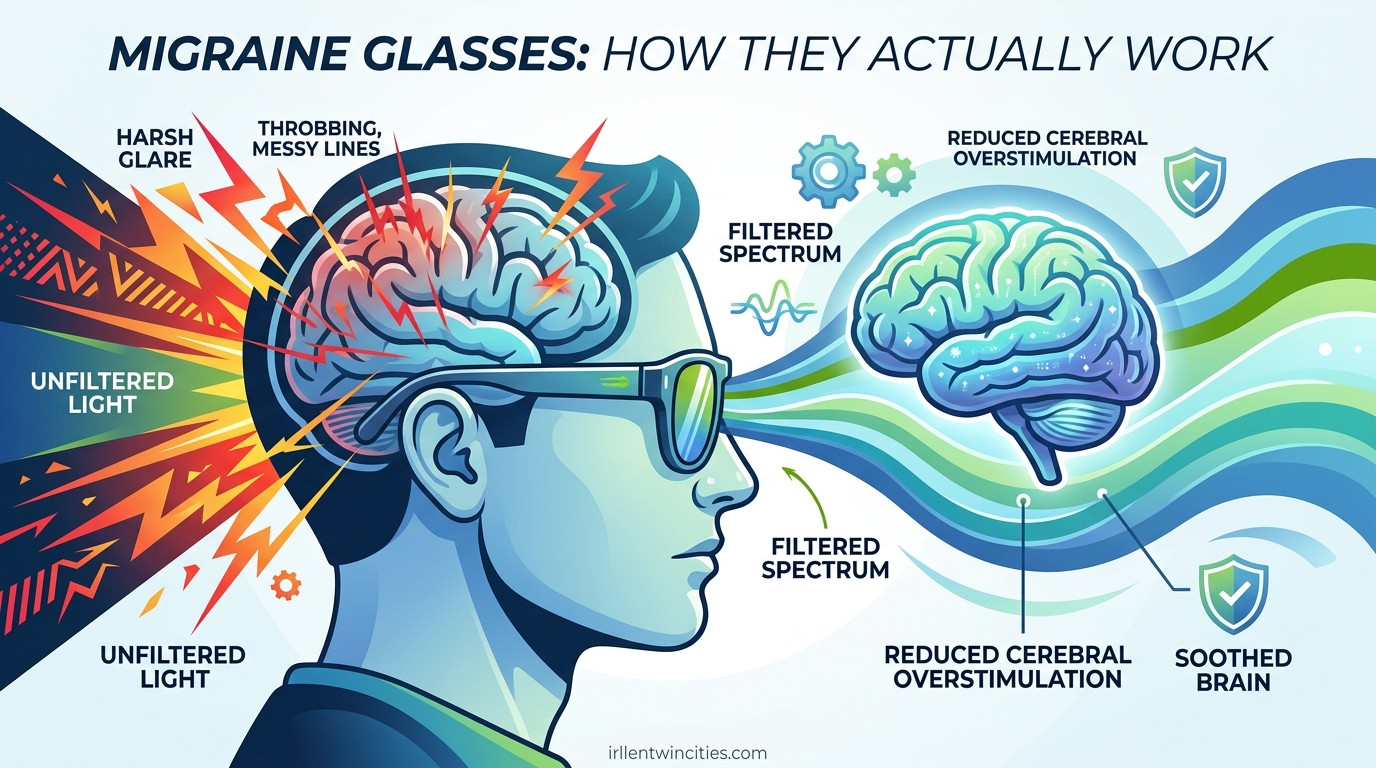
Migraine glasses work by selectively filtering out specific wavelengths of light that are known to activate pain pathways in people with migraine and light sensitivity. Rather than simply darkening your vision like sunglasses, these specialized lenses use precise optical filters to block the most problematic light wavelengths while allowing other, more comfortable wavelengths to pass through with minimal color distortion.
The science behind migraine glasses targets the ipRGCs in your retina. These specialized cells are most sensitive to blue light wavelengths around 480 nanometers, but research has shown they also respond to amber and red light between 520-620 nanometers. When these cells are activated, they send signals directly to the thalamus—the brain’s sensory relay station—which then communicates with pain-processing areas. This explains why light can intensify migraine pain even when your eyes are closed.
By blocking specific wavelengths in the 480-620 nanometer range, migraine glasses reduce the activation of these pain-sensitive cells. The result is less light reaching the pathways that amplify migraine discomfort. Different lens technologies approach this filtering in different ways—some broadly block blue and green light, while newer technologies use precision filters that target multiple problematic wavelengths while letting in soothing green light that has been shown to actually reduce migraine discomfort in some studies.
What makes migraine glasses different from regular sunglasses is the precision of their filtering. Standard sunglasses reduce all visible light relatively evenly, which can sometimes make light sensitivity worse by causing your eyes to adapt to darkness. Migraine glasses, by contrast, are designed to filter only the harmful wavelengths while maintaining normal visual function and color perception as much as possible.
FL-41 Lens Technology
FL-41 is the most established and widely studied tint for migraine relief, originally developed in Florida in the 1980s to help people with light sensitivity. The distinctive rose-pink tint blocks a significant portion of blue-green light in the 480-520 nanometer range, which are the wavelengths that most strongly activate the ipRGCs involved in light sensitivity during migraines.
Multiple studies have examined FL-41’s effectiveness, with research showing it can reduce light sensitivity and migraine frequency for many users. One study found that children who wore FL-41 tinted lenses experienced a reduction in migraine frequency compared to those wearing placebo lenses, while other research has demonstrated decreased light sensitivity and improved comfort in fluorescent lighting environments.
FL-41 lenses typically appear rose, pink, or sometimes brownish-red depending on the specific formulation and intensity. The tint comes in different strengths, with darker versions providing more aggressive light blocking but also more noticeable color distortion. Many people start with a moderate tint strength and adjust based on their personal response and comfort preferences.
One of the advantages of FL-41 is its widespread availability. The technology has been around long enough that many optical providers can create FL-41 prescription lenses, and numerous over-the-counter options exist at various price points. This accessibility has made FL-41 the go-to starting point for many people exploring migraine glasses for the first time.
Avulux and Migraine & Light Sensitivity Lenses
Avulux represents a newer approach to migraine lenses, marketed as the first clinically proven precision optical filter specifically designed for migraine and light sensitivity. Unlike FL-41’s broad filtering approach, Avulux uses what the company calls “precision optical filter technology” that targets multiple problematic wavelengths while selectively allowing soothing green light to pass through.
The key innovation with Avulux is its multi-wavelength filtering. Research has shown that while blue, amber, and red light tend to worsen migraine symptoms, a specific narrow band of green light around 540 nanometers may actually have calming effects during a migraine attack. Avulux lenses are designed to block the harmful wavelengths while transmitting this beneficial green light, potentially providing better relief than filtering alone.
Avulux lenses appear somewhat similar to FL-41 with a rose-pink appearance, though the specific filtering technology differs. The company reports clinical studies showing their lenses can reduce migraine pain and light sensitivity, though independent research is still limited compared to the more established FL-41 tint.
Other companies have developed similar “migraine and light sensitivity” lenses using their own proprietary formulations, often marketed with similar claims about selective filtering and multi-wavelength coverage. These newer technologies generally position themselves as advances over traditional FL-41, though individual responses can vary significantly between different lens types.
FL-41 vs Avulux: Key Differences
Understanding the differences between these two main approaches to migraine glasses can help you have more informed conversations with your eye care provider. Here’s how they compare:
Wavelength Coverage: FL-41 primarily targets blue-green light around 480-520 nanometers, while Avulux filters a broader spectrum including blue, amber, and red light (480-620nm) while allowing specific green wavelengths through. This means Avulux potentially blocks more trigger wavelengths while preserving light that may be soothing.
Appearance: Both lens types have a similar rose-pink appearance, though the specific shade can vary between manufacturers and tint intensities. Casual observers typically won’t notice a significant difference between the two technologies.
Research Base: FL-41 has been studied more extensively over a longer period, with multiple clinical trials supporting its effectiveness for light sensitivity and migraine. Avulux has newer but more limited research, though the company cites clinical trials supporting their specific technology.
Availability: FL-41 is widely available through many optical providers and numerous over-the-counter brands. Avulux is available through fewer providers and tends to be more expensive, reflecting its newer technology and more targeted marketing.
Cost: Generic FL-41 options can range from budget-friendly pairs under $50 to several hundred dollars for designer frames with prescription lenses. Avulux lenses typically cost more due to the proprietary technology, often running $200-400 for complete glasses with prescription options available.
Do Migraine Glasses Actually Work?
The short answer is that research suggests migraine glasses can be effective for many people, but they’re not a universal solution and individual responses vary considerably. Multiple studies have shown that FL-41 tinted lenses can reduce light sensitivity and decrease migraine frequency for some users, and clinical trials sponsored by Avulux manufacturers report positive results for their specific technology.
However, it’s important to understand that migraine glasses don’t work for everyone. Some users report significant relief, others notice modest improvement, and some find no benefit at all. This variability is typical of migraine treatments in general—what works remarkably well for one person may have little effect on another.
Real-world experiences from migraine communities online reflect this mixed response. Many Reddit users in migraine forums report positive results with brands like TheraSpecs and MigraLens, often noting that glasses help with light sensitivity even if they don’t eliminate migraines entirely. Others express skepticism about effectiveness, particularly with cheaper online options, and some find the tint too noticeable for comfortable daily wear.
It’s also worth considering the placebo effect. Given that migraine treatments often have high placebo response rates, some of the perceived benefit from migraine glasses may be attributable to expectation rather than the specific filtering technology. That said, the neurological mechanism by which light wavelengths activate pain pathways is well-documented, suggesting there’s a genuine physiological basis for how properly designed migraine glasses could provide relief.
The most realistic expectation is that migraine glasses may be one tool in your migraine management toolkit rather than a complete solution. They may reduce light sensitivity and potentially decrease attack frequency for some users, but they’re unlikely to eliminate migraines entirely on their own.
When and How to Use Migraine Glasses
Getting the most benefit from migraine glasses means using them strategically rather than wearing them constantly. Here are the situations where they’re most likely to help:
During the Prodrome Phase: Many migraine attacks begin with warning symptoms hours or days before head pain starts. If you notice early signs like mood changes, food cravings, or neck stiffness, putting on your migraine glasses during this prodrome phase may help prevent the attack from fully developing or reduce its severity.
Under Fluorescent Lighting: Office environments, grocery stores, and other spaces with fluorescent lighting are common triggers for migraine sufferers. The flicker and specific wavelength output of fluorescent lights activate ipRGCs effectively, making these environments particularly challenging. Wearing migraine glasses in fluorescent settings can significantly reduce discomfort for many users.
During Computer Work: Digital screens emit significant blue light in the problematic wavelength range. If you spend hours working on computers or looking at other digital devices, migraine glasses may reduce eye strain and decrease the likelihood of screen-related migraine triggers.
Outdoor Activities: Bright sunlight contains the full spectrum of visible light including high concentrations of the wavelengths that worsen migraines. Many migraine sufferers keep separate indoor and outdoor pairs, using darker tints or sunglasses for outdoor activities and lighter tints for indoor use.
During Active Migraines: If you’re already experiencing a migraine attack, wearing your glasses may help reduce light sensitivity and make the attack more bearable. Some users find that glasses during an attack help them remain functional rather than needing to retreat to a dark room.
When you first start wearing migraine glasses, give yourself time to adjust. Your brain needs to adapt to the filtered light input, and some users initially notice color distortion or feel that everything looks slightly pink. Most people adjust within a few days of consistent wear. Start with shorter periods and gradually increase usage as you become accustomed to the tint.
Considerations and Potential Side Effects
While migraine glasses are generally safe with few side effects, there are some considerations to keep in mind. The most obvious is the visual change—the rose-pink tint does affect color perception, which may be problematic for activities where accurate color perception matters, such as graphic design work or certain hobbies.
Some users report initial dizziness or mild disorientation when first wearing migraine glasses, particularly with stronger tints. This typically resolves as your brain adapts to the filtered visual input. Starting with a lighter tint and gradually working up to stronger filtering can help minimize this adjustment period.
Social concerns also come into play for some users. The noticeable tint can draw attention or questions, which may feel uncomfortable if you prefer not to discuss your migraines with coworkers or acquaintances. Some manufacturers offer tints that are subtler or frame styles that look less medical, which may help if this is a concern.
It’s also important to recognize that migraine glasses aren’t appropriate for all situations. They shouldn’t be worn while driving at night or in other low-light conditions where maximum visual clarity is essential. Some eye doctors also caution against using progressive or multifocal lenses with migraine tints, as the combination can sometimes cause visual disturbances.
As with any medical device, it’s worth discussing migraine glasses with your healthcare provider, particularly if you have other vision conditions or are unsure whether light sensitivity is a significant trigger for your migraines. An eye doctor or neurologist familiar with migraine can help you determine whether they’re likely to be beneficial based on your specific situation.
Insurance Coverage and Cost Considerations
One frustrating reality for many migraine sufferers is that insurance coverage for migraine glasses is inconsistent and often limited. Traditional health insurance plans typically don’t cover them because they’re viewed as non-medical devices rather than essential medical equipment. However, there are some avenues for financial assistance worth exploring.
Flexible Spending Accounts (FSA) and Health Savings Accounts (HSA) can often be used to purchase migraine glasses, particularly if you have a letter of medical necessity from your healthcare provider. This allows you to use pre-tax dollars for the purchase, effectively providing a discount equal to your tax rate.
Some vision insurance plans may cover migraine glasses if prescribed by an eye doctor, particularly if they’re incorporated into prescription lenses rather than purchased as standalone non-prescription glasses. Coverage varies significantly between plans, so it’s worth checking with your specific provider about their policy on medically necessary tints.
Cost varies widely depending on whether you need prescription lenses, the brand you choose, and where you purchase them. Non-prescription FL-41 glasses can be found online for under $50, though quality varies significantly at this price point. Mid-range options from reputable brands typically run $100-200, while prescription lenses from major manufacturers can cost $300-500 or more depending on your prescription complexity and frame choice.
For budget-conscious options, some users report success with affordable FL-41 glasses from online retailers, though quality control and tint accuracy may be less consistent than with established brands. Zenni Optical offers migraine lens options at budget-friendly prices if you have a prescription, making this technology more accessible than it once was.
Frequently Asked Questions
Do migraine glasses actually work?
How long should you wear migraine glasses?
Are there side effects to wearing migraine glasses?
Can you get prescription migraine glasses?
Will insurance cover migraine glasses?
Conclusion
Migraine glasses offer a scientifically grounded approach to managing one of the most common and debilitating migraine triggers: light sensitivity. By filtering specific wavelengths that activate pain pathways in the brain, these specialized lenses can reduce discomfort and potentially decrease attack frequency for many sufferers. The science behind them—targeting ipRGCs and the wavelengths of light that most strongly activate these cells—continues to evolve, with both established FL-41 technology and newer precision filters like Avulux offering different approaches to the same problem.
However, migraine glasses aren’t a magic solution. They work well for some people, modestly for others, and not at all for some. The most realistic expectation is that they may be a helpful tool in your broader migraine management toolkit rather than a standalone cure. If light sensitivity is a significant trigger for your migraines, particularly in environments with fluorescent lighting or significant screen time, they may be worth exploring either through budget-friendly FL-41 options to test the concept or through more specialized options if initial results are promising.
As with any migraine treatment, the best approach is to work with your healthcare providers to develop a comprehensive management plan. Migraine glasses may have a place in that plan alongside other preventive measures, acute treatments, and lifestyle modifications. Understanding how they work—and what they can and cannot do—puts you in a better position to make informed decisions about whether they might be helpful for your specific situation.