
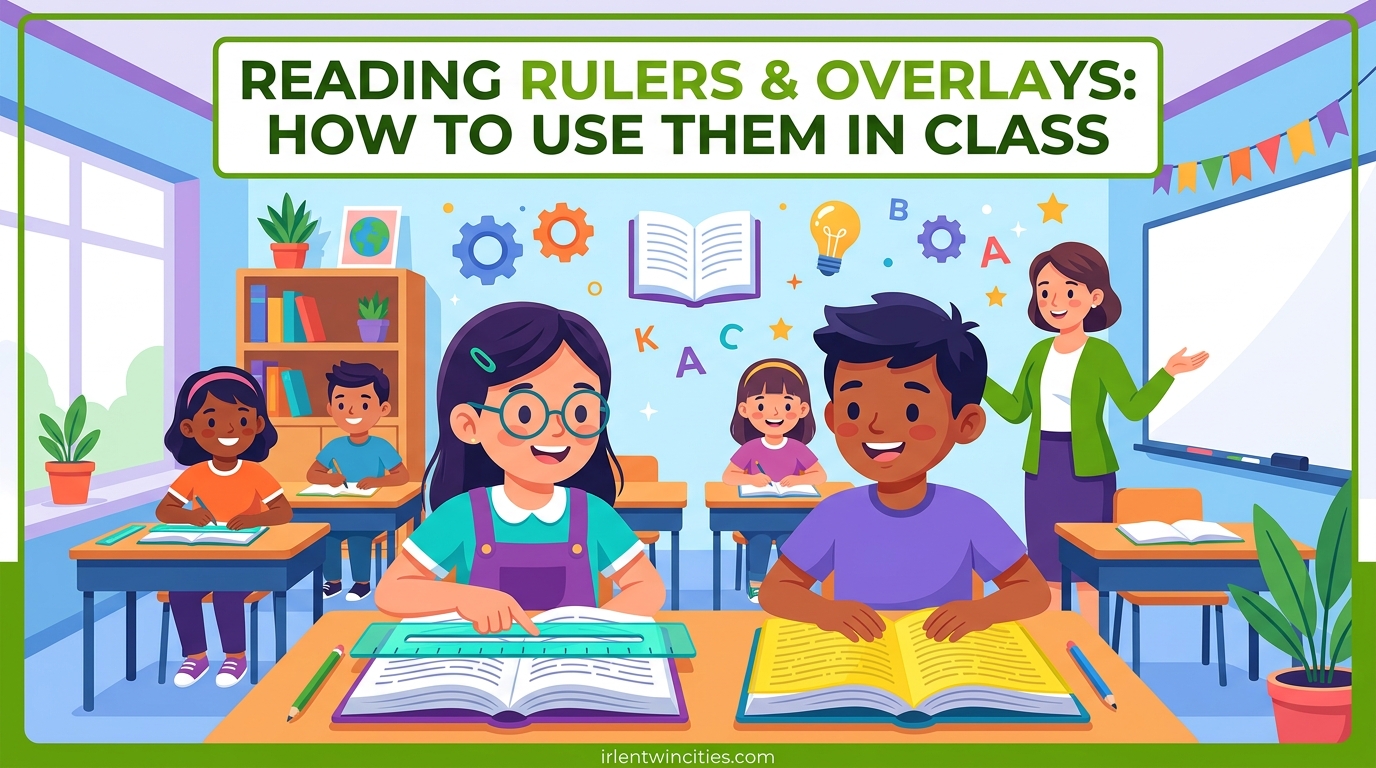
Reading rulers and overlays are simple but powerful tools that can transform how your students engage with text. If you have ever noticed a student losing their place while reading, skipping lines, or seeming to struggle with words that appear to jump around the page, these tools might help. In this guide, I will walk you through exactly how to use reading rulers and overlays in your classroom, who benefits most, and practical tips to make implementation smooth for everyone.
Table of Contents
What Are Reading Rulers and Overlays?
A reading ruler is a colored, transparent strip placed over text to help readers track lines while reading. An overlay serves a similar purpose but covers a larger area of the page. Both tools belong to the same family of visual tracking aids designed to reduce the strain that some students experience when looking at black text on white paper.
You will find two main types of reading rulers. The Plain Window reading ruler has a clear opening that exposes just the line being read, helping students focus without visual distractions. The Duo Reading Ruler has two colored bands, one for the current line and another as a guide for the line below, which can help with visual tracking difficulties.
Most overlays and reading rulers have a matt side and a glossy side. Trying both sides is worth it because some students find the matt side reduces glare better, while others prefer the smoother glide of the glossy side across the page.
How Do Colored Overlays Work for Reading?
The science behind colored overlays involves something called visual stress. This is not the same as vision problems that an optometrist would diagnose. Visual stress refers to discomfort some readers experience when looking at high-contrast text. White paper reflects light in a way that can cause letters to appear to move, blur, or jumble together for certain individuals.
When you place a colored overlay over the page, it changes the wavelength of light hitting your eyes. This reduces the contrast in a specific way that calms the visual system. Research, including studies by Wilkins and colleagues, has shown that this adjustment can help some students read more fluently and with less fatigue.
The reduction in cognitive load is another factor at play. When your brain does not have to work as hard to process visual information, more mental energy becomes available for comprehension. Students who previously exhausted their attention span after a few paragraphs may find they can read for longer periods without losing focus.
How to Use a Reading Ruler: Step-by-Step
Here is how I recommend introducing reading rulers to your students:
Step 1: Position the ruler below the line you are reading. The colored section sits just under the text, with the window exposing only that single line. This eliminates the visual clutter of surrounding lines.
Step 2: Try both sides. Have students test the matt side and the glossy side. Ask them which feels more comfortable. Some students have strong preferences based on how the light reflects off the page.
Step 3: Slide as you read. Move the ruler down the page as you finish each line. The motion helps maintain rhythm and prevents the common habit of skipping lines or losing your place.
Step 4: Give it time. Improvement may take 10 or more minutes of reading before students notice a difference. Do not judge the tool too quickly. Some students report that words “unjumble” once they settle into reading with the ruler.
Step 5: Make it normal. The best classroom approach is to treat reading rulers as a standard tool available to everyone, not something reserved only for students who struggle. This removes the stigma and lets students self-select when they need extra support.
Who Benefits from Reading Rulers?
Dyslexia is the condition most commonly associated with reading rulers and overlays. Students with dyslexia may experience difficulties with accurate and fluent word recognition, which can be partly rooted in visual processing challenges. Colored overlays do not cure dyslexia, but they can reduce one source of interference with reading.
Students with ADHD may also find reading rulers helpful because the tool provides external structure. The clear window creates a natural focus point that can reduce the tendency to skip around the page. Reducing cognitive load means there is less mental effort spent on staying focused and more available for understanding what they read.
Visual processing difficulties encompass a range of challenges where the brain has trouble interpreting visual information correctly. For these students, text may appear distorted, letters may move, or words may cluster together in confusing ways. A colored overlay can sometimes calm these visual disturbances significantly.
Signs that a student might benefit from a reading ruler include losing place frequently, skipping lines or words, rubbing eyes while reading, complaining of headaches after reading assignments, or saying that words seem to move or blur on the page.
Classroom Implementation Tips
The most effective approach I have seen is the inclusive whole-class method. Rather than singling out students who struggle, make reading rulers available to everyone during reading activities. This normalizes the tool and lets students discover on their own whether it helps them.
When introducing reading rulers, avoid framing them as a remedy for problems. Instead, present them as one more tool in the classroom toolkit. You might say something like, “Some readers find these helpful for keeping their place. They are here for anyone who wants to try them.”
For independent reading time, guided reading sessions, and even whole-class instruction, having rulers readily accessible means students can use them when the need arises. Some teachers keep a class set in a basket by the reading corner or distribute them at the start of reading periods.
Digital reading presents its own challenges. Students who struggle with print may find that screen-based reading creates similar visual stress. Some apps and browser extensions now offer screen mask features that simulate the effect of colored overlays for online texts.
Care and Maintenance of Reading Rulers
Reading rulers and overlays are durable but benefit from proper care. Clean them regularly with a soft cloth and mild soap if needed. Avoid harsh chemicals that could damage the colored surface or cause scratches.
Store rulers flat or in a protective sleeve to prevent bending. Extreme heat can warp the plastic, so avoid leaving them in sunny windows or hot classrooms. With reasonable care, a good quality reading ruler can last through an entire school year or longer.
If you are working with overlays, note that the matt side is generally more resistant to fingerprints and smudges, which can be a practical consideration for younger students who handle materials less carefully.
FAQ
How does an overlay work for reading?
Colored overlays work by changing the wavelength of light that reaches your eyes when you look at a page. This reduces visual stress by creating calmer contrast levels. For students who experience letters jumbling or moving on the page, the overlay can stabilize the text and reduce cognitive load, making reading more comfortable and sustainable.
How to use a reading ruler?
Place the reading ruler below the line you are reading so the colored section sits under the text and the window exposes only that line. Try both the matt and glossy sides to see which feels more comfortable. Slide the ruler down as you finish each line, and give it at least 10 minutes of reading time before deciding if it helps.
What color works best for colored overlays?
There is no single best color that works for everyone. Different colors affect light wavelengths differently, so the right choice varies by individual. Some companies offer color selection kits so students can find their optimal shade. In general, trying 3 to 4 different colors is more effective than assuming one color will work for all students.
Do reading rulers always mean dyslexia?
No. While reading rulers are commonly associated with dyslexia, they can help anyone who experiences visual discomfort while reading. Students with ADHD, visual processing difficulties, or even those without any specific diagnosis may find reading rulers make reading more comfortable and help them maintain focus.
Final Thoughts
Reading rulers and overlays represent one of the simplest interventions you can offer students who struggle with reading focus and visual tracking. The beauty of these tools lies in their simplicity and the fact that they work for a wide range of readers, not just those with specific diagnoses.
Whether you are supporting students with diagnosed dyslexia, helping a child who loses their place constantly, or simply looking for ways to make reading more accessible for your whole class, giving reading rulers a try costs nothing but a few minutes of your time. Watch how your students respond and let them guide you toward who benefits most from this straightforward classroom tool.