
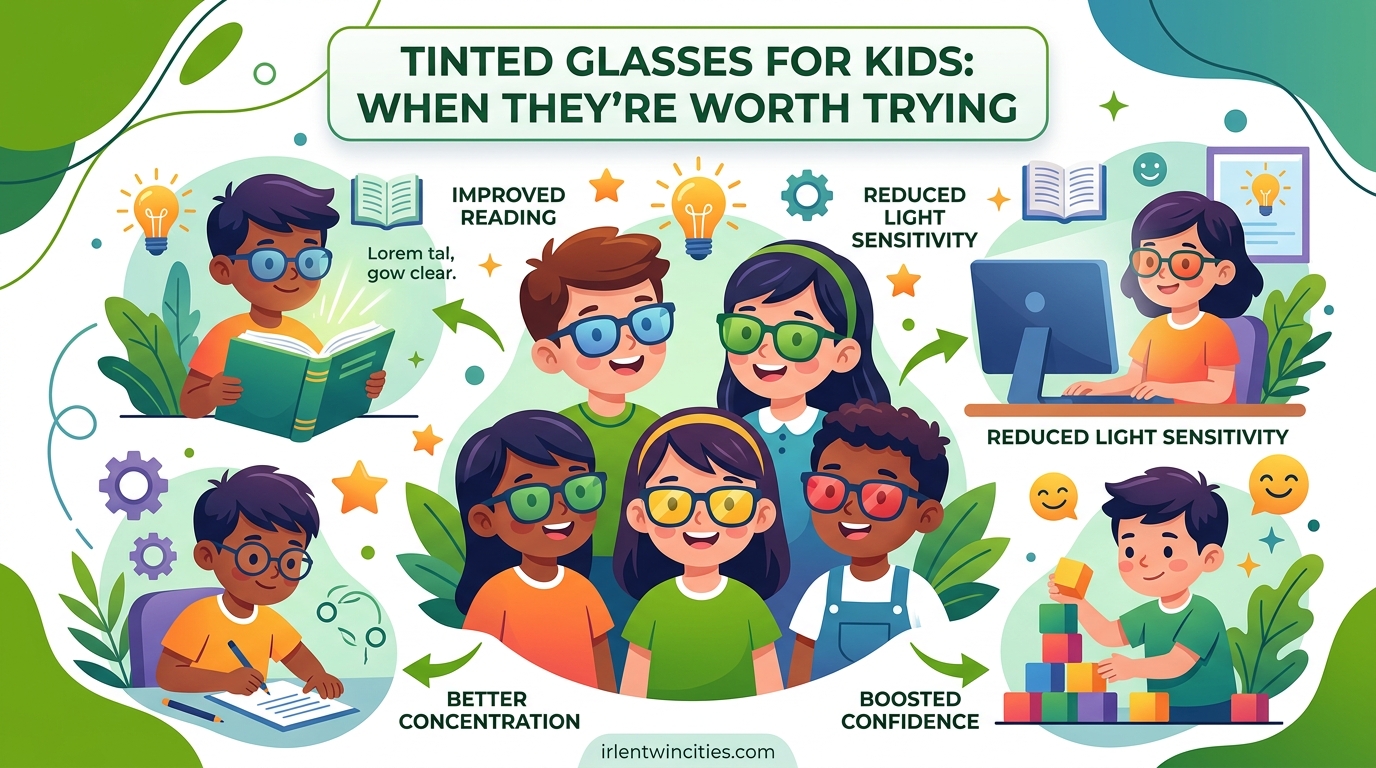
Some children wear tinted glasses to reduce eye strain from screens, ease light sensitivity, or help with reading difficulties. These specialized lenses filter specific light wavelengths that can cause discomfort, making daily activities more comfortable for kids with certain visual challenges.
Children’s eyes are more vulnerable than adult eyes. Their lenses are clearer and transmit more light to the retina, which means they experience more glare and potential strain from digital devices and bright environments. Our team has reviewed the research and talked with parents to understand when tinted glasses actually help and when they’re just expensive accessories.
In this guide, we’ll cover the different types of tinted lenses, when they’re worth trying, signs your child might benefit, and the safety considerations every parent should know before making a purchase.
Table of Contents
What Are Tinted Glasses for Kids
Tinted glasses for kids are eyeglasses with colored lenses designed to filter specific wavelengths of light. Unlike regular clear lenses, these filters can reduce glare, block portions of the blue light spectrum, or enhance contrast to make reading easier.
The concept is simple: different tints absorb or reflect specific colors of light. Blue light glasses filter high-energy visible light from screens. Transition lenses darken in sunlight. FL-41 tints specifically target wavelengths that trigger migraines. Colored lenses for dyslexia aim to reduce visual stress by filtering the specific wavelengths that cause text to appear to move or blur for some readers.
Children’s eyes are particularly sensitive because their ocular lenses are more transparent than adult lenses. This allows more light to reach the retina, which can increase discomfort from bright screens, fluorescent classroom lighting, and outdoor glare. Many parents we spoke with noticed their children squinting less and complaining fewer about headaches after introducing appropriate tints.
Types of Tinted Lenses Explained
Not all tinted glasses serve the same purpose. Understanding the four main types helps you choose the right solution for your child’s specific needs.
Blue Light Blocking Glasses
Blue light glasses filter high-energy visible light, which screens emit in large amounts. The theory suggests that blocking this light reduces digital eye strain and may improve sleep by preventing melatonin suppression.
However, the scientific evidence is mixed. While blue light does affect circadian rhythms, studies show that blue light glasses have minimal impact on preventing myopia or protecting long-term eye health. They may help with sleep if worn in the evening, but they are not a medical necessity for most children.
Transition (Photochromic) Lenses
Transition lenses, also called photochromic lenses, automatically darken when exposed to UV light and return to clear indoors. These provide convenience for children who need prescription glasses and spend time both indoors and outdoors.
The main benefits include UV protection, reduced squinting outdoors, and eliminating the need for separate prescription sunglasses. However, they do not darken inside vehicles since car windshields block most UV light, and they can take a few minutes to clear when coming indoors, which some children find inconvenient.
FL-41 Tinted Lenses
FL-41 is a specific rose-tinted filter originally developed to help patients with light-sensitive migraines. These lenses block blue-green wavelengths between 480 and 520 nanometers, which research suggests are particularly bothersome for people with photophobia and certain types of migraines.
Children with light sensitivity, autism spectrum disorder, or frequent migraines may experience significant relief with FL-41 tints. The rose color reduces fluorescent light harshness, which is common in schools and offices. Studies have shown these tints can reduce migraine frequency in light-sensitive individuals.
Colored Lenses for Dyslexia and Visual Stress
Colored lenses for reading difficulties aim to reduce visual stress, a condition where text appears to blur, move, or create glare on the page. This approach is associated with Irlen syndrome (also called Meares-Irlen syndrome), a controversial condition involving light sensitivity during reading.
These lenses are individually prescribed based on color preference testing. Common tints include yellow, blue, green, or pink, depending on which color makes reading most comfortable for the individual. It is important to note that these lenses do not treat dyslexia itself but may reduce visual symptoms that accompany reading difficulties for some children.
Comparison of Tinted Lens Types
| Tint Type | Primary Purpose | Best For | Key Limitations |
|---|---|---|---|
| Blue Light Blocking | Filter screen light | Evening screen use, sleep issues | Does not prevent myopia; mixed evidence on eye strain |
| Transitions/Photochromic | UV protection, convenience | Active kids, outdoor activities | Does not darken in cars; slower transition in cold weather |
| FL-41 Rose Tint | Migraine and light sensitivity | Photophobia, autism, migraines | Color distortion; not needed for typical vision |
| Colored Reading Lenses | Reduce visual stress | Irlen syndrome, reading difficulties | Controversial evidence; does not treat dyslexia |
When Tinted Glasses Are Worth Trying
Tinted glasses are worth trying when your child has specific symptoms that align with what the tint is designed to address. Here are the scenarios where evidence supports giving them a try.
Screen Time and Digital Eye Strain
If your child spends multiple hours daily on screens for school or entertainment and complains of tired eyes, headaches, or trouble sleeping, blue light glasses worn in the evening may help with circadian rhythm disruption. The American Academy of Ophthalmology states that digital eye strain is primarily caused by how we use screens, not the blue light itself. Taking regular breaks matters more than tint color.
Light Sensitivity and Migraine Conditions
Children who experience migraines triggered by light, or those with conditions like autism where fluorescent lighting causes discomfort, often find genuine relief with FL-41 tinted lenses. Several parents on support forums reported their children could tolerate classroom environments better after getting these specific tints prescribed by their eye doctors.
Reading Difficulties and Visual Stress
If your child reports that text moves on the page, that white backgrounds are too bright, or that they lose their place frequently while reading, colored overlays or lenses may be worth testing. An assessment with an Irlen-certified screener or an optometrist familiar with visual stress can determine if specific colors help. Keep expectations realistic: these tools may improve comfort but will not cure learning disabilities.
5 Signs Your Child May Benefit from Tinted Glasses
Watch for these specific behaviors that suggest your child might benefit from tinted lenses.
1. Complaints of Headaches After Screen Time or Reading
Regular headaches that start after computer use, tablet time, or reading sessions may indicate light sensitivity or visual stress. If headaches consistently follow these activities, a vision screening is warranted.
2. Squinting or Eye Rubbing in Bright Environments
Children who squint in classrooms with fluorescent lighting, complain about sunny days, or rub their eyes frequently may have heightened light sensitivity. Photochromic lenses or FL-41 tints can address these specific issues.
3. Difficulty Tracking Text While Reading
If your child loses their place often, skips words, or says letters move or shimmer on the page, they may have visual stress. Colored overlays during testing can help determine if tinted lenses would make reading more comfortable.
4. Sensitivity to Fluorescent or LED Lighting
Many children with sensory processing differences find standard classroom lighting unbearable. If your child asks to turn off lights, prefers dim rooms, or becomes agitated in brightly lit stores, tinted lenses designed for light sensitivity may help.
5. Trouble Falling Asleep After Evening Screen Use
Blue light suppresses melatonin production, which can delay sleep onset. If your child uses screens before bed and has difficulty falling asleep, blue light glasses worn during evening screen time may help restore normal sleep patterns.
The 20-20-20 Rule: A Foundation for Eye Health
The 20-20-20 rule is a simple practice that helps reduce digital eye strain in children and adults. Every 20 minutes of screen time, look at something 20 feet away for at least 20 seconds. This gives the eye muscles a chance to relax and reduces the accommodative stress caused by prolonged near work.
Tinted glasses complement this rule but do not replace it. Even with blue light filtering lenses, the eye muscles still work hard when focusing on screens up close. We recommend parents set timers or use apps that remind children to take these breaks. One mother told us her son’s eye strain complaints dropped significantly once they implemented the 20-20-20 rule consistently, even without special glasses.
Teaching this habit early helps children develop lifelong eye health practices. Pair the rule with proper screen distance (at least arm’s length away) and good lighting to minimize the need for corrective lenses later.
Safety Considerations and Limitations
What Tinted Glasses Cannot Do
Tinted glasses will not prevent myopia (nearsightedness), cure dyslexia, or fix underlying vision problems. Blue light glasses in particular have been overmarketed, with many claims about eye protection that lack strong scientific support. If your child has a prescription need, tinted lenses must still provide the correct optical correction first and tint second.
Colored lenses for reading difficulties specifically do not treat the phonological processing issues that underlie most forms of dyslexia. They may help with visual comfort for some readers, but educational interventions remain essential for addressing learning differences.
Potential Drawbacks
Tinted lenses change color perception, which can affect activities like art or judging traffic lights. Rose or yellow tints make it harder to distinguish certain colors accurately. Children who wear tinted lenses constantly may become dependent on them and find normal lighting uncomfortable when not wearing their glasses.
Transition lenses do not provide adequate sun protection for driving since car windshields block the UV that triggers the darkening reaction. For road safety, dedicated prescription sunglasses remain necessary for young drivers.
Expert Recommendations
Before purchasing tinted glasses for your child, schedule a comprehensive eye exam with a pediatric optometrist or ophthalmologist. A professional can rule out underlying vision problems, determine if tinted lenses are appropriate, and ensure proper fitting and prescription accuracy.
For children with suspected Irlen syndrome or visual stress, seek an evaluation from an eye care professional familiar with these conditions. The College of Optometrists in Vision Development offers resources for finding specialists who understand learning-related vision problems. Avoid purchasing colored lenses online without professional guidance, as the wrong tint can worsen symptoms.
The American Academy of Ophthalmology recommends focusing on screen habits rather than special glasses: maintain proper distance, ensure good lighting, follow the 20-20-20 rule, and encourage outdoor play, which evidence shows helps prevent myopia development. Tinted glasses should be considered only after these fundamentals are in place and specific symptoms persist.
Frequently Asked Questions
Why do some kids have tinted glasses?
Children wear tinted glasses for several reasons: reducing eye strain from digital screens, managing light sensitivity or photophobia, easing migraine symptoms, or addressing visual stress during reading. Some tints like FL-41 specifically help with fluorescent light sensitivity, while blue light glasses aim to improve sleep and reduce screen-related discomfort.
Do tinted glasses help with ADHD?
Tinted glasses do not treat ADHD directly. However, some children with ADHD also have sensory processing sensitivities or light sensitivity that makes concentrating difficult. FL-41 or other therapeutic tints may help these children feel more comfortable in bright or fluorescent environments, indirectly supporting focus. The glasses address sensory issues, not the core attention deficits of ADHD.
Are blue light blocking glasses safe for kids?
Blue light blocking glasses are generally safe for children. They pose no health risks and simply filter certain light wavelengths. However, parents should ensure the glasses fit properly and that children do not use them as an excuse to increase screen time. The American Academy of Ophthalmology emphasizes that good screen habits matter more than special glasses.
Do doctors ever recommend blue light glasses?
Most eye doctors do not routinely recommend blue light glasses for children. The American Academy of Ophthalmology states there is insufficient evidence that blue light from screens damages eyes or that filtering glasses provide significant benefit beyond improving sleep when worn in the evening. Doctors typically focus on prescribing the 20-20-20 rule, proper ergonomics, and regular eye exams instead.
Do tinted lenses help dyslexia?
Tinted lenses do not treat dyslexia itself, which is a language-based learning difference. However, some children with dyslexia also have visual stress symptoms where text appears to move or blur. For these specific children, individually prescribed colored lenses or overlays may improve reading comfort by reducing visual distortions. The lenses address visual stress, not the phonological processing difficulties at the core of dyslexia.
What color filter is best for dyslexia?
There is no single best color filter for dyslexia because visual stress affects individuals differently. The optimal tint varies by person and must be determined through professional assessment, often using the Irlen Method or similar protocols. Common tint colors include yellow, blue, green, and pink. Each child requires individual testing to find which color, if any, reduces their specific visual symptoms.
What is the 20 20 20 rule for kids?
The 20-20-20 rule is a simple eye exercise to reduce digital strain. Every 20 minutes of screen time, children should look at something at least 20 feet away for 20 seconds. This gives eye muscles a break from close focusing. Parents can use timers or apps to remind children to take these breaks, which eye doctors recommend as the primary defense against digital eye strain.
Are tinted prescription glasses worth it?
Tinted prescription glasses are worth it when your child has specific symptoms that the tint addresses, such as light sensitivity, migraines triggered by light, or visual stress while reading. They are not worth the additional cost for general use or myopia prevention. A comprehensive eye exam helps determine if therapeutic tints would genuinely benefit your child or if standard lenses paired with good screen habits are sufficient.
Conclusion
Tinted glasses for kids are worth trying when your child shows specific symptoms like light sensitivity, screen-related headaches, or visual stress during reading. Blue light glasses may help with evening screen use and sleep. Transition lenses offer convenience for active children who need prescription correction. FL-41 tints can provide real relief for migraine sufferers and those with sensory light sensitivity. Colored lenses may help some readers with visual stress, though they do not treat dyslexia itself.
Before investing in tinted glasses, prioritize the fundamentals: regular eye exams, the 20-20-20 rule, proper screen distance, and good lighting. Consult with a pediatric eye care professional to determine if therapeutic tints are appropriate for your child’s specific situation. With the right approach, tinted glasses can be a valuable tool for improving your child’s visual comfort in our increasingly screen-filled world.