
When your child takes a hit to the head during a soccer game or tumbles off their bike, your first instinct is to check for bleeding or bumps. But what many parents do not realize is that some of the most telling signs of a traumatic brain injury show up in the eyes. I have worked with families who spent days worrying about behavioral changes when the real culprit was hidden vision problems their child simply could not articulate.
Understanding the visual symptoms of TBI parents should watch for can make the difference between a quick recovery and months of struggle. Vision problems after head trauma affect up to 90% of TBI patients, yet they often go unnoticed or get dismissed as unrelated issues. This guide gives you the exact checklist you need to protect your child.
Table of Contents
Common Visual Symptoms of TBI Parents Should Watch For
The brain and vision system are deeply connected. After a concussion or more severe head injury, the neural pathways that process visual information can be disrupted, eye muscles may not coordinate properly, or the optic nerve itself may sustain damage.
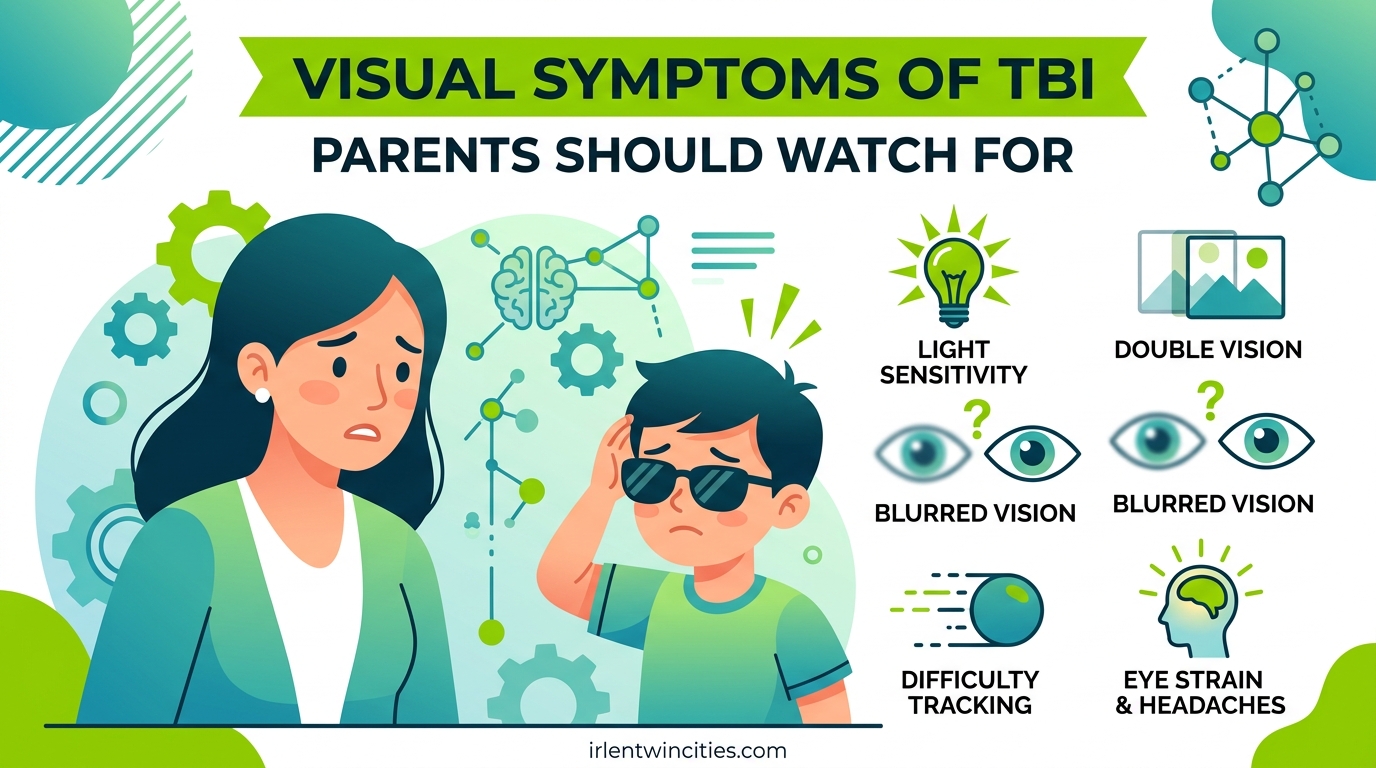
Here are the visual symptoms parents should monitor after any head injury:
- Blurred vision – Objects appear fuzzy or out of focus, even with glasses
- Double vision (diplopia) – Seeing two of everything, which may come and go
- Light sensitivity (photophobia) – Squinting, complaining about normal lighting, wanting to stay in dark rooms
- Eye fatigue – Eyes getting tired quickly during reading or screen time
- Difficulty focusing – Trouble shifting focus from near to far objects
- Tracking problems – Eyes jumping or skipping when following moving objects
- Depth perception issues – Misjudging distances, bumping into doorframes, clumsiness
- Peripheral vision loss – Not noticing things off to the sides
- Visual field cuts – Missing chunks of vision in specific areas
- Motion sensitivity – Feeling sick or dizzy when watching moving objects
These symptoms may appear immediately after the injury or develop hours to days later. Some children experience a combination of several symptoms, while others may only show one or two subtle signs.
Blurred and Double Vision
Blurred vision after head injury is one of the most frequently reported symptoms among concussion patients. The visual cortex located at the back of the brain processes the images our eyes capture, and this area is particularly vulnerable to trauma from impact.
Double vision, medically called diplopia, occurs when the eyes no longer work together as a team. Each eye sends a slightly different image to the brain, and normally the brain merges these into a single picture. After TBI, the coordination between eyes can break down, causing the brain to process two separate images instead of one unified view.
Children often describe double vision differently than adults. A 7-year-old might say things look “fuzzy” or “weird” rather than specifically stating they see two images. Parents on forums have shared that their children described it as “seeing shadows” or “ghost pictures” alongside the real object.
Double vision can be constant or intermittent. Some children only experience it when tired, when looking at specific distances, or during certain activities like reading. This intermittent nature makes it easy to miss during a brief doctor visit, which is why parental observation over several days is so crucial.
One parent shared that their daughter’s double vision after head injury persisted for weeks before they found a neuro-ophthalmologist who properly diagnosed the issue. Early recognition can prevent the frustration and anxiety that comes with undiagnosed vision problems.
Light Sensitivity and Eye Fatigue
Light sensitivity after concussion, also known as photophobia, affects many TBI patients regardless of age. Children may suddenly refuse to go outside on sunny days, complain that classroom lights are “too bright,” or prefer sitting in dimly lit rooms.
This sensitivity happens because the brain’s ability to process light input becomes overwhelmed after injury. Normal lighting levels that were comfortable before the trauma now feel harsh and painful. Some children report that fluorescent lights are particularly bothersome, which can make returning to school challenging.
Concussion eye fatigue is another frequently overlooked symptom. The eyes are controlled by six muscles that must work in precise coordination. After a brain injury, these muscles may struggle to maintain proper alignment, causing them to tire quickly during visual tasks.
Signs of eye fatigue in children include rubbing their eyes frequently, complaining that reading “hurts,” avoiding homework or books they previously enjoyed, or becoming irritable during screen time. Some children may not verbalize the discomfort and instead show behavioral changes like refusing to participate in classroom activities.
The combination of light sensitivity and eye fatigue can create a cycle where children avoid visual activities entirely. This avoidance can be mistaken for laziness or behavioral issues when it is actually a physical symptom requiring treatment.
Tracking and Focusing Problems
Tracking problems after brain injury manifest as difficulty following moving objects smoothly. You might notice your child losing their place while reading, having trouble watching a ball during sports, or struggling to track a teacher moving around the classroom.
Convergence insufficiency is a specific focusing problem where the eyes cannot properly turn inward to focus on near objects. This makes reading particularly difficult because the eyes must converge to view text up close. Children with this condition often report that words “swim” on the page or that they see double when trying to read.
Parents should watch for signs like using a finger to keep place while reading, skipping lines of text, reading much more slowly than usual, or frequently losing their spot. Some children will tilt their head to one side or cover one eye in an attempt to eliminate double vision while reading.
Depth perception issues create safety concerns beyond academic difficulties. Children may misjudge distances when walking, bump into doorframes or furniture, or struggle with stairs. They might have trouble catching or throwing balls, making sports participation frustrating and potentially dangerous.
These focusing and tracking problems directly impact school performance. A child who previously read at grade level may suddenly fall behind, not because of cognitive impairment, but because the physical act of reading has become exhausting and difficult due to vision problems.
Warning Signs That Require Immediate Medical Attention
While many visual symptoms after TBI resolve with time and proper care, certain warning signs demand immediate emergency attention. Parents should call emergency services or go to the nearest emergency room if they observe any of the following:
- Sudden complete vision loss in one or both eyes – This may indicate optic nerve damage or occipital lobe injury requiring urgent intervention
- Severe headache that worsens and does not respond to medication – Combined with vision changes, this suggests increased intracranial pressure
- Persistent vomiting alongside visual symptoms – This combination signals potential serious brain injury
- Seizure activity following the head injury – Any seizure after trauma requires immediate evaluation
- Slurred speech or confusion that worsens rather than improves – Indicates potential bleeding or swelling in the brain
- Unequal pupil sizes or pupils that do not respond to light – This is a classic sign of serious neurological injury
- Inability to wake the child or extreme drowsiness – Suggests significant brain involvement
- Weakness or numbness on one side of the body combined with vision problems – May indicate stroke-like complications from the trauma
The CDC specifically highlights these danger signs for children who have sustained head injuries. When vision problems accompany any of these symptoms, the urgency increases because visual pathways are intimately connected with other critical brain functions.
Trust your parental instincts. If something feels wrong with your child’s behavior, responsiveness, or vision after a head injury, seek medical care immediately. It is always better to have a false alarm than to delay treatment for a serious condition.
How Visual Symptoms Affect Children Differently
Pediatric brain injury vision problems present unique challenges because children cannot always articulate what they are experiencing. Unlike adults who can describe double vision or focusing difficulties specifically, younger children may simply know that something feels wrong without understanding what or why.
Age-specific manifestations help parents recognize problems their children cannot verbalize:
Young children (ages 3-7): May become unusually clingy or irritable. They might refuse to participate in activities they previously enjoyed, have tantrums when asked to look at books or screens, or squint excessively. Some become hesitant about walking or climbing, showing new clumsiness that stems from depth perception issues rather than balance problems alone.
School-age children (ages 8-12): Often show declining academic performance, particularly in reading and math. They may complain of headaches, stomachaches, or feeling tired – all ways children express that visual tasks have become exhausting. Some children will cover one eye with their hand or tilt their head dramatically to see better.
Teenagers (ages 13-18): May report difficulty driving or refuse to drive if learning. They often describe concentration problems, difficulty with homework, or avoiding social activities. Teenagers with TBI-related vision problems sometimes get misdiagnosed with attention disorders when the real issue is visual processing difficulty.
Child concussion visual symptoms also differ in their timeline. Children sometimes experience delayed symptom presentation more frequently than adults, with vision problems appearing 24-72 hours after the initial injury. This delay can confuse parents who thought their child was “fine” immediately after the incident.
School performance impacts are often the first clue parents receive. Teachers may report that a child who previously excelled is now struggling to complete work, losing focus during lessons, or avoiding reading aloud. These academic changes frequently precede any verbal complaints about vision.
Social impacts matter too. Children with undiagnosed vision problems may withdraw from sports, avoid peer interactions, or become frustrated during normal play activities. What looks like depression or behavioral issues may actually be a child struggling to navigate the world with compromised vision.
Delayed Symptoms Parents Should Know About
Not all visual symptoms appear immediately after a head injury. Delayed concussion symptoms are common and can be particularly confusing for parents who initially thought their child was unharmed.
Symptoms may emerge gradually as the brain’s initial shock response wears off. In the first hours after injury, adrenaline and the body’s protective mechanisms can mask vision problems. As these wear off and the child returns to normal activities, visual demands reveal underlying issues.
Vision problems that appear days later often include:
- Reading difficulties that were not present immediately after the injury
- Increased light sensitivity as the child returns to normal environments
- Double vision during specific activities like homework or screen use
- Headaches that develop consistently during visual tasks
- Motion sickness or dizziness that worsens over time
The 24-72 hour window after injury is particularly important for observation. Many children seem fine at first but develop symptoms as they return to school, sports, or other visually demanding activities. This is why medical professionals often recommend gradual return to activities rather than immediate full participation.
Parents should maintain vigilance for at least two weeks following any head injury. Keep a simple symptom log noting any complaints about vision, headaches during reading, or behavioral changes. This documentation helps healthcare providers identify patterns and make accurate diagnoses.
When to be concerned about delayed symptoms: If vision problems worsen rather than improve over time, if new symptoms appear more than a week after the injury, or if symptoms persist beyond two weeks, consult a healthcare provider specializing in brain injury. These patterns may indicate more significant trauma requiring targeted intervention.
First Steps for Concerned Parents
If you suspect your child has vision problems after a head injury, taking the right first steps can significantly impact their recovery. Here is what to do:
Step 1: Document symptoms immediately. Write down exactly what you observed, when it occurred, and what your child said. Note triggers like reading, screen time, or bright lights. This record helps medical professionals understand the pattern and severity.
Step 2: Contact your pediatrician. Start with your child’s primary care doctor who knows their medical history. Describe both the injury and the visual symptoms you have observed. Ask specifically about referrals to specialists who understand brain injury vision problems.
Step 3: Seek specialized care if needed. Not all eye doctors have training in neuro-optometric rehabilitation. Look for a neuro-optometrist or neuro-ophthalmologist who specifically works with TBI patients. These specialists understand that vision after brain injury differs from standard vision problems.
Step 4: Communicate with school. Inform teachers, school nurses, and administrators about the injury and potential vision impacts. Request temporary accommodations such as reduced reading assignments, permission to wear sunglasses in class, extended time for tests, or seating away from bright windows.
Step 5: Limit visual demands during recovery. Reduce screen time, minimize homework initially, and create a low-stimulation home environment. Allow your child to rest their eyes frequently. The brain needs energy to heal, and visual tasks are cognitively demanding.
Questions to ask the doctor:
- Do you specialize in brain injury vision problems?
- What specific tests will evaluate my child’s visual processing?
- Should we consider vision therapy?
- What accommodations do you recommend for school?
- What is the expected timeline for recovery?
- What symptoms would indicate we need to return immediately?
Vision therapy after TBI can help retrain the brain-eye connection for some patients, though results vary. Some parents report significant improvement, while others find it worsens symptoms initially. Work with a specialist who will monitor your child’s response and adjust treatment accordingly.
Eye Care Tips During Recovery
Supporting your child’s visual recovery requires some adjustments to daily routines. These practical strategies can reduce strain and promote healing.
The 20-20-20 rule for concussions and general eye health recommends that every 20 minutes of visual work, your child should look at something 20 feet away for at least 20 seconds. This gives the eye muscles a break from focusing up close and reduces fatigue.
Screen management is essential during recovery. Limit recreational screen time significantly, and when screens are necessary for school, use blue light filters, reduce brightness, and ensure the screen is at least arm’s length away. Encourage frequent breaks and watch for signs of strain like rubbing eyes or squinting.
Lighting adjustments at home help children with photophobia. Use lamps rather than overhead lighting when possible, install dimmer switches, and allow your child to wear sunglasses indoors if bright lighting causes discomfort. Natural light is usually better than fluorescent, so position reading and activity areas near windows when possible.
Rest is not laziness after brain injury. The brain heals during sleep, and reducing cognitive demands including visual tasks allows energy to be directed toward recovery. Do not push your child to “tough it out” or catch up on schoolwork quickly. Gradual return to activities prevents setbacks and supports proper healing.
Reading modifications can help maintain some academic engagement without overwhelming the visual system. Use large print materials when available, increase spacing between lines of text, use bookmarks to reduce visual scanning demands, and consider audiobooks as an alternative to visual reading during early recovery.
Frequently Asked Questions
What are the common visual problems following traumatic brain injury?
Common visual problems after TBI include blurred vision, double vision (diplopia), light sensitivity (photophobia), difficulty focusing, eye tracking problems, depth perception issues, peripheral vision loss, and eye fatigue. These occur because the brain’s visual processing pathways, eye muscles, or optic nerves may be damaged during the injury.
What to watch for with a TBI?
Watch for blurred or double vision, unusual light sensitivity, headaches during visual tasks, difficulty reading, clumsiness or bumping into objects, eye rubbing or squinting, avoiding activities that require focus, and declining academic performance. Seek immediate emergency care for sudden vision loss, severe headache with vomiting, seizures, unequal pupil sizes, or inability to wake the child.
What are the visual signs of head trauma?
Visual signs of head trauma include eyes that do not track together, pupils of unequal size, excessive squinting, covering one eye to see better, tilting the head to see, redness or bruising around the eyes (raccoon eyes), bleeding from the eyes, and complaints of seeing double or blurred images.
What is the 20 20 20 rule for concussions?
The 20-20-20 rule recommends that for every 20 minutes of visual work, you look at something 20 feet away for at least 20 seconds. This helps reduce eye strain and gives the visual system necessary rest breaks during recovery from concussion and other brain injuries.
How long do vision problems last after concussion?
Vision problems after concussion typically last from days to several weeks depending on severity. Most mild concussion vision symptoms resolve within 2-4 weeks with proper rest. However, some patients experience symptoms for months, a condition called post-concussion syndrome. Persistent vision problems beyond 4-6 weeks warrant evaluation by a neuro-optometrist.
How do I know if my child has vision problems after head injury?
Watch for behavioral changes like avoiding reading or screens, rubbing eyes frequently, tilting their head to see, covering one eye, complaints of headaches during schoolwork, declining grades, clumsiness, or irritability during visual tasks. Young children may not verbalize vision problems, so observe how they interact with their environment.
Conclusion
Recognizing the visual symptoms of TBI parents should watch for empowers you to protect your child’s health and recovery. The eyes provide a window into brain function after trauma, and catching vision problems early can prevent months of unnecessary struggle.
Remember that children cannot always tell you when something is wrong with their vision. Your careful observation, combined with the checklist and guidance in this article, helps bridge that communication gap. Document what you see, trust your instincts, and do not hesitate to seek specialized care when needed.
Most children recover fully from concussion-related vision problems with proper rest and appropriate treatment. By understanding what to watch for and taking prompt action, you give your child the best possible foundation for healing and returning to the activities they love.