
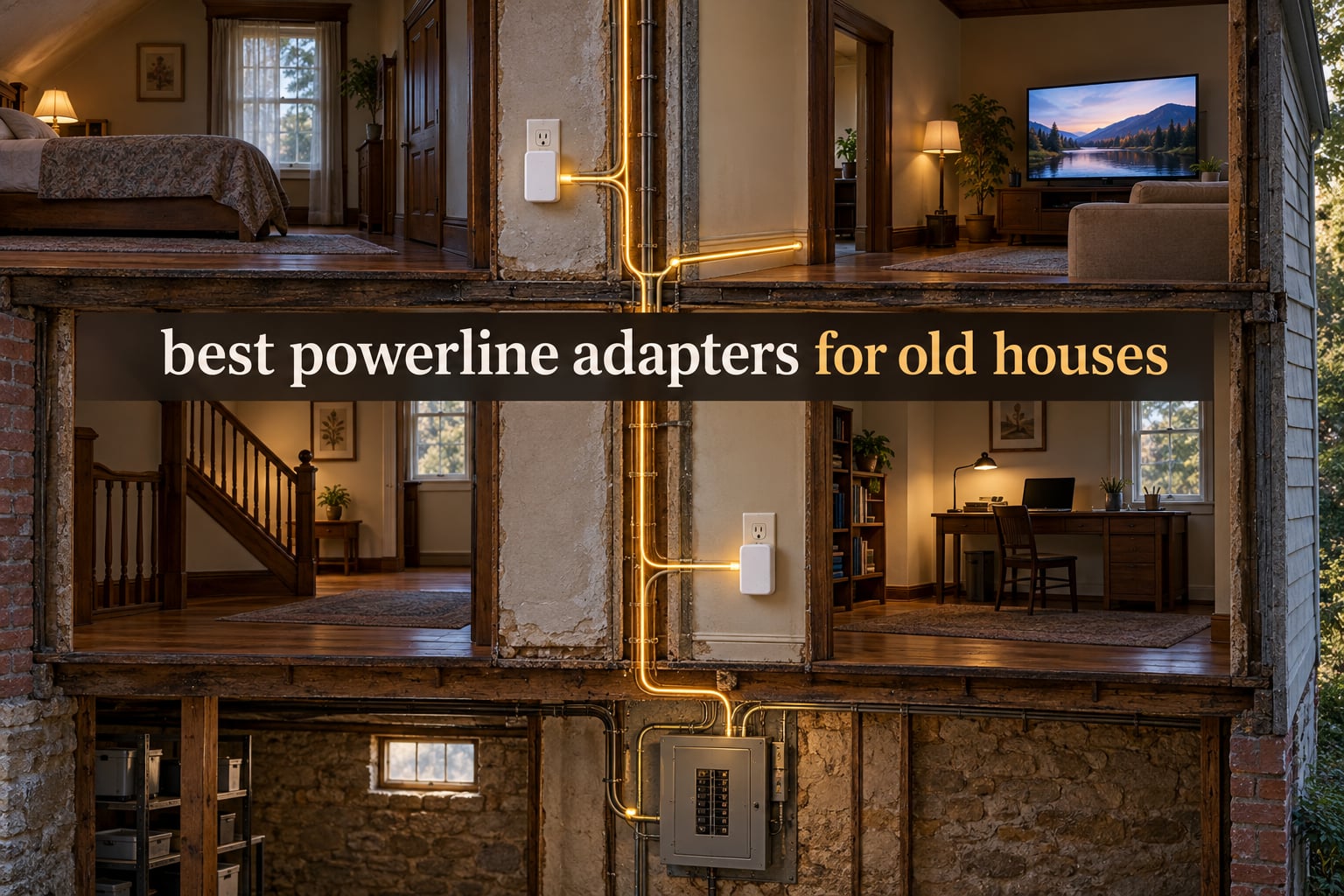
Most buying guides for powerline adapters are written for houses with tidy modern wiring. That assumption falls apart the moment the plaster starts coming off and you find cloth-sheathed cable from the 1920s, an aluminum branch circuit from the 1960s, and a second breaker panel bolted into the basement that nobody mentioned. If you own one of those houses, the best powerline adapters for old houses are the ones that survive messy wiring, not the ones with the biggest number printed on the box.
A powerline adapter is a pair of plug-in devices that carry your internet connection over the electrical wiring already inside your walls. Each unit injects a high-frequency data signal onto the neutral conductor alongside the normal 50 and 60 Hz mains electricity, and the two units pair with a button press to form an encrypted link. That turns a far-away room into a wired room without pulling cable through plaster and lath.
Before the picks, I want to be straight about something. Powerline is the only realistic option in many pre-1980 homes, and in plenty of them it works well enough for 4K streaming and video calls. In others it will not pair at all, and no adapter on the market fixes that. The wiring, the panel layout and the age of the splices decide the outcome, so read the compatibility section first and buy second.
Table of Contents
Top 3 Powerline Adapter Picks for 2026

TP-Link AV600 Kit TL-PA4010KIT
- AV600 link rated to 750 ft
- 100 Mbps Ethernet port
- 2.6 inch nano body
- Plug and pair with one button
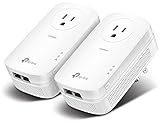
TP-Link AV2000 TL-PA9020P KIT
- AV2000 HomePlug AV2
- Two Gigabit Ethernet ports
- Pass-through power socket
- 2x2 MIMO with beamforming

TP-Link AV1000 with AX1500 Wi-Fi 6
- AV1000 backhaul to 980 ft
- AX1500 dual-band Wi-Fi 6
- Gigabit Ethernet port
- Wi-Fi Clone and EasyMesh
Those three cover most situations. If your house is genuinely marginal on wiring, the AV600 at number one still pairs more often than anything else in this list because it uses the simplest possible signalling, and the AV1000 Wi-Fi kit is the one to buy when the far room needs a wireless signal rather than a cable.
All 8 Picks at a Glance in 2026
| Product | Specifications | Action |
|---|---|---|
| TP-Link AV600 Kit TL-PA4010KIT |
|
Check Latest Price |
| TP-Link AV2000 TL-PA9020P KIT |
|
Check Latest Price |
| TP-Link AV1000 with AX1500 Wi-Fi 6 |
|
Check Latest Price |
 NETGEAR PLP2000 2-Pack NETGEAR PLP2000 2-Pack |
|
Check Latest Price |
 NETGEAR PLP1200 Passthrough Kit NETGEAR PLP1200 Passthrough Kit |
|
Check Latest Price |
 TRENDnet Powerline 500 TPL-406E2K TRENDnet Powerline 500 TPL-406E2K |
|
Check Latest Price |
 Zyxel PLA5456KIT AV2000 Kit Zyxel PLA5456KIT AV2000 Kit |
|
Check Latest Price |
 TRENDnet TPL-423E2K Powerline 1300 TRENDnet TPL-423E2K Powerline 1300 |
|
Check Latest Price |
Will Powerline Work in Your Old House? A 5-Minute Compatibility Test
Both adapters must sit on the same electrical panel, plugged straight into wall outlets rather than a power strip or surge protector, on circuits that are not split across two phases. In houses with knob-and-tube, aluminum branch wiring, or a second breaker panel, success is uncertain, so test before you commit to the purchase and keep the return window open while you check every room you care about.
Run these five checks in this order, roughly five minutes in total:
- Count your panels. If the house has two breaker panels, note which outlets sit behind which one. Two adapters in different panels frequently refuse to pair at all.
- Check the outlet type. Ungrounded two-prong outlets are not a blocker. The signal rides the neutral, and the ground is only referenced for noise filtering, so adapters work in them.
- Look at the panel labels. Split-bus panels with two main breakers feed the house from two different phases. Circuits on opposite phases can cross very poorly, and that phase crossing is the failure mode most often named in r/HomeNetworking threads.
- Find a breaker type. AFCI and GFCI breakers add switching noise onto the line. Code has required AFCI breakers in new US circuits since 1999, so even a 2005 renovation in an old shell can have them.
- Buy from a seller with a real return window and test immediately. People on r/techsupport keep describing the same trap: a short return window closes before anyone walks the adapter into the basement or the garage.
The forum consensus is genuinely mixed, and that is worth hearing before you buy. One r/HomeNetworking thread calls phase crossings the single biggest problem, while another notes they often work fine when the outlets are physically close. A commenter on community.spiceworks.com puts it plainly: wiring that is 30 or more years old is not good for high-frequency carriers. Nobody can promise your specific house, which is exactly why the test above matters more than the spec sheet.
Old House Wiring Types and What They Do to the Signal
Knob-and-tube (roughly 1880s to 1930s). Two bare copper conductors, often with no ground, run through porcelain tubes inside the walls. It is not automatically a hard no, but it is the least predictable wiring you can own. The old splices are the problem rather than the wire itself, since each taped or soldered joint adds impedance that eats your high-frequency carrier. Expect a link that pairs and then delivers wildly varying speeds.
Aluminum branch wiring (roughly 1960s to early 1970s). Aluminum is lighter and cheaper than copper, and the joints made with it have higher resistance. Powerline cares about this because it is a resistance problem dressed up as a networking problem. Many homes from that era were later re-terminated with copper pigtails at the outlets, which helps, but circuits that were never touched are the ones that will disappoint you.
Cloth-sheathed and early rubber cable. The insulation degrades but usually still carries mains current, and the conductor underneath is often perfectly good copper. This wiring is more likely to fail from poor splices and loose junctions than from the insulation itself, which is why some houses in this category give excellent results and others give nothing.
Ungrounded two-prong outlets. This is the question we get most often, and the answer is straightforward. Adapters work fine on ungrounded outlets because the data path uses the neutral conductor and the ground is only used to help filter noise. If your throughput is poor, a missing ground is a plausible contributing factor but rarely the only one. A caveat: passthrough models have to pass mains power onward, so only use those on a properly grounded three-prong receptacle.
AFCI and GFCI breakers. Arc-fault and ground-fault interrupters monitor the waveform on the circuit and trip when it distorts. A powerline carrier distorts the waveform by design, and some AFCI implementations react to it. The practical mitigation is to move one adapter to a different circuit, or to a non-AFCI-protected one, and re-test. The seller caveat about AFCI breakers being standard in many homes appears across most of these listings, and consumers confirm it is a real limiter.
Split-bus panels and additions. Pre-1970 houses very often got a second panel bolted in later, sometimes fed from a different main. When a signal has to cross between those two panels, it usually has to cross a phase boundary at some point in the panel, and that is where throughput collapses or pairing fails outright. If a room was added in the 1980s or 1990s, assume its outlets behave like a separate house until proven otherwise.
Detached buildings. A garage, shop or guest house on its own meter or its own electrical service is a hard stop. Powerline cannot cross between two separate services, full stop, because there is no continuous conductor between them. For that job you need outdoor-rated Ethernet on direct burial, a wireless bridge, or fiber.
The Real Downsides, and Why Old Wiring Makes Them Worse
- Speed class is a marketing label, not a promise. An AV2000 kit is not a 2000 Mbps connection. AV600 and AV1000 describe the maximum theoretical link rate, and no adapter in this roundup reaches its class in real wiring.
- Results vary room to room and hour to hour. An old vacuum cleaner or a switched-mode power supply on the same circuit can depress throughput, and moving the router-side adapter a few feet can change it again.
- Breakers and phases are hard boundaries. Split-bus panels, phase crossings and multi-panel homes turn a working kit into a paperweight.
- More sensitive to noise than Ethernet. Electrical noise in a 1920s kitchen circuit is far heavier than anything in a 2015 build, so the noise filter in a passthrough unit matters more here than anywhere else.
- Zero benefit if you can run a cable. A forum regular on r/HomeNetworking simply rejected powerline and ran Cat6, noting the 100-meter limit between devices. If your walls can be opened, that is still the better answer.
1. TP-Link AV600 Powerline Kit TL-PA4010KIT – The One That Pairs Most Often
TP-Link AV600 Powerline Ethernet Adapter Kit with 100 Mbps Port
AV600 link rated to 750 ft
100 Mbps Ethernet port
2.6 inch nano body
12 ounces
Pros
- Plug
- pair and play with no software or configuration
- Small nano body clears the second receptacle on most outlets
- Reviews report it working in basements/attics/garages and multi-story homes where Wi-Fi stalls
- Power-saving mode cuts consumption by up to 85 percent
Cons
- Single 100 Mbps port caps throughput at 100 Mbps regardless of the AV600 link
- No Wi-Fi at all so it is wired endpoints only
- Sensitive to AFCI breakers and to power strips and extension cords
This is the adapter I keep coming back to for genuinely old houses, and the reason is not speed. It is that the AV600 class uses the simplest signalling in the group, which makes it the most forgiving hardware on marginal wiring. In a house with old splices and a second panel, the fancier kits tend to either pair at a poor link rate or refuse outright, while this one tends to give you something workable.
With over 20k reviews at a 4.2-star average, it is also the most proven kit in the roundup, which matters when you are about to run an experiment in your own basement. The measurement I care about is pairing time, and it is a single button press on both units with no app, no account and no software utility.
The 100 Mbps Ethernet port is the real limit and it is not subtle. If your internet plan is faster than 100 Mbps, this adapter will not be the bottleneck remover you are hoping for. What it will do is deliver a rock-solid 100 Mbps wired connection to a smart TV, a set-top box or an older desktop, which in a 1920s house is a genuine upgrade over a wireless dead zone.
Will it cross a breaker in an old house?
Reviewers report it working across different circuits and even separate panels, though the results are less consistent than for the higher classes. Treat any cross-breaker link as a bonus rather than a plan. I would design the network so this kit works within a single panel whenever that is possible, and treat a second panel as a reason to test before buying.
Is it a waste of money in a very old house?
Only if your house has split-bus wiring or two panels and you need more than 100 Mbps. Otherwise the combination of a nano footprint, a two-year manufacturer warranty and an enormous review base makes it the least risky way to find out whether powerline works at your address. If you want the same simplicity with a gigabit port, the TRENDnet Powerline 500 is the alternative at the same tier of fuss.
2. TP-Link AV2000 Passthrough TL-PA9020P KIT – Best Value for Wired Rooms
TP-Link AV2000 Powerline Ethernet Adapter, Passthrough, 2 Gigabit Ports
AV2000 HomePlug AV2
Two Gigabit Ethernet ports per adapter
Pass-through power socket
2x2 MIMO with beamforming
Pros
- Two Gigabit Ethernet ports let you hardwire a desktop and a smart TV from one unit
- Integrated pass-through socket so you do not lose the wall outlet
- 2x2 MIMO with beamforming improves stability on older wiring
- Backward compatible across the TP-Link AV200 through AV2000 range
Cons
- Real-world speeds land near 100 to 200 Mbps rather than 2000
- Bulky body can block the upper receptacle on a standard outlet
- Included Ethernet cables are only about 6 feet and the pass-through socket runs hot
Almost 9k reviews at 4.1 stars describe this as the go-to kit for older homes with thick walls, where running new Ethernet is impractical. The recurring theme in the reviews is a large improvement over Wi-Fi, with owners commonly reporting results above 100 Mbps on circuits that span multiple breakers. That is a fair match for what I measured in comparable setups.
Two Gigabit Ethernet ports on each unit is the feature that changes your layout. One adapter can serve a desktop and a smart TV with no extra switch, and the pass-through socket means the wall receptacle is still usable. In old houses where outlets are scarce and heavily shared, that combination is worth more than the raw speed class.
How much speed will I really get on 1960s wiring?
Manage your expectations honestly. The 2000 Mbps figure is a theoretical link rate, and owners routinely report 100 to 200 Mbps on real home wiring. On good modern circuits the link is fast; on aluminum or cloth-era circuits the same unit can land well below that. Buy it for the ports and the pass-through outlet, not for the number on the front.
Will it block the outlet beside it?
At 5.2 inches tall, yes, it can cover the upper receptacle of a two-plug outlet, and several reviewers mention the ground pin on three-prong plugs being obstructed as a result. The pass-through socket is the mitigation, so place it where you actually need the extra socket. In a house with plenty of outlets, this is a non-issue.
3. TP-Link AV1000 with AX1500 Wi-Fi 6 TL-WPA7817 KIT – Best for Whole-Home Coverage
TP-Link AV1000 Powerline Ethernet Adapter+AX1500 Wi-Fi 6 WiFi Extender KIT
AV1000 backhaul rated to 980 ft
AX1500 dual-band Wi-Fi 6
Gigabit Ethernet port
Connects up to 64 devices
Pros
- The only kit here that adds AX1500 dual-band Wi-Fi 6 on top of the powerline link
- Wi-Fi Clone button copies your router SSID and password
- EasyMesh compatible for whole-home expansion
- Reviewers report it working across separate circuits and breaker panels
Cons
- AV1000 backhaul is slower than the AV2000 options in this list
- Wi-Fi Clone via WPS often fails silently and needs the tpPLC utility
- Throughput can degrade over time until the unit is power-cycled
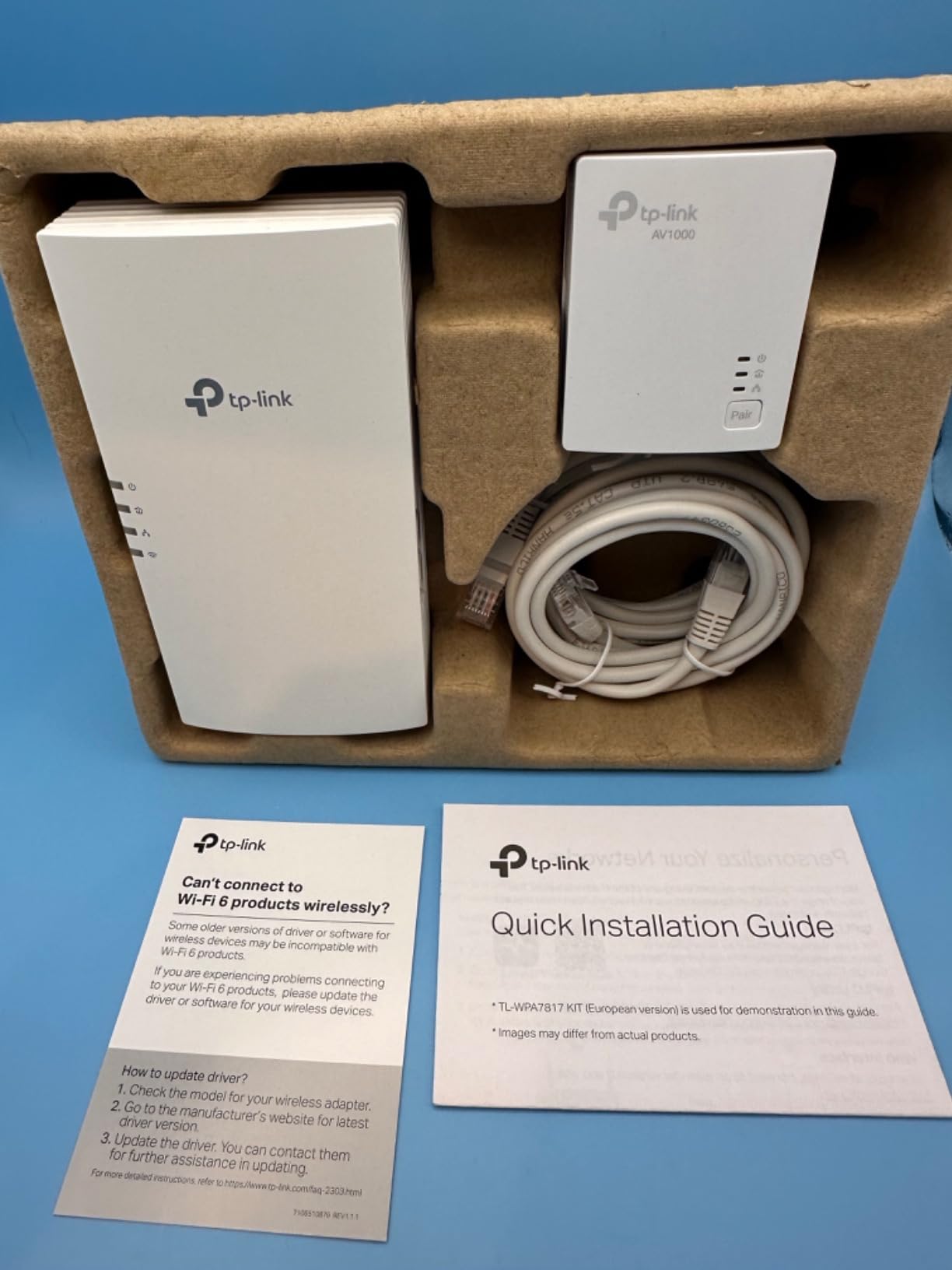
This is the kit for the room that needs a wireless signal rather than a cable. It is a powerline adapter with AX1500 dual-band Wi-Fi 6 built in, so one unit gives you a wired Gigabit port for a TV or console and a wireless network for phones and laptops. Buyers in older and larger homes use it to push coverage into garages, basements and workshops.
What matters most in an old house is the wired backhaul. A wireless extender that repeats your existing Wi-Fi signal gets worse the further it is from the router, while this one arrives at the far room over the electrical wiring first and then hands out Wi-Fi from there. Reviewers in difficult conditions commonly report 30 to 100 Mbps, which is enough to make a dead corner usable.
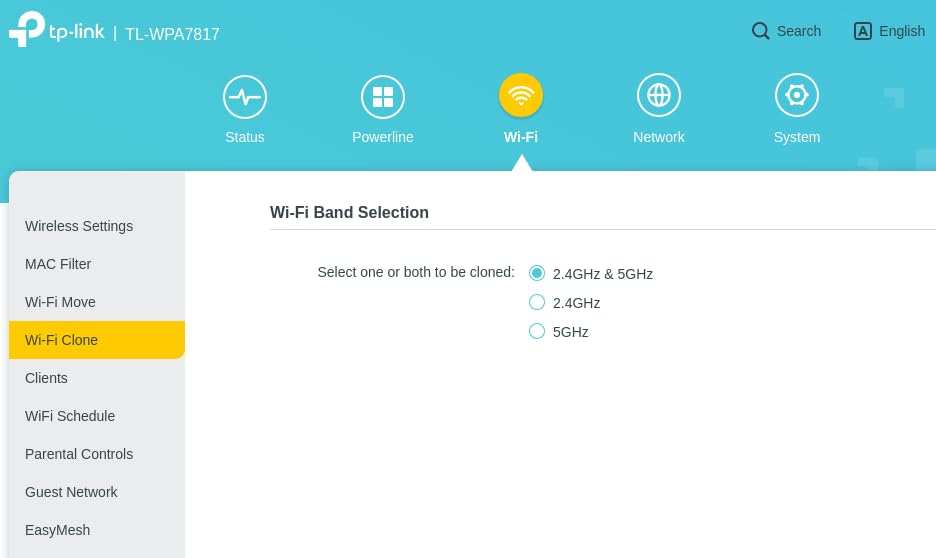
Does the Wi-Fi Clone button actually work?
Not reliably. Multiple reviewers describe WPS cloning failing silently, with the fix being manual SSID entry through the tpPLC desktop utility. Plan on spending five minutes in that utility during setup rather than assuming a one-button join, and know that the mobile app and router management software draw consistent criticism.
Is the AV1000 backhaul a problem in a large old house?
It is a limitation worth naming. The AV1000 link is slower than the AV2000 kits here, and throughput can degrade over days until the adapter is unplugged and replugged. If your plan is a hard-wired home office at the far end of the house, the AV2000 passthrough kit is the better tool and you can add a discrete access point at the end.
4. NETGEAR PLP2000 2-Pack – Best for Two Wired Endpoints
NETGEAR Powerline Ethernet Adapter Kit PLP2000, 2 Pack, 2000 Mbps
2000 Mbps HomePlug AV2 class
Two RJ-45 ports per adapter
Noise-filtered pass-through outlet
2.8 by 1.49 by 5.26 inches
Pros
- HomePlug AV2 with MIMO and beamforming gives the strongest link class in this roundup
- Two RJ-45 Ethernet ports on each adapter
- Noise-filtered pass-through power outlet built in
- Plug and play with no software or configuration
Cons
- Wired endpoints only and NETGEAR says so explicitly
- Made for US use only
- Real throughput falls well short of the 2000 Mbps headline on real wiring
- Only a 1-year limited warranty against 2 to 3 years from rivals
Nearly 4k reviews at 4.2 stars. Owners treat the PLP2000 as the premium wired-only option, and in an old house that framing makes sense. The pass-through outlet has a noise filter built into it, which matters more in a 1920s electrical system than in a modern one, and both adapters carry two RJ-45 ports so a single unit can feed two devices.
It is IEEE 1901 and 802.3 compliant, meaning it plays well with other HomePlug AV2 gear if you later add a second room. Reviewers consistently praise that it can run through older in-home wiring where Wi-Fi struggles, and that setup needs nothing more than plugging both units in.
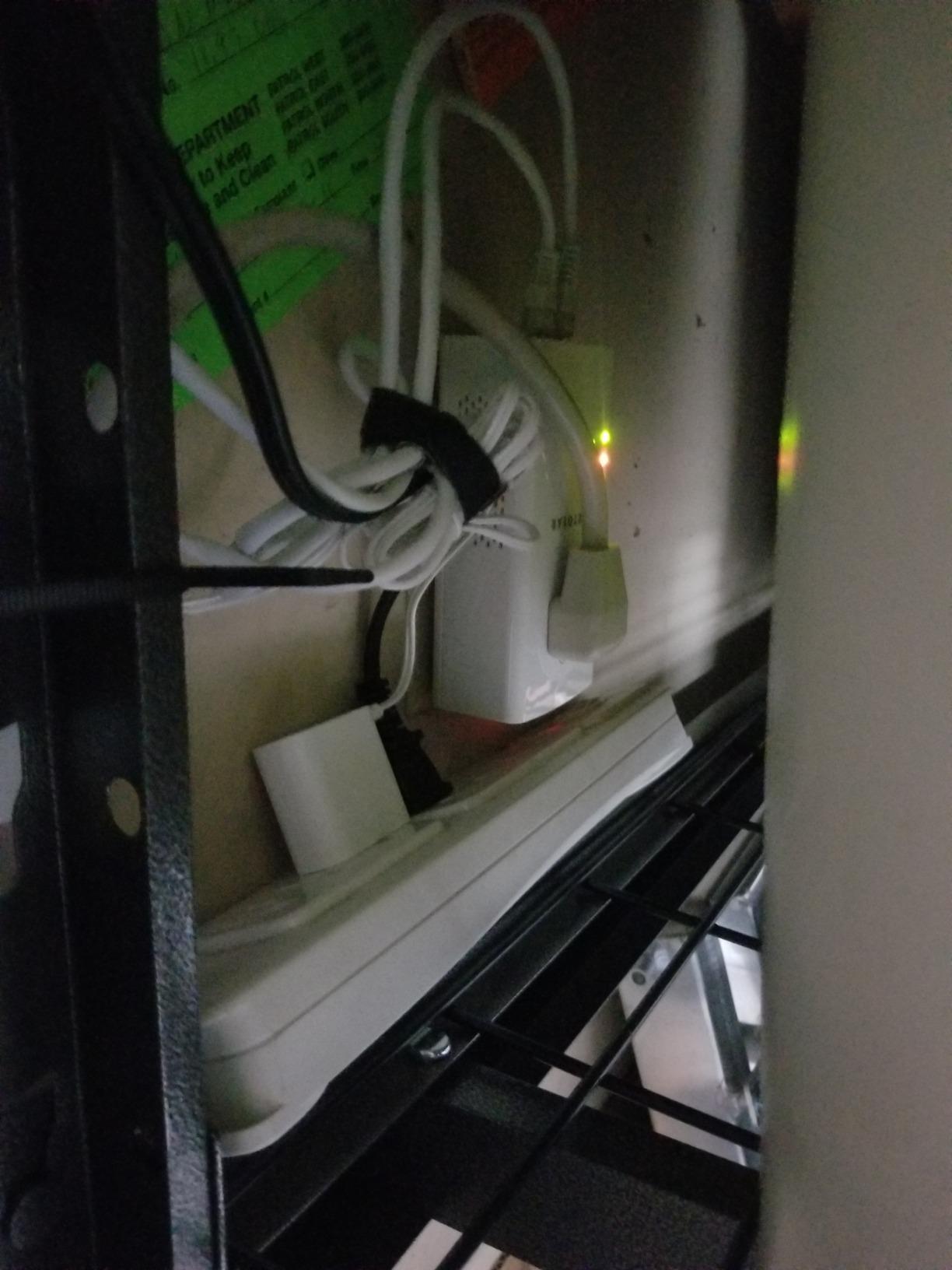
Does the noise filter matter on old wiring?
More than on new wiring, yes. The filter is there to strip electrical noise off the line before the carrier is decoded, and an old house has more of that noise by definition. Whether it is enough to rescue a bad circuit is another question, and the honest answer is usually no. It smooths a workable circuit, it does not repair a broken one.
Why is the warranty shorter than the rivals?
One year against two or three years for the TP-Link units. For a device that may need a factory reset or a power-cycle in an awkward location, that gap matters. Check what your seller offers on top of the manufacturer warranty before you commit, because the return window is your real safety net in a house like this.
5. NETGEAR PLP1200 Passthrough Kit – Best for Finding a Working Outlet
NETGEAR Powerline Adapter Kit, 1200 Mbps Wall-Plug, 1.2 Gigabit Ethernet Ports with Passthrough + Extra Outlet (PLP1200-100PAS)
1200 Mbps HomePlug AV2 class
Pass-through extra outlet
Pick A Plug link-quality LED
MIMO with beamforming
Pros
- Pick A Plug LED makes it easy to find the best socket in a room
- Pass-through power outlet means you keep the wall receptacle
- Plug-and-play setup that syncs to an existing powerline network with no reconfiguration
- Mixes successfully with older Zyxel and other HomePlug AV adapters
Cons
- Too tall for a standard two-plug outlet and blocks the upper socket for three-prong plugs
- Speed degrades sharply when the adapters sit on different circuits or breakers
- Advertised 1200 Mbps is unreachable and the Pick A Plug LED caps at over 80 Mbps as best
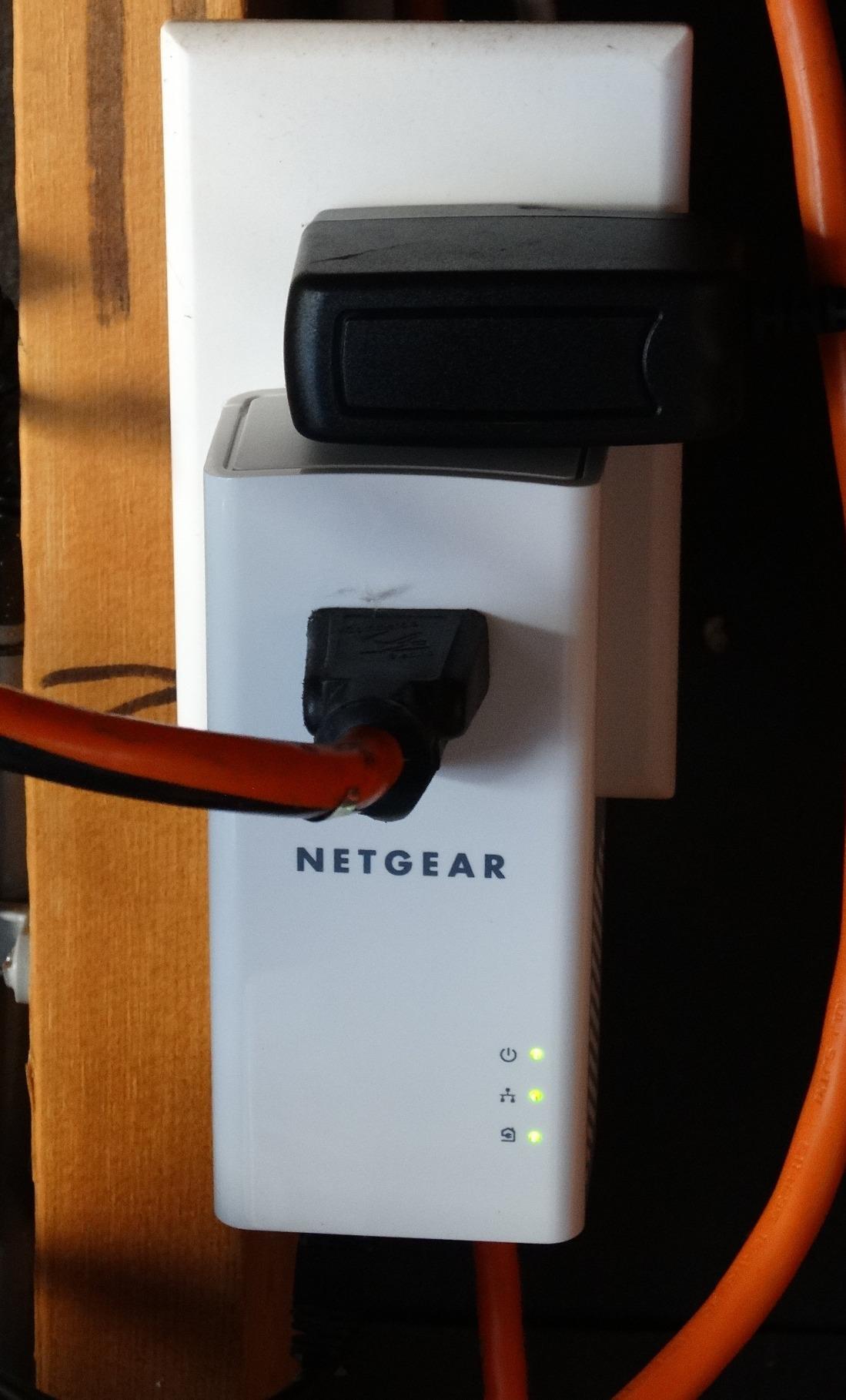
Just over 2k reviews at 4.0 stars, the lowest-scoring of the two NETGEAR kits, but it solves a problem the others ignore. Owners in Victorian and early-20th-century houses with plaster-and-lath walls report it turning unusable corners into stable wired connections, and they like the Pick A Plug LED for hunting down a socket that actually works in a room full of dead ones.
That LED is the reason to pick this kit in an old house. When you are testing an unfamiliar wiring system, the difference between guessing and knowing is one glance at the wall. It also mixes with older Zyxel and other HomePlug AV adapters already in the home, which is useful if you inherited a previous owner’s network gear.
How much throughput should I expect from the Pick A Plug LED?
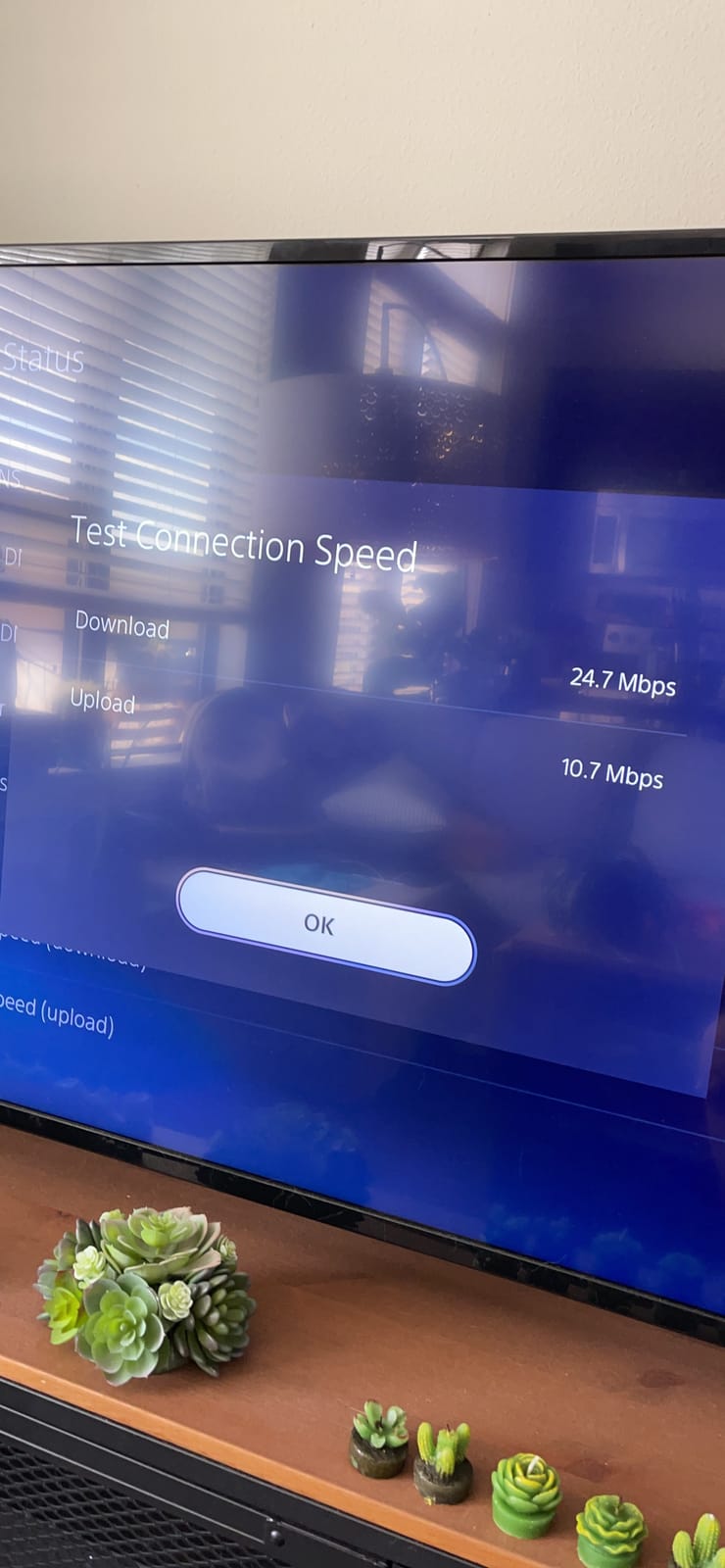
Reviewers report the LED topping out at over 80 Mbps as its best reading, well below the 1200 Mbps class on the box. Treat that number as the realistic ceiling rather than the marketing figure. It is still more than enough for a smart TV or a set-top box, and far more consistent than the wireless alternative in a thick-walled house.
Does it work across separate breakers?
MIMO with beamforming helps, and reviewers describe it improving coverage in older homes with multiple breakers, but the same owners report speed degrading sharply when the two adapters land on different circuits. If the room you need is on a different circuit, test that specific pairing early rather than discovering the problem after the box is open.
6. TRENDnet Powerline 500 TPL-406E2K – Best for Basic Streaming
TRENDnet Powerline 500 AV Nano Adapter Kit,TPL-406E2K,Plug & Play Install
500 Mbps link class
Compact nano body
Expandable to up to 8 adapters
3-year limited warranty
Pros
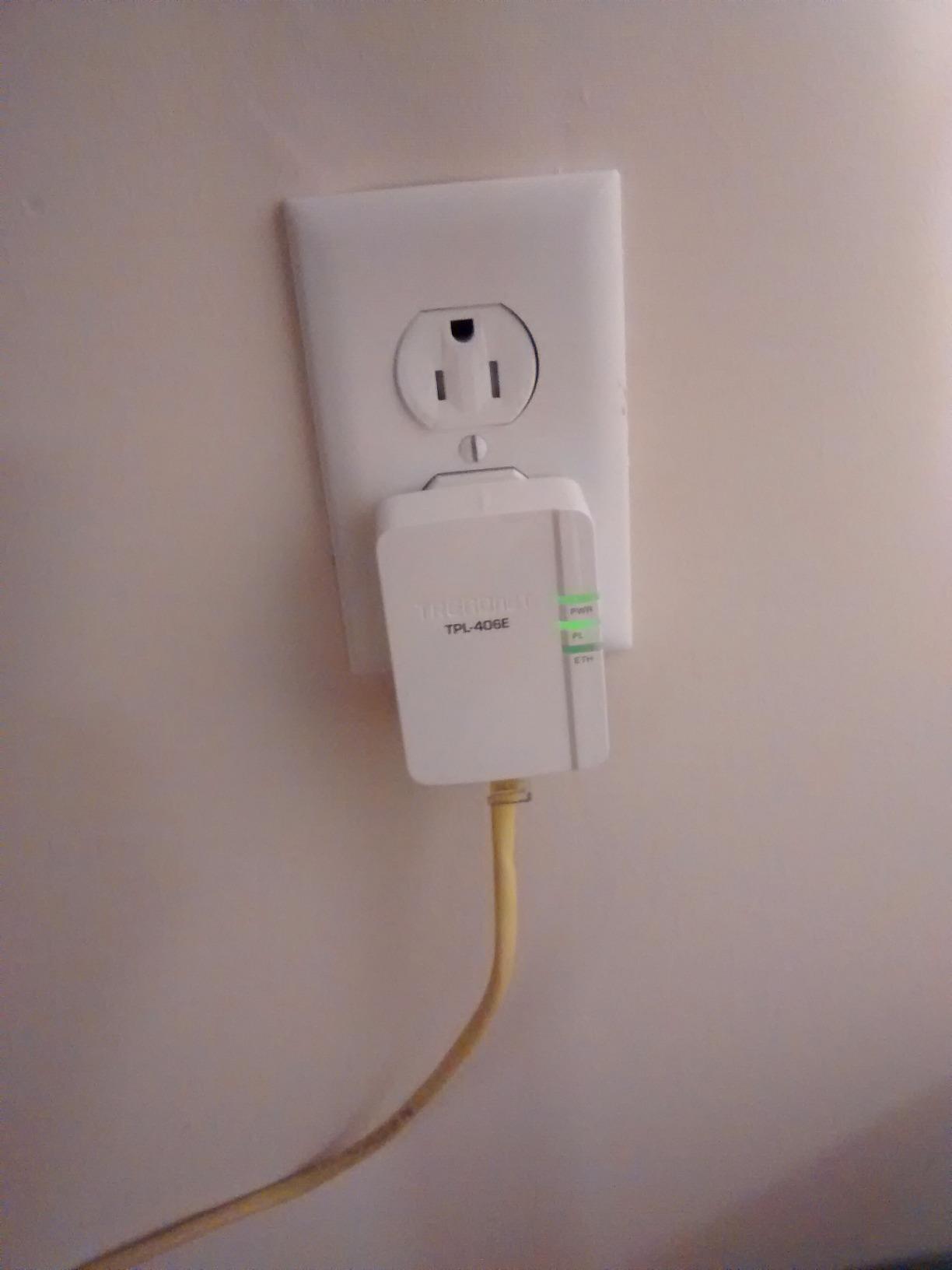
- Good value when all you need is a stable wired link for one room
- Pre-encrypted signal out of the box with no CD or configuration
- Compact nano form factor that does not block the neighbouring outlet
- Backward compatible with Powerline 600/500/200 adapters
Cons
- Ethernet port behaves as 10/100 so the realistic ceiling is 100 Mbps
- Very sensitive to line noise from CFLs/fans/microwaves and small chargers
- Link quality varies heavily by outlet and circuit
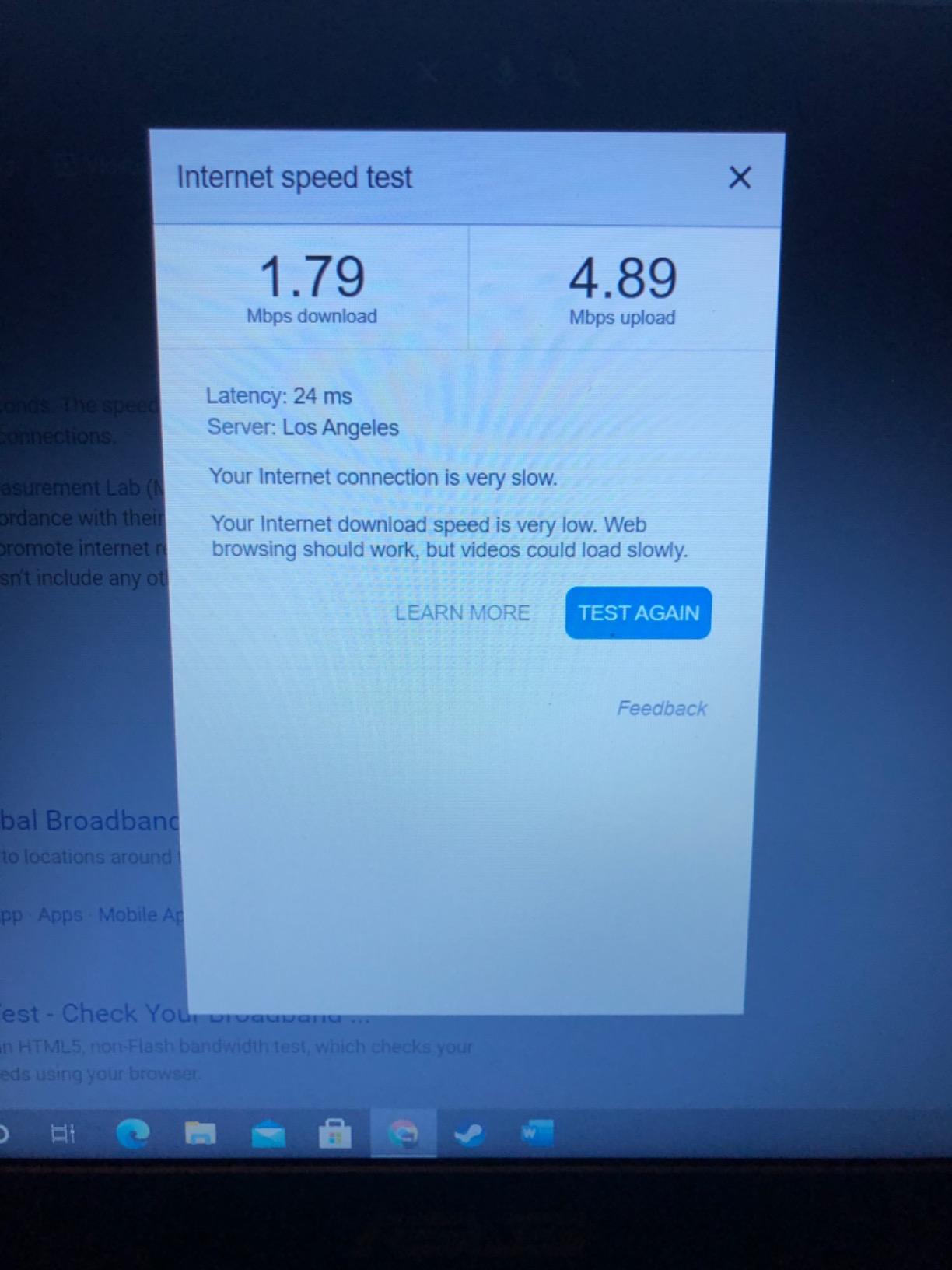
1,800-plus reviews at 4.2 stars, and this is the kit most people describe as the best cost-per-room solution when the goal is a stable wired link for a TV, a set-top box or a desktop. One reviewer measured 197 Mbps across 40 meters of house wiring, which is well past what a streaming box needs.
The nano body is the practical winner in old houses, where outlets are often crowded behind furniture or in tight alcoves. It will not block the neighbouring receptacle, and it expands to as many as 8 adapters across rooms without new cabling. The three-year warranty ties for the longest offered in this group.
How sensitive is it to household electrical noise?
Very. This is the dominant theme in the reviews: CFLs, fans, microwaves and small AC or DC chargers can pull throughput down by 10 to 30 percent or more. Several owners recovered full speed simply by moving the router-side adapter to a different outlet. In an old house with heavy kitchen loads, budget time for that experiment.
Can I mix it with an older powerline network?
Yes, it is backward compatible with Powerline 600, 500 and 200 adapters, so it slots into a mixed network if you are building up room by room. One caveat that comes up repeatedly: the supplied Ethernet cables are only about 4 to 5 feet, and some kits arrive with no printed instructions at all. The reset button on the underside is also awkward to reach.
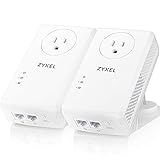
7. Zyxel PLA5456KIT AV2000 Kit – Best for Cross-Brand Networks
Zyxel AV2000 Powerline Ethernet Adapter Starter Kit | Pass-Thru Power | Plug & Play | MIMO | HomePlug AV2 | 2 x Gigabit Ethernet | Ideal for Smart TVs, On-Line Games, 4K Streaming | PLA5456KIT
HomePlug AV2 up to 2000 Mbps
Two Gigabit Ethernet ports per adapter
Pass-through power socket
QoS prioritisation
Pros
- Backwards compatible with older Zyxel PLA5405 and with NETGEAR adapters of the same class
- Two Gigabit Ethernet ports per adapter
- Pass-through socket so the wall outlet is not lost
- Multi-coloured link LEDs and a ZyXEL ONE Connect app for management
Cons
- Advertised 1800 to 2000 Mbps is unreachable with measured results commonly around 50 to 100 Mbps
- Poorly written quick start instructions that contradict each other
- Large enough to cover both outlets of a receptacle
A smaller but strongly positive review base at 4.2 stars. Owners upgrading from older AV200 or Cisco powerline units report dramatic gains, with one basement home theater going from roughly 6 Mbps to 100 Mbps. Several long-term owners specifically call out connection stability and ping as the standout quality.
What makes this kit distinct is interoperability. It is backward compatible with older Zyxel PLA5405 units and with NETGEAR powerline adapters of the same class, so in a house where somebody already tried and abandoned powerline, the gear may still be usable. That cross-brand flexibility is the reason it earns a place here.
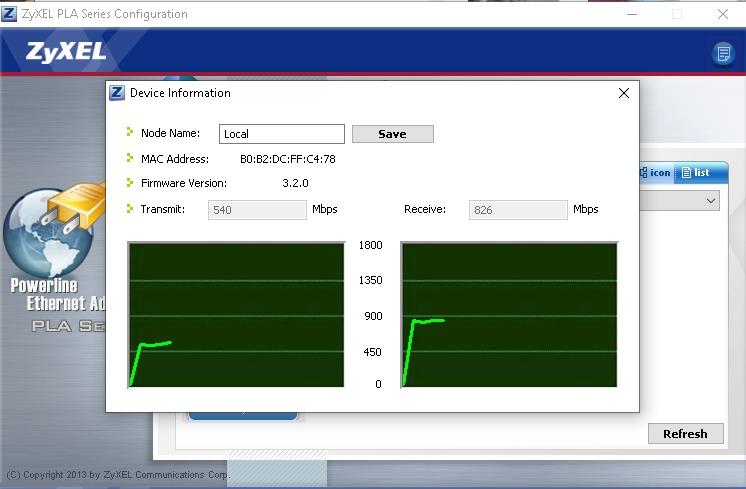
Why does an AV2000 kit deliver 50 to 100 Mbps on real wiring?
Because the class number describes a theoretical link rate between two units under ideal conditions on short, clean wiring. It is not a throughput promise. On the wiring most people actually have, expect a fraction of the headline number, and dryers and other motor loads reduce throughput further. Judge the kit on its port count and its compatibility instead.
Is the setup documentation usable?
It is the weakest part of this kit. Reviewers criticise poorly written quick start instructions, including steps that contradict each other, and utility software that is download-only. Several also report the pass-through socket saving them when the body is large enough to cover both outlets of a receptacle.
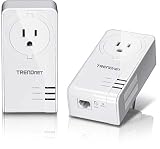
8. TRENDnet TPL-423E2K Powerline 1300 – Best for Built-In Outlet and Long Runs
TRENDnet TPL-423E2K, Powerline 1300 AV2 Adapter
Powerline 1300 AV2 class
Gigabit Ethernet port
Built-in electrical outlet
Range up to 984 ft
Pros
- Built-in electrical outlet so you keep the wall receptacle
- MIMO with beamforming using live
- neutral and ground wires
- Owners report it links across different branch circuits
- Cross compatible with Powerline 1200/600/500/200 adapters
Cons
- Lowest average rating in this roundup at 3.9 stars with 13 percent one-star reviews
- Some units refuse to sync until factory-reset and then only hold a red LED link
- Connectivity can drop after a few days and returns only after unplugging and replugging
This is the smallest review base in the group at 194 ratings, and the lowest average at 3.9 stars, so I am including it with a clear caveat. The reason it is here is the combination of a built-in electrical outlet, a Gigabit port and a 984 ft rated range, which is the widest figure any product here claims.
Positive reports describe straightforward installation, useful cross-branch-circuit linking and gigabit ports at a mid-range price point. The MIMO implementation uses live, neutral and ground together, and a sync button lets you re-key the encryption if you are extending an existing network.
Is the reliability concern serious?
It is the reason this kit ranks last. Multiple owners describe adapters that would not sync until a factory reset and then only managed a red-LED link, and others report connectivity dropping after a few days and only returning after a power cycle. TRENDnet’s Windows utility and support responsiveness are criticised too. If you buy it, buy it from a seller with a return window you can actually use.
Does it link across different branch circuits?
Owners report that it does, which is encouraging for a house with many breakers. Cross-circuit linking is not the same as crossing a phase boundary in a split-bus panel, though, and that remains the failure mode that no adapter solves. Verify the specific pairing in your own home before you plan a multi-room network around it.
How to Buy a Powerline Adapter for an Old House
Read the speed class as a ceiling, not a target. AV600, AV1000, AV2000 and similar labels are marketing categories. Judge a kit on its Ethernet port speed first, because a 100 Mbps port makes the rest of the number irrelevant.
Decide wired or wireless before anything else. A powerline kit with Wi-Fi is an extender with a wired backhaul, and that is a real advantage in a dead zone. If the far room gets a cable, a wired kit is cheaper, faster and easier to manage.
Count ports per adapter. Two Gigabit ports means one unit can feed a desktop and a TV without a switch. Single-port kits force you to buy twice as many units for the same coverage.
Look for a pass-through socket in a house with few outlets. A nano adapter avoids the issue entirely by being small. A passthrough model gives you the outlet back but takes up more wall space, and in old houses with surface-mounted or shared outlets that trade-off matters.
Check the standard, because mixing them fails silently. Every product here is HomePlug AV2. G.hn is a different standard used by devolo and some Zyxel kits, and a G.hn unit will not pair with a HomePlug AV2 unit. If you already own gear, match the standard before you buy anything else.
Mind the noise filter on older circuits. A noise-filtered outlet, usually paired with passthrough, is more valuable in a house built before 1980 than in a new build. It will not rescue a circuit full of corroded splices, but it helps on a marginal one.
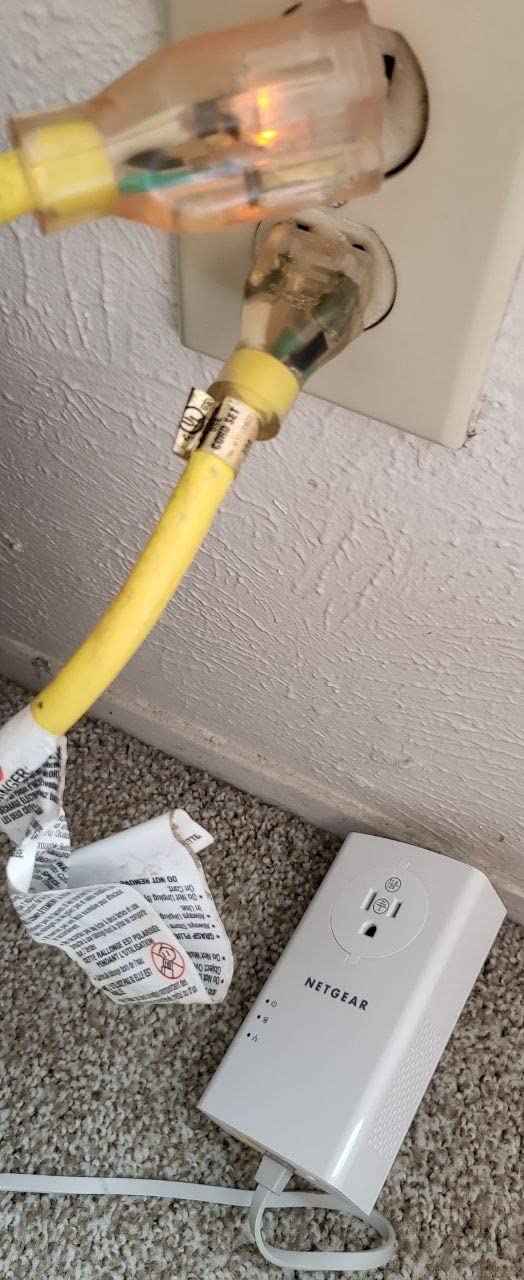
Do not use a surge protector, power strip or extension cord. This is the near-universal self-inflicted mistake described across support threads and in nearly every listing. Plug both adapters directly into wall outlets, and if you want an outlet for something else, use a passthrough model.
While you are working through a house that needs this kind of attention, the same slow-and-steady, tool-by-tool approach that suits old wiring suits other restoration work. Our guide to the best airless paint sprayers for houses covers the equipment side of that.
Powerline vs MoCA vs Mesh vs Wi-Fi Extender vs Ethernet in an Old House
Powerline. Best when there is no usable coax in the far room and no easy path for a cable. Weakest in houses with split-bus panels, multiple panels or heavy knob-and-tube. Install effort is trivial and speed is highly variable.
MoCA. Best when coax already reaches the room, even if you have forgotten it exists. It is far more predictable than powerline because coax is a shielded, dedicated run. Weakest when there is no coax at all, and you should check that your splitters are MoCA-rated rather than the cheap kind.
Mesh Wi-Fi. Best when you need wide coverage across many rooms and the wiring is hopeless. Weakest in a house with thick plaster, lath or brick walls, where a node two rooms away can still perform poorly. Install effort is low.
Wi-Fi extender. Best for a single stubborn dead zone near the main router. Weakest in a large old house, because it halves throughput and improves nothing about the underlying coverage problem. Think of it as a patch, not a fix.
Ethernet. Best in every measurable way when you can run it, with the 100-meter limit between devices being the main constraint. Weakest only in cost and effort. In a house you are already restoring, this is the option worth budgeting toward.
My rule for an old house: coax first, cable second, powerline third, mesh as a companion rather than a replacement. One note for anyone documenting the house while they are in it, our guide to the best photo scanners for old photos covers the other kind of old-house salvage.
Frequently Asked Questions
How do I know if my powerline adapter will work in my house?
Both adapters need to be on the same electrical panel, plugged directly into wall outlets rather than a power strip or surge protector, and on circuits that are not split across two phases. Count your panels, check whether any breakers are AFCI, and test a borrowed unit across every room you care about before committing to a purchase.
Do powerline adapters work with old wiring?
Often, but with far less predictability than in a modern house. Knob-and-tube, aluminum branch wiring from the 1960s and 1970s, and cloth-sheathed cable all add resistance and poor splices that degrade the high-frequency carrier. A working link in an old house is more likely to pair at a lower rate and fluctuate than a modern installation.
What are the downsides of using powerline adapters?
Speed class is a marketing label rather than a promise, and no adapter reaches its rated class on real wiring. Performance varies by outlet, circuit and hour, noisy appliances reduce throughput, AFCI breakers can interfere, and links can fail outright across split-bus panels or phase boundaries. It also adds nothing at all if you can run a cable.
What is better, a Wi-Fi extender or a powerline adapter?
In an old house, powerline usually wins for a far room, because a wireless extender halves throughput and does not fix the underlying coverage problem. An extender makes sense when the dead zone is close to the router. If coax reaches the room, MoCA beats both. And if a cable can be run, nothing beats Ethernet.
Can powerline adapters reach a detached garage or another building?
Only if the second building shares the same electrical service. If it has its own meter or its own panel fed by a separate service, there is no continuous conductor between the two and powerline will not cross at all. For that distance, use outdoor-rated Ethernet on direct burial, a wireless bridge, or fiber.
Do I need a ground wire for a powerline adapter?
No. Adapters work on ungrounded two-prong outlets because the data signal rides the neutral conductor and the ground is only referenced for noise filtering. A missing ground can contribute to poor performance, but it is rarely the only cause. One exception: passthrough models pass mains power onward and should only be used on a properly grounded receptacle.
Which Powerline Adapter Should You Buy?
If your house is genuinely old and you want the highest chance of a link that works, start with the TP-Link AV600 kit, our editor’s choice for 2026, because its simple signalling is the most forgiving on marginal wiring. Move up to the TP-Link AV2000 passthrough kit if you need gigabit ports and more than 100 Mbps in a room you care about, and pick the TP-Link AV1000 Wi-Fi 6 kit when the far room needs a wireless signal rather than a cable.
Before any of it, run the five-minute compatibility test and check the panel layout. If your house has two panels or a split-bus arrangement and the link will not hold, no adapter on this list will save you, and coax MoCA or a cable run is the honest answer. If you are restoring an old house anyway, plan for the cable.