
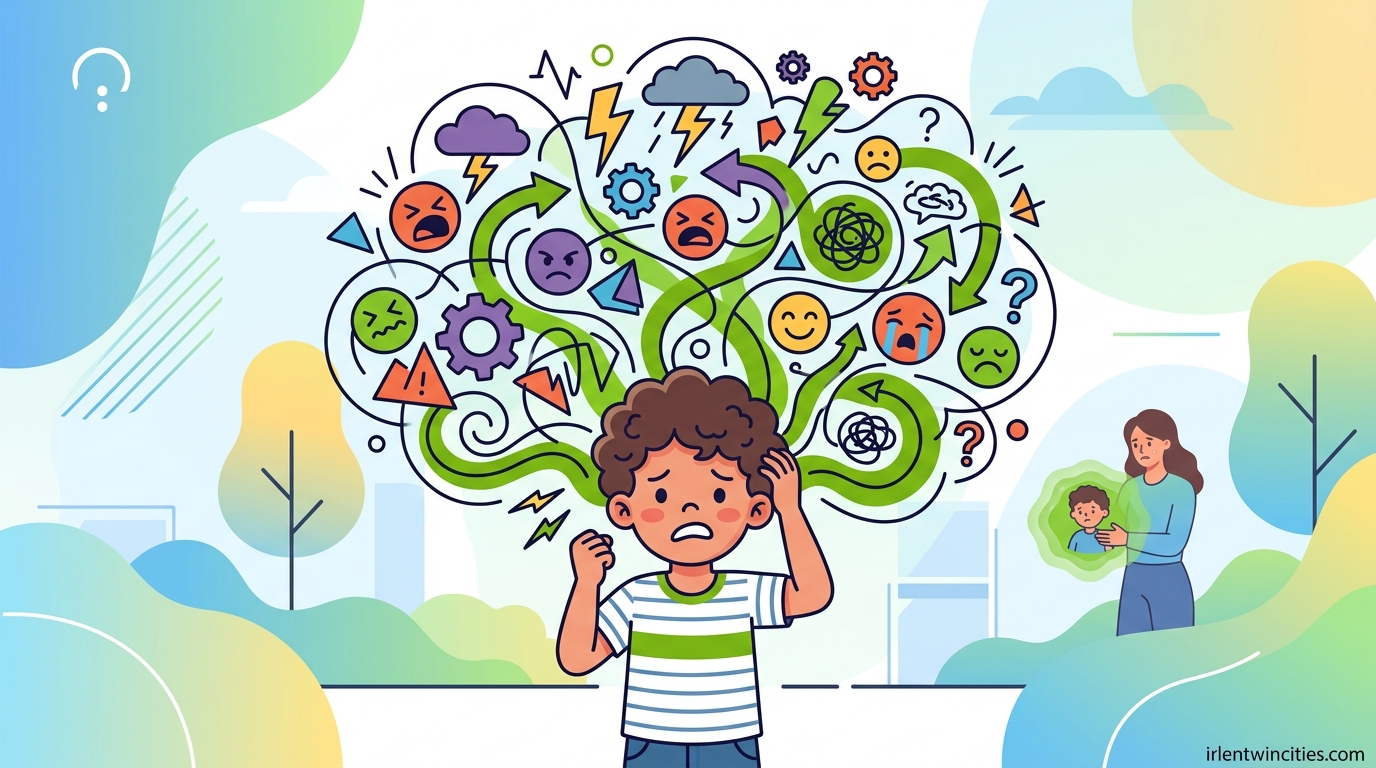
Your seven-year-old was happily playing with blocks five minutes ago. Now they’re screaming, throwing toys, and inconsolable because the tower collapsed. As a parent of a child with ADHD, you’ve likely witnessed these intense emotional storms more times than you can count. These aren’t ordinary childhood tantrums. They’re signs of emotional dysregulation, a challenging aspect of ADHD that affects up to 70% of children with the condition.
Understanding ADHD and emotional dysregulation in children is essential for every parent navigating this complex journey. This guide will help you recognize the signs, understand why they happen, and equip you with practical strategies that actually work. What you read here is backed by research and informed by real experiences from parents who have walked this path.
Table of Contents
What Is Emotional Dysregulation in Children with ADHD?
Emotional dysregulation means difficulty managing the speed, intensity, and duration of emotional reactions. Children with ADHD experience emotions more frequently, more intensely, and for longer periods than their neurotypical peers. Where another child might feel frustrated and move on, a child with ADHD may explode with anger and need 30 minutes to recover.
For many years, emotional dysregulation wasn’t officially recognized as part of ADHD. The DSM focused on inattention, hyperactivity, and impulsivity. But growing research now suggests emotional dysregulation could be considered a fourth central feature of ADHD. Parents have known this intuitively all along. The emotional struggles often cause more daily challenges than the classic ADHD symptoms.
Children with ADHD don’t choose to have these big emotions. Their brains process emotional information differently. The same neurological differences that make it hard to focus or sit still also make it difficult to regulate feelings. This isn’t bad parenting or a character flaw. It’s a neurological reality that requires understanding and targeted support.
Why Do Children with ADHD Struggle with Emotional Regulation?
The Brain Science Behind Big Emotions
The prefrontal cortex acts as the brain’s executive control center. It manages planning, decision-making, and yes, emotional regulation. In children with ADHD, this region develops more slowly and functions differently. Research shows their prefrontal cortex may be 2-3 years behind their chronological age in terms of maturity.
This delayed development affects executive functioning, the set of mental skills that includes working memory, flexible thinking, and self-control. When emotions hit, children with ADHD lack the neurological infrastructure to process, evaluate, and respond appropriately. The emotional wave crashes over them before their cognitive brain can intervene.
Bottom-Up vs. Top-Down Processing
Emotional regulation involves two distinct processes. Bottom-up processing happens automatically, driven by triggers in the environment. Top-down processing uses conscious thought to manage those automatic reactions. Children with ADHD rely heavily on bottom-up processing. They react before they think.
Their emotional brain (the amygdala) sends powerful signals that overwhelm the cognitive brain’s attempts to regulate. This creates what parents see as emotional impulsivity. The child feels something strongly and expresses it immediately, without the filtering mechanism that neurotypical children develop.
The Emotional Brain vs. The Cognitive Brain
Dr. Thomas Brown and other ADHD researchers describe two interacting systems. The cognitive brain handles thoughts, reasoning, and planning. The emotional brain generates feelings and drives. In ADHD, these systems don’t communicate effectively. The emotional brain takes charge, and the cognitive brain struggles to catch up.
This explains why reasoning with your child during an outburst rarely works. Their cognitive brain is essentially offline. They can’t process your logical arguments because their emotional brain is running the show. This isn’t defiance. It’s a neurological bottleneck that requires different intervention strategies.
Signs and Symptoms of Emotional Dysregulation in ADHD
Recognizing emotional dysregulation is the first step toward helping your child. Here are the key signs parents should watch for:
Quick temper and low frustration tolerance. Small setbacks trigger major reactions. A puzzle piece won’t fit, and the entire puzzle gets thrown across the room. These reactions happen fast and feel disproportionate to the situation.
Intense emotional reactions. Emotions aren’t just present. They’re overwhelming. A minor disappointment feels like a catastrophe. Mild annoyance becomes explosive anger. The intensity matches a major crisis even when the trigger is minor.
Long recovery time. Once upset, children with ADHD struggle to return to baseline. Where neurotypical children might calm down in minutes, ADHD children may remain dysregulated for 20-30 minutes or longer. They can’t simply “shake it off.”
Sudden tears or anger. Emotional shifts happen rapidly and unpredictably. Happy one moment, devastated the next. Parents often describe this as walking on eggshells, never knowing what might trigger the next outburst.
Mood swings and emotional lability. Emotions change quickly and dramatically throughout the day. This isn’t bipolar disorder. It’s emotional dysregulation, where feelings are volatile and difficult to stabilize.
How Symptoms Show at Different Ages
Toddlers and preschoolers (ages 2-5): Expect tantrums that last longer and happen more frequently than in other children. Transitions become battlegrounds. Leaving the park or switching activities triggers massive resistance and screaming. They may hit, bite, or throw themselves on the floor with seemingly no warning.
School-age children (ages 6-12): Frustration with homework or chores leads to outbursts. They may cry at school when they make mistakes, attracting unwanted attention from peers. Losing at games becomes unbearable. They might verbally lash out at siblings or parents when corrected.
Teenagers (ages 13-18): Emotional intensity combines with hormonal changes, creating a potent mix. Rejection sensitivity increases dramatically. Criticism feels like personal attacks. They may withdraw or explode, oscillating between extremes. Social situations become minefields as they overreact to perceived slights from friends.
Myths vs. Facts About ADHD and Emotional Dysregulation
Misconceptions about emotional dysregulation create unnecessary shame and ineffective interventions. Let’s separate myth from reality:
Myth: Children with emotional dysregulation are just spoiled or poorly parented.
Fact: Emotional dysregulation has a neurological basis. No amount of traditional discipline changes brain wiring. Parents need strategies designed for ADHD brains, not standard parenting approaches.
Myth: They’re being manipulative to get their way.
Fact: Manipulation requires planning and emotional control that ADHD children lack. Outbursts are reactive, not calculated. The child is suffering, not scheming.
Myth: They could control their emotions if they really tried.
Fact: Trying harder doesn’t strengthen the prefrontal cortex. Children with ADHD need external supports and strategies while their brains develop, not just willpower.
Myth: Emotional dysregulation isn’t a real ADHD symptom.
Fact: While not in the original DSM criteria, research consistently shows emotional dysregulation affects 50-70% of people with ADHD. Many experts now consider it a core feature requiring recognition and treatment.
How Emotional Dysregulation Affects Daily Life
The impact of emotional dysregulation extends far beyond the moment of an outburst. Understanding these effects helps parents prioritize intervention and seek appropriate support.
Family Relationships
Daily emotional storms strain family dynamics. Parents report walking on eggshells, never knowing what might trigger the next explosion. Siblings may feel neglected as parents focus attention on the child with ADHD. Family activities become stressful as parents anticipate problems. Many parents describe feeling exhausted, defeated, and questioning their parenting abilities despite their best efforts.
The good news is that understanding the neurological basis helps parents respond with empathy rather than frustration. This shift alone can improve family relationships significantly.
School Performance
Emotional dysregulation affects learning in multiple ways. Frustration with difficult work leads to giving up or outbursts. Embarrassment about mistakes prevents participation. Conflicts with peers during group work disrupt instruction. Many children with ADHD underperform academically not because they lack ability, but because emotional struggles interfere with demonstrating what they know.
Teachers who understand ADHD can implement accommodations that reduce emotional triggers. Flexibility on deadlines, private spaces for calming down, and modified assignments can make enormous differences.
Social Relationships
Making and keeping friends is challenging when emotions run hot. Other children may find the intensity overwhelming or scary. A child who yells when they lose a game quickly becomes unwelcome at playdates. Rejection sensitivity causes children to misinterpret neutral interactions as negative, creating self-fulfilling prophecies of social difficulty.
Social skills groups and structured activities with clear rules can help children practice emotional regulation in controlled settings. Some parents find that one-on-one playdates work better than group situations.
Sibling Dynamics
Siblings of children with ADHD face unique challenges. They may feel overlooked when parents focus attention on the struggling child. They may become targets of emotional outbursts. They might struggle to understand why their sibling gets different rules or more patience.
Supporting siblings means explaining ADHD in age-appropriate ways, ensuring they get individual attention, and teaching them strategies for de-escalating conflicts. Family therapy can help address these complex dynamics.
Long-Term Effects When Untreated
Without intervention, childhood emotional dysregulation often persists into adulthood. Adults with untreated ADHD emotional issues struggle with relationship stability, employment, and mental health. They’re at higher risk for anxiety, depression, and substance abuse. Early intervention significantly improves long-term outcomes.
Practical Strategies for Parents: Managing Emotional Outbursts
Now let’s focus on what you can actually do. These strategies come from research, clinical practice, and real parents who have found what works.
What to Do in the Moment: Crisis Management
Step 1: Stay calm yourself. Your regulated nervous system helps co-regulate your child. Take deep breaths. Speak slowly and softly. Your calm presence is more powerful than your words in this moment.
Step 2: Ensure safety. If your child is hitting, kicking, or throwing, prioritize physical safety. Move other children away. Remove dangerous objects. Create space for the outburst to happen safely.
Step 3: Use minimal words. During emotional flooding, language processing shuts down. Don’t lecture or reason. Simple phrases like “I’m here” or “You’re safe” work better than paragraphs.
Step 4: Offer comfort without demanding. Some children want physical comfort during outbursts. Others reject it. Offer but don’t force. Stay nearby so they know you’re present.
Step 5: Wait for the storm to pass. Emotional dysregulation episodes have a natural course. You can’t rush them. Stay patient and present until your child’s nervous system returns to baseline.
The 10-3 Rule for ADHD Kids
The 10-3 rule, often recommended by ADHD specialists, suggests two key interventions. When you notice your child escalating, offer 10 minutes of physical activity. Jumping jacks, running laps, or dancing can help discharge emotional energy before it explodes.
The “3” refers to offering three choices when you sense frustration building. Giving limited options preserves autonomy while guiding toward acceptable outcomes. “Do you want to finish your homework now, after dinner, or first thing tomorrow morning?” Choices reduce the power struggles that trigger emotional outbursts.
Prevention Strategies
Maintain consistent routines. Predictability reduces anxiety and emotional triggers. Visual schedules help children anticipate transitions. Warnings before activity changes give time to prepare emotionally.
Ensure adequate sleep. Sleep deprivation dramatically worsens emotional dysregulation. Children with ADHD often struggle with sleep, creating a vicious cycle. Prioritize sleep hygiene and consult your pediatrician if sleep issues persist.
Provide regular movement breaks. Physical activity helps regulate the nervous system. Before challenging tasks, have your child run laps or do jumping jacks. Many parents report that proactive movement prevents afternoon meltdowns.
Feed regularly. Low blood sugar triggers emotional volatility. Regular protein-rich snacks help maintain stable blood sugar and steadier moods.
Emotion Coaching Techniques
Dr. John Gottman’s research shows that children who learn to understand and label emotions develop better self-regulation. Practice naming feelings throughout the day. “You seem frustrated with that puzzle.” “I notice you’re excited about the party.” This builds emotional vocabulary and awareness.
Create a “feelings thermometer” or use emotion charts to help your child identify intensity levels. “Is this a 3 or an 8 on the frustration scale?” Externalizing the emotion helps create distance and perspective.
Teach coping strategies when your child is calm, not during an outburst. Practice deep breathing, progressive muscle relaxation, or visualization techniques during peaceful moments. These skills need to be established before they’re needed.
Creating Calm-Down Spaces
Designate a specific area where your child can retreat when emotions escalate. This isn’t punishment. It’s a tool for self-regulation. Include comfort items, sensory tools, and calming activities. Some children benefit from weighted blankets, fidget toys, or noise-canceling headphones.
Teach your child to recognize their own warning signs and use the space proactively. “When you feel your fists clenching, that’s a sign to take a break.” Self-awareness takes time to develop but pays enormous dividends.
School Collaboration and Accommodations
Work with your child’s school to create an accommodation plan. A 504 Plan or IEP can include emotional regulation supports. Possible accommodations include:
Permission to take breaks in a designated calm space when overwhelmed. A signal system that allows your child to communicate distress without drawing attention. Modified assignments that reduce frustration while maintaining learning. Advance warning about changes in routine or schedule. Access to fidgets or other self-regulation tools during class.
Regular communication between home and school helps identify triggers and successful interventions. Share what works at home and ask what works at school.
Treatment Options for ADHD Emotional Dysregulation
When home strategies aren’t enough, professional intervention can make a significant difference. Here are the evidence-based treatment options:
Medication
Stimulant medications (methylphenidate and amphetamine-based) often improve emotional regulation along with attention and hyperactivity. Many parents report that medication reduces emotional intensity and helps their child recover faster from upsets. Non-stimulant options like atomoxetine (Strattera) and guanfacine (Intuniv) can also help with emotional symptoms.
Medication isn’t right for every child, but it’s worth discussing with your pediatrician or psychiatrist if emotional dysregulation significantly impacts daily functioning.
Behavioral Therapy
Cognitive Behavioral Therapy (CBT) adapted for children with ADHD teaches emotion recognition, coping strategies, and problem-solving skills. Dialectical Behavior Therapy (DBT) skills, including distress tolerance and emotion regulation modules, show promise for older children and teens.
Look for therapists who specialize in ADHD and have experience with childhood emotional dysregulation. Standard talk therapy is often less effective than structured, skills-based approaches.
Parent Training Programs
Parent-Child Interaction Therapy (PCIT), Parent Management Training (PMT), and similar programs teach specific skills for managing difficult behaviors. These programs have strong research support for improving parent-child relationships and reducing behavioral outbursts.
Groups like CHADD (Children and Adults with ADHD) offer parent support and training. Connecting with other parents who understand reduces isolation and builds practical knowledge.
When to Seek Professional Help
Consider professional evaluation if emotional outbursts occur multiple times per week, significantly disrupt family functioning, cause your child distress, lead to school problems or social isolation, or involve aggression toward self or others. A comprehensive evaluation can rule out co-occurring conditions like anxiety, depression, or oppositional defiant disorder that may be contributing to emotional struggles.
FAQ
What does emotional dysregulation look like in kids with ADHD?
Emotional dysregulation in ADHD children appears as quick temper, low frustration tolerance, intense reactions that seem disproportionate to the situation, sudden mood swings, and long recovery times after becoming upset. You might see screaming meltdowns over minor disappointments, physical aggression when frustrated, or tears that last for 30 minutes or more. These emotional responses happen frequently and interfere with daily activities, school performance, and family life.
What is the 10-3 rule for ADHD kids?
The 10-3 rule is a practical strategy for managing ADHD emotional dysregulation. The “10” refers to providing 10 minutes of physical activity when you notice your child becoming emotionally elevated. Movement helps discharge energy before it becomes an outburst. The “3” means offering three acceptable choices when you sense frustration building. Limited options give your child autonomy while guiding them toward outcomes that won’t trigger further conflict.
What medications are used for emotional dysregulation?
Stimulant medications like methylphenidate (Ritalin, Concerta) and amphetamines (Adderall, Vyvanse) often improve emotional regulation alongside other ADHD symptoms. Non-stimulant options include atomoxetine (Strattera) and guanfacine (Intuniv). Some children benefit from antidepressants or mood stabilizers if emotional dysregulation co-occurs with anxiety or depression. Medication decisions should be made with a psychiatrist or pediatrician familiar with ADHD.
Is emotional dysregulation a core component of ADHD?
While not included in the original DSM criteria, growing research suggests emotional dysregulation may be a fourth core feature of ADHD alongside inattention, hyperactivity, and impulsivity. Studies show 50-70% of children with ADHD experience significant emotional dysregulation. Many ADHD experts now consider it a primary symptom that requires recognition and treatment, not just a secondary effect of other ADHD challenges.
How can I stay calm when my child is having an outburst?
Staying calm during your child’s emotional outburst takes practice. Take slow, deep breaths to regulate your own nervous system. Remind yourself that this is neurological, not personal or manipulative. Use a mantra like “This will pass” or “My calm helps my child.” If possible, tag in another adult when you feel yourself losing composure. Building your own support network and self-care practices makes staying calm during crises more achievable.
What’s the difference between normal tantrums and ADHD emotional dysregulation?
Normal tantrums are developmentally expected and decrease with age. They happen in response to clear triggers and resolve relatively quickly. ADHD emotional dysregulation involves more frequent outbursts that are more intense, last longer, and occur at older ages than typical tantrums. The emotional reactions seem disproportionate to the trigger, and recovery takes significantly longer. Children with ADHD also struggle more with identifying and communicating their emotions before they explode.
Conclusion
ADHD and emotional dysregulation in children creates real challenges for families, but understanding the neurological basis changes everything. Your child isn’t choosing to have these big emotions. Their brain is still developing the systems needed for self-regulation. With the right strategies, support, and sometimes professional intervention, children with ADHD can learn to manage their emotions more effectively.
Start with one or two strategies from this guide. Maybe it’s the 10-3 rule or creating a calm-down space. Add more as you and your child build new habits. Progress happens gradually, and setbacks are normal. What matters is having tools that work and knowing you’re not alone on this journey.
If you’re feeling overwhelmed, reach out to your child’s pediatrician or a mental health professional who specializes in ADHD. Parent support groups, both online and in-person, provide connection with others who truly understand. Your child can learn to navigate their big emotions, and your family can find more peace. That future is possible with knowledge, support, and the right approach.