
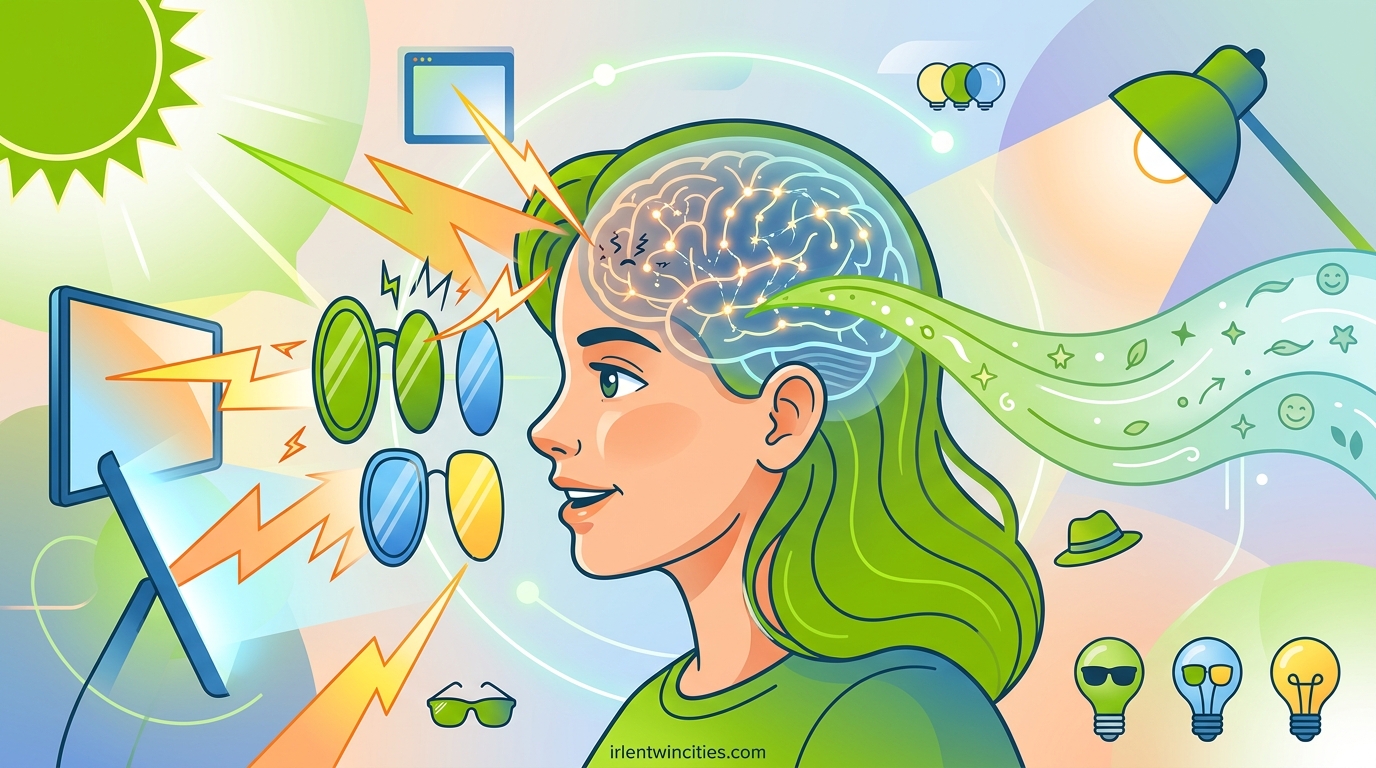
For many autistic people, walking into a brightly lit room feels like stepping directly into an interrogation spotlight. Up to 75% of autistic individuals experience some degree of light sensitivity, and for them, what others might call “normal” lighting can feel genuinely painful or overwhelming. This article explains why bright lights affect autistic people so intensely, what triggers to watch for, and practical ways to manage light sensitivity in daily life.
Table of Contents
What Is Light Sensitivity in Autism?
Light sensitivity in autism, also called photophobia, occurs when the brain overreacts to certain lighting conditions. Unlike typical light sensitivity that might cause minor discomfort, the autistic version often creates genuine pain, intense discomfort, or an urgent need to escape the lighting environment entirely.
The difference between hypersensitivity and sensory overload matters here. Hypersensitivity is the heightened awareness of sensory input that causes reactions like squinting or flinching. Sensory overload happens when that input becomes too much for the brain to process, triggering a cascade of stress responses. Many autistic people experience both, sometimes in the same moment.
Research consistently shows that approximately 75% of autistic people report sensitivity to light. This is not a small inconvenience. It shapes where they can go, how long they can stay, and whether they can function at all in certain environments.
Why Bright Lights Overwhelm Autistic People
The Neurological Explanation
Scientists believe the brains of autistic individuals process sensory information differently than neurotypical brains. Neural pathways that respond to visual stimuli show heightened reactivity in many autistic people, meaning the same amount of light creates a stronger neurological response.
Several factors contribute to this difference. Some researchers point to altered retinal responses, where the eyes of autistic individuals may send slightly different signals to the brain even when receiving the same visual input. Others focus on differences in sensory integration, where the brain normally filters and prioritizes incoming sensory data but appears to do so differently in autistic individuals.
The result is that visual stimuli like bright or flickering lights reach the brain at full intensity without the normal filtering effect. What feels like normal lighting to most people can feel like standing under stadium lights to someone with this heightened sensitivity.
Why Fatigue Makes It Worse
If you have spoken with autistic people about their light sensitivity, you may have noticed that sensitivity varies. One day they can handle a fluorescent-lit store, and another day the same store feels unbearable. This is not inconsistency. It is exhaustion.
When the autistic brain is already dealing with sensory processing demands, its capacity to handle additional sensory input decreases. Fatigue, burnout, stress, and illness all reduce the threshold for sensory overload. Light sensitivity spikes on days when mental resources are already stretched thin.
Common Light Triggers
Understanding what types of light cause problems helps you anticipate and avoid triggers before they become overwhelming.
Fluorescent Lights
Fluorescent lighting is often the most problematic for autistic individuals. These lights flicker at a frequency that is invisible to the naked eye but that the brain can still detect. The constant pulsing of light, even when steady-seeming, creates low-level neurological strain that builds up over time.
Beyond the flicker, fluorescent lights also emit a broader spectrum of light that includes more blue wavelengths. Many autistic people report that this blue light component intensifies their discomfort.
LED Lighting
LED lights present their own challenges. While they do not flicker like fluorescents, many LED lights emit high levels of blue light. They also often produce directional light that creates harsh glare on surfaces, increasing contrast issues that many autistic people find difficult.
Dimmed LED lights can seem like a solution, but some autistic people report that dimmed LEDs create their own problems, with different wavelength profiles that can feel unnatural or cause eye strain at lower intensities.
Bright Sunlight and Glare
Natural light is not automatically better. Bright sunlight creates extreme brightness that can feel blinding, especially in environments with high contrast like snow-covered ground or reflective surfaces like water or glass buildings.
Glare from any light source affects autistic people disproportionately. The way light bounces off surfaces creates visual noise that the brain must work harder to process. This is why many autistic individuals wear sunglasses even on overcast days.
Flickering and Pulsing Lights
Any light that pulses, even subtly, creates problems. This includes not just fluorescent lights but also certain types of signage, television screens, and some electronics. The brain must work to reconcile the visual inconsistency, and this effort accumulates into sensory strain.
Signs and Symptoms of Light Sensitivity
Light sensitivity manifests differently in different people. Here are the most common signs to watch for.
Physical Reactions
Physical signs include involuntary squinting, narrowing the eyes, or keeping them partially closed in bright environments. Some autistic people report that their eyes feel strained or painful after exposure to problematic lighting. Headaches are common, particularly after time in fluorescent-lit spaces.
One autistic person described the sensation this way: keeping their eyes open in bright light feels like torture. They compared it to being forced to stare at something painful while unable to look away.
Behavioral Responses
Watch for avoidance behaviors. An autistic person who can normally handle certain environments but suddenly refuses to enter them may be responding to lighting changes. Wearing sunglasses indoors, turning away from light sources, or positioning themselves in shadows are all signs of light sensitivity.
Emotional and Cognitive Impacts
Light sensitivity often creates frustration, anxiety, or a sense of being overwhelmed. Autistic individuals may report feeling like they cannot think clearly in certain lighting environments. The effort to filter out distracting visual input competes with cognitive resources, making it harder to focus, communicate, or regulate emotions.
Impact on Daily Life
Light sensitivity is not just uncomfortable. It shapes where autistic people can go, how long they can stay, and whether they can function in certain settings at all.
In school, fluorescent-lit classrooms can make learning nearly impossible. Children may need accommodations like seating away from windows, permission to wear sunglasses indoors, or alternative assignment formats. Without these accommodations, academic performance suffers not because of intelligence but because of environmental barriers.
At work, open-plan offices with fluorescent or LED lighting create ongoing strain. Many autistic adults find they must advocate strongly for accommodations like desk lamps instead of overhead lighting, flexible remote work options, or permission to use noise-canceling headphones to help manage sensory load alongside lighting modifications.
Social situations become calculated decisions. A restaurant with bright overhead lights may be avoided. Social events held in certain venues may simply be inaccessible. This is not preference. It is necessity.
Coping Strategies and Practical Solutions
While you cannot control every environment, you can build strategies that make the controllable spaces more manageable.
Environmental Modifications at Home
Create low-stimulation spaces in your home where lighting can be controlled. Use lamps instead of overhead lights. Choose warm-colored LED bulbs that emit less blue light. Install dimmers on all lights. Consider blackout curtains for windows to manage natural light.
Many autistic people find that creating one room, or even one corner of a room, with consistently low lighting gives them a retreat space when other environments become overwhelming.
Workplace and Classroom Accommodations
You have the right to request reasonable accommodations for disability-related needs. Request permission to use a desk lamp instead of overhead fluorescent lights. Ask about moving your workspace near a window with natural but controllable light. In classrooms, seating near the door for easy exit breaks can help.
Bring your own lighting solutions where possible. A small personal lamp with a warm color temperature can make a fluorescent office desk more manageable. Tinted lens glasses can be worn indoors in many settings without appearing unusual.
Wearing Tinted Lenses Indoors
Colored or tinted lenses help many autistic people manage light sensitivity. The specific color that works varies by individual. Some people find rose-tinted lenses helpful. Others need specific precision-tinted lenses designed for sensory sensitivities.
One forum user reported that rose-tinted lenses transformed their ability to function in fluorescent-lit environments. Another said they keep sunglasses in every bag for unexpected bright situations. This is not about preference. It is about access.
Taking Sensory Breaks
Build sensory breaks into your day. Step outside for a few minutes in natural but shaded light. Find a low-stimulation room where lights can be turned down or off. These breaks allow the brain to reset its sensory processing resources.
The key is proactive breaks, not reactive ones. Waiting until overwhelmed to seek relief means fighting an uphill battle. Building breaks into the schedule prevents overload from building in the first place.
Task Lighting Instead of Overhead Lighting
Replace overhead lights with task lighting where possible. A desk lamp focused on your work surface creates adequate light for the task without casting the entire room in harsh illumination. This reduces overall sensory load while maintaining the light needed for specific activities.
Understanding the 6-Second Rule in Autism
The 6-second rule in autism refers to a processing guideline. It suggests that autistic individuals may need at least 6 seconds to process sensory information and respond to it. This applies to light-related processing as well.
When someone is exposed to overwhelming light, their brain needs time to integrate that input and form a response. Expecting immediate reactions, especially in bright or fluorescent environments, sets autistic people up for failure. Building in these processing pauses reduces frustration and improves outcomes in both educational and workplace settings.
When to Seek Professional Support
While self-advocacy and environmental modifications help many autistic people manage light sensitivity, professional support may be needed when sensitivity significantly impacts quality of life, mental health, or ability to access necessary spaces.
Occupational therapists with autism expertise can provide personalized strategies for managing sensory processing differences. They can help identify specific triggers, recommend environmental modifications, and develop sensory diets that build in appropriate accommodations.
If light sensitivity is causing significant anxiety, preventing work or school attendance, or contributing to depressive symptoms, speak with a healthcare provider about options. While there is no medication specifically for sensory overload, treating co-occurring conditions like anxiety can reduce overall sensory sensitivity.
Do bright lights bother people with autism?
Light sensitivity in autism is a neurological reality, not a preference or a behavior to fix. Understanding why bright lights overwhelm autistic people helps create environments where autistic individuals can function without constant strain. Whether you are autistic yourself, supporting an autistic family member, or creating spaces for autistic people, these insights make a real difference.
If you or someone you support is struggling with light sensitivity, start with small environmental modifications. A lamp instead of an overhead light. A pair of tinted lenses. One low-stimulation room. These changes accumulate into better quality of life.