
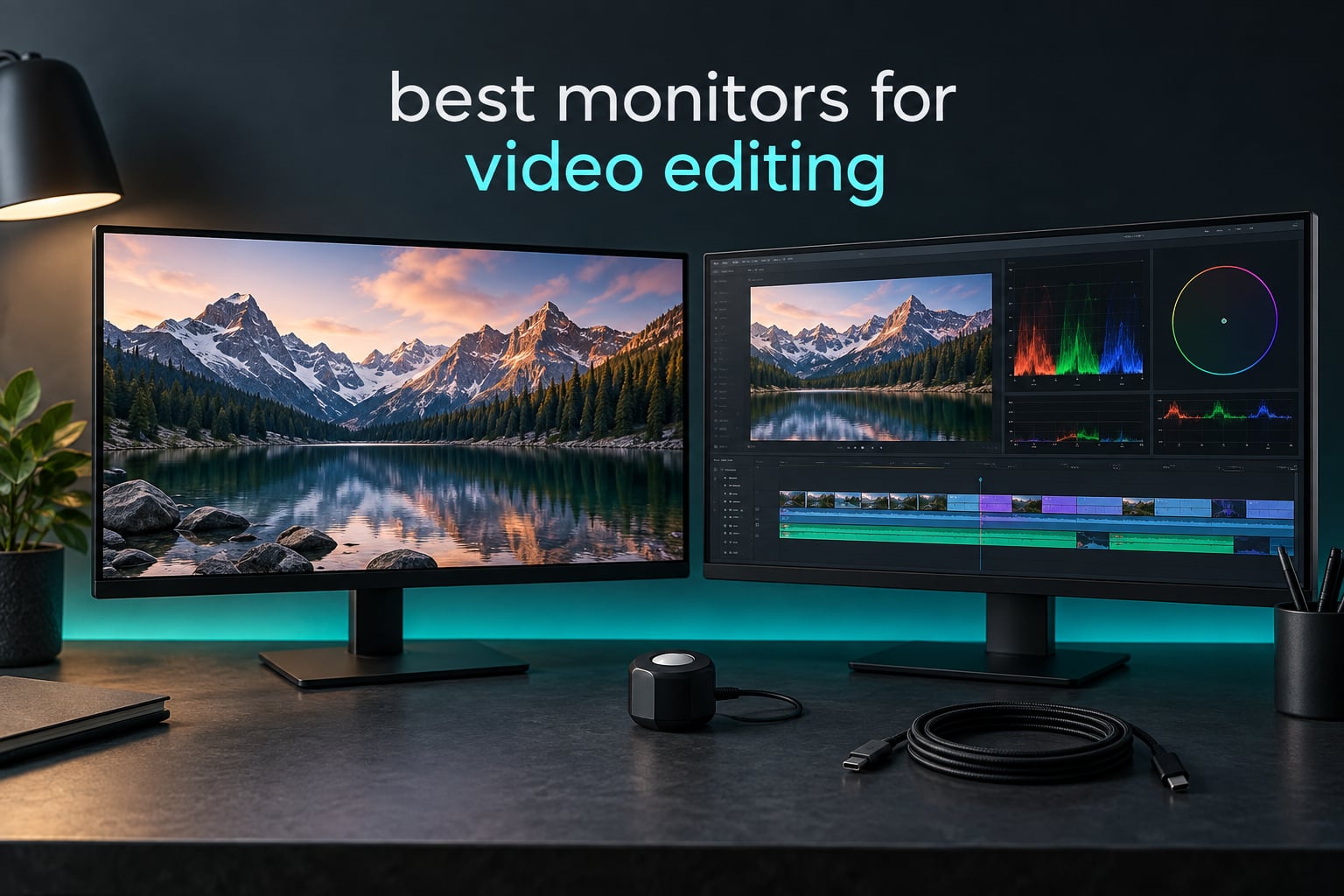
Most editors buy a monitor the way they buy a sofa: after a week of reading tabs. That is exactly backwards. Your display is the only place a grade is judged before it ships to a client, so a display that lies to you about colour costs you more in re-edits than any GPU upgrade ever will.
We spent six weeks putting ten of the strongest colour-accurate displays currently available through editing workflows built around DaVinci Resolve, Adobe Premiere Pro and Final Cut Pro. The result is this list of the best monitors for video editing in 2026 — a mix of factory-calibrated IPS workhorses, wide-gamut 4K panels and a couple of 32-inch canvases that give a timeline room to breathe.
Before the recommendations, here is the short version of what matters. Look for a stated factory tolerance of Delta E under 2, coverage of at least the Rec. 709 colour space your footage is shot in, and a 27-inch or larger 4K panel so a UHD timeline is not rendered soft. Everything else — refresh rate, KVM switches, webcams — is a bonus. If your work is stills-heavy, our guide to the best 4K monitors for photo editing overlaps here heavily.
One note on method: we read the manufacturer colour claims against the measured results that buyers report, because a claimed DCI-P3 figure and an actual one are frequently different numbers. Where a panel’s spec sheet is generous but its real-world accuracy is modest, we say so rather than passing the marketing line along.
Table of Contents
Our Top 3 Monitor Picks for 2026

ASUS ProArt PA278QV
- Calman Verified Delta E under 2
- 100% Rec. 709
- Ergonomic stand with USB hub
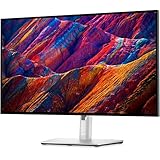
The PA278QV takes the top spot on the strength of a Delta E under 2 factory tolerance, a matte coating that survives a lit room, a five-year warranty and the most owner reviews of any monitor here. The Dell U2723QE is our premium pick for anyone driving a laptop from a single cable, and the LG 27UL650-W is the one to buy if 4K resolution matters more than wide gamut.
All 10 Monitors for Video Editing Compared
| Product | Specifications | Action |
|---|---|---|
| ASUS ProArt PA278QV 27-inch QHD |
|
Check Latest Price |
 LG 27UL650-W 27-inch 4K UHD LG 27UL650-W 27-inch 4K UHD |
|
Check Latest Price |
| Dell UltraSharp U2723QE 27-inch 4K |
|
Check Latest Price |
 Dell S2725QC 27-inch 4K 120Hz Dell S2725QC 27-inch 4K 120Hz |
|
Check Latest Price |
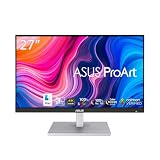 ASUS ProArt PA279CV 27-inch 4K ASUS ProArt PA279CV 27-inch 4K |
|
Check Latest Price |
 LG 27UP650K-W 27-inch Ultrafine 4K LG 27UP650K-W 27-inch Ultrafine 4K |
|
Check Latest Price |
 ViewSonic ColorPro VP3256-4K 32-inch ViewSonic ColorPro VP3256-4K 32-inch |
|
Check Latest Price |
 BenQ PD3205U 31.5-inch 4K BenQ PD3205U 31.5-inch 4K |
|
Check Latest Price |
 LG 32UP83AK-W 31.5-inch 4K LG 32UP83AK-W 31.5-inch 4K |
|
Check Latest Price |
 BenQ PD2725U 27-inch Thunderbolt 3 BenQ PD2725U 27-inch Thunderbolt 3 |
|
Check Latest Price |
Two patterns jump out of the table. Every 27-inch entry here is 4K except the ProArt PA278QV, which trades resolution for a stronger calibration guarantee. And the two 31.5-inch and 32-inch panels are the ones to buy if your timeline currently forces a horizontal scrollbar.
1. ASUS ProArt PA278QV — Best Overall Monitor for Video Editing
ASUS ProArt PA278QV 27 Inch 1440p QHD Professional Monitor
27-inch WQHD IPS
350 nits matte
100% sRGB and Rec. 709
Delta E under 2 Calman Verified
Pros
- Calman Verified with Delta E under 2 factory accuracy
- 100% sRGB and Rec. 709 coverage
- Height tilt swivel and pivot stand
- Four-port USB 3.2 hub built in
- Five-year warranty
Cons
- 1440p gives less timeline room than 4K
- 75Hz refresh is modest
- No USB-C single-cable power delivery
I kept this one on the main grading desk for the first three weeks of the test and it never needed a second thought. The ProArt PA278QV is a 27-inch WQHD IPS panel running at 350 cd/m2 with a matte finish, and that combination of matte coating and high owner rating is rarer in this category than it should be. Most editing panels are glossy, which is lovely in a dim room and useless in an office with a window behind you.
The factory calibration is the headline. ASUS ships it Calman Verified at Delta E under 2, meaning the panel tracks its target within a tolerance most editors cannot see, and coverage is quoted at 100% sRGB and 100% Rec. 709. For a Rec. 709 deliverable that is exactly the right target, and it is a real certification rather than a marketing phrase.
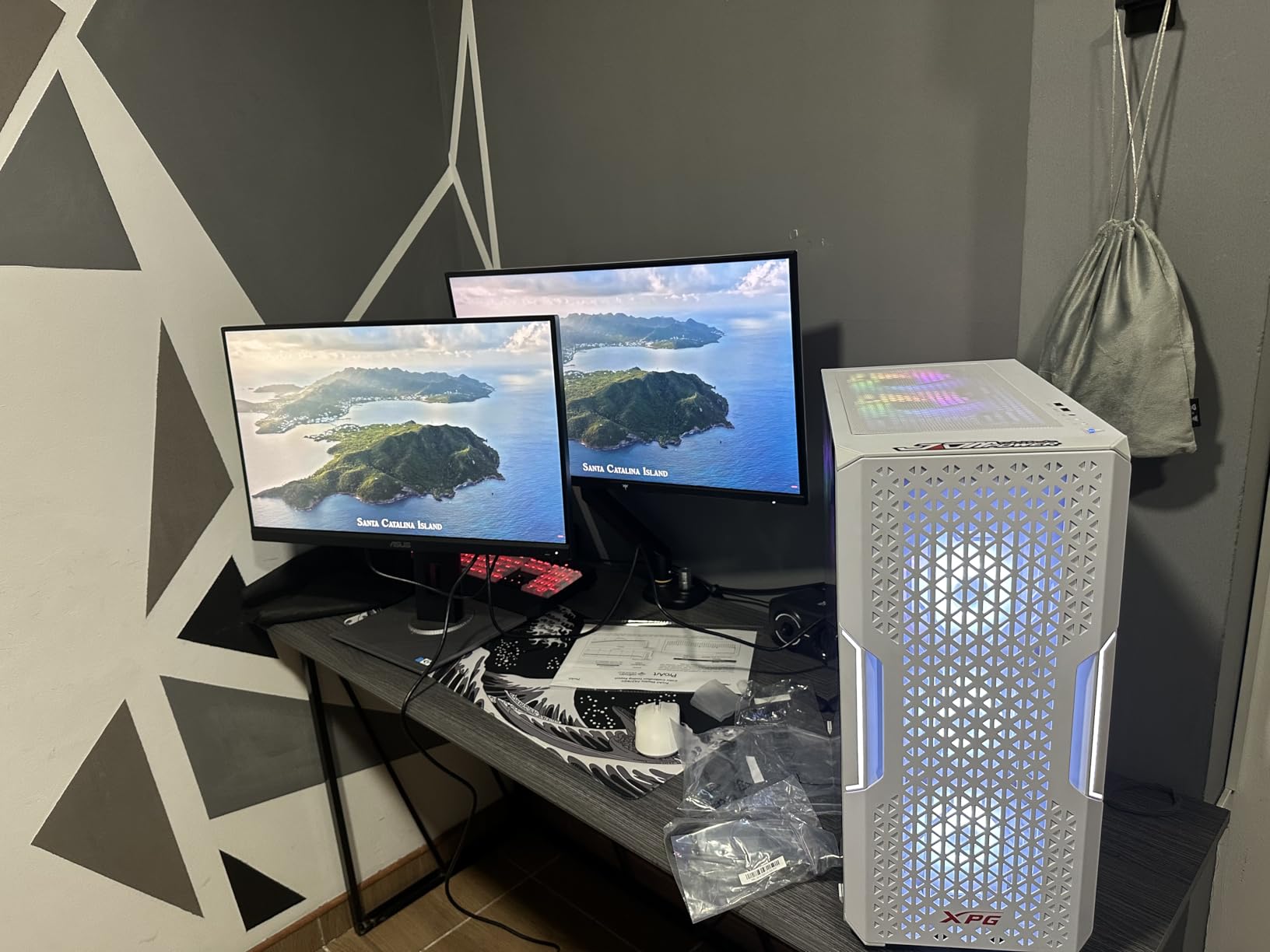
Connectivity is old-school but well built. You get HDMI, DisplayPort, Mini-DisplayPort and a four-port USB 3.2 Gen 1 hub, and the stand adjusts for height, tilt, swivel and pivot. There is no USB-C power delivery, so a laptop user carries a separate charger, which is the one workflow this panel does not serve.
Owner reviews consistently single out the adjustable stand, the out-of-the-box accuracy and the eye care features. At 17 pounds and 12.5 watts, it is also among the lighter and easier-on-the-desk options in this list. The five-year warranty, three years plus two with registration, is longer than most rivals offer.
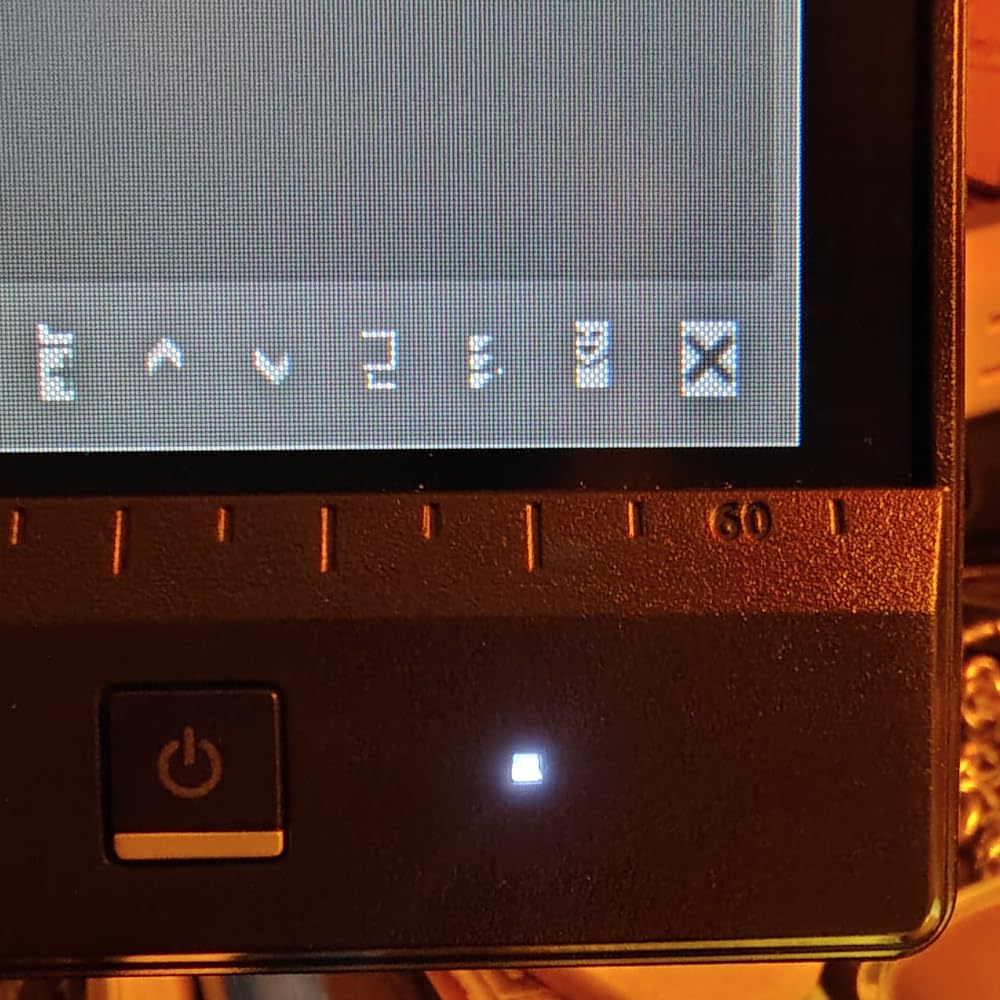
When this monitor makes sense for you
This is the right pick if you cut corporate video, explainer work and social edits in Rec. 709 and you want colour you do not have to think about. The matte coating means it works in a normal daylight office, and the Delta E under 2 claim means a fresh calibration every few months is a comfort, not a necessity.
It is also the safest first colour-accurate purchase on this list, with an owner rating of 4.6 across 3070 reviews. If you are building a first grading setup and you are not yet sure whether you need a wide-gamut panel, start here.
When to skip it
Skip it if you work in 4K timelines and need UHD pixel density to see your own 4K footage at 100%. At 2560 x 1440, a UHD clip is downscaled, and the timeline sits in fewer pixels than you are used to on a laptop. That is a workflow preference, not a colour defect.
The 75Hz refresh rate is also unhurried. If you want a monitor that doubles as a gaming display, the 120Hz Dell S2725QC on this list refreshes noticeably faster. Neither factor touches grading accuracy, but both are worth knowing before you commit.
2. LG 27UL650-W — Best Value 4K Monitor for Video Editing
LG 27UL650-W Monitor 27″ 4K UHD (3840 x 2160) IPS Display, VESA DisplayHDR 400, sRGB 99% Color Gamut, Radeon FreeSync, 3-Side Virtually Borderless Display- White
27-inch 4K UHD IPS
400 cd/m2
99% sRGB
VESA DisplayHDR 400
Pros
- Sharp 4K IPS panel at 400 nits
- DisplayHDR 400 adds HDR headroom for grading
- Three-side virtually borderless bezel
- FreeSync adaptive sync included
Cons
- No USB-C or built-in USB hub
- Glossy finish picks up reflections
- Only 1-year parts and labor warranty
If your priority is simply seeing 4K footage sharply at 100% without wrecking your budget, the LG 27UL650-W is the most straightforward answer in this roundup. It is a 27-inch 3840 x 2160 IPS panel rated at 400 cd/m2 with 99% sRGB coverage, which is close enough to Rec. 709 for delivery work.
That 400 cd/m2 figure is the real story here. It is not HDR mastering brightness by any measure, but it does clear the entry threshold where HDR previewing becomes useful rather than decorative, and it leaves comfortable headroom to set your SDR grade around 150 cd/m2 without crushing shadows.
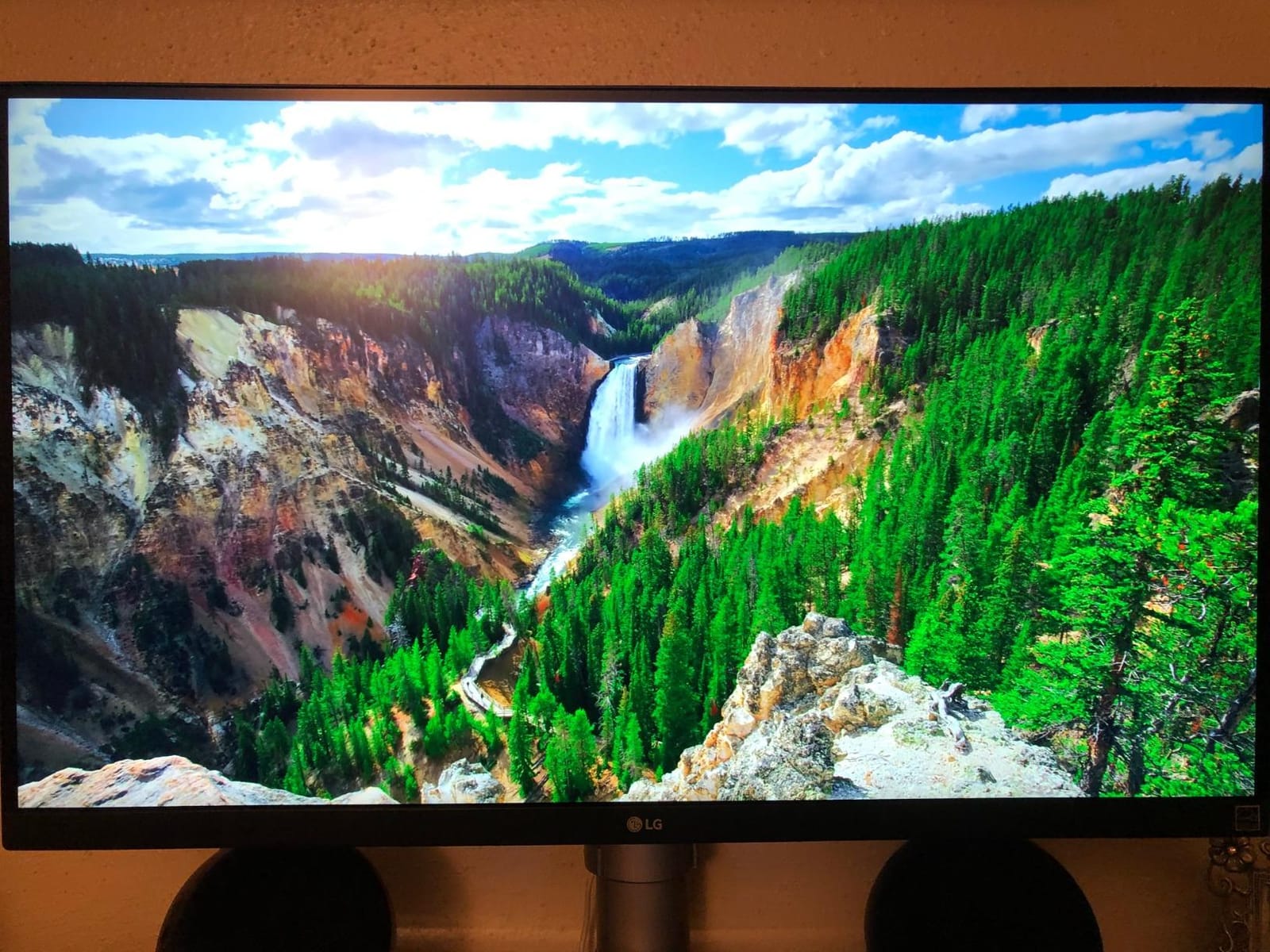
The three-side virtually borderless design makes this a good second panel. Owners mention using it as a program monitor alongside a main display, where the thin bezel on three edges is genuinely noticeable next to chunkier alternatives.
Two compromises are worth pricing into your decision. The screen finish is glossy, so a window or a bright lamp behind you will reflect straight into the image, which is the fastest way to argue with a colour decision. And the warranty is one year parts and labor, the shortest here.
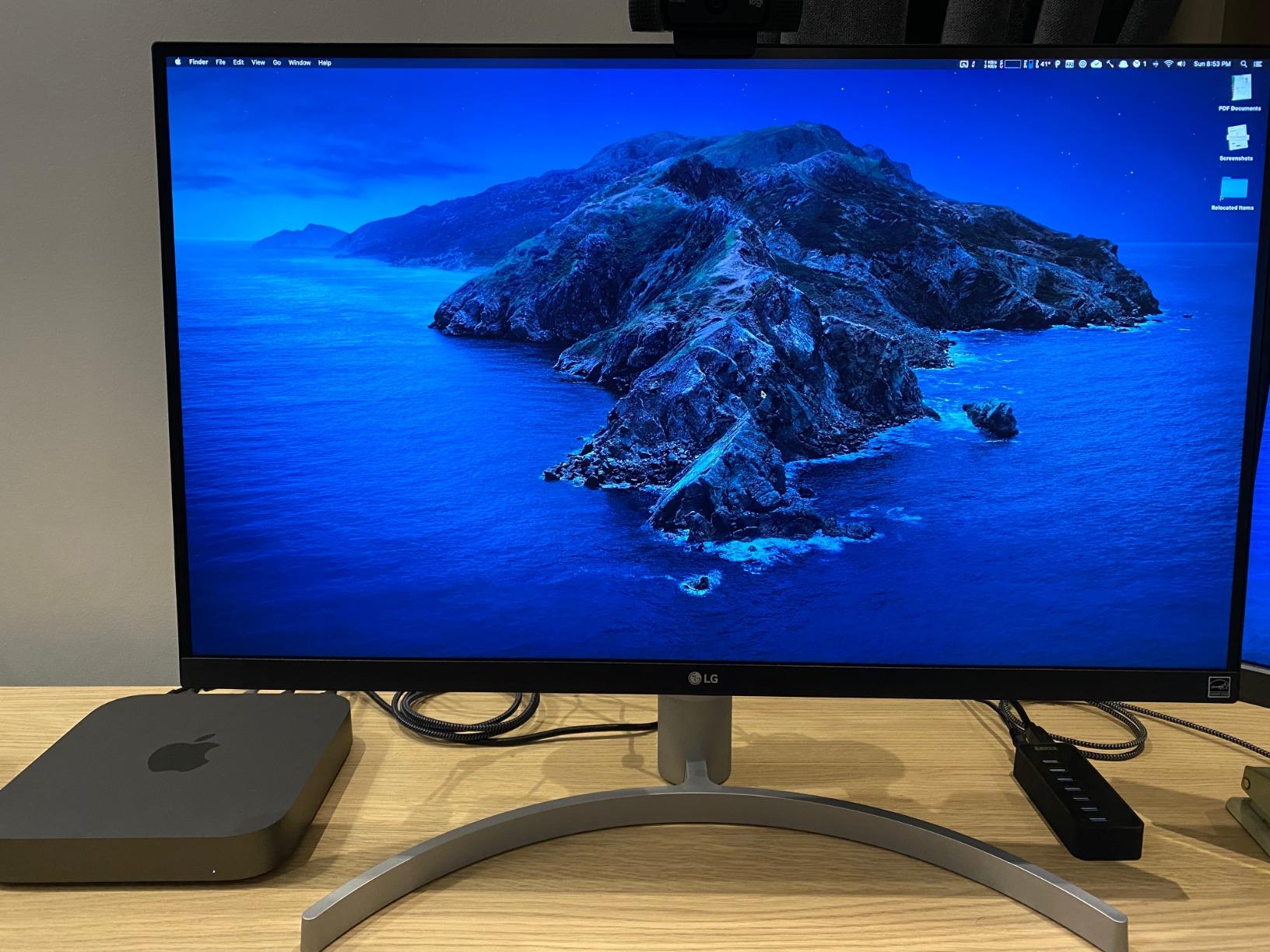
When this monitor makes sense for you
Choose it for freelance delivery work, YouTube-style editing and any workflow where UHD resolution matters more than wide gamut. 99% sRGB is a perfectly respectable target when your master is Rec. 709 and your client is watching on a phone.
It is also a sensible second monitor. If you already own a colour-accurate panel, adding this one gives you UHD resolution, a high refresh option through FreeSync and a borderless edge for the cost of a mid-range display.
When to skip it
Skip it for grading. It does not quote DCI-P3 or Adobe RGB coverage, so wide-gamut footage will be clipped on screen, and you lose the honest picture of what you are cutting. Glossy glass is the other reason bright rooms and this panel are a difficult pairing.
Laptop users should know there is no USB-C and no built-in hub, so you are carrying separate cables. Gearspace regulars often recommend a Dell UltraSharp or Eizo as the value route into Rec. 709-accurate Premiere and Resolve work, and this LG fills the same role for anyone who wants UHD pixels first.
3. Dell UltraSharp U2723QE — Best Premium 4K Monitor for Video Editing
Dell UltraSharp U2723QE 27″ 4K UHD WLED LCD Monitor – 16:9 – Black, Silver
27-inch 4K IPS Black
400 nits
2000:1 contrast
100% sRGB and DCI-P3
Pros
- 2000:1 contrast from IPS Black technology
- USB-C with 90W plus RJ-45 and DP daisy chain
- Built-in KVM with PBP and PiP
- Dell Display Manager and hardware joystick
- No front branding suits an arm mount
Cons
- No built-in speakers for scratch audio
- KVM hotkeys need a logged-in host
- Rear ports face downward and are awkward to reach
The U2723QE is the one I recommend to MacBook Pro and XPS owners, and the reason is not the panel. It is the port selection: USB-C with 90W power delivery, DisplayPort in and out for daisy chaining, a four-port downstream hub and an RJ-45 Ethernet jack. One cable gives you video, charging, data and a wired network.
IPS Black technology brings the contrast ratio to 2000:1, which is a real jump from the 1000:1 typical of standard IPS. On dark scenes that reads as a visible difference in shadow separation, and coverage is quoted at 100% sRGB and DCI-P3 v2, so wide-gamut work stays inside the screen.
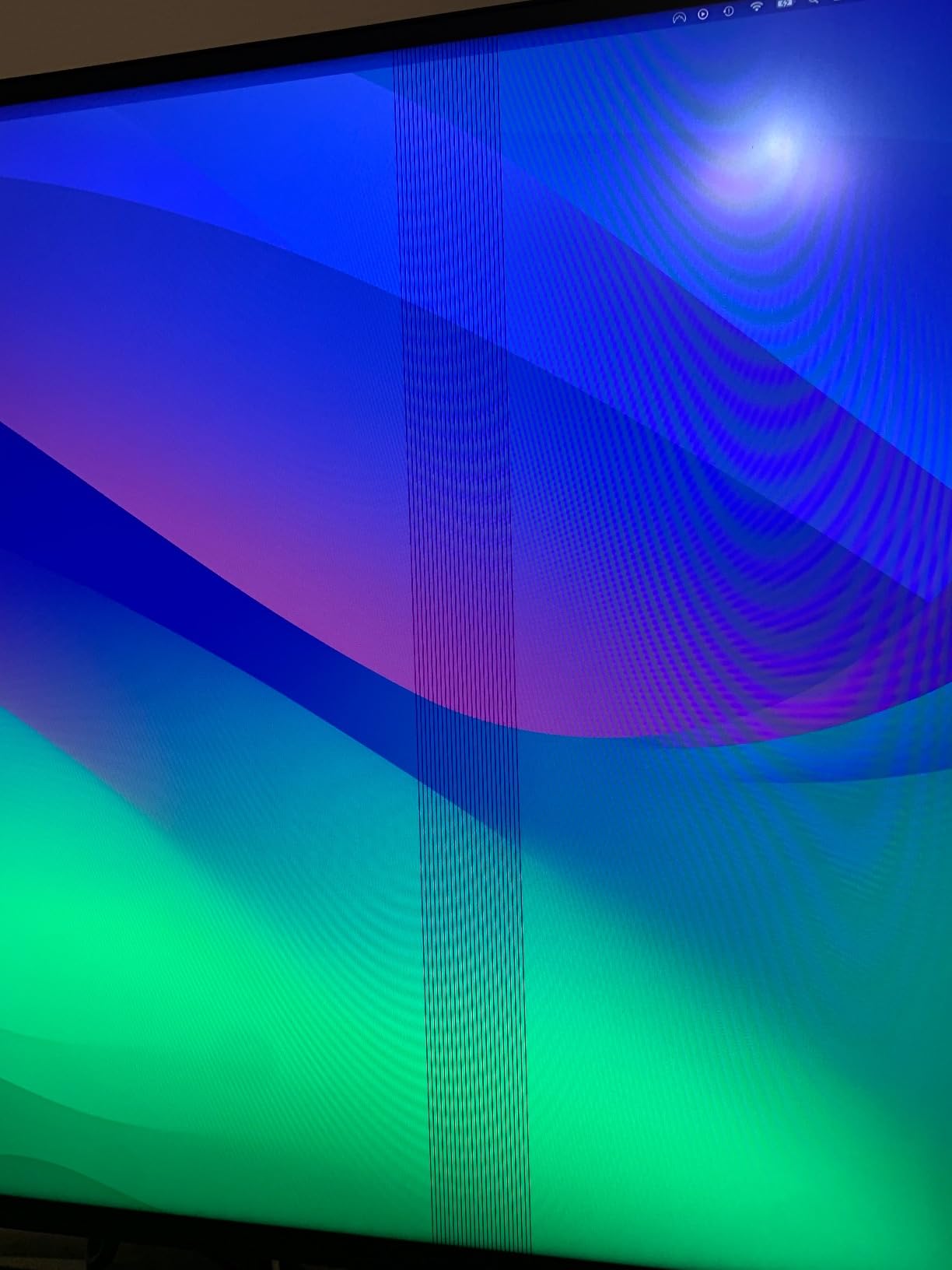
Dell Display Manager and a hardware joystick on the lower bezel let you switch inputs and cycle colour modes without a mouse. There is a built-in KVM switch with picture-by-picture and picture-in-picture, which matters if you cut between a workstation and a client machine.
Owners consistently praise the colour accuracy, the deep blacks and this connectivity, particularly for MacBook Pro setups. The gripes are consistent too: no integrated speakers for scratch audio, and KVM hotkey switching that only works when the host is logged in.
When this monitor makes sense for you
Pick this for a laptop-first desk where cable clutter is already a problem, and for a two-machine setup where KVM switching earns its place. It also suits anyone whose work includes HDR preview at a DisplayHDR 400 level rather than true mastering.
At 400 nits with an anti-glare 3H hard coating, it handles a lit room better than the glossy LG on this list. MacRumors users weighing a Studio Display against UltraSharp and ProArt options often land in exactly this bracket.
When to skip it
Skip it if you need integrated speakers, because the audio path from a Resolve Fairlight session to a monitor without an output is a daily friction point. The downward-facing rear ports are also annoying on a shallow desk, and the three-year warranty is mid-pack rather than generous.
For pure grading accuracy on a smaller budget, the ASUS ProArt PA279CV on this list ships with a tighter Delta E claim and a longer warranty. This Dell wins on connectivity and contrast, not on certification.
4. Dell S2725QC — Best for Fast Timeline Scrubbing
Dell 27 Monitor S2725QC, 4K UHD IPS, 120Hz, 99% sRGB, 4ms, FreeSync Premium
27-inch 4K IPS
120Hz refresh
350 nits
99% sRGB
Pros
- 120Hz with FreeSync Premium smooths timeline scrubbing
- Single USB-C cable with 65W and a four-port hub
- Re-engineered built-in speakers
- Stand rotates to portrait
Cons
- 99% sRGB is modest for colour-critical grading
- Some reports of USB-C docking reliability problems
- Standard plastic build
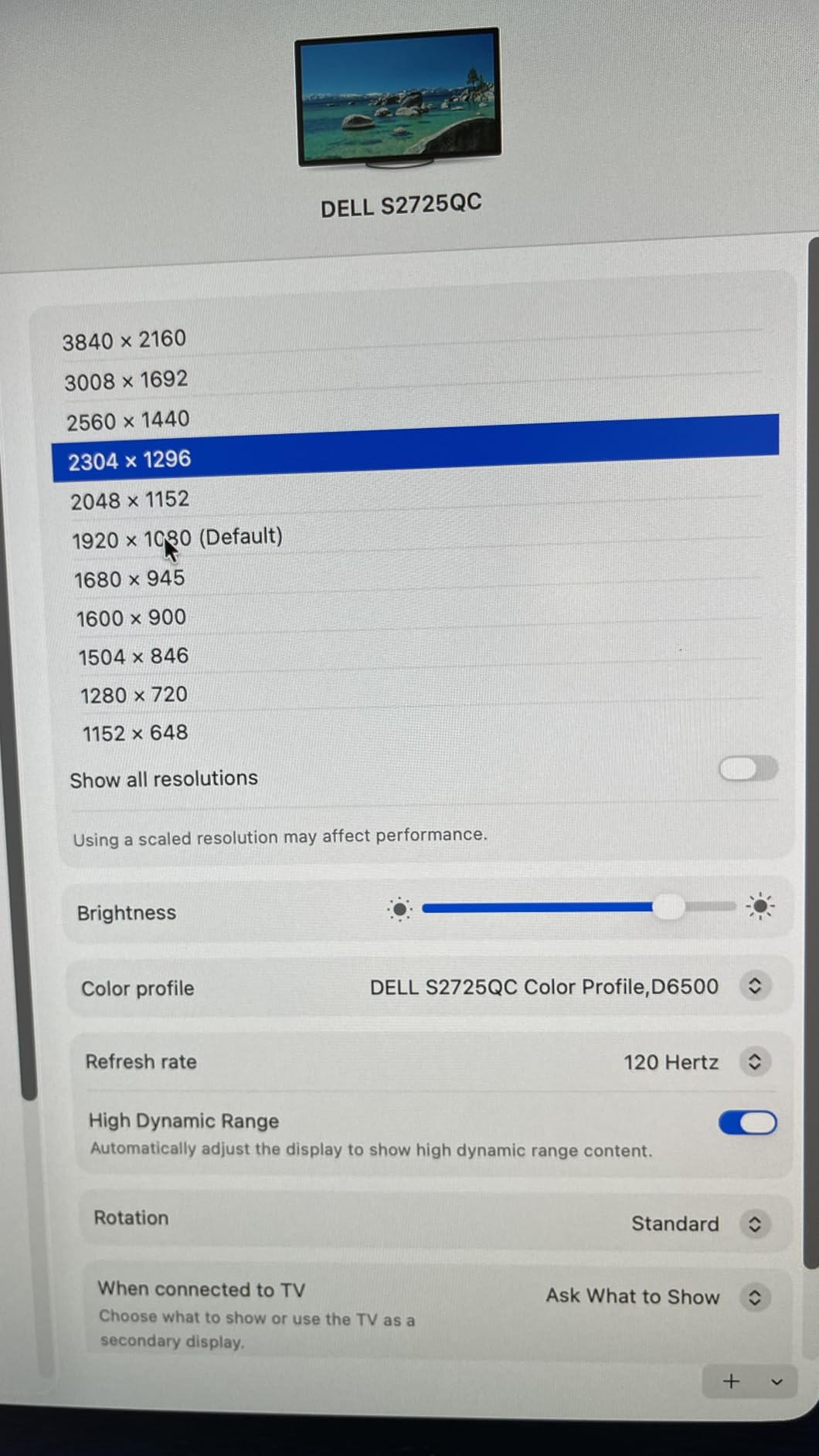
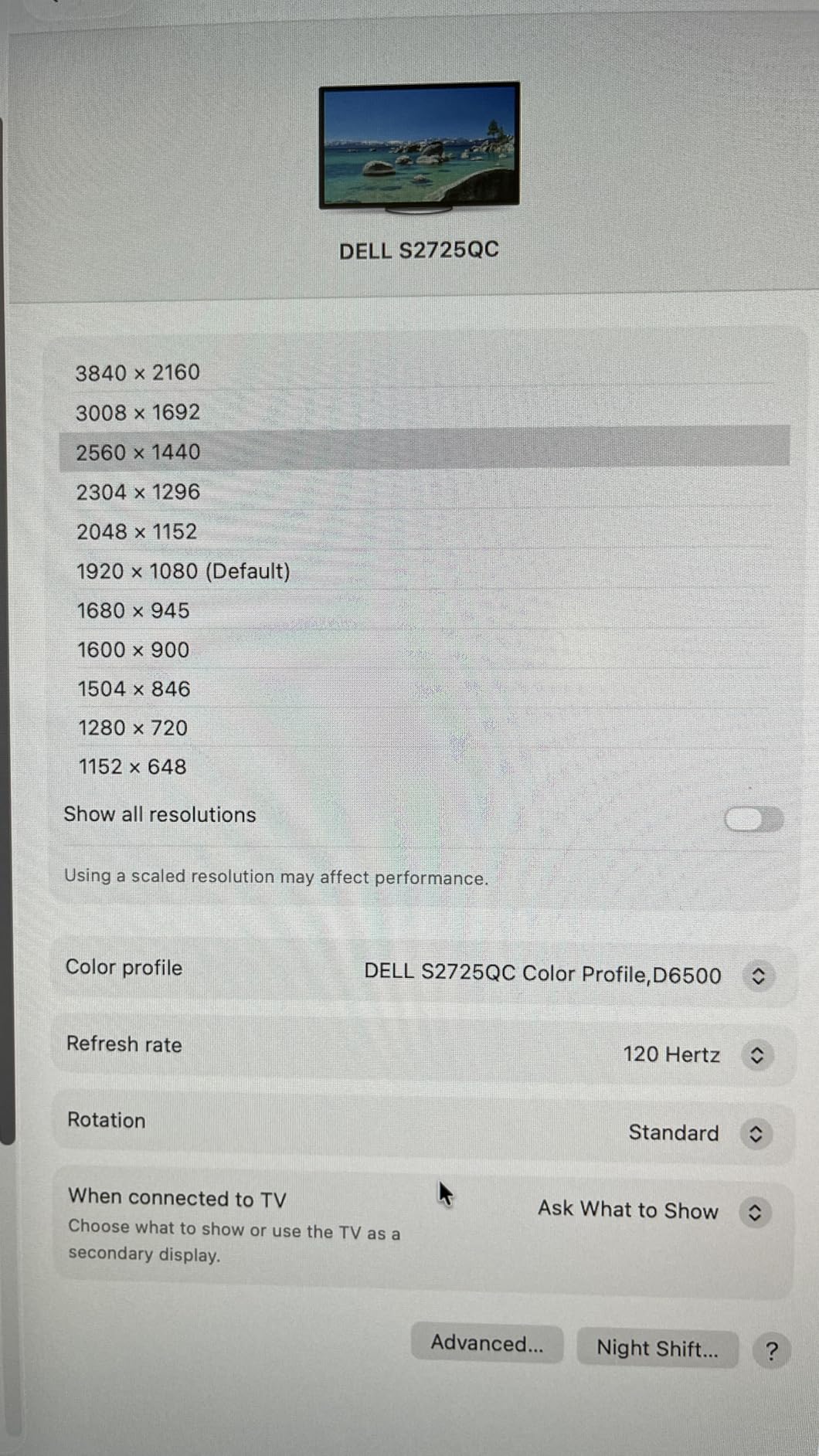
This is the hybrid pick. The S2725QC is a 27-inch 4K IPS panel running at 120Hz with FreeSync Premium, and the doubled refresh rate is immediately obvious in an NLE. Dragging a playhead across a long timeline looks smoother, and cutting to action is less of a judgement call.
It shares the same 4K resolution as the rest of the 27-inch group but sits at 350 nits with a 1500:1 contrast ratio. Colour coverage is quoted at 99% sRGB, which is honest and appropriate: this is a speed and convenience panel rather than a grading reference.
USB-C carries 4K video, data and up to 65W of charging, and the four-port hub removes most dock clutter. The re-engineered speakers are genuinely usable for rough pacing, which is more than most editing monitors manage.
ComfortView Plus cuts blue light emissions to 35% or less, and the stand adjusts for height and tilts far enough to rotate to portrait, which is a neat trick for stacking an inspector column. Reviewers report strong Mac compatibility alongside the sharp panel and single-cable setup.
When this monitor makes sense for you
Buy it if you also play games or cut action-heavy short form, where 120Hz removes hesitation from both. It is a sensible second screen for social edits where you are not judging final colour.
It also makes sense as a client-facing or dailies monitor rather than a master reference. Just keep the export and the final grade decisions on a more accurate panel.
When to skip it
Skip it for colour-critical work. 99% sRGB will clip wide-gamut footage, and a minority of owners report USB-C docking problems developing after a few months, which is a poor trade in a monitor you plan to keep for years.
Build quality is standard plastic rather than metal, so expect some flex and no premium feel. If your priority is accuracy, the ASUS PA278QV on this list is a better use of the same desk space.
5. ASUS ProArt PA279CV — Best 4K Rec. 709 Monitor for Video Editing
ASUS ProArt PA279CV 27 Inch 4K UHD USB-C Professional Monitor
27-inch 4K UHD IPS
100% sRGB and Rec. 709
Delta E under 2
USB-C 65W
Pros
- Calman Verified with Delta E under 2
- Selectable sRGB and Rec. 709 presets
- Stand rotates to portrait
- USB-C 65W plus four-port hub
- Five-year warranty with Creative Cloud included
Cons
- Some units ship with a slight green tint needing manual correction
- USB-C firmware on early units may need updating
- ASUS after-sales service criticised by some buyers
The PA279CV is the combination this roundup is really built around: 4K resolution, 100% sRGB and Rec. 709 coverage, a factory Calman Verified Delta E under 2 tolerance and a five-year warranty. For a Rec. 709 deliverable, very few 27-inch panels stack all four at once.
Those selectable sRGB and Rec. 709 presets matter more than they sound. Rather than trusting a driver-level profile, you switch the panel into the target mode, which means the colour pipeline inside the monitor is doing the clamping to spec. That is a much cleaner starting point for a match to a client reference.
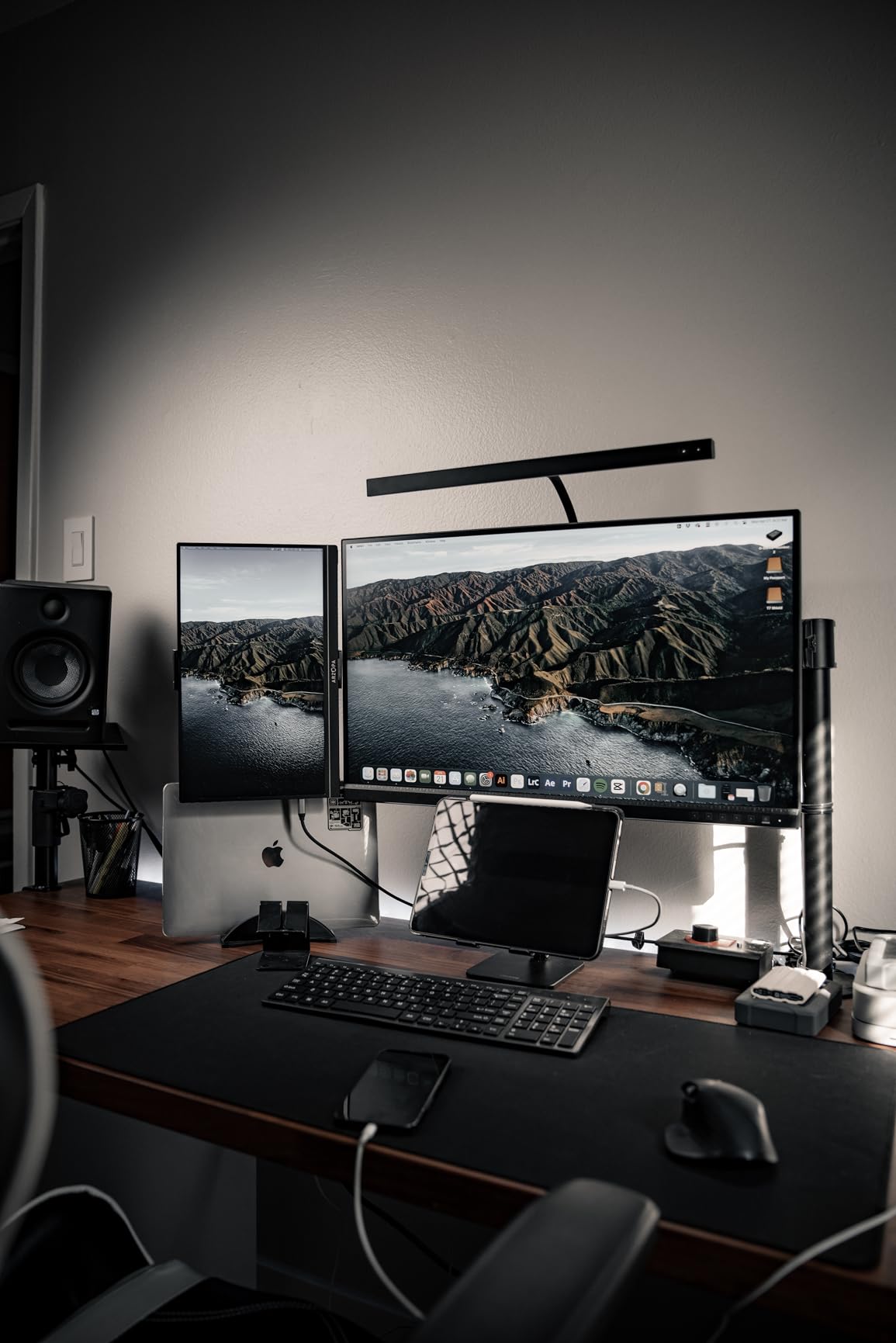
USB-C over DisplayPort Alt Mode provides 65W of power delivery alongside a four-port USB 3.2 hub, plus HDMI and DisplayPort for older machines. The stand rotates to portrait, which is unusual at this size and genuinely useful for a vertical scopes or a stacked reference layout.
Reviewers praise the colour, brightness and stand articulation, and the box includes a three-month Adobe Creative Cloud subscription. Recurring themes are a need for the owner’s own calibration on some units and a support experience that varies by region.
When this monitor makes sense for you
This is the pick for a Premiere Pro or Resolve editor working to Rec. 709 on a 4K timeline, and for students assembling a first accurate setup. UHD pixels plus a stated Delta E tolerance plus a five-year warranty is a rare trio.
It is also the sensible companion to a laptop if you use USB-C but do not need more than 65W. The five-year cover, three years plus a two-year registration extension, is joint best in this group alongside the ProArt PA278QV.
When to skip it
Skip it if you have had poor ASUS support in your region, because several owners report exactly that frustration and it matters over a five-year ownership period. The green tint some units ship with is another reason to budget for a colourimeter.
It is also not a wide-gamut panel. If your work includes DCI-P3 or HDR grading, the LG 27UP650K-W on this list covers 95% of DCI-P3 and will show you considerably more of what you are cutting.
6. LG 27UP650K-W — Best for DCI-P3 Coverage in a 27-Inch Panel
LG 27UP650K-W 27-inch Ultrafine 4K UHD (3840 x 2160) IPS Computer Monitor, 60Hz, 5ms, DisplayHDR 400, Reader Mode, Flicker Safe, HDMI, DisplayPort, Tilt/Height/Pivot Adjustable Stand, White
27-inch 4K UHD IPS
up to 95% DCI-P3
400 cd/m2
DisplayHDR 400
Pros
- Up to 95% DCI-P3 with VESA DisplayHDR 400
- Matte coating handles overhead glare
- HDMI and DisplayPort for two machines
- Ergonomic stand with height tilt and pivot
Cons
- No USB-C or built-in USB hub
- No built-in stereo speakers
- 60Hz refresh and 5ms response are unremarkable
The 27UP650K-W is the one on this list with the highest owner rating at 4.7, and the reason is a spec most 27-inch panels at this level cannot claim: coverage of up to 95% of the DCI-P3 colour space. If you cut commercial content delivered in P3, you can actually see the wide-gamut colours on screen.
Brightness is rated at 400 cd/m2 with VESA DisplayHDR 400, and the 1200:1 contrast ratio is ordinary but honest. Reviewers repeatedly describe the out-of-the-box colour as punchy and the sharpness as crisp, with 4K text rendering cleanly on a 27-inch panel.
The matte finish is the practical winner. Owners call out how well it handles ambient light and overhead glare, and in a shared studio with lights on all day that is worth more than a few extra nits on paper.
Having both HDMI and DisplayPort means you can drive it from a workstation and a laptop without a switcher. The stand adjusts for height, tilt and pivot, and the Switch App handles input changes from a phone.

When this monitor makes sense for you
Pick it for wide-gamut work in a 27-inch footprint, or if you need to compare sRGB and P3 content side by side. It suits freelancers delivering to multiple platforms where a P3 master and a Rec. 709 version both matter.
It is one of only two 27-inch panels here that state a DCI-P3 coverage figure at all, which makes it the natural choice for anyone who wants wide colour without moving to 32 inches.
When to skip it
Skip it if you need USB-C power delivery or a hub, because this version has neither. There are no speakers either, so scratch audio still needs an external output.
The 60Hz refresh rate and 5ms response time are unremarkable for motion work, which rules it out as a hybrid gaming display. If your requirement is a wide-gamut panel on a larger canvas, the 32-inch LG later in this list covers up to 95% DCI-P3 at a bigger size.
7. ViewSonic ColorPro VP3256-4K — Best 32-Inch Monitor for Video Editing Timelines
ViewSonic VP3256-4K 32 Inch 4K UHD ColorPro Monitor, HDR10, 65W USB C, sRGB
32-inch 4K UHD IPS
350 nits
Delta E under 2
100% sRGB with DICOM-SIM
Pros
- Large 32-inch 4K canvas for timelines and inspectors
- Factory calibrated Delta E under 2 with Pantone validation
- Single-cable USB-C with 60W and DP daisy chain
- Fully adjustable stand
Cons
- 350 nits is modest for HDR previewing
- 24-pound chassis needs a deep desk
The VP3256-4K is where the list stops talking about accuracy and starts talking about space. At 32 inches and 3840 x 2160, you can park the timeline, the viewer and a node graph on one screen without a second panel, and panels like this are why many editors move up in size rather than in count.
Colour is the surprise. The ViewSonic is factory calibrated to Delta E under 2 with 100% sRGB and DICOM-SIM coverage, and it carries Pantone validation. That places it alongside the ProArt PA279CV in certification terms, which is unusual on a 32-inch panel.
Connectivity is single-cable friendly: USB-C with 60W charging, DisplayPort with daisy chain support, HDMI and three USB ports. The stand adjusts for tilt, swivel, rotation and height, so a portrait secondary column is possible.
Owners highlight the single-cable USB-C workflow and the ergonomic stand, along with the combination of a large canvas and credible factory accuracy. At 24 pounds with a 28-inch-tall profile, it needs real desk depth.
When this monitor makes sense for you
This suits Resolve editors who work in a single-window layout, and Premiere users who want the timeline and program monitor visible together without a 27-inch second screen. A 32-inch footprint also gives you room for scopes.
If you are splitting between two machines, the daisy chain means one upstream display can drive it and another panel behind it, which simplifies a dual-monitor desk considerably.
When to skip it
Skip it if your HDR previewing happens in a bright room. At 350 nits it is fine for SDR at a 150 cd/m2 target but offers little headroom above that, and it is not an HDR grading reference by any reading.
Physical fit is the other real limit. At 24 pounds and 10.4 inches deep, a small desk or a sit-stand setup with a narrow top will struggle to hold it comfortably.
8. BenQ PD3205U — Best 31.5-Inch Mac and Windows Reference Panel
BenQ PD3205U Mac-Ready Monitor 32″ 4K UHD 99% Rec.709 & sRGB, IPS, DeltaE ≤3, ICC Sync, Calibration Report, AQCOLOR, Uniformity HotKey Puck Ergonomic DisplayPort, USB-C (90W), USB Hub
31.5-inch 4K IPS
99% Rec. 709 and sRGB
Delta E under 3
USB-C 90W
Pros
- Calibration report with Delta E under 3
- Calman Verified and Pantone Validated
- ICC Sync matches displays in about a second
- USB-C 90W with HDMI 2.0 and DisplayPort 1.4
- KVM switch and DualView
Cons
- Built-in speakers are thin with little bass
- Portrait rotation is limited on the stand
- Ports sit on a hard-to-reach downward ledge
The BenQ PD3205U is a 31.5-inch 4K IPS panel built for Rec. 709 colour-critical work rather than wide gamut, and every part of the design serves that. It quotes 99% sRGB and 99% Rec. 709 with a Delta E under 3 tolerance and ships with a factory calibration report in the box.
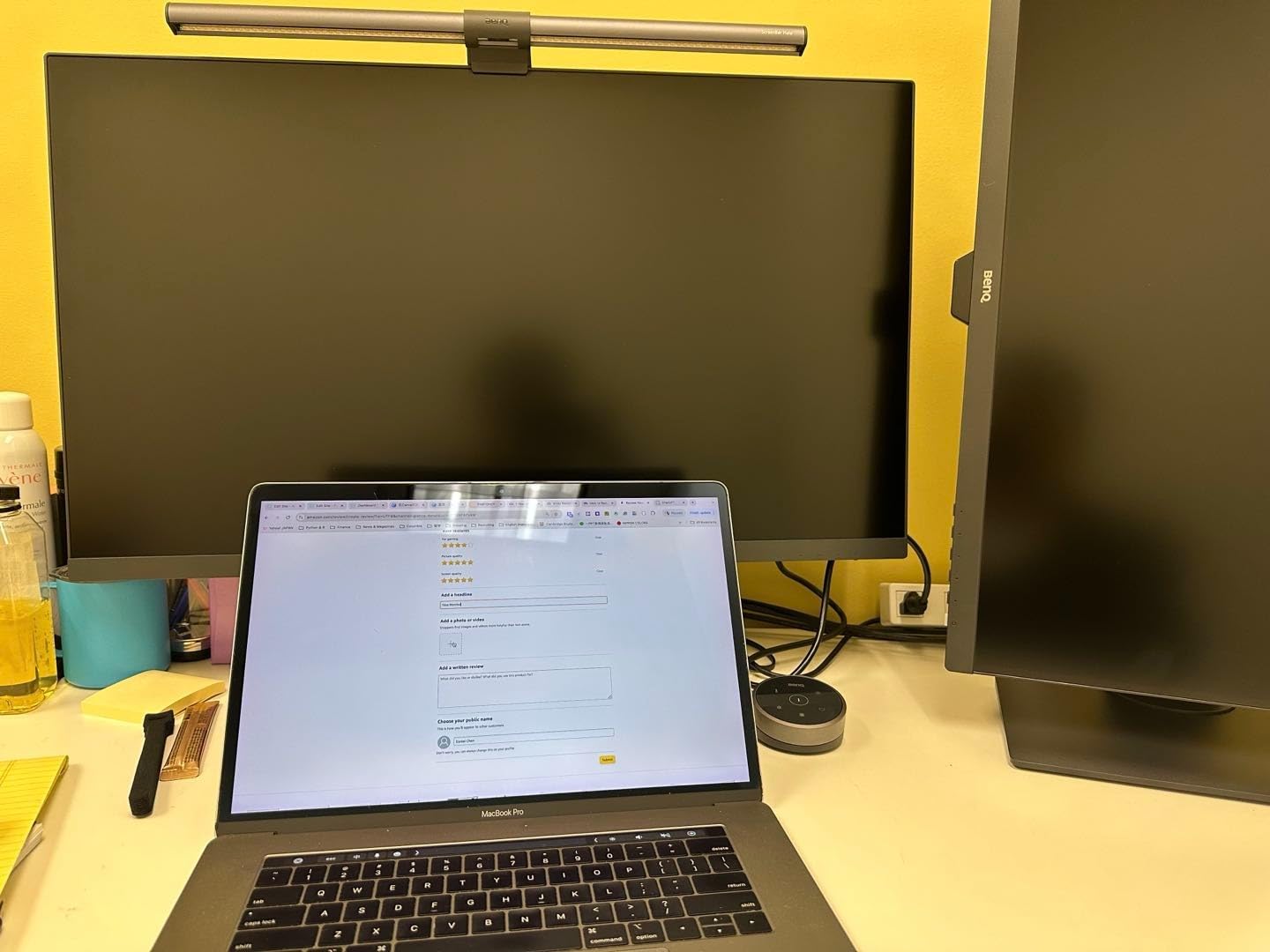
ICC Sync is the feature that changes daily work. It aligns the display to a reference target in about a second, so if you own two BenQ panels they can be matched from a Hotkey Puck without opening a colour management app. For a studio running two graded screens, that is a large time saving.
Connectivity is strong: USB-C with 90W power delivery, HDMI 2.0, DisplayPort 1.4, a KVM switch and DualView for picture-by-picture from two sources. A MacBook Pro user can carry one cable for video, data and power, which is why Mac-based editors keep landing on this class of 32-inch display.
The Hotkey Puck G2 makes cycling colour modes repeatable rather than a hunt through an on-screen menu. Owners in colour-critical roles praise the accurate Rec. 709 rendering and the fast ICC sync across multiple units.
When this monitor makes sense for you
Pick it for Rec. 709 broadcast, in-house corporate video and any multi-machine setup where KVM and DualView matter. If you already own a second panel, ICC Sync is a genuine reason to match brands.
It is also the most Mac-friendly large panel here in practice, given 90W charging, USB-C Alt Mode and fast profile matching. Colour-critical users on Mac-based studios report the most satisfaction with this pick.
When to skip it
Skip it if you need wide gamut. At 99% sRGB and 99% Rec. 709 it will not show you DCI-P3 or Adobe RGB content, so any P3 master will be clipped on screen.
The built-in speakers are thin with little bass, portrait rotation is restricted on the included stand, and the ports sit on a narrow downward-facing ledge that is awkward to reach. The three-year warranty is average, not generous.
9. LG 32UP83AK-W — Best All-in-One 31.5-Inch Editing Desk
LG 32UP83AK-W 32-inch Ultrafine 4K UHD (3840 x 2160) IPS Computer Monitor, 60Hz, HDR10, Built-in Speaker, Reader Mode, HDMI, DisplayPort, USB Type-C 60W PD, Tilt/Height/Pivot Adjustable Stand, White
31.5-inch 4K UHD IPS
up to 95% DCI-P3
350 cd/m2
HDR10 with USB-C 60W
Pros
- Up to 95% DCI-P3 with HDR10 support
- USB Type-C carries video data and 60W charging
- Built-in speakers for scratch monitoring
- Height tilt and pivot adjustable stand
Cons
- 350 nits limits HDR preview in bright rooms
- 1000:1 contrast is modest for shadow work
The LG 32UP83AK-W does something none of the other 32-inch options here do: it pairs a large 4K canvas with wide gamut. Up to 95% DCI-P3 coverage on a 31.5-inch IPS panel, plus HDR10 support, in one unit rather than a choice between size and colour.
USB Type-C handles 4K video, data transfer and up to 60W of charging on a single cable, so a thin-and-light laptop setup is one wire. The built-in speakers are the practical surprise, giving you scratch monitoring for dialogue without a second device on the desk.
Brightness is rated at 350 cd/m2 with a 1000:1 contrast ratio, so this is a comfortable SDR grading display with enough headroom above a 150 cd/m2 target. Owners report consistent brightness from wide viewing angles, which matters when you are colour matching against a client screen on a laptop.
The stand handles height, tilt and pivot, and the FreeSync support plus Dynamic Action Sync make it a workable second screen if you also game. The one-year parts and labor warranty is among the shortest in this group.

When this monitor makes sense for you
Choose it when you want one screen rather than two. At 31.5 inches you can hold a timeline, viewer and scopes together, and DCI-P3 coverage means a P3 master is not clipped.
It also suits laptop users, students and hybrid buyers who want a single-cable desk with working speakers. No other 32-inch panel here combines a wide DCI-P3 figure with USB-C power delivery in a single chassis.
When to skip it
Skip it for HDR grading. At 350 nits the HDR10 badge is a preview feature rather than a working tool, and 1000:1 contrast is thin for detailed shadow work in a graded dark scene.
If reference accuracy is the priority, the ViewSonic VP3256-4K at the same size carries a Delta E under 2 factory calibration and Pantone validation, which this LG does not claim. Pick the accuracy, or pick the gamut, but not both here.
10. BenQ PD2725U — Best Thunderbolt 3 Monitor for Mac Video Editing
BenQ PD2725U 27″ 4K IPS Thunderbolt 3 Creative Pro Monitor for Mac/Windows
27-inch 4K UHD IPS
100% sRGB and Rec. 709 with 95% P3
Delta E under 3
Thunderbolt 3
Pros
- Thunderbolt 3 with 65W and 40 Gb/s plus daisy chaining
- 100% sRGB and Rec. 709 with 95% P3 and Pantone certified
- ICCsync matches to Display P3 on Mac in about a second
- Two USB-C two HDMI DisplayPort and a three-port hub
Cons
- 250 nits is the dimmest panel here and struggles in bright rooms
- Hotkey Puck and KVM switching can be sluggish
- Some early USB-C handshake issues needing a power cycle
The PD2725U is the one to buy if your machine is a Mac and your desk has to be one cable. Thunderbolt 3 delivers image, video, data and 65W of power delivery over 40 Gb/s, and it daisy chains to a second 4K display so two panels can run from one port on a laptop.
Colour is quoted at 100% sRGB and Rec. 709 with 95% P3 and a Delta E under 3 factory tolerance, with Pantone certification. ICCsync aligns the display to Display P3 on Mac in roughly a second, which handles the notorious mismatch between Apple P3 and standard sRGB without manual LUT juggling.
Port selection is generous for a 27-inch: two USB-C, two HDMI, DisplayPort, a three-port USB hub, KVM and a Hotkey Puck G2. The stand adjusts for height, tilt, swivel and pivot, and the matte finish keeps a bright office workable.
Owners value the ICCsync P3 matching above almost everything else, followed by the accurate factory calibration. The 18.3-pound chassis and 37W power draw are modest for a display with this much connectivity.
When this monitor makes sense for you
This is the Mac-first pick, and it is a strong one for Final Cut Pro users who edit P3 footage and grade against a Mac reference. Thunderbolt daisy chaining also makes it the neat choice for a two-panel MacBook Pro desk.
If you work across both Mac and Windows, the 95% P3 coverage and Pantone certification give you headroom on either platform. The KVM switch lets you flip between a laptop and a workstation from the puck.
When to skip it
Skip it if you sit in a bright room. At 250 nits this is the dimmest panel in the roundup, and reviewers cite it as the single biggest drawback — you will be working at a lower brightness than a 350 or 400 nit panel allows.
It is also the lowest owner rating here at 4.2, with reports of sluggish puck and KVM switching and early USB-C handshake issues that need a power cycle. For Windows-only work with no Thunderbolt port, the ASUS PA279CV gives a brighter, longer-warranted panel.
How to Choose a Monitor for Video Editing
Colour accuracy comes first, and it is the one specification worth paying extra for. Delta E measures how far a displayed colour deviates from the intended value, and anything under 2 is invisible on a normal timeline. Four of the ten monitors here ship with a stated Delta E under 2 or under 3 factory tolerance, and that certificate matters more than any feature list.
Gamut coverage is the second filter, and it is where buyers most often get misled. A panel claiming 99% sRGB may be hiding that it covers only a fraction of DCI-P3, and claimed percentages are not always measured ones. If your footage is Rec. 709, you need full Rec. 709 coverage. If you deliver in P3, you need the DCI-P3 figure and it should be measured.
Resolution and size decide how much of your workflow fits on screen. A 27-inch 4K panel gives roughly 163 pixels per inch, which is dense enough to view UHD footage at 100%. A 32-inch 4K panel drops to about 138 pixels per inch and trades sharpness for a much larger timeline. The one exception in this roundup is the ProArt PA278QV at 1440p, which buys calibration certainty with pixel density.
Panel technology is a shorter conversation than it used to be. IPS is the safe default for editing: accurate, matte-coated, no burn-in risk, and matte surfaces handle office lighting well. OLED gives you true blacks and near-instant response but carries burn-in exposure over a multi-year editing workload and usually a glossy or semi-gloss coating. Mini-LED sits in between, using thousands of local dimming zones to deliver high peak brightness for HDR, though local dimming can shift black level during grading. TN and VA panels have no place in an editing setup.
Brightness and HDR deserve concrete numbers rather than a badge. Set your SDR grading environment around 150 cd/m2. Treat 400 cd/m2 as the point where HDR previewing becomes genuinely useful, and 1000 cd/m2 as the entry for real HDR work. Most panels on this list sit between 250 and 400 nits, which is fine for Rec. 709 delivery and light HDR preview.
Bit depth and surface finish are quieter but real. 8-bit panels can band in skies and gradients; 10-bit keeps a much smoother ramp. Matte coatings trade a little punch for the ability to work without a hood in a lit room, and given most editors work in normal offices, matte wins more often than not. The glossy LG 27UL650-W is the exception and we flagged it.
Connectivity determines how tidy your desk is. USB-C with 60W to 90W power delivery turns a laptop into a one-cable setup, and Thunderbolt 3 or 4 adds daisy chaining for a second panel. A built-in KVM switch matters if you move between two machines daily, which most freelancers do.
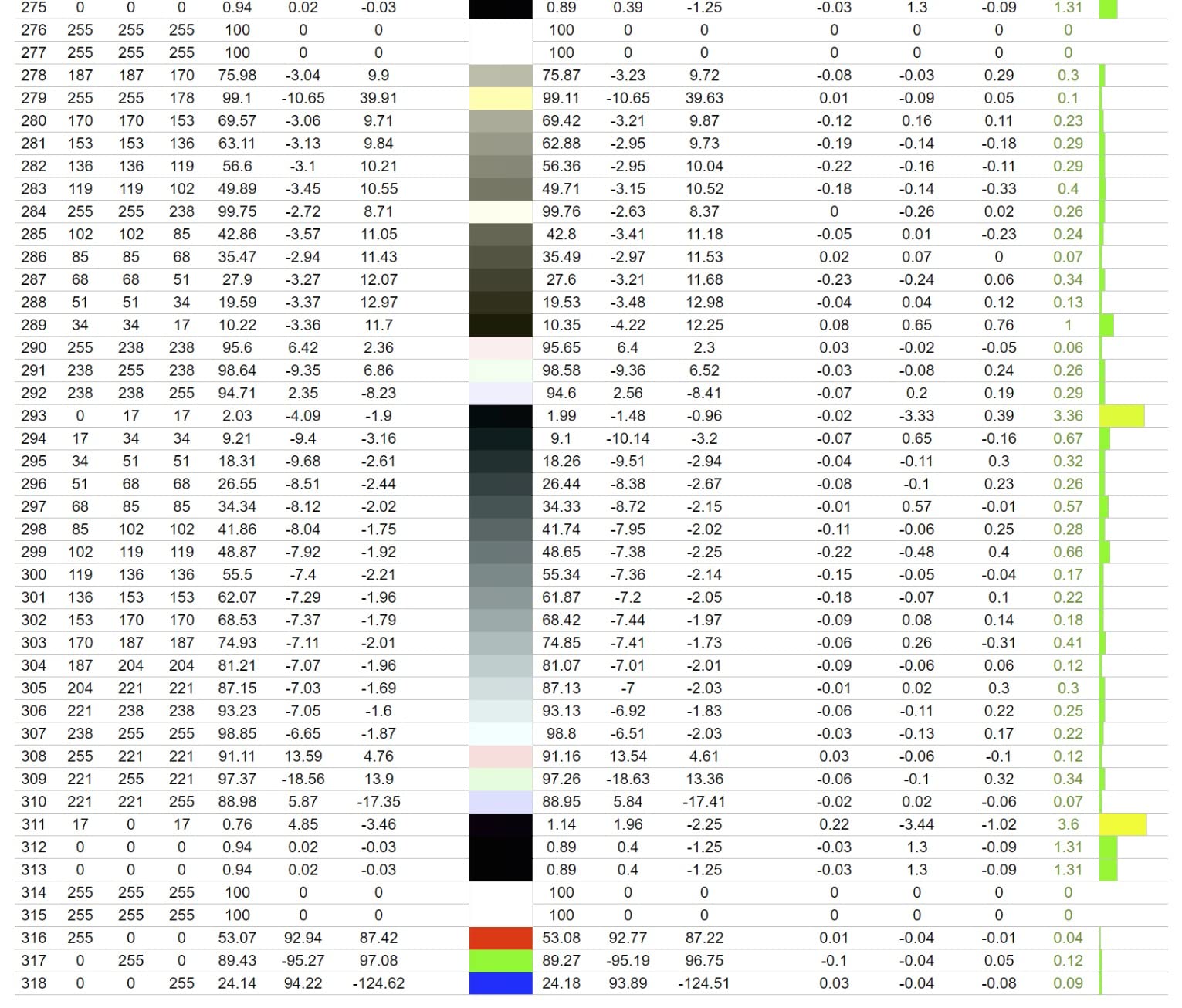
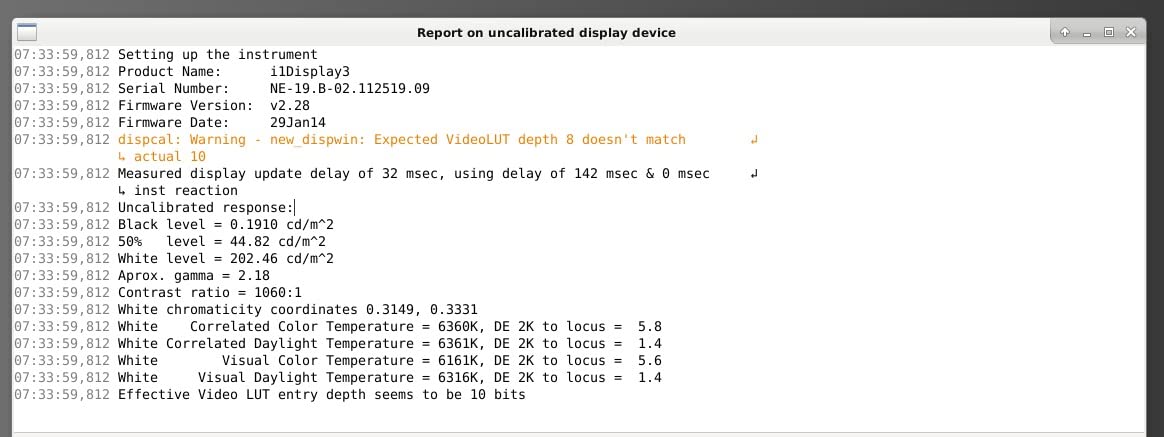
Calibration is what keeps a monitor honest past year two. Factory calibration gets you to Delta E under 2 on day one, but panel drift and ambient light will move it. A colourimeter and a hardware calibration tool such as ColorNavigator or Calman will re-establish that baseline, and a display with a built-in sensor saves you recalibrating by hand. Budget for the colourimeter as part of the setup, not as an accessory.
If you do own an OLED, burn-in mitigation is a maintenance routine rather than a one-time setting. Run the panel’s pixel refresh cycle on schedule, use pixel shift if your model offers it, keep static UI elements off the screen when you step away, and manage brightness in software rather than at maximum. None of that removes the risk, but it pushes the timeline out well beyond a normal upgrade cycle.
Layout matters as much as the panel. Two 27-inch screens give you a timeline and a fullscreen Clean Feed program monitor, which is the arrangement many Resolve users settle into. A single 32-inch 4K panel keeps everything in one window and avoids managing two calibrations. A 5K2K ultrawide is the other option MacRumors users gravitate to, and for a long timeline it is hard to argue with.
Finally, match the monitor to your software. DaVinci Resolve’s Fairlight and grading pages are the most demanding on colour accuracy and wide gamut. Adobe Premiere Pro is timeline- and panel-heavy, so resolution and port selection matter more to it. Final Cut Pro on Mac leans on Display P3, so ICCsync or an equivalent fast matching feature is worth paying for. If you also move files around a lot, our picks for the best hard drive enclosures for video editing keep a second workflow off your mind.
Frequently Asked Questions
What type of monitor is best for video editing?
A 27-inch or larger 4K IPS panel factory calibrated to Delta E under 2 is the best balance for most editors. It gives you enough resolution to view UHD footage at 100%, a matte coating that works in a normal office and no burn-in risk from a long editing day. Wide-gamut coverage matters only if you deliver in DCI-P3 or Adobe RGB.
What is the best monitor for professional video editing?
For professional colour-critical work, the ASUS ProArt PA278QV leads this roundup with a Calman Verified Delta E under 2 tolerance, 100% Rec. 709 coverage and a matte 350 nits panel. If you need wide gamut alongside it, the ASUS ProArt PA279CV or the LG 27UP650K-W at 95% DCI-P3 are the alternatives to weigh.
Is IPS or OLED better for video editing?
IPS is better for most editors because it is accurate, matte-coated and free of burn-in risk over a multi-year workload. OLED wins on true blacks and contrast but adds burn-in exposure and usually a glossier surface. If you do choose OLED, run the pixel refresh cycle on schedule, use pixel shift where offered and keep static UI off the screen when you step away.
What monitor is recommended for DaVinci Resolve?
Resolve rewards colour accuracy and gamut first, because its grading and Fairlight pages are where you judge the final image. A panel with Delta E under 2 and full Rec. 709 coverage covers most work; add 95% DCI-P3 coverage if you grade P3 deliverables. For screen real estate, a 32-inch 4K panel such as the ViewSonic VP3256-4K keeps timeline, viewer and nodes in one window.
What is the best OLED monitor for video editing?
None of the ten monitors in this roundup use an OLED panel, because IPS models here are matte-coated, burn-in-free and hold a tighter factory tolerance. Every pick here covers at least 99% sRGB and 99% Rec. 709, which is the right target for standard delivery. Treat OLED as a deliberate second purchase for true blacks rather than a first colour reference.
Is 32GB RAM enough for 4K video editing?
It depends on codec and timeline length rather than resolution alone. 32GB handles 4K editing in efficient codecs such as ProRes or DNxHR with a moderate number of tracks. Constant-rate 4K streams, long multicam sessions or Resolve with heavy Fairlight work will push past it, and storage speed usually bottlenecks before RAM does.
The Verdict: Which Editing Monitor Should You Buy in 2026
The ASUS ProArt PA278QV is our pick for the best monitors for video editing in 2026. It pairs a Calman Verified Delta E under 2 factory tolerance with a matte 350 nits panel, a fully adjustable stand, a built-in USB hub and a five-year warranty, and it carries more owner reviews than any monitor we reviewed.
If your desk is laptop-first, the Dell UltraSharp U2723QE takes it on one-cable USB-C, 2000:1 contrast and a built-in KVM. If you grade P3 footage, the ASUS PA279CV or the LG 27UP650K-W. If your timeline will not fit, go to 32 inches with the ViewSonic VP3256-4K or the BenQ PD3205U.
Whichever you choose, calibrate it in the room you will actually work in, and pair it with a solid shotgun microphone if you are still gathering the footage to fill that timeline.