
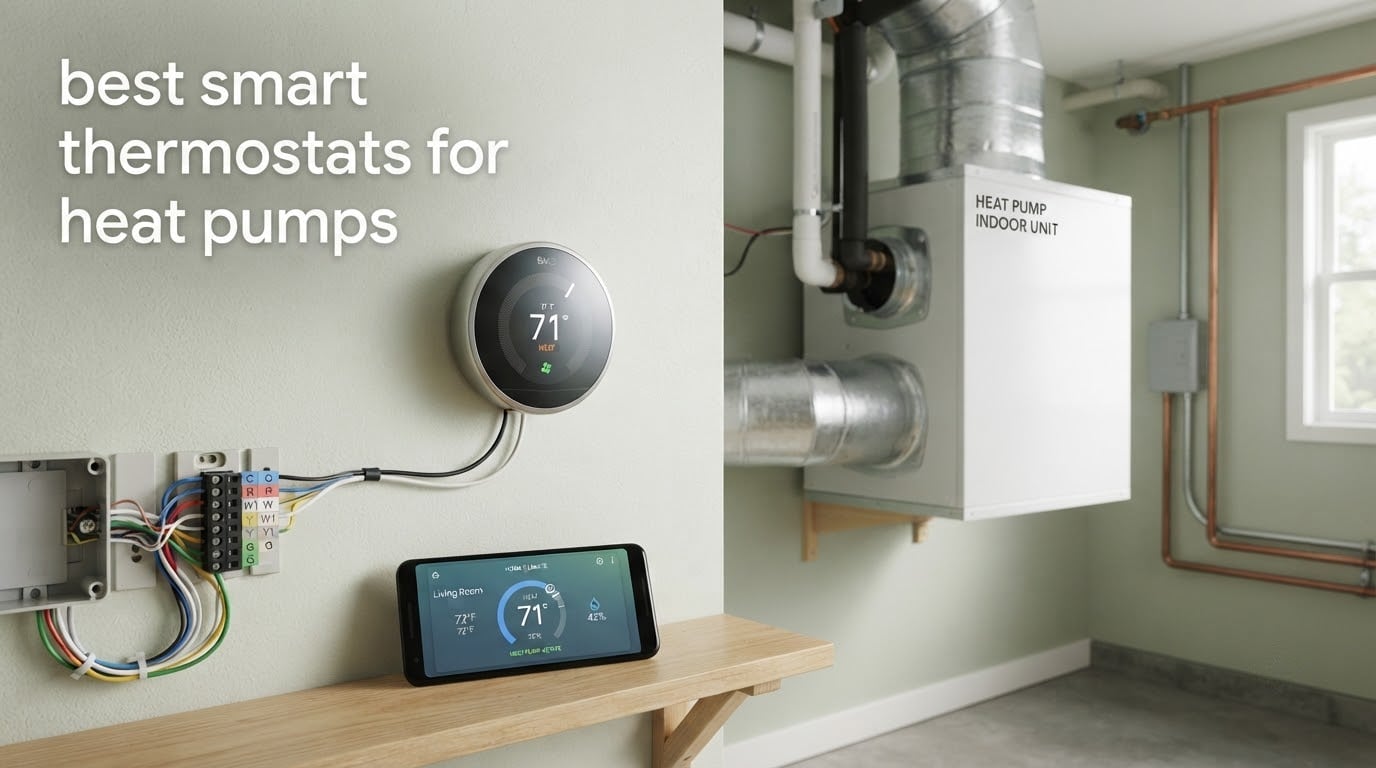
The best smart thermostats for heat pumps are the models that speak heat pump wiring properly. That means handling the O/B reversing valve terminal, stage control, and the auxiliary heat lockout that keeps your backup strips from running every time it gets cold. Buy a cooling-only thermostat and the system will limp along at best, or quietly call for backup heat far more than it should.
Our team worked through ten of the strongest heat pump compatible thermostats on the market, comparing wiring support, stage handling, app quality and C-wire requirements side by side. The short answer: the Sensi Smart Thermostat ST55 wins overall, the Google Nest Thermostat is the easiest install, and the ecobee Smart Thermostat Premium is the one to buy when room-to-room comfort matters more than price. Every pick below is rated for heat pumps in the product specifications, not just in the marketing headline.
One warning before we start. The familiar claim that a smart thermostat works with 85% of HVAC systems without a C-wire carries an explicit heat pump carve-out, because the extra load a heat pump draws usually needs that constant power line. If you have never seen your thermostat wires, check them before you pick anything. We walk through it step by step later in the guide, and it will save you a return shipment.
If you want the wider picture of connected climate gear first, our guide to the best smart thermostats for home covers the general category. This one is narrower and more useful if you own a heat pump.
Table of Contents
Top 3 Smart Thermostats for Heat Pumps in 2026
These three cover the overwhelming majority of heat pump households: a budget-friendly all-rounder, the simplest install, and the most capable sensor-driven option. Our full list of ten follows below.

Sensi Smart Thermostat ST55
- Rated for heat pumps boilers and baseboard heat
- C-wire not required in most applications
- ENERGY STAR certified
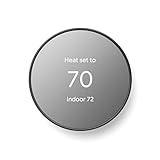
Google Nest Thermostat
- Works with most 24V heat pump systems
- Automatic Eco uses geolocation
- Matter and Google Assistant support

ecobee Smart Thermostat Premium
- SmartSensor included
- Built-in air quality monitor
- Power Extender Kit included
The Best Smart Thermostats for Heat Pumps in 2026
Here is every model we considered in one place, with the heat pump relevant details called out. Use this table to narrow the field, then read the full review for the one or two that survive.
| Product | Specifications | Action |
|---|---|---|
| Sensi Smart Thermostat ST55 |
|
Check Latest Price |
| Google Nest Thermostat |
|
Check Latest Price |
 Honeywell RTH9600WF Smart Color Honeywell RTH9600WF Smart Color |
|
Check Latest Price |
| ecobee Smart Thermostat Premium |
|
Check Latest Price |
 ecobee Smart Thermostat Enhanced ecobee Smart Thermostat Enhanced |
|
Check Latest Price |
 Nest Learning Thermostat 4th gen Nest Learning Thermostat 4th gen |
|
Check Latest Price |
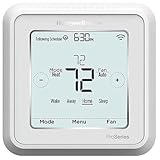 Honeywell Lyric T6 Pro Honeywell Lyric T6 Pro |
|
Check Latest Price |
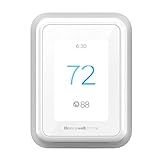 Honeywell T9 WiFi Honeywell T9 WiFi |
|
Check Latest Price |
 Honeywell Vision Pro 8000 Honeywell Vision Pro 8000 |
|
Check Latest Price |
 Sensi Touch 2 ST76 Sensi Touch 2 ST76 |
|
Check Latest Price |
1. Sensi Smart Thermostat ST55 – Best Overall Smart Thermostat for a Heat Pump
Sensi Smart Thermostat, Wi-Fi, DIY, Alexa, Energy Star Certified, ST55
Works with heat pumps, boilers and baseboard heat
ENERGY STAR certified
5 inch display
Three year warranty
Pros
- Works with heat pumps
- furnaces
- boilers and baseboard heat
- C-wire not required in most applications
- ENERGY STAR certified for about 23% HVAC energy savings
- Built-in level on the back plate speeds up DIY install
- Three-year manufacturer warranty
Cons
- High and low temperature alert thresholds are fixed rather than adjustable
- Wi-Fi pairing can fail on the first attempt
- App interface feels dated beside newer competitors
The ST55 is the thermostat we recommend to almost anyone with a ducted heat pump who wants remote control without a contractor visit. It is rated for air conditioners, boilers, furnaces and heat pumps, and it fits in the same wall space as the round Honeywell and White-Rodgers stat most people already have. That footprint matters more than it sounds, because swapping to a thermostat that needs a fresh hole in the drywall is the single most common reason people abandon a swap halfway.
What made this our top pick is the power situation. The ST55 usually installs without a C-wire, which is unusual for a model that handles heat pumps, and it ships with a power-extending arrangement that has been proven on real installs. Buyers consistently report the same experience: pull the old stat, transfer the wires, and follow the app. A level moulded into the back plate is a small thing that tells you the manufacturer thought about people doing this on a ladder.
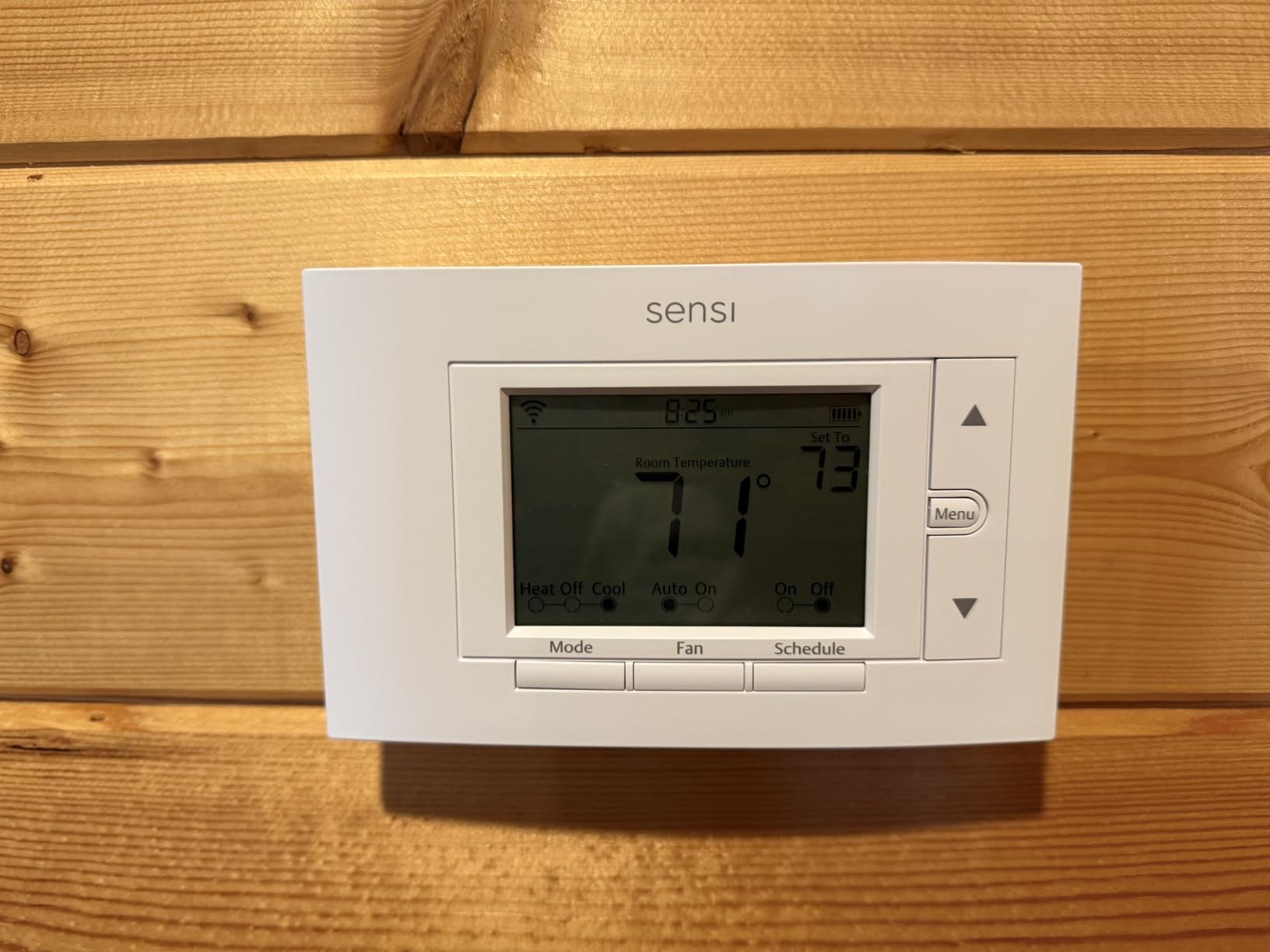
The app is where the ST55 feels like its generation. Scheduling is flexible on a per-day basis and you can copy a day to the rest of the week, which is a real time saver if your household runs a weekday and weekend pattern. Humidity is displayed on the unit itself and in the app, and usage reports, filter reminders and equipment alerts are all there. If you are coming from a plain dial thermostat, none of this is intimidating.
The 5-inch display is larger than the Nest and it shows a target temperature next to the current reading, so nobody has to guess which number matters. Copeland, which manufactures the Sensi line, backs it with a three-year warranty. Measured against the ten models here, that is the longest published warranty alongside the ecobee units, and it is longer than Honeywell’s two-year terms on the T9 and the Vision Pro 8000.
Check this before you buy the ST55
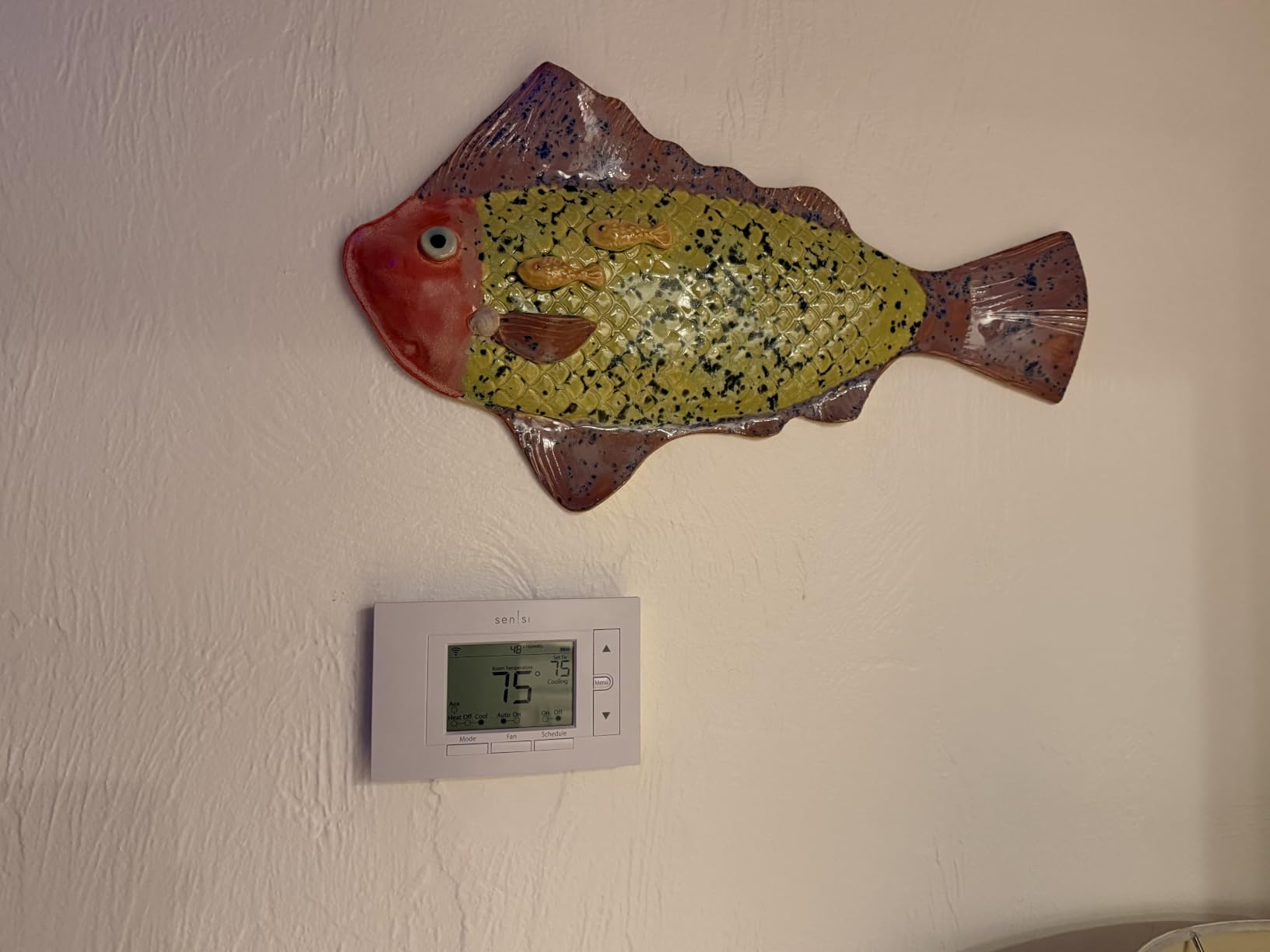
The most common complaint we found in the reviews is not about the thermostat at all, it is about the router. Owners on certain mesh and 5 GHz setups report that the first Wi-Fi pairing attempt fails, and support troubleshooting focuses almost entirely on 2.4 GHz channels and router settings. If your home is a large mesh network, have the 2.4 GHz band ready before you start.
The second limitation worth knowing is that the high and low temperature and humidity alert thresholds are fixed rather than adjustable. For most people that is irrelevant, but if you are monitoring a rental or a cabin at a distance, you cannot tune when you get pinged.
Who the ST55 suits and who should skip it
Choose the ST55 if you want broad equipment compatibility, a painless install and no subscription. It is also the only model in this group that explicitly covers electric baseboard heating alongside heat pumps, which matters in mixed homes where a heat pump handles the main floor and line voltage handles a converted space.
Skip it if you need remote room sensors out of the box, because they are not included and are sold separately. Anyone chasing built-in occupancy sensing or a sensor-driven schedule should look at the ecobee Enhanced, which does that natively for a similar hardware generation.
2. Google Nest Thermostat – Easiest Heat Pump Thermostat to Install
Google Nest Thermostat – Smart Thermostat for Home – Programmable Wifi Thermostat – Charcoal
Works with most 24V heat pump systems
2 inch LCD display
Battery powered
ENERGY STAR certified
Pros
- Works with most 24V heat pump systems
- Battery powered so it keeps its schedule during an outage
- Automatic Eco uses phone geolocation
- Works with Google Assistant and Matter assistants
- ENERGY STAR certified
Cons
- Heat pump setups usually need a C-wire or a power accessory
- No expandable remote temperature sensor support in this generation
- Adding a second household member can force a factory reset
The original Nest Thermostat is still the most widely reviewed smart thermostat in this group, and for a heat pump household the reasons to pick it are straightforward. It is rated specifically for heat pumps, it runs on 24 volts, and it supports both 2.4 GHz and 5 GHz Wi-Fi alongside Bluetooth Low Energy. The ring control means you turn the wall to adjust temperature without opening the app, which is the interaction most people actually use day to day.
Nest Learning builds your schedule by watching when you change the temperature, so the manual setup that other thermostats demand largely disappears after the first week. Eco and Away mode layers phone geolocation on top of the built-in occupancy sensor, and the monthly energy reports give you a real number rather than a vague feeling that things are more efficient.

The honest headline is the 4.1 star average, the lowest of the ten models here, and the reviews show exactly why. Support and installation friction outrank device complaints. Several owners on older two-wire systems needed a power adapter or a technician, and troubleshooting through Google support was frequently frustrating. Documentation in the box is thin, so most of the setup burden lands on the app.
There is one more consideration for heat pump owners specifically. The unit is battery powered, which is great during an outage but means it needs the C-wire for a reliable clock and a screen you can actually read. On heating-only, cooling-only, zone-controlled and heat pump configurations, the guidance is to run a C-wire or a power accessory.

Where the Nest still wins on a heat pump
The Matter support is the quiet advantage. If you are building a smart home around newer platforms rather than a single vendor’s app, this thermostat talks to a much wider range of assistants. It also works with Amazon Alexa and Google Assistant, and the hardware runs on a schedule Google has kept stable for years rather than yearly model churn.
Owners upgrading from a much older system also report the unit fitting neatly over the existing plate, so there is no visible gap around the wall cutout. Combined with a C-wire run, that makes this the tidiest finished job in the group for most homes.
Where it is the wrong call
Skip it if you run a multi-zone system or an energy recovery ventilator and need those extra terminals handled, because this generation offers no expandable remote temperature sensor support at all. It is also not designed for UK or EU heating layouts, where a Heat Link accessory handles the hydronic controls.
And if your household will have more than one person controlling the schedule, be careful. Multiple reviewers describe adding a second user forcing a factory reset, which on a heat pump means a reconfiguration of your stages and lockout settings.
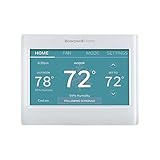
3. Honeywell Home RTH9600WF – Best Heat Pump Thermostat for Clear On-Screen Data
Honeywell Home RTH9600WF Smart Color Thermostat ENERGY STAR Wi-Fi Programmable Touchscreen Alexa Ready – C-Wire Required
Works with heat pumps including electric backup heat
Customizable color touchscreen
C-wire required
Two year warranty
Pros
- Works with heat pumps including electric backup heat
- Customizable color touchscreen with humidity and forecast
- Smart Response learns heating and cooling patterns
- Eligible for utility rebates and efficiency incentives
- Two-year limited warranty
Cons
- C-wire is required or a separate power adapter must be installed
- Not compatible with 120-240V electric baseboard heat
- Heating-only oil furnace systems need a C-wire present
This Honeywell is the most popular of the ten by review volume after the two units above, and it is a genuinely different proposition. The RTH9600WF is a wall-mounted colour touchscreen that shows indoor and outdoor temperature, humidity and a daily forecast on the home screen, and you can pick the display colour to match your wall. For a heat pump household that cares about seeing the outdoor reading next to the indoor one, nothing else here does that as clearly.
Compatibility is explicit rather than aspirational. The published specification covers forced air running on gas, oil or electricity, hot water and steam systems, and heat pumps with electric backup heat. That last phrase is the one to look for, because it means the stage logic for the compressor and the backup strips is handled rather than ignored.
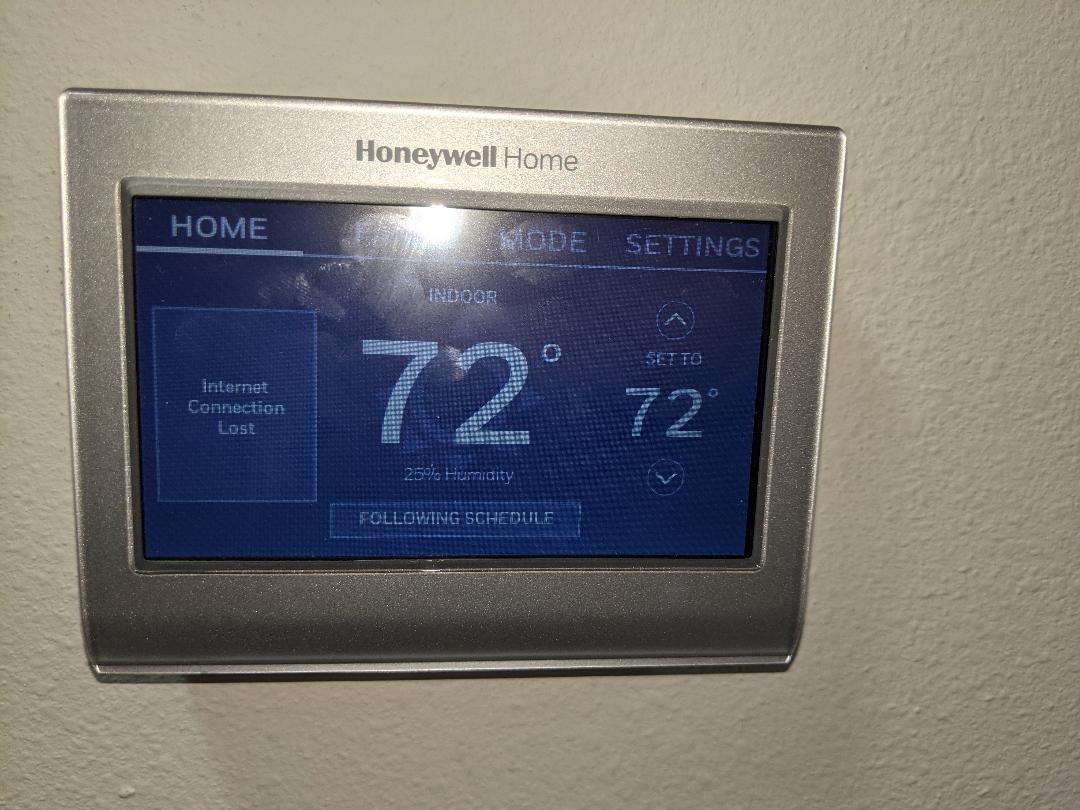
Smart Response is the scheduling engine. It watches how the home responds to a call for heat or cool and shifts the start time so you are comfortable when you wake rather than when the system fires. Reviewers credit the app and the voice integrations, including Amazon Alexa, Google Assistant, Microsoft Cortana and IFTTT, as reliable in day to day use.
There is a money argument too. Because the unit is ENERGY STAR certified, it qualifies for utility rebates and seasonal efficiency rewards through the Honeywell Home account link, and reviewers repeatedly mention that as a factor in the value calculation. Over a ten year thermostat life, rebate money is a real offset.
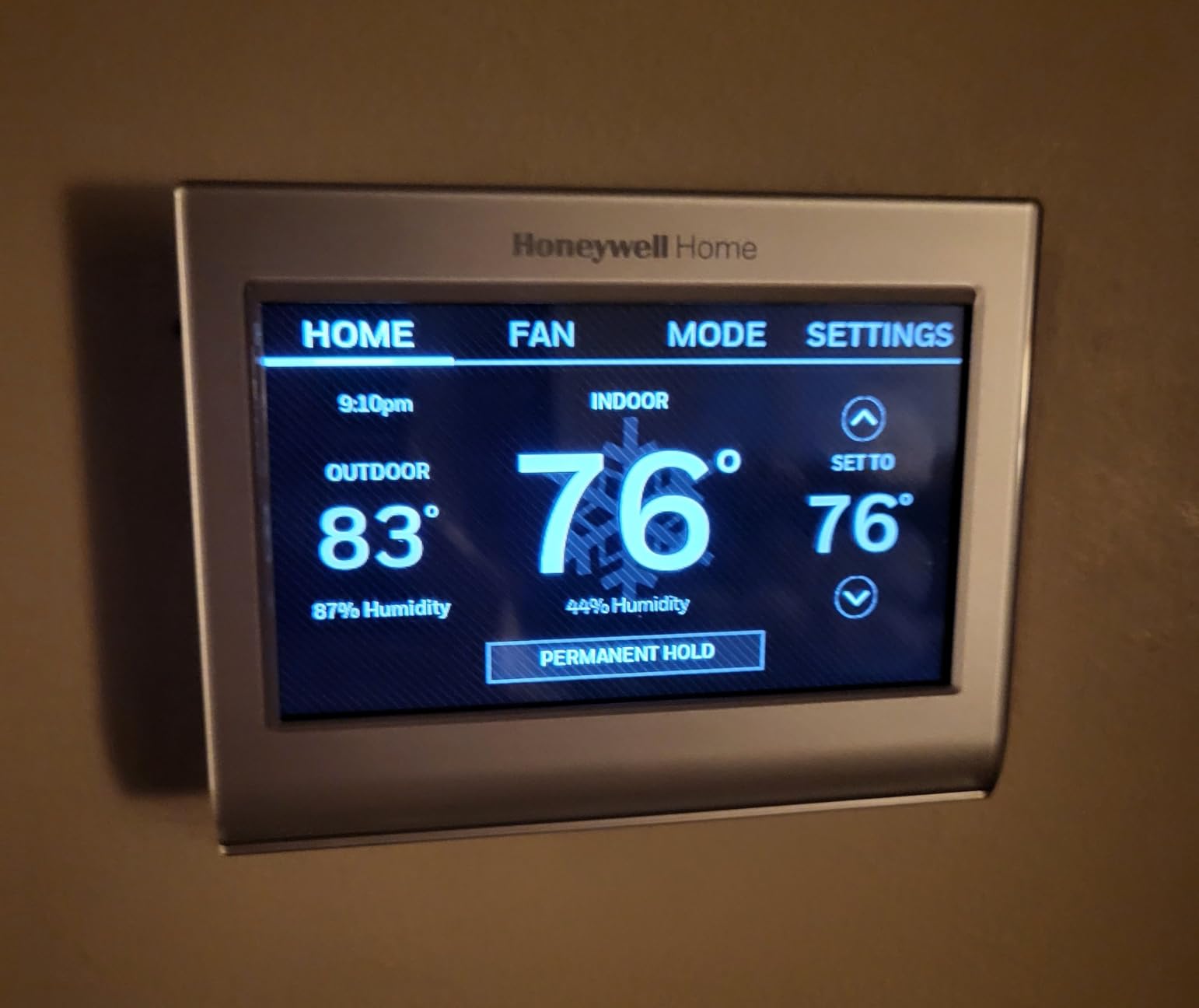
Verify the C-wire before anything else
This is the model in the roundup where the C-wire question decides the outcome. A C-wire is required, or a separate C-wire power adapter has to be installed, and on a heat pump the adapter is a small job for an electrician rather than a weekend DIY task. If your existing wiring has no common wire, budget for that before you commit.
The second hard limit is electric baseboard heat at 120 to 240 volts, which this thermostat does not control. A third limitation affects heating-only oil furnaces, which only work here with a C-wire present. Neither matters for a standard ducted heat pump, but both will disqualify the unit in a mixed system.
Where it fits and where it does not
Pick the RTH9600WF for a ducted heat pump with electric backup heat where you want the data on screen and a rebate-eligible, contractor-familiar unit. It is also a sensible choice if a family member will actually use the thermostat rather than only their phone, because the physical interface is self-explanatory.
Skip it if you need room sensors, since none are supported here, and skip it if you have line voltage baseboard heat in the same home. Anyone with a third stage of heat or a dual-fuel system should read the Vision Pro 8000 review further down, because that model handles the stage counts this one does not.
4. ecobee Smart Thermostat Premium – Best Heat Pump Thermostat for Room Sensors
ecobee Smart Thermostat Premium – WiFi, Siri & Alexa Built-In, Smart Sensor
SmartSensor included
Built-in air quality monitor
Siri or Alexa built in
Compatible with 95% of HVAC systems
Pros
- SmartSensor included to balance hot and cold rooms
- Built-in air quality monitor with filter change reminders
- Siri or Alexa built into the thermostat
- Radar occupancy sensor preheats before you arrive
- Power Extender Kit included for homes without a C-wire
Cons
- Additional SmartSensors and SmartSecurity subscriptions cost extra
- Siri needs an Apple home hub
- Front door features need an ecobee Smart Doorbell Camera
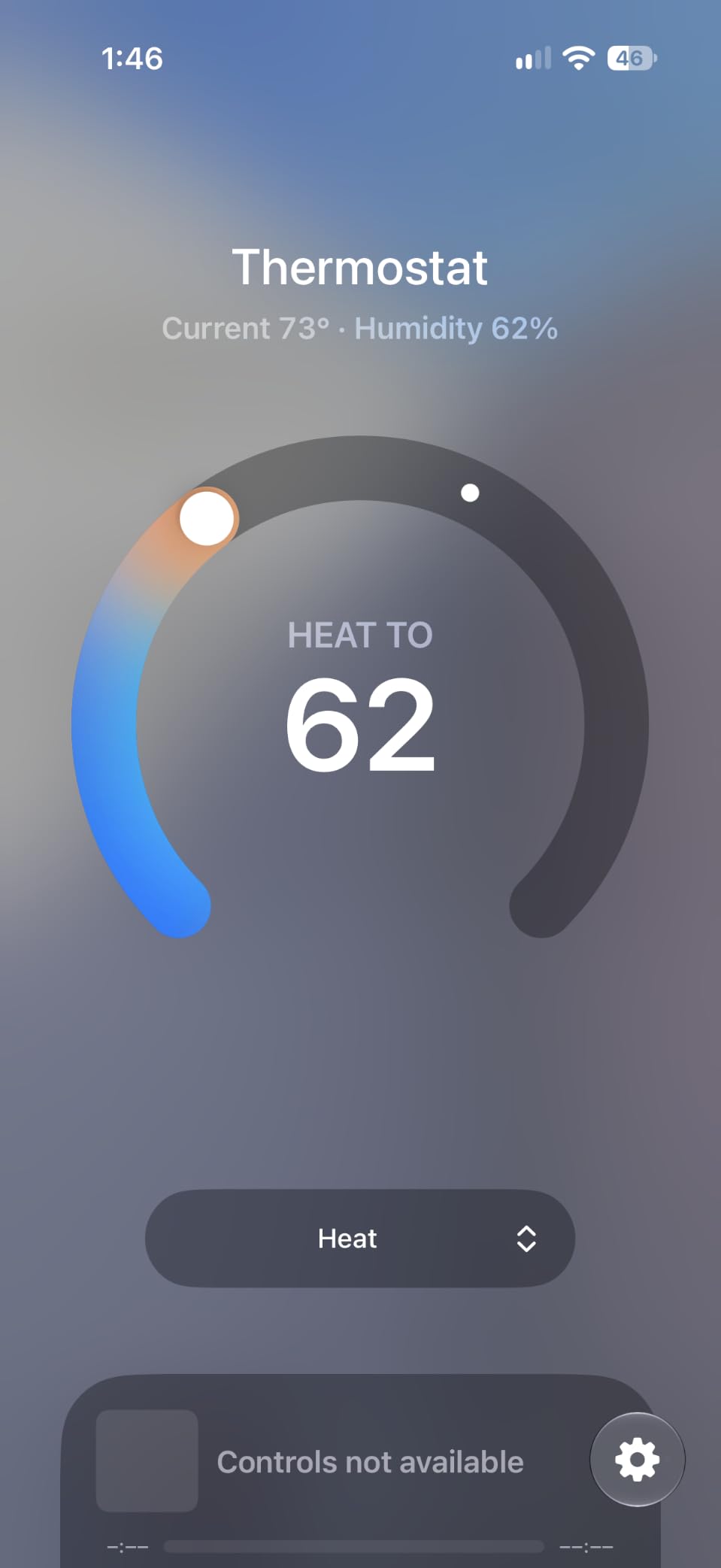
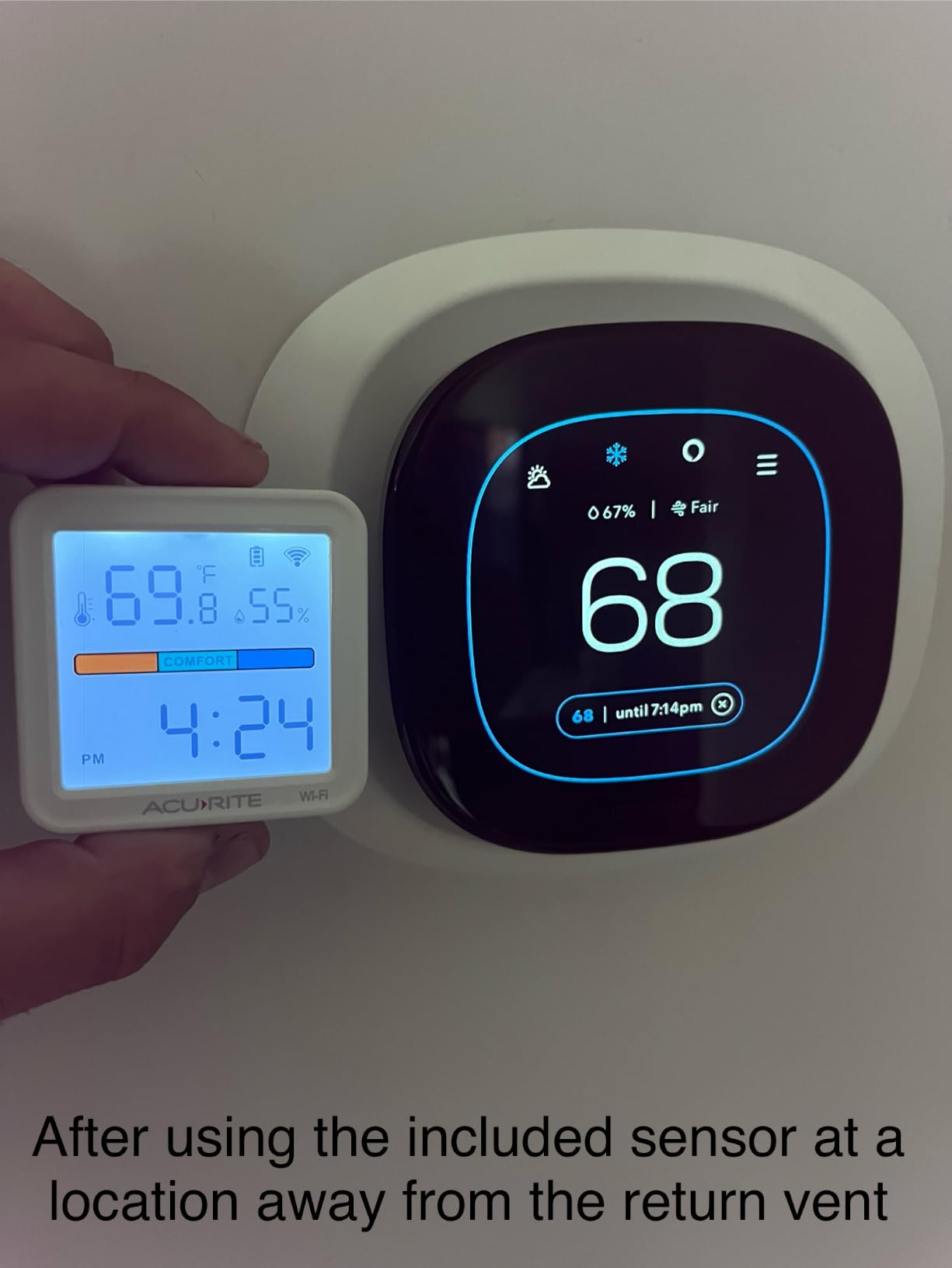
The Premium is the most capable thermostat in this roundup, and the only one that ships with a remote room sensor in the box. That included SmartSensor is the whole argument. A ducted heat pump pushes air through every supply register, and the room with the thermostat on the wall is very often not the room that feels wrong. Moving the sensor to the far end of the house fixes comfort problems no schedule change ever will.
Heat pump compatibility is broad. The published figure is 95% of HVAC systems, and the listed uses run from air conditioner and boiler through furnace, heat pump, humidifier and dehumidifier, which means an indoor unit with a whole house dehumidification setup is in scope. The Power Extender Kit in the box removes the most common heat pump objection, since a C-wire is not always required.
The radar occupancy sensor is the piece we would call the real upgrade. It preheats or precools before you arrive and then steps back when the house is empty, which on a heat pump means the compressor runs during a period when the building can hold the temperature, not during a recovery ramp. The claim attached to the product is up to 26% in annual energy savings from automatic occupancy adjustment, and occupancy-based control is the mechanism that makes those numbers plausible.
It is also the only model here with a built-in air quality monitor that issues drop alerts and filter change reminders, plus a speaker that runs Siri or Alexa with audio streaming. The metal body and 4.09 inch square face look and feel like premium hardware, and the warranty runs three years.
What the extras cost you over time
Read the accessory list before you commit, because this is where the price gap widens. A second SmartSensor for the opposite end of the house is a separate purchase, as is the ecobee SmartSecurity subscription, and the front door live view with two-way talk only appears if you also install an ecobee Smart Doorbell Camera. Siri works, but it requires an Apple home hub on the network.
So treat the Premium as a thermostat plus a starter sensor, not as a sealed system. Budget for two sensors in a large two storey home, and the ongoing subscription question becomes a fair one to ask yourself rather than a surprise.
When to buy the Premium and when to step down
Buy the Premium when rooms disagree with each other, when someone is home on an unpredictable schedule, or when you want the thermostat to also tell you when the air is dirty. It is the strongest choice in the group for a heat pump with uneven duct distribution, which is most of them.
Step down to the ecobee Enhanced if the built-in speaker and air quality monitor do not interest you. You keep the occupancy sensing and the Power Extender Kit, and you avoid paying for hardware you will not use.
5. ecobee Smart Thermostat Enhanced – Best Heat Pump Thermostat for Occupancy Sensing
ecobee Smart Thermostat Enhanced, Programmable Wifi Thermostat
Built-in occupancy sensing
Compatible with 90% of HVAC systems
Power Extender Kit included
4 inch display
Pros
- Built-in occupancy sensing preheats and precools before arrival
- Compatible with 90% of HVAC systems
- Power Extender Kit included for C-wire-free installs
- Works with Alexa and Google Assistant plus HomeKit and SmartThings
- Three-year warranty
Cons
- SmartSensors are sold separately for room-by-room control
- No built-in voice speaker or air quality sensor on this model
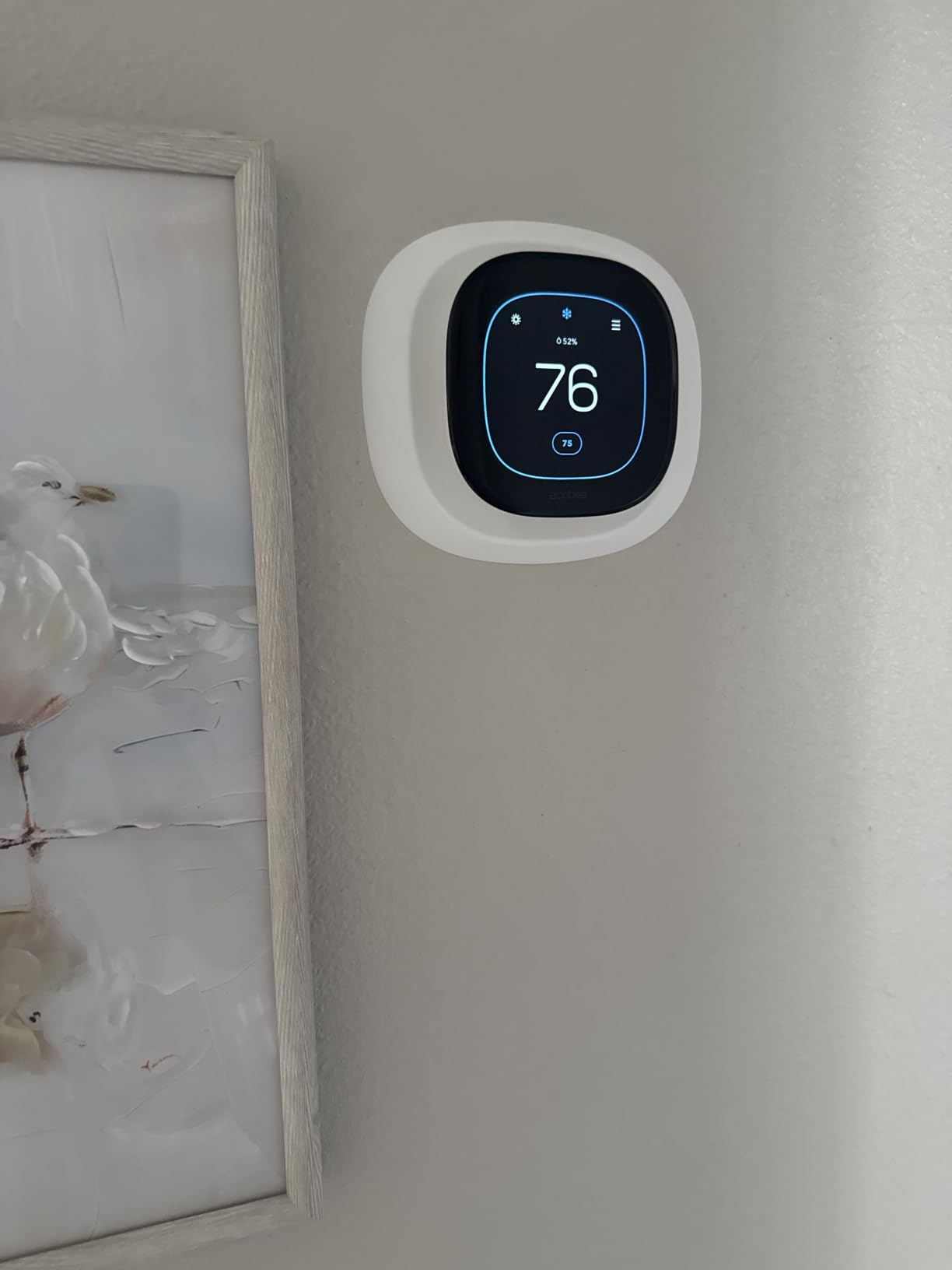
The Enhanced is the version of the ecobee that makes the most sense if you already know you do not need a speaker in your wall. It keeps the two features that actually change how a heat pump runs, built-in occupancy sensing and the Power Extender Kit, and it drops the air quality monitor and the voice hardware. The published compatibility figure is 90% of HVAC systems, and heat pumps and humidifiers are both on the supported list.
Occupancy sensing is the headline. The thermostat learns your preferences and schedule, and it uses the radar sensor to preheat or precool before you arrive instead of running recovery on a fixed clock. It also factors humidity into the comfort calculation, which is a detail that matters in a humid climate where the compressor is dehumidifying as it cools.
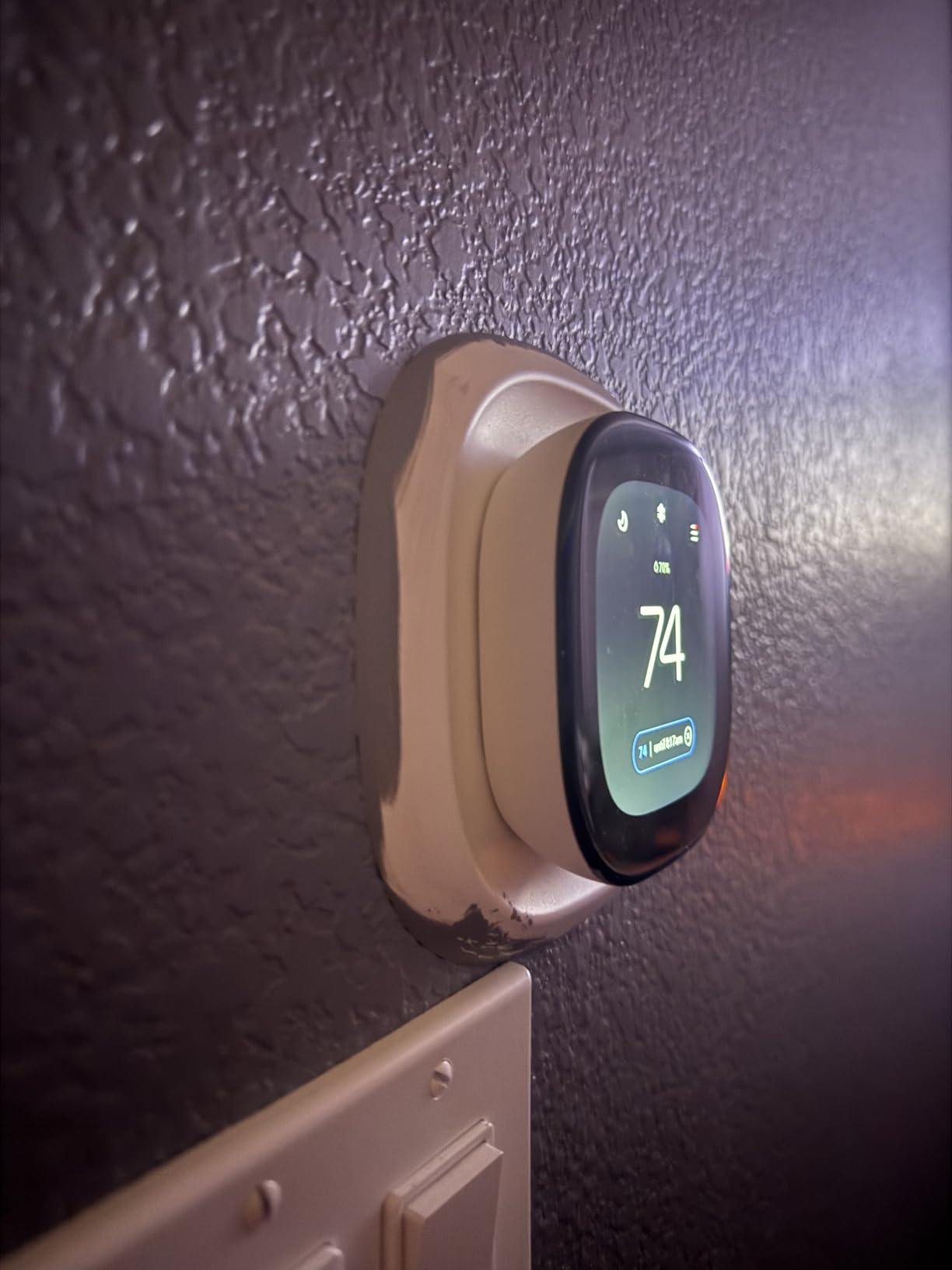
Reviewers consistently describe it as the middle step in the ecobee range rather than a compromised unit, and the 4.4 star average with a 74% five-star share reflects that. The app, schedule views and system activity screens are identical to the Premium, so nothing about daily use feels reduced. Remote control works from a smartphone, tablet or an Apple Watch.
On installation, the Power Extender Kit again removes the C-wire question in many homes, and the trim plate is included so the finished unit looks intentional on a bare wall. The three-year warranty matches the Premium, so you are not trading away coverage.
The one decision that matters here
There is no room sensor in the box. That is the single thing to weigh, because with a ducted heat pump the sensor placement question is the one that decides whether anyone in the house is comfortable. If you can place the thermostat in a central hallway, the built-in sensor may be enough. If you have a two storey layout or a room that always runs cold, buy the Premium instead and get the sensor.
You can also add SmartSensors later, and the Enhanced supports them, so this is a reversible decision rather than a dead end. Just budget for the fact that the sensors are sold separately.
Who this model is for
Choose the Enhanced for a heat pump household that wants occupancy-based control and broad equipment compatibility without paying for a built-in speaker. It is the sweet spot in the ecobee range for anyone whose home has a single main living space and a reasonably even airflow path.
Skip it if you want to ask your thermostat for the weather or monitor air quality, since neither is possible here. And if your priority is Apple HomeKit, this unit supports it alongside Alexa, Google Assistant and SmartThings, which is the widest ecosystem coverage in the roundup.
6. Google Nest Learning Thermostat 4th Generation – Best Nest Choice for a Heat Pump
Google Nest Learning Thermostat (4th gen) + Nest Temperature Sensor (2nd gen) – Obsidian
Works with most 24V systems including heat pumps
60% larger Dynamic Farsight display
Nest Temperature Sensor included
Backed by a maintenance band
Pros
- Includes a second generation Nest Temperature Sensor
- Display is 60% larger with automatic brightness adjustment
- Asks permission before it changes your schedule
- Works with most 24V heat pump systems
- Matter compatible with the major voice assistants
Cons
- Not ENERGY STAR rated so many rebate programs exclude it
- Backplate is not backward compatible with 3rd gen Nest wiring
- Setup app can report a false no power reading on the R wire
This is the current-generation Nest, and unlike the model above it arrives with a Nest Temperature Sensor in the box. For a heat pump household that is the decisive detail, because it gives you a second reading point without a separate purchase. The included sensor is the second generation unit, and it does genuinely improve room targeting over a thermostat-only setup.
It works with most 24V systems including gas, electric, oil, forced air, heat pump and radiant, and no C-wire is required in most homes. Natural heating and cooling is the feature we would highlight for heat pump owners, because it learns how outdoor conditions affect indoor temperature and pauses the system when the house is already where you want it, which protects a variable speed compressor from unnecessary cycling.
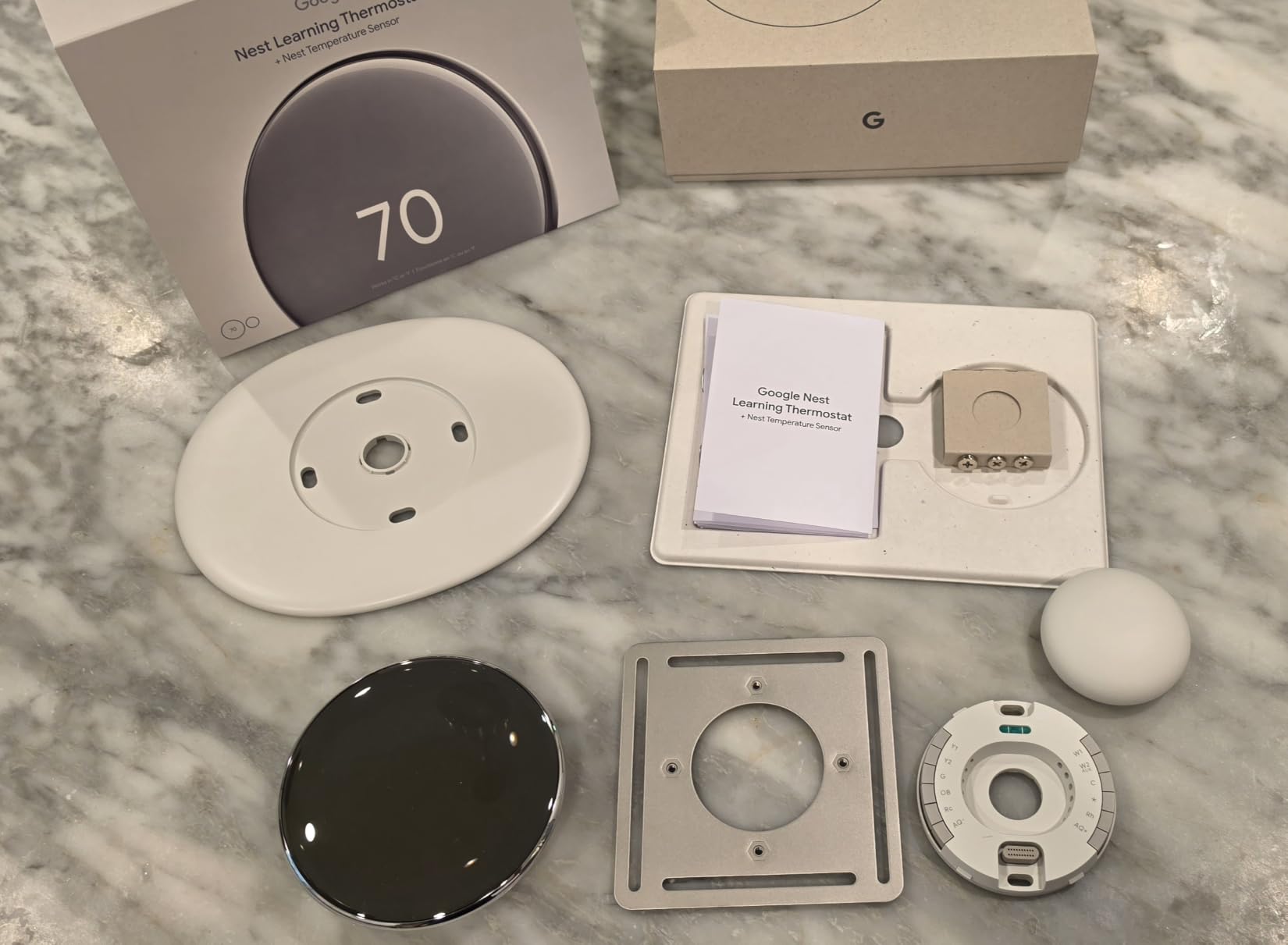
The manually adjustable maintenance band deserves a mention in a heat pump roundup. It sets the temperature band outside which the compressor will not run, so you can control cycling behaviour directly rather than relying on the learning algorithm. The claimed saving is up to 31% on heating and cooling bills, and it asks permission before it changes your schedule rather than editing it silently.
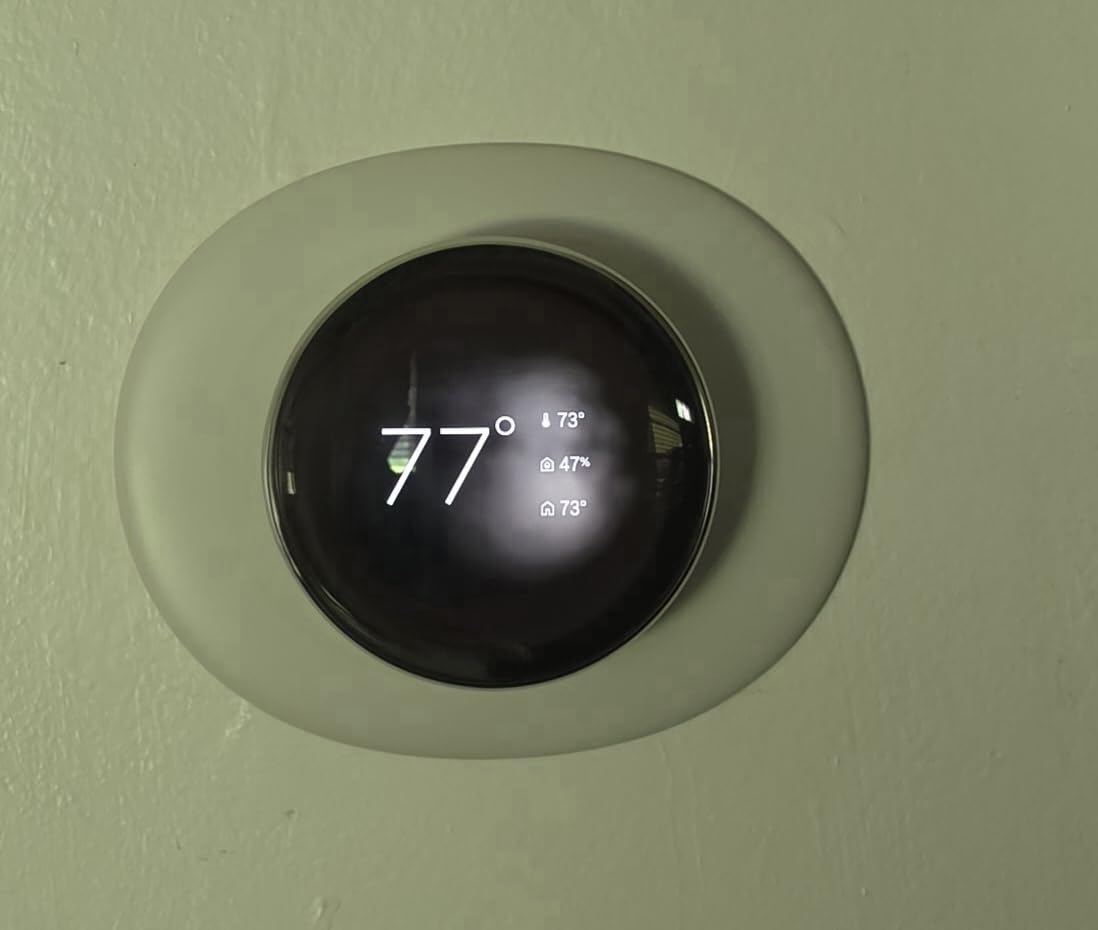
Owners upgrading from a third generation unit praise the display, which is 60% larger with Dynamic Farsight and automatic brightness, readable from across a room. The 78% five-star share in the reviews is the highest in this entire group, and the aluminium and mirrored finish looks like hardware from a different price bracket.
Three things that catch people out
First, the loss of ENERGY STAR certification. That rating is what makes a thermostat eligible for most utility rebate programs, so removing it can cost you real money over a decade, and several reviewers treat that as a genuine downgrade rather than a technicality. Check your utility’s requirements before you buy.
Second, the backplate is not backward compatible with third generation Nest wiring, so replacing an existing Nest means new wiring rather than a swap. Third, the setup app can report a false no power reading on the R wire even when you can measure voltage with a meter, which sends people hunting for a fault that does not exist.
Where the 4th gen Nest fits
Buy it if your home is already in the Google ecosystem, you want the learning behaviour and you care about the second sensor being included. Matter compatibility means it also works with Alexa and Siri, so it is not as locked in as its price might suggest.
Skip it if you rely on rebates, if you are upgrading from a third generation Nest and want a weekend swap, or if you prefer physical buttons. The minimalist dial takes more steps than a button thermostat to reach common settings, and Adaptive Eco sometimes drifts below the temperature you asked for.
7. Honeywell Lyric T6 Pro – Best Contractor-Grade Heat Pump Thermostat
Honeywell TH6220WF2006/U Lyric T6 Pro Wi-Fi Programmable Thermostat with Stages Up to 2 Heat/1 Cool Heat Pump or 2 Heat/2 Cool Conventional
Stages up to 2 heat and 1 cool for heat pumps
Z-Wave connectivity
Battery backup
Two AA batteries
Pros
- Supports heat pumps with up to 2 stages of heat and 1 of cool
- Z-Wave connectivity makes it easy to pair with a security system
- Battery backup retains programming during outages
- Four ounce body fits a standard wall plate
Cons
- No wireless remote room sensors on this model
- Some units arrive in contractor mode and cannot be registered
- Builder-installed versions are frequently left in that state
The T6 Pro is the model HVAC technicians hand out, and the specification explains why. It supports stages up to 2 heat and 1 cool on a heat pump, or 2 heat and 2 cool on a conventional system, which covers the vast majority of residential equipment in North America. It is a small, plain, 4 ounce unit that does one job and does not pretend otherwise.
Two AA batteries provide backup, so the schedule survives a power outage rather than resetting to defaults. That is more important on a heat pump than it first appears, because a thermostat that forgets your stages and lockout settings after an outage is a thermostat that will need an HVAC tech to put right.

The Z-Wave connectivity is a genuinely useful addition for anyone with a security system or a home automation controller. It is one of the very few thermostats in this roundup that speaks a local protocol, and owners report that pairing it with a Z-Wave security system works out especially well. If you run Home Assistant or a similar hub, that local path matters more than any voice assistant integration.
At 4.4 stars with a 74% five-star share across roughly 2,650 reviews, satisfaction is high among people who know what they are buying. There is no touchscreen, no speaker and no occupancy radar, and owners who later move to a T9 cite the missing wireless room sensors as the single reason they upgraded.
The contractor mode problem, and how to avoid it
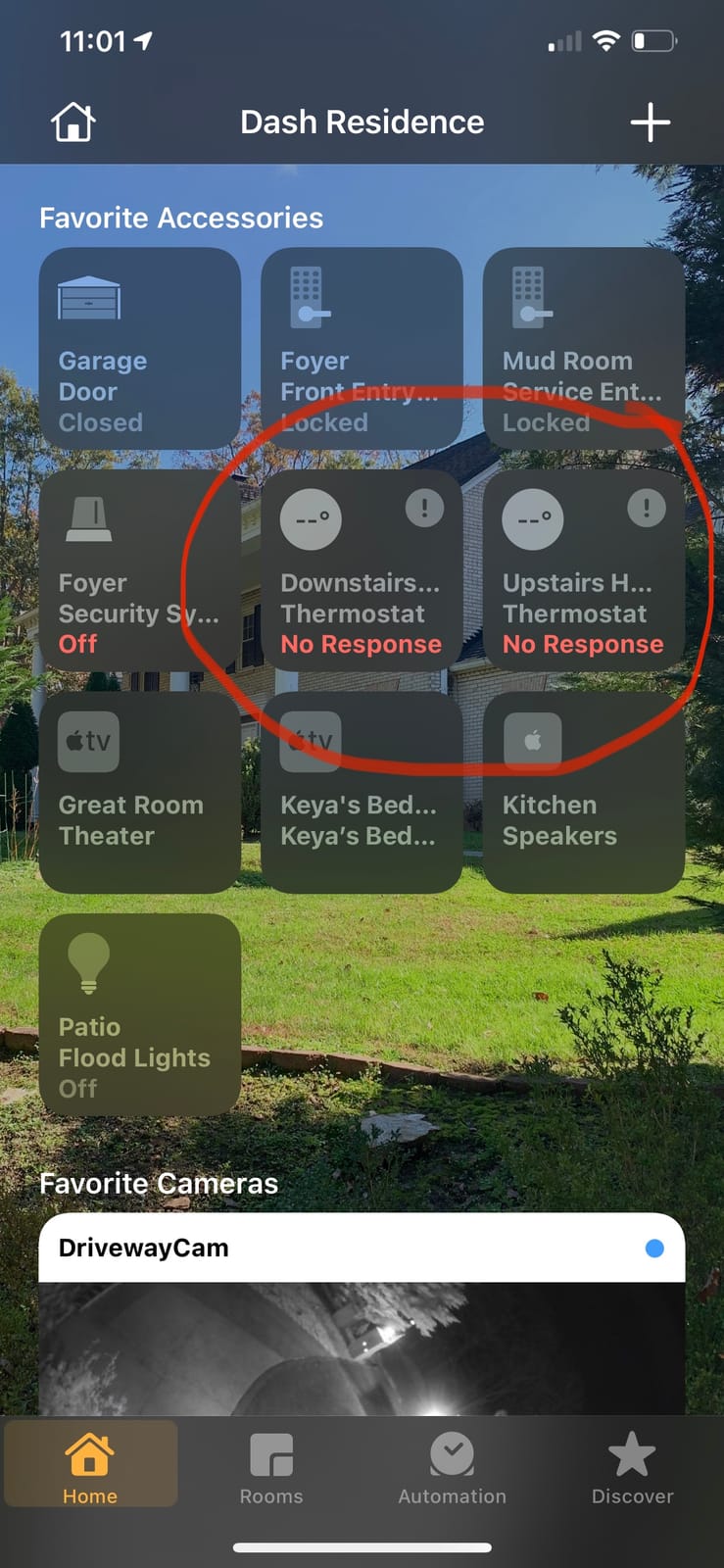
There is a documented recurring issue: units arriving in contractor mode. In that state the thermostat will not register in the Resideo app until it has been reconfigured, and builder-installed versions are frequently delivered in exactly that condition. If you are self-installing, check the box before the installer leaves or buy from a seller who will confirm the state.
That same simplicity has a limit. There are no wireless room sensors, so if you move to the T9 later for remote sensing, you are not adding an accessory, you are replacing the thermostat. The T9 also uses the same wall adapter as the T6, so the swap is physical rather than a rewiring job.
Who should choose the T6 Pro
Pick it for a two stage heat pump, a dual-fuel system or a house where reliability beats features, and pick it especially if you have a Z-Wave alarm or automation panel. It is a set-and-forget unit that a technician can commission in minutes and a household can ignore.
Skip it if you need third stage heat control, humidity targets or any form of room-by-room sensing. The Vision Pro 8000 covers the stage counts this one does not, and it is the one we would consider for a three stage heat pump.
8. Honeywell T9 WiFi – Best Heat Pump Thermostat for Wireless Room Sensors
Honeywell Home T9 WiFi Smart Thermostat, Smart Room Sensor Ready, Touchscreen Display, Alexa and Google Assist
Smart Room Sensor ready touchscreen
Power adapter included
Works on 2.4 and 5 GHz
Two year warranty
Pros
- Supports wireless Smart Room Sensors and can average readings across rooms
- Sensors can activate by room occupancy or act as temperature probes
- Power adapter included so it works in most homes
- Works on both 2.4 GHz and 5 GHz networks
- Two-year limited warranty
Cons
- Resideo app can show a wrong inside temperature until force-closed
- Humidity sensor reads about 10% high
- Fan control is single-speed with no scheduled circulate
The T9 is the most capable of the Honeywell consumer units, and the feature that separates it is wireless room sensing. Smart Room Sensors are added on as needed, and they can be configured to trigger on room occupancy or simply to act as temperature probes. When several are present the thermostat can average readings across rooms, which is exactly the behaviour a ducted heat pump needs in a house with uneven airflow.
It is compatible with forced air on gas, oil or electricity, hot water and steam, and heat pumps with electric backup heat. A power adapter is included so it works in most homes without a C-wire, and owners with heat pumps report reliable connectivity on both 2.4 GHz and 5 GHz, including mesh and combined band networks.
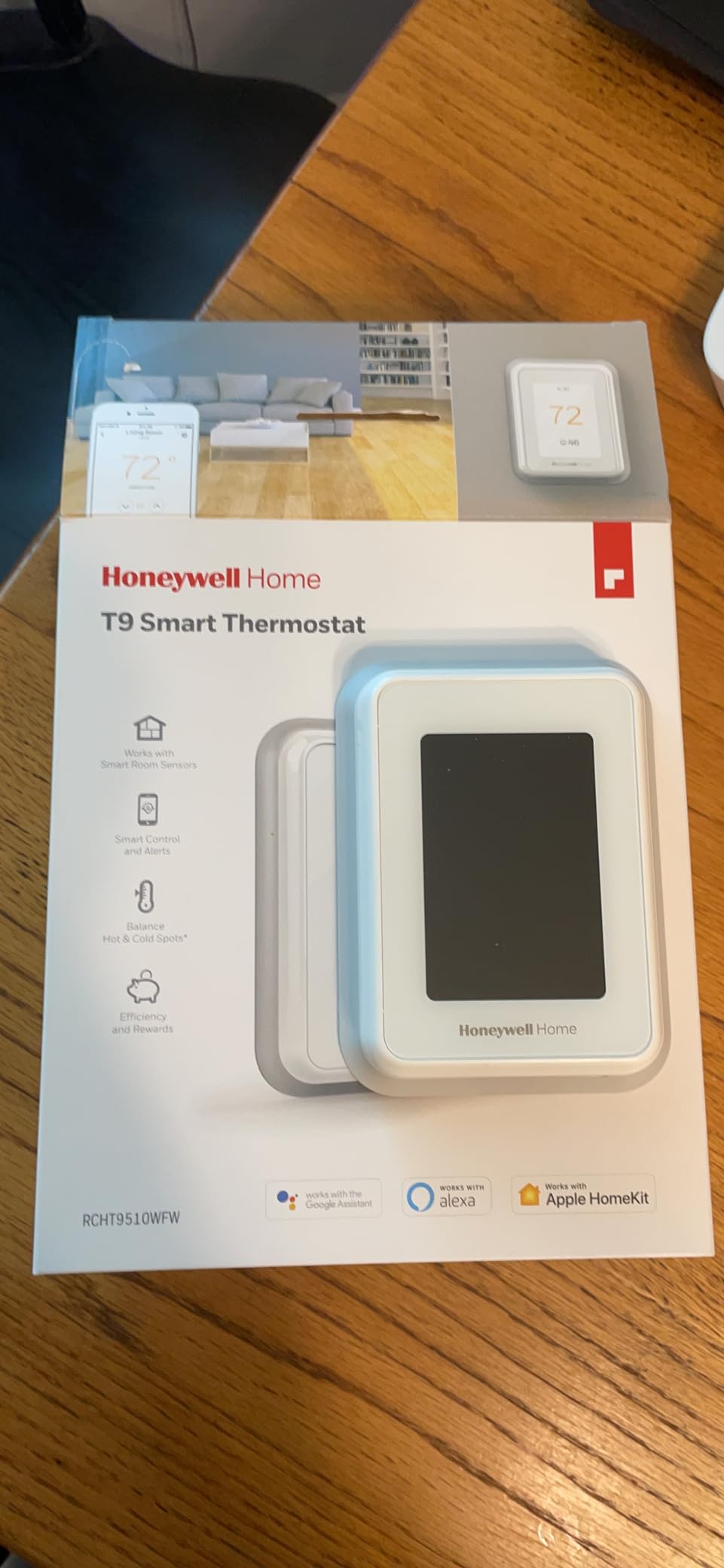
Setup identifies the heating and cooling type for you, which removes the most tedious part of commissioning a heat pump thermostat. Smart Response learns the patterns, monthly energy reports track the result, and linking your Honeywell Home account to your utility adds seasonal efficiency rewards. Auto Home and Away uses geofencing from the app.
There is also a continuous circulate fan setting and auto heat and cool switching. The sensors are visually prominent, and reviewers are candid that the hardware looks more functional than modern, but the measurement quality is what matters on a thermostat.
The app and sensor caveats you should know
The most detailed negative reports in the reviews all concern the Resideo app rather than the thermostat. Several owners describe it showing an incorrect inside temperature and set point until the app is force-closed, and the humidity sensor reading roughly 10% high compared with other sensors. If you plan to use the app as your primary control surface, test it during setup before you rely on it.
A second usability trap is the sensor priority setting. The sensor driving the temperature reading is buried in a priority menu, which surprises people who assume the wall unit is the source. Usage data can also take several days to appear, so an empty dashboard on day one is normal rather than a fault.
When the T9 is the right buy
Choose the T9 when rooms in your home genuinely disagree and you want wireless sensors rather than a cable run between them. It is the strongest fit in this roundup for a heat pump paired with a gas furnace, because the stage control handles the changeover without any extra hardware.
Skip it if you rely on humidity readings for a basement or whole house dehumidifier setup, given the calibration drift reviewers report, or if you want occupancy-based control without setting geofencing. For that last need the ecobee models use radar rather than phone location.
9. Honeywell Vision Pro 8000 – Best Heat Pump Thermostat for Staging and Humidity Control
Honeywell TH8321WF1001 Touchscreen Thermostat Wifi Vision Pro 8000 with Stages upto 3 Heat / 2 Cool
Stages up to 3 heat and 2 cool
Remote indoor and outdoor sensor inputs
Built-in Wi-Fi
C-wire required
Pros
- Supports up to 3 stages of heat and 2 of cool
- Humidity control with indoor and outdoor sensor inputs
- Heat pump lockout settings for cold weather
- Built-in Wi-Fi needs no separate gateway
- Sturdy set screw terminals
Cons
- C-wire required with no battery compartment
- Only one remote sensor input so multiple sensors read as one average
- Configuration menu has no auto-setup mode
The Vision Pro 8000 is the only thermostat here that supports up to 3 stages of heat and 2 of cool, and that single line is why it belongs in a heat pump roundup. Three stage heat pumps exist, and most consumer smart thermostats simply cannot address them. If your outdoor unit has three stages of compression, this is the unit that can, alongside the heat pump lockout settings that keep backup heat from taking over in cold weather.
Humidity control is the other headline. It accepts an indoor humidity sensor input and an outdoor temperature and humidity sensor input, and it balances temperature and humidity targets rather than treating one as a subset of the other. For a heat pump in a humid climate, where the unit is already removing moisture as it cools, that is a real operating difference.
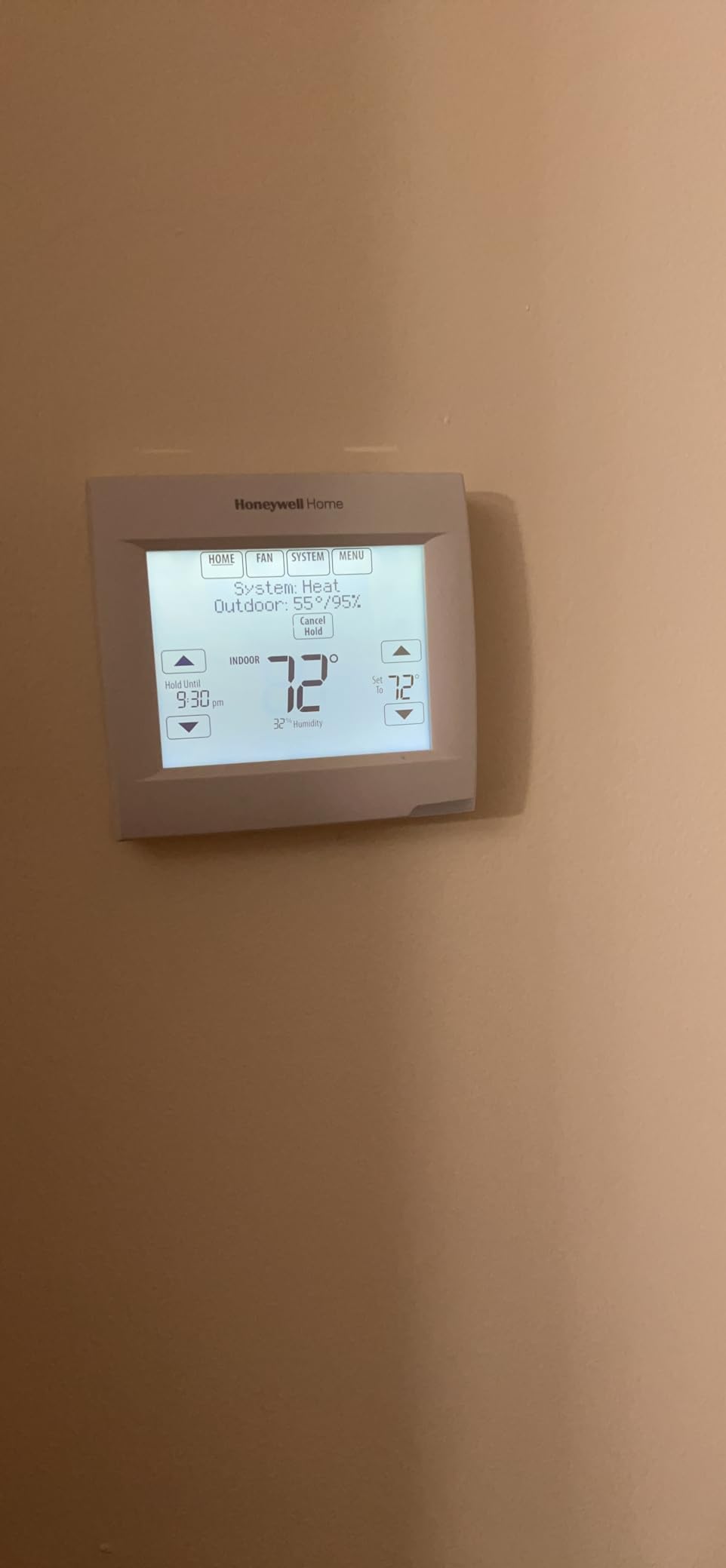
The learning behaviour is called Program Assist, and it ramps the home toward the setpoint at the scheduled time rather than switching on at a fixed hour. Auto changeover handles the move between heating and cooling without a manual toggle, which on a reversible heat pump is the setting people most often leave wrong.
Reviewers include HVAC professionals who install the same model in commercial rooftop units, and they are the source of the strongest technical praise in the roundup. Built-in Wi-Fi means no separate Honeywell gateway, the Total Connect Comfort app is long-established, and email alerts fire when indoor temperature or humidity move past your thresholds. The set screw terminals are also a genuine step up from friction connectors.
Where the single sensor input becomes a real limit
There is only one remote sensor input. If you want two remote sensors, they have to be wired together and read as a single average, which defeats the purpose of having them. Multi-room control on this model therefore means living with the average, and anyone whose comfort problem is a single cold room should rule it out.
Installation is the other consideration. The unit needs a C-wire from the furnace and has no battery compartment, so a professional install is advised. The configuration menu asks a long list of HVAC questions with no auto-setup mode, which is a real cost in contractor time. Some older production runs also carry large back prongs from a previous version, and owners report returning those.
Who should buy it and who should not
Buy the Vision Pro 8000 for a three stage heat pump, a dual-fuel system with a gas furnace backup, or a home with a whole house dehumidifier and humidifier that the thermostat needs to coordinate. Reviewers note several people replacing a Nest with it for less money, which tells you where it sits in the value conversation.
Skip it for a standard single stage heat pump in a small home. You would be paying for stage capacity and humidity control you cannot use, while giving up the no-C-wire installs that the ecobee units and the Sensi ST55 handle.
10. Sensi Touch 2 ST76 – Best Heat Pump Thermostat with a Touchscreen
Sensi Touch 2 Smart Thermostat Wi-Fi, Alexa, Energy Star Certified, ST76
Works with heat pumps, furnaces and boilers
C-wire required for power
ENERGY STAR certified
Black beveled edge display
Pros
- Works with Sensi Room Sensors sold separately
- C-wire install guided step by step over Bluetooth
- ENERGY STAR certified for about 23% HVAC energy savings
- Works with Alexa plus Google Assistant and SmartThings
- Three-year manufacturer warranty
Cons
- C-wire is required for power
- Room sensors are sold separately
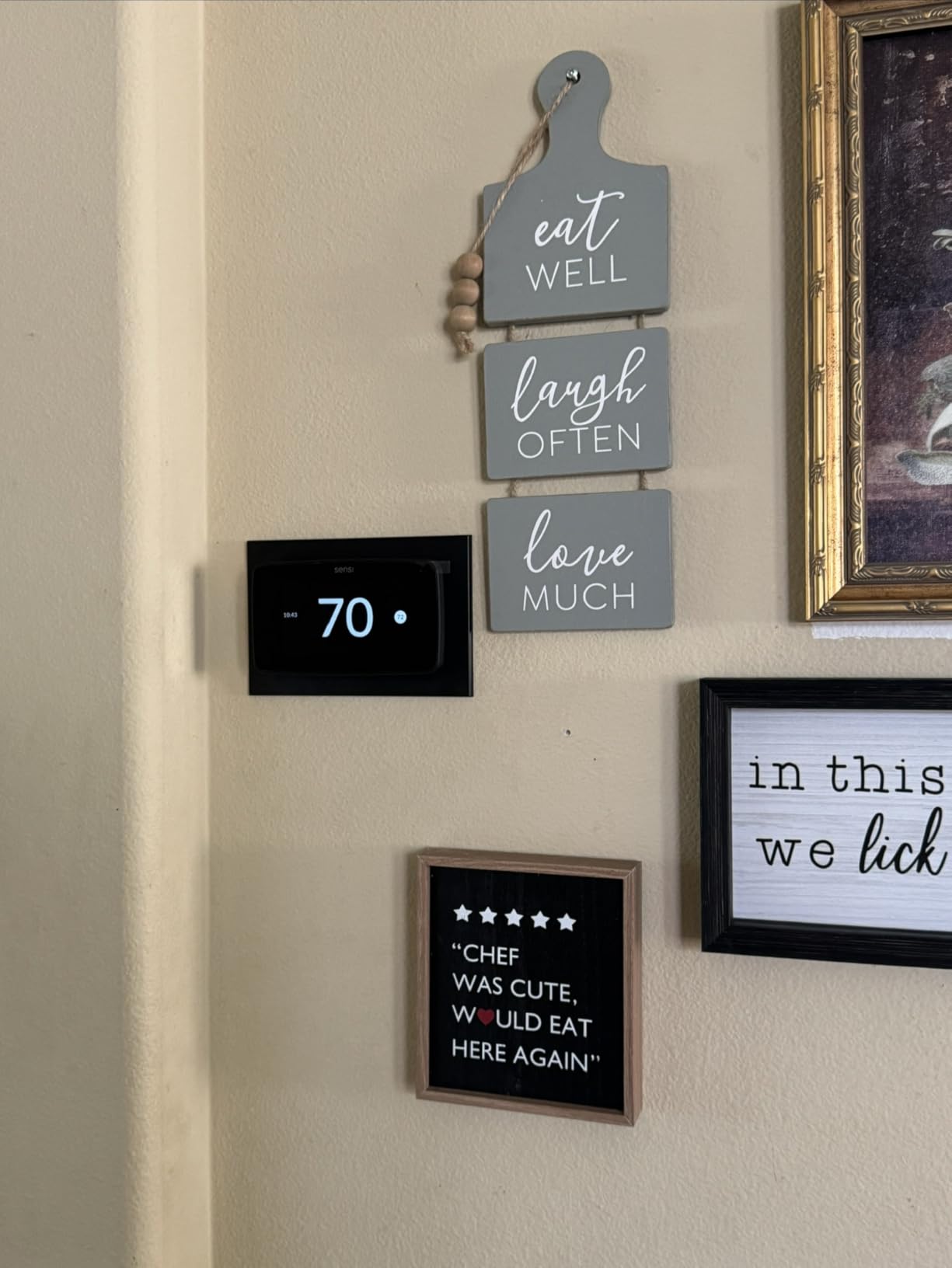
The Touch 2 is the touchscreen upgrade to the ST55, and it keeps everything that made the ST55 our pick. It works with air conditioners, boilers, furnaces and heat pumps, it is ENERGY STAR certified, and it carries the same three-year warranty and the same stance on privacy, with Sensi stating it does not sell personal information to third parties. Usage reports, equipment alerts and filter replacement reminders are all present.
What you add is a colour LCD touchscreen instead of the ST55’s button layout, and support for Sensi Room Sensors so you can balance temperatures across the home. On a ducted heat pump those sensors are the feature that matters, so this is a sensible middle ground between the ST55 and a bundled sensor.
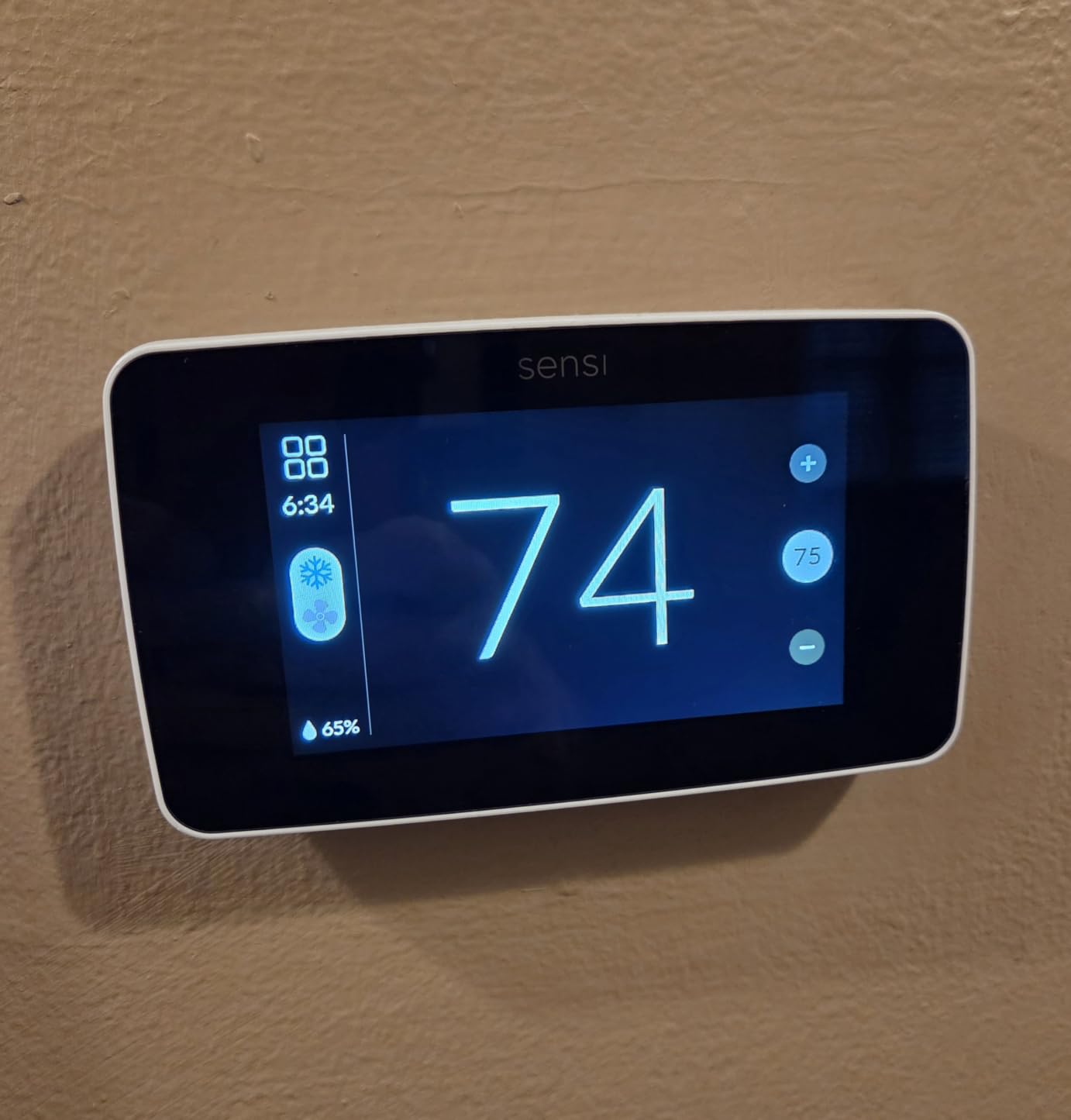
Setup is guided through the app using universal Bluetooth rather than a website or a code typed into the unit, and each step is walked through on screen. That is a genuine improvement on the older generation, where people regularly got stuck at the wiring step. Voice support covers Amazon Alexa, Google Assistant and SmartThings, plus hand control.
Buyers on the reviews rate it at 4.3 stars with a 75% five-star share across roughly 1,250 reviews. The positioning is clear: people compare it against the ST55 almost entirely on display type and sensor support, and the outcome usually comes down to whether you need the screen and the sensors or just the thermostat.
Check for a C-wire, because this one requires it
The defining difference from the ST55 is power. A common wire is required for this model, with no power stealing fallback. On a heat pump install that is usually fine, because the common wire is more likely to be present, but in an older home it is a real task. Budget for an electrician to run one rather than discovering it after the old thermostat is off the wall.
The second thing to plan is sensors. Sensi Room Sensors are supported but sold separately, so this is a two purchase decision for a heat pump household that wants room balancing. The same is true of the ST55, but the Touch 2 at least gives you the screen those sensors pair with.
When to choose the Touch 2
Pick the Touch 2 when you want app-guided installation, a touchscreen, and the option to add room sensors later without changing thermostats. It is also a good fit if privacy is a factor, since the manufacturer publishes a data privacy commitment rather than leaving it vague.
Skip it if you have no C-wire and no plan to add one, because the ST55 will save you that work. And if you want a room sensor in the box on day one, the ecobee Premium remains the only pick in this list that includes one.
How to Choose a Heat Pump Thermostat Without Guessing
Compatibility, not features, decides this purchase. A heat pump thermostat has to handle the compressor, the reversing valve and the auxiliary heat strips on the same set of low voltage wires, and most of what follows is about confirming your system before you spend money on the wrong unit.
Check your wires in five minutes
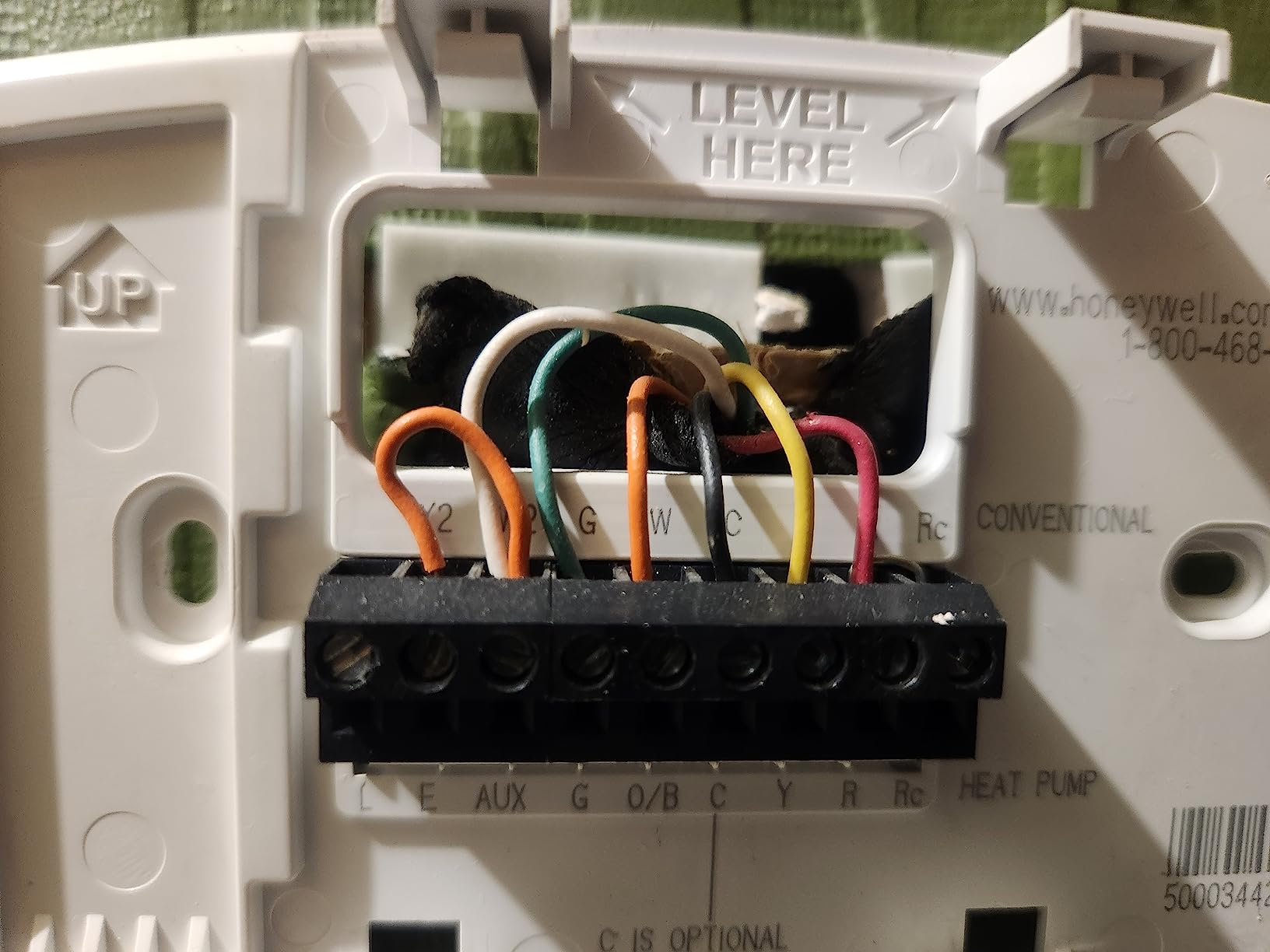
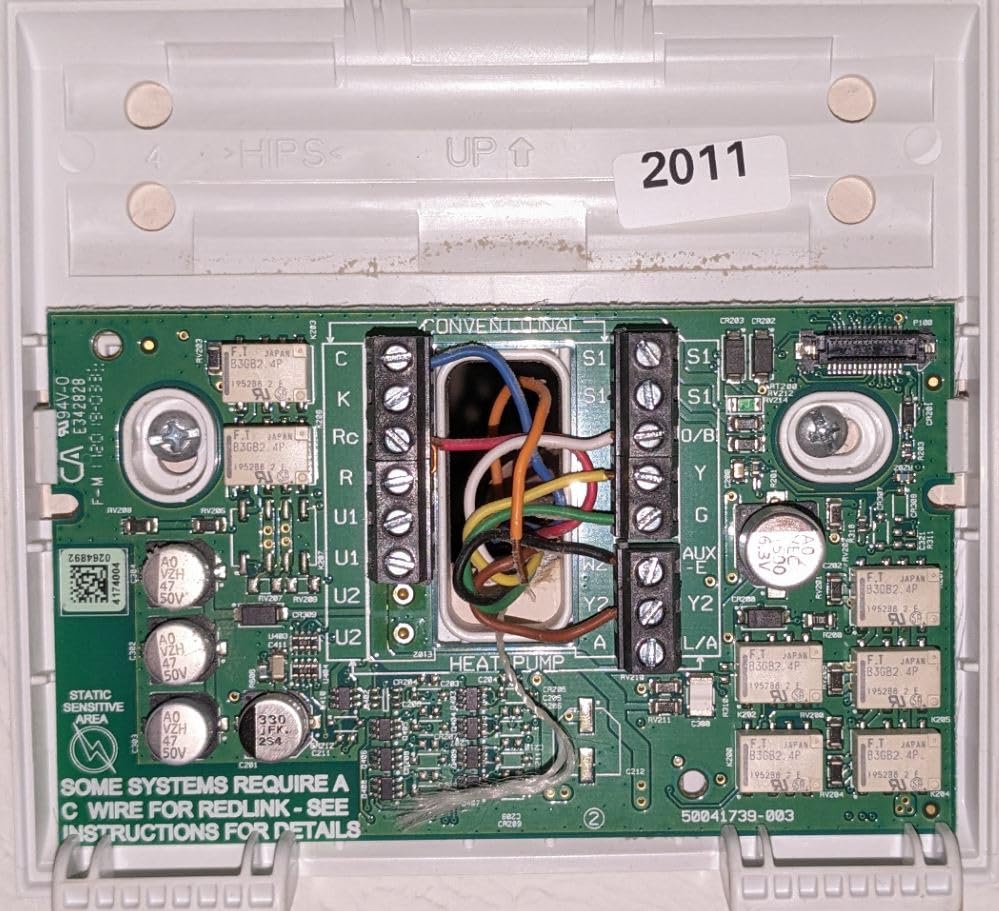
Remove the faceplate on your current thermostat and photograph the wires before touching anything. Count what you find and match it against these terminals: R is 24 volt power and is essential, W calls for heat, Y calls for cooling, G calls for the indoor fan, C is the common wire that supplies constant power, and the O or B terminal is the one that matters most on a heat pump because it reverses the refrigerant flow.
Y2 and W2 appear on two stage systems, and RC or R as a single wire is common on newer installs. If you see O and B together, you have a heat pump with a reversing valve and you need a thermostat that supports both. If you find no C wire at all, note that before you go shopping, because three of the ten models here require one and only some of the rest can work around it.
A photo of those wires posted to an HVAC advice forum, along with your heat pump make and model, gets you a far more reliable answer than a marketing compatibility chart. That is the check we would do first every time.
Auxiliary heat lockout, explained
Auxiliary heat lockout is a temperature below which the thermostat refuses to call for backup electric heat. Set it too low and your backup strips run through every cold evening, which is the classic complaint from heat pump owners who find their bills went up after installing a smart thermostat. Set it too high and the house stays uncomfortable during a cold snap while the compressor works hard and may not keep up.
A sensible starting point is somewhere in the low forties in Fahrenheit for most climates, raised a little if you have a poorly insulated house or a cold region, and lowered if you have a large gas furnace as backup. The settings we saw described in practice on the T9, the Vision Pro 8000 and the ecobee units all sit in this range, and the Vision Pro additionally exposes a dedicated heat pump lockout setting for cold weather.
Whatever thermostat you pick, the first weekend after installation should be spent watching the system in cold weather and confirming that the compressor, not the strips, is carrying the load. Forum advice threads are full of owners who never configured this and spent a winter paying for it.
Staging, sizing delay and short cycling
Sizing delay is the pause after a stage satisfies the call for heat, before the next stage engages. On a variable speed or inverter compressor, a thermostat that ignores it can restart the outdoor unit too soon, and repeated short cycling is hard on the compressor and wasteful to run. The heat pump stage counts vary widely across this list, from one stage on the Sensi units up to 3 heat and 2 cool on the Vision Pro 8000.
Variable speed equipment also reacts badly to a learning thermostat that swings setpoints around wildly, because a large ramp can trigger a defrost cycle on the outdoor coil. If you have an inverter unit, the Nest Learning models are the ones here that explicitly pause the system when conditions are already met.
Whichever model you choose, set the maintenance band or cycle thresholds to something reasonable before you finish. It costs five minutes and it is the difference between a system that runs quietly all winter and one that starts and stops every twenty minutes.
Ductless mini-splits and IR bridges
None of the ten thermostats in this roundup is a wired mini-split controller. A ductless heat pump with an infrared indoor unit is a different category, and the honest answer to whether a Nest or ecobee can control one is that they cannot, because a ductless head has no low voltage control board to talk to. That leaves an IR bridge, which learns the signal from your handheld remote and relays it over Wi-Fi, or a purpose-built ductless controller.
IR bridges fail in a predictable way. The transmitter needs a sightline to the indoor unit, and once someone puts a sofa or a tall plant in front of it the commands stop arriving. The symptom is silence rather than an error, so you only find out on a hot afternoon. Mount it high on a wall with a clear view, test each unit before you finish, and expect one bridge per zone.
If your heat pump is ductless, read our guide to the best mini split heat pumps for cold climates first, because equipment that can hold temperature at low outdoor temperatures changes how you should configure a thermostat around it.
C-wire problems and how to fix them
If your existing thermostat has no common wire, you have four options and they are not equal. A power adapter or power extender is the cheapest and is the approach the ecobee Power Extender Kit and the Honeywell T9’s included adapter use, drawing power from the equipment rather than adding a wire. Running a new C-wire through the wall is the cleanest answer and the only one that works for every model, but it needs an electrician.
Choosing a thermostat that never needed the C-wire is the third option, and it is the reason the Sensi ST55 is our top pick. The fourth is to keep what you have and accept the constraints. For most heat pump systems, the common wire is genuinely worth running, because the screen, the clock and the schedule all depend on it.
One caution specific to heat pumps. Power stealing draws power from the call relays, and a heat pump’s control board carries more load than a small cooling relay. It works on many installs and fails intermittently on others, so if you go that way, confirm with an HVAC technician that your specific equipment supports it.
Humidity control, subscriptions and privacy
Humidity is worth thinking about on a heat pump because the unit dehumidifies as it cools, which means a thermostat that only reads temperature leaves performance on the table. The Vision Pro 8000 is the only model here with full humidity control and both indoor and outdoor humidity inputs. The ecobee Enhanced factors humidity into its comfort calculation, the ecobee Premium adds filter reminders, and the Sensi models display humidity on the unit without controlling it.
On subscriptions, the picture is cleaner than it used to be. None of these ten requires a paid tier for basic heating and cooling control. The costs that do appear are optional and specific: ecobee SmartSecurity and additional SmartSensors, and the ecobee doorbell camera features. If you never subscribe, the thermostat still works fully.
For privacy, the Sensi models publish a straightforward commitment that they do not sell personal information to third parties, which is a real differentiator if that matters to you. Every other unit here depends on a cloud connection for remote control, so a thermostat that cannot reach the internet loses some of its value even though basic heating continues.
One last point for households with a heat pump plus a gas furnace plus an ERV or a humidifier: check that the thermostat you pick can actually handle the extra terminals. Multi-terminal setups are exactly the scenario where general buying guides mislead, and confirming your heat pump and auxiliary equipment before purchase is the difference between a weekend job and a return.
Frequently Asked Questions
What is the best smart thermostat for a heat pump?
The Sensi Smart Thermostat ST55 is the best overall smart thermostat for a heat pump because it is rated for heat pumps, boilers and furnaces, usually installs without a C-wire, and carries a three-year warranty. For room-to-room comfort the ecobee Smart Thermostat Premium includes a SmartSensor in the box, and for three stage equipment the Honeywell Vision Pro 8000 is the only pick here rated for 3 heat and 2 cool stages.
Can I use an ecobee smart thermostat with a heat pump?
Yes. The ecobee Smart Thermostat Premium is compatible with 95% of HVAC systems and the Enhanced with 90%, and both list heat pumps among supported equipment. Each ships with a Power Extender Kit so it can install in homes without a C-wire, and both work with humidifiers, which matters if your heat pump handles whole house moisture control.
Which smart thermostat is better, Nest, ecobee, or Honeywell?
For a ducted heat pump with uneven rooms, ecobee leads because the Premium includes a room sensor and a power extender kit. For a large home already in Google Home, the Nest Learning 4th gen pairs a second generation sensor with Matter support. For staging, humidity and multi stage control, the Honeywell Vision Pro 8000 handles 3 heat and 2 cool stages, which neither of the others can.
Will a Nest or ecobee control my mini-split?
No. A ductless mini-split indoor unit has no low voltage control board, so wired smart thermostats cannot run one. You need an infrared bridge that learns your handheld remote signal, or a purpose-built ductless controller. Bridge placement matters more than the model, because the transmitter needs a clear sightline to the head and fails silently when something is placed in front of it.
What if my thermostat requires a C-wire and I don’t have one?
You have four options. Run a new common wire through the wall, which is the cleanest fix and needs an electrician. Use a power adapter or power extender, which is the approach the ecobee Power Extender Kit and the included T9 adapter take. Choose a model that never needed it, such as the Sensi ST55. Or keep your current thermostat and accept no remote control.
How do I set auxiliary heat lockout on my thermostat?
Set the lockout temperature to the point below which the thermostat should not call for backup electric heat. A sensible starting point is in the low forties in Fahrenheit, raised for a poorly insulated house or a cold climate and lowered where a large gas furnace handles backup. Verify during the first cold weekend that the compressor, not the strips, is carrying the heat load.
Do smart thermostats reduce energy usage?
They can, but only when they control staging properly. The ecobee models claim up to 26% in annual savings from automatic occupancy adjustment, the Nest Learning model claims up to 31% on heating and cooling, and the ENERGY STAR certified Sensi models are associated with about 23% on HVAC energy. The single biggest risk is a bad auxiliary heat lockout, which burns those savings on backup strips.
Are smart thermostats compatible with variable-speed heat pumps?
Most of the models in this roundup are, and two handle inverter behaviour especially well. The Nest Learning models pause the system when the home is already at the temperature you want, and a manually adjustable maintenance band gives you direct control over cycling thresholds. Set the sizing delay and stage counts to match your equipment so a variable speed compressor is not restarted too soon.
The Verdict for Heat Pump Owners in 2026
After working through all ten, the best smart thermostats for heat pumps still come down to system type. Buy the Sensi ST55 for the widest compatibility and the easiest install, the ecobee Smart Thermostat Premium if rooms in your house disagree with each other, and the Honeywell Vision Pro 8000 if you have three stages of heat or a humidifier to coordinate. Whatever you choose, photograph your thermostat wires first and set the auxiliary heat lockout before the first cold weekend. That single afternoon of setup is where the savings actually come from.