

The best solar generators for off-grid cabins are the BLUETTI AC180 for most cabins, the Anker SOLIX C1000 Gen 2 for units that recharge fast, and the EcoFlow DELTA 2 Max when you need enough storage for a full-size refrigerator plus tools. Every pick below is a portable power station with a battery, an inverter and solar input, tested against the same four things: usable watt-hours, continuous output, real solar yield and cold-weather behaviour.
A solar generator is not a fuel-burning machine. Solar panels make direct current, a charge controller pushes it into a battery, and an inverter converts the stored energy into the 120V household power your appliances expect. There is no fuel delivery, no oil change and no carbon monoxide exhaust hanging in a small cabin, which matters most in winter when a combustion generator is a fire risk and a cold-weather headache.
We compared 12 units on capacity, continuous and surge output, solar input wattage, weight, battery chemistry, expandability and outlet count, then cross-checked those numbers against owner runtime reports rather than headline figures. Several of the claims printed on the box do not survive contact with a real load, and the difference shows up most clearly on small always-on devices like a router or a medical machine. If you are still working out what class of machine you need, start with our broader solar generator buying guide, then come back here for the cabin-specific shortlist.
Cabin use differs from ordinary home backup in two ways that decide almost every spec. First, you are usually far from a road, so weight and how a unit survives being hauled over gravel matters more than it does in a garage. Second, your solar window is short. Winter at 45 degrees latitude gives you a handful of usable hours, so a machine that only refills from a bundled 200W panel will not carry a refrigerator through a cloudy week. Both of those problems show up repeatedly in the off-grid forum conversations, and they are the reason several familiar models rank lower here than their review scores suggest.
Table of Contents
Top 3 Solar Generators for Off-Grid Cabins

BLUETTI AC180
- 1152Wh LiFePO4 battery
- 1800W continuous AC output
- 500W solar input
- 20ms UPS switchover
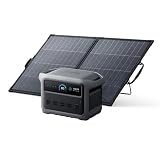
Anker SOLIX C1000 Gen 2
- 1024Wh LiFePO4
- 2000W continuous output
- 49-minute full recharge
- 600W solar input

EcoFlow DELTA 2 Max
- 2048Wh LiFePO4
- 2400W AC output with X-Boost
- expandable to 6kWh
- 15 outlets
All 12 Solar Generators for Off-Grid Cabins Compared in 2026
The table below lists every unit in this guide with the three numbers that decide whether it can run a cabin. Usable capacity is lower than the printed watt-hour figure on every model here, because the inverter itself draws power whenever the unit is switched on.
| Product | Specifications | Action |
|---|---|---|
| BLUETTI AC180 |
|
Check Latest Price |
 BLUETTI Elite 100 V2 BLUETTI Elite 100 V2 |
|
Check Latest Price |
| Anker SOLIX C1000 Gen 2 |
|
Check Latest Price |
 Jackery Explorer 1000 v2 Jackery Explorer 1000 v2 |
|
Check Latest Price |
 OUPES Mega 1 OUPES Mega 1 |
|
Check Latest Price |
| EcoFlow DELTA 2 Max |
|
Check Latest Price |
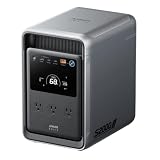 Anker SOLIX S2000 Anker SOLIX S2000 |
|
Check Latest Price |
 Jackery HomePower 3000 Jackery HomePower 3000 |
|
Check Latest Price |
 EcoFlow DELTA Pro 3600Wh EcoFlow DELTA Pro 3600Wh |
|
Check Latest Price |
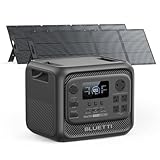 BLUETTI Elite 300 BLUETTI Elite 300 |
|
Check Latest Price |
 EcoFlow DELTA 3 Ultra Plus EcoFlow DELTA 3 Ultra Plus |
|
Check Latest Price |
 PECRON F3000LFP PECRON F3000LFP |
|
Check Latest Price |
1. BLUETTI AC180 Review: The Most Complete Cabin Unit
BLUETTI AC180 Portable Power Station 1152Wh 1800W LiFePO4 Solar Generator
1152Wh LiFePO4
1800W continuous 2700W peak
500W solar input
37.4 pounds
11 outlets
Pros
- Clear display showing input and output at a glance
- Full charge in about 1 hour at 1440W AC input
- Charges from wall
- solar
- 12V car or alternator
- Quiet running that does not overheat
- Five-year warranty
Cons
- Heavy at about 37 pounds and awkward to carry far
- Overhead draw of roughly 15-20W shortens runtime on small loads
- Wireless charging pad on top stops working after a few seconds
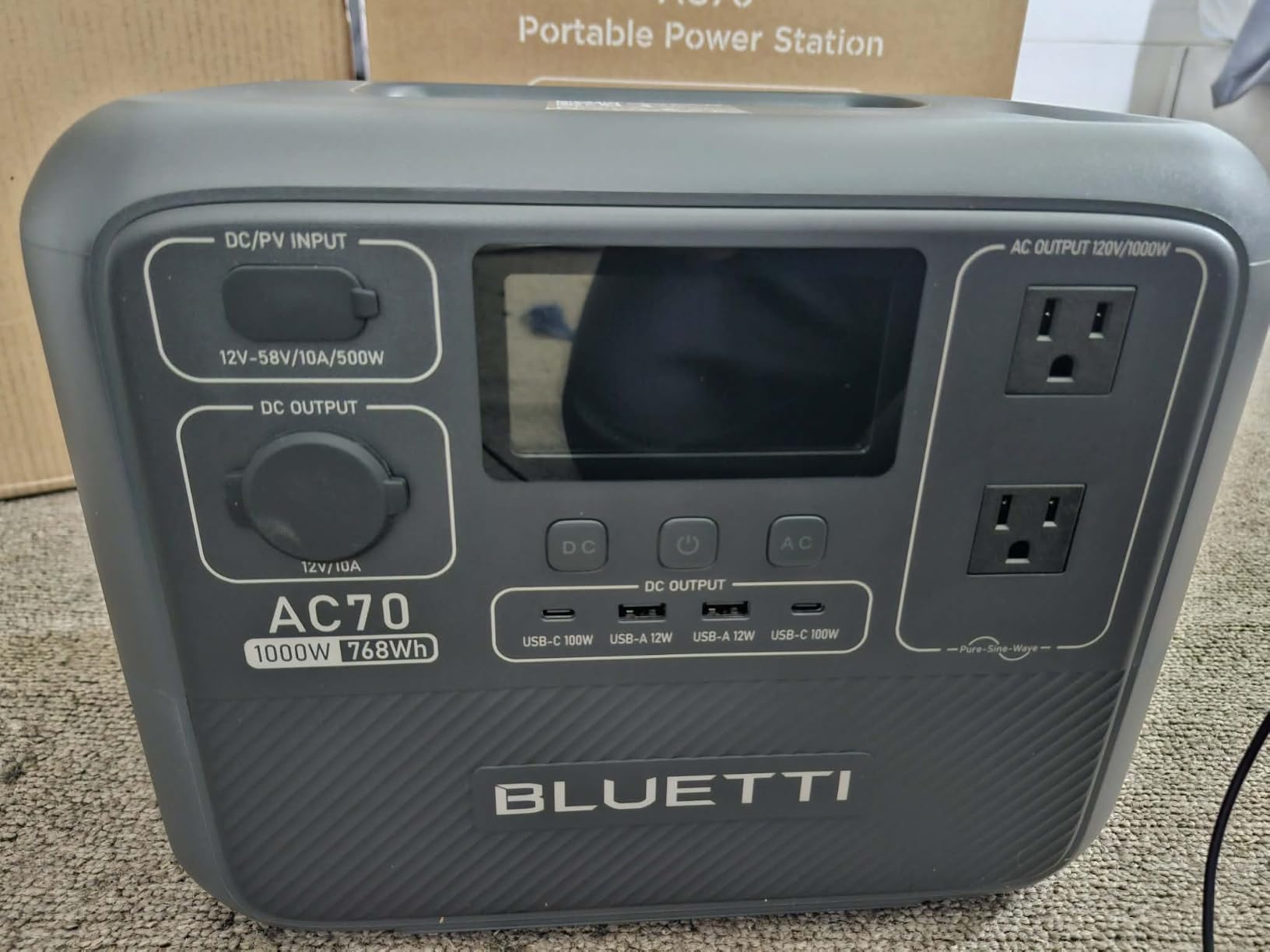
The AC180 is the unit I keep coming back to for a weekend cabin, and it earns that position on balance rather than on any single headline. It stores 1152Wh of lithium iron phosphate, pushes 1800W continuously, and accepts up to 500W of solar through standard connectors. Eleven outlets mean the fridge, a lamp, the router and a phone charger all fit without an adapter block.
The display is the part I noticed most. Input and output wattage sit side by side in watts, so you can see at a glance whether the panels are actually producing or whether the overhead draw is eating your runtime. That transparency matters when you are two hours down a logging road and deciding whether to fire up the microwave.
The honest weakness is efficiency on small loads. Owners measuring the inverter overhead put it at roughly 15-20W with the unit switched on, and only about 90% of rated capacity is usable. A router drawing 12W will therefore run noticeably shorter than the 1152Wh figure suggests, and a few buyers found runtime improved substantially after installing firmware updates and fully cycling the battery once at home.
Recharge speed is the other quiet strength. A full charge takes about an hour at 1440W from a wall, and 500W of solar refills the pack in roughly three hours of good sun. For a cabin owner who drives up on a Friday, that means the unit can be topped up overnight and be ready for the first load of the morning.
How the AC180 handles a real cabin load
A standard 12V cottage fridge is the anchor load in most off-grid cabins. On a 1kWh-class unit like this one, expect a night of normal use rather than several days, so plan a top-up before you leave. Paired with a 500W portable panel, the daily draw of a fridge plus LED lighting plus a router is comfortably within reach on a clear day.
The 20ms UPS switchover is what makes it usable as cabin backup. Routers, laptops and CPAP machines do not tolerate a gap, and 20ms is fast enough that most of them never notice the changeover.
Where the AC180 falls short
Thirty-seven pounds is a two-person lift over a porch step and effectively immovable alone if the cabin sits at the end of a trail. Anyone hauling gear in solo should look at the Elite 100 V2 or the Jackery Explorer 1000 v2 instead.
The 11th outlet, a wireless charging pad on the top panel, is the one reviewers complain about most consistently. It drops out after a few seconds, so treat it as decoration rather than a charging surface.
2. BLUETTI Elite 100 V2 Review: Best When Solar Comes First
BLUETTI Solar Generator Elite 100 V2 with 200W Solar Panel Included, 1024Wh
1024Wh LiFePO4
4000+ cycles to 80%
1000W solar input
25 pounds
10ms UPS
Pros
- Fastest solar input in the 1kWh class at up to 1000W
- Only 25 pounds with an integrated handle
- 10ms UPS keeps routers and laptops alive
- Quiet at 30dB in silent mode
- Includes a 200W solar panel
Cons
- About 768Wh of usable internal capacity drains quickly on small loads
- Real solar input lands at 55-80% of panel rating
- Some settings only change through the phone app
Where most 1kWh machines cap solar input around 300-400W, the Elite 100 V2 accepts up to 1000W. For an off-grid cabin that matters more than the capacity number, because a bigger input ceiling means you can bring your own panels and refill fast when the sun is out.
It is also among the most manageable units in this guide at 25 pounds, with a proper integrated handle rather than recessed grips. That is a real difference when the power station lives in a shed 200 feet from the cabin and you are doing it alone in the dark.
Owners running coolers, CPAP machines, tools and lighting report many hours of use per charge, and the 10ms UPS switchover is fast enough to keep a router and a laptop running through a grid outage without a hiccup. Silent mode holds noise to 30dB, which makes it acceptable to run overnight in a sleeping area.
Plan for the gap between printed and usable capacity. Reviewers put the realistic figure at about 768Wh, so if your load list is a fridge, a lamp and a router, budget for a top-up every day or two rather than a full weekend.
Panel math for a small cabin array
With a 1000W input ceiling, two 400W panels or three 300W panels will drive this unit hard. Real yields typically land at 55-80% of panel rating depending on angle, haze and season, so size on the lower end of that range and you will avoid the disappointment of watching the charge rate stall at midday.
Do not rely on the included 200W panel as your primary array. It refills roughly a quarter of the pack on a good day, which is a maintenance trickle, not a power supply.
Where the Elite 100 V2 falls short
Some charging parameters and output settings can only be changed from the app. If you prefer physical switches or a unit that works the same way offline, this is not it.
DC output current is modest for RV-style distribution, so anyone running a 12V distribution board from this unit will find the headroom tighter than the AC spec suggests.
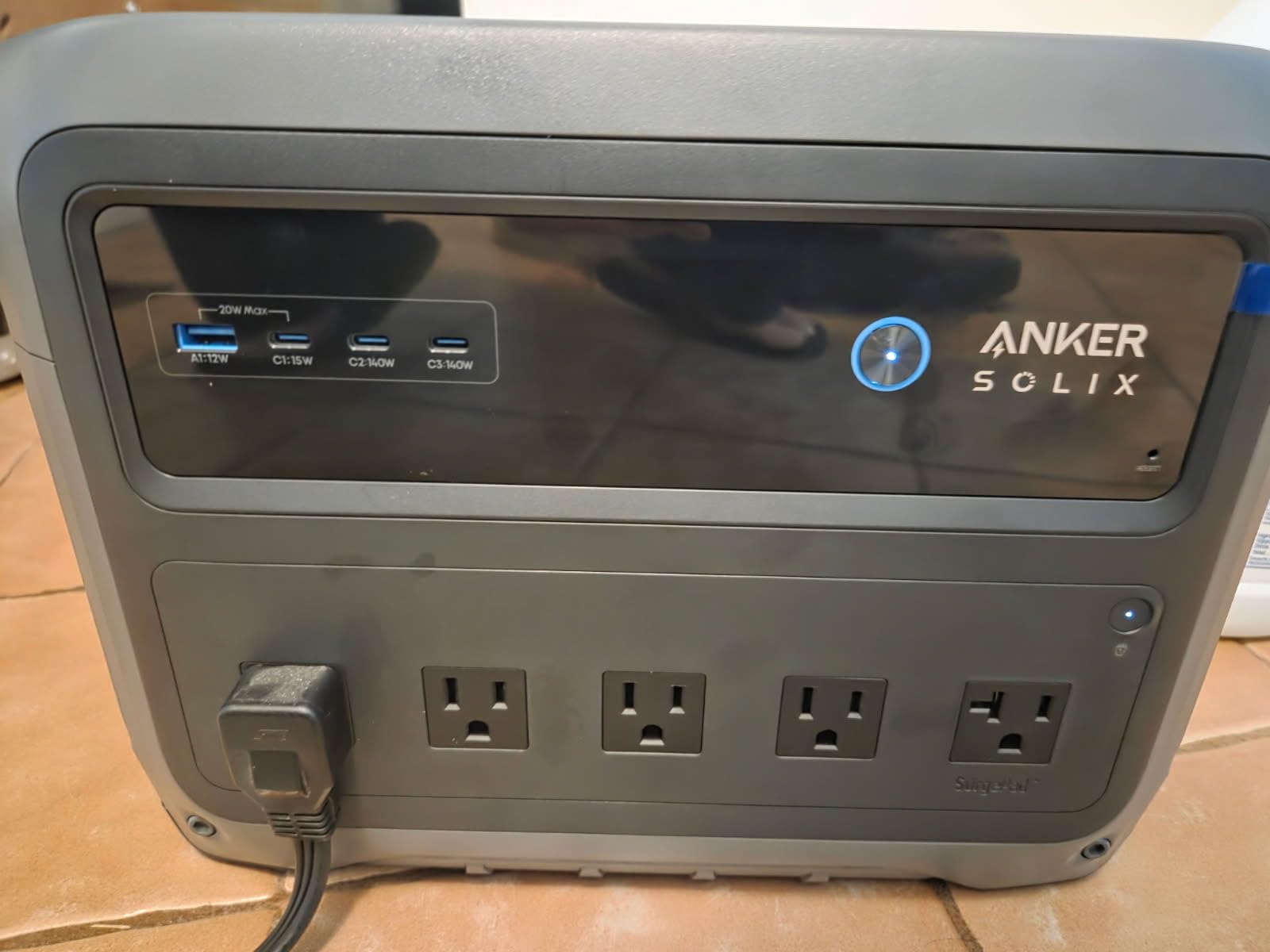
3. Anker SOLIX C1000 Gen 2 Review: The Fastest Way Back to Full
Anker SOLIX C1000 Gen 2 Portable Power Station with 200W Solar Panel
1024Wh LiFePO4
2000W continuous 3000W peak
600W solar input
9 ports
5-year warranty
Pros
- Full recharge in 49 minutes at 1600W input
- Compact and light for a 1kWh class machine
- Under 10ms UPS switchover
- Handles heavy loads while charging from solar
- Anker replaces failed first-generation units
Cons
- Gen 2 loses the expansion option the first generation had
- Some inverter waveform distortion on microwave loads
- Cables need a case that is not included
Charge speed is the identity of this machine. A full recharge takes 49 minutes on a 1600W input, and a top-off from 83% takes about 15 minutes. For a cabin with unreliable grid backup or a long drive between supply points, that turnaround is more useful than a slightly larger battery you rarely fill.
It also handles sustained heavy loads while simultaneously taking solar in, so you can run the freezer and refill the pack at the same time instead of alternating between the two. Under 10ms UPS behaviour keeps CPAP machines, laptops and routers running through a switch without restarting them.
Owners report running a refrigerator for two-plus days on this unit and powering 1400W resistive loads without trouble. A 600W solar input ceiling refills the whole pack in about 1.8 hours, and the included PS200 bifacial panel gives you a starting array if you have nothing else.
The one structural change worth flagging is that the Gen 2 is not expandable, where the first generation accepted extra battery packs. Buyers planning to grow capacity should note that before buying, since adding storage later is not an option here.
Why charge speed matters more than usual off-grid
At a cabin you charge when energy is available: overnight on a wall, or during the short midday window. A 49-minute full cycle means a late arrival still leaves you with a full pack before dark, and it means a cloudy morning is recoverable rather than a lost day.
The app also carries a time-of-use scheduler, so you can hold charge back and discharge it during an expensive peak window if the cabin is on a metered supply.
Where the C1000 Gen 2 falls short
Waveform distortion shows up on microwave loads, and some sensitive or older appliances react to it. If your cabin list includes a microwave on a circuit with sensitive electronics, test it before you rely on it.
Cables and accessories have no included case, and the bundled panel draws some complaints about build quality. Budget for a proper cable bag and a panel bracket if you intend to move the array seasonally.
4. Jackery Explorer 1000 v2 Review: The Easiest Complete Kit
Jackery Solar Generator 1000 v2 and 200W Solar Panel,1070Wh,1500W AC
1070Wh LiFePO4
1500W AC 3000W surge
23.8 pounds
7 outlets
5-year coverage
Pros
- Lightest unit here at 23.8 pounds with a foldable handle
- Runs a full-size side-by-side fridge for about 9 hours
- One-hour emergency charge can be enabled in the app
- Solar and AC charging at the same time
- Three pure sine wave AC outlets
Cons
- Fast one-hour charge must be switched on in the app and ages the battery
- Runs hot on the exhaust side while charging
- The bundled 200W panel sags and needs constant repositioning
The Explorer 1000 v2 is a complete starting package: a 1070Wh lithium iron phosphate battery, a 1500W inverter with 3000W surge, seven outlets including three pure sine wave AC sockets, and a 200W panel in the same box. It is the pick if you want a solar generator for an off-grid cabin without buying three separate parts.
At 23.8 pounds with a foldable handle, it is the easiest unit in the guide to move single-handed. Owners running a full-size side-by-side fridge report about nine hours of runtime, and portable fridges last several days.
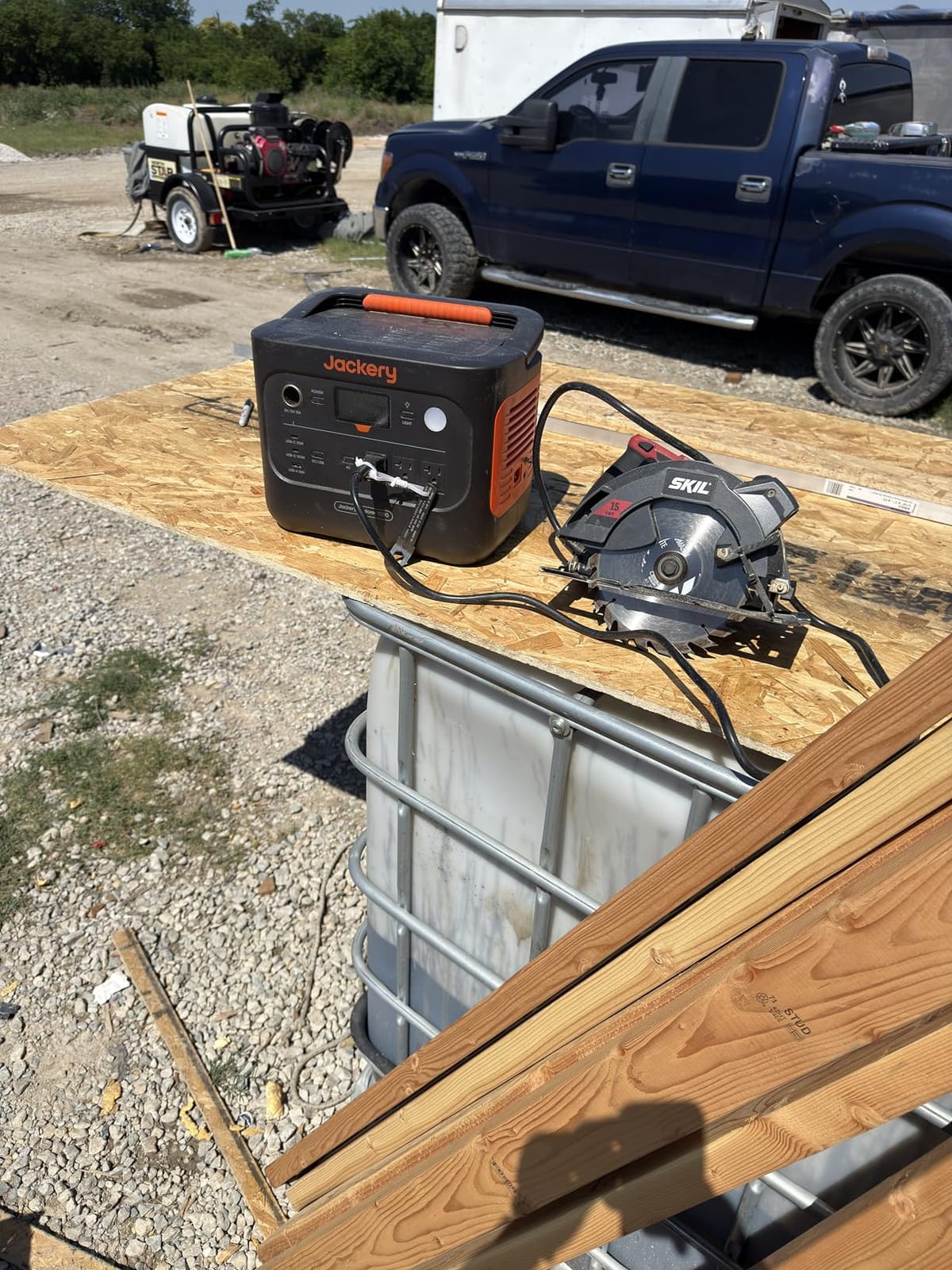
Two details catch new owners out. The one-hour emergency charge has to be enabled manually in the app, and using it repeatedly shortens battery life, so it works best as a Friday-night top-up rather than a daily habit. The unit also runs noticeably hot on the exhaust side while charging, so give it ventilation rather than a closed shelf.
App control also unlocks a 30dB quiet mode, which is genuinely useful when the machine sits in the sleeping loft. The lithium iron phosphate pack is rated for 4000+ cycles and a 10-year lifespan, which is the sort of number that matters if you intend to keep this unit for a decade.
What the bundled panel actually contributes
The 200W SolarSaga panel takes roughly six hours to reach 80% and needs frequent repositioning to follow the sun. Treat it as a maintenance charger for a weekend cabin, not as the way to live off-grid full time.
The short solar cable makes shaded charging awkward, and the panel body is described as flimsier than you would expect. If you intend to run this unit as your primary supply, plan to buy a sturdier 400W panel and a longer lead.
Where the Explorer 1000 v2 falls short
1500W continuous output is modest against the 2000W class machines, so microwaves, power tools and a fridge running at the same time will reach the ceiling. Separate high-draw appliances across a morning and an afternoon rather than assuming simultaneous use.
A minority of buyers report unresolved promotion and service issues, although warranty support itself draws repeated praise. Check the panel shipping separately from the unit and plan for a second delivery window.
5. OUPES Mega 1 Review: High Output From a Lightweight Pack
OUPES Mega 1 Portable Power Station 1024Wh 2000W (4500W Surge)
1024Wh LiFePO4
2000W continuous 4500W stated surge
800W solar input
expandable to 5120Wh
Pros
- 2000W continuous output is unusually high for a 1kWh pack
- 0-80% in about 36 minutes on AC
- Expands to 5120Wh with two B2 batteries
- Under 30 pounds with well-spaced outlets
- 800W solar input on standard MC4 connectors
Cons
- Stated 4500W surge is optimistic and some units trip around 2100W
- Proprietary charging cable is hard to source
- Cooling fan is audible during every charge cycle
- Plastics feel cheap and Wi-Fi in the app is unreliable
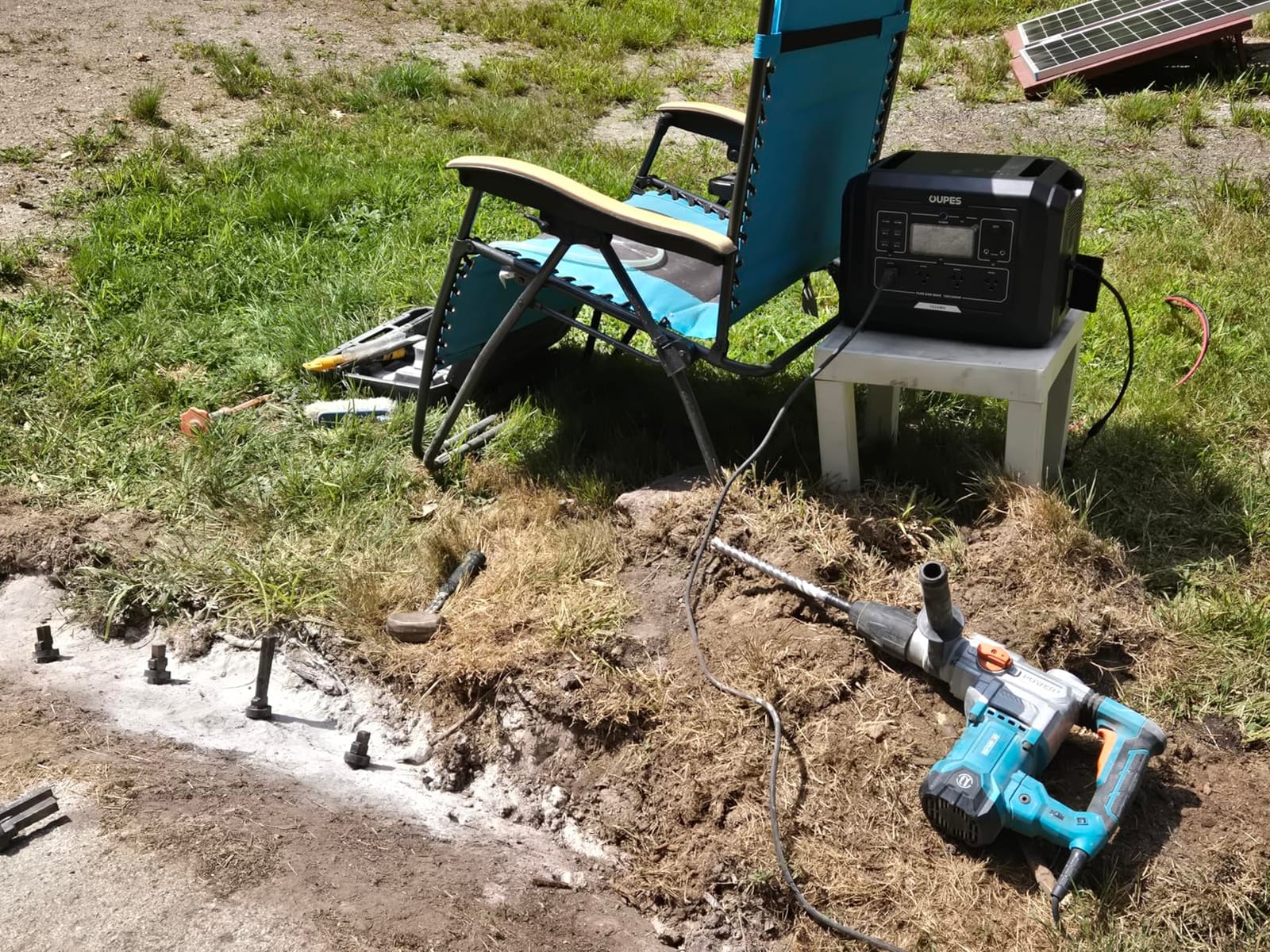
The Mega 1 makes a straightforward argument: for a cabin that also needs to run a circular saw or a pressure washer, output matters more than capacity, and 2000W continuous from a 1kWh pack is rare. It also expands to 5120Wh with two B2 extra batteries without replacing the inverter, so a weekend retreat can grow into a full-time homestead over time.
Charging is quick, reaching 80% in about 36 minutes on AC, and 800W solar input through standard MC4 connectors means it will work with panels you may already own. Reviewers consistently frame it as the best power-per-dollar option in this class.
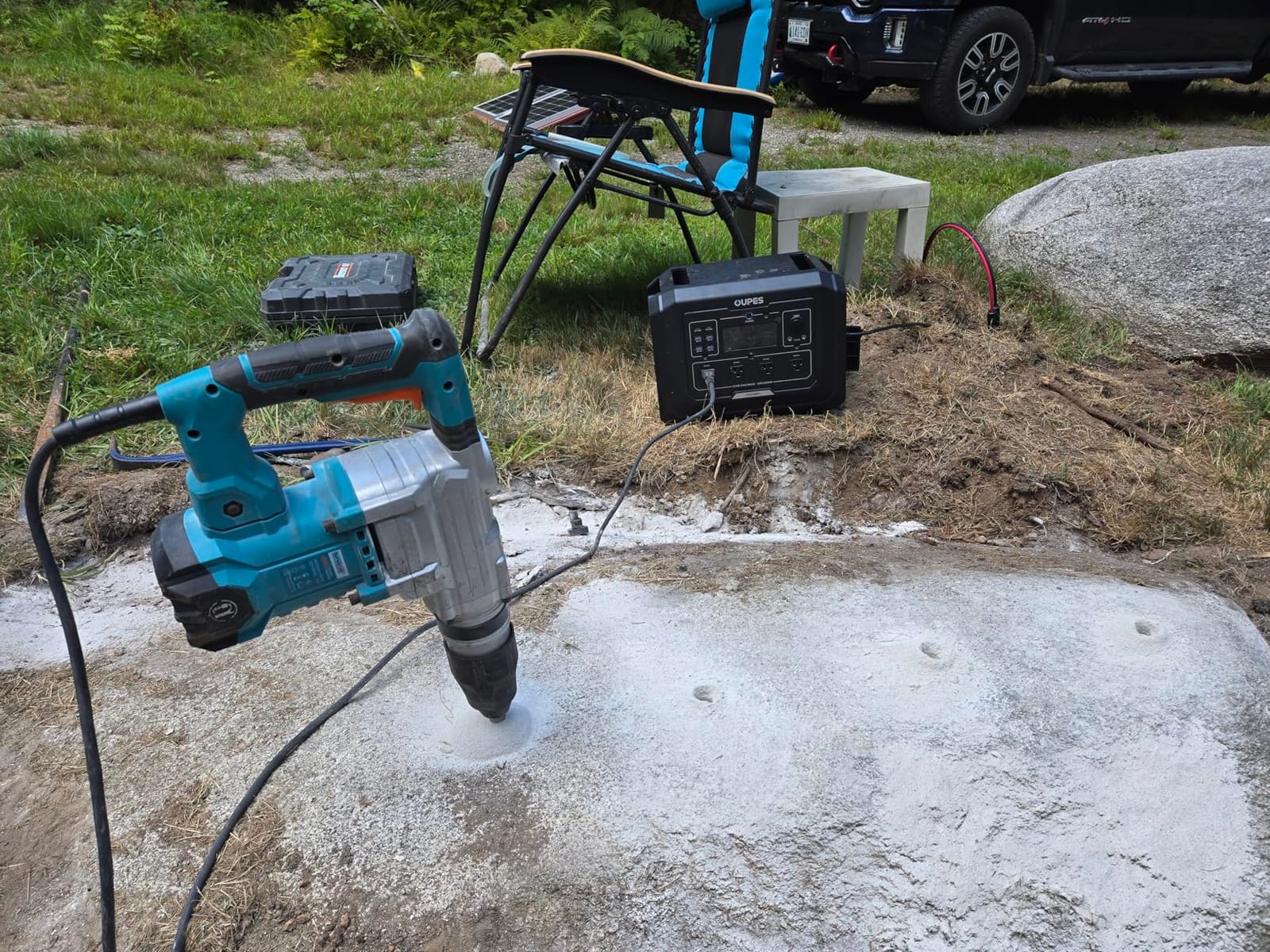
Reported real-world use includes fridges, microwaves, lighting, Starlink terminals and coffee makers, which is a decent cross-section of a cabin week. Under 20ms UPS transfer covers routers and laptops. The lithium iron phosphate cells are rated for 3500+ cycles and the warranty runs five years.
Now the caveats. The advertised 4500W surge is optimistic and some units trip between roughly 2050W and 2200W, so size tools on the continuous figure. The proprietary charging cable is hard to source, the cooling fan runs audibly during any charge, and Wi-Fi in the app is unreliable even though Bluetooth behaves.
Matching a tool list to inverter headroom
Motorised tools draw a surge far above their running watts, which is exactly where a boosted surge rating would help. Since the real surge on this unit is closer to its 2000W continuous figure, budget for one tool at a time and keep the fridge on a separate circuit during the session.
If your cabin work is mostly cordless, a smaller unit with better capacity is the better trade. The Mega 1 earns its place when you have corded tools or a compressor on the list.
Where the Mega 1 falls short
The case plastics feel cheap and reviewers doubt it will tolerate knocks or weather exposure, so keep it indoors or in a covered box. A cabin is a wet place, and a power station is not a marine product.
It is also not returnable through Amazon, which removes the easiest remedy if a unit arrives faulty. OUPES support has replaced a defective unit quickly for at least one buyer, but the weight of that risk sits with you.
6. EcoFlow DELTA 2 Max Review: Best Balance for a Working Cabin
EF ECOFLOW DELTA 2 Max Solar Generator 2048Wh With 400W Solar Panel
2048Wh LiFePO4
2400W AC 3400W with X-Boost
expandable to 6kWh
15 outlets
400W panel
Pros
- 0-80% in 43 minutes using combined AC and solar
- Expands to 6kWh with extra batteries
- 2400W output with X-Boost reaching 3400W
- 15 outlets for mixed loads
- Bright display and a capable app
Cons
- Solar connection needs extra XT60i cables that are not included
- Real solar ceiling is about 880W across two ports
- No 240V output so electric clothes dryers will not run
The DELTA 2 Max is the first unit in this list where the arithmetic starts to look like a small cabin rather than a weekend shelter. 2048Wh of storage and 2400W of continuous output cover a full-size refrigerator, lighting, a router and a few hours of tools at the same time, and expansion to 6kWh is available when you outgrow it.
Charging speed is exceptional. Combined AC and solar input takes it from zero to 80% in 43 minutes, and a full charge from a wall takes under two hours. Fifteen outlets mean you can leave a coffee maker, a laptop charger and a lamp connected without hunting for a free socket.
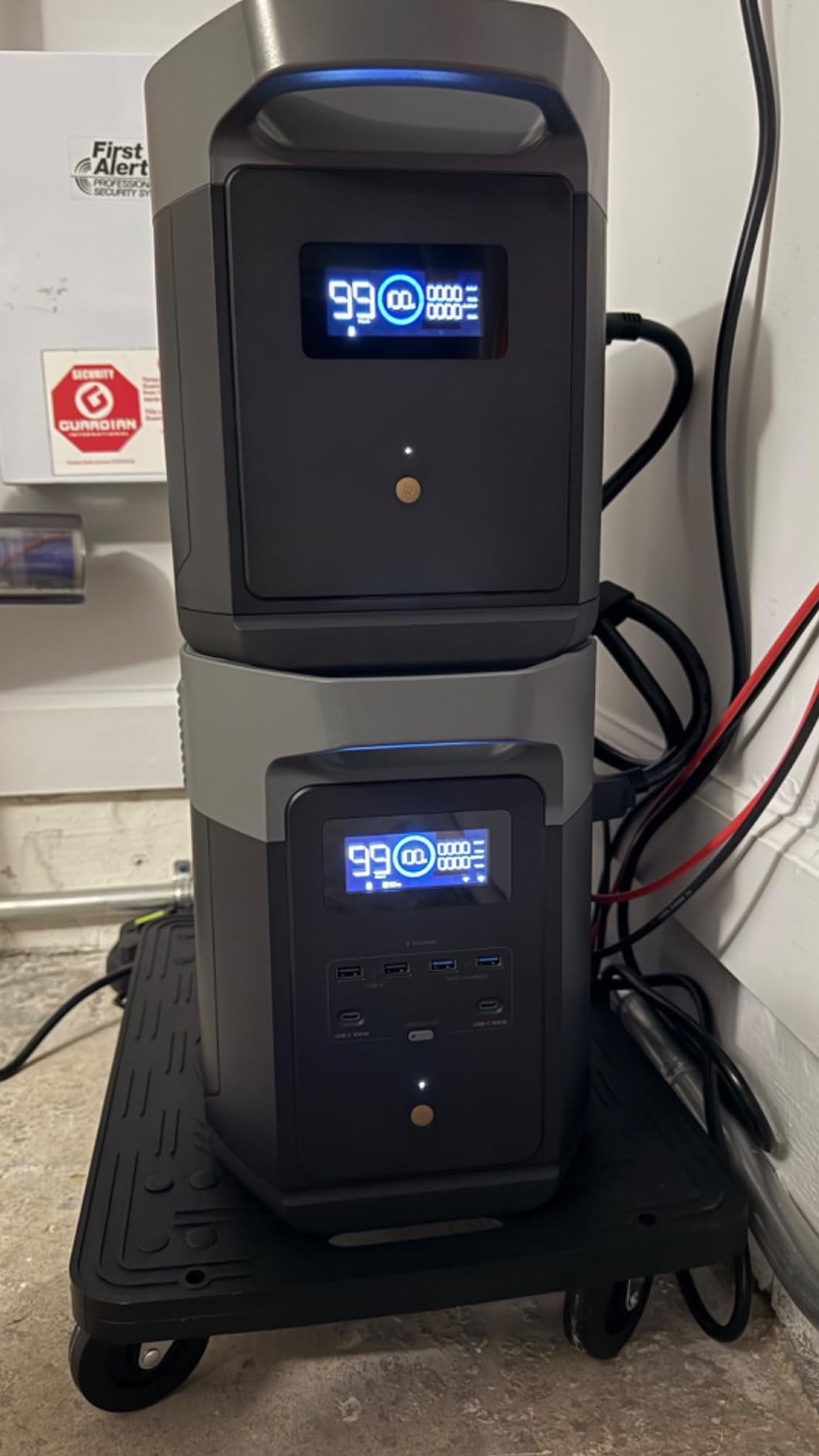
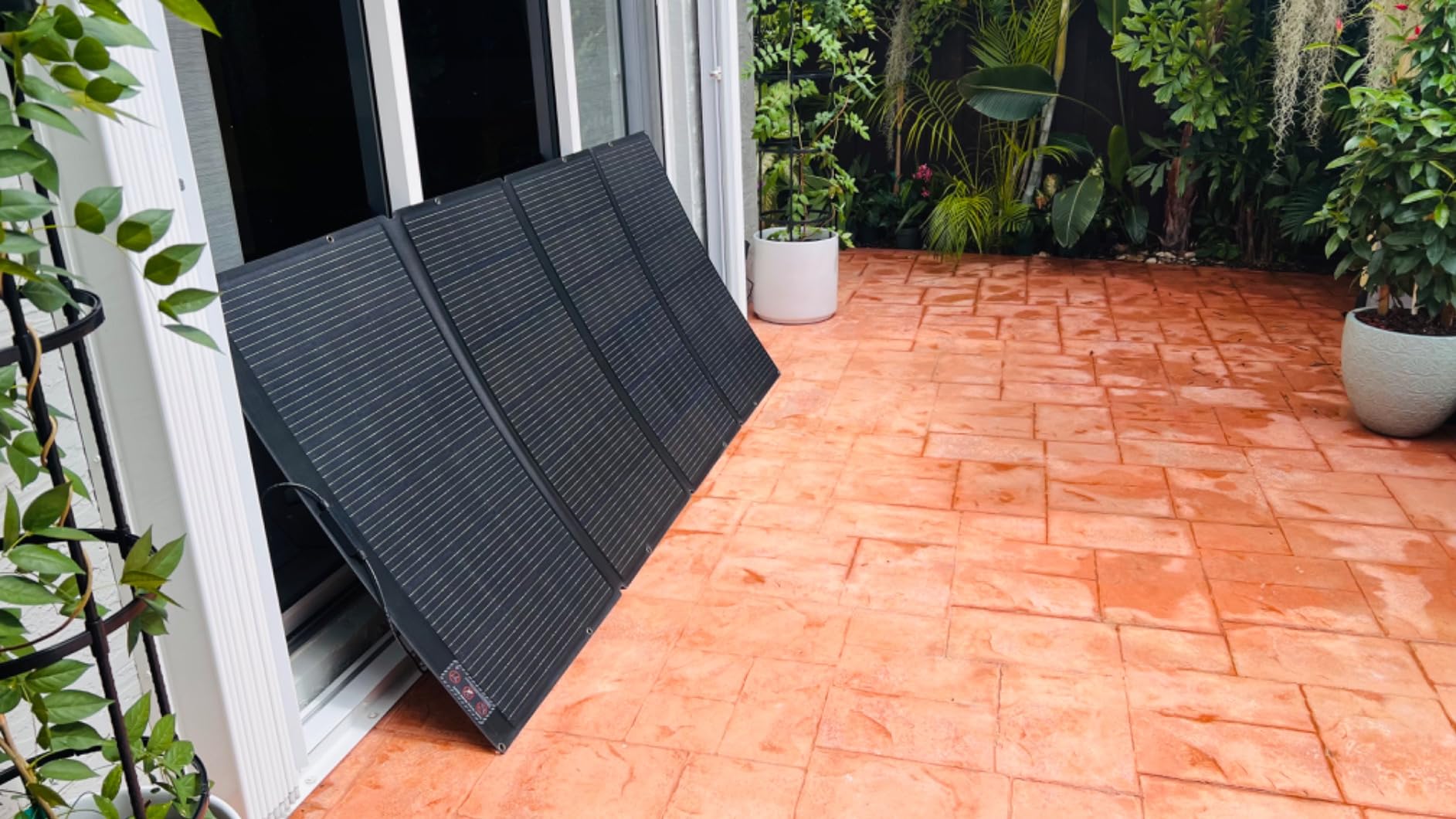
Owners report running a full-size refrigerator for roughly 21 hours on a charge, and several describe cutting household electricity use substantially by running the unit on solar during daylight hours. The 400W bundled panel is IP68 rated, folds compactly and weighs 35.3 pounds.
The most useful piece of practical advice in the reviews concerns cabling. The panel cannot plug straight in without extra XT60i to MC4 cables, so buy those before your first sunny day. The real solar input ceiling is about 880W across two ports, which caps how large an array you can usefully attach.
How much of a cabin it actually covers
A 2kWh class unit handles the classic off-grid load list without drama: a fridge and freezer running together, LED lighting, a router, phone charging and occasional power tools. That is a weekend cabin in winter, provided you keep the margin we cover in the sizing section below.
For a full-time homestead with a well pump, electric heat or a washer and dryer, this is where you hit the wall. Expansion to 6kWh extends runtime but not output, so anything above 2400W still needs a different machine.
Where the DELTA 2 Max falls short
There is no 240V output, so electric clothes dryers and other 240V appliances are off the table. If your cabin laundry plan depends on a dryer, size for that separately.
The bundled panel needs constant repositioning to track the sun, and its case is a poor stand. One reviewer also reported a failure under 100 hours, replaced with a refurbished unit, so keep the warranty paperwork accessible if you buy from a third-party seller.
7. Anker SOLIX S2000 Review: The Longest Refrigerator Runtime Here
Anker SOLIX S2 Portable Power Station, 2,010Wh, 1,500W
2010Wh LiFePO4
1500W continuous 3000W peak
400W solar input
6W idle draw
35.7 pounds
Pros
- Lowest idle draw in this guide at about 6W
- Fridge runtime of 33-35 hours measured by owners
- Compact for a 2kWh machine at 35.7 pounds
- Outlets on both front and rear for tidy setups
- Under 10ms UPS switchover
Cons
- Charging fan is audibly droning at 1200W input
- Strong burn-off odour during the first charge cycle
- No 12V DC car port
- At 1500W continuous it will not run a room air conditioner for long
The S2000 solves a problem the other 2kWh units do not: overhead consumption. Measured idle draw is about 6W, and roughly 3W in UPS mode, which is the main reason its refrigerator runtime of 33-35 hours beats machines with larger rated capacities.
That number matters more than raw watt-hours at a cabin, because most of what you plug in is small. A router, a lamp and a freezer running together spend far more hours at low draw than at high draw, and efficiency losses are proportionally larger when the load is small.
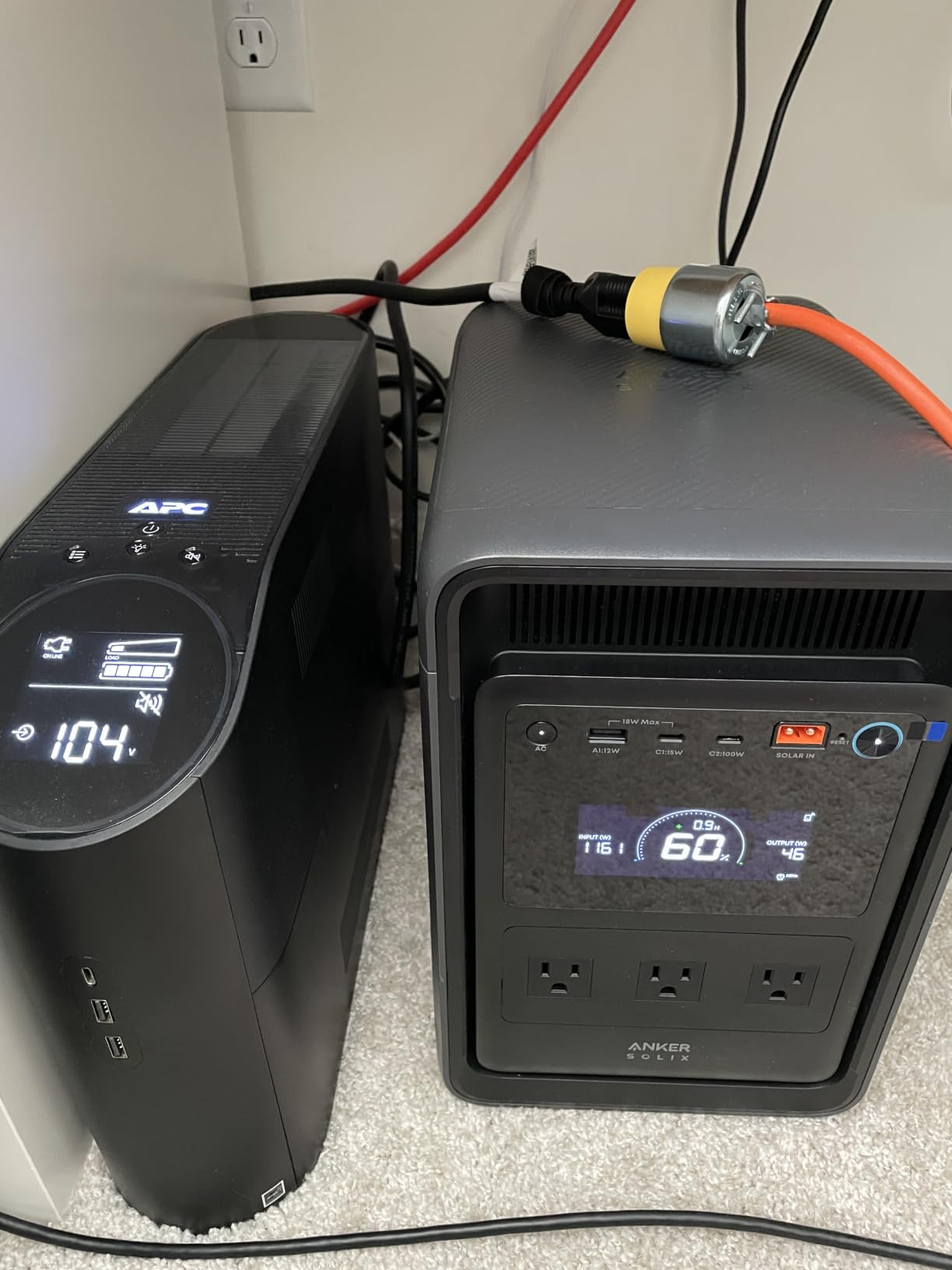
Owners measuring a 220L fridge report roughly 3% consumption per hour, which lines up with the 33-35 hour claim. The pack is built on 314Ah cells with a 10,000-cycle rating, and the footprint is small for its class, around 8.2 by 11.1 by 12.7 inches.
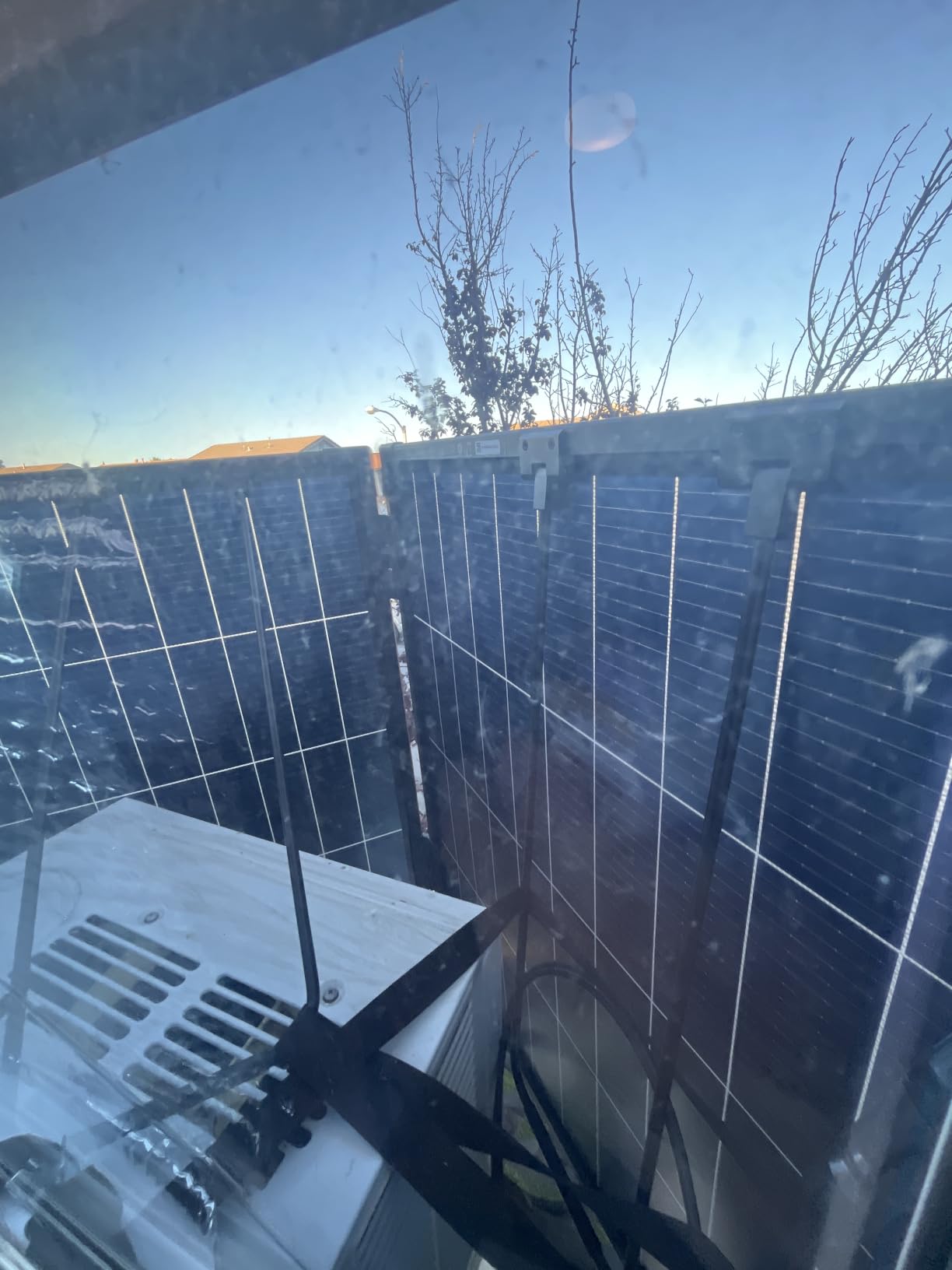
Recharging comes from six sources, including up to 400W of solar, plus AC, generator, alternator and car. The app offers time-of-use scheduling, custom charge limits and energy tracking, and outlets sit on both the front and rear so you can build a tidy setup in a cabinet.
Why low overhead draw changes the sizing decision
Most cabin load lists are dominated by small continuous loads rather than one big burst. When overhead losses are under 10% instead of 20%, the same 2kWh pack effectively delivers an extra half kWh to the appliances you actually care about, and the case for stepping up to a 3kWh machine weakens considerably.
This is the quiet efficiency argument for choosing an Anker S2000 over a nominally similar competitor. It matters most for anyone running a freezer overnight with nothing else switched on.
Where the S2000 falls short
Output is capped at 1500W continuous, so a room air conditioner or an electric heater is out of reach for anything but short bursts. If your heating plan runs on electricity, that is a hard stop.
At 35.7 pounds it is a two-hand carry with no proper handle, and there is no 12V DC car port, so 12V accessories need an adapter. Expect a noticeable burn-off smell on the first charge; it fades after the first cycle.
8. Jackery HomePower 3000 Review: For Cabins With Big Appliances
Jackery HomePower 3000 and 2x200W Solar Panels, 3072Wh, 3600W AC Output
3072Wh LiFePO4
3600W continuous 7200W surge
20ms UL-certified UPS
2x 200W panels
59.5 pounds
Pros
- Runs camper air conditioning
- microwave
- fridge and TV at the same time
- Very quiet in normal use
- Full recharge in 1.7 hours on hybrid AC and DC
- A full-size fridge runs 1-2 days on a charge
- Compact for a 3kWh machine
Cons
- No expansion with extra batteries
- About 60 pounds and no factory wheels
- Two 200W panels need roughly 9-11 hours for an 80% charge
- UPS mode needs a minimum load to hold output steady
When a cabin has a real appliance problem rather than a lighting and fridge problem, this is the machine. 3600W continuous and 7200W surge covers a microwave, a fridge, fans and even a camper air conditioning unit at the same time, which no 1kWh or 2kWh unit in this guide will do.
Owners use it as a trailer or cabin power source and report a full-size fridge running one to two days on a charge. Operation is very quiet, and the UL-certified UPS switches in 20ms or less for computers and networking gear.
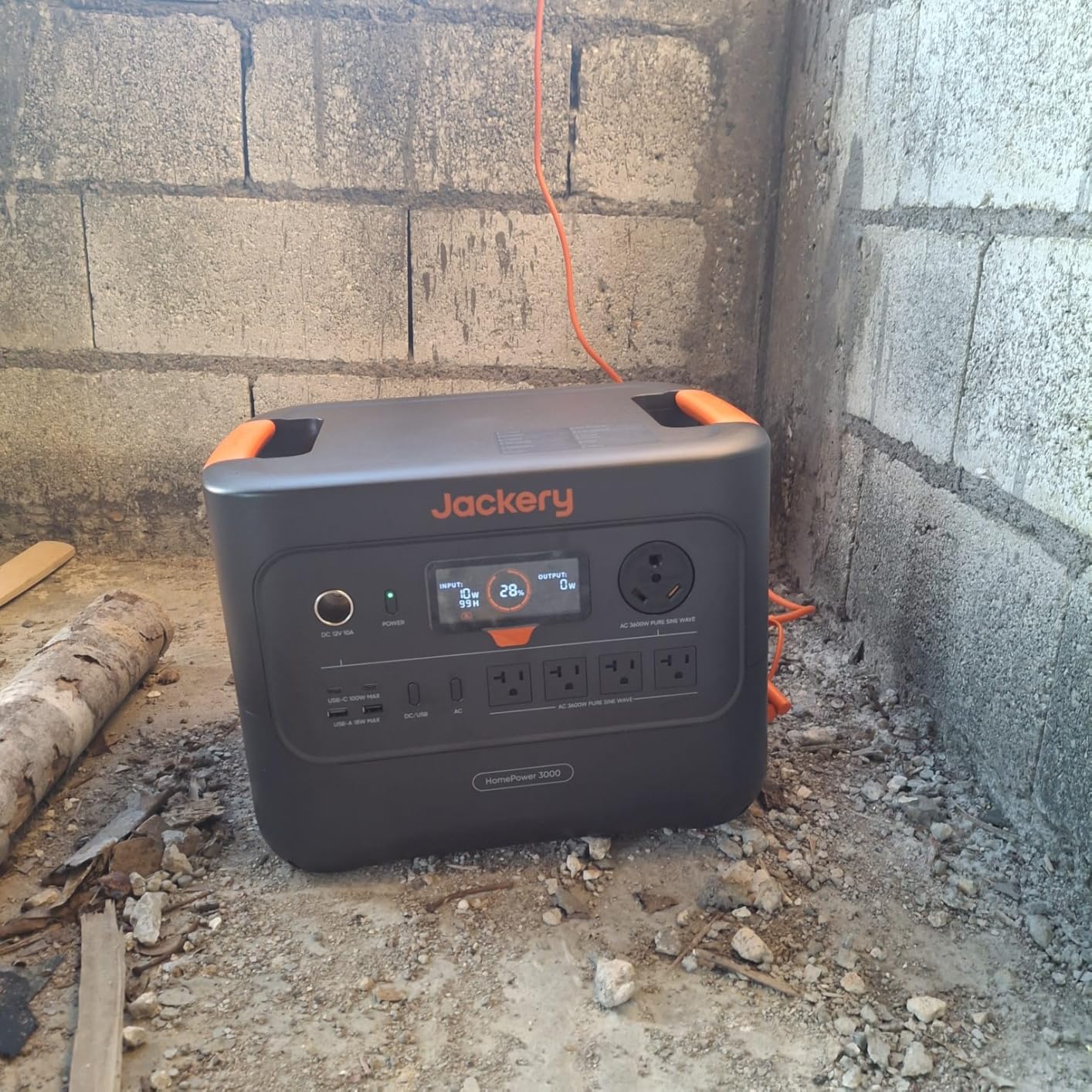
Recharging is fast when you have a wall outlet, with a full cycle in 1.7 hours using hybrid AC and DC or 2.2 hours on AC alone. The lithium iron phosphate pack is rated for 4000 cycles to 70% capacity, and for a 3kWh class machine the footprint is unusually small.
Two things limit it. It cannot be expanded with extra batteries, so 3072Wh is the ceiling for the life of the unit. At about 60 pounds with no factory wheels, plan on a wheel kit before you try to move it across a gravel drive alone.
Which cabins actually need 3kWh and 3600W
The load that justifies this is simultaneous: fridge plus freezer plus lighting plus router plus a power tool or a microwave, all in one session. Weekend cabins rarely need that. A cabin with a well pump, a washing machine or electric heat on the same circuit does.
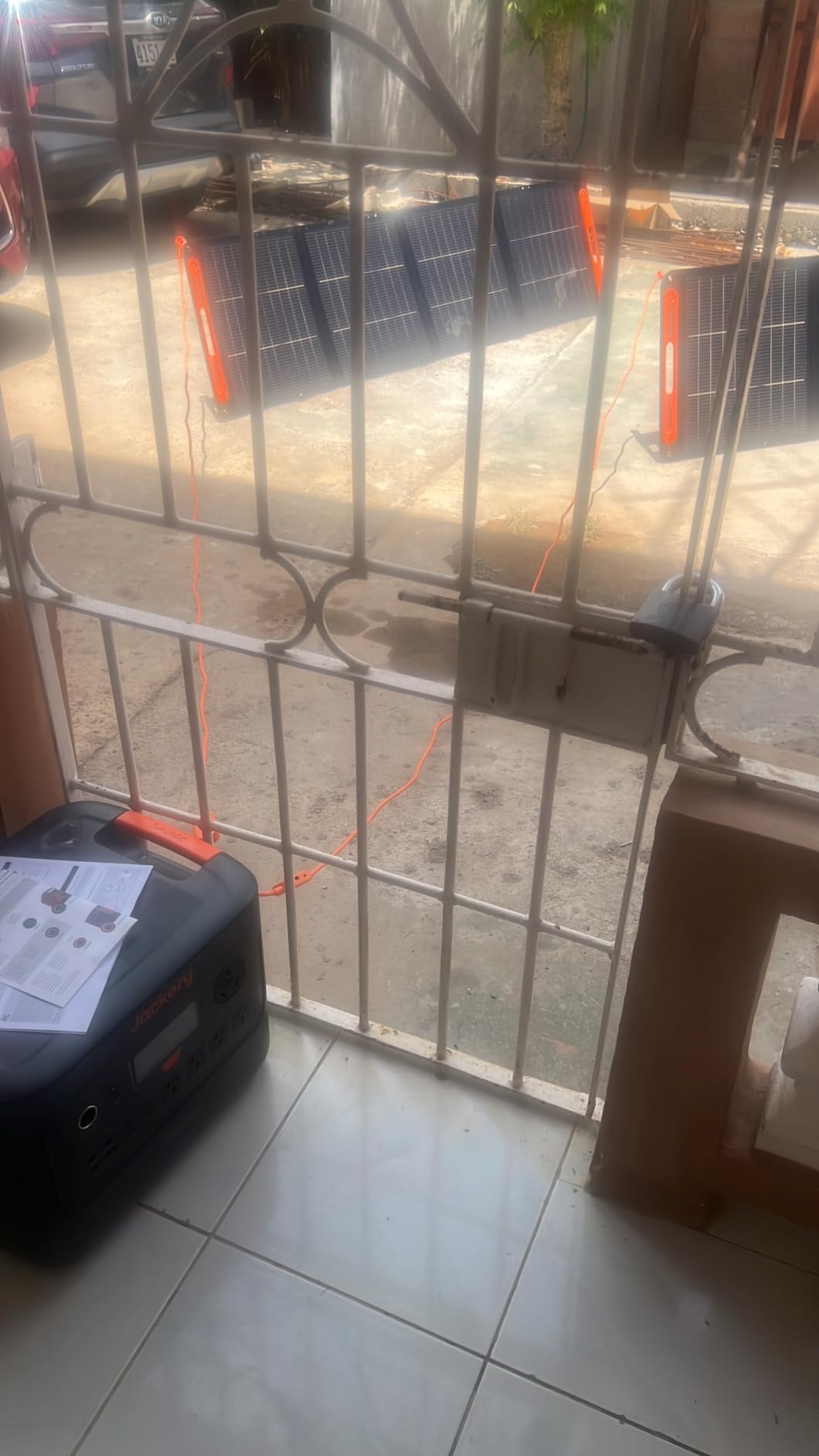
For solar-only operation, two 200W panels taking 9-11 hours for 80% is the weak point. That array suits a maintenance top-up, not a primary supply, so plan on buying larger panels or accepting a wall outlet during your visits.
Where the HomePower 3000 falls short
UPS mode needs a minimum load to hold output steady, so a single small router may cause the output to drop out repeatedly. Test your actual standby load before relying on it as a backup.
One buyer also found that the promoted Alexa integration does not work and that support responses were unhelpful, although warranty service itself is generally responsive. Verify what you need from the app before you are dependent on it.
9. EcoFlow DELTA Pro 3600Wh Review: When It Stays Put
EF ECOFLOW Solar Generator 3.6KWh DELTA Pro with 400W Portable Solar Panel
3600Wh capacity
3600W output
15 outlets
400W panel at 22.4% efficiency
5-year warranty
Pros
- Large 3600Wh capacity paired with 3600W output
- 15 outputs including 5 AC outlets and a car port
- App control over status
- temperature and charge scheduling
- 400W panel reaches a 22.4% conversion rate and is IP68 rated
- Panel folds into a carry case
Cons
- Very heavy at 99 pounds and hard to reposition
- One 400W panel takes about 11 hours for a full recharge
- Power station and panel arrive in separate packages
- Older chemistry and design against newer LFP designs
This is the pick for a cabin where the power station lives in one spot and never moves. At 99 pounds, no one is carrying it to the woodshed, so the weight that disqualifies it for portable use becomes irrelevant, and 3600Wh of storage with 3600W of output covers a genuinely substantial load list.
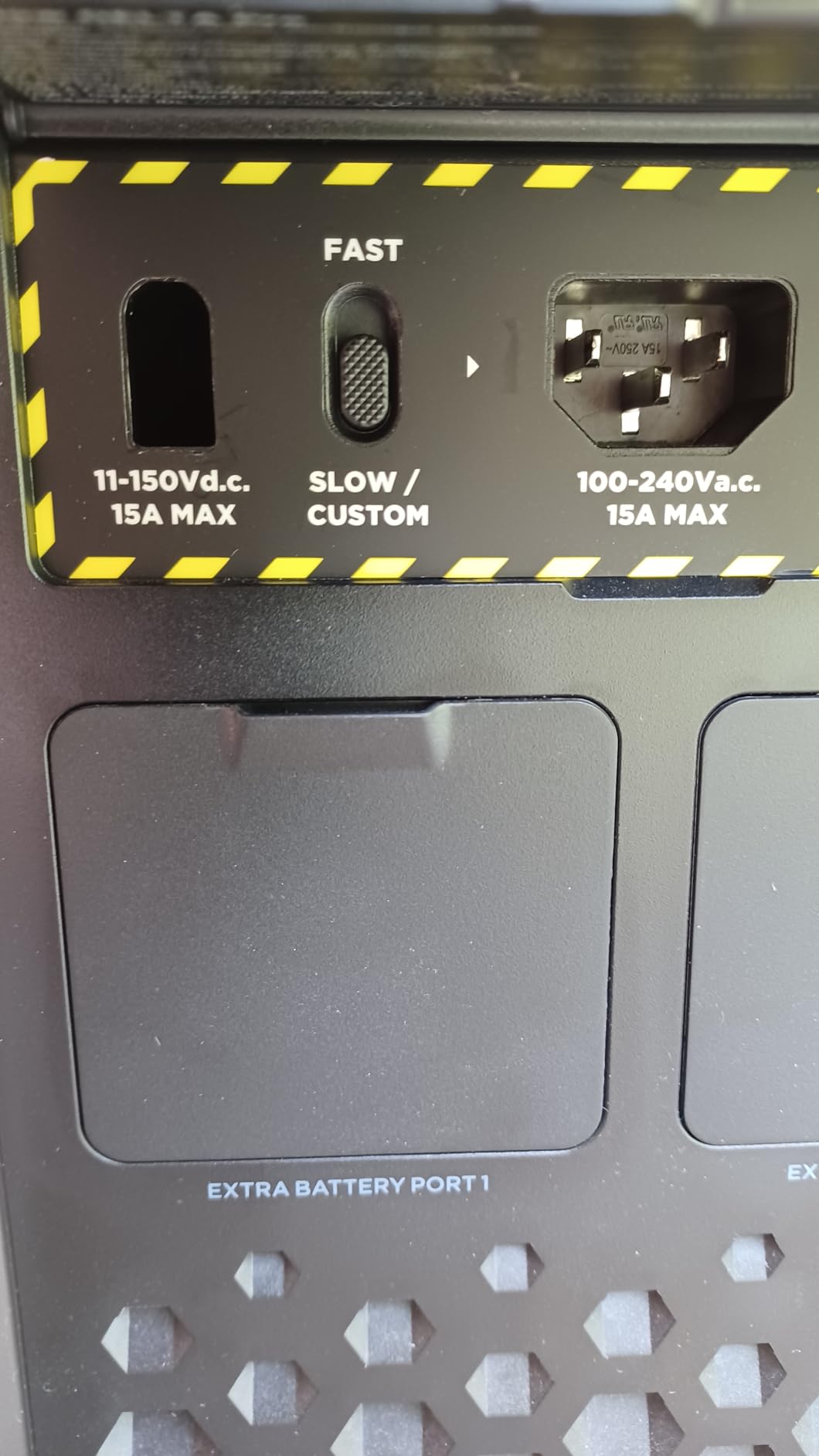
Fifteen outputs including five AC outlets, four USB-A, two USB-C, two DC, a car port and an Anderson port mean a workshop, an office and a kitchen can all be served from one box. The app covers status, temperature and charge scheduling over Wi-Fi or Bluetooth.
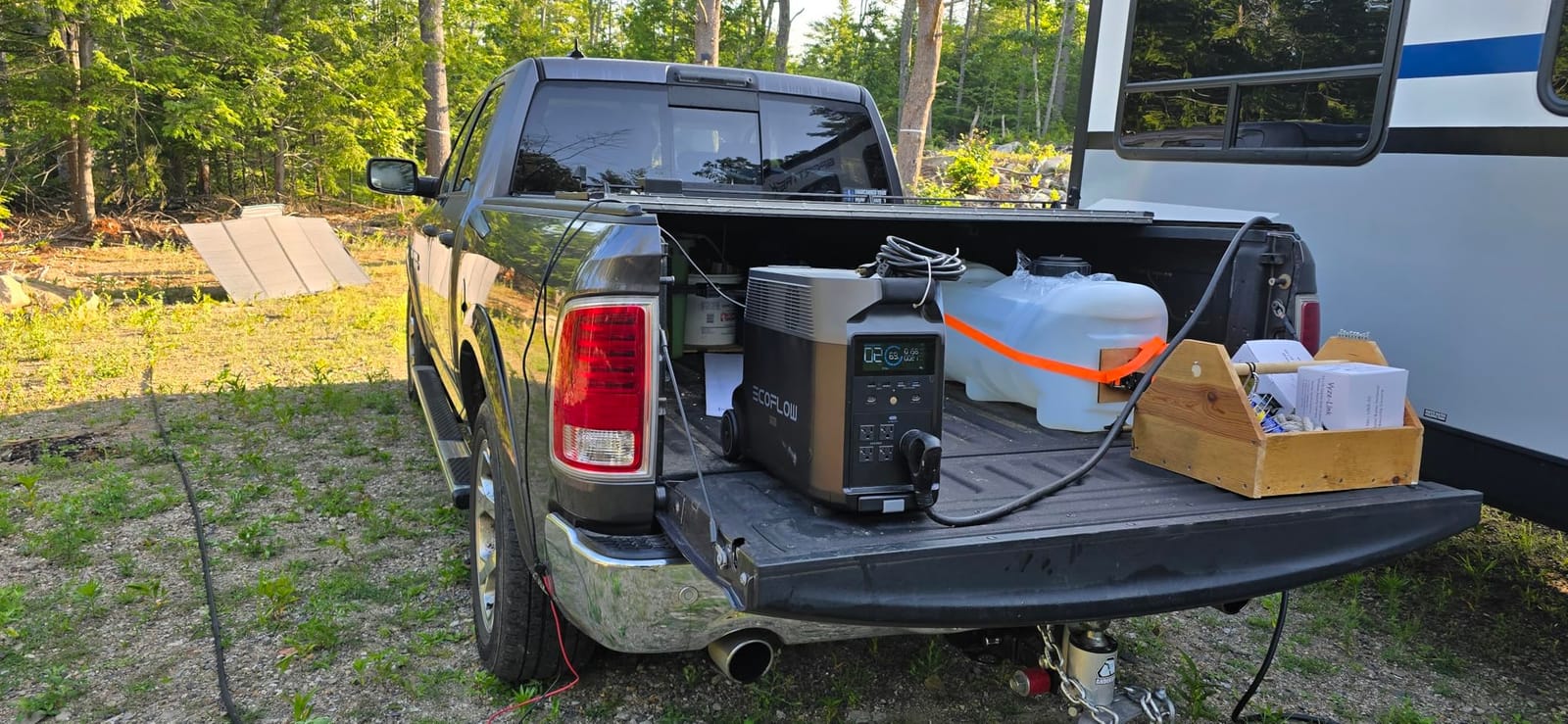
The bundled 400W panel is genuinely well made, with a 22.4% conversion rate and an IP68 rating, and it folds into its own case at 35.3 pounds. That matters in a place with snow and rain, where a lightweight panel is more likely to be damaged or blown over.
The single-panel recharge time of about 11 hours is the real limitation. A full setup would use three 400W panels for roughly 3.5 hours, and owners who stay for extended periods treat the array as the primary supply rather than an accessory.
When a fixed location changes the maths
Once the machine is not moving, expansion options matter less than total storage, and the argument flips in this unit’s favour. A 3600Wh pack covers a fridge, freezer, lighting, router, laptop and a decent stretch of evening power use in one charge.
It also frees you to run a proper fixed panel array on a roof or rack, which is the arrangement this unit is really designed for. The included case doubles as a folding panel support.
Where the DELTA Pro falls short
Ninety-nine pounds is immovable for one person, so a dolly or a second pair of hands is a requirement rather than a nicety. Plan the route from the vehicle to the final position before it arrives.
Design and chemistry trail the newer LFP models in this list, and the low review count leaves less long-term field evidence behind it. If you are staying in a remote location, the warranty terms and the availability of replacement parts matter as much as the headline capacity.
10. BLUETTI Elite 300 Review: Smallest 3kWh Footprint
BLUETTI Solar Generator Elite 300 & 2x200W Solar Panel 3014.4Wh LFP Battery
3014Wh LFP
2400W AC 4800W surge
78 minutes to 80%
TT-30 RV outlet
2x 200W panels
Pros
- Roughly 59% smaller than traditional large power stations
- True 20A right-angle blade outlets and a 30A 12V DC output
- 80% charge in about 78 minutes
- 24/7 phone support from technicians
- Large multicolor display readable from a distance
Cons
- Not expandable
- so 3kWh is the ceiling
- Solar input capped at 60V and 20A and exceeding it voids the warranty
- Some settings and firmware updates only through the app or Wi-Fi
The Elite 300 solves a problem most 3kWh machines ignore: cabin storage space. Reviewers note it is roughly 59% smaller than traditional large power stations, which in a small cabin with a wood stove and a gear closet is worth as much as extra capacity.
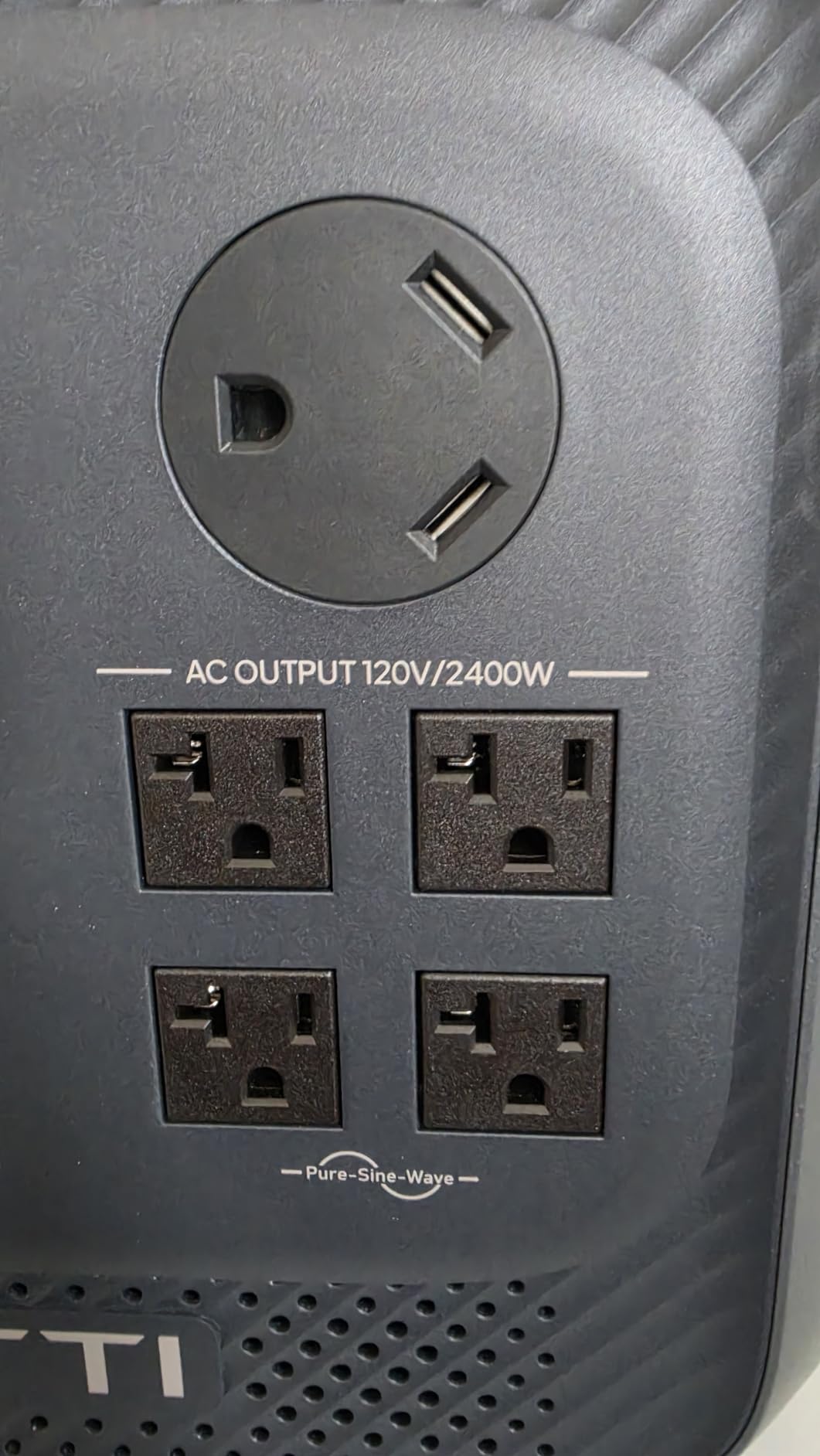
You also get proper 20A right-angle blade outlets and a 30A 12V DC output, so it can feed an RV or a DC distribution board without adapters. It reaches 80% charge in about 78 minutes and pulls around 520W from a 480W bifacial panel, which is efficient solar harvesting.
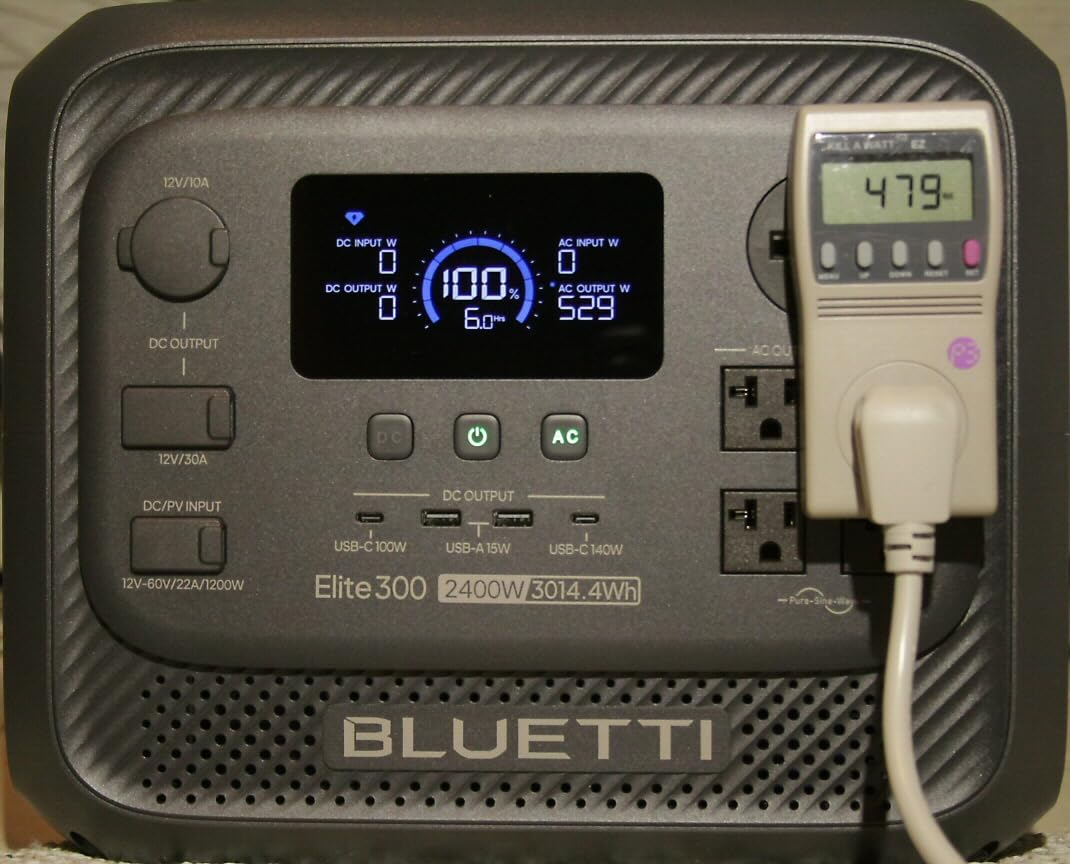
Field reports include powering a travel trailer through a summer of dispersed camping, running a fridge, fans and phone charging for a full day, and handling a continuous 2400W load without trouble. Support is repeatedly described as responsive, with 24/7 phone access to technicians and negligible self-discharge when switched off.
The warranty-sensitive detail is the solar input ceiling of 60V and 20A, or 1200W. Exceeding that voids the warranty, so check your panel voltage and series count before connecting anything more ambitious than the two 200W panels in the box.
Compact 3kWh versus expandable 3kWh
Several machines in this guide offer 3kWh now with expansion later, and this one does not. If your load list is stable and you have the space solved, the smaller footprint is the better outcome. If you expect to add a second battery within a few seasons, take the expandable option instead.
Outdoor and RV users get something the expandable units lack here, which is 20A blade outlets rather than the 10-15A sockets most portable units fit.
Where the Elite 300 falls short
At roughly 50-58 pounds with only recessed grips, it is a two-person lift. Budget for a dolly if the route to the cabin involves steps or loose ground.
The soft-start voltage ramp struggled to start a 500W dehumidifier compressor in at least one report, which is worth knowing if you plan to run a dehumidifier through a humid autumn or spring. Some firmware changes are also only reachable through the app or Wi-Fi.
11. EcoFlow DELTA 3 Ultra Plus Review: Built to Grow
EF ECOFLOW 3072Wh DELTA 3 Ultra Plus Power Station with 2X400W Solar Panels
3072Wh expandable to 11kWh
3600W continuous 7200W surge
X-Quiet 3.0
under 10ms UPS
Pros
- Expands from 3kWh all the way to 11kWh
- 3600W continuous output with near-silent X-Quiet 3.0 running
- Reaches 80% in under an hour
- LiFePO4 pack with EV-grade CTC structure rated for 10 years of daily use
- Under 10ms UPS for computers
- routers and medical equipment
Cons
- Only 3 total power outlets listed
- fewer than competing 3kWh units
- The unit and the 400W panels arrive in separate packages
The DELTA 3 Ultra Plus is the one to buy if you know your load list will grow. It starts at 3072Wh and expands to 11kWh, so a weekend cabin setup can become a full-time off-grid supply without replacing the unit, and the 3600W continuous output handles the surge needs of heavier appliances.
Durability is the headline for a device expected to sit in a cold building for years. The lithium iron phosphate pack uses an EV-grade cell-to-pack structure engineered for a decade of daily cycling, and a 24/7 smart battery management system guards against extreme heat, cold and heavy loads.
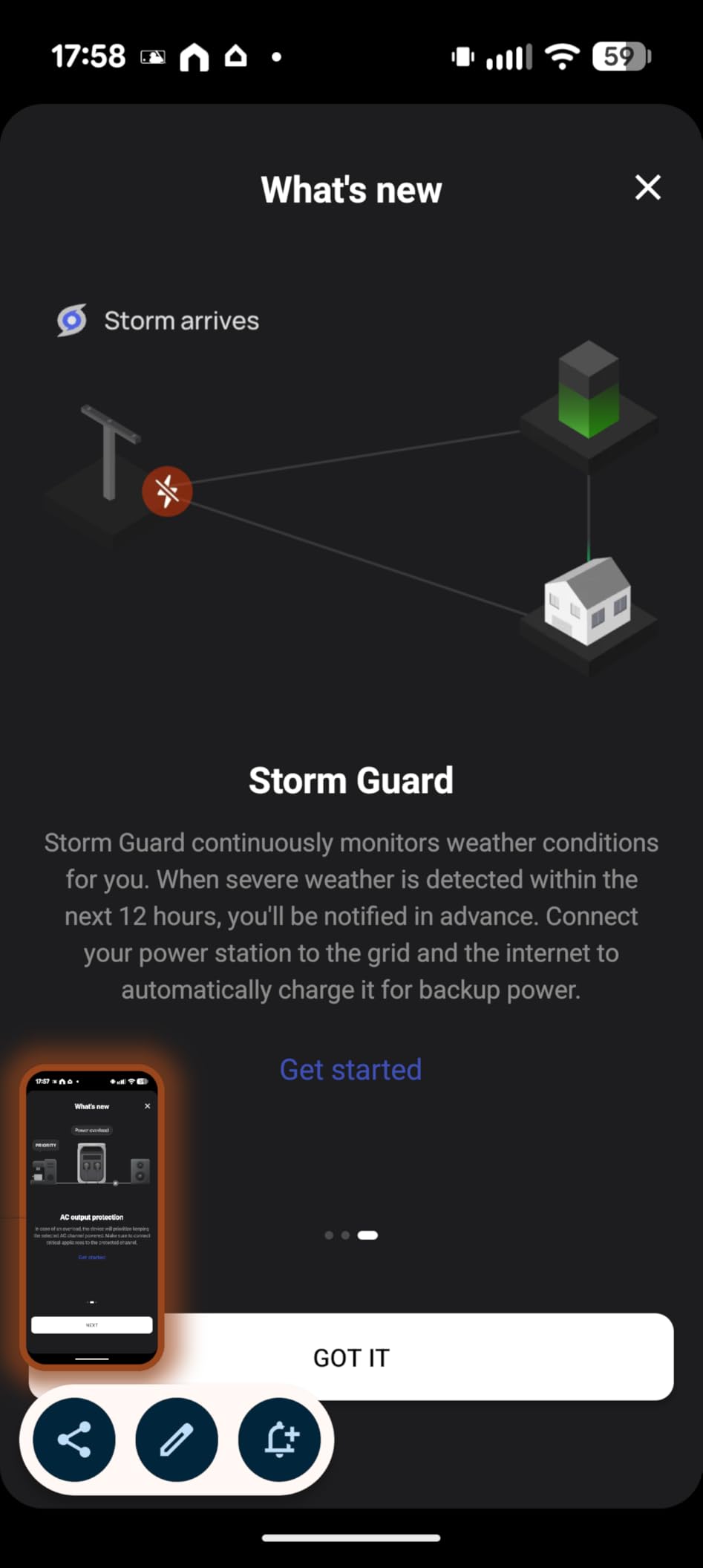
Charging reaches 80% in under an hour with X-Stream fast charging, and there are six ways to refill, including wall, solar, car, EV station and generator. Under 10ms UPS behaviour protects computers, routers and medical equipment, and X-Quiet 3.0 keeps it near silent while running.
The weakness is outlet count. Only three power outlets are listed, which is fewer than every other 3kWh machine here, and it directly limits how many AC devices you can run at the same time. Plan your load schedule around three live sockets.
What expansion to 11kWh changes
Expansion is about surviving cloudy stretches rather than running more appliances. At 11kWh, a fridge, freezer, lighting, router and laptop can run for several consecutive overcast days without a wall outlet, which is the single biggest resilience gain in this guide.
Buyers also cite the six charging paths as a deciding feature, since a cabin with a vehicle, an EV charger and a generator has more ways to refill than most competing units allow.
Where the DELTA 3 Ultra Plus falls short
Three outlets is genuinely restrictive for a full-time home, and the two 400W panels arrive in a separate package, so plan a second delivery window before your first trip.
The review pool is smaller than most competitors here, so long-term field evidence is thinner. For a purchase intended to last a decade at a remote location, that is a fair thing to weigh against the expansion path.
12. PECRON F3000LFP Review: The Most Connections for 3kWh
PECRON Portable Power Station F3000LFP, 3072Wh Solar Generator, 3600W LiFePO4 Battery Home Backup, Fast Charging Power Station Expand Capacity to 10752Wh, Solar Generators for Home Use, Camping, RV
3072Wh LiFePO4
3600W pure sine wave
1600W solar input
13 ports
2+3 year warranty
Pros
- 13 output ports including 6 AC outlets
- Two 100W USB-C PD ports for laptops
- 0-100% AC recharge in about 2 hours at 1800W
- Up to 1600W solar input across a 25-120V range
- Expands to 10752Wh with EP3800 batteries
Cons
- Heavy at 63.3 pounds for a 3kWh unit
- Listing shows 220V AC which matters in North America
- Expansion needs a separately purchased XT120-M cable
- One reviewer found charging continued past full rather than stopping
The F3000LFP wins on connections. Thirteen output ports, including six AC outlets, two 100W USB-C PD ports for laptops, two USB-A, a car port and two DC 5525 outputs, means a cabin full of phones, laptops, cameras and appliances can all be served from one unit without hunting for a free socket.
It also has the highest solar input ceiling in this guide at 1600W across a 25-120V range, and it expands to 10752Wh with EP3800 batteries. Recharge from a wall takes about two hours at 1800W input, and the 8-20ms UPS switch protects computers and medical devices.
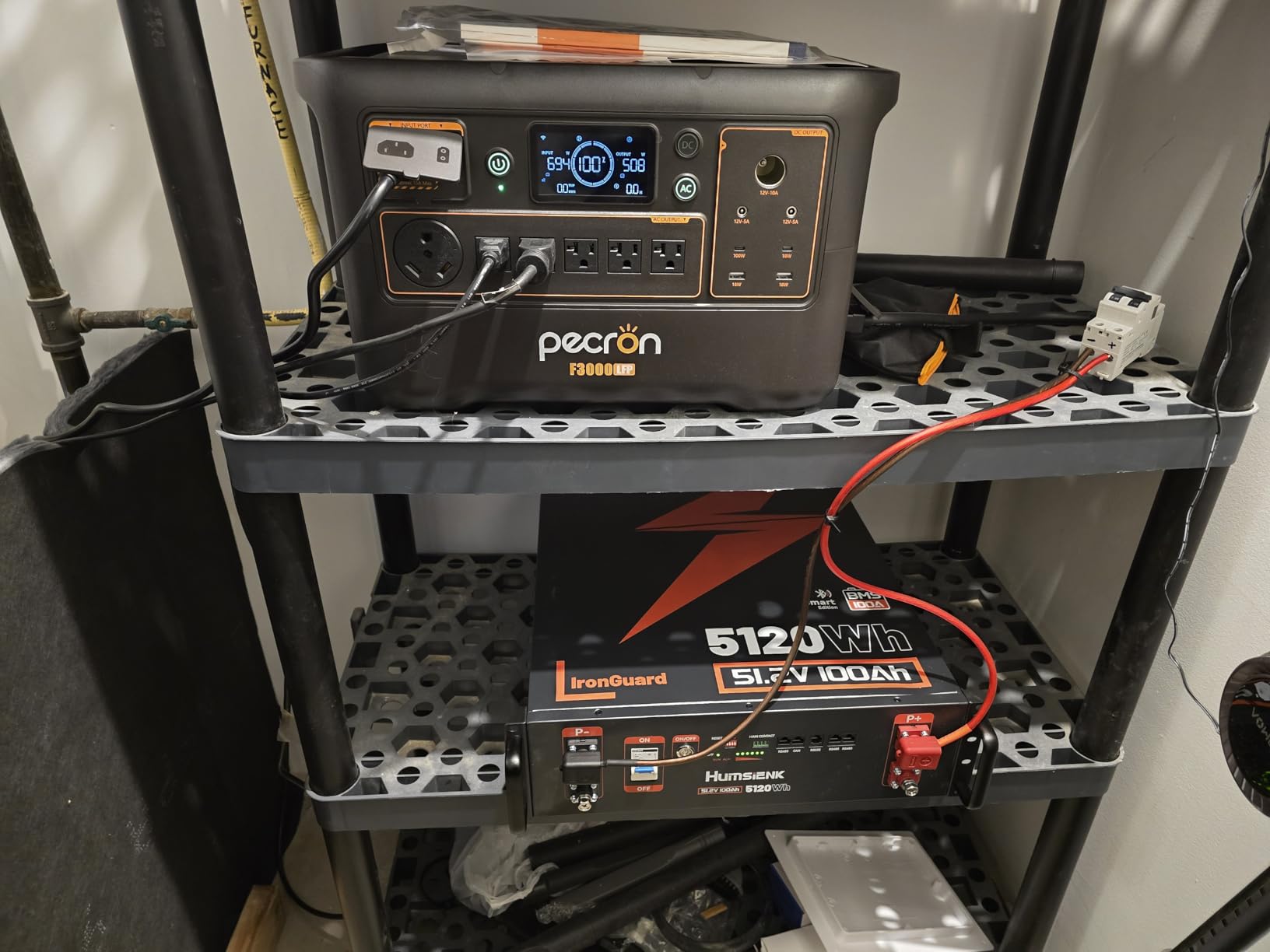
Owners consistently highlight value against the major brands, since 3kWh of storage and 3600W of pure sine wave output typically cost considerably more elsewhere. The warranty is two years plus three, with 24/7 support behind it.
Two things give us pause. The listing shows 220V AC output, and in North America that specification deserves direct confirmation with the manufacturer before you buy. Expansion also requires a separately sold XT120-M cascade cable, which is easy to overlook in the total cost.
When 13 ports beat 3600W
Port count matters more than raw output when your load is fragmented: several phones, two laptops, a router, a camera charger and lighting all running at once. Each of those draws little, but together they add up to more than the sockets on a typical 3kWh unit.
The 100W USB-C PD ports in particular remove a whole class of adapters, which is a quiet quality-of-life gain in a cabin where you do not want to hunt for a charger in the dark.
Where the F3000LFP falls short
At 63.3 pounds it is heavy for a 3kWh unit, and a less-established brand means a smaller review pool than the four major names here, which is real risk for a remote installation.
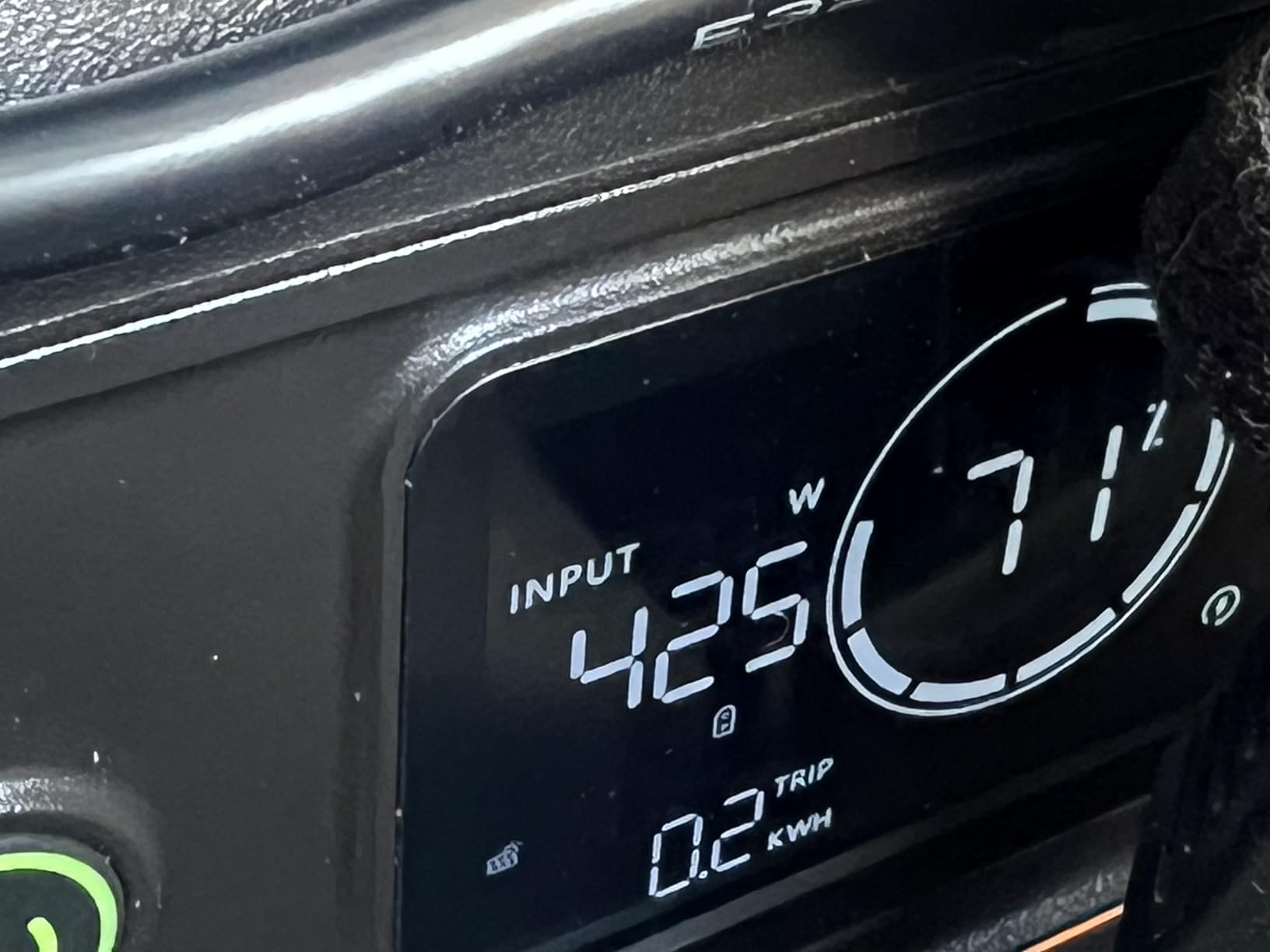
One reviewer found that charging did not stop automatically at 100% on their unit, which wastes power and is worth checking on arrival. Confirm the voltage specification and the expansion cable cost before committing.
How to Size a Solar Generator for Your Cabin
Size a solar generator for an off-grid cabin by summing the wattage of everything you intend to run, multiplying by the hours it runs, and dividing by inverter efficiency. Most sizing mistakes come from confusing output watts with stored watt-hours, so start by separating those two numbers clearly.
Watts describe how hard a device pulls at any moment. Watt-hours describe how much energy the battery can hold, and a rough 85% of rated capacity is realistically usable once conversion losses and overhead draw are taken out.
- List every load and its running watts. A standard fridge cycling compressor draws far more than its average, a router sits near 12W, LED lighting is usually 5-15W per fixture and a microwave peaks near 1000-1500W.
- Multiply each running figure by hours of use per day to get daily watt-hours.
- Add the daily totals, then add a 20% margin for cloudy weather and appliance surges.
- Divide by 0.8 to account for inverter losses, which gives the capacity to buy.
- Check that your highest single load sits comfortably below the continuous output, and that surge loads stay under the peak rating.
A worked example: a fridge at 100W for eight hours is 800Wh, a freezer at 80W for 24 hours is 1920Wh, four LED fixtures at 10W for five hours is 200Wh, and a router at 12W for 24 hours is 288Wh. That is 3208Wh of daily use, which is 3849Wh after the margin and 4812Wh after the 85% derating.
A 2kWh unit cannot carry that list, and a 3kWh unit covers it on good days. For a winter cabin with that load, you would be looking at a 5kWh or larger fixed system or a hybrid approach. If you want a wider comparison of capacity classes, our guide to the best solar generators for home backup maps the same trade-off for grid-connected houses.
Runtime figures from owners give you a sanity check on the math. Reported results include about 9 hours for a full-size side-by-side fridge on a 1070Wh Jackery, roughly 21 hours on a 2048Wh EcoFlow DELTA 2 Max, and 33-35 hours on the 2010Wh Anker S2000, whose low overhead draw is why it outperforms its size class on fridge duty.
Solar Generator vs Propane Generator for an Off-Grid Cabin
For a remote cabin, the best backup arrangement is usually a hybrid rather than a straight choice. Off-grid cabin owners on forums frequently describe running a portable power station as the daily supply and keeping a combustion generator purely for high-draw items such as coffee makers, power tools and space heaters.
A propane or gas generator is cheap to run and refuels anywhere, and it handles any load you throw at it. Against that, it is noisy, it produces carbon monoxide in an enclosed space, it needs oil changes and fuel storage, and it will not start reliably in freezing conditions after standing.
A solar generator runs silently, has zero emissions, needs no fuel deliveries and keeps working in a locked cabin at minus temperatures. Its limits are capacity and recharge speed, which is exactly where the combustion machine earns its place as a backup rather than a competitor.
If you do want a combustion unit as a backup, look at an inverter generator rather than a standard one, and read our inverter generator guide and dual fuel buying guide first. For storm outages on a connected house rather than a true off-grid site, our portable generator picks cover the other side of that comparison.
Solar Panel Sizing, Winter Recharge and Cold Cabin Storage
Most bundles ship with a panel far smaller than the battery can accept, and this is where owner expectations go wrong. The DELTA 3 Ultra Plus ships with two 400W panels and takes AC, solar, car, EV station and generator charging, while the C1000 Gen 2 accepts 600W of solar and includes a 200W panel. Match the array to the input ceiling the manual lists, not the other way around.
A common rule for winter cabins is to size the array at roughly three times the daily consumption in wattage. For a cabin drawing 1500Wh a day, that points to a 1500W array, which in practice means three or four 400W panels rather than the single panel in the box.
Expect real yields of 55-80% of panel rating, and far less in winter. At 45 degrees latitude in December you may have three to four usable peak sun hours, so a 1000W array might deliver 4kWh on a clear day and well under 1kWh during a cloudy week. That is the calculation that decides whether a portable station is the right answer at all.
Most units in this guide use lithium iron phosphate cells, which tolerate cold far better than nickel manganese cobalt chemistries and hold charge well when stored. Keep the pack between about 50% and 80% charge when it is sitting unused, bring it into a warmer space before charging below freezing, and never charge a lithium pack at a temperature it does not support.
Finally, be honest about the handoff point. A portable power station is the right answer for weekend cabins, seasonal use, backup duty and anywhere you cannot install a fixed array. If you are running a full-time homestead with a well pump, electric heat and a washer, a fixed solar system with a proper inverter and a generator backup is the correct system, and off-grid forum consensus is blunt about buying the biggest unit you can physically haul.
Frequently Asked Questions
What type of backup generator is best for an off-grid solar system?
A portable power station running on lithium iron phosphate cells works best as the daily supply at an off-grid cabin, because it is silent, emits nothing and functions in freezing temperatures. Most owners keep a small inverter generator as a backup purely for high-draw loads such as coffee makers, power tools and space heaters, rather than choosing one or the other.
What size solar generator do you need to run a house?
Add up the running watts of everything you want to power and multiply each by the hours it runs per day to get daily watt-hours. Add a 20% margin for cloudy days, then divide by 0.8 for inverter losses. For a small cabin running a fridge, freezer, LED lighting and a router, that calculation typically lands between 3kWh and 5kWh of storage.
How big of a solar system do I need for off-grid living?
For a seasonal cabin, size the panel array at roughly three times your daily consumption in wattage, so a 1500Wh daily draw points to about 1500W of panels. Full-time off-grid living with a well pump, electric heat or laundry needs a fixed solar system rather than a portable power station, because capacity grows past what a single unit can usefully recharge.
What size generator do I need for off-grid?
Match continuous output to the largest single appliance you plan to run, and size storage separately for runtime. A 1500W inverter will handle a fridge, lighting and a router comfortably, while power tools and microwaves push you toward 2000W or 3600W. Check surge ratings against motorised loads because compressors and pumps draw far more at startup than while running.
Can a portable power station run a refrigerator and Wi-Fi at the same time?
Yes, and that is the most common cabin load. A 2010Wh Anker SOLIX S2000 measures roughly 33-35 hours of full-size refrigerator runtime with about 3% per hour consumption, and a router drawing 12W is negligible beside it. Remember that the inverter itself draws 6W to 20W whenever the unit is switched on, which shortens runtime on very small loads.
The Best Solar Generators for Off-Grid Cabins in 2026
The BLUETTI AC180 remains our pick for the best solar generators for off grid cabins, because 1152Wh of usable lithium iron phosphate storage, 1800W of continuous output and 500W of solar input cover the classic cabin load without exaggeration. Pick the Anker SOLIX C1000 Gen 2 if recharge speed matters more to you than expansion, and the EcoFlow DELTA 2 Max if you need real headroom for tools, a second appliance and a longer stretch away from a wall outlet.
Whatever you choose, buy the panel array to match the winter sunlight rather than the battery, and check the weight against the route from your vehicle to the plug. Both details cause more disappointment than the inverter rating ever will.