
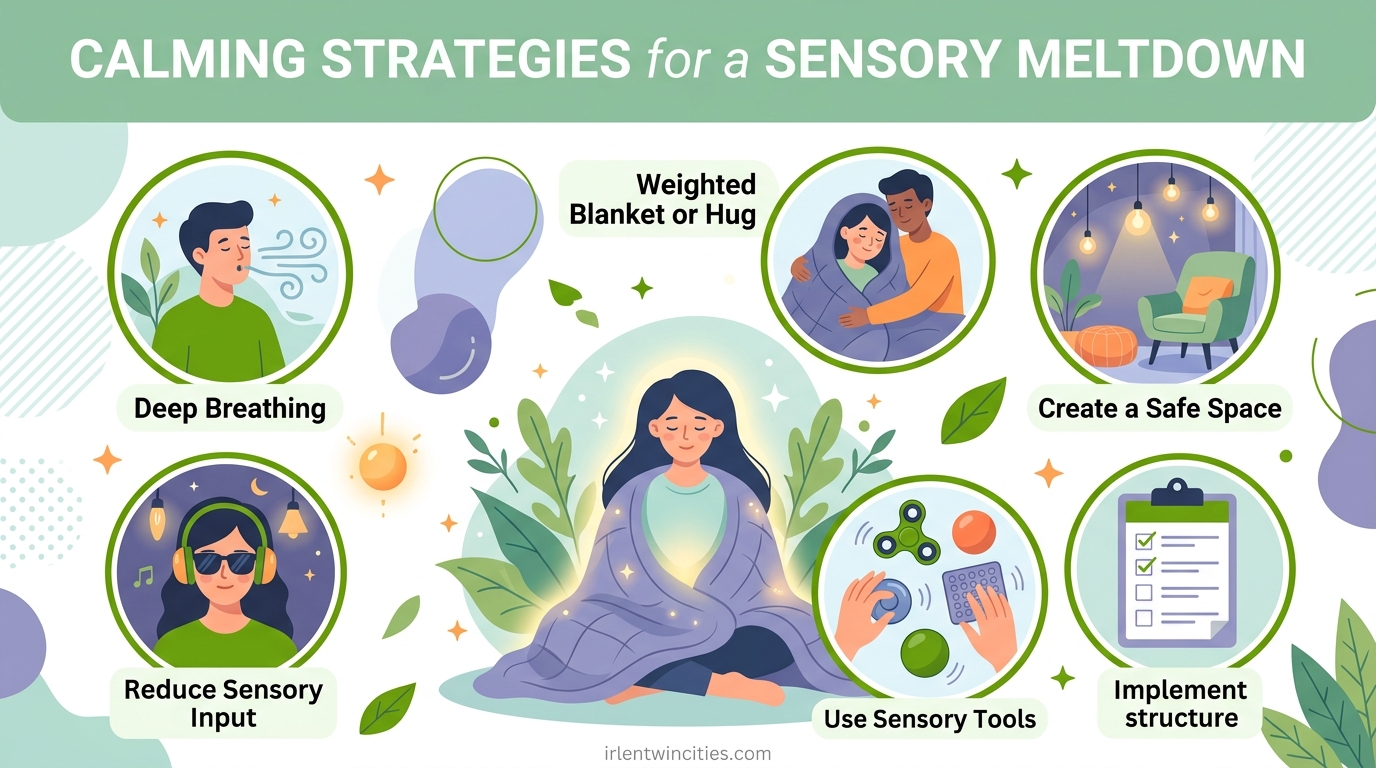
You’re in a crowded store when suddenly the fluorescent lights feel too bright, the chatter becomes deafening, and the clothing tags against your skin start scratching like sandpaper. Your heart races, your chest tightens, and you feel the overwhelming urge to escape immediately. This is sensory overload, and without the right calming strategies for a sensory meltdown, it can quickly escalate into a full-blown neurological crisis that feels impossible to control.
Sensory meltdowns happen when our nervous system receives more input than it can process, triggering an involuntary fight-or-flight response. Unlike tantrums, these are not behavioral choices but genuine neurological events that require specific approaches to manage safely and effectively. Whether you’re a parent supporting an autistic child, an adult navigating your own sensory needs, or an educator seeking to understand, having the right tools makes all the difference.
In this comprehensive guide, I’ll share evidence-based calming strategies for a sensory meltdown that work across ages and settings. You’ll learn how to recognize warning signs before they escalate, immediate techniques to de-escalate crises, prevention strategies to reduce frequency, and how to build a personalized sensory toolkit that actually helps.
Table of Contents
Understanding Sensory Meltdowns vs. Tantrums
Before diving into calming strategies for a sensory meltdown, it’s crucial to understand what we’re dealing with. A sensory meltdown is an involuntary neurological response to overwhelming sensory input. The brain receives more stimulation than it can process, triggering a primitive survival response in the brain stem that completely overrides logical thinking and emotional regulation.
During a sensory meltdown, the person loses access to their reasoning capabilities. They’re not choosing to behave this way, they’re experiencing a nervous system overload that feels genuinely threatening. This is why traditional discipline, reasoning, or behavioral approaches fail during meltdowns – the part of the brain responsible for those functions has temporarily gone offline.
The neuroscience behind this is fascinating. When sensory input exceeds our processing capacity, the amygdala (our brain’s alarm system) activates the fight-or-flight response before the prefrontal cortex (our logical thinking center) can intervene. This happens in milliseconds, which is why meltdowns seem to come out of nowhere when in reality, warning signs were likely building for some time.
Meltdown vs. Tantrum vs. Shutdown: Key Differences
Understanding the difference between these three states is essential because each requires a different approach. Here’s a quick comparison:
| Feature | Sensory Meltdown | Tantrum | Sensory Shutdown |
|---|---|---|---|
| Trigger | Sensory overload | Wanting something denied | Overwhelming sensory or emotional input |
| Control | None (involuntary) | Some control maintained | None (involuntary) |
| Awareness | Minimal during episode | Aware of audience | Withdrawn, unresponsive |
| Duration | 20-90 minutes typical | Stops when goal achieved or attention shifts | Variable, hours possible |
| After-effects | Exhaustion, shame | Return to normal | Gradual re-engagement needed |
| Best Response | Sensory regulation, safety | Wait out, ignore attention-seeking | Reduce demands, quiet space |
Notice that meltdowns and shutdowns are both involuntary neurological responses, while tantrums are behavioral. This distinction is crucial because trying to discipline someone through a sensory meltdown can actually make it worse – their brain is already in survival mode and doesn’t have access to learning centers.
Recognizing Early Warning Signs Before a Sensory Meltdown
The most effective calming strategies for a sensory meltdown begin before the crisis point. Learning to recognize early warning signs gives you a precious window to intervene with regulation techniques before the nervous system becomes completely overwhelmed. These signs vary by individual, but common patterns emerge across many people with sensory processing differences.
Physical warning signs often appear first and include changes in muscle tension, breathing patterns, and skin response. You might notice shoulders creeping up toward ears, hands clenching into fists, shallow rapid breathing, or skin flushing or paling. Some people develop a tremor or start rocking back and forth unconsciously as their body attempts to self-regulate.
Behavioral changes are equally telling. Watch for increased stimming (repetitive self-stimulatory behaviors like hand-flapping, rocking, or vocalizing), withdrawal from social interaction, covering ears or eyes, or sudden resistance to transitions. Language might become more repetitive or scripted, and the person may seem “stuck” on a particular topic or demand.
Emotional shifts can be subtle initially – irritability that seems out of proportion to the situation, sudden tearfulness, or appearing “checked out” and disconnected. What looks like defiance or attitude might actually be an overwhelmed nervous system crying out for help.
I recommend keeping a simple behavior log to track patterns. Note the time, location, what was happening immediately before, what warning signs appeared, and how long the episode lasted. After 2-3 weeks, you’ll likely see clear patterns that help predict and prevent future meltdowns.
Common Sensory Triggers to Watch For
Identifying your specific triggers or those of someone you support is key to prevention. Common triggers include:
Auditory: Loud noises, multiple conversations, high-pitched sounds, background music, construction sounds, thunder, fireworks
Visual: Fluorescent lighting, bright sunlight, cluttered spaces, moving patterns, flashing lights, crowded visual fields
Tactile: Clothing textures, seams in socks, tags, unexpected touch, temperature extremes, messy hands, certain fabrics
Proprioceptive: Not knowing where body is in space, feeling unsupported, lack of deep pressure input
Vestibular: Movement, being still too long, uneven surfaces, heights, motion sickness
Interoceptive: Hunger, thirst, fatigue, temperature regulation, needing bathroom
Understanding which sensory systems are most vulnerable helps you target prevention strategies effectively. Most people have 2-3 primary trigger systems rather than being sensitive to everything.
Immediate Calming Strategies During a Sensory Meltdown
When a sensory meltdown is already in progress, the goal shifts from prevention to regulation and safety. The nervous system is in full fight-or-flight mode, so we need to provide sensory input that signals safety while reducing overwhelming stimulation. These calming strategies for a sensory meltdown work by either providing regulating input or removing threatening input, depending on the individual’s needs.
Remember: during a meltdown, the person is not in control of their behavior. They’re experiencing a neurological storm that feels genuinely frightening. Your role is to be an anchor of calm, provide regulating input if welcomed, and ensure safety while the storm passes.
Deep Pressure Techniques for Immediate Regulation
Deep pressure is one of the most powerful calming strategies for a sensory meltdown because it directly impacts the nervous system. Pressure input activates the parasympathetic nervous system (our “rest and digest” mode) while reducing cortisol levels. This is why weighted blankets, tight hugs, and compression clothing feel so regulating to many people.
Weighted items provide constant deep pressure that many find immediately calming. A weighted blanket placed across the lap or shoulders, a weighted vest, or even a heavy backpack can help ground the nervous system. The general rule is 10% of body weight plus 1-2 pounds, but individual preferences vary.
Compression techniques work similarly. If the person welcomes touch (ASK FIRST), try firm hugs rather than light touch, which can feel ticklish or overwhelming. Some people benefit from being wrapped tightly in a blanket like a burrito, or using compression clothing like undershirts or vests that provide steady pressure.
Proprioceptive heavy work involves activities that provide input to muscles and joints. Pushing against a wall, carrying heavy items, squeezing therapy balls, or doing jumping jacks can all help regulate an overstimulated nervous system. The key is providing intense sensory input that helps the brain feel more “in” the body rather than overwhelmed by external input.
Vestibular Calming Strategies
The vestibular system, located in our inner ear, controls balance and movement perception. When this system is dysregulated, gentle, rhythmic movement can be incredibly calming. However, the wrong type of movement can make things worse, so pay attention to individual preferences.
Rhythmic, linear movements are generally most regulating. Slow rocking in a rocking chair or on a therapy ball, gentle swinging, or even slow walking back and forth can help. Avoid spinning or rapid movements, which typically escalate rather than calm.
Inverted positions like hanging upside down briefly or putting head below heart level can reset the vestibular system for some people. Others find this overstimulating, so observe responses carefully.
Stillness is regulating for some people during meltdowns, especially if they’re already overwhelmed by movement and chaos. Creating a quiet, still space with minimal vestibular input might be exactly what they need.
Auditory Regulation Strategies
Sound sensitivity is one of the most common sensory triggers, so addressing auditory input during meltdowns is crucial. However, strategies vary dramatically – some people need complete silence while others benefit from specific sounds.
Noise reduction is the first line of defense. Noise-canceling headphones can dramatically reduce overwhelming environmental sounds. Ear defenders (industrial hearing protection) work similarly and are often more affordable. Simply moving to a quieter space or turning off music, televisions, and appliances helps.
White noise and nature sounds provide a consistent auditory landscape that masks unpredictable environmental sounds. White noise machines, rain sounds, or ocean waves can be regulating for many people. Some prefer pink noise (softer than white) or brown noise (deeper, rumbling).
Rhythmic music at low volume helps some people regulate. Look for songs with a steady 60-80 beats per minute tempo, which matches resting heart rate and can help slow an elevated heart rate. Avoid music with sudden tempo changes, loud dynamics, or complex arrangements.
Complete silence works best for some people, particularly those experiencing auditory overstimulation where ANY sound feels painful. In these cases, aim for the quietest environment possible and avoid talking unless absolutely necessary.
Visual Calming Techniques
Visual processing difficulties are common during sensory meltdowns, and reducing visual input can significantly shorten episode duration. The goal is to create a visually simple, predictable environment.
Lighting adjustments make a significant difference. Turn off fluorescent lights (which flicker imperceptibly to most but are painfully obvious to many with sensory processing differences). Use dimmable lamps instead of overhead lights, or natural light when available. Some people benefit from complete darkness, while others need soft, warm lighting.
Visual space reduction helps overwhelmed visual systems. Move to a smaller room with less visual clutter, use a tent or blanket fort, or simply create a corner with solid-colored walls and minimal items. Covering mirrors, removing patterned items, and clearing surfaces helps.
Sleep masks or sunglasses provide immediate visual reduction. Even indoors, some people find relief from wearing sunglasses during meltdowns. Sleep masks that block all light work for those who need complete visual deprivation.
Visual focus tools like calming jars (glitter jars), lava lamps, or watching a slow-moving fan provide a single, predictable visual focus point that can help regulate the visual system. The key is simple, repetitive visual input rather than complex or rapidly changing visuals.
Tactile Soothing Strategies
Tactile input can be either regulating or overwhelming during meltdowns, so individual preference is key. For those who find touch calming, specific strategies can help ground the nervous system.
Texture preferences vary widely. Some people find soft, smooth textures regulating (silk, velvet, smooth stones), while others prefer rough textures (bumpy balls, textured blankets, coarse fabrics). Offer options and observe what works.
Temperature input can be incredibly regulating. Cold compresses, ice packs, or even holding a cold drink provide intense sensory input that can “shock” the nervous system into regulation. Warm blankets, heating pads, or warm baths help others relax tense muscles.
Tactile fidgets like stress balls, therapy putty, textured tangles, or fidget cubes give hands something to do while providing regulating input. The key is offering variety – what works one day might not work the next.
Proprioceptive touch through massage, joint compression, or brushing techniques can help some people feel more “in” their bodies. Always ask first and respect any resistance to touch during meltdowns.
Oral Motor Strategies for Regulation
The mouth has a high density of sensory receptors, making oral input a powerful regulatory tool. Chewing, sucking, and breathing techniques all provide input that can calm an overstimulated nervous system.
Chewing options provide intense proprioceptive input to the jaw. Chewelry (jewelry designed for chewing), chew tubes, gum, crunchy foods like carrots or pretzels, or even chewy candy can all help. The resistance provides feedback that helps regulate the nervous system.
Sucking through straws, drinking thick liquids like smoothies, or using sports bottles requires effort that provides regulating oral input. Some people find sucking on hard candy or pacifiers helpful, regardless of age.
Breathing techniques activate the vagus nerve, which directly influences our nervous system’s state. Try 4-7-8 breathing (inhale for 4, hold for 7, exhale for 8), box breathing (inhale 4, hold 4, exhale 4, hold 4), or simply focusing on long, slow exhales. The key is making exhales longer than inhales.
Movement-Based Regulation
Movement can be either regulating or overwhelming during meltdowns, depending on the type and intensity. The goal is providing movement that helps the nervous system feel grounded rather than more chaotic.
Heavy work activities are generally most regulating. Pushing against a wall, carrying heavy items, doing animal walks (bear walk, crab walk), or pulling resistance bands all provide proprioceptive input that calms. Even pushing a loaded laundry cart or carrying grocery bags can help.
Rhythmic movement like walking, marching, or gentle swinging regulates the vestibular system. The key is consistent, predictable movement rather than sudden or erratic movement.
Isometric exercises like pushing palms together, pressing feet into the floor, or squeezing muscles tightly then releasing help people feel more connected to their bodies. This can be particularly helpful for those who feel “floaty” or disconnected during meltdowns.
Complete stillness works best for some people, particularly those already overwhelmed by movement and stimulation. In these cases, create a calm, stationary environment and avoid encouraging movement.
What NOT to Do During a Sensory Meltdown
Equally important as knowing what TO do during a sensory meltdown is understanding what NOT to do. Well-intentioned responses can actually escalate meltdowns and make them last longer. Here are critical mistakes to avoid:
Don’t demand eye contact. For many neurodivergent people, eye contact during a meltdown feels threatening or overstimulating. Let them look away, cover their eyes, or wear sunglasses.
Don’t use complex language. During meltdowns, language comprehension drops significantly. Use simple, concrete phrases: “I’m here,” “You’re safe,” “We’ll wait.” Avoid questions, explanations, or reasoning.
Don’t touch without permission. While deep pressure helps many, unexpected touch during a meltdown can feel overwhelming or threatening. Ask first: “Can I give you a hug?” or “Would you like the weighted blanket?”
Don’t threaten consequences. Meltdowns are involuntary – threatening punishment for something the person can’t control only increases fear and escalates the situation. Save behavioral discussions for when everyone is calm.
Don’t try to “stop” the meltdown. You can’t turn off a nervous system storm once it starts. Focus on supporting the person through it safely and reducing its duration. The goal is regulation, not suppression.
Don’t take it personally. Meltdowns often include hurtful words, aggression, or rejection. Remember this is the nervous system in survival mode, not the person’s true feelings. They may not even remember what they said afterward.
Don’t crowd the space. Too many people trying to help at once creates more sensory input. Designate one support person and send others to another room or area.
Helping Children During Sensory Meltdowns
When supporting children through sensory meltdowns, developmental considerations shape our approach. Children have less developed self-regulation skills, smaller emotional regulation capacity, and may not have the communication skills to express what they need. These calming strategies for a sensory meltdown are adapted specifically for children.
Stay calm yourself. Children pick up on our emotional state. If you’re anxious, frustrated, or scared, they’ll feel it and it escalates their dysregulation. Practice your own breathing, use a calm voice, and move slowly and predictably. Think of yourself as an anchor in their storm – the calmer you are, the more they can borrow that calm.
Get on their level. Kneel or sit so you’re at eye level rather than towering over them. This feels less threatening and helps you better read their facial expressions and body language. However, don’t force them to make eye contact if they’re looking away.
Use simple, concrete language. “You’re safe. I’m here. We’ll wait.” Repeat these reassuring phrases rather than asking questions or giving explanations. Save the teaching moments for when they’re calm – during a meltdown, their brain can’t learn anyway.
Offer choices, not commands. “Do you want the weighted blanket or would you like to squeeze this ball?” gives them some control while still providing regulatory input. “Do you want to go to your calm corner or stay here with the headphones?” respects their autonomy while moving toward regulation.
Create a calm down space. Designate a specific area (corner, tent, room) that is consistently available for regulation. Stock it with sensory tools they find helpful: weighted blanket, headphones, fidgets, lighting control. This becomes a safe haven they learn to seek out independently.
Use visual supports. Picture cards showing calming strategies, visual schedules showing what comes next, or “first-then” boards help children understand what’s happening when language processing is difficult. Having these available in the calm down space is particularly helpful.
Practice regulation when calm. The time to teach calming strategies is NOT during a meltdown. Practice deep breathing, using sensory tools, and going to the calm down space during happy, regulated times. This builds neural pathways and familiarity so these strategies are accessible during meltdowns.
Self-Soothing Strategies for Autistic Adults
Autistic adults face unique challenges around sensory meltdowns. Most resources focus on children, leaving adults figuring out self-regulation strategies independently. Additionally, adults often have longer meltdown histories, more complex triggers, and the added challenge of navigating workplace and social expectations. These calming strategies for a sensory meltdown are specifically designed for adults.
Know your early warning signs. Adults often push through early signs of overwhelm because of work demands, social expectations, or simply habit. Pay attention to your patterns – the headache that signals auditory overload, the irritability that means you’re visually overstimulated, the restlessness that indicates need for movement. Respecting these early signs prevents full meltdowns.
Build a portable sensory toolkit. Keep a small bag with your essential regulation tools: headphones, sunglasses, fidgets, chewelry, whatever works for you. Having this with you at all times means you can respond quickly when overwhelm starts, rather than waiting until you’re in crisis.
Identify safe spaces. Know where you can go if you need a sensory break – your car, a specific room at work, a quiet corner of a coffee shop, even a bathroom stall. Having these mapped out in advance means you don’t have to figure it out while overwhelmed.
Use workplace accommodations. If you’re employed, you may be entitled to accommodations under the ADA (or equivalent laws in your country). This might include noise-canceling headphones, a private workspace, flexible break schedule, permission to use fidget tools, or modified lighting. Document your needs and request accommodations formally.
Develop self-advocacy scripts. Practice saying things like “I need a sensory break,” “This environment is overwhelming me,” “I need to step out for a few minutes,” or “I’m not able to continue this conversation right now.” Having these phrases ready makes it easier to advocate for yourself when stressed.
Plan for social situations. Parties, family gatherings, and events can be sensory minefields. Arrive early (less crowded), bring your own food if needed (dietary sensory issues), identify quiet spaces at the venue, plan an exit strategy, set a time limit, and bring a support person if possible.
Honor your recovery time. Adult meltdowns often come with significant recovery periods. Don’t schedule important meetings, difficult conversations, or high-demand situations immediately after a meltdown. Give yourself the rest and recovery you need – pushing through too quickly often triggers secondary meltdowns.
Consider professional support. Occupational therapists who specialize in sensory processing can create personalized sensory diets and regulation strategies. Therapists who understand neurodivergence can help with emotional processing around meltdowns. You don’t have to figure this out alone.
Prevention Strategies and Building Your Sensory Diet
The most effective calming strategies for a sensory meltdown happen before the crisis begins. Prevention through sensory diet planning, environmental modifications, and routine adjustments dramatically reduces meltdown frequency and severity. A sensory diet isn’t about food – it’s a planned schedule of sensory activities that provides the nervous system with regulating input throughout the day.
What is a sensory diet? Just as we need nutritional food at regular intervals to maintain physical health, our nervous systems need specific sensory input to stay regulated. A sensory diet is a personalized plan that ensures you get the right type and amount of sensory input throughout the day. This prevents the sensory deprivation that leads to meltdowns.
Building sensory tolerance is a gradual process. Start with short exposures to challenging sensory situations paired with regulating activities. For example, if grocery stores are overwhelming, start with 10-minute trips during quiet times, wear headphones, use a shopping list to reduce decision fatigue, and plan a regulating activity immediately after. Gradually increase duration as tolerance builds.
Environmental modifications at home create a sensory-friendly baseline. Consider lighting changes (replace fluorescents with LEDs, use dimmers), reducing visual clutter, creating quiet spaces, managing temperature, and organizing belongings to reduce visual chaos. Small changes like adding rugs to reduce echo, using blackout curtains, or removing air fresheners can make a significant difference.
Routine and structure reduce unexpected sensory challenges. Having consistent morning and evening routines, predictable meal times, regular sensory breaks, and advance notice of changes helps the nervous system feel safe. Visual schedules and calendars reduce anxiety about what’s coming next.
Preparation for transitions is crucial because transitions are prime meltdown triggers. Give advance notice (“In 10 minutes we’ll leave”), use transition objects (bring a comfort item from home to the car), create transition rituals (listen to specific music in the car), and allow extra transition time rather than rushing.
Seasonal considerations matter more than many realize. Summer brings heat, humidity, insects, and schedule changes. Winter brings heavy clothing, dry skin, less daylight, and holiday chaos. Spring brings pollen, rain, and schedule disruptions. Fall brings temperature swings, new clothes, and routine changes. Anticipating these seasonal shifts and adjusting sensory diets accordingly prevents seasonal meltdowns.
Long-term planning involves looking at weeks and months, not just days. If you know a challenging event is coming (holiday gathering, travel, medical appointment), plan sensory rest before and after, reduce demands in surrounding days, and bring your sensory toolkit. Thinking ahead prevents crises.
Building Your Complete Sensory Toolkit
Having the right tools available makes calming strategies for a sensory meltdown significantly more effective. A well-stocked sensory toolkit includes items for each sensory system, organized and accessible when needed. Whether you’re supporting a child or managing your own sensory needs, these tools are your first line of defense.
Emergency Calm Down Kit Essentials
Your emergency kit should be portable and contain your most reliable regulation tools. Pack these in a small bag that stays with you or is easily accessible:
Auditory: Noise-canceling headphones or ear defenders, earplugs, white noise app downloaded on phone, soothing music playlist
Visual: Sunglasses (even for indoors), sleep mask, calming jar or glitter wand, small fidget with visual appeal
Tactile: Stress ball or therapy putty, textured fidget (smooth stone, bumpy ball, textured fabric), cold pack (instant cold compress), small piece of comfort fabric
Proprioceptive: Resistance band (light or medium), handheld massager, small weights or weighted lap pad
Oral motor: Chewelry or chew tube, gum, hard candy, water bottle with straw
Movement: Small trampoline for home, resistance band for pulling, bubble wrap for popping
Comfort items: A small object that provides emotional comfort (special rock, small stuffed animal, meaningful token)
Home Sensory Space Setup
Creating a dedicated sensory space at home provides a reliable regulation environment. This doesn’t need to be an entire room – a corner, nook, or even a closet can work:
Lighting control is essential. Install dimmable lights, use lamps instead of overhead fixtures, have blackout curtains or window covers, include multiple lighting options (colored lights, string lights, nightlight)
Comfortable seating that provides sensory input: bean bag chair (surrounds body), rocking chair or glider (vestibular input), therapy ball (movement while seated), pile of pillows and blankets (proprioceptive input)
Sensory tools organized and accessible: shelves with labeled bins, hanging organizers for fidgets, designated spots for each tool so they can be found quickly during dysregulation
Visual simplicity with solid colors, minimal patterns, reduced clutter, calm artwork or photos, meaningful comforting items
Sound control through soft furnishings that absorb sound (rugs, curtains, upholstered furniture), white noise machine, ability to close door for quiet
Personalization makes the space feel safe and inviting: include the person’s interests, favorite colors, meaningful objects, photos of loved ones, anything that creates a sense of safety and ownership
Budget-Friendly Sensory Tool Alternatives
Professional sensory tools can be expensive, but many effective alternatives are budget-friendly or even free:
Weighted items: Instead of expensive weighted blankets, try using regular blankets stacked, heavy coats, or bags of rice/beans. For deep pressure, try tight hugs, rolling in blankets like a burrito, or being sandwiched between couch cushions.
Fidgets: Instead of specialty fidgets, try stress balls made from balloons filled with flour or rice, rubber bands, paper clips, stones, textured fabric scraps, bubble wrap, or items found in nature.
Visual tools: Instead of expensive calming jars, make your own with water, clear glue, and glitter in a plastic bottle. Use cardboard to create “looker” frames that reduce visual field. Sunglasses from dollar stores work perfectly.
Oral motor tools: Instead of chewelry, try crunchy foods, gum, hard candy, straws for drinking, or chewing on clean, safe objects like silicone kitchen tools.
Movement equipment: Instead of therapy balls, try rolling on the floor, doing animal walks, jumping jacks, or pushing against walls. Household items like laundry baskets can be used for heavy work activities.
Sensory bins: Instead of expensive sensory tables, use plastic storage bins filled with rice, beans, water, sand, or shredded paper. Add scoops, cups, and small toys for exploration.
Communication Strategies During and After Meltdowns
Communication becomes challenging during sensory meltdowns. The language centers of the brain are largely offline, making it difficult to both express needs and understand what others are saying. These communication strategies complement the calming strategies for a sensory meltdown by ensuring connection and understanding happen at the right times.
During meltdowns: Keep communication minimal. Use simple phrases repeated consistently: “You’re safe,” “I’m here,” “We’ll wait.” Avoid questions, which require language processing that isn’t available. Use gestures, pictures, or objects to communicate instead of words. If the person uses AAC (augmentative and alternative communication), have their device available but don’t force its use.
Visual supports bridge communication gaps when language is difficult. Picture cards showing calming strategies, visual schedules showing what’s happening next, or “first-then” boards (First: meltdown, Then: snack) help the person understand what’s happening without requiring language processing.
Social stories prepare for challenging situations and process after meltdowns. Create simple stories with pictures explaining what will happen, what might feel hard, and what strategies to use. After meltdowns, social stories can help process what happened and what to try next time.
Post-meltdown communication should wait until FULLY regulated – often hours later or even the next day. When processing, focus on what happened without blame: “Your body got overwhelmed,” “The lights were too bright,” “You needed deep pressure.” Connect patterns: “I noticed you started covering your ears before the meltdown.” Practice strategies for next time: “Next time we can try headphones earlier.”
For nonverbal individuals: Learn their unique communication signals. What does their body language tell you? What specific behaviors indicate different needs? Create a simple communication system with pictures, objects, or technology that allows them to express basic needs even when dysregulated.
Recovery and Aftercare Following Sensory Meltdowns
The period following a sensory meltdown is just as important as the meltdown itself. Proper recovery and aftercare reduce the likelihood of secondary meltdowns, support emotional processing, and help everyone involved regain their equilibrium. These final calming strategies for a sensory meltdown focus on the post-meltdown phase.
Physical recovery needs come first. The nervous system has been through an intense workout and needs rest. Offer water and a simple snack (blood sugar drops during meltdowns), encourage rest or sleep, provide comfort items, and allow for reduced demands. Don’t rush back to activities or expectations.
Emotional processing happens once fully regulated. For children, this might mean drawing pictures of what happened, talking about feelings, or practicing strategies. For adults, journaling, talking with a trusted person, or simply reflecting can help. Remember that shame is common after meltdowns – address this directly and compassionately.
Caregiver recovery is equally important but often neglected. Supporting someone through meltdowns is exhausting and emotionally draining. Take your own recovery time, process your emotions separately from the person, seek support from others, and practice self-care. You can’t pour from an empty cup.
Preventing secondary meltdowns requires careful planning after the initial meltdown. The nervous system is depleted and more vulnerable to further overload for hours or even days after a meltdown. Reduce sensory demands, stick to familiar routines, provide extra sensory input proactively, and avoid challenging situations during this recovery window.
Tracking and learning from each meltdown helps prevent future ones. Update your behavior log with what triggered the meltdown, what warning signs appeared, what strategies helped, what didn’t help, and how long recovery took. Look for patterns over time and adjust prevention strategies accordingly.
Professional support may be needed if meltdowns are frequent, severe, long-lasting, or dangerous. Occupational therapists can assess sensory needs and create personalized sensory diets. Therapists who understand neurodivergence can help with emotional regulation and family dynamics. Physicians can evaluate for underlying medical issues that might contribute to sensory difficulties.
Frequently Asked Questions About Calming Strategies for a Sensory Meltdown
How do I calm down from a sensory meltdown?
What is the difference between a sensory meltdown and a tantrum?
How long do sensory meltdowns typically last?
What should you put in a sensory calm down kit?
How do you help a nonverbal child during a sensory meltdown?
What triggers sensory meltdowns in autistic adults?
Conclusion: Finding Your Path to Sensory Regulation
Calming strategies for a sensory meltdown are deeply personal – what works beautifully for one person might be completely ineffective or even overwhelming for another. The key is understanding your unique sensory profile, recognizing your early warning signs, building a toolkit of strategies that actually help, and practicing these techniques when you’re calm so they’re available when you need them most.
Remember that sensory meltdowns are involuntary neurological responses, not behavioral choices. Approach yourself and others with compassion rather than judgment. Whether you’re supporting a child, managing your own sensory needs, or learning to better understand neurodivergent experiences, the strategies outlined here provide a foundation for safer, more effective regulation.
Start small: identify your primary sensory triggers, create a basic calm down kit, practice two or three regulation techniques regularly, and track patterns to see what helps. Over time, you’ll develop an intuitive understanding of what your nervous system needs and how to provide it before reaching crisis point.
Sensory regulation is a skill that develops with practice and patience. Be gentle with yourself through the learning process. Each meltdown teaches you something new about your needs and strengths. With the right strategies, support, and self-understanding, sensory meltdowns can become less frequent, shorter, and easier to manage – allowing you or your loved one to participate more fully in daily life with confidence and dignity.