
Watching your child struggle to see clearly can be unsettling. If you have noticed something seems off with how they look at the world, you are not alone. Lazy eye, clinically called amblyopia, affects roughly 3 out of every 100 children. Understanding the symptoms early makes a real difference in outcomes.
This guide walks you through everything you need to know about lazy eye symptoms, from the earliest warning signs to what happens if the condition goes untreated. We cover what doctors look for, how the condition develops, and real perspectives from people living with amblyopia.
Table of Contents
What Is Lazy Eye (Amblyopia)?
Lazy eye, or amblyopia, develops when one eye sends weaker signals to the brain during early childhood. Over time, the brain starts relying almost entirely on the stronger eye and essentially ignores the weaker one. This is not a problem with the eye itself, but rather how the brain processes vision.
The condition typically begins between birth and age 7, which is why early detection matters so much. During these critical years, visual pathways are still developing. If the brain never learns to use both eyes properly, the vision loss can become permanent.
Many parents first notice something seems different when their child squints more than usual or seems to favor one side of their body. Others discover it during routine pediatric screenings. Either way, recognizing the signs early leads to better treatment outcomes.
Signs and Symptoms of Lazy Eye
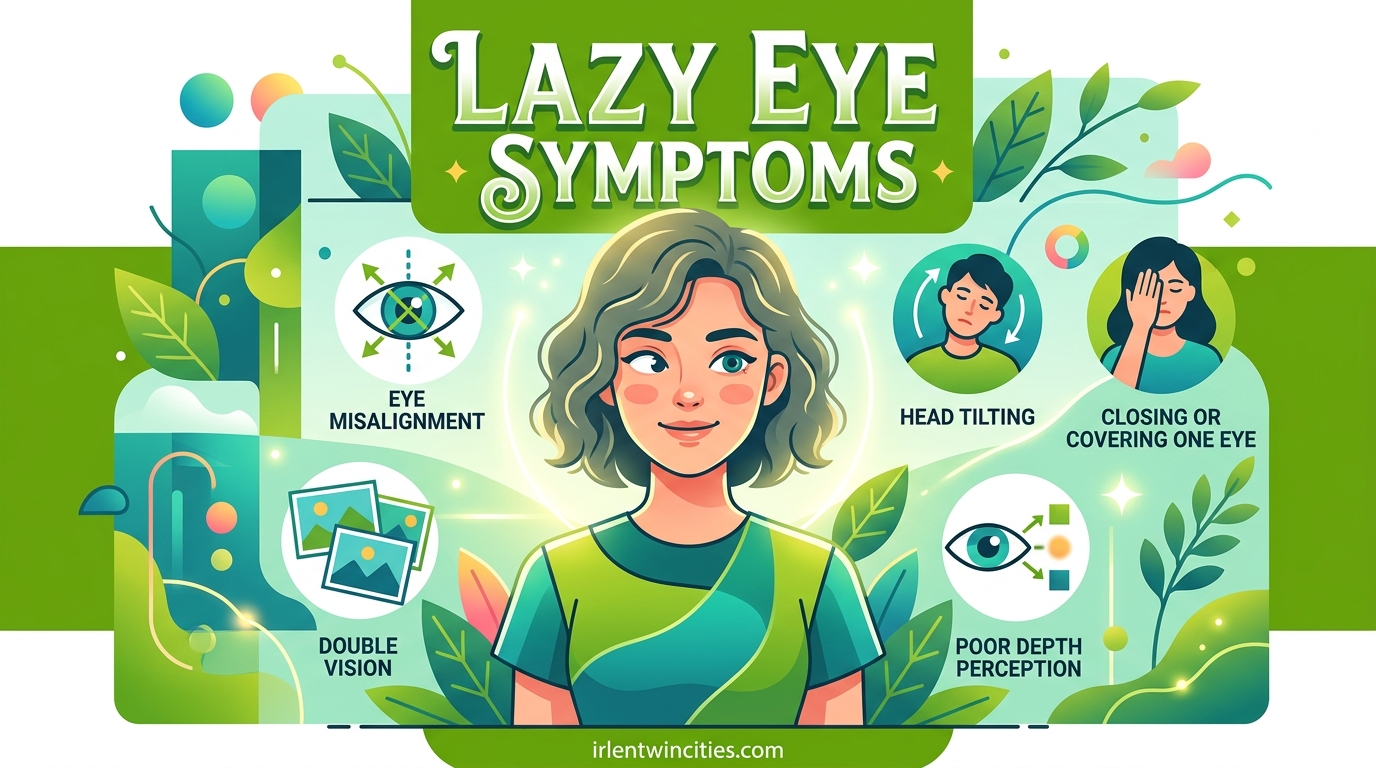
Signs and symptoms of lazy eye include:
- An eye that wanders inward or outward (this is strabismus)
- Squinting or shutting one eye frequently
- Poor depth perception and difficulty judging distances
- Head tilting or turning to see things more clearly
- Bumping into objects on one side
- Difficulty with hand-eye coordination tasks
- Favoring one side of the body
- Eye misalignment visible to others
- Poor vision in one eye despite appearing normal
- Reading or learning difficulties related to vision
What Are the First Signs of Amblyopia?
The first signs often appear so gradually that parents miss them entirely. Your child might consistently bump into things on one side without seeming clumsy otherwise. They may tilt their head sharply when trying to focus on something. Some children start closing or covering one eye to see better, especially during reading or screen time.
In toddlers and preschoolers, you might notice they stumble more than typical despite good motor skills. They may sit unusually close to the television or hold books very close to their face. Some kids resist activities that require good depth perception, like catching a ball.
Older children may complain that their “good eye” feels tired or that things look blurry. They might mention headaches after reading or visual tasks. When you ask them to cover one eye, they may become agitated or say they cannot see well at all.
What Causes Amblyopia?
Strabismic Amblyopia
This form develops when the eyes are misaligned. One eye might turn inward (esotropia), outward (exotropia), upward, or downward. The brain receives two different images and cannot merge them properly. Rather than seeing double, it simply ignores the input from the misaligned eye.
The misalignment is often noticeable to parents and pediatricians. However, some cases are subtle enough that only an eye care professional catches them during examination.
Refractive Amblyopia
This type occurs when one eye has significantly worse refractive error than the other. Your child might be severely nearsighted, farsighted, or have astigmatism in one eye. The brain again decides to ignore the blurrier input, and that eye never develops proper visual acuity.
Refractive amblyopia can be harder to detect because the eyes may look completely straight and normal. Your child may not complain about their vision because they have grown used to seeing the world through only one clear eye.
Deprivation Amblyopia
This is the most severe form and requires prompt treatment. Something physically blocks light from entering the eye, such as a congenital cataract or droopy eyelid. The deprivation must be corrected quickly to prevent permanent vision loss in that eye.
This type accounts for a small percentage of amblyopia cases but demands immediate medical attention. If you notice any opacity in your child’s pupil or a persistently droopy eyelid, see an eye care provider right away.
Risk Factors for Developing Lazy Eye
Some children face higher odds of developing amblyopia. Premature birth, low birth weight, and family history of eye conditions all increase risk. Children with developmental delays may also be more susceptible.
Congenital conditions like cataract, ptosis (droopy eyelid), or asymmetry in refractive error create the foundation for lazy eye to develop. Any history of strabismus in the family raises the probability that your child will experience similar issues.
Boys and girls are affected at roughly equal rates, though some studies suggest slight male predominance. The condition appears across all ethnic groups and socioeconomic backgrounds.
How Lazy Eye Is Diagnosed
Detection starts with pediatric vision screenings, which most schools and doctors offices perform regularly. These screenings look for basic visual acuity, eye alignment, and refractive errors. However, comprehensive eye exams by an optometrist or ophthalmologist catch far more cases.
During a full exam, the eye care professional will test visual acuity in each eye separately, check how the eyes move and work together, and examine the structures of both eyes. They may use dilating drops to get a better view of the internal structures and can determine the exact refractive prescription.
For younger children who cannot read letters, specialists use picture-based tests, LEA symbols, or retinal scanning devices. The key is that both eyes must be evaluated independently, not just together.
What Does Amblyopia Feel Like?
People living with amblyopia describe their experiences in ways that help us understand the real impact. One person shared that looking through their amblyopic eye is “like some stuff is blurry and some isn’t,” making reading especially difficult.
Another described the feeling of disorientation, noting that the muscles around their lazy eye feel weak. They mentioned that moving their eyes creates an unsettling sensation unlike what people with normal binocular vision experience.
Several individuals described a sensation of “darkness” or an obstruction in their lazy eye, even though nothing physically blocks their vision. The brain simply does not process the input fully, creating this eerie absence of visual information.
Headaches are common, particularly deep aches at the back of the eye after extended reading or screen time. The effort of compensating with one eye creates strain that people with typical vision do not experience.
Treatment Options Overview
Early intervention leads to the best outcomes in treating lazy eye. The goal is to force the brain to pay attention to the weaker eye and rebuild those neural connections.
Eye Patching
The traditional approach involves covering the stronger eye with a patch for several hours daily. This forces the weaker eye to work harder, stimulating visual development. Treatment typically lasts months to years, depending on severity and patient age.
Compliance can be challenging, especially with younger children who find patching frustrating. Parents report that creating a routine, using decorative patches, or pairing patching time with special activities improves adherence.
Atropine Drops
Eye drops called atropine blur the stronger eye, achieving a similar effect to patching without the adhesive. One drop daily often works as effectively as hours of patching. This approach has gained popularity for its convenience and better compliance rates.
Side effects may include light sensitivity and temporary blurred vision in the medicated eye. These typically resolve quickly and are generally well-tolerated by most patients.
Surgery
When strabismus causes the amblyopia, surgery to realign the eye muscles may be necessary. The procedure adjusts the tension on specific muscles to bring the eyes into proper alignment. Surgery often precedes or accompanies vision therapy rather than replacing it.
Recovery is relatively quick for most patients, though full visual rehabilitation may take additional time. Surgery alone does not guarantee restored vision without concurrent therapy to strengthen the neural connections.
Complications If Left Untreated
Is Amblyopia a Brain Issue?
Yes. The problem originates in how the brain processes visual information, not in the physical structures of the eye itself. The neural pathways connecting the eye to the brain fail to develop properly when ignored during childhood.
Once those pathways solidify, typically after age 7 or 8, correcting the underlying cause may no longer restore vision. The brain simply lacks the programming to interpret signals from the amblyopic eye. This is why pediatric eye care matters so much.
Untreated amblyopia can lead to permanent vision loss in the weaker eye. Adults who never received treatment may have difficulty with tasks requiring good vision in that eye, limiting career options and daily functioning.
Beyond the physical implications, people with untreated amblyopia often report lower confidence and frustration related to their vision issues. The condition touches emotional well-being as well as practical visual ability.
Can Lazy Eye Be Prevented?
Not all cases of amblyopia can be prevented, but early detection dramatically improves outcomes. Regular pediatric eye screenings catch most cases before they progress. Parents should ensure their children receive comprehensive eye exams by age 3 or 4, even if no problems seem apparent.
If your child has risk factors like family history of eye conditions, prematurity, or developmental delays, more frequent monitoring is wise. Watch for subtle signs like head tilting, squinting, or favoring one side during visual tasks.
When treatment begins early, many children develop normal or near-normal vision in the affected eye. The brain retains remarkable plasticity in early childhood, making recovery possible when intervention occurs at the right time.
When to See a Doctor
Schedule an eye exam if you notice any of the following in your child. Eyes that appear misaligned or do not track together properly warrant professional evaluation. Consistent squinting, head tilting, or closing one eye should prompt a visit.
If your child seems unusually clumsy, bumps into things frequently, or struggles with activities requiring depth perception, have their vision checked. Any complaints about blurred vision, headaches after reading, or difficulty seeing should be addressed.
Adults who were never treated for amblyopia as children should also consult with an eye care professional. While adult treatment has more limited success, understanding your condition helps you manage it effectively.
Frequently Asked Questions
What are the first signs of amblyopia?
The first signs include eye wandering or misalignment, frequent squinting or closing one eye, head tilting, poor depth perception causing clumsiness, and difficulty with reading or close-up tasks. Some children bump into objects on one side or sit very close to screens.
What happens if a lazy eye is left untreated?
Untreated amblyopia leads to permanent vision loss in the weaker eye. After childhood, the brain loses plasticity and can no longer rebuild the neural pathways needed for proper vision. This affects depth perception, peripheral vision, and can limit career options.
Does amblyopia ever go away?
Amblyopia does not resolve on its own. The brain cannot spontaneously relearn to use the weaker eye without intervention. However, early treatment in childhood produces excellent outcomes, with many children achieving normal or near-normal vision.
Is amblyopia a brain issue?
Yes. Amblyopia is fundamentally a neurological condition where the brain fails to develop proper connections with one eye. The physical structures of the eye may be healthy, but the brain ignores or suppresses the input from the weaker eye.
Is amblyopia linked to autism?
Amblyopia and autism are separate conditions with no direct causal relationship. However, some studies suggest that children with certain neurodevelopmental conditions may have higher rates of vision problems including amblyopia, making screening important for all children.
Is amblyopia related to ADHD?
Amblyopia itself does not cause ADHD, but the visual difficulties it creates can be mistaken for attention problems. A child struggling to see clearly may become fidgety, avoid reading tasks, or seem inattentive. Proper vision correction often improves behavioral symptoms.
Conclusion
Lazy eye symptoms represent an opportunity for early intervention. The condition responds well to treatment when caught during childhood visual development. Understanding what to look for, from subtle behavioral signs to obvious eye misalignment, empowers you to seek help at the right time.
If you suspect your child might have amblyopia, schedule a comprehensive eye exam with an optometrist or ophthalmologist. Early detection and consistent treatment give your child the best chance at normal vision development. The symptoms covered here serve as a starting point for that conversation with your healthcare provider.