
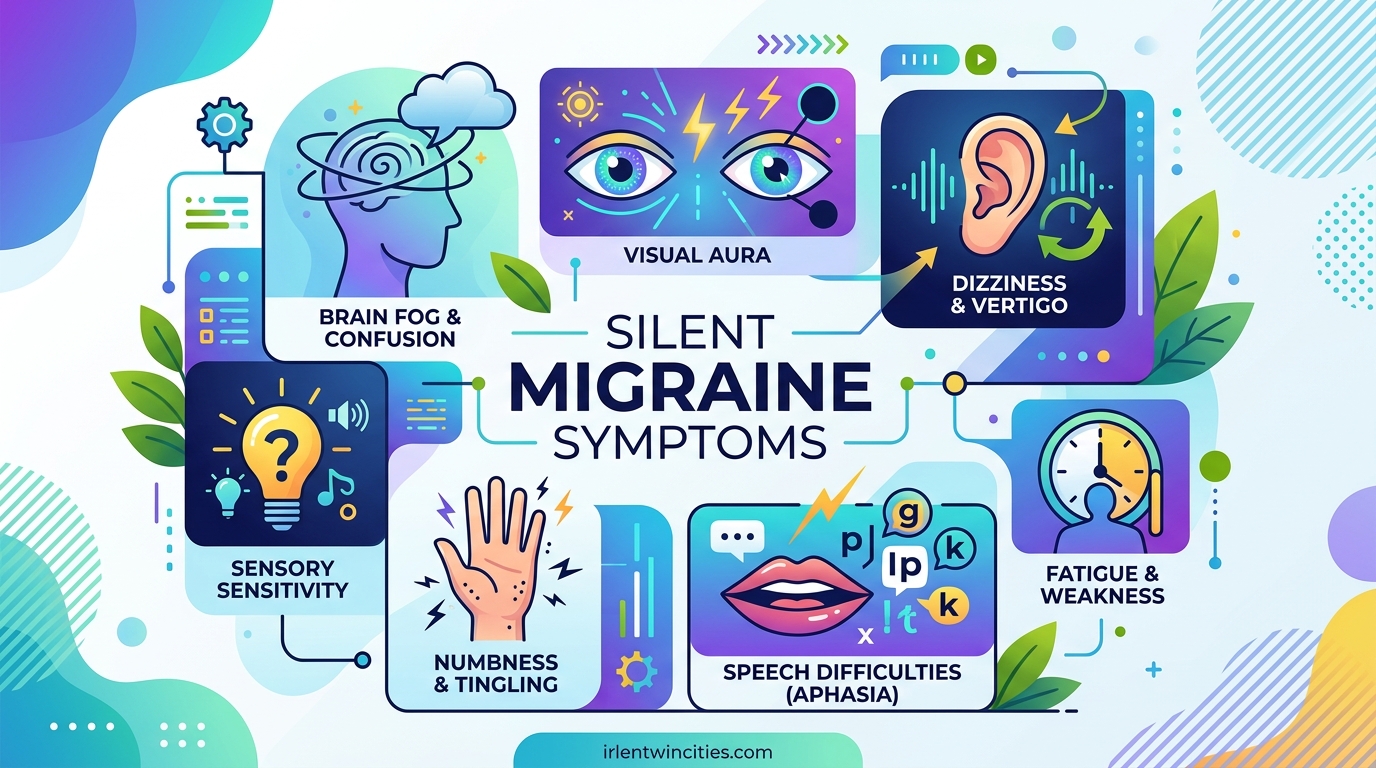
Silent migraine symptoms can be confusing and frightening. You experience the neurological effects of a migraine attack without the characteristic headache pain that most people associate with this condition. Understanding what silent migraine is, how it manifests, and what you can do about it helps you manage this often-misunderstood condition.
I have worked with many patients who describe the frustration of having their symptoms dismissed because they lack the “classic” headache pain. Medical professionals sometimes call this condition acephalgic migraine, migraine aura without headache, or simply typical aura without headache. The terminology varies, but the experience remains the same: neurological symptoms that disrupt your daily life without the throbbing pain.
In this guide, I will explain everything you need to know about silent migraine symptoms. You will learn how to recognize the warning signs, understand what triggers these episodes, and discover effective treatment options. I will also share insights from real people who experience silent migraines, addressing the common fears and questions that arise when dealing with this condition.
Table of Contents
What Is Silent Migraine?
Silent migraine is a type of migraine attack that causes neurological symptoms without the headache pain typically associated with migraine. The medical community officially recognizes this as typical aura without headache under the International Classification of Headache Disorders. This condition affects approximately 4-5% of people with migraine, most commonly occurring in young adults in their 20s and 30s, as well as adults between ages 40 and 60.
The key characteristic of silent migraine is the presence of migraine aura symptoms. Aura refers to the neurological disturbances that can affect your vision, senses, and speech. In a typical migraine with aura, these symptoms precede or accompany the headache phase. In silent migraine, the aura occurs, but the headache phase never materializes. Some people experience relief at avoiding the pain, while others find the neurological symptoms equally disruptive.
To understand why silent migraine happens, you need to know about cortical spreading depression. This is a wave of abnormal electrical activity that moves slowly across your cerebral cortex, the outer layer of your brain. It starts with a brief period of intense neuronal firing, followed by a longer period of suppressed activity. When this wave affects your occipital lobe (the visual processing center), you see flashing lights or blind spots. When it spreads to your parietal or temporal lobes, you experience sensory changes or speech difficulties. The pain pathways may not activate, leaving you with all the neurological symptoms but none of the head pain.
Many people with silent migraine describe feeling like something serious is wrong with their brain. One person I spoke with said it feels like “my brain is not working right.” This captures the essence of the experience perfectly. Your cognitive function feels impaired, your senses feel heightened or distorted, and yet there is no pain to point to as the cause. This can make explaining your condition to doctors, family members, or employers particularly challenging.
The term acephalgic migraine comes from Greek roots meaning “without head pain.” Some people also hear the term ocular migraine used, though this is technically incorrect. Ocular migraine refers to a specific type where only one eye experiences visual disturbances. Silent migraine affects both eyes and can include sensory and speech symptoms beyond just visual changes. Understanding these distinctions helps you communicate more effectively with healthcare providers.
Silent Migraine Symptoms
Silent migraine symptoms vary from person to person, but they consistently involve neurological disturbances that affect how you perceive the world around you. These symptoms typically develop gradually over 5 to 20 minutes and can last anywhere from 20 minutes to an hour. Unlike stroke symptoms, which come on suddenly, silent migraine aura symptoms build up progressively. This gradual onset is one key way doctors distinguish between the two conditions.
Visual Aura Symptoms
Visual disturbances are the most common manifestation of silent migraine. These can range from mildly annoying to completely disabling, depending on their severity and your activities when they strike. I have heard people describe seeing flashing lights, zigzag patterns, or wavy lines across their field of vision. Some experience jagged lines that shimmer or move slowly across their visual field. These patterns often start in the center of vision and expand outward in a crescent shape.
Scotoma, or blind spots, represent another frequent visual symptom. You might notice areas in your vision where you simply cannot see anything, as if someone has placed a dark spot over part of your visual field. This can make reading impossible or create dangerous situations if you are driving. Many people describe looking at someone and being unable to see their face clearly because a blind spot obscures it. Some experience complete or partial vision loss in one or both eyes during an episode.
Blurry vision and visual distortions also occur regularly. Objects may appear to shimmer, wave, or lose their sharp edges. Colors might seem different, or you might see halos around lights. Tunnel vision, where your peripheral vision narrows, can create a disorienting experience. These visual changes typically resolve within 60 minutes, but they can be terrifying while they last, especially the first time you experience them.
Sensory and Speech Symptoms
Beyond visual disturbances, silent migraine can cause significant sensory changes. Paresthesia, the medical term for abnormal sensations like numbness and tingling, often affects people during silent migraine episodes. These sensations typically start in one hand and spread up the arm to the face, following a pattern called a chevron or marching progression. You might feel pins and needles, burning, or a complete loss of sensation in affected areas.
Speech difficulties, known medically as aphasia, represent another challenging symptom. During a silent migraine episode, you might struggle to find the right words, speak clearly, or understand what others are saying. Some people describe knowing what they want to say but being unable to form the sounds or words. Others experience comprehension difficulties where speech sounds like a foreign language they cannot quite grasp. These symptoms typically resolve within the hour, but they can be deeply unsettling while they persist.
Dizziness and balance problems frequently accompany silent migraine. The room might feel like it is spinning, or you might feel unsteady on your feet. Some people experience vertigo so severe they cannot walk without support. Tinnitus, or ringing in the ears, can add to the sensory overload. Temperature sensitivity is another symptom that often goes unrecognized; you might feel suddenly cold when the room is warm, or vice versa, as your body struggles to regulate its internal thermostat.
Other Common Symptoms
Even without headache pain, silent migraine can cause significant physical discomfort. Nausea affects many people during episodes, sometimes accompanied by vomiting. Sensitivity to light, sound, and smell, known as photophobia, phonophobia, and osmophobia respectively, can make normal environments feel overwhelming. Wearing dark sunglasses indoors, keeping rooms completely silent, and avoiding strong odors become necessary survival strategies during an attack.
Brain fog and confusion represent some of the most frustrating symptoms. You might feel like you cannot think clearly, process information, or make decisions. Tasks that normally feel easy become impossible. Dissociation, or feeling disconnected from your body, affects many people. One person described it as feeling “out of body” or “trippy but not in a good way.” This sense of unreality can trigger anxiety and panic, especially if you do not understand what is happening.
Extreme fatigue often follows silent migraine episodes, during what is called the postdrome phase. Your body has gone through a significant neurological event, and it needs time to recover. Some people describe feeling like they have been hit by a truck, even without experiencing any pain. Neck and shoulder stiffness, irritability, and mood changes can also accompany these episodes, adding to the overall burden of the condition.
The Four Phases of Silent Migraine
Understanding the phases of silent migraine helps you recognize patterns and prepare for episodes. While not everyone experiences all four phases, knowing what to look for can reduce anxiety and help you manage symptoms more effectively. Traditional migraine includes four phases: prodrome, aura, headache, and postdrome. In silent migraine, the headache phase is absent, but the other three phases remain.
Phase 1: Prodrome (Pre-Attack Warning Signs)
The prodrome phase serves as your early warning system, typically beginning 24 to 48 hours before the main symptoms appear. Learning to recognize these warning signs gives you time to prepare, adjust your schedule, and possibly prevent the episode from fully developing. Many people miss these early signals until they learn what to watch for.
Common prodrome symptoms include mood changes such as depression, euphoria, or irritability. You might experience unusual food cravings, particularly for sweet or salty foods. Neck stiffness and shoulder tension often signal an approaching episode. Fatigue, difficulty concentrating, and yawning frequently occur. Some people notice increased urination or fluid retention. These subtle changes can be easy to dismiss until you recognize their connection to your silent migraine pattern.
One person I spoke with described their prodrome as feeling “off” in a way they could not quite define. They became cranky over sounds, touch, and light in ways that did not make logical sense. Recognizing these patterns allowed them to start preventive measures earlier, sometimes stopping the episode from progressing to the aura phase. Keeping a detailed diary helps identify your personal prodrome symptoms, which may differ from the typical list.
Phase 2: Aura (The Main Silent Migraine Event)
The aura phase represents the core of silent migraine, where neurological symptoms become fully apparent. This phase typically lasts between 20 and 60 minutes, though individual experiences vary. The symptoms you experience during aura define your silent migraine episode, and they can occur without any preceding prodrome symptoms or following postdrome effects.
During the aura phase, visual symptoms often dominate, but sensory and speech disturbances can occur simultaneously or sequentially. The symptoms usually develop gradually, build to a peak, and then slowly resolve. This progressive nature helps distinguish silent migraine from more serious conditions like stroke or transient ischemic attack (TIA), where symptoms appear suddenly and reach maximum intensity immediately.
Some people experience aura symptoms in isolation, with no prodrome before or postdrome after. Others find their episodes follow a predictable pattern through all phases except headache. Understanding your personal pattern helps with diagnosis and management. If you experience aura without any other migraine symptoms, this is the defining characteristic of silent migraine that you should communicate to your healthcare provider.
Phase 3: Headache Phase (Absent in Silent Migraine)
In typical migraine with aura, the headache phase follows the aura, lasting anywhere from 4 to 72 hours. This phase brings the throbbing, pulsating pain that most people associate with migraine attacks. The pain often worsens with physical activity and is accompanied by nausea and sensitivity to stimuli.
In silent migraine, this headache phase simply does not occur. Your neurological symptoms from the aura phase resolve, and you may move directly into recovery or experience only mild residual effects. The absence of this pain phase is what defines silent migraine and often leads to confusion in diagnosis. Doctors trained to look for headache pain may initially dismiss your symptoms or search for other explanations.
It is worth noting that some people experience what they call “partially silent” migraines, where the headache is present but mild compared to the neurological symptoms. Others find that their silent migraines occasionally develop into full migraines with headache pain. These variations are normal, and tracking them helps your doctor understand your specific pattern.
Phase 4: Postdrome (Recovery Phase)
The postdrome phase, often called the “migraine hangover,” affects many people after silent migraine episodes. This recovery period can last 24 to 48 hours as your brain returns to normal function. Even without headache pain, your neurological system needs time to recover from the cortical spreading depression that occurred during the aura phase.
Common postdrome symptoms include brain fog, difficulty concentrating, and mental fatigue. You might feel sluggish, mentally slow, or unable to perform at your usual cognitive level. Physical exhaustion often accompanies this phase, making even routine tasks feel draining. Some people experience mood changes, ranging from depression to euphoria, as their brain chemistry rebalances.
Understanding postdrome helps you plan recovery time after episodes. Many people try to return to normal activities immediately after their aura symptoms resolve, only to find they cannot function at full capacity. Giving yourself permission to rest during this phase can speed recovery and prevent triggering another episode through overexertion. Light activities, good hydration, and adequate sleep support your brain during this vulnerable recovery window.
Causes and Triggers of Silent Migraine
Understanding what causes silent migraine and what triggers your individual episodes empowers you to take control of your condition. While the underlying mechanism involves cortical spreading depression in your brain, various factors can initiate this process. Identifying your personal triggers through careful tracking often reveals patterns you can modify or avoid.
What Causes Silent Migraine?
The fundamental cause of silent migraine, like all migraine types, involves abnormal brain activity and chemistry. Cortical spreading depression, that wave of electrical disturbance moving across your cerebral cortex, represents the immediate physiological cause of aura symptoms. Researchers believe this phenomenon relates to hyperexcitable neurons in the brains of people with migraine, which fire abnormally in response to various stimuli.
Genetic factors play a significant role in silent migraine. If you have family members with migraine, you are more likely to experience silent migraine yourself. Studies have identified several genes associated with migraine susceptibility, though the exact inheritance patterns remain complex. Your genetic makeup influences how your brain processes sensory information, regulates blood flow, and responds to neurotransmitters like serotonin and dopamine.
Brain chemistry changes also contribute to silent migraine episodes. Serotonin levels fluctuate before and during migraine attacks, affecting pain processing, mood regulation, and sensory perception. Other neurotransmitters, including calcitonin gene-related peptide (CGRP), play roles in the migraine process. Understanding these chemical factors has led to new treatment options targeting specific molecules involved in migraine generation.
Common Triggers to Watch For
While you cannot change your genetic predisposition to silent migraine, you can identify and manage the triggers that initiate your episodes. Triggers vary enormously from person to person, but certain categories appear consistently across those with silent migraine. Keeping a detailed trigger diary helps identify your specific sensitivities.
Stress ranks as one of the most common triggers for silent migraine. This includes both psychological stress from work, relationships, or anxiety, and physical stress from illness, poor sleep, or overexertion. Interestingly, stress relief can also trigger episodes, leading to what some call “let-down” migraines that occur after stressful periods end. The relationship between stress and migraine involves complex hormonal and neurochemical changes.
Sleep changes frequently trigger silent migraine episodes. Too much sleep, too little sleep, irregular sleep schedules, or poor sleep quality can all initiate attacks. Many people find their silent migraines occur on weekends when they sleep in, or after travel disrupts their normal sleep pattern. Maintaining consistent sleep hygiene, including regular bedtimes and wake times, helps stabilize your brain and reduce episode frequency.
Weather and barometric pressure changes affect many people with silent migraine. Shifts in atmospheric pressure, temperature swings, and storm fronts can trigger episodes hours or even a day before the weather changes arrive. Some people experience episodes during specific seasons or when traveling to different climates. While you cannot control the weather, awareness of your sensitivity allows you to prepare for vulnerable periods.
Certain foods and beverages trigger silent migraine in susceptible individuals. Common culprits include aged cheeses, processed meats containing nitrates, monosodium glutamate (MSG), artificial sweeteners, and alcohol (particularly red wine). Caffeine presents a complex relationship, withdrawal from regular caffeine use can trigger episodes, while some people find small amounts of caffeine help prevent or treat attacks.
Hormonal changes significantly influence silent migraine, particularly in women. Many women experience episodes around menstruation, during ovulation, or when taking hormonal contraceptives. Pregnancy often changes migraine patterns, sometimes improving symptoms and sometimes worsening them. Menopause typically brings relief for many women as hormonal fluctuations stabilize.
Sensory triggers can initiate silent migraine episodes. Bright lights, especially flickering or flashing lights, often trigger visual aura. Loud noises, strong smells (perfumes, cleaning products, gasoline), and certain visual patterns (stripes, complex geometric designs) affect many people. Understanding your sensory sensitivities helps you avoid or prepare for triggering environments.
How Silent Migraine Is Diagnosed
Getting an accurate diagnosis for silent migraine can be challenging because the condition lacks the most recognizable symptom: headache pain. Many people visit multiple doctors, undergo extensive testing, and receive incorrect diagnoses before someone recognizes their symptoms as silent migraine. Understanding the diagnostic process helps you advocate for yourself and communicate effectively with healthcare providers.
The diagnostic process begins with a detailed medical history. Your doctor will ask about your symptoms, when they started, how long they last, and what they feel like. They will want to know about any family history of migraine, your sleep patterns, stress levels, and potential triggers you have noticed. Be prepared to describe your symptoms in detail, including the gradual onset that distinguishes migraine aura from stroke symptoms.
A thorough neurological examination helps rule out other conditions that might cause similar symptoms. Your doctor will test your reflexes, muscle strength, coordination, sensory responses, and cranial nerve function. They will examine your eyes and may test your visual fields. These tests look for signs of neurological disease that could explain your symptoms better than migraine.
Ruling out other conditions represents a crucial part of the diagnostic process. Silent migraine symptoms can mimic more serious neurological conditions, including stroke, transient ischemic attack (TIA), seizure disorders, brain tumors, or multiple sclerosis. Depending on your symptoms and medical history, your doctor might order imaging studies like MRI or CT scans, blood tests, or electroencephalography (EEG) to eliminate these possibilities.
Keeping a symptom diary significantly improves your chances of receiving an accurate diagnosis. Record each episode, noting when it started, what symptoms you experienced, how long they lasted, and what you were doing before they began. Include information about your sleep, stress levels, menstrual cycle (if applicable), and any potential triggers you noticed. This detailed record helps your doctor identify patterns consistent with silent migraine.
Questions your doctor might ask include: Do your symptoms develop gradually over several minutes? Do they affect both eyes or just one? Do they last between 5 and 60 minutes? Do you have a family history of migraine? Have you experienced migraine with headache in the past? Do your symptoms resolve completely between episodes? These questions help distinguish silent migraine from other conditions and confirm the diagnosis.
Silent Migraine Treatment Options
Treating silent migraine requires a different approach than treating typical migraine with headache pain. Since the headache phase is absent, medications designed primarily for pain relief may not help. Instead, treatment focuses on managing neurological symptoms, preventing episodes, and addressing associated symptoms like nausea or dizziness.
Acute (Attack) Treatment
When a silent migraine episode begins, treatment options are somewhat limited. Triptans, the most common acute migraine medications, work primarily by constricting blood vessels and blocking pain pathways. Since silent migraine lacks the headache pain component, triptans often provide limited benefit. Some doctors still prescribe them because they may help with associated symptoms or prevent progression to headache in those who sometimes develop pain. However, many people with pure silent migraine find triptans ineffective.
Non-steroidal anti-inflammatory drugs (NSAIDs) like ibuprofen or naproxen help some people, though their effectiveness varies. These medications may address the inflammatory processes occurring in the brain during migraine episodes. Anti-nausea medications can provide relief if nausea accompanies your silent migraine symptoms. Medications like metoclopramide address both nausea and can help with gastric stasis that sometimes occurs during migraine.
During an acute silent migraine episode, rest represents your best treatment strategy. Find a quiet, dark room where you can relax while your neurological symptoms run their course. Avoid driving, operating machinery, or making important decisions while experiencing aura symptoms. Some people find relief from cold compresses on the forehead or neck, though this helps more with traditional migraine pain than with silent migraine symptoms.
Preventive Treatment
Preventive medications often prove more effective for silent migraine than acute treatments. These medications aim to reduce the frequency, severity, and duration of episodes by stabilizing brain chemistry and reducing neuronal excitability. Beta-blockers like propranolol or metoprolol work well for many people, reducing the hyperexcitability that leads to cortical spreading depression.
Calcium channel blockers, particularly verapamil, help prevent silent migraine episodes in some individuals. These medications affect the electrical activity of neurons and can reduce the likelihood of cortical spreading depression. Some neurologists specifically recommend calcium channel blockers for people whose silent migraines include significant visual symptoms.
CGRP inhibitors represent the newest class of preventive migraine medications. These injectable or oral medications block calcitonin gene-related peptide, a molecule involved in migraine pathophysiology. Clinical trials show significant effectiveness for reducing migraine frequency, and many people with silent migraine report benefit. These medications are expensive and typically require insurance pre-authorization.
Anti-seizure medications like topiramate or valproate can prevent silent migraine episodes in some people. These drugs stabilize neuronal membranes and reduce the brain hyperexcitability that leads to migraine. They require careful monitoring for side effects and are not appropriate for everyone. Some doctors prescribe low-dose aspirin for prevention, particularly in older adults, though the evidence for this approach is limited.
Non-Medication Approaches
Beyond medications, several non-pharmacological approaches help manage silent migraine. Biofeedback teaches you to control physiological functions like muscle tension and blood flow, potentially reducing episode frequency. This technique requires training with a specialist but offers lasting skills for migraine management.
Stress management techniques including meditation, progressive muscle relaxation, and cognitive behavioral therapy can reduce episode frequency by addressing one of the most common triggers. Regular physical exercise, when performed consistently, helps regulate brain chemistry and reduce stress. Some people find specific supplements like magnesium, riboflavin (vitamin B2), or CoQ10 helpful, though evidence for these approaches varies.
Prevention Strategies and Lifestyle Changes
Preventing silent migraine episodes often proves more effective than treating them once they start. Lifestyle modifications that address your personal triggers and support overall brain health can significantly reduce episode frequency and severity. These changes require commitment but offer lasting benefits for your neurological health.
Trigger identification and avoidance forms the foundation of silent migraine prevention. Through careful tracking, identify the specific factors that initiate your episodes. Once identified, develop strategies to avoid or minimize these triggers. This might mean adjusting your sleep schedule, managing stress more effectively, avoiding certain foods, or preparing for weather changes you cannot control.
Sleep hygiene critically influences silent migraine patterns. Maintain a consistent sleep schedule with the same bedtime and wake time every day, including weekends. Create a sleep environment that promotes rest: cool, dark, quiet, and comfortable. Avoid screens for at least an hour before bed, as blue light affects your circadian rhythm. Limit caffeine after noon and avoid heavy meals close to bedtime.
Stress management techniques help prevent the episodes that stress triggers. Regular practice of relaxation techniques like deep breathing, meditation, or yoga reduces your baseline stress level and improves your ability to handle challenging situations. Consider cognitive behavioral therapy if anxiety about silent migraine episodes becomes problematic. Many people experience significant anxiety during and after episodes, which can create a cycle of stress triggering more episodes.
Regular exercise supports brain health and stress reduction, both important for silent migraine prevention. Aim for at least 150 minutes of moderate exercise per week, spread across multiple days. Choose activities you enjoy so you will maintain the habit. Be cautious about sudden intense exercise, which can trigger episodes in some people. Gradual warm-up and cool-down periods help prevent exercise-triggered attacks.
Hydration and diet influence silent migraine frequency. Drink adequate water throughout the day, as dehydration commonly triggers episodes. Eat regular meals to maintain stable blood sugar, as hypoglycemia can initiate attacks. Consider working with a nutritionist to identify food triggers and develop an eating pattern that supports your neurological health.
Tracking symptoms remains essential for effective prevention. Use a paper diary or smartphone app to record potential triggers, prodrome symptoms, episodes, and treatments. Review this data regularly with your doctor to identify patterns and adjust your prevention strategy. Many tracking apps now offer features specifically for migraine, including weather tracking and trigger analysis.
When to See a Doctor for Silent Migraine
Knowing when to seek medical care for silent migraine symptoms helps ensure you receive appropriate treatment while avoiding unnecessary emergency visits. Silent migraine symptoms can mimic serious conditions, creating genuine anxiety about when to seek emergency care versus routine medical appointments.
Silent Migraine vs Stroke: Knowing the Difference
The fear that silent migraine symptoms might indicate a stroke affects many people experiencing these episodes. Understanding the differences helps you make informed decisions about when to seek emergency care. While both conditions affect brain function, they present with distinct patterns that doctors use to distinguish between them.
Silent migraine symptoms develop gradually over 5 to 20 minutes, building to their peak slowly. Stroke symptoms appear suddenly, reaching maximum intensity within seconds or minutes. Silent migraine aura typically affects both eyes or both sides of the body symmetrically. Stroke usually affects one side of the body, following a clear unilateral pattern. Silent migraine symptoms resolve completely within 60 minutes. Stroke symptoms persist and may worsen without treatment.
However, if you have never experienced these symptoms before, or if your symptoms differ from your typical pattern, seeking immediate medical evaluation is appropriate. Only a doctor can definitively distinguish between silent migraine and stroke or TIA. When in doubt, err on the side of caution and seek emergency care.
Emergency Warning Signs
Certain symptoms require immediate emergency medical attention, regardless of whether you typically experience silent migraine. Call emergency services or go to the nearest emergency room if you experience any of the following: Sudden, severe symptoms that develop within seconds rather than minutes. Weakness on one side of the body that does not match your typical aura pattern. Confusion, difficulty speaking, or understanding speech that is worse than your usual symptoms. Loss of consciousness or severe dizziness that prevents standing.
Additional warning signs include vision loss in one eye only (as opposed to both eyes), severe headache accompanying your neurological symptoms (if you typically have silent migraine without pain), or symptoms that last longer than an hour without improvement. Symptoms that do not resolve completely between episodes also warrant immediate evaluation.
For routine care, schedule an appointment with your primary care doctor or a neurologist if you experience new neurological symptoms, if your episodes are increasing in frequency or severity, or if your current treatment is not working. A headache specialist or neurologist with migraine expertise can provide the most appropriate care for silent migraine. Do not accept being told your symptoms are “just anxiety” without a thorough neurological evaluation.
Frequently Asked Questions About Silent Migraine
Do triptans work on silent migraines?
Triptans are generally not effective for pure silent migraine because they primarily target headache pain pathways. Since silent migraine lacks the pain phase, triptans provide limited benefit for most people. Some doctors still prescribe triptans because they may help with associated symptoms or prevent progression in people who sometimes develop headache pain. Alternative treatments like anti-nausea medications, NSAIDs, and preventive medications often prove more effective for managing silent migraine.
Can you have a hemiplegic migraine without the headache?
Hemiplegic migraine can occasionally occur without headache pain, though this is rare. Hemiplegic migraine causes temporary weakness or paralysis on one side of the body, along with typical aura symptoms. When it occurs without headache, it is particularly difficult to distinguish from stroke or TIA. If you experience motor weakness during episodes, you need immediate medical evaluation to rule out serious conditions. Hemiplegic migraine requires specialized treatment and close medical supervision.
Why do I get migraine symptoms without a headache?
Silent migraine occurs when your brain experiences cortical spreading depression that affects sensory, visual, or language centers without activating pain pathways. This wave of abnormal electrical activity moves across your cerebral cortex, causing neurological symptoms, but the trigeminovascular system that generates headache pain remains unaffected. Genetic factors, brain chemistry, and individual neurological wiring determine whether you experience pain with your migraine aura. About 4-5% of people with migraine have this acephalgic pattern.
What mimics silent migraines?
Several conditions can mimic silent migraine symptoms, including stroke or TIA, seizure disorders (particularly occipital lobe seizures), ocular conditions like retinal detachment or optic neuritis, vestibular disorders causing dizziness and balance problems, autoimmune conditions affecting the nervous system, and brain tumors or structural abnormalities. Carbon monoxide poisoning and certain medication side effects can also cause similar symptoms. A thorough neurological evaluation helps distinguish silent migraine from these other conditions.
How long can a silent migraine last?
The aura phase of silent migraine typically lasts between 20 and 60 minutes, though some people experience shorter or longer episodes. The prodrome phase can begin 24 to 48 hours before aura symptoms appear. The postdrome recovery phase may last another 24 to 48 hours after aura resolves. While aura symptoms themselves usually resolve within an hour, the entire migraine episode from prodrome through postdrome can span several days. If your aura symptoms last longer than 60 minutes, seek medical evaluation.
Is silent migraine dangerous?
Silent migraine itself is not life-threatening, though the symptoms can be frightening and disruptive. The primary danger lies in the potential confusion with stroke or other serious conditions. People with migraine with aura, including silent migraine, may have a slightly increased risk of stroke, particularly women who smoke or use hormonal contraceptives. However, the absolute risk remains low. The main impact of silent migraine is on quality of life, work performance, and daily functioning.
Can stress cause silent migraine?
Stress is one of the most common triggers for silent migraine episodes. Both acute stress and chronic stress can initiate the neurological processes that lead to migraine. Stress causes hormonal changes, muscle tension, and neurochemical shifts that make your brain more susceptible to cortical spreading depression. Interestingly, stress relief can also trigger episodes, leading to let-down migraines that occur after stressful periods end. Managing stress through relaxation techniques, therapy, and lifestyle changes helps reduce silent migraine frequency.
Can silent migraines occur without aura?
By definition, silent migraine requires the presence of aura symptoms without headache pain. If you experience migraine symptoms without both headache and aura, this would be classified differently, possibly as vestibular migraine or another migraine variant. Some people experience what they call silent migraine when they have other migraine symptoms like nausea, light sensitivity, and fatigue without either pain or typical aura. These cases require medical evaluation to determine the correct classification and appropriate treatment.
Conclusion
Silent migraine symptoms can be disruptive and frightening, but understanding this condition empowers you to manage it effectively. You now know that silent migraine, also called acephalgic migraine or migraine aura without headache, causes neurological symptoms through cortical spreading depression without triggering pain pathways. The visual disturbances, sensory changes, and speech difficulties you experience are real neurological events that deserve proper medical attention and treatment.
If you suspect you have silent migraine, I encourage you to seek evaluation from a neurologist or headache specialist. Keep a detailed symptom diary to help with diagnosis, and do not accept dismissal of your symptoms simply because you lack headache pain. Treatment options exist, from preventive medications to lifestyle modifications, that can significantly reduce episode frequency and improve your quality of life.
Remember that you are not alone in this experience. Many people navigate silent migraine successfully by identifying their triggers, developing prevention strategies, and building supportive healthcare relationships. The anxiety and frustration you may feel are normal responses to a condition that affects your brain function, but with proper management, silent migraine does not have to control your life.