
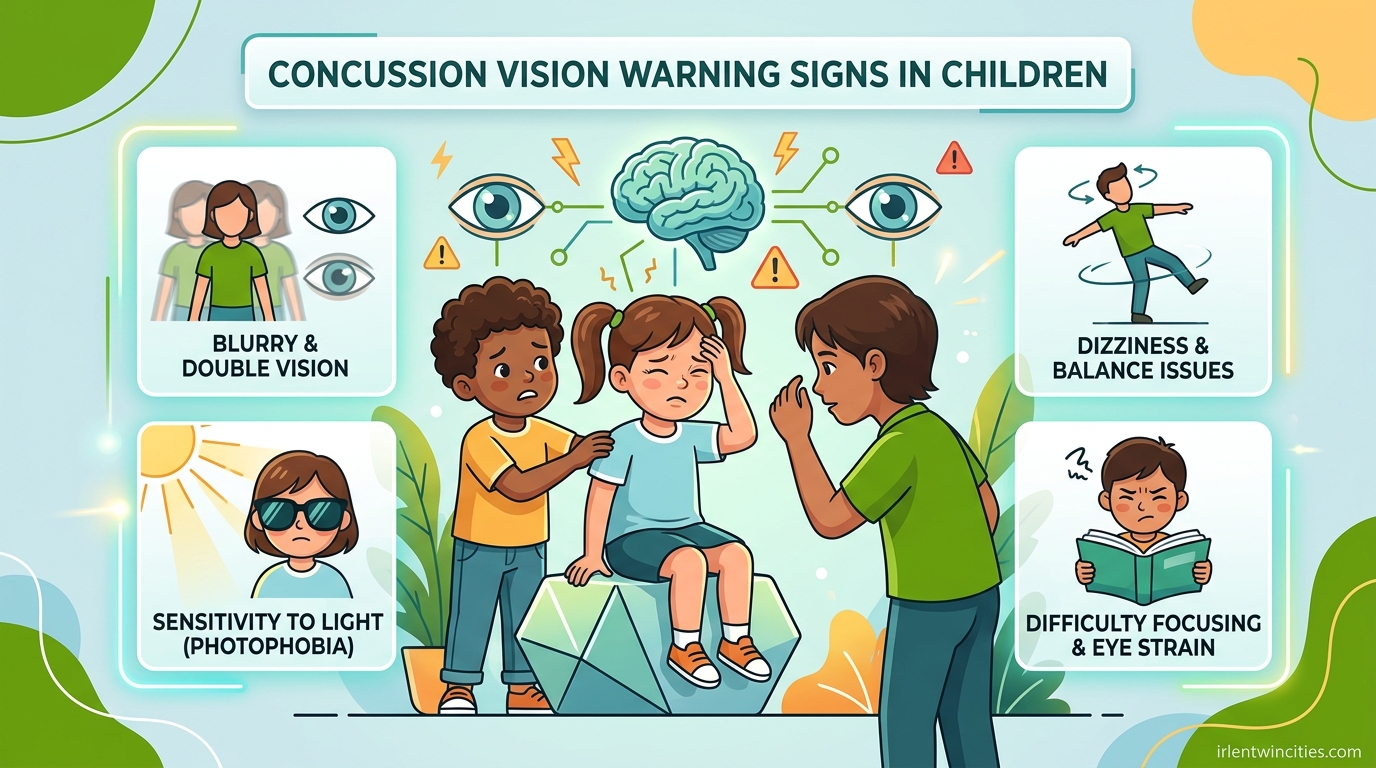
When my friend’s 7-year-old daughter fell off her bike and hit her head, the first thing her mom noticed wasn’t a bump or cut. It was the way her daughter kept squinting and rubbing her eyes, complaining that everything looked “fuzzy.” That subtle vision change was the key warning sign that helped them recognize a concussion early. If you’re searching for concussion vision warning signs children might display, you’re taking the right first step to protect your child’s health and recovery.
In this guide, I’ll walk you through everything I wish I had known when my own child had a minor head injury. You’ll learn exactly what vision symptoms to watch for, how they differ by age, when to rush to the emergency room, and how to help your child succeed at school during recovery. By the end, you’ll have a clear action plan and the confidence to advocate for your child’s needs.
Table of Contents
What Is a Concussion and How Does It Affect Vision?
A concussion is a mild traumatic brain injury caused by a bump, blow, or jolt to the head that disrupts normal brain function. Unlike more severe brain injuries, concussions don’t typically cause structural damage visible on CT scans or MRIs. The injury occurs at a cellular level, affecting how brain cells communicate and process information.
Vision and the brain are deeply connected. Up to 40% of children who suffer concussions experience some form of vision problem afterward. The brain controls everything your eyes do: tracking moving objects, focusing on near and far distances, processing what you see, and coordinating both eyes to work together. When the brain is injured, these sophisticated visual systems can go haywire.
The most common vision-related concussion symptoms in children include blurred vision, double vision, difficulty focusing when reading, and sensitivity to light. Some children also experience trouble with eye tracking, which makes following a line of text or watching a moving ball particularly challenging. These symptoms can appear immediately after the injury or develop over the following hours and days.
Concussion Vision Warning Signs Children: What to Watch For
As a parent, you’re in the best position to notice subtle changes in your child’s vision after a head injury. Children often don’t have the vocabulary to describe what they’re experiencing, so observation is key. Based on my research of parent experiences and medical guidance, here are the seven vision warning signs that should raise concern:
1. Blurred or fuzzy vision. Your child may complain that things look out of focus, or you might notice them squinting more than usual. This happens when the brain has trouble processing the clear images the eyes are sending.
2. Double vision (diplopia). One of the most alarming symptoms for parents to observe. Your child might see two of everything, or they may close one eye to try to see clearly. This occurs when the eyes stop working together properly.
3. Difficulty reading or focusing on near objects. If your child suddenly struggles with homework they could handle before, avoids reading, or holds books unusually close or far away, take note. Eye focusing muscles may be affected.
4. Sensitivity to light (photophobia). Bright lights, screens, or even normal daylight may cause discomfort, squinting, or headaches. Some children will wear sunglasses indoors or avoid well-lit rooms.
5. Eye strain or pain. Complaints of tired eyes, burning sensations, or pain around the eyes are common. Your child might rub their eyes frequently or complain of headaches that start behind the eyes.
6. Difficulty with eye tracking. Watch if your child struggles to follow a moving object, loses their place while reading, or has trouble copying from the board at school. Smooth eye movements require complex brain coordination.
7. Motion sensitivity or dizziness with visual movement. Busy visual environments like crowded hallways, scrolling screens, or watching fast-moving scenes may trigger nausea, dizziness, or discomfort. This indicates the vestibular-ocular connection has been disrupted.
Age-Specific Vision Symptoms: Toddlers, School-Age, and Teens
Children express concussion symptoms differently depending on their developmental stage. Understanding these age-specific differences helps you recognize problems even when your child can’t articulate them clearly.
Infants and Toddlers (Under 5): At this age, children cannot tell you about vision problems. Watch for physical cues: one pupil larger than the other, excessive squinting, refusing to make eye contact, or appearing visually overstimulated. A normally curious toddler who suddenly avoids looking at books or toys may be experiencing visual disturbances. You might also notice balance problems, excessive clumsiness, or a dazed appearance that lasts longer than a few minutes.
School-Age Children (5-12): These children can usually describe basic symptoms but may not connect them to the head injury. Listen for complaints about headaches during reading, trouble seeing the board at school, or wanting to sit closer to the TV. Teachers may report your child losing their place while reading, skipping lines, or avoiding written work. Some children become frustrated with schoolwork they previously enjoyed, which can be a sign of underlying vision strain.
Adolescents (13+): Teens often minimize symptoms to avoid missing sports or social activities. They may report screen-related headaches, difficulty driving (for older teens), or trouble concentrating during long study sessions. Be alert for changes in academic performance, complaints about fluorescent lighting at school, or avoiding activities that require visual focus like video games or reading. Some teens describe feeling “foggy” or having trouble “processing” what they see.
How Vision Problems Are Identified After Concussion
Healthcare providers use several methods to evaluate vision after a suspected concussion. The standard neurological exam includes checking pupil response, eye movement coordination, and visual field testing. Your doctor may shine a light in each eye to check that pupils constrict equally and track together, which is a basic but important screening tool.
The King-Devick test is a rapid screening tool that many sports medicine physicians and some pediatricians use. This 2-minute concussion test requires your child to read a series of numbers arranged in rows as quickly as possible. Because it tests eye tracking, attention, and language processing simultaneously, it can help identify subtle visual processing problems that might indicate a concussion. Some schools and sports leagues use this test for baseline screening before athletic seasons begin.
If vision problems persist beyond a few weeks, your doctor may refer your child to a neuro-optometrist or ophthalmologist specializing in traumatic brain injury. These specialists can perform more detailed assessments of eye teaming, focusing ability, and visual processing. Vision therapy may be recommended for children with persistent symptoms, involving exercises to retrain the brain-eye connection.
When to Seek Emergency Care: Danger Signs Parents Must Know
Most concussions, while concerning, can be managed at home with medical guidance. However, certain danger signs require immediate emergency room evaluation. Call 911 or go to the emergency department if you observe any of the following:
1. One pupil larger than the other. Unequal pupil size after a head injury can indicate serious brain injury requiring immediate intervention.
2. Worsening headache that won’t go away. While headaches are common after concussion, a severe headache that intensifies despite rest and medication is concerning.
3. Repeated vomiting. More than one episode of vomiting suggests increased pressure in the brain.
4. Unusual behavior, confusion, or inability to recognize people/places. These signs indicate the brain injury may be more severe than initially apparent.
Regarding the 4-hour rule for concussions: Medical professionals recommend that parents monitor children closely for at least 4 hours after a head injury. During this window, symptoms may evolve or worsen. If new symptoms appear or existing symptoms intensify during this monitoring period, seek medical evaluation promptly. Many parents worry about letting their child sleep after a head injury; while brief checks are reasonable, normal sleep is actually beneficial for healing once initial danger signs have been ruled out.
School Accommodations and Return-to-Learn Strategies
Vision problems can make returning to school particularly challenging for children recovering from concussions. The good news is that most schools are familiar with concussion protocols and willing to provide accommodations. The key is communicating your child’s specific needs clearly to teachers and administrators.
Common school accommodations for post-concussion vision problems include: reduced screen time or permission to use paper alternatives, seating away from bright windows or under dimmed lighting, enlarged print materials or audio books, extended time for tests and assignments, frequent breaks from visual tasks, and permission to wear sunglasses or a hat indoors if light-sensitive. Some children benefit from having a second set of textbooks to keep at home, eliminating the need to carry heavy bags.
For children with persistent symptoms, a 504 plan or Individualized Education Program (IEP) may be appropriate. These legal documents formalize accommodations and ensure consistency across all classes. Your child’s physician can provide documentation supporting the need for these accommodations. Return-to-learn should be gradual: many children start with half-days or limited academic workload before returning to full schedules.
Recovery Timeline: How Long Do Vision Problems Last?
The timeline for vision recovery after concussion varies significantly between children. Most children see significant improvement within 1-2 weeks, with symptoms continuing to fade over 4-6 weeks. However, up to 20% of children experience persistent post-concussion symptoms lasting months.
Several factors influence recovery time: severity of the initial injury, history of previous concussions, age (younger children sometimes recover faster), promptness of treatment and rest, and presence of pre-existing conditions like ADHD or learning disabilities. Children who return to physical or mental activity too quickly often experience prolonged recovery.
If vision problems persist beyond 3-4 weeks, consult a healthcare provider about vision therapy or neuro-optometric rehabilitation. These specialized treatments can address lingering issues with eye focusing, tracking, and coordination. Most children do recover fully, but patience and appropriate support during the healing process make a significant difference.
Parent Action Checklist: What to Do If You Suspect a Concussion
Having a clear action plan reduces anxiety and ensures you take the right steps at the right time. I developed this checklist based on medical guidance and conversations with parents who have navigated this experience:
Immediate Steps (First Hour): Remove your child from play or activity. Check for danger signs requiring emergency care. Apply ice to any bumps. Keep your child calm and resting. Note the time of injury.
Monitoring Period (Next 4 Hours): Observe closely for the danger signs listed above. Limit screen time and bright lights. Allow quiet rest in a dim room. Note any vision complaints or unusual behaviors. Offer small amounts of water.
Medical Evaluation: Contact your pediatrician even if symptoms seem mild. Schedule an appointment within 24-48 hours. Request vision-specific screening. Ask about return-to-learn and return-to-play guidelines. Obtain written documentation of recommended accommodations.
Ongoing Care: Maintain a symptom diary tracking vision complaints and their severity. Communicate with teachers about classroom needs. Ensure adequate sleep and hydration. Gradually reintroduce academic work as symptoms allow. Follow up with specialists if symptoms persist beyond 2-3 weeks.
Documentation Tips: Keep records of the injury circumstances, all medical appointments, symptoms observed, school communications, and accommodation plans. This documentation helps with school planning and provides a clear picture if symptoms evolve.
Frequently Asked Questions
How to tell if a kid has a concussion in his eyes?
Look for blurred or double vision, squinting, sensitivity to light, difficulty reading, excessive eye rubbing, trouble tracking moving objects, and complaints of eye pain or headaches during visual tasks. Watch for one pupil appearing larger than the other, which is a danger sign requiring immediate care.
What is the 4 hour rule for concussions?
The 4-hour rule refers to the critical monitoring period after a head injury. Parents should observe children closely for at least 4 hours, watching for evolving or worsening symptoms. During this window, new symptoms may appear that indicate the need for medical evaluation. After this period, if no danger signs have emerged and symptoms are stable, normal sleep is generally safe and beneficial for healing.
What is the 2 minute concussion test?
The 2-minute concussion test, also known as the King-Devick test, is a rapid screening tool that evaluates eye tracking, attention, and language processing. The child reads numbers arranged in rows as quickly as possible. Baseline tests taken before sports seasons allow comparison after suspected injuries. While helpful for screening, it does not replace comprehensive medical evaluation.
Can a concussion cause vision problems?
Yes, up to 40% of children experience vision problems after a concussion. The brain controls eye movements, focusing, and visual processing. When injured, these systems can malfunction, causing blurred vision, double vision, light sensitivity, difficulty reading, and trouble with eye coordination. Most vision problems resolve within weeks with proper rest and care.
Conclusion
Recognizing concussion vision warning signs children display after a head injury can make the difference between a smooth recovery and prolonged symptoms. Trust your parental instincts. If something seems off with your child’s vision after a bump to the head, seek medical guidance. Most children recover fully within weeks, especially when given proper rest, appropriate school accommodations, and patient support during the healing process.
The information in this guide comes from current medical research and real parent experiences, but it doesn’t replace personalized medical advice. When in doubt, contact your pediatrician. Your attentiveness and advocacy are your child’s most valuable resources during concussion recovery.