
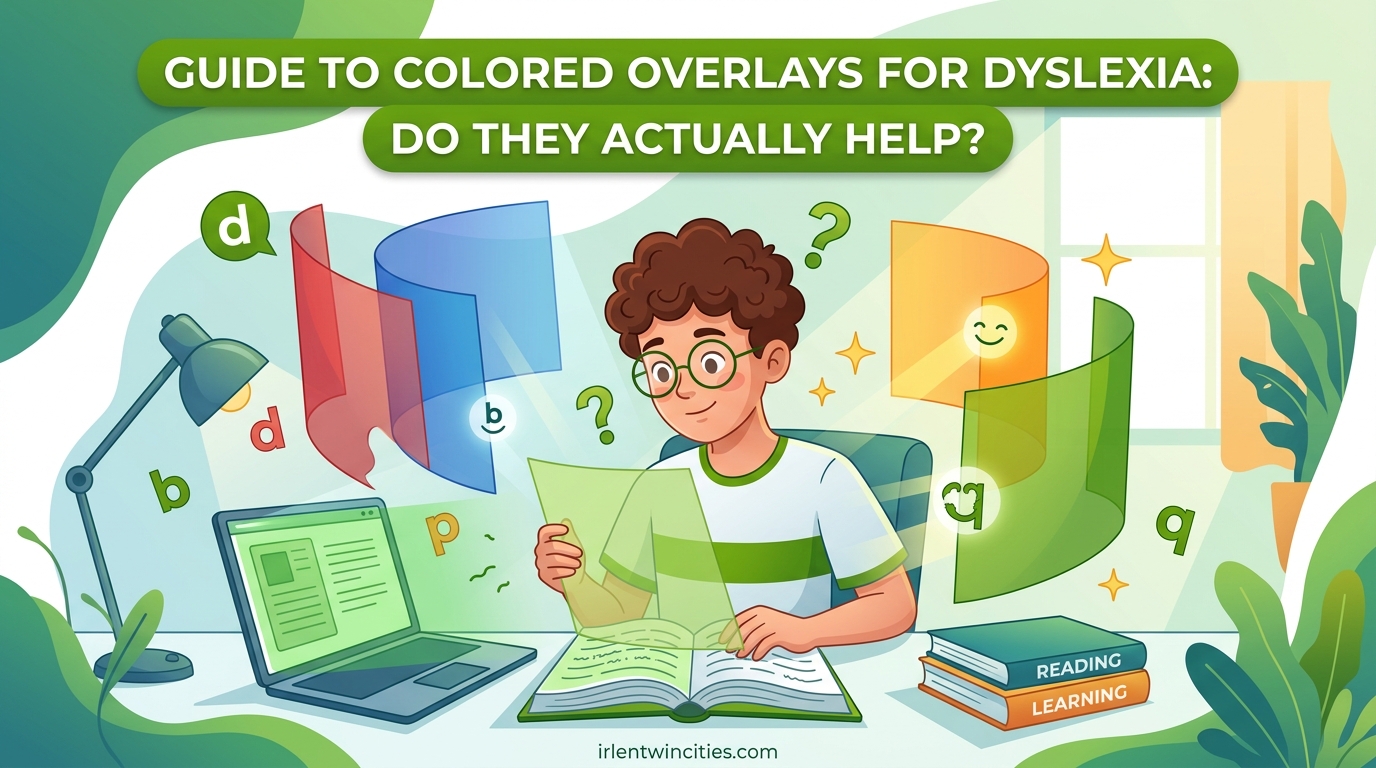
Colored overlays do not treat dyslexia itself. Research consistently shows that while some people report feeling more comfortable reading with colored overlays, they do not actually improve reading ability in individuals with dyslexia. However, they may help people who experience visual stress, a separate condition sometimes called Irlen Syndrome, that can coexist with dyslexia.
This distinction matters because parents and educators frequently spend money on overlays expecting to help reading difficulties when the actual issue is neurological. We will look at what science actually says, why some people still report benefits, and how to tell if colored overlays might be worth trying in your situation.
Table of Contents
What Dyslexia Actually Is
Dyslexia is a neurological language-based learning difference that affects how the brain processes written language. It impacts phonological awareness, which means individuals struggle to connect letters with their sounds, decode words, and achieve reading fluency. Standard vision tests almost always come back normal because dyslexia is not a problem with the eyes.
The condition originates in how the brain interprets language sounds and letter patterns. Brain imaging studies show differences in how dyslexic individuals process written text, particularly in the left hemisphere regions responsible for language. This is why evidence-based treatments focus on phonics instruction, phonological awareness training, and multisensory language approaches rather than visual interventions.
When someone with dyslexia struggles to read, the difficulty comes from language processing, not from seeing words differently on a page. This is why treating dyslexia with colored overlays is like using eye drops for a headache. The symptom might overlap but the underlying cause is entirely different.
What Colored Overlays Are and How They Work
Colored overlays are transparent plastic sheets placed over text to change the color of the page you are reading. They were developed based on the idea that specific light wavelengths cause visual discomfort in some readers, creating distortions that make reading harder. The theory suggests filtering these wavelengths reduces the visual stress some people experience.
Companies like Irlen sell colored overlays and tinted lenses claiming to help with a condition they call Irlen Syndrome, also known as Meares-Irlen Syndrome. Diagnostic assessments from certified Irlen practitioners can cost hundreds of dollars. Some parents report success stories, which we will examine more closely later.
The critical point is that colored overlays may address visual stress symptoms, which can be separate from dyslexia. A person can have both conditions, one condition, or neither. The overlay addresses the visual stress component, not the dyslexia component. Confusing these two separate issues leads to wasted money and missed opportunities for proper treatment.
What Research Actually Says
Multiple systematic reviews and meta-analyses have examined colored overlay research. The consensus is clear. Colored overlays do not improve reading ability in people with dyslexia. This finding comes from studies across multiple countries including the UK, Australia, and the United States.
A landmark review by the Australian Government Department of Education examined intervention studies and found no evidence that colored overlays improved reading outcomes for students with dyslexia. Similarly, UK research published in peer-reviewed journals found that any perceived improvements were likely due to placebo effects or expectancy bias rather than actual changes in visual processing.
The issue is that many early studies lacked proper controls. When researchers used double-masked designs where neither the participants nor the testers knew which overlay color was being used, the benefits disappeared. This strongly suggests the mechanism is psychological rather than physiological.
However, this does not mean colored overlays help nobody. Research does show that some individuals with visual stress symptoms report reduced eye strain and improved reading comfort. The problem is that visual stress is not dyslexia, and improving comfort while reading does not improve the underlying language processing difficulties that define dyslexia.
One frequently cited concern from parents in online forums is the cost of professional Irlen assessments. One parent noted they investigated Helen Irlen’s credentials and discovered she is a licensed family therapist, not a medical doctor with specialized training in eye conditions or vision science. This does not automatically disqualify her work, but it raises questions about why assessments that could be performed by existing eye care professionals require separate certification and significant fees.
Visual Stress vs Dyslexia: The Critical Distinction
Visual stress, sometimes called Irlen Syndrome or Meares-Irlen Syndrome, involves discomfort when reading that originates from visual processing rather than language processing. Symptoms include light sensitivity, headaches when reading, text appearing to move or blur, and eye strain that disappears when looking away from the page.
Someone with visual stress might struggle to read because the experience causes physical discomfort. Someone with dyslexia struggles because the brain has difficulty connecting letters with their sounds. The end result looks similar on a reading test, but the causes are completely different.
The challenge is that these conditions can overlap. A person can have both dyslexia and visual stress, which makes evaluating treatment claims difficult. If a colored overlay helps someone read more comfortably for 30 minutes instead of 10, they might read more and score better on a test. This improvement would show up in anecdotal reports even though the overlay did nothing for the dyslexia itself.
Parents frequently share stories in forums about spending money on expensive Irlen assessments only to find minimal benefit. One parent described how a clear laminator sheet worked just as well as expensive overlays, which aligns with research suggesting the benefit comes from the expectation of help rather than the specific color. Another described how a teacher tested five students with Irlen equipment and found all five performed better without the overlays.
This is not to dismiss every positive experience. Some families genuinely report that colored materials help their children read more comfortably. The key question is whether the improvement comes from addressing dyslexia or from addressing a separate visual stress issue. If it is the latter, the overlay helps comfort but not reading ability itself.
When Colored Overlays Might Be Worth Trying
If you suspect visual stress rather than pure dyslexia, some indicators suggest colored overlays might provide genuine benefit. Look for these symptoms: headaches after reading, sensitivity to bright lights or fluorescent lighting, text appearing to move or ripple, eyestrain that makes reading uncomfortable, and difficulty reading for more than 10-15 minutes before needing breaks.
A low-cost way to test this at home is to use colored plastic sheets from a craft store. Place a blue, green, yellow, or pink transparent sheet over text and observe whether reading feels more comfortable. If symptoms improve, the benefit might be real. If nothing changes, the issue is likely dyslexia rather than visual stress.
However, even if colored overlays help with visual comfort, they should not replace evidence-based dyslexia treatments. If your child has dyslexia, the priority should be structured literacy instruction including phonics, phonemic awareness, and fluency building. Overlays might be a helpful accommodation for reading fatigue, but they are not a treatment for the underlying condition.
Be cautious about expensive diagnostic assessments. The creator of Irlen Syndrome is a licensed family therapist, not a medical doctor with ophthalmology training. Certified Irlen diagnosticians are not licensed eye care professionals. If you suspect genuine vision problems, consult an optometrist or ophthalmologist first to rule out actual visual acuity issues.
The Most Effective Treatments for Dyslexia
Research strongly supports several approaches for dyslexia. Structured literacy programs using systematic phonics instruction show the best outcomes. The Orton-Gillingham approach and similar methodologies teach letter-sound relationships explicitly and systematically. These programs address the root of dyslexia rather than just accommodating symptoms.
Key components of effective treatment include phonemic awareness training, systematic synthetic phonics instruction, repeated reading practice, spelling instruction, and multisensory learning that engages visual, auditory, and kinesthetic pathways. These are the interventions with decades of research supporting their effectiveness.
Organizations like the International Dyslexia Association recommend structured literacy as the evidence-based standard. This approach has been validated through thousands of studies and is endorsed by every major educational and medical organization that has reviewed the evidence.
If your child has been diagnosed with dyslexia, prioritize these evidence-based approaches over visual interventions like overlays or tinted lenses. You can always try overlays as a low-cost accommodation if reading fatigue is an issue, but do not expect them to improve reading ability. The money spent on a $200 overlay set could instead fund 10 hours of effective tutoring.
Conclusion
The honest answer is that colored overlays do not help dyslexia because dyslexia is not a visual condition. However, they may help people experiencing visual stress, which is a separate issue that sometimes accompanies dyslexia. If you are considering overlays, first get a proper dyslexia assessment to understand what you are actually dealing with. Then try the low-cost plastic sheet test at home before spending money on expensive diagnostic procedures.
Focus your resources on evidence-based treatments like structured literacy instruction. If visual stress symptoms are present, overlays might provide comfort, but treat them as an accommodation, not a cure. The best outcomes come from addressing the actual nature of the difficulty, whether that is language processing or visual discomfort or both.
FAQ
Do coloured overlays work for dyslexia?
Colored overlays do not improve reading ability in people with dyslexia because dyslexia is a language-based neurological condition, not a visual problem. However, they may help people who experience visual stress symptoms like eye strain, light sensitivity, or text appearing to move. Any perceived benefits for dyslexia itself are likely due to placebo effects.
Does coloring help with dyslexia?
Using colored materials or overlays does not treat dyslexia itself. Some people report feeling more comfortable when reading with colored overlays, but this addresses visual stress, not the underlying language processing difficulties of dyslexia. Effective dyslexia treatment requires structured literacy instruction.
What is the most effective treatment for dyslexia?
The most effective treatments are evidence-based structured literacy programs including systematic phonics instruction, phonemic awareness training, repeated reading practice, and multisensory learning approaches. Programs based on the Orton-Gillingham methodology have decades of research support.
What is the best color for dyslexia to read?
Research does not support any specific color as better for dyslexia. If visual stress is present, individuals often have personal preferences, but this varies widely. Some people prefer blue, others prefer yellow, pink, or green. The specific color matters less than whether the person experiences any benefit from reduced visual stress.
What colors do dyslexics struggle with?
Dyslexia itself does not involve color sensitivity or preference. Any color-related difficulties come from visual stress (Irlen Syndrome), not dyslexia. Some people with visual stress report struggling with black text on white backgrounds, but this is a separate condition that can coexist with dyslexia.
Do colored lenses help with dyslexia?
Colored lenses, like overlays, do not improve reading ability in individuals with dyslexia. Research using controlled studies shows no improvement in reading outcomes. Any benefits appear to be related to reduced visual stress symptoms or placebo effects rather than treating the language processing difficulties of dyslexia.