
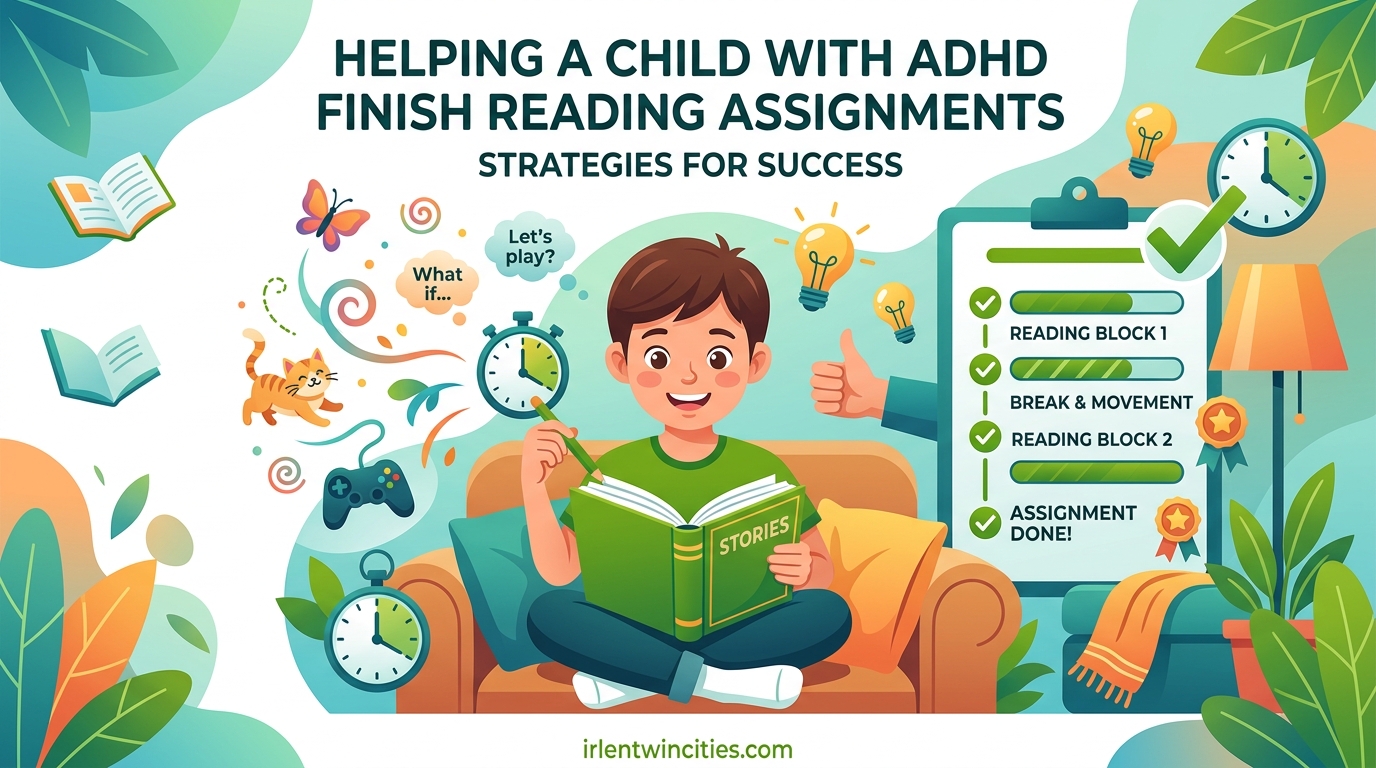
Watching your child with ADHD struggle to finish reading assignments can leave you feeling helpless and frustrated. You are not alone. Many parents face daily battles over homework time, and the conflict can strain your relationship with your child. The good news is that proven strategies exist that can transform reading time from a battleground into a more manageable, even enjoyable, experience. This guide shares practical techniques backed by research and real-world experience from parents who understand exactly what you are going through.
Children with ADHD often want to complete their reading assignments. They simply lack the internal tools to organize their attention, manage their energy, and sustain focus long enough to reach the finish line. When you understand how ADHD affects the brain, you can stop taking the resistance personally and start implementing changes that genuinely help. The strategies in this article address the core challenges: executive function difficulties, time perception issues, sensory overwhelm, and motivation struggles.
Table of Contents
Why ADHD Makes Reading Assignments Hard
ADHD affects the brain’s executive functions, which are the mental skills responsible for starting tasks, sustaining attention, organizing materials, and managing time. For a child with ADHD, simply understanding what a reading assignment requires and where to begin can feel overwhelming. The task of reading a chapter or finishing a book is not just difficult to complete. It may feel impossible to approach.
Working memory challenges make it hard for children to remember what they just read or to connect ideas across pages. Inattention causes their focus to drift away from the text toward sounds, movements, or thoughts they cannot control. Time blindness, a common ADHD trait, means your child may genuinely believe they have been reading for an hour when only ten minutes have passed. This disconnect between perceived and actual time leads to surprises when bedtime arrives and the assignment remains unfinished.
Research from the CDC indicates that ADHD significantly impacts a child’s ability to complete schoolwork, not because they lack intelligence or desire, but because traditional approaches do not match how their ADHD brain works. Understanding this distinction is essential. Your child is not lazy or defiant. Their brain simply processes focus, time, and task completion differently.
1. Reduce Distractions
The first and most powerful strategy comes directly from what search engines show in featured snippets for this topic. Children with ADHD are easily distracted by noise and activity around them. Creating a dedicated quiet space can make a significant difference in your child’s ability to focus on reading assignments.
Designate a specific area for homework that is away from high-traffic parts of your home. Turn off unnecessary electronics, including television and music without lyrics. If your home environment is naturally noisy, consider using noise-canceling headphones or playing ambient sounds like rain or ocean waves. Some children focus better with gentle background noise, so observe what works best for your child.
Keep the workspace clean and free of unnecessary items on the desk. Papers, toys, and other objects compete for your child’s attention even when they are not actively looking at them. A clear workspace signals to the ADHD brain that only one task matters right now. Store other materials in organizers nearby so your child can access them when needed without being overwhelmed by choices.
2. Use Timer Techniques
Timer techniques directly address the time blindness that affects many children with ADHD. Setting a visible timer creates external accountability where internal time sense fails. Two popular approaches parents recommend are the 10 3 rule and the 5 3 1 rule.
The 10 3 rule adapts the Pomodoro technique for ADHD brains. Your child reads for 10 minutes, then takes a 3-minute active break involving movement. After completing three cycles, your child earns a longer break of 10 to 15 minutes. This approach matches the ADHD brain’s need for frequent reset moments. The active breaks are essential. Sitting still during breaks rarely helps redirect accumulated energy.
The 5 3 1 rule uses shorter work intervals. A child works on a reading task for 5 minutes, takes a 3-minute break, and repeats the cycle. After completing one full cycle, the child earns a larger reward. This works well for children who become overwhelmed by longer reading assignments or who are just beginning to build focus stamina.
Place the timer where your child can see it without having to ask. Watching time pass externally helps children with ADHD understand how long tasks actually take. This awareness builds over time, eventually improving their internal time estimation skills.
3. Break Tasks Into Smaller Chunks
A chapter-long reading assignment can feel insurmountable to a child with ADHD. Breaking the work into concrete, manageable sections transforms an impossible task into a achievable series of small wins. Chunking tasks is one of the most effective interventions for ADHD-related homework struggles.
Instead of assigning “read Chapter 5,” break it into “read pages 100 to 105.” When those pages are complete, celebrate that milestone before moving to the next section. Some parents use sticky notes or small markers to show children exactly where to stop. Others use highlighters to color-code specific page ranges for different sessions.
For longer books, focus on page milestones rather than chapter goals. A child who dreads reading chapters may feel encouraged by reaching page 50 when yesterday they only reached page 47. Track these small improvements visually. A progress chart showing how far your child has come provides motivation that abstract praise cannot match.
When your child finishes a chunk, acknowledge it specifically. Instead of simply saying “good job,” try “You finished those three pages. That means you have 12 more to go and then you are done.” This gives your child a concrete sense of forward progress rather than an indefinite extension of the task.
4. Engage Multiple Senses
Multisensory techniques help ADHD children maintain attention by involving more than just vision. When reading engages multiple senses simultaneously, the brain has more pathways to sustain focus. This is why many parents and educators incorporate movement, sound, and tactile elements into reading practice.
Allow your child to read while pacing if that is what their body needs. Some children focus better when they can walk around the room or bounce on a small exercise ball while reading. Others benefit from having something to hold in their hands, like a fidget toy or textured object, as long as it does not distract from the text itself.
Consider audiobooks as a complement to physical reading. When a child follows along in a book while listening to the same words read aloud, multiple sensory channels reinforce the content. This approach is particularly helpful for children who struggle with decoding or who become fatigued by sustained visual reading. Many parents find that alternating between reading and listening keeps a child engaged for longer periods.
Reading aloud can also help. When your child reads the words out loud, they involve the auditory processing system in addition to visual processing. This extra engagement can improve comprehension and retention for children who struggle with silent reading stamina.
5. Build a Reward System
Children with ADHD often have difficulty staying motivated for tasks that do not provide immediate reward. Reading assignments typically offer delayed or intangible benefits, which makes them especially challenging. Creating a concrete reward system provides the immediate motivation their brains need.
Establish a point or token system where your child earns rewards for completing reading milestones. Some families use sticker charts where each completed assignment adds a sticker. Others use a points system that allows children to exchange accumulated points for privileges or small prizes. A common approach from parents is to let the child earn something they genuinely want, whether that is screen time, a special snack, or an activity with a parent.
Make the reward immediate rather than delayed. If your child finishes a reading assignment but does not receive any acknowledgment until the end of the week, the motivation is too far removed to be effective. Celebrate each small win right away. The consistency of immediate rewards eventually helps children build intrinsic motivation for reading itself.
Focus on specific praise rather than general approval. Instead of “good boy,” try “You sat down and finished your reading even when it was hard. That shows real determination.” This type of feedback helps children feel proud of their effort and builds self-esteem around academic tasks rather than eroding it.
6. Allow Movement While Reading
One of the most common struggles parents share in forums is that their ADHD child simply cannot sit still to read. Forcing a child who needs movement to remain stationary creates unnecessary conflict and increases frustration for everyone. Many children with ADHD focus better while moving, not despite their movement.
Allow your child to carry reading material with them and pace around the room if that is what their body demands. Some children read better while walking on a treadmill or exercise bike. Others need to stand at a counter or lean against a wall. Observe your child and identify what positions allow them to focus best.
Incorporate movement into breaks rather than expecting stillness. After a timer goes off, encourage your child to jump, stretch, or dance for a few minutes. This helps burn off accumulated energy so they can return to reading with renewed focus. Movement breaks are not wasted time. They are essential reset moments that enable longer total reading sessions.
If your child fidgets constantly with objects, provide appropriate items like stress balls, modeling clay, or textured strips that they can hold while reading. As long as the object occupies the restless part of their attention without requiring active thought, it can help rather than hinder reading comprehension.
Setting Up the Ideal Homework Space for ADHD
The environment where your child reads matters significantly. Creating the right homework space reduces the cognitive load that ADHD brains experience when organizing themselves for a task. A well-designed space removes unnecessary decision-making and visual distractions.
Choose a consistent location for homework time. Using the same space each day builds a routine that signals to the ADHD brain that it is time to focus. This space should have good lighting, a comfortable chair that supports posture, and all necessary materials stored within reach. Parents recommend having a designated homework bin or cart that can be brought to the workspace and put away when reading time ends.
Use color-coded organizers to keep materials separate and easy to find. Folders labeled by subject with different colors prevent your child from wasting time searching for papers. Some families use a magnetic board on the front door to track assignments visually. This external reminder system helps children who struggle with remembering what homework they have left to complete.
Keep healthy snacks nearby for children who tend to feel hungry during homework time. Blood sugar fluctuations can exacerbate ADHD symptoms, and having nutritious food available prevents energy crashes that interfere with focus. Avoid sugary snacks that may contribute to energy swings, and encourage water intake to stay hydrated.
Frequently Asked Questions
What is the 5 3 1 rule for ADHD?
The 5 3 1 rule is a time management technique where a child works on a task for 5 minutes, takes a 3-minute break, and repeats the cycle. After completing one cycle, the child can earn a larger reward. This structure helps ADHD children sustain focus in manageable intervals and provides built-in movement breaks that address their need for frequent reset moments.
What is the 30% rule of ADHD?
The 30% rule refers to the tendency for children with ADHD to perceive time differently. Research suggests that when asked to estimate how long a task will take, children with ADHD may underestimate by approximately 30%. This time blindness makes it important for parents to set external time markers and break assignments into concrete segments rather than relying on their child to track time internally.
How to finish reading books with ADHD?
To help a child with ADHD finish reading books, try allowing them to choose books on topics they enjoy, use audiobooks alongside physical texts, set page milestones instead of chapter goals, and create a comfortable reading environment with minimal distractions. Celebrating small victories along the way keeps motivation high. Letting the child pace while reading and using reward systems also significantly improves completion rates.
What is the 10 3 rule for ADHD kids?
The 10 3 rule is a variation of the Pomodoro technique specifically adapted for ADHD. A child reads or works for 10 minutes, then takes a 3-minute active break involving movement. After completing three cycles, the child earns a longer break of 10 to 15 minutes. This approach matches the ADHD brain’s need for frequent reset moments and helps children with attention regulation stay more focused during work intervals.
Helping a child with ADHD finish reading assignments requires patience, consistency, and a willingness to adapt your approach based on what works for your specific child. The strategies in this article are starting points. Experiment with different combinations to find the approach that fits your family’s dynamics. Remember that progress is not always linear. Some days will be harder than others, and that is normal.
The goal is not perfection. It is building your child’s confidence around reading and teaching them strategies they can use independently as they grow. When children with ADHD experience small successes, they build resilience and intrinsic motivation. Those wins, accumulated over time, lead to lasting change. Trust the process, celebrate the small victories, and remember that your support makes a profound difference in your child’s academic journey.