
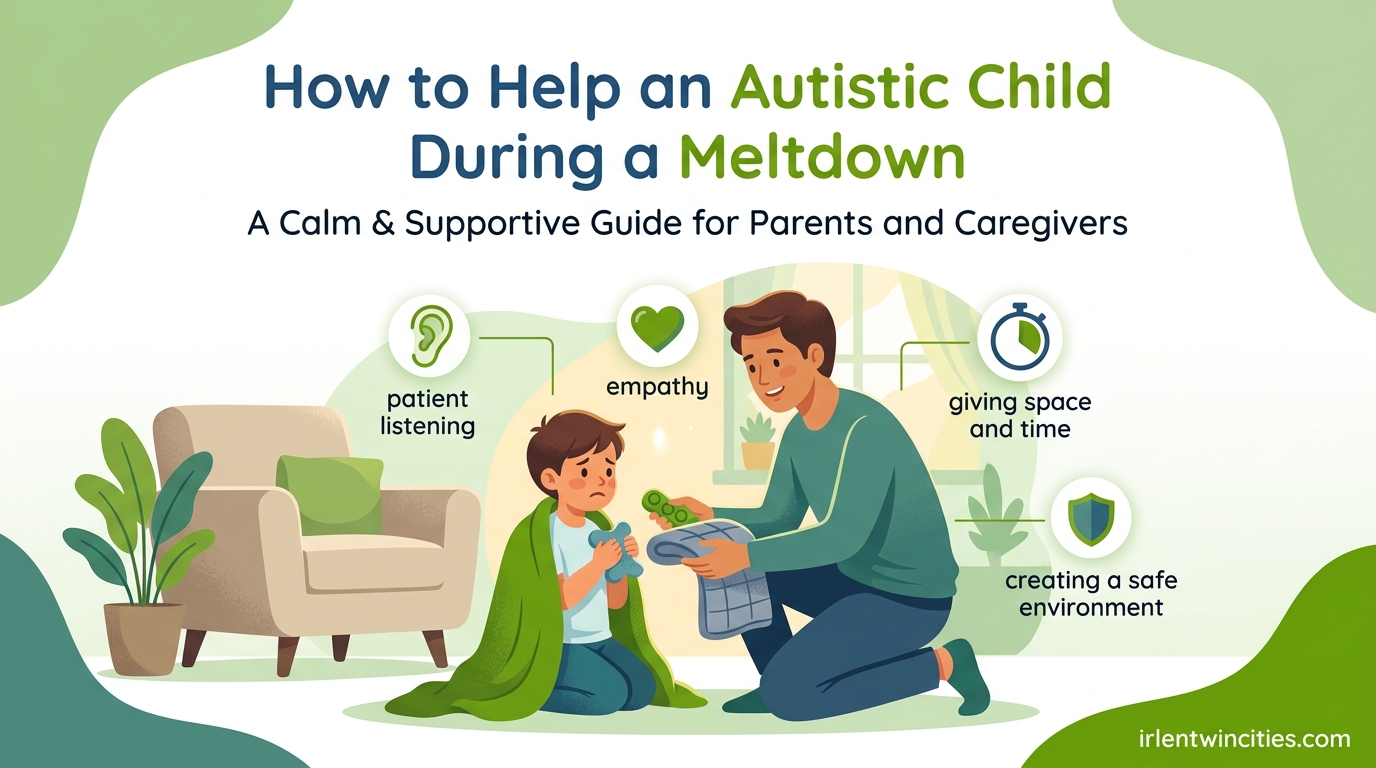
Watching your autistic child spiral into a meltdown can feel overwhelming. You want to help, but every attempt seems to make things worse. I have been there, and I understand how helpless it feels when your child is in distress and you do not know how to reach them.
A meltdown is not bad behavior. It is an involuntary response to sensory or emotional overload that your child cannot control. Understanding this changes everything about how you respond. This guide will walk you through exactly what to do during a meltdown, how to stay calm as a caregiver, and strategies to prevent future episodes.
You will learn warning signs to watch for, step-by-step techniques that actually work, and how to care for yourself in the process. Every child is different, so you will also discover how to tailor your approach to your specific child’s needs.
Table of Contents
What is an Autistic Meltdown?
An autistic meltdown is a intense physical and emotional response to feeling overwhelmed. Unlike a tantrum, which a child uses to get something they want, a meltdown is completely involuntary. Your child is not choosing to behave this way. Their nervous system has reached its limit and they have lost control of their body and emotions.
During a meltdown, the brain’s sensory processing becomes overwhelmed, triggering the fight-flight-freeze response. The brain stem takes over, pushing the child into survival mode. At this point, your child cannot respond to logic, calming cues, or requests to stop. The prefrontal cortex, which handles reasoning and self-control, has essentially gone offline.
This is why punishments during or after a meltdown are ineffective. Your child literally cannot control their behavior until their nervous system regains regulation. The goal is not to stop the meltdown but to keep your child safe and wait for their system to reset.
Meltdown vs Tantrum: Understanding the Difference
Knowing whether you are dealing with a meltdown or a tantrum changes how you respond. A tantrum is a purposeful behavior where the child has some control. They might make eye contact, test boundaries, and stop when they get what they want. Meltdowns are different. Your child may zone out, flap their hands, scream without pause, or become completely unaware of their surroundings.
One parent described it like this: during a tantrum, my child wanted something and could pause to check if I was watching. During a meltdown, my child was gone. They did not know I existed. That distinction matters because it tells you that your child needs safety and space, not negotiation or consequences.
Both responses are distressing, but meltdowns require a different approach. Trying to reason with a child in meltdown mode is like trying to have a conversation with someone who is having a panic attack. It simply does not work until their nervous system settles.
Warning Signs of an Approaching Meltdown
Learning to recognize early warning signs gives you a window to intervene before a meltdown fully develops. Every child has their own unique signals, but there are common patterns to watch for.
Early warning signs often include increased stimming behaviors like hand flapping, rocking, or repetitive movements. Your child might become withdrawn, cover their ears, or ask to leave a situation. Some children verbalize more, saying “too loud” or “my head hurts.” Others become physically agitated, pacing or needing to move.
Younger children might show regression in skills they have already mastered. School-age children might start arguing more or becoming rigid about routines. Teenagers might become visibly frustrated, roll their eyes, or withdraw physically. These patterns are not the meltdown itself but precursors that signal your child’s nervous system is getting overwhelmed.
Creating a personal warning signs list with your child, if they are verbal, can help you recognize patterns specific to them. Some families find it helpful to track when meltdowns occur to identify triggers like hunger, tiredness, overstimulation, or transitions between activities.
How to Help During a Meltdown: Step-by-Step
When a meltdown is in progress, your priority is safety. Everything else comes second. Here is what to do step by step.
Step 1: Ensure Safety First
Move your child to a safe space if possible. Remove any objects that could cause injury if thrown or stepped on. If you are in public, prioritize finding a quiet corner away from crowds. Other people’s reactions can add to your child’s distress, so creating physical distance from an audience helps.
If your child is older or larger and prone to self-injury, focus on protecting their head and ensuring they cannot fall or hit something dangerous. Do not try to physically restrain them unless they are in immediate danger. Holding a child down during a meltdown can increase agitation and cause injury to both of you.
Step 2: Create Space and Reduce Sensory Input
Give your child room. Do not touch them unless necessary for safety. Crowding their space can feel threatening when their nervous system is already on high alert. Turn down lights if possible, reduce noise, and remove strong smells or textures from their immediate environment.
If you have noise-cancelling headphones or sunglasses available, offer them without forcing. Some children find deep pressure calming, like a weighted blanket or lying under a pillow. Others prefer complete isolation. Watch your child’s responses and respect what their body is telling them they need.
Step 3: Stay Calm and Match Their Energy
One of the hardest parts of managing a meltdown is staying calm yourself. But your regulation directly affects your child’s ability to recover. If you approach with panic or frustration, your child’s nervous system interprets that as another threat.
Matching your child’s energy level can be counterintuitive but effective. If your child is high energy, screaming or moving vigorously, a calm whisper might not register. Some parents find that a calm but present voice, matching intensity without adding to it, helps ground their child.
Use simple, short sentences if your child can hear you. “I am here.” “You are safe.” “I am not leaving.” Avoid complex instructions or lengthy explanations. Your child is not capable of processing lots of words right now.
Step 4: Wait it Out
Meltdowns run their course. There is no magic button to stop them. Your job is to be present, keep your child safe, and wait. This might take five minutes or over an hour. Duration varies widely and is not a reflection of your parenting or your child’s severity of autism.
One parent shared that learning to just wait, without trying to fix or end the meltdown, actually shortened the duration over time. Her child seemed to recover faster when she was not adding pressure to stop. It felt counterintuitive, but backing off helped.
Step 5: Reconnect After the Storm Passes
Once your child regains regulation, they may be exhausted, confused, or embarrassed. Some children remember the meltdown clearly; others have limited memory of what happened. Either way, they need connection, not correction.
Offer comfort without lecturing. A hug, a drink of water, or just sitting together quietly helps rebuild trust. If your child can talk about what happened, listen without judgment. If they cannot or do not want to, that is okay too. The priority is restoring a sense of safety and connection.
How to Stay Calm as a Caregiver
You cannot pour from an empty cup. Staying calm during your child’s meltdown requires preparation and practice, not just willpower in the moment.
Develop a personal regulation routine before a meltdown occurs. This might include deep breathing, repeating a mantra, or simply accepting that this moment will pass. Some caregivers find it helpful to mentally recite that their child is not giving them a hard time; their child is having a hard time.
Practice matching your child’s energy. If they are high energy, a calm voice might not register. Experiment in calm moments to see what energy level your child responds to best. One parent discovered that her daughter actually responded better when she matched her energy with a firm, present tone rather than a gentle whisper.
Remember that your child is not doing this to you. Their brain is genuinely overwhelmed and they cannot control their response. This framing does not make the experience less difficult, but it can shift your internal reaction from frustration to compassion.
If you feel yourself escalating, it is okay to briefly step away if your child is safe. A five-second breather in another room, as hard as it feels, can prevent you from saying or doing something that makes the situation worse.
Prevention Strategies and Sensory Planning
While not every meltdown can be prevented, understanding triggers and planning ahead reduces frequency and intensity over time.
Identify Your Child’s Triggers
Keep a log of when meltdowns occur and what preceded them. Common triggers include unexpected transitions, loud noises, bright lights, hunger, tiredness, overstimulation, social demands, and sensory textures. Over time, patterns emerge that help you anticipate and avoid or prepare for high-risk situations.
Once you identify triggers, work with your child to either reduce exposure or develop coping strategies. Some families use visual schedules to prepare children for transitions. Others build in regular breaks during high-stimulation activities.
Create a Calm-Down Kit
Having sensory tools available can help prevent escalation or support recovery. A calm-down kit might include noise-cancelling headphones, sunglasses, a weighted lap pad, fidget toys, a favorite snack, an ice pack or cooling towel, and comfort items like a small blanket or stuffed animal.
Keep the kit accessible at home, in the car, and at school or daycare. When you feel a meltdown approaching, offering these tools gives your child resources to self-regulate before things spiral.
Modify the Environment
Environmental changes can reduce sensory overload before it becomes a problem. At home, this might mean using dimmer switches, having a designated quiet space, reducing clutter, and using soft textures. In public, scout ahead for quiet areas where you could retreat if needed.
When attending events, plan ahead. Know where exits are, where quiet spaces exist, and have an exit strategy. Some parents find it helpful to give their child a signal they can use when they need to leave, reducing the stress of negotiating in the moment.
After the Meltdown: Recovery and Debrief
Meltdowns are exhausting for everyone involved. The recovery period is as important as the response during the meltdown itself.
Expect your child to need significant recovery time. They might be physically drained, emotionally fragile, or behave younger than their age for a while afterward. Some children sleep for hours after a major meltdown. Others become clingy and need extra reassurance.
Do not punish after a meltdown. Your child cannot control what happened, and consequences will only increase feelings of shame and anxiety. Instead, focus on reconnecting and helping them feel safe again.
When your child is ready, you can gently talk about what happened without blame. Ask what helped, what did not help, and what might help next time. This is not about preventing all future meltdowns but about building your child’s self-awareness and developing shared strategies.
Some children benefit from a visual social story about meltdowns that you read together afterward, normalizing the experience and reinforcing that you are a team.
Self-Care for Caregivers
Caregiver burnout is real, and managing meltdowns is physically and emotionally exhausting. You cannot support your child effectively if you are running on empty.
Find moments to reset during the day, even if just five minutes. This might mean stepping outside, doing a quick breathing exercise, or simply sitting without engaging with anyone. You deserve these breaks without guilt.
Build a support network. Connect with other autism parents who understand what you are going through. Venting to someone who gets it is different from explaining to someone who does not live this daily.
Consider therapy or counseling specifically for parents of autistic children. Grief, isolation, and burnout are common, and talking to a professional who understands autism can help you process these feelings. Some communities offer parent support groups that combine the benefit of peer support with professional guidance.
Remember that caring for yourself is not selfish. Your child needs a regulated adult in their corner. When you are depleted, your capacity to stay calm during meltdowns decreases. Investing in your own wellness directly benefits your child.
When to Seek Professional Help
While meltdowns are a normal part of autism for many children, there are times when professional support is needed.
Seek help if your child’s meltdowns are increasing in frequency or intensity over time, if they are causing injury to themselves or others, if they are preventing your child from attending school or participating in daily activities, or if you feel overwhelmed and unable to cope.
A behavioral therapist or autism specialist can help you develop personalized strategies and identify whether there are underlying issues like co-occurring conditions that need treatment. Occupational therapists can address sensory processing needs. Psychiatrists can evaluate whether medication might help manage severe anxiety or emotional dysregulation.
You do not have to figure everything out alone. Reaching out for professional help is a sign of strength, not failure. Your child’s wellbeing depends on yours, and getting support benefits your entire family.
Frequently Asked Questions
What causes meltdowns in autistic children?
Meltdowns are caused by sensory or emotional overload that overwhelms the nervous system. Triggers vary by child but commonly include loud noises, bright lights, unexpected changes, hunger, tiredness, social demands, and sensory textures. The brain’s sensory processing becomes overwhelmed, triggering the fight-flight-freeze response where the child cannot control their behavior.
What is the 6 second rule in autism?
The 6 second rule refers to a calming technique where you take 6 deep breaths to help regulate your own nervous system before responding to a meltdown. By taking this brief pause, you give yourself time to respond calmly rather than reacting from stress. This simple strategy helps caregivers stay regulated so they can better support their child.
How do you handle autistic outbursts?
Stay calm and ensure safety first. Create space by removing yourself from the situation if possible, reduce sensory input like lights and noise, and wait for the nervous system to reset. Do not try to reason, punish, or negotiate during an outburst. Offer comfort after the storm passes without lecturing. Focus on keeping your child safe and being present until the meltdown ends naturally.
What is the difference between an autistic meltdown and a tantrum?
A tantrum is a purposeful behavior where the child has some control and might make eye contact or test boundaries. A meltdown is involuntary and the child loses control completely, often becoming unaware of their surroundings. During a meltdown, the brain has essentially switched to survival mode and cannot process logic or calming requests. Understanding this difference changes how you respond, as meltdowns require safety and space rather than negotiation.
Conclusion
Helping your autistic child during a meltdown is one of the most challenging aspects of parenting a neurodivergent child. It requires patience, preparation, and a deep understanding that your child is not giving you a hard time; they are having a hard time.
Remember the key steps: ensure safety, create space, reduce sensory input, stay calm, and wait. After the meltdown, reconnect without punishment and check in on your own wellbeing too. Prevention strategies like identifying triggers, creating a calm-down kit, and modifying environments can reduce frequency over time.
You are not alone in this journey. Every meltdown you survive is evidence of your strength and dedication as a parent. Your child needs you, and you are showing up even when it is hard. That matters more than you know.
For more support, consider connecting with other autism parents, exploring professional resources, and building your own self-care routine. With time, practice, and the right strategies, you will feel more confident navigating meltdowns and supporting your child through overwhelming moments.