
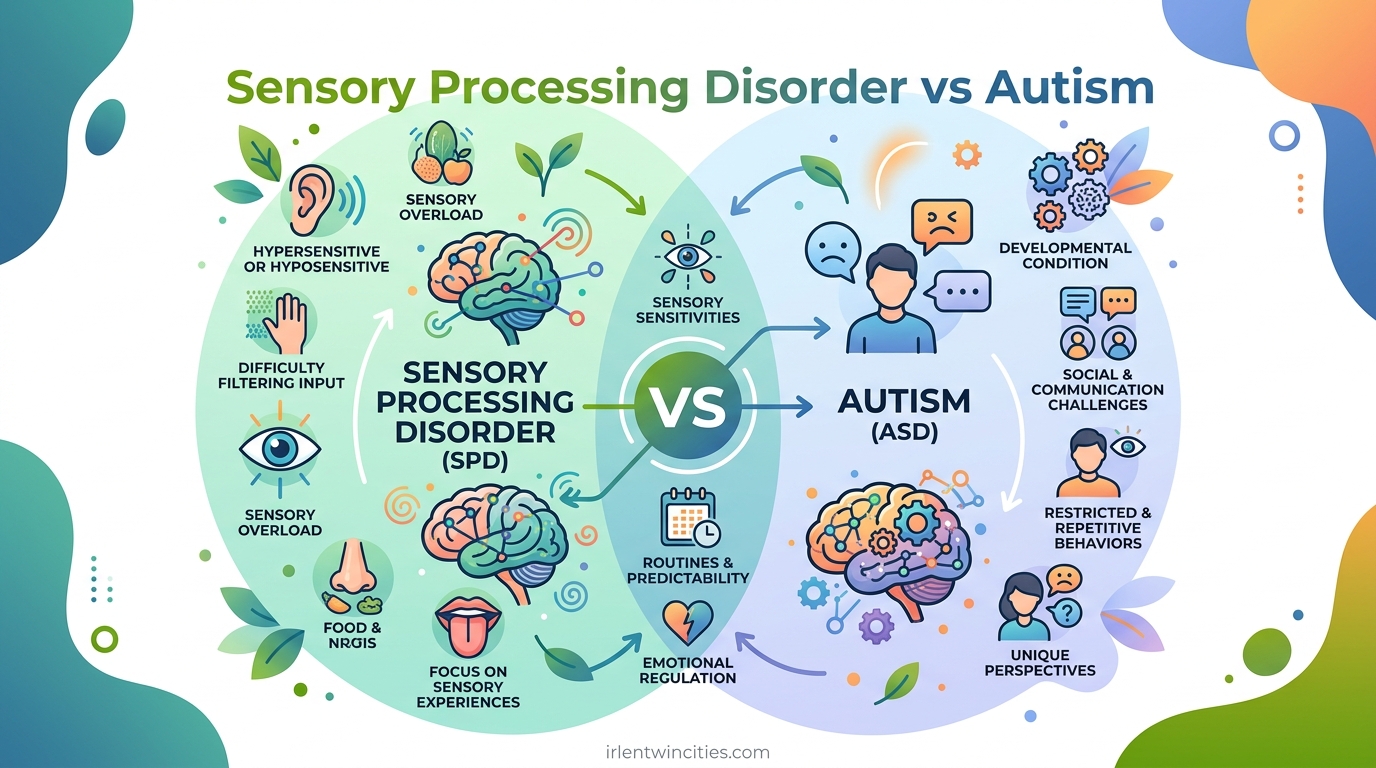
If you are a parent or caregiver trying to understand why your child reacts strongly to certain sounds, textures, or sights, you are not alone. Many families find themselves searching for answers, wondering whether their child is experiencing sensory processing disorder vs autism. The confusion is completely understandable. These two conditions share similarities, but they are not the same.
This guide breaks down everything you need to know about sensory processing disorder vs autism, including their definitions, how they overlap, and what makes them different. Our goal is to help you feel more confident in understanding these conditions and knowing when to seek support.
Table of Contents
SPD vs ASD at a Glance: A Quick Comparison
Before diving into the details, here is a quick comparison to help you understand the key differences:
| Aspect | Sensory Processing Disorder (SPD) | Autism Spectrum Disorder (ASD) |
|---|---|---|
| Core Focus | Difficulty processing sensory information | Challenges with social communication and restricted behaviors |
| Social Communication | Typically not affected | Significantly affected |
| Restricted Behaviors | Not present | Present (repetitive movements, strict routines) |
| DSM-5 Recognition | Not a formal diagnosis | Recognized neurodevelopmental disorder |
| Primary Treatment | Occupational therapy with sensory integration | Behavioral therapy, speech therapy, occupational therapy |
| Overlap with Each Other | 90% of autistic people have SPD symptoms | SPD can exist independently of autism |
What is Sensory Processing Disorder (SPD)?
Sensory processing disorder is a condition where the brain has difficulty detecting, modulating, and interpreting sensory stimuli. When someone has SPD, ordinary sensory experiences can feel overwhelming or barely noticeable at all. This affects how they respond to daily routines, social situations, and learning environments.
Understanding SPD
The brain’s sensory pathways do not work the same way for people with SPD. Some individuals are hyper-sensitive, meaning they feel sensory input more intensely than others. A scratchy clothing tag, a loud siren, or bright fluorescent lights might cause significant distress. Others are hypo-sensitive, meaning they seek out intense sensory experiences because they do not feel them strongly enough. They might crave deep pressure, spin frequently, or fail to notice when someone calls their name.
Research from UCSF using diffusion tensor imaging has shown differences in the white matter tracts of people with SPD compared to both neurotypical individuals and those with autism. These brain differences help explain why sensory processing difficulties occur and how they can be separate from other neurodevelopmental conditions.
The Three Types of SPD
Sensory processing disorder manifests in three main patterns. Understanding these types can help you identify which one might apply to your child or the person you are supporting.
Sensory Modulation Disorder involves difficulty regulating responses to sensory input. Individuals may become overwhelmed easily, withdraw from stimulation, or actively seek it out. This is the most common type and directly impacts emotional regulation and daily functioning.
Sensory-Based Motor Disorder affects posture, balance, and movement coordination. Individuals may appear clumsy, have trouble with fine motor skills like handwriting, or struggle with tasks that require body awareness. Proprioception, or knowing where your body is in space, is often affected.
Sensory Discrimination Disorder involves difficulty distinguishing between different sensory inputs. Someone might not realize when they are being touched, might confuse the smell of one food with another, or might misjudge how hard they are gripping something. This type can significantly impact learning and safety awareness.
Who Does SPD Affect?
Sensory processing difficulties are common in children and can persist into adulthood. Research suggests that approximately 1 in 6 children experience sensory processing challenges significant enough to affect daily life. While many children naturally outgrow some sensory sensitivities, others continue to struggle throughout their lives.
SPD often appears alongside other conditions including autism, ADHD, and developmental delays. However, it can also exist as a standalone concern. Many adults report receiving a diagnosis of SPD only after seeking assessment for other neurodevelopmental differences.
What is Autism Spectrum Disorder (ASD)?
Autism spectrum disorder is a neurodevelopmental condition characterized by persistent differences in social communication and interaction, along with restricted, repetitive patterns of behavior, interests, or activities. ASD is recognized in the DSM-5 and affects individuals across all backgrounds, with varying levels of support needs.
Understanding ASD
Autism is not a single set of characteristics. It exists on a spectrum, meaning individuals can have vastly different experiences and support needs. Some autistic individuals are verbal and independent, while others require significant support with daily living skills. What unites autism are two core areas of difference.
The first core area involves social communication and social interaction. Autistic individuals may struggle to understand social cues, maintain eye contact, engage in back-and-forth conversation, or interpret facial expressions and body language. These challenges can make social situations feel exhausting or confusing.
The second core area involves restricted, repetitive behaviors. This might include repeating words or phrases, insisting on sameness, having intense interests in specific topics, or engaging in repetitive physical movements like hand flapping or rocking. Many autistic people also have highly structured routines and become distressed when those routines are disrupted.
Core Features of Autism
Beyond social communication and restricted behaviors, autistic individuals frequently experience sensory differences. Research consistently shows that approximately 90% of autistic people have sensory processing difficulties. This overlap is one reason why distinguishing between sensory processing disorder vs autism can be challenging.
However, the presence of sensory difficulties alone does not indicate autism. The key distinguishing factors are the social communication challenges and restricted behavioral patterns that are central to an autism diagnosis. An autistic person may have sensory sensitivities, but they will also have the broader social and behavioral characteristics of autism.
How ASD is Diagnosed
Autism diagnosis involves comprehensive evaluation by specialists including developmental pediatricians, child psychologists, neurologists, or psychiatrists. The assessment typically includes direct observation, caregiver interviews, and standardized tools that evaluate social communication, play skills, and behavioral patterns.
The DSM-5 criteria require that symptoms be present in early childhood, even if they are not recognized until later. For adults who did not receive a childhood diagnosis, obtaining an autism diagnosis can be more challenging but is still possible through specialized assessment services.
The Overlap Between SPD and Autism
Understanding the relationship between sensory processing disorder vs autism requires acknowledging how significantly these conditions overlap. This overlap is the primary source of confusion for families seeking answers.
How Common is the Overlap?
Research indicates that up to 90% of autistic individuals meet the criteria for sensory processing disorder. This means sensory difficulties are extremely common in autism. When professionals evaluate a child for autism, they almost always find sensory processing differences.
However, the reverse is not true. Many individuals with SPD do not have autism. They may struggle intensely with sensory processing but show typical social communication skills and no restricted behaviors. This is a crucial distinction. A child who is extremely sensitive to loud noises and avoids certain textures but engages appropriately with peers and does not show repetitive behaviors may have SPD without autism.
Why the Confusion?
The confusion arises because sensory difficulties are so prevalent in autism that they can mask other conditions. Parents and professionals may focus on the obvious sensory symptoms without recognizing that the underlying condition is actually autism. Alternatively, a child with SPD might be mistakenly diagnosed with autism because sensory behaviors can resemble some autistic characteristics.
Forum discussions reveal that many adults received their SPD diagnosis during an autism assessment. Some report feeling relieved when SPD was identified as the primary concern, while others describe frustration at not receiving clearer differentiation between the two conditions. This confusion highlights the need for careful, thorough assessment by experienced professionals.
Key Differences Between SPD and Autism
While the overlap is significant, several key differences help distinguish sensory processing disorder vs autism. Recognizing these differences is essential for obtaining the right support and interventions.
Social Communication
Social communication is the most important differentiator. Individuals with SPD alone do not have the social communication challenges that define autism. They understand social cues, enjoy social interactions, and form relationships in typical ways. An autistic individual, by definition, has persistent differences in social communication and social-emotional reciprocity.
If your child struggles with sensory sensitivities but also initiates conversations, understands sarcasm, makes eye contact comfortably, and enjoys playing with peers, autism is less likely to be the primary concern. However, if your child avoids social interaction, struggles to understand nonverbal communication, or has difficulty building relationships, autism screening is warranted.
Behavioral Patterns
Restricted, repetitive behaviors are unique to autism. These behaviors go beyond typical sensory-seeking or sensory-avoiding. They include repetitive movements like hand flapping or rocking, insistence on sameness, highly intense interests in specific topics, and significant distress when routines change.
Someone with SPD may seek out sensory input like spinning or jumping, but this is typically to regulate their sensory system rather than a compulsive behavior. An autistic person may engage in these behaviors as part of their broader restricted behavioral patterns. The motivation and context differ even if the outward behavior looks similar.
Brain Research
UCSF research using brain imaging has shown distinct differences between SPD and autism. While both conditions involve differences in brain structure and connectivity, the patterns differ. In SPD, the differences are most notable in white matter tracts associated with sensory processing. In autism, the differences are more widespread and involve areas associated with social communication and emotional processing.
This research supports what many clinicians observe: SPD and autism are related but distinct neurodevelopmental patterns. The brain imaging studies provide biological evidence that SPD can exist independently of autism, even though the two frequently co-occur.
How SPD and Autism Are Diagnosed
The diagnostic process differs significantly between sensory processing disorder vs autism due to their recognition status in clinical diagnostic manuals.
DSM-5 Status
One of the most significant differences is that sensory processing disorder is not currently recognized as a formal diagnosis in the DSM-5. This creates challenges for families seeking evaluation and treatment coverage. While occupational therapists and other professionals regularly identify and treat SPD, it is categorized under “Other Specified Neurodevelopmental Disorder” or is not formally coded in the same way autism is.
This lack of formal recognition means that some insurance providers may not cover SPD treatment, and schools may not be required to provide the same accommodations they offer for autism. Many parents report this as a source of frustration and argue for broader recognition of SPD as a distinct condition.
Autism spectrum disorder, in contrast, is a recognized neurodevelopmental disorder in the DSM-5. It has specific diagnostic criteria, established assessment tools, and generally broader access to services and accommodations.
Who Can Diagnose?
For autism, diagnosis typically involves a multidisciplinary team. Developmental pediatricians, child psychologists, psychiatrists, or neurologists with autism expertise can provide diagnosis. Comprehensive evaluations often include speech-language pathologists and occupational therapists.
For SPD, occupational therapists are typically the primary professionals who assess and treat sensory processing difficulties. Some psychologists and developmental pediatricians also evaluate SPD. However, finding professionals experienced with adult SPD diagnosis can be particularly challenging, as most research and clinical services focus on children.
If you are wondering what doctor treats sensory processing disorder, an occupational therapist specializing in sensory integration is often the best starting point. Look for professionals with advanced training in sensory integration therapy and experience working with the specific age group you are seeking help for.
Treatment Approaches for SPD and Autism
Treatment for sensory processing disorder vs autism involves different primary approaches, though both may include occupational therapy as a component.
SPD Treatment
Sensory integration therapy is the primary treatment approach for SPD. This therapy, provided by trained occupational therapists, helps individuals experience sensory input in a structured, gradually increasing way. The goal is to improve the brain’s ability to process and respond to sensory information appropriately.
Therapy sessions might involve playing with textured materials, swinging, jumping, or other sensory-rich activities. The therapist carefully controls the sensory environment to help the individual develop better modulation. Environmental modifications at home and school are also crucial components of SPD management.
Autism Treatment
Autism treatment typically involves multiple approaches tailored to the individual’s needs. Behavioral therapies such as ABA (Applied Behavior Analysis) address specific skills and reduce challenging behaviors. Speech therapy supports communication development. Occupational therapy addresses sensory needs as well as daily living skills.
Social skills groups help autistic individuals learn and practice social communication. Many autistic people also benefit from educational support, vocational training, and mental health services that address co-occurring conditions like anxiety or depression.
Can Someone Have Both?
Yes, it is absolutely possible for someone to have both SPD and autism. In fact, as mentioned earlier, approximately 90% of autistic individuals have sensory processing difficulties. When both conditions are present, treatment must address both the sensory processing needs and the social communication and behavioral aspects of autism.
A comprehensive evaluation by professionals experienced with both conditions is essential. The treatment plan should be individualized, recognizing that having autism does not automatically mean sensory difficulties will respond to the same approaches used for SPD alone. Similarly, treating only the SPD without addressing autism-related needs would be incomplete.
When to Seek Professional Help
Knowing when to seek professional help can be difficult. Every child develops at their own pace, and not every sensory sensitivity indicates a disorder. However, certain signs warrant professional evaluation.
Seek evaluation if your child:
- Shows extreme reactions to sensory stimuli that significantly disrupt daily life
- Avoids certain textures, sounds, or activities consistently and refuses to engage
- Has difficulty with fine or gross motor skills compared to same-age peers
- Struggles to regulate emotions, especially around sensory experiences
- Shows limited or no response to sensory input that would typically cause a reaction
- Has concerns about social communication or language development
- Displays repetitive behaviors, strict routine adherence, or intense fixations on specific topics
Consult a professional if:
- Sensory difficulties are preventing participation in school, social activities, or family life
- You are consistently modifying family routines to accommodate sensory needs
- Your child is experiencing significant distress or anxiety related to sensory input
- Siblings or other family members are affected by the sensory behaviors
- Teachers or other caregivers have expressed concerns about your child’s behavior or development
Early intervention makes a significant difference. The earlier sensory difficulties are identified and addressed, the better the outcomes tend to be. However, it is never too late to seek help. Many adults have found valuable support and understanding through diagnostic assessment later in life.
What Parents and Caregivers Can Do
If you suspect your child has sensory processing difficulties, there are practical steps you can take while seeking professional evaluation.
Observe and document. Keep a record of what triggers strong reactions, what calming strategies work, and how sensory difficulties impact daily life. This information helps professionals understand your child’s specific profile.
Create a sensory-friendly home environment. Identify and reduce unnecessary sensory triggers where possible. Offer quiet spaces for retreat, provide sensory tools like stress balls or weighted blankets, and give advance notice before unavoidable sensory experiences like haircuts or loud events.
Connect with other parents. Online communities and local support groups for parents of children with SPD or autism can provide valuable emotional support, practical tips, and recommendations for local professionals. Many parents report that learning from others who have walked the same path was instrumental in helping them advocate effectively for their child.
Focus on strengths. While it is important to address challenges, also celebrate your child’s strengths and interests. Many children with sensory difficulties excel in areas related to their sensory preferences. Supporting these interests builds confidence and provides motivation for developing other skills.
Trust your instincts. You know your child best. If something feels off, if your child is struggling in ways that do not fit typical development, or if you sense there is more going on than simple pickiness or sensitivity, seek a second opinion. Parents in online forums frequently share that they knew something was different about their child long before receiving a formal diagnosis.
Connection to Irlen Syndrome and Reading Difficulties
At Irlen Twin Cities, our work focuses specifically on reading disorders and Irlen syndrome, which relates to sensory processing in important ways. Irlen syndrome involves difficulties with visual processing that can significantly impact reading, writing, and learning. Like SPD, it involves the brain processing sensory information differently than typical.
Some individuals with SPD also experience visual processing difficulties. If your child struggles with reading fluency, experiences visual discomfort when reading, or has difficulty with written assignments despite adequate intelligence and instruction, Irlen syndrome screening may be beneficial. Our specialists can help determine whether visual processing issues are contributing to learning difficulties.
Understanding the broader picture of how your child processes sensory information, including visual input, is crucial for getting the right support. Sensory processing disorder, autism, and Irlen syndrome can all impact learning and daily functioning, but they require different approaches to assessment and intervention.
Frequently Asked Questions
How to tell the difference between autism and sensory processing disorder?
The main difference is social communication and behavioral patterns. Autism involves persistent challenges in social communication and restricted, repetitive behaviors. SPD affects only sensory processing without impacting social skills or causing restricted behaviors. If someone struggles with sensory input but has typical social relationships and no repetitive behaviors, SPD is more likely.
Can SPD be mistaken for autism?
Yes, SPD can be mistaken for autism because sensory difficulties are present in approximately 90% of autistic individuals. However, SPD can exist without autism. A thorough evaluation by professionals experienced with both conditions can differentiate between them. The key is assessing social communication skills and looking for restricted, repetitive behaviors that characterize autism.
What doctor treats sensory processing disorder?
Occupational therapists are the primary professionals who assess and treat SPD. Look for occupational therapists with advanced training in sensory integration therapy. Developmental pediatricians, psychologists, and neurologists may also evaluate SPD as part of broader developmental assessments.
How to handle kids with sensory issues?
Create a supportive environment by identifying and reducing unnecessary sensory triggers. Offer sensory tools like weighted blankets or stress balls. Give advance notice before unavoidable sensory experiences. Establish calming routines and provide quiet retreat spaces. Seek professional evaluation for significant difficulties, and connect with other parents for support and practical strategies.
Is sensory processing disorder on the autism spectrum?
No, SPD is not considered part of the autism spectrum according to current diagnostic guidelines. However, they frequently co-occur. About 90% of autistic people have SPD symptoms, but SPD can exist independently. The DSM-5 does not recognize SPD as a formal diagnosis, while autism is a recognized neurodevelopmental disorder.
Can you have SPD without autism?
Yes, you can have SPD without autism. Many individuals have significant sensory processing difficulties without meeting the criteria for autism. They may struggle with sensory input but have typical social communication skills and no restricted, repetitive behaviors. Research using brain imaging supports that SPD can exist as a distinct condition.
Conclusion
Understanding the differences between sensory processing disorder vs autism is crucial for getting the right support and interventions. While these conditions share significant overlap, with approximately 90% of autistic individuals experiencing sensory processing difficulties, they are distinct conditions with different core features.
The key differentiator is social communication. Autism involves persistent challenges in understanding and engaging in social communication, along with restricted, repetitive behaviors. SPD affects only sensory processing and does not include these social and behavioral characteristics. A person can have SPD alone, autism alone, or both conditions together.
If you suspect your child has either condition, seeking evaluation from experienced professionals is important. Early intervention leads to better outcomes, and proper diagnosis opens doors to appropriate services and accommodations. Remember that you are your child’s best advocate. Trust your observations, document your concerns, and persist until you get the answers and support your family needs.
Whether the answer turns out to be sensory processing disorder, autism, or both, understanding your child’s unique needs is the first step toward helping them thrive. You are not alone on this journey, and seeking information like you are doing now is a powerful way to support your child.