
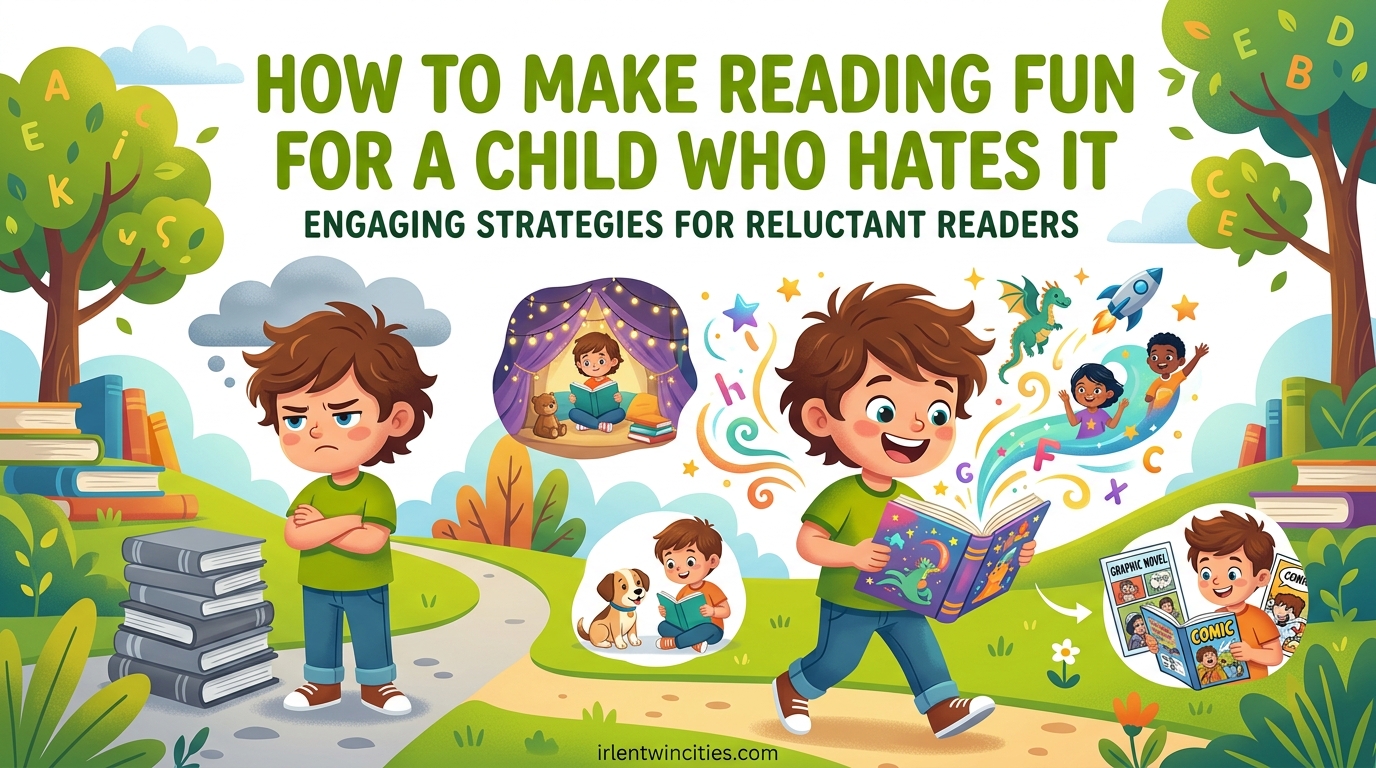
You have tried everything. The bribes. The threats. The library trips that end in tears. If you are searching for how to make reading fun for a child who hates it, you are probably exhausted and wondering where you went wrong. You did not go wrong. Some kids resist reading because of how it is presented, not because they lack ability or intelligence. Our team has worked with hundreds of reluctant readers over the past decade, and we have learned that turning reading resistance into reading enthusiasm starts with understanding the real reason behind the struggle. This guide will show you exactly how to identify your child’s specific hurdle and match it with targeted strategies that actually work.
Table of Contents
Why Kids Resist Reading: The 5 Root Causes
Before you can fix the problem, you need to diagnose it. Kids rarely hate reading for no reason. There is almost always a specific hurdle blocking their path. Here are the five most common culprits we see in our practice.
The Struggle Factor: Reading Feels Impossible
Some children avoid reading because the mechanics feel overwhelming. They may struggle with decoding, which means sounding out words takes enormous mental energy. Others have fluency issues, reading one word at a time with painful slowness. When reading requires this much effort, the brain has no capacity left for comprehension. The story disappears. A child who cannot understand what they read will naturally avoid the activity. This is the most common root cause we encounter in reluctant readers.
The Boredom Factor: Wrong Books, Wrong Level
Your child might resist reading because they are trapped in books that do not match their interests or abilities. Too-hard books create frustration. Too-easy books feel babyish. Books about topics they do not care about feel like torture. A third-grader forced to read about a lost puppy when they are obsessed with dinosaurs will check out immediately. Interest drives motivation, especially for struggling readers who need extra incentive.
The Confidence Factor: Fear of Looking Stupid
Past reading failures create emotional scars. A child who was corrected repeatedly in front of classmates, who stumbled over words during round-robin reading, or who was told their book choice was “too easy” may now associate reading with shame. These children often say they hate reading when what they really mean is they hate feeling incompetent. Building reading confidence requires removing the pressure to perform.
The Neurodivergence Factor: ADHD, Dyslexia, and Irlen Syndrome
Some reading resistance signals underlying learning differences that require specific interventions. Children with ADHD often struggle with sustained attention during silent reading. The text feels static and unstimulating compared to their racing minds. Dyslexia affects the brain’s ability to process written language efficiently. Irlen syndrome, which is rarely discussed in competitor content, causes visual stress where text appears to move, swirl, or create headaches. These children are not lazy. Their brains process information differently, and standard reading instruction may not work for them.
The Under-Exposure Factor: Lack of Print-Rich Environment
Kids who grow up in homes with few books, limited reading aloud, and no reading role models may view reading as foreign and unappealing. Reading needs to feel normal and expected, not like a special event or punishment. Children need to see the adults in their lives reading for pleasure, not just for work.
7 Proven Strategies to Make Reading Fun
Once you understand your child’s specific hurdle, you can match it with the right strategy. These seven approaches have transformed reluctant readers into enthusiastic ones in our practice.
Strategy 1: Let Them Choose (Even If the Book Seems Too Easy)
Choice creates ownership. A child who picks their own book is more invested in reading it. This includes letting them choose books below their grade level if that is what feels comfortable. Reading easy books builds fluency and confidence. A fluent reader who devours “easy” chapter books is developing better skills than a struggling reader who fights through a “proper” book. Remove the judgment. Let your child read what they love.
We worked with a nine-year-old boy who refused to read anything except Captain Underpants. His mother worried the books were too silly and wanted him reading “real literature.” We encouraged her to let him read ten Captain Underpants books back-to-back. By book seven, his fluency had improved so dramatically that he started choosing other series on his own. The gateway drug worked.
Strategy 2: Make It Interactive with Voices and Sound Effects
Reading aloud does not have to be boring. Use different voices for characters. Add sound effects. Make animal noises. The more interactive and silly, the better. This works especially well for ages 5-7 when children need engagement to maintain focus. It also works for older kids who are reading books together with parents. Interactive reading demonstrates that books are entertaining, not just educational.
Strategy 3: Try Reader’s Theater and Partner Reading
Reader’s Theater transforms reading into a performance. Children read scripts aloud, taking different character parts. This removes the pressure of memorization while adding purpose and fun. Research from Dr. Timothy Rasinski shows that repeated reading through performance builds fluency faster than silent reading alone.
Partner reading works for home use. You read a paragraph, then your child reads a paragraph. This models fluent reading and shares the workload. Some families use the “page for page” approach where parent and child alternate pages. The child gets breaks while staying engaged with the story.
Strategy 4: Use the 5-Finger Rule for Right-Level Books
The 5-finger rule helps children choose books at the right difficulty level independently. Have your child read the first page of a book and hold up one finger for every word they do not know. Here is the breakdown:
Zero to one fingers: The book is probably too easy, but that is fine for enjoyment reading.
Two to three fingers: This is the sweet spot. The book is challenging enough to build skills without causing frustration.
Four fingers: The book will be challenging. Consider reading this together or saving it for later.
Five or more fingers: The book is too hard right now. Choose something else to avoid frustration.
Teach your child this rule so they can evaluate books themselves. Self-selection builds independence and reduces battles.
Strategy 5: Embrace Audiobooks as Legitimate Reading
Listening to audiobooks counts as reading. Full stop. Research shows that audiobooks build vocabulary, comprehension, and background knowledge just as effectively as visual reading. For children with decoding struggles or ADHD, audiobooks remove the mechanical barrier while still exposing them to complex language and stories.
Pair audiobooks with print books for maximum benefit. Your child can follow along in the physical book while listening. This builds word recognition and fluency while eliminating the struggle of decoding unknown words. Many libraries offer free audiobook apps like Libby that make this approach accessible.
Strategy 6: Create a Reading-Friendly Environment
Environment shapes behavior. Designate a cozy reading spot with pillows, blankets, and good lighting. Make sure books are visible and accessible. Keep baskets of books in rooms where your child spends time. Reduce competing distractions by limiting screens during designated reading periods.
Some children read better while moving. Let them read on a yoga ball, pacing the room, or lying on the floor. The traditional sit-still-at-a-desk model does not work for all brains. Movement can actually help some children focus better.
Strategy 7: Make Reading a Celebration, Not a Punishment
Never use reading as a consequence. Do not say “go to your room and read” as a punishment. Do not remove reading privileges as a threat. Frame reading as a reward instead. Try “after you finish your chores, you get to read for twenty minutes” rather than “if you do not clean your room, no reading tonight.” The subtle shift in framing matters enormously to how children view the activity.
Celebrate reading milestones without making them feel like school assignments. Track books completed on a chart. Have a special snack while reading together. Create a family ritual around story time. Make reading feel special and positive.
Age-Specific Strategies That Work
What works for a six-year-old may bore a twelve-year-old. Here are age-specific approaches for how to make reading fun for a child who hates it at different developmental stages.
Ages 5-7: Building the Foundation
At this age, reading should feel like play. Use letter tiles for spelling games. Read picture books together and ask prediction questions like “what do you think happens next?” Let them read the same favorite book repeatedly. Repetition builds fluency and confidence. Point out words in the environment, reading cereal boxes and road signs together. Everything counts.
Focus on phonological awareness through rhyming games and wordplay. Keep sessions short, ten to fifteen minutes maximum. End while they are still having fun, not when they are exhausted.
Ages 8-10: The Critical Transition
This is when many children who previously enjoyed reading start resisting. The books get harder, and picture support disappears. Graphic novels are your best friend at this stage. They provide complex stories with visual support, bridging the gap for struggling readers. Series books work well because familiarity breeds comfort. Once a child loves one Magic Tree House book, they have twenty more waiting.
Give these children control over when and where they read. Some prefer morning, others bedtime. Some like silence, others need background noise. Respect their preferences to build ownership.
Ages 11-13: Keeping Older Kids Engaged
Tweens need to see the relevance. Connect reading to their interests. A child obsessed with sports might love athlete biographies or sports magazines. A gamer might enjoy books about game design or choose-your-own-adventure stories. Audiobooks become particularly useful at this age since tweens can listen while doing other activities.
Magazine subscriptions create anticipation and provide bite-sized content that feels less overwhelming than books. Let them read on tablets or e-readers if they prefer screens. The format matters less than the content consumption.
When Reading Resistance Signals Something Deeper
Sometimes reading resistance is a symptom of an underlying learning difference. Knowing when to seek professional help can save years of frustration. Here are warning signs to watch for in 2026.
Signs of Dyslexia
Look for consistent letter reversals after age seven, difficulty rhyming, trouble sounding out unfamiliar words, and avoiding writing as well as reading. Children with dyslexia often have average or above-average intelligence but struggle disproportionately with reading and spelling. If your child shows these signs, request an evaluation through your school or a private educational psychologist.
Signs of Irlen Syndrome
Irlen syndrome is a visual processing issue that affects how the brain interprets written text. Watch for complaints that text moves on the page, words appear to swirl or blur, headaches during reading, or extreme fatigue after short reading sessions. These children may squint, rub their eyes frequently, or use their finger to track lines. Colored overlays or tinted glasses often provide immediate relief. This condition is frequently missed in standard vision tests.
ADHD and Reading Challenges
Children with ADHD often resist silent reading because their brains crave stimulation. They may read the same sentence repeatedly without comprehending it, or they may avoid sitting still altogether. For these children, audiobooks, movement while reading, and frequent breaks work better than traditional approaches. If you suspect ADHD, consult your pediatrician for evaluation and consider behavioral interventions alongside reading support.
What To Do While Waiting for Assessment
If you suspect a learning difference but are waiting for evaluation, continue with the strategies in this guide. None of them will harm a child with learning differences, and many will help. Focus on building confidence, using multisensory approaches, and keeping reading pressure-free. Document what you observe to share with evaluators. Trust your instincts, parents often notice issues before teachers do.
Frequently Asked Questions
How do you help your child who hates reading?
Start by identifying the root cause of their resistance. Use the 5-finger rule to ensure books are at the right level, let them choose their own reading material, make reading interactive with voices and sound effects, try audiobooks as an alternative, and create a cozy reading environment. Remove pressure and celebrate small wins to build confidence.
What is the 5 finger rule for reading?
The 5-finger rule helps children select appropriately leveled books. Have your child read the first page and hold up one finger for each unknown word. Zero to one fingers means the book may be too easy. Two to three fingers is the ideal zone. Four fingers means the book will be challenging. Five or more fingers indicates the book is too difficult right now.
What is the 10-10-10 rule for kids?
The 10-10-10 rule suggests children read for 10 minutes, discuss what they read for 10 minutes, and then write about it for 10 minutes. This balanced approach builds comprehension and retention while breaking reading into manageable chunks that reduce overwhelm.
What is the 5 4 3 2 1 reading strategy?
This comprehension strategy asks readers to identify 5 key vocabulary words, 4 interesting facts, 3 supporting details, 2 inferences they can make, and 1 main idea. It works well for informational text and helps children engage deeply with content rather than just skimming.
Is it normal for kids to hate reading?
Reading resistance is common but usually signals an underlying issue rather than a true hatred of reading. Most resistant readers struggle with the mechanics, find the material boring, or have had negative experiences. With the right support and strategies, the majority of children who hate reading can become enthusiastic readers.
How to Make Reading Fun for a Child Who Hates It: Your Next Steps
Transforming a reluctant reader takes patience, but it is absolutely possible. The strategies in this guide work because they address the real reasons children resist reading rather than forcing compliance. Remember that your goal is not to create a perfect reader overnight. Your goal is to help your child discover that reading can be enjoyable, not painful.
Pick one strategy from this guide to implement this week. Maybe it is letting your child choose any book they want, even if it seems too easy. Maybe it is trying audiobooks during the car ride to school. Maybe it is creating a cozy reading nook with pillows and their favorite stuffed animal. Small changes create momentum.
If you suspect a learning difference like dyslexia, Irlen syndrome, or ADHD, trust your instincts and seek evaluation. Early intervention makes a tremendous difference. While you wait for answers, keep reading positive and low-pressure. Every book your child enjoys is a victory, regardless of the reading level or format.
Reading opens doors to knowledge, empathy, and opportunity. Every child deserves to walk through those doors on their own terms. With the right approach, your reluctant reader can become a child who chooses to read because they want to, not because they have to. That transformation starts today with a single, small step.