
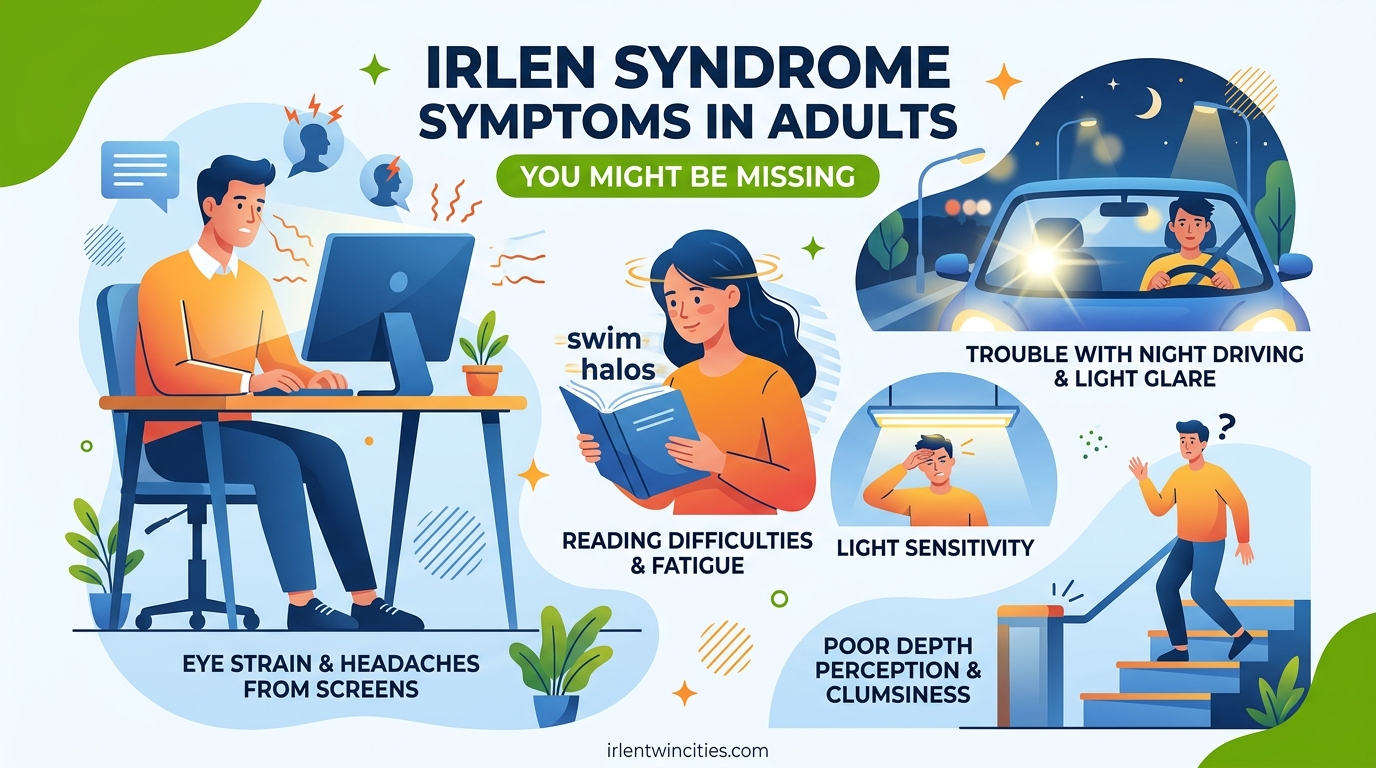
Have you ever struggled with persistent headaches after reading, felt overwhelmed by fluorescent lighting, or experienced unexplained difficulty with depth perception? You might be among the millions of adults living with undiagnosed Irlen Syndrome, also known as visual processing disorder or scotopic sensitivity syndrome. This perceptual processing disorder affects approximately 12-14% of the general population, yet many adults spend years attributing their symptoms to other causes or simply accepting them as normal.
Unlike optical problems that can be corrected with glasses or contacts, Irlen Syndrome is a neurological disorder affecting how the brain processes visual information, particularly specific wavelengths of light. For adults, this condition often goes unrecognized because symptoms develop gradually or have been present since childhood, leading many to believe their struggles are simply personal weaknesses rather than treatable visual processing symptoms.
Table of Contents
Understanding Irlen Syndrome: More Than Just Vision Problems
Irlen Syndrome is a spectrum disorder that affects the brain’s ability to process visual information efficiently. The condition occurs when the brain overreacts to certain wavelengths of light, causing the visual cortex to become overstimulated. This sensory processing problem is not related to eye health—people with Irlen Syndrome typically have 20/20 vision—but rather to how the brain interprets and processes what the eyes see.
Also referred to as Meares-Irlen syndrome or scotopic sensitivity syndrome, this condition is hereditary in approximately 50% of cases. However, adults can also develop Irlen Syndrome following head injuries, concussions, or inflammatory conditions like Lyme disease. The connection to brain injuries explains why some adults experience sudden onset of symptoms later in life, even if they never had visual processing difficulties as children.
What makes Irlen Syndrome particularly challenging for adults is the misconception that visual problems only affect children. In reality, adult Irlen Syndrome symptoms often manifest differently than childhood symptoms, focusing more on workplace performance, daily living challenges, and emotional impact rather than academic struggles.
Why Adults Often Miss These Symptoms
Adults frequently overlook Irlen Syndrome symptoms for several reasons. First, many develop coping mechanisms over time that mask their visual processing difficulties. You might have become an expert at avoiding bright environments, relying heavily on audiobooks instead of reading, or using artificial tears to combat persistent eye strain. These adaptations become so ingrained that you may not realize they’re compensating for an underlying visual processing disorder.
Additionally, Irlen Syndrome symptoms often mimic other common conditions, leading to frequent misdiagnosis with ADHD, dyslexia, anxiety disorders, or chronic fatigue syndrome. Adults typically seek help for secondary symptoms like headaches migraines or concentration problems rather than recognizing the root cause as visual stress. Without proper screening for perceptual processing disorder, healthcare providers may treat these symptoms without addressing the underlying visual processing problem.
Another factor contributing to missed diagnoses is the gradual worsening of symptoms over time. Adults often attribute increasing difficulty with reading, computer work, or night driving to normal aging rather than recognizing it as progressive visual fatigue from untreated Irlen Syndrome. This normalization of symptoms delays diagnosis and treatment unnecessarily.
Adult-Specific Warning Signs That Are Often Overlooked
Reading and Writing Difficulties Beyond Simple Fatigue
While children with Irlen Syndrome typically struggle with academic performance, adults experience reading difficulties that manifest in professional and personal contexts. Common adult Irlen Syndrome symptoms related to reading include:
- Print distortion: Words appear to move, blur, or fade in and out on the page
- Rivers running through text: White spaces between words appear as moving streams or gaps
- Text washing out: Print becomes difficult to see or disappears entirely, especially under fluorescent lights
- Difficulty sustaining reading: Inability to read for extended periods without taking breaks
- Reluctance to read: Avoiding reading tasks, work documents, or even leisure reading
- Writing challenges: Difficulty writing in a straight line or uneven spacing between words
- Proofreading struggles: Missing errors when reviewing written work, even when carefully checking
These symptoms often intensify throughout the day as visual fatigue accumulates. You might find yourself reading more slowly than colleagues, struggling to review contracts or reports, or feeling exhausted after attending meetings with extensive handouts. Adults with undiagnosed Irlen Syndrome often limit their reading to essential tasks only, missing opportunities for professional development or personal enrichment through reading.
Light Sensitivity That Disrupts Daily Life
Photophobia, or extreme light sensitivity, is one of the most common yet overlooked Irlen Syndrome symptoms in adults. This goes beyond preferring dim lighting—adults with Irlen Syndrome may experience genuine discomfort or pain in everyday lighting situations. Specific manifestations include:
- Fluorescent light sensitivity: Headaches, dizziness, or nausea under office lighting
- Sunlight intolerance: Squinting excessively, needing sunglasses even on cloudy days
- Glare sensitivity: Difficulty seeing when light reflects off shiny surfaces
- Computer eye strain: Rapid fatigue when working on digital screens
- Shopping center discomfort: Feeling overwhelmed in stores with bright lighting
- Night driving difficulties: Struggle with glare from headlights and streetlights
Many adults with undiagnosed Irlen Syndrome unconsciously structure their lives to avoid light sensitivity triggers. You might prefer working from home, choose restaurants based on lighting rather than food quality, or avoid social events in brightly lit venues. While these adaptations seem like personal preferences, they often represent unrecognized accommodations for visual processing disorder.
Physical Symptoms That Mimic Other Conditions
The physical manifestations of Irlen Syndrome often lead adults to seek medical care for seemingly unrelated health issues. Common physical symptoms include:
- Frequent headaches and migraines: Especially triggered by reading, computer work, or bright environments
- Eye strain and fatigue: Sore, tired eyes even after adequate sleep
- Dizziness and nausea: Particularly when exposed to visually stimulating environments
- Physical tension: Tight shoulders, clenched jaw, or poor posture resulting from straining to see clearly
- Sleep disturbances: Difficulty falling asleep after visually demanding days
- General fatigue: Feeling exhausted after tasks that require sustained visual attention
Because these physical symptoms resemble other common conditions, adults frequently undergo unnecessary medical testing for migraines, vision problems, or neurological issues. Without recognizing the connection to visual processing disorder, treatments focus on symptom management rather than addressing the root cause.
Depth Perception and Spatial Awareness Challenges
While often overlooked, depth perception problems significantly impact adult quality of life. Irlen Syndrome can affect spatial awareness in ways that create both safety concerns and social embarrassment. Adults with undiagnosed visual processing disorder may experience:
- Clumsiness and bumping into objects: Misjudging distances to furniture, doorways, or people
- Stair difficulties: Hesitation or tripping when going up or down stairs
- Driving challenges: Difficulty judging distances, especially when parking or changing lanes
- Sports performance issues: Problems catching balls, judging trajectories, or coordinating movements
- Escalator anxiety: Fear or difficulty stepping on or off moving walkways
- Pouring difficulties: Spilling when pouring liquids because of depth perception errors
These spatial awareness challenges often cause embarrassment and self-consciousness. Adults may avoid activities they enjoy or develop elaborate strategies to hide their difficulties. Unfortunately, depth perception problems are frequently dismissed as simple clumsiness rather than recognized as symptoms of a treatable visual processing disorder.
Attention, Concentration, and Cognitive Impact
The cognitive load of compensating for visual processing difficulties significantly impacts attention and concentration. Adults with undiagnosed Irlen Syndrome often struggle with:
- Difficulty sustaining attention: Especially during reading, meetings, or computer work
- Short attention span for visual tasks: Needing frequent breaks when focusing on anything visually demanding
- Information retention problems: Difficulty remembering what was read or seen
- Task avoidance: Procrastinating on projects that require extensive reading or screen time
- Underperformance at work: Failing to meet potential despite intelligence and effort
These attention and concentration symptoms frequently lead to misdiagnosis with ADHD in adults. However, unlike ADHD, which involves widespread attention difficulties, the concentration problems associated with Irlen Syndrome specifically relate to visually demanding tasks. Adults with Irlen Syndrome may have excellent attention for auditory information or hands-on activities while struggling significantly with visual information processing.
Workplace Challenges: The Hidden Professional Impact
Adults with undiagnosed Irlen Syndrome face unique workplace challenges that significantly impact career satisfaction and advancement. Modern work environments create multiple triggers for visual processing symptoms, including:
- Open office lighting: Fluorescent lighting in shared workspaces causes immediate discomfort
- Extended computer use: Required screen time exacerbates computer vision syndrome
- Document review: Reading contracts, reports, and digital communications becomes physically exhausting
- Meeting environments: Whiteboards, presentations, and handouts create visual stress
- Deadlines and pressure: Rushed work prevents necessary visual breaks, worsening symptoms
Professionals with untreated Irlen Syndrome may find themselves limited in career choices or unable to advance to positions requiring more reading, computer work, or public speaking with visual aids. Many unconsciously self-select jobs that minimize visual demands, potentially sacrificing career satisfaction or earning potential.
Workplace accommodations for Irlen Syndrome can be simple yet transformative. Adjustments like natural lighting, reduced screen time, colored overlays for documents, or permission to use tinted lenses can dramatically improve comfort and productivity. However, adults cannot request these accommodations without recognizing their visual processing difficulties.
The Emotional Toll of Undiagnosed Irlen Syndrome
Beyond physical symptoms and workplace challenges, undiagnosed Irlen Syndrome takes a significant emotional toll on adults. Years of struggling with unexplained difficulties often lead to:
- Low self-esteem: Feeling inadequate compared to peers who seem to handle visual tasks easily
- Anxiety about performance: Worrying about reading aloud, reviewing documents, or driving in unfamiliar areas
- Frustration and irritability: Becoming easily frustrated when visually overwhelmed
- Social withdrawal: Avoiding situations that trigger symptoms, limiting social and professional opportunities
- Depression: Feelings of hopelessness about persistent difficulties despite efforts to improve
- Imposter syndrome: Feeling like a fraud despite genuine accomplishments and intelligence
The emotional impact often intensifies as adults take on more responsibilities at work and home. Parenting demands like helping with homework, professional requirements like continuing education, or personal goals like reading for pleasure become increasingly difficult without proper diagnosis and treatment.
Perhaps most painful is the self-blame that many adults with undiagnosed Irlen Syndrome experience. Having been told they’re not trying hard enough or simply need to concentrate better, many internalize these messages as personal failings rather than recognizing them as symptoms of a neurological disorder affecting visual processing.
Common Misdiagnoses and Co-Occurring Conditions
Irlen Syndrome frequently co-occurs with other conditions and is often mistaken for disorders with overlapping symptoms. Understanding these connections can help adults advocate for comprehensive evaluation:
- ADHD: Attention problems in Irlen Syndrome specifically affect visual tasks, while ADHD involves broader attention difficulties
- Dyslexia: While both involve reading difficulties, dyslexia is a language-based disorder while Irlen Syndrome is visual processing
- Anxiety disorders: Anxiety about performance often develops secondary to untreated Irlen Syndrome
- Chronic fatigue syndrome: Fatigue from Irlen Syndrome is specifically related to visual processing demands
- Migraine disorders: While migraines and Irlen Syndrome can co-occur, treating Irlen Syndrome often reduces migraine frequency
- Autism spectrum disorders: Approximately 33-46% of individuals with autism or ADHD also have Irlen Syndrome
Importantly, having Irlen Syndrome does not exclude the possibility of also having these other conditions. However, untreated visual processing disorder will worsen symptoms of co-occurring conditions and complicate treatment effectiveness. Comprehensive evaluation should include screening for Irlen Syndrome, especially when standard treatments for other conditions provide incomplete relief.
Self-Assessment: Common Questions About Irlen Syndrome
Adults considering whether they might have Irlen Syndrome often ask themselves questions like:
- Why do I get headaches every time I try to read for more than 20 minutes?
- Why does fluorescent lighting make me feel physically ill?
- Why am I so much slower at reading than my colleagues?
- Why do I avoid driving at night even though I’ve been driving for years?
- Why does text seem to move or blur when I’m tired?
- Why do I feel exhausted after a normal workday?
- Why do I keep making careless errors even when I’m trying to be careful?
- Why do I dread meetings with lots of handouts or presentations?
If you find yourself asking these questions regularly, you may be experiencing undiagnosed Irlen Syndrome symptoms. While this self-assessment isn’t diagnostic, recognizing patterns in your struggles can help you seek appropriate evaluation.
When to Seek Professional Help
If you suspect you might have Irlen Syndrome, seeking professional evaluation can be life-changing. Consider scheduling an Irlen Syndrome screening if you:
- Experience persistent headaches or eye strain after reading or computer work
- Avoid reading or visually demanding tasks despite wanting to engage in them
- Struggle significantly with fluorescent lighting or bright environments
- Have difficulty with depth perception, spatial awareness, or night driving
- Feel that your work performance doesn’t reflect your intelligence or effort
- Have been diagnosed with other conditions that haven’t fully resolved your symptoms
- Notice family members with similar visual processing struggles
Irlen Syndrome testing typically involves a comprehensive assessment of your visual processing challenges, including evaluation of print distortions, light sensitivity, depth perception, and other symptoms. Based on this assessment, diagnostic tools like colored overlays or tinted lenses can be prescribed to address your specific visual processing needs.
Treatment Options and Hope for Adults
The good news is that Irlen Syndrome is highly treatable at any age. While children receive the most benefit from early intervention, adults experience significant improvement with proper treatment. The Irlen Method uses individually prescribed colored filters, either as overlays for reading materials or as tinted lenses (Irlen Spectral Filters) worn like glasses.
These colored overlays and tinted lenses work by filtering the specific wavelengths of light that cause visual processing problems for each individual. Because Irlen Syndrome is a spectrum disorder with highly individual symptoms, there’s no one-size-fits-all solution—each person requires precise color customization based on diagnostic testing.
Adults who receive treatment often report immediate improvements in reading comfort, reduced headaches, better tolerance for fluorescent lighting, and enhanced depth perception. Beyond symptom relief, many experience increased confidence, improved workplace performance, and renewed ability to enjoy activities they had abandoned due to visual difficulties.
Living Well with Irlen Syndrome: Beyond Treatment
While colored overlays and tinted lenses provide significant relief, adults with Irlen Syndrome benefit from additional strategies to manage symptoms in daily life:
- Environmental modifications: Using natural lighting when possible, installing dimmer switches, or using warm-tone LED bulbs instead of fluorescent
- Visual breaks: Scheduling regular breaks from visually demanding tasks, following the 20-20-20 rule (every 20 minutes, look at something 20 feet away for 20 seconds)
- Ergonomic adjustments: Optimizing screen brightness, using matte screen protectors, or positioning monitors to reduce glare
- Workplace accommodations: Requesting reduced fluorescent lighting, permission to use colored overlays, or additional time for reading-intensive tasks
- Lifestyle adaptations: Wearing sunglasses outdoors, choosing seating carefully in restaurants or meeting rooms, or using audiobooks as alternatives to reading
- Stress management: Recognizing that stress worsens visual processing symptoms and implementing relaxation techniques
These adaptations, combined with appropriate treatment, enable adults with Irlen Syndrome to thrive professionally and personally without being limited by visual processing challenges.
Conclusion: Recognizing the Missing Pieces
Irlen Syndrome symptoms in adults frequently go unrecognized, leading to decades of unnecessary struggle with reading, light sensitivity, depth perception problems, and workplace challenges. By understanding that these difficulties stem from a neurological visual processing disorder rather than personal shortcomings, adults can seek appropriate evaluation and experience transformative improvements through treatment.
If you’ve recognized yourself or someone you care about in these symptoms, know that help is available. Irlen Syndrome is not a reflection of intelligence, capability, or effort—it’s a treatable condition affecting how your brain processes visual information. With proper diagnosis through Irlen Syndrome testing and appropriate use of colored overlays or tinted lenses, adults can overcome the limitations of untreated visual processing disorder and reach their full potential.
The first step is recognizing that the symptoms you’ve been living with aren’t normal and don’t have to be permanent. Whether you’ve struggled for decades or are just beginning to notice difficulties, seeking evaluation for Irlen Syndrome can open the door to lasting relief and improved quality of life.
Frequently Asked Questions About Irlen Syndrome in Adults
What is Irlen Syndrome?
Irlen Syndrome, also known as scotopic sensitivity syndrome or Meares-Irlen syndrome, is a perceptual processing disorder affecting how the brain processes visual information, particularly specific wavelengths of light. It is a neurological disorder that causes the brain to overreact to certain light frequencies, resulting in visual processing difficulties despite having normal eyesight.
What are the symptoms of Irlen Syndrome in adults?
Adult Irlen Syndrome symptoms include reading difficulties (print distortion, rivers through text, text washing out), light sensitivity (especially to fluorescent lighting), frequent headaches and eye strain, depth perception problems, attention and concentration issues with visual tasks, and physical symptoms like dizziness or fatigue after visually demanding activities. These symptoms often worsen throughout the day or with accumulated visual fatigue.
Do I have Irlen Syndrome?
Common signs that you might have Irlen Syndrome include frequent headaches after reading, discomfort under fluorescent lights, difficulty sustaining reading, problems with night driving, clumsiness or bumping into objects, and avoiding visually demanding tasks. While online questionnaires can provide initial indication, formal Irlen Syndrome testing by a certified diagnostician is necessary for accurate diagnosis.
Can adults develop Irlen Syndrome?
Yes, while Irlen Syndrome is often hereditary and present from childhood, adults can develop the condition following head injuries, concussions, strokes, or inflammatory conditions like Lyme disease. Some adults also experience worsening symptoms over time, making previously manageable difficulties more pronounced. The condition can develop at any age, though diagnosis is often delayed because symptoms are attributed to other causes.
Is Irlen Syndrome the same as dyslexia?
No, Irlen Syndrome and dyslexia are different conditions. Dyslexia is a language-based learning disability affecting reading and spelling, while Irlen Syndrome is a visual processing disorder affecting how the brain processes what the eyes see. However, the conditions can co-occur, and Irlen Syndrome can exacerbate dyslexia symptoms. Proper evaluation can distinguish between or identify both conditions.
Does Irlen Syndrome cause headaches?
Yes, headaches and migraines are among the most common Irlen Syndrome symptoms in adults. The visual strain caused by the brain overprocessing light frequencies leads to tension headaches, especially after reading, computer work, or exposure to fluorescent lighting. Many adults with Irlen Syndrome experience immediate headache relief when using appropriately prescribed colored overlays or tinted lenses.
Can Irlen Syndrome be treated?
Yes, Irlen Syndrome is highly treatable using the Irlen Method, which involves individually prescribed colored filters. Treatment typically begins with colored overlays for reading and may progress to tinted lenses (Irlen Spectral Filters) worn as glasses for comprehensive visual processing support. The specific colors are customized to each individual’s symptoms, and most adults experience significant improvement in reading comfort, reduced headaches, and better tolerance for challenging lighting environments.
How is Irlen Syndrome diagnosed?
Irlen Syndrome is diagnosed through a comprehensive assessment conducted by a certified Irlen diagnostician. The evaluation typically includes screening for visual processing symptoms, assessment of print distortions and light sensitivity, depth perception testing, and systematic trials with colored overlays to identify the most effective filters. The diagnostic process is non-invasive and focuses on identifying how your brain processes visual information rather than evaluating eye health.
Does Irlen Syndrome go away?
Irlen Syndrome is a lifelong condition that does not resolve on its own. However, symptoms can be effectively managed and treated using appropriate colored overlays or tinted lenses. While the underlying neurological difference remains, treatment eliminates or significantly reduces the problematic symptoms, allowing adults to read, work, and function without visual processing difficulties. Consistent use of prescribed filters is necessary for ongoing symptom management.
Can you get disability for Irlen Syndrome?
Irlen Syndrome may qualify as a disability under the Americans with Disabilities Act (ADA) if it substantially limits major life activities such as reading, working, or learning. Adults with diagnosed Irlen Syndrome can request workplace accommodations like modified lighting, permission to use colored overlays, reduced screen time, or additional time for reading tasks. Documentation from a qualified diagnostician is typically required for formal accommodations. Some individuals may also qualify for educational accommodations if pursuing continuing education.