
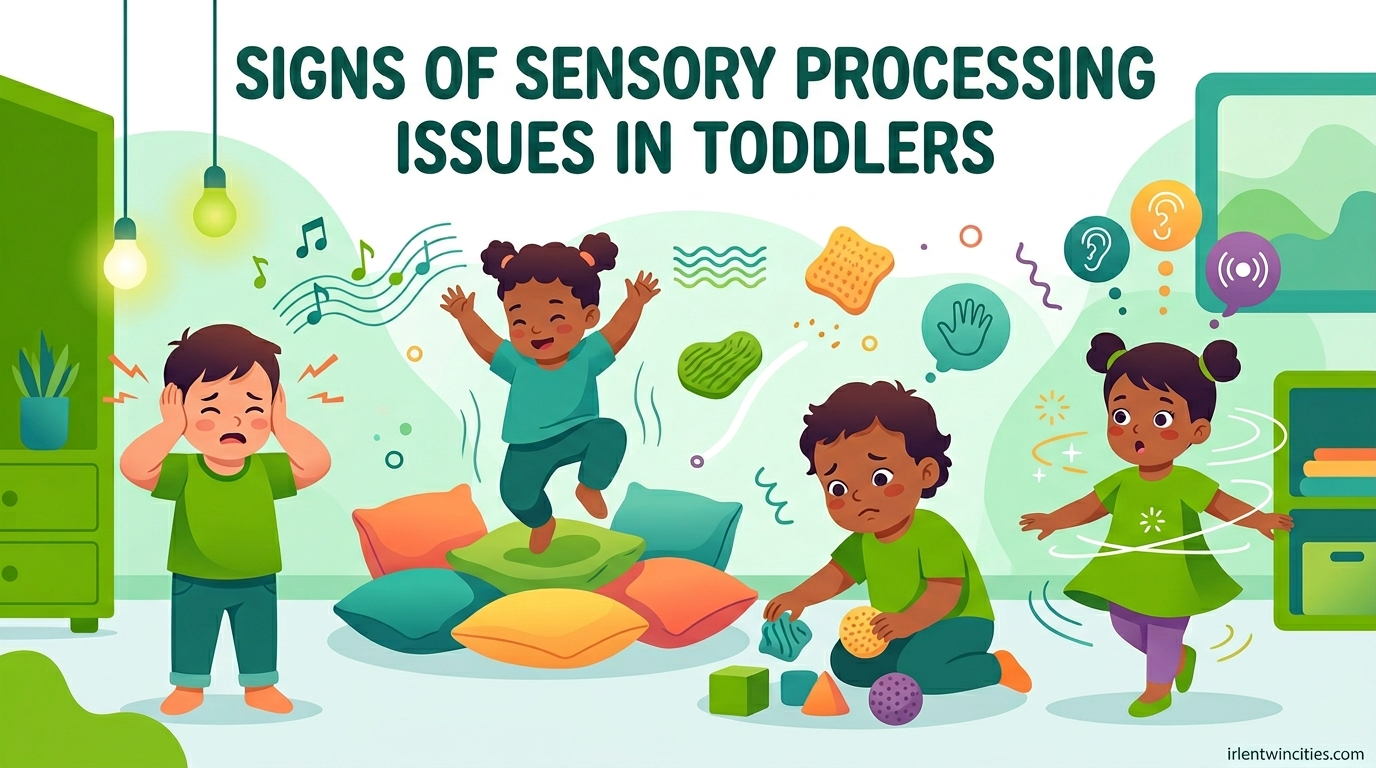
Watching your toddler struggle with certain activities, foods, or everyday experiences can be confusing and heartbreaking. You might find yourself wondering why your child has such intense reactions to things that seem minor to others, or why they seem to constantly seek out certain sensations while avoiding others with equal intensity. If this sounds familiar, you may be observing signs of sensory processing issues in toddlers. Understanding these signs can help you support your child more effectively and determine whether professional guidance might be beneficial.
Sensory processing refers to how the brain receives and interprets information from the senses. For most children, this happens automatically and seamlessly. However, for children with sensory processing disorder (SPD), this process doesn’t work quite as smoothly, leading to sometimes overwhelming reactions to ordinary sensory experiences. Recognizing the signs of sensory processing issues in toddlers is the first step toward getting your child the support they need to thrive.
Table of Contents
What Is Sensory Processing Disorder?
Sensory processing disorder is a neurological condition that affects how the brain processes sensory information from the body and the environment. While we typically think of the five senses (sight, sound, touch, taste, and smell), there are actually two additional sensory systems that play crucial roles: the vestibular system (which relates to balance and movement) and proprioception (which provides awareness of where your body is in space).
For children with SPD, the sensory information that most people filter out without thinking can feel either overwhelming or insufficient. This can manifest as hypersensitivity (over-responsiveness to sensory input) or hyposensitivity (under-responsiveness or seeking of sensory input). It’s important to understand that SPD exists on a spectrum, and no two children experience it exactly the same way.
Many parents first notice signs of sensory processing issues in toddlers between the ages of 18 months and 3 years, when children’s activities and environments become more complex and demanding. During this developmental stage, toddlers are expected to tolerate a wider range of sensory experiences, from wearing certain types of clothing to sitting through story time at daycare. For a child with SPD, these everyday demands can feel insurmountable.
Important distinction: While sensory processing issues are often associated with autism spectrum disorder and ADHD, they can also occur independently. Having sensory processing difficulties does not automatically mean your child has another condition, but it can be a contributing factor. A comprehensive evaluation by a qualified professional can help determine whether there are co-occurring conditions.
Tactile (Touch) Sensitivity Signs
The tactile system is often one of the first areas where parents notice sensory processing issues. Touch is a constant sense, present in virtually every moment of your child’s day, from the clothes they wear to the foods they touch to the surfaces they explore. When the tactile system is dysregulated, everyday experiences can become sources of significant distress.
Hypersensitivity to Touch (Tactile Defensiveness)
Children who are hypersensitive to touch may display strong aversions to certain textures, temperatures, or pressures. These reactions often seem disproportionate to the actual stimulus and can significantly impact daily routines.
Signs of tactile hypersensitivity in toddlers:
- Extreme meltdowns when touched unexpectedly or without warning
- Refusing to wear certain fabrics, tags, or seams in clothing
- Resisting having their face wiped, hair washed, or nails trimmed
- Complaining that foods are “too messy” or refusing to touch certain textures
- Gagging or retching when hands become dirty or sticky
- Avoiding barefoot play, especially on grass, sand, or textured surfaces
- Showing distress when transitioning between temperatures (water, weather)
Hyposensitivity to Touch (Seeking More Tactile Input)
On the other end of the spectrum, some toddlers with sensory processing issues actively seek out intense touch experiences. These children may appear to have a high pain tolerance or constantly crave tactile stimulation.
Signs of tactile hyposensitivity in toddlers:
- Constantly touching, patting, or rubbing surfaces and textures
- Preferring to walk barefoot regardless of surface
- Seeking out textured objects to hold or mouth
- Not noticing when hands or face are dirty
- Showing minimal reaction to cuts, bruises, or scrapes
- Enjoying pressure-based activities like being squeezed or hugged tightly
Auditory (Sound) Sensitivity Signs
Sound sensitivity in toddlers can range from an overwhelming fear of certain noises to a apparent lack of response to sounds that should naturally draw attention. Parents often describe their children as being “super sensitive” to sound or seeming “deaf” to verbal cues.
Hypersensitivity to Sound
Many toddlers with auditory hypersensitivity become distressed by sounds that other children barely notice. This can create significant challenges in everyday environments like grocery stores, playgrounds, and family gatherings.
Signs of auditory hypersensitivity in toddlers:
- Covering ears frequently, especially in response to sudden or loud sounds
- Melting down at public events, parties, or crowded venues
- Being unable to tolerate vacuum cleaners, blenders, or hair dryers
- Showing distress at high-pitched sounds or certain musical instruments
- Difficulty focusing when background noise is present
- Being able to hear sounds from far away or detecting sounds others miss
Hyposensitivity to Sound
Some toddlers with sensory processing issues appear to not hear sounds at all, even when their hearing is perfectly normal. This can be mistaken for stubbornness or selective listening.
Signs of auditory hyposensitivity in toddlers:
- Not responding to their name being called, even consistently
- Needing sounds to be repeated or delivered at higher volumes
- Being easily distracted by background sounds
- Enjoying making loud noises themselves
- Seeking out noisy environments or constantly noisy toys
- Difficulty following verbal instructions
Vestibular and Proprioceptive Signs
The vestibular and proprioceptive systems are sometimes called the “hidden senses” because they’re less understood by parents. However, difficulties with these systems often cause some of the most noticeable signs of sensory processing issues in toddlers.
Vestibular System (Balance and Movement)
The vestibular system is located in the inner ear and is responsible for detecting movement and changes in head position. It plays a crucial role in balance, coordination, and eye movements.
Signs of vestibular processing issues in toddlers:
- Extreme fear or distress when feet leave the ground (being lifted, swing sets)
- Constantly spinning, rolling, or seeking opportunities for movement
- Appearing clumsy or uncoordinated compared to peers
- Having difficulty with stairs; needing to hold onto walls or railings
- Fear of falling when walking on uneven surfaces
- Becoming disoriented or nauseated after spinning or rapid movement
- Under-responsive to movement (not noticing when being moved or tipped)
Proprioceptive System (Body Awareness)
Proprioception is the sense that tells us where our body parts are without looking at them. It helps us gauge pressure, coordination, and spatial awareness.
Signs of proprioceptive processing issues in toddlers:
- Constantly bumping into furniture, walls, or people
- Walking on tiptoes consistently
- Difficulty with fine motor activities like holding a crayon or using utensils
- Needing to use excessive force when playing (pressing too hard, breaking toys)
- Appearing to not know where their body is in space
- Enjoying crashing, jumping, or applying pressure to their body
- Difficulty with activities that require bilateral coordination
Oral and Smell Sensitivity Signs
Oral and olfactory sensitivities are extremely common in toddlers with sensory processing issues and can significantly impact feeding and daily routines. These difficulties often emerge early and can be some of the most challenging for families to manage.
Taste and Texture Sensitivity
Extreme picky eating related to food textures is often one of the first signs parents notice. This goes beyond normal toddler food jags and can severely limit a child’s diet.
Signs of oral/taste sensitivity in toddlers:
- Refusing entire categories of foods based on texture (all soft foods, all crunchy foods)
- Gagging, retching, or vomiting when encountering unwanted food textures
- Only eating foods that are a specific temperature or preparation style
- Chewing food for excessive periods without swallowing
- Stuffing mouth with food beyond comfortable capacity
- Mouthing objects or people beyond typical toddler age
- Limited diet of “beige” or similar-colored foods
Smell Sensitivity
Olfactory sensitivities can cause toddlers to avoid certain people, places, or foods based on smell alone.
Signs of smell sensitivity in toddlers:
- Covering nose frequently or commenting on smells
- Refusing to be near people wearing perfume, lotion, or cologne
- Avoiding certain rooms or places due to odor-based associations
- Being able to detect subtle smells others miss
- Seeking out strong smells or intentionally smelling objects and surfaces
Sensory Seeking vs. Sensory Avoiding Behaviors
One of the most helpful frameworks for understanding sensory processing issues is recognizing that children may exhibit either sensory seeking or sensory avoiding behaviors, and often both exist simultaneously in different sensory domains. Understanding your child’s patterns can help you anticipate needs and provide appropriate support.
| Behavior Type | Characteristics | Example Responses |
|---|---|---|
| Sensory Seekers | Actively pursue intense sensory input; seem to have an unending need for stimulation | Jumping continuously, seeking loud noises, touching everything, craving deep pressure |
| Sensory Avoiders | Actively resist or escape sensory input; become distressed when overwhelmed | Covering ears, refusing certain textures, withdrawing from activity, melting down |
| Mixed Pattern | Seek some sensory input while avoiding others simultaneously | Loving spinning but hating being touched; craving loud music but covering ears at vacuums |
Real parent experiences often highlight how confusing mixed patterns can be. A toddler might love the sensation of jumping on a trampoline but completely fall apart when their hands get dirty. Another might constantly seek out crunchy foods but refuse anything with a creamy texture. These contradictions are hallmarks of sensory processing issues and are not deliberate stubbornness or manipulation.
Understanding the “Why” Behind Behavior
When you understand sensory processing issues, behaviors that seemed maddening suddenly make sense. A toddler who won’t wear jeans isn’t being difficult; the texture may genuinely feel unbearable. A child who head-bangs may be seeking proprioceptive input that helps their brain organize sensory information. This shift in understanding can transform how parents respond and support their children.
Signs in Daily Life: Meltdowns, Sleep, and Routine
Sensory processing issues don’t exist in isolation; they affect every aspect of daily life. Understanding how SPD manifests in everyday situations can help parents recognize patterns and develop strategies.
Meltdowns vs. Tantrums
One of the most important distinctions for parents to understand is the difference between meltdowns and tantrums, as they require very different responses.
| Meltdowns (Sensory Overload) | Tantrums (Goal-Driven) |
|---|---|
| Triggered by sensory or emotional overwhelm | Triggered by frustration, wanting something |
| Child cannot control or stop once triggered | Child has some control and can stop if needs are met |
| Fighting the situation makes it worse | Often responds to negotiation or distraction |
| Child may not be able to communicate during episode | Child typically continues communicating during episode |
| Exhaustion and disorientation often follow | Child recovers more quickly when episode ends |
Sleep Challenges
Many toddlers with sensory processing issues have significant sleep difficulties. The sensory demands of the day can create accumulated overload that makes winding down extremely difficult.
Common sleep-related signs:
- Difficulty falling asleep despite extreme exhaustion
- Waking frequently throughout the night
- Being unable to relax in certain sleeping positions or environments
- Requiring specific bedding textures or sleep arrangements
- Hyperawareness of sounds or visual stimuli in the bedroom
- Difficulty with bedtime routines due to transition sensitivities
Routine and Transition Difficulties
Toddlers with SPD often struggle with transitions and unexpected changes, which can make daily routines exhausting for the entire family.
Signs of routine and transition difficulties:
- Extreme distress when switching between activities
- Needing extensive warning before transitions
- Ritualistic insistence on completing routines in specific order
- Melting down when plans change unexpectedly
- Taking extremely long to transition between preferred and non-preferred activities
When to Worry: Normal Toddler Behavior vs. SPD Signs
All toddlers go through phases of picky eating, occasional meltdowns, and difficulty with transitions. This is normal developmental progression. So how do you distinguish typical toddler behavior from signs of sensory processing issues?
Red Flags That Suggest Professional Support May Be Needed:
- Behaviors that are consistent across multiple environments (home, daycare, grandparents’ house)
- Behaviors that significantly interfere with daily functioning or participation in age-appropriate activities
- Behaviors that are escalating rather than improving over time
- Behaviors that are causing physical harm (head banging, severe self-injury)
- Extreme reactions to sensory input that would not typically bother a child of the same age
- Significant developmental delays in motor skills, speech, or social areas alongside sensory concerns
- Family history of autism, ADHD, or sensory processing difficulties
- Your parental intuition telling you something isn’t quite right
Parents often describe knowing something was different about their child before they could articulate what. Trust your observations. If you’re concerned, seeking evaluation does not mean you’re “labeling” your child unnecessarily. It means you’re gathering information to better understand and support them.
When to Seek Professional Help
If you’ve recognized many of these signs in your toddler, you might wonder what the next steps are. The good news is that help is available, and early intervention can make a significant difference in your child’s development and your family’s quality of life.
Who to See
Several professionals can help evaluate and treat sensory processing issues in toddlers:
- Pediatrician: Your first point of contact; can provide referrals to specialists and rule out medical conditions
- Occupational Therapist (OT): The primary professional for evaluating and treating SPD; uses sensory integration therapy
- Developmental Pediatrician: Can provide comprehensive developmental evaluation and identify co-occurring conditions
- Child Psychologist or Therapist: Can help with behavioral strategies and parent support
What to Expect During Evaluation
An occupational therapy evaluation for SPD typically includes:
- Parent interview about developmental history, daily challenges, and specific concerns
- Observation of the child during structured and unstructured play
- Standardized assessments measuring sensory processing, motor skills, and coordination
- Assessment of how the child responds to various sensory stimuli
- Discussion of findings and recommendations for treatment
The Value of Early Intervention
Research consistently shows that early intervention leads to better outcomes for children with sensory processing issues. A toddler’s brain is highly plastic and adaptable, making this an ideal time to develop coping strategies and sensory integration. Don’t wait to see if your child “grows out of it” if you have genuine concerns. Early support provides your child with tools and strategies that will serve them throughout their life.
Treatment Approaches and What to Expect
While there’s no “cure” for sensory processing disorder, effective treatments can significantly improve a child’s ability to function and thrive. Treatment is highly individualized based on your child’s specific profile of strengths and challenges.
Sensory Integration Therapy
This is the primary approach used by occupational therapists to treat SPD. Sessions involve structured exposure to sensory experiences in a safe, supportive environment. The goal is to help the child’s nervous system learn to process sensory input more efficiently over time.
Sensory Diet
A sensory diet is a personalized plan of sensory activities designed to meet your child’s specific needs throughout the day. Just as regular meals keep blood sugar stable, regular sensory input helps keep the nervous system regulated. A sensory diet might include activities like jumping on a mini-trampoline before seated activities, using a weighted lap pad during story time, or incorporating deep pressure activities before transitions.
Environmental Modifications
Simple changes to your home and routine can dramatically reduce sensory overload:
- Providing noise-canceling headphones for overwhelming environments
- Choosing soft, tag-free clothing in preferred fabrics
- Using blackout curtains or reducing visual clutter
- Allowing extra time for transitions and routines
- Creating a calm sensory-friendly space at home
- Preparing the child for sensory-rich environments in advance
Frequently Asked Questions
What are the signs of sensory processing disorder in toddlers?
Signs of SPD in toddlers include extreme reactions to touch, sounds, or movement; avoiding or seeking certain textures and sensations; frequent meltdowns that seem disproportionate to triggers; difficulty with coordination and balance; extreme picky eating related to food textures; resistance to wearing certain clothing; and unusual seeking of intense sensory input like jumping, crashing, or spinning.
How do I know if my toddler has sensory issues?
You may notice your toddler consistently avoids or seeks out certain sensory experiences more intensely than peers. Signs include covering ears frequently, melting down at tags or seams in clothing, refusing foods by texture, falling frequently, not responding to their name being called, or constantly needing to touch and explore surfaces. A professional evaluation by an occupational therapist can provide a definitive assessment.
What does sensory processing disorder look like in toddlers?
In toddlers, SPD often appears as extreme behavioral reactions to sensory input that wouldn’t bother most children the same age. A toddler with SPD might have violent meltdowns when their socks feel “wrong,” refuse to eat any food with a certain texture, not notice when their name is called, constantly crash into furniture, or cover their eyes around bright lights. The behavior is consistent and significantly impacts daily functioning.
When should I be concerned about sensory issues in my toddler?
Consider seeking help if sensory behaviors are consistently interfering with daily life, preventing participation in normal activities, causing severe meltdowns multiple times per day, or if you’re noticing patterns that other caregivers comment on. Early intervention is most effective, so discussing concerns with your pediatrician or requesting an occupational therapy evaluation can be appropriate even before getting a formal diagnosis.
How is SPD diagnosed in toddlers?
SPD is typically diagnosed by an occupational therapist through standardized assessments and clinical observations. The evaluation may include the child’s responses to various sensory stimuli, motor skills assessments, and parent interviews about daily behaviors and challenges. Your pediatrician can refer you to a specialist, and early evaluations can often be done through early intervention programs.
Can toddlers outgrow sensory processing issues?
While some children with mild sensory sensitivities may develop better coping strategies over time, sensory processing disorder is typically not something a child simply outgrows. With appropriate support, therapy, and environmental modifications, children can learn to manage their responses to sensory input more effectively. Early intervention significantly improves long-term outcomes and helps children develop needed skills.
Supporting Your Toddler Through Sensory Challenges
Recognizing the signs of sensory processing issues in toddlers is an act of love and advocacy. By understanding what your child is experiencing, you’re already on the path to providing better support. Remember that sensory processing difficulties are not about being “difficult” or “behavioral problems” they are about a neurological difference in how the brain processes sensory information.
Every child with SPD is unique, and what works for one may not work for another. Be patient with the process of learning your child’s specific triggers and responses. Celebrate small victories and remember that seeking help is a sign of strength, not weakness.
With understanding, appropriate interventions, and support, children with sensory processing issues can develop effective coping strategies, build resilience, and thrive in their daily lives. Your awareness and commitment to understanding your child makes all the difference in their journey.