
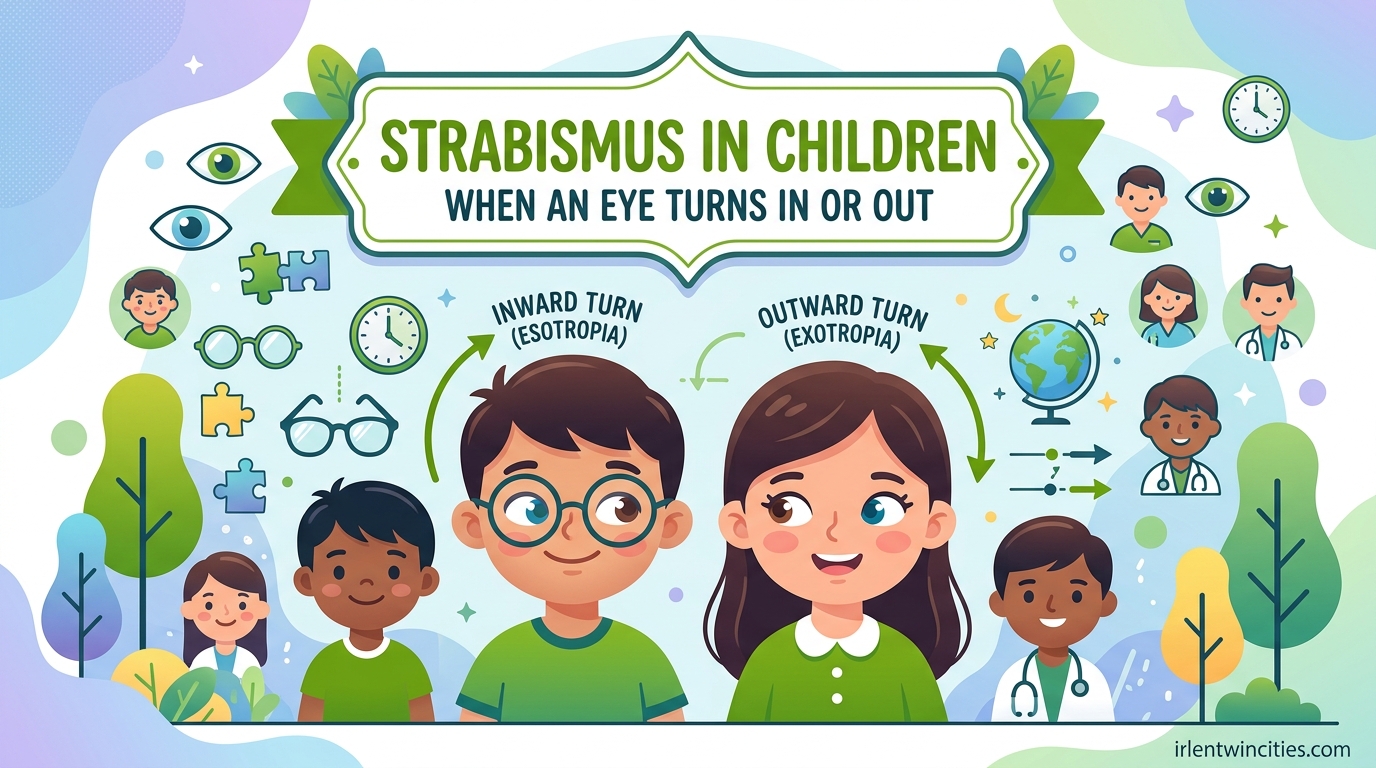
Strabismus in children is one of those conditions that can send a parent’s heart racing the moment they notice it. One day your baby’s eyes seem perfectly aligned, and the next you catch a moment where one eye drifts inward while the other stays straight ahead. That split-second observation can spark hours of worry.
I have worked with families navigating this journey for over a decade, and the first thing I always tell concerned parents is this: you are not overreacting by seeking answers. Early detection and treatment of strabismus can prevent permanent vision problems and protect your child’s depth perception for life.
In this guide, you will learn exactly what strabismus is, how to spot the warning signs, what treatment options exist, and when to seek professional help. Whether you are noticing occasional eye wandering or a constant misalignment, this information will help you take the right next steps with confidence.
Table of Contents
What Is Strabismus in Children?
Strabismus is a condition where the eyes do not line up properly. While one eye focuses straight ahead, the other eye turns inward, outward, upward, or downward. This misalignment happens because the six muscles that control eye movement are not working together in perfect coordination.
When eyes are properly aligned, both focus on the same object and send matching images to the brain. The brain then combines these two images into one clear, three-dimensional picture. With strabismus, the eyes send two different images to the brain, which creates confusion.
In children under seven years old, the brain handles this confusion by starting to ignore the image from the misaligned eye. This adaptation prevents double vision, but it comes at a serious cost. Over time, the ignored eye develops poor vision that cannot be corrected with glasses alone. This condition is called amblyopia, commonly known as lazy eye.
The connection between strabismus and amblyopia is why early intervention matters so much. Without treatment, the affected eye can suffer permanent vision loss. The window for effective treatment starts closing around age seven or eight, when the visual system becomes fully developed.
Types of Strabismus: Understanding the Direction of Eye Turn
Not all strabismus looks the same. Doctors classify the condition based on which direction the misaligned eye turns. Understanding these types helps parents describe what they are seeing and understand their child’s specific diagnosis.
Esotropia (Eyes Turn Inward)
Esotropia is the most common form of strabismus in children. With this type, one or both eyes turn inward toward the nose, giving the appearance of being cross-eyed. Parents often first notice esotropia when their child is looking at something in the distance or when they are tired.
There are several subtypes of esotropia. Infantile esotropia appears within the first six months of life and often involves a large, constant eye turn. Accommodative esotropia typically develops between ages two and three and is caused by farsightedness. When a farsighted child tries to focus on something, their eyes turn inward too much as they strain to see clearly.
Exotropia (Eyes Turn Outward)
Exotropia occurs when one or both eyes turn outward toward the ear. This type often starts as intermittent, meaning the eye wanders only some of the time. Parents might notice it when their child is daydreaming, looking into the distance, or when they are tired or sick.
Intermittent exotropia is the most common form in children. The eye might drift outward for a few seconds, then snap back into alignment. Over time, if left untreated, intermittent exotropia can become constant. Children with exotropia may also squint one eye in bright sunlight as a way to control the drift.
Hypertropia and Hypotropia (Vertical Misalignment)
These less common types involve one eye turning upward (hypertropia) or downward (hypotropia) compared to the other eye. Vertical strabismus often causes the most noticeable head tilting as children try to align their eyes by adjusting their head position.
Vertical misalignments are frequently associated with specific muscle weaknesses or nerve problems. They require careful evaluation by a pediatric ophthalmologist to determine the underlying cause and appropriate treatment approach.
Signs and Symptoms: How to Tell If Your Child Has Strabismus
Recognizing strabismus in children requires attentive observation, especially since young children cannot tell you if they are seeing double or having vision problems. Here are the key signs parents should watch for.
Visible Eye Misalignment
The most obvious sign is when one eye appears to look in a different direction than the other. This misalignment might be constant, happening all the time, or intermittent, appearing only when your child is tired, daydreaming, or looking at specific distances.
Take photos of your child using the camera flash. In pictures where your child is looking directly at the camera, look at the reflection of the flash in their eyes. The reflection should appear in the same spot in each eye. If one reflection is centered while the other is off to the side, this can indicate misalignment.
Squinting and Head Tilting
Children with strabismus often develop compensatory behaviors to manage their double vision or to help their eyes work together. Frequent squinting, especially when focusing on objects, can signal that your child is struggling to align their vision.
Consistent head tilting or turning is another telling sign. Your child might tilt their head to one side or turn their face to favor one eye over the other. This positioning helps them use their better-seeing eye or brings their eyes into better alignment temporarily.
Vision-Related Signs
Some children with strabismus close or cover one eye, especially in bright light or when trying to focus on detailed tasks. Others may have poor depth perception, which shows up as clumsiness, difficulty catching balls, or trouble with stairs and curbs.
Older children might complain of double vision, headaches, or eye strain. However, many children adapt so well to their condition that they do not recognize anything is wrong. This is why regular eye screenings during pediatric checkups are essential.
Pseudostrabismus: When Eyes Look Crossed But Are Not
Many infants appear to have crossed eyes when their vision is actually perfectly normal. This condition, called pseudostrabismus, happens because of the facial features common in young babies. A wide, flat bridge of the nose or extra skin folds at the inner corners of the eyes can create the optical illusion that the eyes are turned inward.
With pseudostrabismus, if you look closely at the light reflection in your baby’s eyes, the reflection will appear in the same position in both eyes even when they seem crossed. With true strabismus, the reflections will be in different positions.
Pseudostrabismus typically becomes less noticeable as the child grows and their facial structure changes. The nose bridge becomes more prominent, and the skin folds become less pronounced. Most children outgrow the appearance of pseudostrabismus by age two or three.
If you are unsure whether your child has true strabismus or pseudostrabismus, a pediatric ophthalmologist can perform a simple examination to tell the difference. It is always better to have an evaluation than to assume it is just a normal appearance.
Causes and Risk Factors of Strabismus in Children
Understanding what causes strabismus helps parents understand why their child developed the condition and whether siblings might be at risk. While the exact cause varies, several factors contribute to its development.
Refractive Errors
Farsightedness is one of the most common causes of accommodative esotropia. When a child who is farsighted tries to focus on near objects, their eyes must work harder to see clearly. This extra focusing effort causes the eyes to turn inward too much.
Correcting the farsightedness with glasses often allows the eyes to straighten on their own. The glasses reduce the focusing effort, which in turn reduces the inward pulling of the eyes. This is why eyeglasses are frequently the first treatment tried for accommodative esotropia.
Family History
Strabismus tends to run in families. If one parent had strabismus as a child, their children have a higher risk of developing it. The risk increases further if both parents had the condition or if siblings are already affected.
The inheritance pattern is complex and not strictly from either mother or father specifically. Multiple genes appear to be involved, and the condition can skip generations. Even with a strong family history, there is no guarantee a child will develop strabismus, but vigilant monitoring is wise.
Other Risk Factors
Several medical conditions increase the likelihood of strabismus. Children born prematurely have a higher risk due to potential complications affecting eye muscle development. Cerebral palsy, Down syndrome, and other conditions affecting brain development or muscle control also increase risk.
Trauma to the head or eye, though less common, can damage the nerves or muscles controlling eye movement. In some cases, strabismus can be a sign of a more serious underlying condition affecting the brain or nervous system, which is why sudden onset strabismus always requires immediate medical attention.
When to See a Doctor: Normal Milestones vs Warning Signs
Understanding what is normal for eye development at different ages helps parents know when to seek evaluation. Some apparent eye misalignment in very young babies is actually a normal part of visual system development.
Age-Based Eye Development
Newborn babies often have eyes that wander or appear misaligned. Their eye muscles are still developing, and their brain is learning to coordinate both eyes together. Intermittent crossing or wandering in the first three months of life is usually normal.
By four months of age, a baby’s eyes should be able to stay straight and work together most of the time. If one or both eyes continue to wander in, out, up, or down after this age, an evaluation by a pediatric ophthalmologist is recommended.
By six months, eye alignment should be consistently straight. Any misalignment that persists beyond this milestone warrants professional assessment, even if it seems to come and go.
Red Flags That Need Immediate Attention
Sudden onset strabismus in a child who previously had straight eyes is a medical emergency. This can indicate a neurological problem, brain injury, or other serious condition requiring immediate evaluation in an emergency room.
Other warning signs that need prompt attention include strabismus accompanied by headaches, vomiting, fever, or changes in behavior. Eyes that appear to shake or move constantly (nystagmus) along with misalignment also require urgent evaluation.
Any eye misalignment that appears after an injury to the head or eye should be evaluated immediately, even if the injury seemed minor.
How Strabismus Is Diagnosed
Diagnosing strabismus involves more than just observing eye alignment. A comprehensive pediatric eye examination assesses vision in each eye, determines how well the eyes work together, and identifies any associated conditions like amblyopia.
The cover test is a key diagnostic tool. The doctor covers one eye and observes the movement of the uncovered eye, then switches to cover the other eye. If an eye has to move to refocus when uncovered, that indicates strabismus. This test reveals both obvious and subtle misalignments.
Vision testing measures how well each eye sees individually. For children too young to read eye charts, special techniques using pictures or patterns assess visual acuity. Refraction testing determines whether glasses might correct the misalignment.
A dilated eye exam allows the doctor to look inside the eye and rule out other conditions that might cause similar symptoms. This examination is thorough but painless, though the eye drops used for dilation will make your child’s vision blurry and light-sensitive for several hours.
Treatment Options for Strabismus in Children
Treatment for strabismus aims to straighten the eyes, improve vision in the affected eye, and restore proper depth perception. The specific approach depends on the type and severity of the misalignment, the child’s age, and any associated conditions.
Eyeglasses and Corrective Lenses
For children with accommodative esotropia caused by farsightedness, eyeglasses are often the first and sometimes only treatment needed. The glasses correct the refractive error, reducing the focusing effort that pulls the eyes inward.
Some children need to wear glasses full-time, while others only need them for near work like reading. The doctor will specify the wearing schedule based on your child’s specific prescription and response to treatment.
Prism lenses can also be incorporated into glasses for some types of strabismus. These special lenses bend light before it enters the eye, reducing the amount of turning the eye must do to see clearly.
Eye Patching
When strabismus has led to amblyopia (lazy eye), patching the stronger eye forces the brain to use the weaker eye. The patch is worn over the good eye for several hours each day, depending on the severity of the vision difference.
Patching can be challenging with young children who do not understand why they cannot see well out of their patched eye. Making patching a consistent part of the daily routine helps. Some parents find success by patching during favorite activities like watching a show, which distracts from the temporary vision impairment.
Reward systems and positive reinforcement work better than punishment or force. Many families create patching charts with stickers to track progress and celebrate milestones. Connecting with other parents going through the same experience can provide emotional support and practical tips.
Eye Drops (Atropine)
For children who cannot tolerate patching, atropine eye drops offer an alternative treatment for amblyopia. The drops blur vision in the stronger eye, forcing the brain to use the weaker eye instead.
Atropine is typically used once daily in the stronger eye. The effect lasts for several days, so some doctors prescribe weekend-only dosing. Side effects can include light sensitivity and mild stinging when first applied, but most children tolerate the drops well.
Vision Therapy
Vision therapy, also called orthoptics, involves exercises designed to improve eye coordination and focusing abilities. A trained therapist guides the child through activities that strengthen the eye muscles and improve the brain’s ability to use both eyes together.
Vision therapy is most effective for certain types of strabismus, particularly convergence insufficiency where the eyes have trouble working together for near tasks. It is rarely sufficient as a standalone treatment for significant misalignments but can be helpful as adjunctive therapy after surgery or with glasses.
Strabismus Surgery
When glasses, patching, or vision therapy cannot achieve proper eye alignment, surgery may be necessary. Strabismus surgery adjusts the length or position of the eye muscles to straighten the eyes.
The surgeon either strengthens a weak muscle by removing a small section and reattaching it closer to the eye, or weakens an overactive muscle by moving it back from its original attachment point. Sometimes surgery is performed on both eyes to achieve the best balance.
Surgery is usually done as an outpatient procedure under general anesthesia. Recovery is relatively quick, with most children returning to normal activities within a week or two. Glasses or patching may still be needed after surgery to optimize vision and maintain alignment.
Some children require more than one surgery to achieve the best result, especially for complex or longstanding misalignments. Success rates are high, with most children achieving significantly improved alignment and binocular vision.
Living With Strabismus: Support for Parents and Children
Beyond the medical aspects of treatment, strabismus affects families emotionally and socially. Understanding these impacts and finding support helps everyone navigate the journey more successfully.
Emotional and Social Impact
Children with visible eye misalignment may become self-conscious as they get older, especially during the school years when peers may ask questions or make comments. Addressing these concerns early with honest, age-appropriate explanations helps children feel more confident.
Some children with untreated strabismus experience difficulties with sports and activities requiring good depth perception. This can affect their willingness to participate in physical activities and social interactions. Treatment that restores proper eye alignment often improves both vision and social confidence.
Managing Treatment at Home
Consistency is key for successful treatment. Whether your child wears glasses, patches, or uses drops, establishing a routine makes compliance easier. Many families find that associating treatment with specific daily activities helps create the habit.
Regular follow-up appointments are essential to monitor progress and adjust treatment as needed. The frequency of visits depends on your child’s age, the severity of their condition, and their response to treatment. Younger children and those with more significant misalignments typically need more frequent monitoring.
Connecting with other parents through support groups, online forums, or local organizations provides valuable perspective. Other families who have been through strabismus treatment can offer practical advice and emotional support that complements your medical care.
FAQ
Do kids outgrow strabismus?
Children do not outgrow true strabismus. While pseudostrabismus (the appearance of crossed eyes due to facial structure) resolves as a child grows, genuine strabismus requires treatment. Without intervention, the brain continues to ignore input from the misaligned eye, potentially causing permanent vision loss. Early treatment offers the best outcomes.
What is the most common cause of strabismus in children?
The most common cause of strabismus in children is farsightedness leading to accommodative esotropia. When a farsighted child focuses on near objects, their eyes turn inward excessively. Other common causes include family history, premature birth, and conditions affecting muscle or nerve development.
What are the early warning signs of strabismus?
Early warning signs include visible eye misalignment where one eye turns in, out, up, or down, squinting or closing one eye especially in bright light, consistent head tilting to see better, and poor depth perception showing as clumsiness. Parents may also notice different light reflections in photos taken with flash.
How to fix strabismus in a 2 year old?
Treatment for a 2-year-old with strabismus typically starts with corrective eyeglasses if farsightedness is present. Eye patching may be needed if amblyopia has developed. Surgery is considered if glasses do not achieve alignment. Early intervention at this age offers excellent prospects for restoring normal vision and depth perception.
Is strabismus inherited from mother or father?
Strabismus can run in families but does not follow a simple inheritance pattern from either parent specifically. Multiple genes contribute to the risk. If one parent had strabismus, children have an increased risk. The risk is higher if both parents or siblings are affected, but many children develop strabismus without any family history.
What is the 20-20-20 rule for kids?
The 20-20-20 rule helps prevent eye strain in children who spend time on screens or doing close-up work. Every 20 minutes, have your child look at something 20 feet away for at least 20 seconds. While this rule helps with eye comfort, it does not prevent or treat strabismus, which requires professional evaluation and treatment.
Conclusion: Early Action Makes the Difference
Strabismus in children is a condition that demands attention but should not cause panic. The key is early detection and appropriate treatment. When addressed promptly, most children achieve excellent vision outcomes and normal depth perception.
If you notice any signs of eye misalignment in your child, schedule an evaluation with a pediatric ophthalmologist. Trust your instincts as a parent. The brief time invested in an eye examination can protect your child’s vision for a lifetime.
Remember that you are not alone in this journey. Thousands of families successfully navigate strabismus treatment every year, and the medical community has well-established protocols to help your child see their best. Taking action now gives your child the gift of clear, comfortable vision for all the years ahead.