
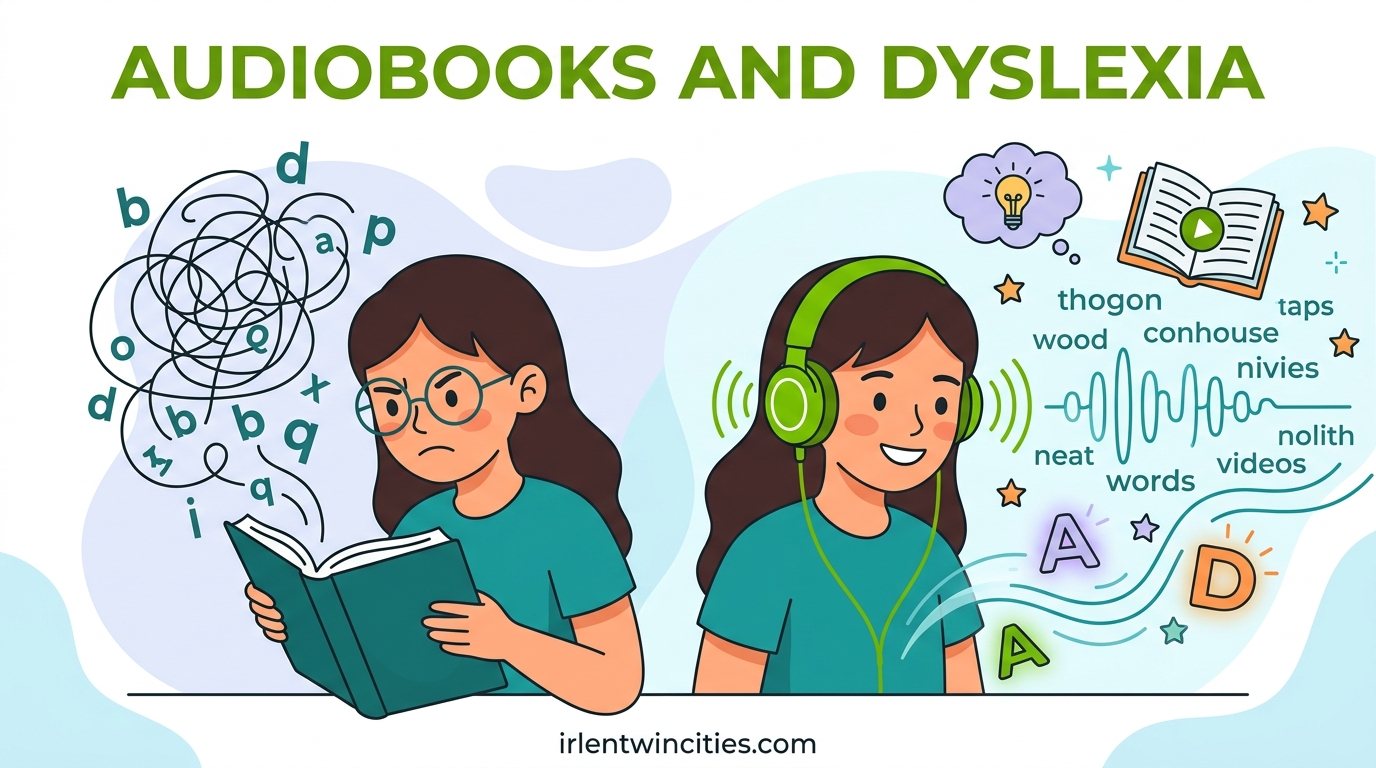
Audiobooks and dyslexia: do they count as reading? The answer is an emphatic yes. Audiobooks absolutely count as reading because they provide access to the same language comprehension, vocabulary development, and knowledge acquisition that visual reading offers.
The confusion often stems from a misunderstanding about what reading actually involves. Many people equate reading with decoding, the ability to translate written symbols into sounds. But decoding is merely the doorway to reading, not the destination. The true purpose of reading is comprehension, and comprehension works beautifully through listening.
At our center, we work daily with individuals who have spent years believing they were not readers because traditional text was difficult for them. Then they discover audiobooks, and everything changes. They find they can enjoy complex literature, keep up with academic content, and experience the pleasure of stories without the exhaustion of laborious decoding. That is real reading, and it matters deeply.
Table of Contents
What “Reading” Really Means: Decoding vs. Comprehension
Reading involves two separate but related processes: decoding and language comprehension. Understanding this distinction is essential for answering whether audiobooks count as reading.
Decoding is the mechanical process of translating written words into spoken language. It requires phonological processing, recognizing letter patterns, and applying phonics rules. This is the component that individuals with dyslexia struggle with most. Decoding demands significant cognitive effort for those with reading disabilities, often leaving little mental energy for actual understanding.
Language comprehension is the ability to understand spoken or written language. It involves vocabulary knowledge, grasping sentence structure, making inferences, and connecting ideas. This is where the real work of reading happens. Comprehension is what allows us to learn from text, enjoy narratives, and engage with ideas.
When you listen to an audiobook, you bypass the decoding barrier entirely. Your brain receives language directly through your ears, activating the same comprehension networks that visual reading engages. The meaning-making process is identical whether the words enter through your eyes or your ears. For someone with strong receptive language skills but weak decoding ability, audiobooks provide full access to the comprehension benefits of reading.
Think of it this way: decoding is a delivery method, not the package itself. Whether a book arrives by truck, train, or airplane, the contents remain the same. Audiobooks simply use a different delivery system that works better for certain learners.
The Science Behind Audiobooks and Dyslexia
Brain research consistently supports what many dyslexic readers have known intuitively: listening to books activates the same language comprehension networks as visual reading. The University of Michigan’s Dyslexia Help center emphasizes that once decoding skills are established, listening to text becomes functionally equivalent to reading it for comprehension purposes.
Neuroimaging studies reveal that both reading and listening engage overlapping brain regions responsible for language processing. The temporal lobes, which handle semantic processing and language comprehension, light up similarly whether someone is decoding text or listening to narration. The primary difference lies in the early sensory processing stages, not in the deeper comprehension networks.
Research on the Matthew Effect in reading development provides another compelling reason to embrace audiobooks for struggling readers. The Matthew Effect describes how good readers tend to get better because they read more, while struggling readers tend to fall further behind because they avoid reading. For individuals with dyslexia, the mechanical difficulty of decoding creates a barrier that prevents them from accumulating the reading practice needed to build vocabulary and background knowledge.
Audiobooks break this cycle. They allow struggling readers to consume age-appropriate content at grade level, accumulating the same vocabulary and knowledge as their peers. This prevents the widening achievement gap that often accompanies dyslexia. The cognitive load of decoding is removed, freeing mental resources for comprehension, enjoyment, and learning.
Recent studies on neural pathways have also demonstrated that listening comprehension supports reading comprehension development. The language structures, vocabulary, and syntactic patterns that listeners absorb transfer to improved reading ability. Audiobooks are not a shortcut that bypasses learning; they are a bridge that supports it.
Benefits of Audiobooks for Dyslexic Learners
Audiobooks provide specific, measurable benefits for individuals with dyslexia and other reading disabilities. These advantages extend far beyond simple convenience.
Access to Grade-Level Content
One of the most significant challenges for students with dyslexia is the mismatch between their intellectual ability and their reading level. A bright twelve-year-old with dyslexia might read at a third-grade level while comprehending material at or above grade level when listening. Audiobooks eliminate this gap, allowing learners to access content that matches their cognitive development rather than their decoding skills.
Vocabulary Development
Research consistently shows that most vocabulary is acquired through exposure to language in context, not through direct instruction. Students learn words by encountering them repeatedly in meaningful contexts. Audiobooks provide this exposure, allowing listeners to acquire sophisticated vocabulary through context clues, just as traditional readers do. Hearing words pronounced correctly also supports phonological awareness and spelling development.
Building Background Knowledge
Background knowledge is one of the strongest predictors of reading comprehension success. Students who know more about a topic understand texts about that topic better. Audiobooks allow dyslexic learners to build the same knowledge base as their peers, ensuring they do not fall behind in content areas while working on reading skills.
Reading Enjoyment and Motivation
Perhaps most importantly, audiobooks restore the pleasure of reading. Forum discussions reveal a common theme among adults with dyslexia: “I always liked stories, but I hated reading because I am dyslexic.” The exhaustion and frustration of laborious decoding often kill the joy of books. Audiobooks remove that barrier, allowing individuals to experience the flow state that engaged readers enjoy.
We have heard countless stories from parents describing how their children’s confidence transformed once they discovered audiobooks. One parent shared that her son completed over fifty books in a year using audiobooks, after previously refusing to read anything longer than a picture book. That confidence carries over into other academic areas and into life beyond school.
What Audiobooks Do Not Replace
While audiobooks absolutely count as reading for comprehension purposes, they do not replace the need for explicit reading instruction. This distinction matters, especially for parents and educators making decisions about support strategies.
Audiobooks do not teach decoding skills. They do not build phonological awareness, strengthen letter-sound relationships, or develop the neural pathways needed for fluent word recognition. For students with dyslexia, explicit, structured literacy instruction remains essential. Programs based on Orton-Gillingham methodology, the Wilson Reading System, or other evidence-based approaches are necessary for developing the mechanical reading skills that will serve learners throughout life.
The goal is a balanced approach. Audiobooks provide access to content, enjoyment, and knowledge while structured literacy instruction builds the underlying skills. Neither replaces the other. Both are necessary components of a comprehensive literacy plan for someone with dyslexia.
Many successful adults with dyslexia describe using this dual approach throughout their education. They used audiobooks to keep up with academic content while simultaneously receiving specialized reading instruction. As their decoding skills improved over time, they could gradually transition to more traditional reading. Some continue to use audiobooks for pleasure or efficiency even after developing solid reading skills.
Practical Tips for Using Audiobooks Effectively
Making the most of audiobooks involves more than simply pressing play. These strategies help maximize the benefits while supporting overall literacy development.
Follow Along When Possible
When learners have access to both the audio and print versions of a text, following along can provide additional support. Seeing words while hearing them builds connections between spoken and written language. Many apps and devices support this dual-format approach, highlighting text as it is read aloud. This multisensory approach reinforces decoding skills while ensuring comprehension.
Choose the Right Platforms
Several services specifically serve learners with reading disabilities. Learning Ally provides human-narrated audiobooks designed for students with dyslexia, learning disabilities, and visual impairments. Bookshare offers accessible ebooks with text-to-speech capability for qualified students. Audible provides a vast commercial library suitable for older students and adults. School libraries and public libraries increasingly offer audiobook lending through apps like Libby and OverDrive.
Consider Age and Development
For young children with dyslexia, audiobooks paired with picture books can build foundational literacy concepts. Elementary students benefit from audiobooks for both pleasure reading and content-area learning. High school and college students rely heavily on audiobooks to manage the volume of academic reading required. Adults with dyslexia often describe audiobooks as life-changing, enabling them to pursue careers and interests that require extensive reading.
Address the Stigma
Many people with dyslexia report feeling embarrassed about using audiobooks, as if they are cheating or taking shortcuts. This stigma is misplaced and harmful. Accommodations exist to provide equal access, not unfair advantage. Learning to advocate for audiobook use and to explain their legitimacy to teachers, employers, and family members is an important skill. Remember that many successful professionals, including authors, lawyers, and executives with dyslexia, rely on audiobooks daily.
Combine with Active Reading Strategies
Even when listening, active engagement improves comprehension and retention. Pause to predict what will happen next. Visualize scenes and characters. Ask questions about the content. Discuss books with others. These strategies transform passive listening into active reading, ensuring deep engagement with the material.
FAQ
Is reading an audiobook considered reading?
Yes, audiobooks are absolutely considered reading. Research shows that listening to books activates the same language comprehension networks in the brain as visual reading. For individuals with dyslexia, audiobooks provide equal access to content, vocabulary, and knowledge. The goal of reading is comprehension, and audiobooks deliver comprehension effectively.
Do people with dyslexia prefer audiobooks?
Many people with dyslexia strongly prefer audiobooks because they remove the exhausting barrier of decoding. After years of struggling with laborious reading, discovering audiobooks often feels like a revelation. Users report finally enjoying books, completing more titles, and experiencing the pleasure of stories without frustration. Preferences vary, but audiobooks are a preferred accommodation for many.
Do audiobooks have the same benefits as reading?
Audiobooks provide the same comprehension, vocabulary, and knowledge benefits as visual reading. Brain research confirms that listening activates identical language processing networks. The primary difference is that audiobooks do not build decoding skills. For a balanced approach, combine audiobooks for content access with structured literacy instruction for skill development.
Will audiobooks help improve my reading skills?
Audiobooks support reading development indirectly by building vocabulary, background knowledge, and language comprehension. These elements transfer to improved reading ability. However, audiobooks alone do not teach decoding skills. Combine audiobook use with explicit phonics and structured literacy instruction for comprehensive reading improvement.
Do audiobooks count as reading for kids?
Yes, audiobooks count as reading for children, including those with dyslexia and other learning differences. They provide age-appropriate content access while students develop decoding skills. Many schools recognize audiobooks as valid accommodations in IEP and 504 plans. The comprehension and vocabulary benefits are identical to visual reading.
Final Thoughts
Audiobooks and dyslexia: do they count as reading? The evidence, the research, and the lived experiences of millions of readers all answer the same way. Yes, they count. They count as reading, as learning, and as a pathway to the joy that books bring.
If you or someone you love has dyslexia, embrace audiobooks without guilt or hesitation. They are not a shortcut or a cheat. They are a legitimate accommodation that provides equal access to the world of literature and knowledge. Combine them with structured literacy instruction, advocate for their acceptance, and read proudly with your ears.