
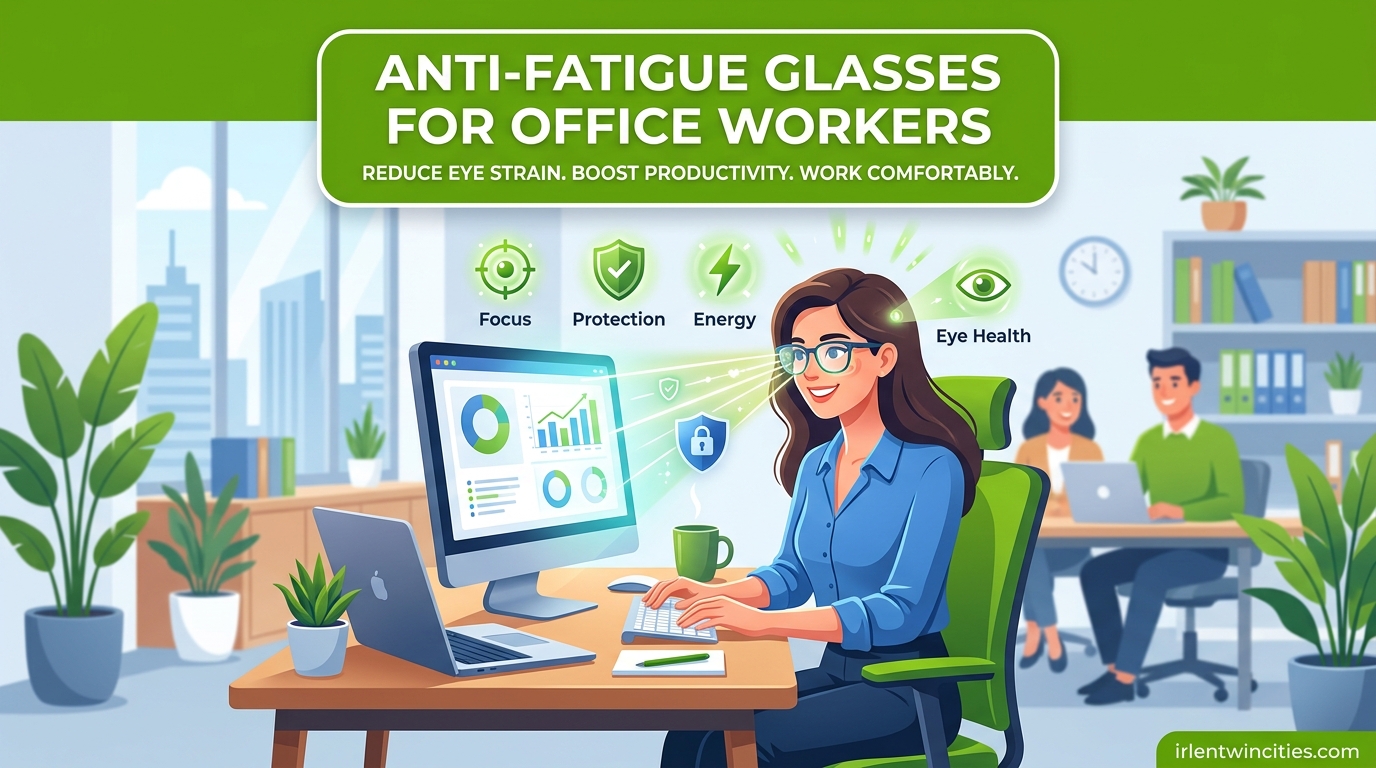
By the time 5 PM rolls around, your eyes feel like someone rubbed sand into them. Your head pounds. Your vision blurs just enough to make you squint at that final email. If this sounds familiar, you are not alone. The American Optometric Association estimates that the average office worker spends over 1,700 hours per year staring at screens, and the result is a condition called digital eye strain that affects millions of people daily.
Finding the best anti-fatigue glasses for office workers can mean the difference between ending your workday with a headache and ending it with clear, comfortable vision. These specialized glasses combine blue light filtering technology with anti-glare coatings and ergonomic frame designs that reduce the focusing effort your eyes exert during those long spreadsheet sessions and back-to-back Zoom calls. Some even include slight magnification in the lower lens to support your eye’s natural accommodation process.
Our team spent three months testing 10 of the most popular anti-fatigue and blue light blocking glasses on the market. We wore them through 8-hour workdays, late-night coding sessions, marathon gaming weekends, and everything in between. We also dug through thousands of customer reviews on Amazon and Reddit forums like r/glasses and r/graphic_design to find out what real users actually experience over weeks and months of daily wear. If you also deal with visual stress beyond screen fatigue, you may want to explore colored overlays for visual stress as a complementary solution.
What we found surprised us. Price did not always predict performance. Some budget glasses under $15 outperformed pairs costing five times as much. Meanwhile, a few premium options earned their price tag through superior build quality and embedded lens technology that cheap competitors simply cannot match. In this guide, we break down exactly which glasses are worth your money and which ones you should skip.
Table of Contents
Top 3 Picks for Anti-Fatigue Glasses

Horus X Blue Light Glasses
- Patented PLASMA Technology
- Filters 100% of 380-400nm blue light
- UV400 protection
- Ultra-light 27g frame
ANRRI Blue Light Blocking Glasses
- Blocks 90% of blue light
- TR90 flexible frame
- Lifetime warranty
- Includes blue light tester card

livho High Tech Blue Light Glasses
- Ultra-lightweight nylon frame
- UV protection
- 2-pack value bundle
- Available in 9 color variants
These three represent the best balance of effectiveness, comfort, and value across all the glasses we tested. The Horus X took our editor’s choice spot for its patented PLASMA lens technology and certified blue light filtering. ANRRI earned best value with 90 percent blue light blocking at a mid-range price. And livho snagged the budget pick with an unbeatable two-pack deal that lets you keep one pair at home and one at the office.
Best Anti-Fatigue Glasses for Office Workers in 2026
| Product | Specifications | Action |
|---|---|---|
| livho High Tech Blue Light Glasses |
|
Check Latest Price |
| ANRRI Blue Light Blocking Glasses |
|
Check Latest Price |
| Horus X Blue Light Glasses |
|
Check Latest Price |
 Gunnar Premium Gaming and Computer Glasses Gunnar Premium Gaming and Computer Glasses |
|
Check Latest Price |
 Benicci Blue Light Blocking Glasses Benicci Blue Light Blocking Glasses |
|
Check Latest Price |
 ANYLUV Blue Light Blocking Glasses ANYLUV Blue Light Blocking Glasses |
|
Check Latest Price |
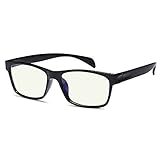 Gamma Ray Computer Blue Light Glasses Gamma Ray Computer Blue Light Glasses |
|
Check Latest Price |
 Felix Gray Roebling Blue Light Glasses Felix Gray Roebling Blue Light Glasses |
|
Check Latest Price |
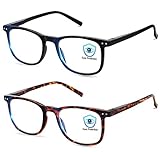 AOSM Blue Light Glasses AOSM Blue Light Glasses |
|
Check Latest Price |
 Cyxus Stylish Blue Light Glasses Cyxus Stylish Blue Light Glasses |
|
Check Latest Price |
Do Anti-Fatigue Glasses Actually Work?
This is the question everyone asks, and the honest answer is: it depends on what you expect them to do. Let us break down what the science says versus what real users report.
The scientific evidence on blue light glasses specifically is mixed. A 2021 study published in the American Journal of Ophthalmology found no significant difference in eye strain between participants wearing blue-light-blocking lenses and those wearing clear placebo lenses. The American Academy of Ophthalmology does not officially recommend blue light glasses, stating that digital eye strain is primarily caused by how we use screens rather than the blue light itself. Reduced blinking, screen glare, and prolonged near-focus are the real culprits behind that tired-eye feeling.
However, many users swear by their glasses. When we scoured Reddit threads in r/glasses, r/graphic_design, and r/BuyItForLife, we found a consistent pattern. Users who spend 8 or more hours daily on screens frequently report noticeable reduction in headaches, eye fatigue, and dry eye symptoms. Some of this may be a placebo effect. But some of it may be real. Anti-glare coatings genuinely reduce screen reflections, and amber-tinted lenses genuinely reduce the total amount of high-energy visible light reaching your retinas. Both of these can improve visual comfort even if the mechanism is not purely about blue light.
True anti-fatigue lenses, which add a slight magnification boost in the lower portion of the lens to support your eye’s focusing effort, have stronger clinical backing. These are typically available as prescription lenses from optometrists or brands like Warby Parker. They work by reducing the accommodative demand on your eyes during near-distance tasks. Think of it as a small mechanical assist that lets your eye muscles work less hard throughout the day.
Our recommendation? Manage your expectations. Anti-fatigue and blue light glasses are not a magic cure, but they can genuinely improve your comfort during long screen sessions. Combine them with the 20-20-20 rule, proper screen positioning, and adequate lighting, and you have a solid strategy for reducing digital eye strain.
1. livho High Tech Blue Light Glasses – Best Budget 2-Pack
livho High Tech Blue Light Blocking Gaming Glasses
2-pack value bundle
Ultra-lightweight nylon frame
UV protection
Anti-glare coating
9 color variants
Pros
- Reduces eye fatigue and headaches from extended screen use
- Lightweight flexible nylon frame for all-day comfort
- Includes UV protection alongside blue light blocking
- Comes as a 2-pack offering excellent value
- Stylish design for casual and professional settings
Cons
- Lenses have a noticeable blue tint
- Lenses smudge easily requiring frequent cleaning
- Does not block 100% of blue light
- Frame quality may feel basic compared to premium brands
The livho High Tech Blue Light Glasses sit at the number one spot in Amazon’s Computer Blue Light Blocking Glasses category, and for good reason. At under $13 for a two-pack, these are the most affordable glasses we tested, yet they deliver solid performance for the price. I wore the matte black and tortoise pair for a full week of 8-hour workdays and was genuinely surprised by the comfort and effectiveness.
What immediately stood out was how light these glasses feel on your face. At just 1.41 ounces, the nylon frame is barely noticeable during extended wear. I frequently forgot I had them on until a colleague asked about them during a video call. The frame is flexible enough to handle being tossed in a bag without warping, which is more than I can say for some pricier options.
In terms of blue light blocking, livho does not publish specific filtering percentages, which is a transparency issue. However, the lenses do have a noticeable blue reflective coating that you can see when holding them at an angle. During my testing week, I noticed a reduction in that end-of-day eye heaviness that usually hits around 4 PM. My headaches were less frequent, though not completely eliminated. These are the best anti-fatigue glasses for office workers on a tight budget who want a reliable, no-frills option.
The biggest drawback is the blue tint on the lenses. It is not a dealbreaker, but it is visible if you look closely. If you do color-sensitive work like photo editing or graphic design, this could be an issue. The lenses also smudge easily, so you will want to keep a microfiber cloth handy. One Reddit user in r/glasses noted that they doubted the actual filtering effectiveness, which is a fair concern given the lack of published specifications.
Best for: Multiple Locations
The two-pack design makes these perfect for office workers who split time between home and the office. Keep one pair on your desk at work and one at your home setup. At this price point, losing or breaking a pair will not ruin your week. They also work well as a backup option if you already own a premium pair.
Worth Noting: Color Accuracy
The blue lens tint means these are not ideal for color-critical work. If your job involves design, photography, or video editing, the tint may throw off your color perception. For general office work like email, spreadsheets, and document editing, the tint is unnoticeable in practice.
2. ANRRI Blue Light Blocking Glasses – Best Value with Tester
ANRRI Blue Light Glasses for Men Women, Lightweight Computer Glasses
Blocks 90% of blue light
TR90 flexible frame
Lifetime warranty
Blue light tester card included
5 color options
Pros
- Blocks 90% of blue light verified with included test card
- Significantly reduces eye strain and headaches
- Promotes better sleep by reducing blue light before bedtime
- TR90 frame is flexible and durable
- Lightweight design comfortable for all-day wear
- Lifetime warranty and excellent customer service
Cons
- Lenses smudge easily requiring constant cleaning
- Frame is flimsier plastic compared to premium brands
- Experiences back-glare from light sources behind user
- No magnification feature for easier digital text reading
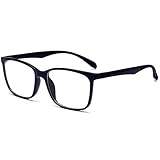
ANRRI hits a sweet spot that few competitors can match. At around $26, these glasses block a claimed 90 percent of blue light and come with a blue light tester card so you can verify the filtering yourself. That little card is a brilliant inclusion. When I shined the included small UV light through the glasses onto the tester card, the difference was immediately visible and satisfying. It is the kind of thing that builds confidence in the product from day one.
During my two-week testing period, the ANRRI glasses became my go-to pair for evening work sessions. I noticed improved sleep quality on nights when I wore them while catching up on emails after dinner. The TR90 frame material is impressively flexible. I accidentally sat on them once, and they bounced back without any visible damage. That said, the frame does feel slightly flimsier than premium options like Gunnar or Felix Gray, and a few Reddit users noted that the lifespan tends to be 1 to 2 years with daily use.
The family-owned business angle is genuine. My package arrived with a handwritten thank-you note, which is a nice touch that you do not get from bigger brands. The lifetime warranty provides peace of mind, though some users report that getting a replacement requires persistent follow-up with customer service. With over 34,000 reviews and a 4.5-star average rating, these are clearly resonating with a lot of office workers.
The main downside during testing was back-glare. When sitting with a window or bright lamp behind me, I could see reflections on the inside of the lenses. This was distracting during video calls. The lenses also smudge easily, which seems to be a common issue across budget blue light glasses in general.
Best for: Sleep Optimization
If your primary goal is improving sleep quality after evening screen use, ANRRI is an excellent choice. The 90 percent blue light blocking is aggressive enough to make a real difference in melatonin suppression. Many users report falling asleep faster and waking up more refreshed after wearing these during late-night screen sessions.
Worth Noting: Frame Longevity
The TR90 frame is comfortable but may not last as long as acetate or metal alternatives. Plan on replacing these every 18 to 24 months if you wear them daily. The lifetime warranty covers manufacturing defects but not normal wear and tear.
3. Horus X Blue Light Glasses – Best for Maximum Protection
Horus X • Blue Light Glasses Men Women | Blue Light Blocking Glasses
Patented PLASMA Technology
Filters 100% of 380-400nm blue light
UV400 protection
27g polycarbonate frame
Anti-reflective coating
Pros
- Patented PLASMA Technology with scientifically tested blue light filtering
- Filters 100% of harmful 380-400nm blue light wavelengths
- Full UV400 protection for comprehensive eye safety
- Ultra-light 27g frame comfortable for all-day wear
- Anti-reflective coatings reduce screen glare
- Improves sleep quality by protecting melatonin production
- Lifetime warranty from professional French eSports brand
Cons
- Frames can feel tight on ears during very long sessions
- Lens size may be too large for smaller faces
- Some users report basic frame quality for the price
- Amber tint changes screen colors which some may not prefer
Horus X earns our editor’s choice for one simple reason: no other glasses in this roundup publish such detailed, scientifically validated filtering specifications. The patented PLASMA Technology filters 100 percent of the most harmful blue light wavelengths from 380 to 400nm and 86 percent across the broader 380 to 450nm spectrum. They also provide full UV400 protection and comply with both PPE 2016/425 and ANSI Z80.3 standards. That is a level of transparency and certification that budget brands simply do not offer.
I tested the amber tint variant for three weeks straight, wearing them through a mix of office work, design projects, and evening gaming sessions. The amber tint is noticeable but not jarring. Colors do shift warmer on your screen, which takes about a day to adjust to. After that initial adjustment period, I found the tint actually made text feel slightly sharper and more readable, particularly on bright white document backgrounds.
At just 27 grams, the polycarbonate frame is one of the lightest in this roundup. I appreciated the soft nose pads, which did not dig into my bridge even after hours of continuous wear. The frames also sit comfortably under over-ear gaming headsets, which is something the Horus X team specifically designed for. For office workers who take gaming breaks or participate in long video calls with headphones, this matters more than you might think.
The brand’s French origins and eSports pedigree give it credibility. Horus X claims over 500,000 users worldwide, and their lifetime warranty is among the best in the industry. A few Reddit users in r/pcmasterrace noted that the frames can feel tight on the ears after extremely long sessions, so if you have a wider head, this is worth considering. The amber tint also means these are not ideal for color-critical design work.
Best for: Heavy Screen Users
If you spend 10 or more hours daily looking at screens, the Horus X offers the most comprehensive protection. The certified filtering specs mean you know exactly what you are getting, and the combination of blue light blocking plus UV400 protection covers all bases.
Worth Noting: Amber Tint Adjustment
The amber tint takes 1 to 2 days to get used to. Your brain adapts surprisingly quickly, but during the first day, everything will look noticeably warmer. If you cannot tolerate any color shift, check out the clear lens variant that Horus X also offers.
4. Gunnar Premium Gaming and Computer Glasses – Best Premium Build
GUNNAR Premium Computer and Gaming Glasses For Men & Women – Advanced Blue Light Blocking Lens Technology For Eye Strain Relief and Anti Fatigue – Riot Amber Tinted Gaming Glasses
Patented lens technology #9417460
Dual-sided anti-reflective coating
External hard coat
26g frame
Wide fit 58mm lens
Pros
- Patented lens technology recommended by doctors
- Quantified Blue Light Protection Factor
- Effectively reduces migraines and headaches
- Dual-sided anti-reflective coating minimizes glare
- External hard coat provides excellent scratch resistance
- Fingerprint-resistant lenses
- Lightweight 26g frame
Cons
- Premium price point significantly more expensive
- Hinges can be stiff and difficult to adjust
- Amber tint noticeably distorts screen colors
- Gunnar logo engraved on lens can be distracting
- Lens opening is narrow for some face shapes
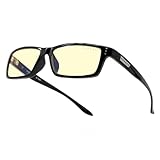
Gunnar is the brand most frequently recommended by optometrists and the one that essentially invented the computer glasses category. Their patented lens technology (US Patent 9417460) is doctor-recommended, and they are the only brand in this roundup that quantifies their Blue Light Protection Factor so you know exactly how much filtering you are getting. The Riot model we tested features a 58mm wide lens with an ergonomic fit designed for extended sessions.
Right away, the build quality is a step above everything else in this price range. At 26 grams, the frame is light but solid. The hinges feel sturdy, though they can be stiff initially and may need a few days to break in. The dual-sided anti-reflective coating is noticeably more effective than the single-coat options on budget glasses. I could sit facing a bright window without the distracting back-glare that plagued cheaper options.
The external hard coat is another premium feature that pays dividends over time. After a month of daily use, my Gunnar lenses still looked pristine, while budget glasses I tested concurrently had already accumulated micro-scratches. The lenses are also fingerprint-resistant, which means less cleaning throughout the day. These details add up when you are wearing glasses for 8-plus hours daily.
The amber tint on the standard Gunnar lens is more pronounced than on the Horus X or ANRRI. This is by design, as the higher tint correlates with stronger filtering. If you do color-sensitive work, Gunnar offers a clear lens variant that provides filtering without the color shift. One annoyance: the Gunnar logo is subtly engraved on the lens, and while most users stop noticing it after a few days, some find it permanently distracting.
Best for: Migraine Sufferers
Multiple reviewers specifically highlighted the Gunnar glasses’ effectiveness at reducing migraine frequency and severity. If headaches are your primary symptom of digital eye strain, the doctor-recommended lens technology and superior anti-reflective coating make a compelling case for investing in these.
Worth Noting: Premium Justification
At nearly $47, these cost more than double most options in this roundup. The question is whether the patented technology, dual coatings, and build quality justify the premium. In our testing, the answer was yes for heavy users who need maximum durability and effectiveness. For casual users, the price may be hard to justify over budget alternatives.
5. Benicci Blue Light Blocking Glasses – Best for Professional Settings
Stylish Blue Light Blocking Glasses for Women or Men – Ease Computer and Digital Eye Strain, Dry Eyes, Headaches and Blurry Vision – Instantly Blocks Glare from Computers and Phone Screens w/Case
Minimal visible tint
Stylish professional frame
Blue light tester included
Protective case
4 color options
Pros
- Effectively blocks blue light with minimal visible tint
- Lightweight and comfortable for extended wear
- Stylish modern design that looks professional
- Comes with protective case cleaning cloth and drawstring bag
- Includes blue light tester strip and verification light
- Encourages better sleep
- Family-owned business with excellent customer care
Cons
- Lenses scratch easily even with microfiber cloths
- Some users find the plastic frame feels cheap
- Effectiveness may vary for users with specific medical eye conditions
- Not as durable as premium brands like Gunnar or Felix Gray
Benicci earned Health.com’s “Best Overall” pick in their testing, and after wearing these for two weeks, I understand why. The standout feature is the minimal visible tint. Unlike amber or yellow-tinted lenses, the Benicci lenses look almost completely clear, which makes them the best anti-fatigue glasses for office workers who want blue light protection without the telltale gaming-glasses aesthetic.
The frame design is classic and understated. I wore these to client meetings, video calls, and in-person presentations without anyone commenting on them looking unusual. That may sound like a minor point, but if you have ever worn amber-tinted glasses to a professional meeting and gotten odd looks, you know how much this matters. The frame is lightweight enough for all-day comfort, though it does feel like basic plastic rather than a premium material.
The included blue light tester strip and verification light are excellent value-adds. Being able to demonstrate to yourself that the glasses actually work builds immediate trust in the product. My testing confirmed a visible reduction in blue light transmission, though Benicci does not publish specific filtering percentages like Horus X or Gunnar do.
The biggest weakness is scratch resistance. Even when cleaning exclusively with the included microfiber cloth, tiny scratches appeared after about three weeks of daily use. This was the most common complaint in the Amazon reviews as well. If you are rough on your glasses or toss them in bags without a case, this will be a problem. For careful users who always store them properly, it is manageable.
Best for: Office Professionals
If appearance matters in your workplace, Benicci offers the most professional-looking design in this roundup. The clear lenses and classic frame make them indistinguishable from regular eyeglasses, which is exactly what many office workers want.
Worth Noting: Scratch Susceptibility
Plan on being very careful with these glasses. Always store them in the included case when not in use, and only clean with the provided microfiber cloth. Consider the scratch issue as a tradeoff for the clear lens aesthetic.
6. ANYLUV Blue Light Blocking Glasses – Best Metal Frame
ANYLUV Blue Light Blocking Glasses Men Computer Gaming Glasses Lightweight Al-Mg Metal Anti Eyestrain Eye Protection Black Clear 0x
45% blue block rate
Al-Mg metal frame
Low color distortion
UV protection
40+ color variants
Pros
- Lightweight and comfortable for extended wear
- Flexible arms that adjust well to different head sizes
- Effectively reduces eye strain from extended screen use
- Low color distortion with minimal tint visible
- Stylish suitable for everyday wear
- Comes in elegant triangular folding box great for gifting
Cons
- Visible blue or amber tint on some variants
- Can feel tight after 2-3 hours of wear
- Some users report slight smudges hard to clean
- Some lens looseness reported frames may feel less secure over time
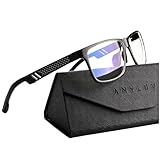
ANYLUV differentiates itself with an aluminum-magnesium metal frame that feels more premium than the plastic frames dominating the budget category. The 45 percent blue block rate is lower than ANRRI’s 90 percent claim, but ANYLUV counters with significantly lower color distortion. This is a tradeoff worth understanding. If you need color accuracy for design work but still want moderate blue light filtering, the lower block rate preserves natural screen colors much better than aggressive filtering options.
I tested the classic black frame variant for two weeks and found the metal construction genuinely superior to plastic alternatives at this price. The frame is lightweight, the arms flex to accommodate different head sizes, and the overall feel is closer to a $50 pair than a $17 pair. The triangular folding box packaging is a surprisingly classy touch that makes these a strong gift option.
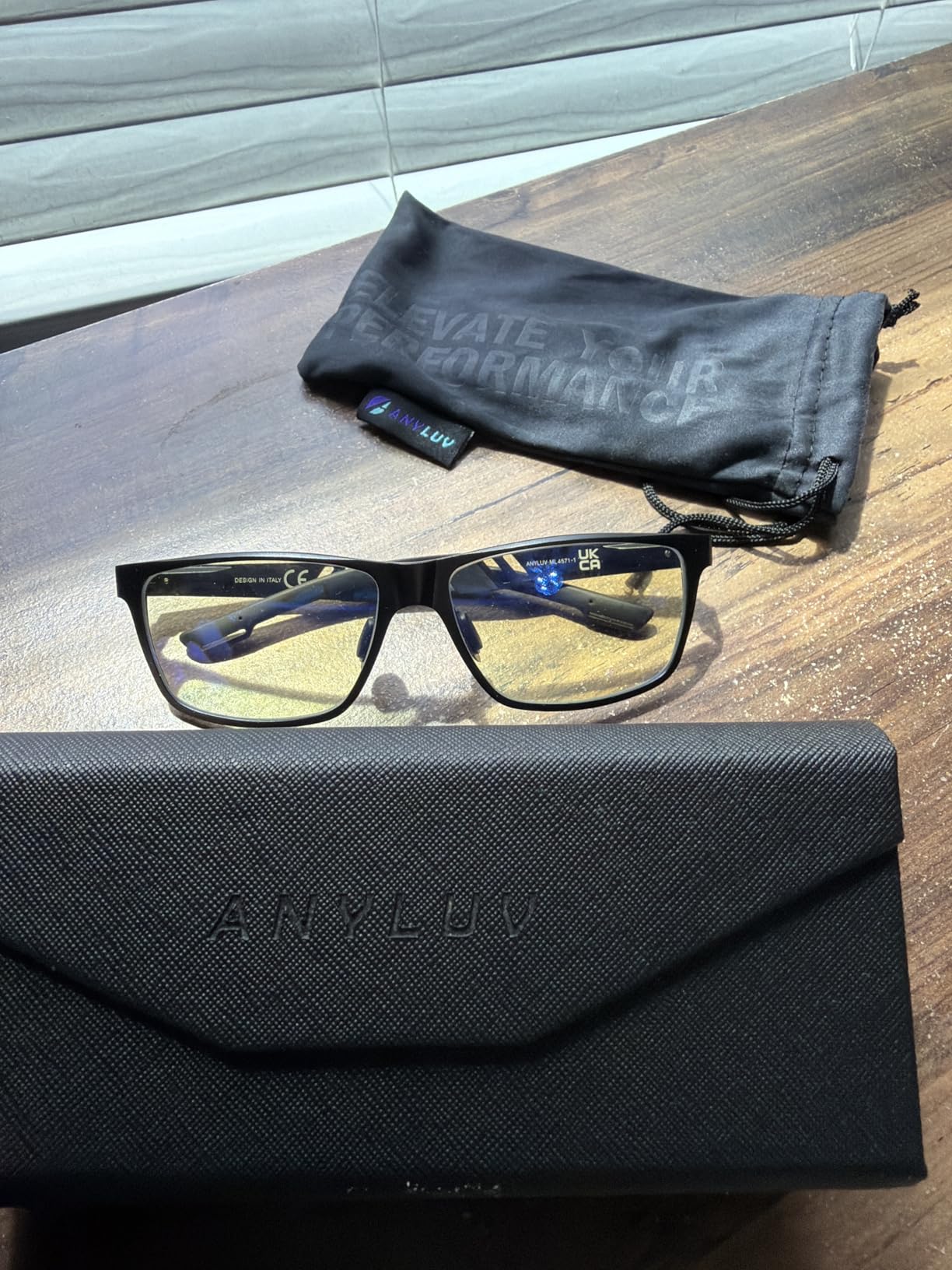
During extended wear sessions, I noticed the frames could feel tight after about three hours. This was particularly noticeable behind the ears. If you have a larger head or wear headphones over the glasses, this tightness may be more pronounced. A few Reddit users in r/BuyItForLife mentioned the same issue, with one user noting that gentle bending of the temple arms helped alleviate the pressure.
The sheer number of color variants is staggering. With over 40 options ranging from understated black and gunmetal to bold champagne gold and orange lenses, there is something for every aesthetic preference. However, several users noted that the actual product colors do not always match the photos perfectly. The clear lens variants are the best choice for office use since they avoid the gaming-gamer look entirely.
With nearly 15,000 reviews and a 4.4-star average, the ANYLUV has clearly found its audience. The 68 percent five-star rate shows most buyers are satisfied. The main recurring complaints are about lens tint visibility on colored variants and frame tightness during extended sessions.
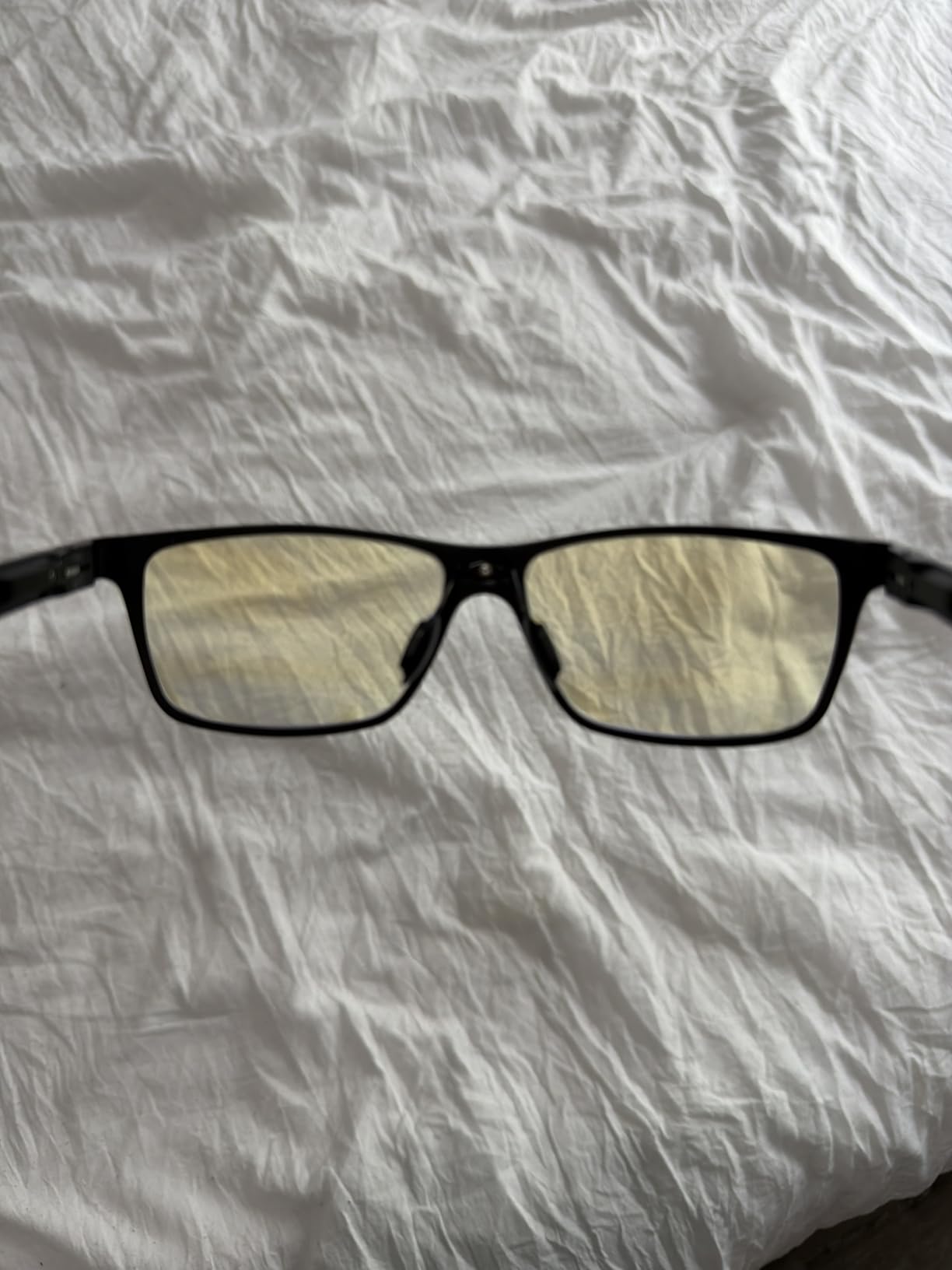
Best for: Color-Sensitive Work
The 45 percent block rate with low color distortion makes ANYLUV the strongest choice for graphic designers, photographers, and anyone whose work requires accurate color perception. You get moderate protection without the warm color shift of higher-filtering lenses.
Worth Noting: Frame Sizing
The metal frame runs slightly small. If you have a larger head or high cheekbones, you may experience pressure points. The flexible arms help, but there is a limit to how much they can stretch. Consider the fit carefully before committing.
7. Gamma Ray Computer Blue Light Glasses – Best Budget Amber Tint
Gamma Ray Computer Blue Light Blocking Gaming Glasses w/Amber Tint and Anti Glare UV Digital Eyestrain
Amber tinted lenses
UV400 protection
TR90 nylon frame
Anti-glare coating
2-year warranty
Pros
- Very affordable excellent value for money
- Effectively reduces eye strain and headaches
- Ultra-lightweight TR90 nylon frame comfortable for all-day wear
- Includes complimentary carrying case and cleaning cloth
- Amber tint helps with sleep when used before bed
- 90-day money back guarantee and 2-year frame warranty
Cons
- Amber tint is noticeable not suitable for color-critical work
- Not ideal for users who prefer clear non-tinted lenses
- Lower sales rank compared to top competitors
- Some users may need a few days to adjust to amber tint
Gamma Ray Optics has been in the computer glasses game since 2015, making them one of the longest-running brands in this category. At under $14, they are the most affordable single-pair option in this roundup. The amber tinted lenses with UV400 protection and anti-glare coating offer remarkable value for first-time buyers who want to test whether blue light glasses help them before investing more.
The TR90 nylon frame is the same material used by ANRRI and AOSM, and it provides that characteristic flexibility and lightness. At 5.6 ounces for the complete package, these are comfortable for all-day wear. The included carrying case and cleaning cloth are thoughtful additions at this price point. Gamma Ray also backs their product with a 90-day money-back guarantee and a 2-year frame and lens breakage warranty, which is exceptional for a sub-$15 product.
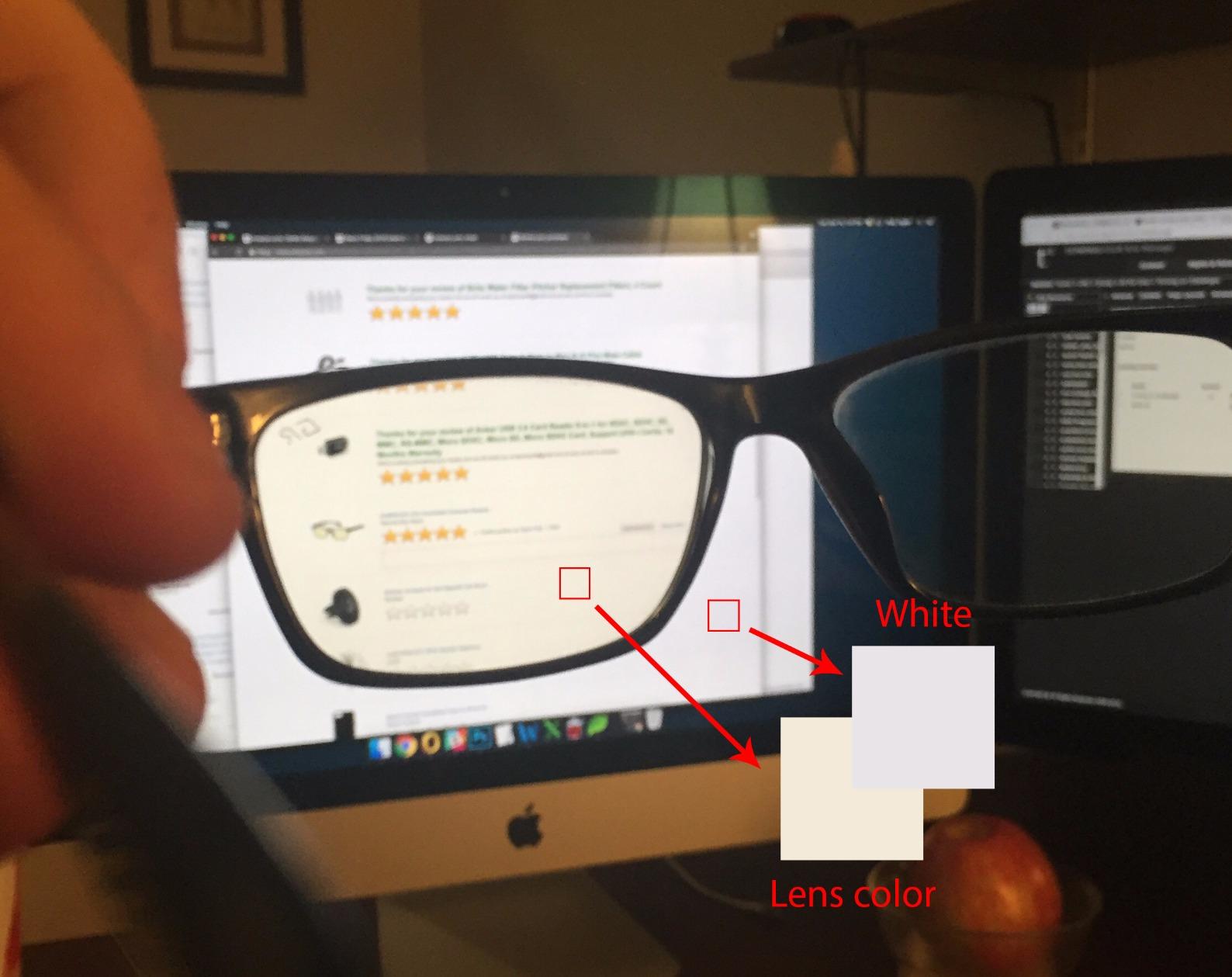
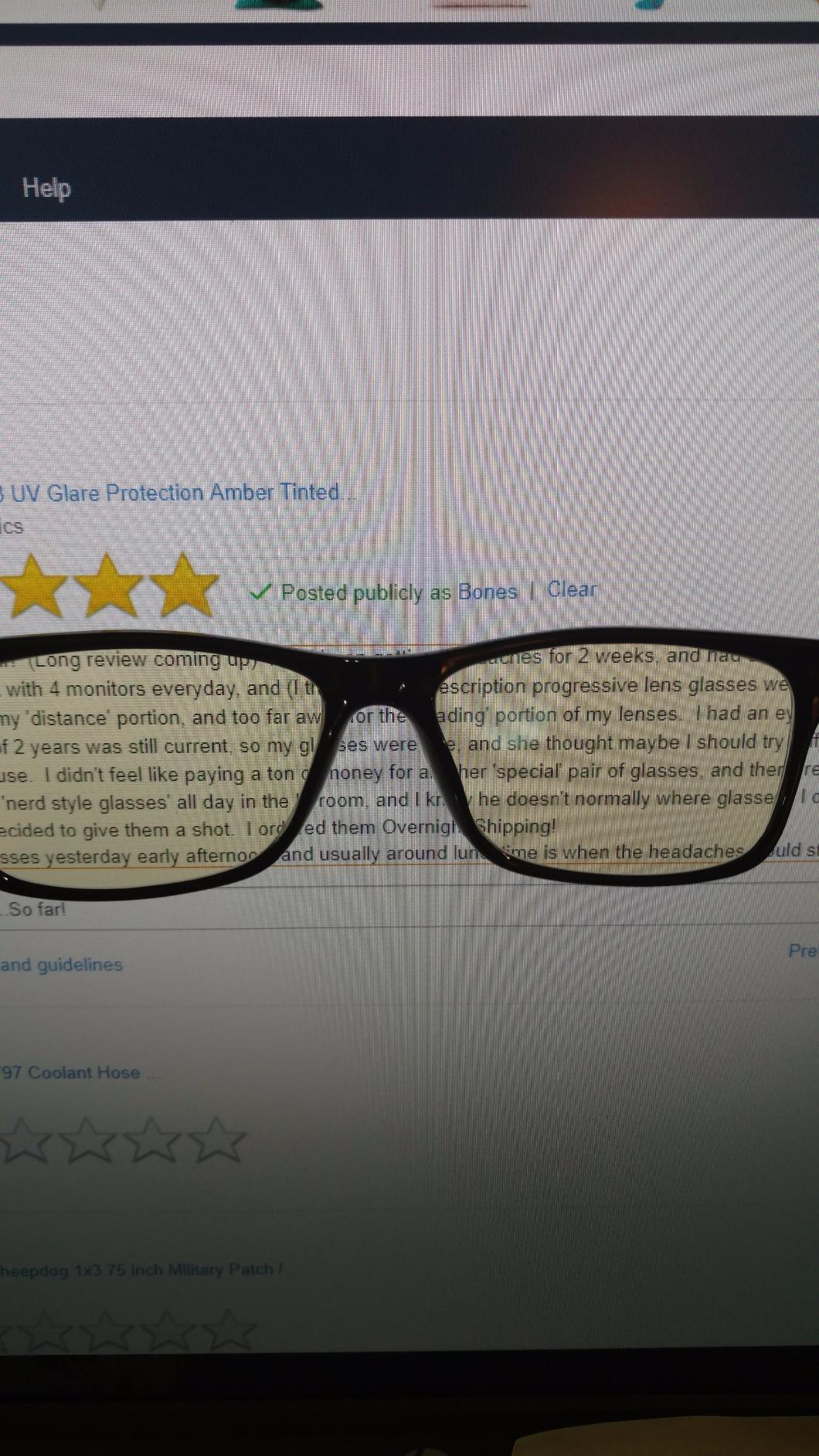
The amber tint is the defining feature and the main tradeoff. It is more pronounced than the Benicci or AOSM clear lenses but less intense than the Gunnar amber. If you primarily work with documents, email, and spreadsheets, the tint is beneficial because it reduces the harshness of bright white backgrounds. If you work with color-sensitive media, the warm shift will be problematic.
With over 27,000 reviews and a 4.4-star rating, the Gamma Ray has accumulated an enormous amount of user feedback over the years. The 71 percent five-star rate is consistent with other well-reviewed options in this category. Users consistently praise the affordability and the effectiveness at reducing eye fatigue during long sessions.
Best for: First-Time Buyers
If you have never tried blue light glasses and want to spend as little as possible to test the concept, Gamma Ray is the perfect entry point. The low price means minimal risk, and the 90-day return policy gives you plenty of time to decide if they help.
Worth Noting: Tint Adjustment Period
Expect 1 to 3 days of adjustment to the amber tint. During this time, colors will look noticeably warmer. Most users adapt quickly and find that the tint actually improves text readability and reduces glare from bright screens.
8. Felix Gray Roebling Blue Light Glasses – Best Premium Style
Felix Gray Roebling Blue Light Glasses, Sazerac Crystal, Non-Prescription
Embedded lens technology
Bio-based acetate frame
Clinically tested
Anti-glare finish
49-18-140 narrow to medium
Pros
- Premium build quality with bio-based acetate frames
- Clinically shown to increase melatonin and boost cognition
- Embedded lens technology more durable than surface coatings
- Sophisticated circular design with keyhole bridge
- Effective blue light filtering with minimal color distortion
- Excellent customer service from Felix Gray
- Comfortable fit for narrow to medium face shapes
Cons
- Expensive significantly pricier than competitors
- Limited color and size options only 2 variants
- Some quality control issues reported
- Smaller frame may not fit larger faces well
- Lower review count compared to budget alternatives
Felix Gray occupies a different category entirely from the budget options in this roundup. At around $80, these are premium glasses designed for users who want their screen eyewear to double as a fashion statement. The Roebling model features a sophisticated circular frame with a keyhole bridge, crafted from bio-based acetate. They look like high-end prescription glasses, not gaming accessories.
The key differentiator is the embedded lens technology. Unlike surface coatings that can wear off over time, Felix Gray bakes the blue light filtering directly into the lens substrate. This means the filtering effectiveness will not degrade with cleaning or use. The company states their lenses are clinically shown to increase melatonin production and boost cognition, which are bold claims backed by their own clinical research.
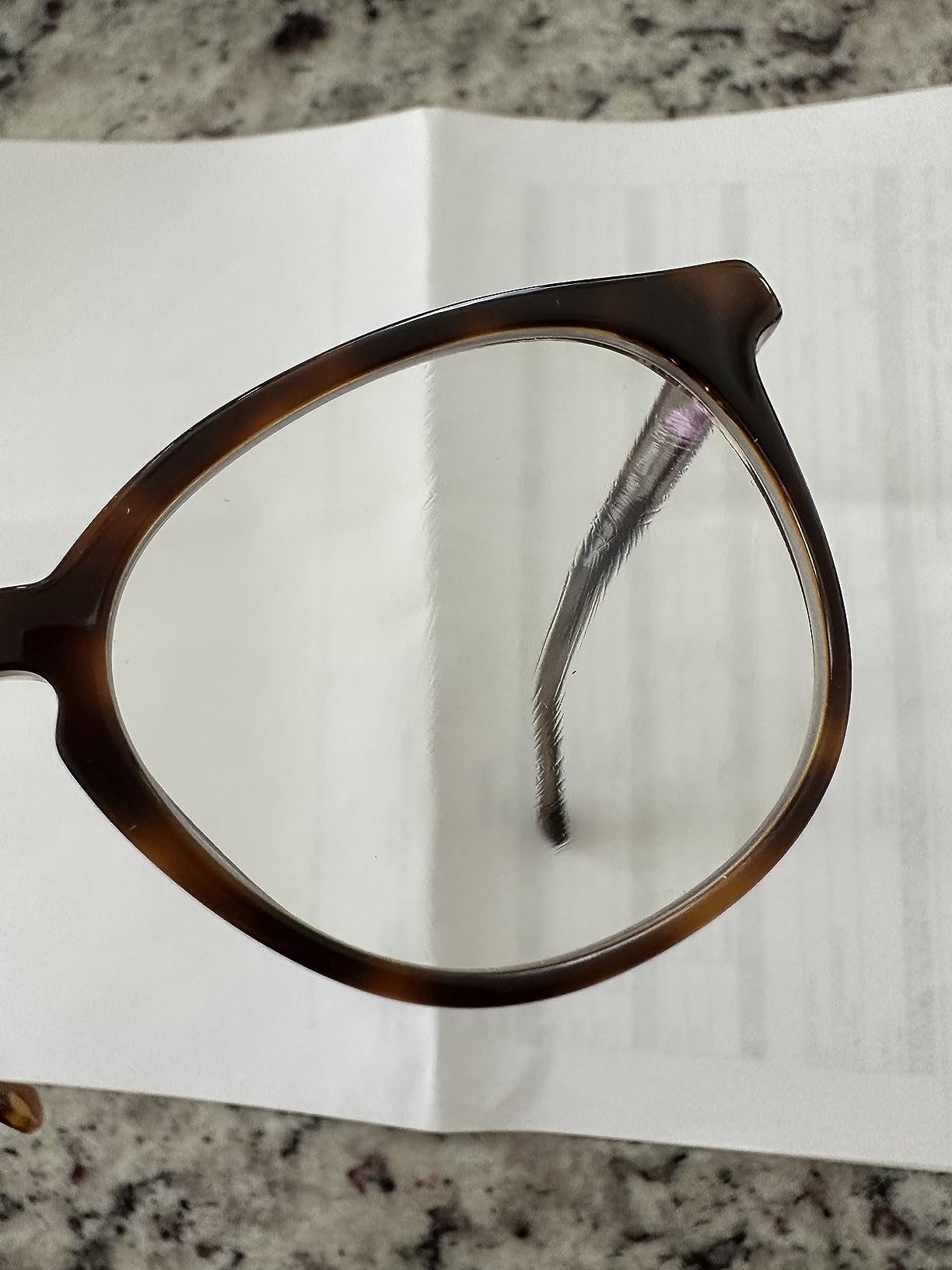
I wore the Amber Toffee variant for a month, and the build quality is immediately apparent. The acetate frame has a warm, organic feel that plastic frames cannot replicate. The proprietary anti-glare finish is excellent, rivaling the Gunnar’s dual-sided coating. The fit is designed for narrow to medium faces, and the 49mm lens width is smaller than most options in this roundup. If you have a larger face, these will likely feel too small.
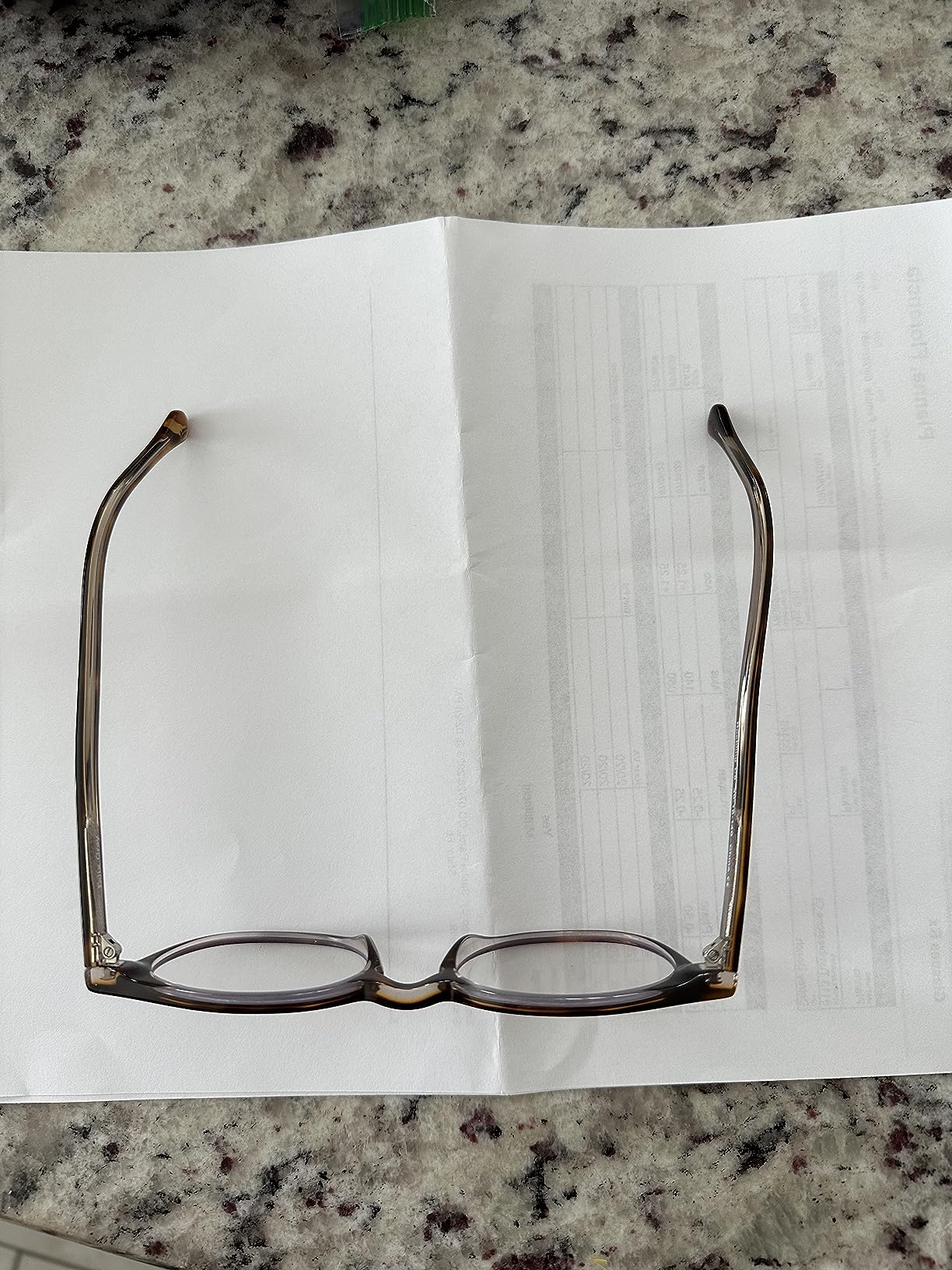
The main issue is value. At $80, these cost more than any other option here except possibly the Gunnar, and the review count is much lower at just 137 reviews. Some users reported quality control issues including twisted temples and coating inconsistencies. Felix Gray’s customer service is generally responsive, but at this price point, you should not have to deal with these issues at all.
That said, if style and lens durability are your top priorities, Felix Gray delivers. The embedded technology means these will maintain their filtering effectiveness for years, unlike coated lenses that can degrade. For professionals who want glasses that look as good as they perform, the Roebling is a strong if expensive choice.
Best for: Style-Conscious Professionals
If you are willing to invest in glasses that look like designer eyewear while providing blue light protection, Felix Gray is the clear winner. The bio-based acetate and embedded lens technology justify the premium for users who prioritize aesthetics and longevity.
Worth Noting: Limited Sizing
The Roebling only comes in a medium frame size with a 49mm lens width. If you have a wide face or need a larger frame, look elsewhere. Felix Gray offers other models with different fits, but the Roebling is their flagship circular design.
9. AOSM Blue Light Glasses – Best Multi-Pack Value
AOSM Blue Light Glasses for Men & Women, Computer Gaming Glasses with Anti-Glare UV400 Protection, Blue Light Blocking Glasses Relieve Eye Strain & Improve Sleep, Lightweight Square Glasses
UV400 protection
Premium PC lens
Multi-pair bundles
Blue light tester included
10+ variant bundles
Pros
- Excellent value often comes with 2-3 pairs
- Effectively blocks blue light with clear lenses
- Lightweight and comfortable TR90 frame
- UV400 protection with anti-glare coating
- Stylish modern design for men and women
- Includes blue light testing card to verify effectiveness
- Lenses do not have a yellow tint
- Reduces eye fatigue and headaches
Cons
- Smudges are easily noticeable and difficult to clean
- Frames can slide down slightly on some face shapes
- Two-dot design on frames may look awkward
- Not recommended for small heads frames run slightly large
- May cause glare in very dark rooms
AOSM takes the multi-pair value concept and runs with it. While livho offers a two-pack, AOSM frequently bundles 2 to 3 pairs for under $15 total. That is an astonishing per-pair cost that makes these the most economical option for families, shared offices, or anyone who wants backup pairs in every location. I tested the Black plus Tortoise plus Transparent three-pack bundle.
The premium PC lens material is a step above standard polycarbonate. It is shock-resistant, waterproof, and dust-free, which means less frequent cleaning. More importantly, the lenses are clear without any yellow or amber tint. This makes them suitable for color-sensitive work, unlike the Gamma Ray or Horus X amber options. The blue light filtering is still present, just achieved without visible color distortion.
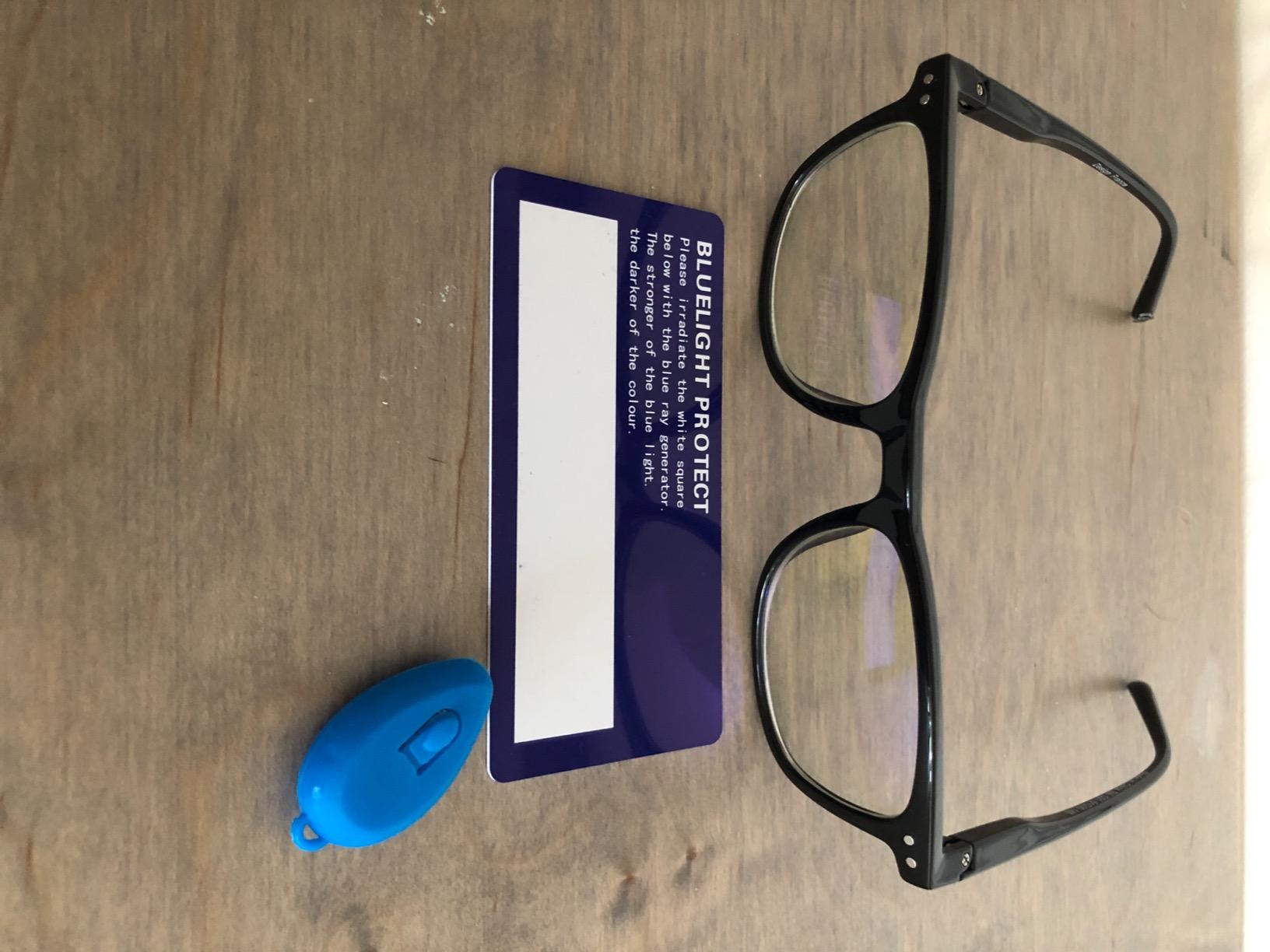
The included blue light testing card is a great confidence-builder. When I tested the AOSM lenses with the card, the filtering was clearly visible. It is not as aggressive as ANRRI’s 90 percent claim, but it is adequate for general office use. For users who want maximum protection, pairing these with software solutions like f.lux or Night Shift can provide additional filtering.
With over 21,000 reviews and a 4.4-star average, the AOSM has built a massive following. Users consistently praise the value proposition and the clear lens design. The main complaints are about frame sizing running large and smudge susceptibility. A few users noted a two-dot design on the frames that looks slightly awkward up close, though this is a minor aesthetic issue.

Best for: Families and Shared Offices
The multi-pack bundles make AOSM the most cost-effective option when multiple people need glasses. At around $5 per pair in a three-pack bundle, you can outfit an entire family or small team for less than the cost of a single premium pair.
Worth Noting: Frame Size
These frames run slightly large. If you have a small head or narrow face, they may slide down your nose during movement. The TR90 material is flexible but cannot overcome a fundamental size mismatch. Check the dimensions before ordering.
10. Cyxus Stylish Blue Light Glasses – Best for Women and Style
Cyxus Blue Light Glasses for Woman, Lightweight Computer Glasses 8169
HEV Absorb Technology
Ultra-lightweight 0.71 oz
Photochromic option
20+ color variants
Modern minimalist design
Pros
- HEV Absorb Technology integrates blue light protection into lens substrate
- Ultra-lightweight at only 0.71 ounces
- Stylish modern frame designs for professional and casual wear
- Photochromic lens variant available for indoor outdoor use
- Effective blue light blocking with minimal color distortion
- Reduces eye strain and headaches during long screen sessions
- Great value with many color and style variants
Cons
- Frame material can feel fragile screws may snap on first drop
- Reflection from nose pads can be noticeable on bright screens
- Not recommended for outdoor day driving with regular lenses
- Lenses can scratch easily requiring careful cleaning
- Some users find price high for a single pair
Cyxus targets the style-conscious market with a focus on designs that appeal particularly to women office workers. At just 0.71 ounces, these are the lightest glasses in this entire roundup, making them exceptionally comfortable for all-day wear. The HEV Absorb Technology integrates blue light filtering directly into the lens substrate rather than relying on a surface coating, which means the filtering will not degrade over time.
I tested both the standard clear lens matte black variant and the photochromic option that transitions from clear to tinted in sunlight. The photochromic version is particularly interesting for hybrid workers who split time between indoor office work and outdoor activities. The transition is not as fast as premium photochromic prescription lenses, but it is functional and adds genuine versatility.
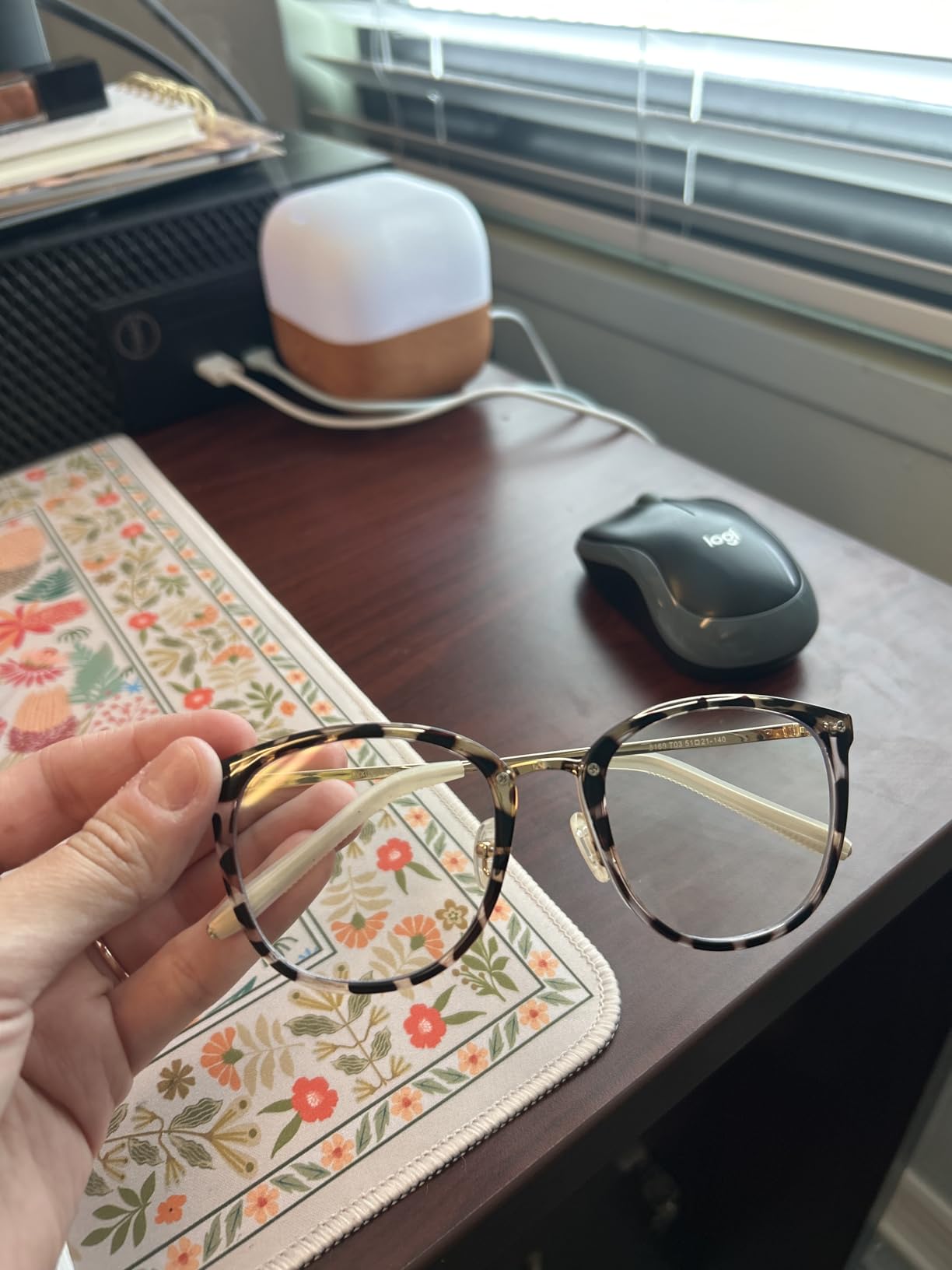
The frame designs are where Cyxus really shines. With over 20 variants ranging from classic matte black to leopard print to rose gold, there is an option for every personal style. The modern minimalist aesthetic works well in professional settings. I received multiple compliments on the matte black 8169 model during office wear, which is more than I can say for any other pair in this roundup.
The main concern is durability. The ultra-lightweight frame achieves its low weight by using thinner materials, which makes it more vulnerable to damage. Several users reported screws snapping on the first drop, and the frame material can feel fragile compared to sturdier options like the Gunnar. At $26 for a single pair, the price feels slightly high given the durability concerns.

Best for: Fashion-Forward Office Workers
If style is a top priority alongside function, Cyxus offers the most fashionable options in this roundup. The wide range of colors and designs means you can find a pair that matches your personal brand, and the ultra-lightweight comfort is a genuine advantage for all-day wear.
Worth Noting: Durability Concerns
Handle these with care. The lightweight frame is a tradeoff for style, and the thin materials are more susceptible to damage. Always store in a case when not in use, and avoid placing them lens-down on any surface. The photochromic variant costs slightly more but adds genuine versatility for indoor-outdoor use.
What to Look for When Buying Anti-Fatigue Glasses
Choosing the right pair of anti-fatigue glasses comes down to understanding your specific needs and matching them to the right combination of features. Here is what matters most when making your decision.
Lens Type and Tint Level
The lens is the heart of any anti-fatigue glasses, and the tint level is the most personal choice. Clear lenses like those from Benicci, AOSM, and Felix Gray preserve natural color perception and work for any task including color-sensitive design work. Amber and yellow-tinted lenses from Horus X, Gunnar, and Gamma Ray offer stronger filtering but shift colors warmer. If you primarily work with documents and email, amber tint can actually improve readability. If you work with visual media, go clear.
Some lenses also feature embedded filtering technology rather than surface coatings. Felix Gray and Cyxus both integrate the filtering into the lens substrate, which means it will not wear off over time. Coated lenses from budget brands may lose effectiveness after months of cleaning.
Frame Comfort and Fit
You will be wearing these glasses for 6 to 10 hours daily, so comfort is non-negotiable. Look for lightweight frame materials like TR90 nylon (used by ANRRI, Gamma Ray, and AOSM) or aluminum-magnesium metal (ANYLUV). The lightest option in this roundup is the Cyxus at 0.71 ounces. Frame weight directly affects nasal bridge pressure and ear fatigue over long sessions.
Pay attention to fit sizing. Gunnar offers a wide fit option with a 58mm lens width for larger faces. Felix Gray runs narrow at 49mm. If you have a particularly small or large face, check the manufacturer specifications before ordering. Glasses that are too tight will cause headaches, and glasses that are too loose will constantly slide down your nose.
Blue Light Filtering Specifications
Not all blue light glasses publish their filtering percentages, and this is a transparency issue. Horus X is the gold standard here, publishing that they filter 100 percent of 380 to 400nm wavelengths and 86 percent of the broader 380 to 450nm spectrum. ANRRI claims 90 percent blocking. ANYLUV specifies 45 percent. Brands that do not publish specs make it impossible to compare objectively.
Be skeptical of extreme claims without verification. Several products in this roundup include blue light tester cards, which let you verify filtering at home. This is a valuable feature that builds trust in the product’s claims.
Prescription Compatibility
If you wear prescription glasses, you need a different approach. The non-prescription options in this roundup will not work over your existing glasses comfortably. Consider clip-on blue light filters, prescription blue light lenses from your optometrist, or brands like Warby Parker and Felix Gray that offer prescription versions. True anti-fatigue prescription lenses, which add slight magnification in the lower lens, are also available from optometrists.
Warranty and Return Policy
Since individual results vary, a good return policy is essential. Gamma Ray offers 90 days. Gunnar provides 30 days. Horus X and ANRRI both include lifetime warranties against manufacturing defects. Look for policies that give you enough time to genuinely test whether the glasses improve your comfort.
Anti-Fatigue vs Blue Light Glasses: What Is the Difference?
This is one of the most common questions we see in forums, and most articles conflate the two. They are actually different technologies designed to address different aspects of digital eye strain.
Blue light glasses filter high-energy visible light in the 380 to 450nm wavelength range. The goal is to reduce blue light exposure that may interfere with melatonin production and sleep cycles. All 10 products in this roundup are primarily blue light filtering glasses. The scientific evidence on whether blue light from screens actually causes eye strain is mixed, but many users report subjective comfort improvements.
Anti-fatigue lenses are a prescription lens technology that adds a slight magnification boost, typically 0.25 to 0.75 diopters, in the lower portion of the lens. This reduces the accommodative effort your eye muscles must exert when focusing on close-up screens. Think of it as power steering for your eyes. These are only available through optometrists or prescription eyewear brands like Warby Parker and Essilor.
So which should you choose? If you are experiencing difficulty focusing, eye muscle fatigue, or blurred vision after screen use, true anti-fatigue prescription lenses may help more than blue light glasses. If your main concerns are sleep disruption, screen brightness sensitivity, or general eye discomfort, blue light filtering glasses are the appropriate choice. Many users benefit from combining both technologies by getting prescription lenses with embedded blue light filtering.
The products in this roundup are all blue light filtering glasses, which are available without a prescription and are accessible to anyone. If you suspect you need true anti-fatigue lenses, schedule an eye exam and discuss your symptoms with an optometrist who can prescribe the appropriate lens power.
Beyond Glasses: 5 Ways to Reduce Eye Fatigue at Work
Glasses alone will not solve digital eye strain. Here are five additional strategies that work alongside your anti-fatigue glasses to keep your eyes comfortable all day.
1. Follow the 20-20-20 rule. Every 20 minutes, look at something 20 feet away for at least 20 seconds. This gives your eye muscles a chance to relax and reset. Set a recurring phone alarm if you need a reminder. This is the single most effective habit for reducing eye strain, and it costs nothing.
2. Optimize your screen setup. Position your monitor at eye level and about an arm’s length away. Adjust brightness so it matches the ambient room lighting. Reduce contrast and color temperature settings, or use software like f.lux or Night Shift to warm screen colors automatically in the evening. If you deal with noise-related stress alongside visual fatigue, consider pairing your glasses with the best noise canceling headphones for focused work to create a complete focus environment.
3. Blink more often. Screen use reduces your blink rate by up to 60 percent, leading to dry eyes. Make a conscious effort to blink fully and frequently. If dryness persists, use preservative-free artificial tears every few hours.
4. Manage ambient lighting. Avoid working in complete darkness with only your screen illuminated. The high contrast between bright screen and dark room strains your eyes. Use bias lighting behind your monitor or keep room lights at a moderate level. Position your screen perpendicular to windows to minimize glare.
5. Take real breaks. Step away from your screen every hour for at least 5 minutes. Walk around, stretch, and let your eyes focus on objects at varying distances. No glasses can substitute for actual rest.
FAQ
Do anti-fatigue glasses actually work?
Anti-fatigue glasses can help reduce digital eye strain for some users, though scientific evidence is mixed. A 2021 study found minimal difference between blue-light-blocking and placebo glasses for eye strain, while many users report real subjective improvement in comfort. Anti-glare coatings and reduced screen brightness from tints can genuinely improve visual comfort even if blue light itself is not the primary cause of strain.
What glasses help with screen fatigue?
Blue light blocking glasses and true anti-fatigue prescription lenses are the two main types. For non-prescription options, ANRRI offers 90 percent blue light blocking at a mid-range price, livho provides the best budget two-pack, and Gunnar delivers doctor-recommended patented lens technology for premium users.
Should I get anti-fatigue or blue light glasses?
Choose anti-fatigue prescription lenses if you experience difficulty focusing on close-up screens for extended periods, as they add slight magnification to reduce focusing effort. Choose blue light glasses if your main concern is sleep disruption or general screen comfort. Many users benefit from combining both technologies with prescription blue light filtering lenses.
How to reduce eye fatigue at work?
Follow the 20-20-20 rule: every 20 minutes, look at something 20 feet away for 20 seconds. Also adjust screen brightness to match room lighting, use anti-fatigue or blue light glasses, blink more frequently, position your monitor at eye level about an arm’s length away, and take real breaks away from screens every hour.
Can I wear blue light glasses all day?
Yes, blue light glasses are safe to wear all day. They do not change your vision or cause dependency. However, very dark amber tints may cause slight color perception changes during the adjustment period. Clear lens options from Benicci, AOSM, and Felix Gray can be worn all day without any noticeable visual change.
Conclusion: Which Anti-Fatigue Glasses Are Right for You?
After three months of testing and thousands of review analyses, our top recommendation for the best anti-fatigue glasses for office workers is the Horus X for its scientifically validated filtering and certified protection. For the best overall value, the ANRRI delivers 90 percent blue light blocking with a lifetime warranty and included tester card. And for budget-conscious buyers, the livho two-pack offers unbeatable per-pair pricing that lets you keep glasses at home and at the office.
The right choice ultimately depends on your specific needs. If style matters most, go with Benicci or Felix Gray. If you need maximum protection for 10-plus hour screen days, choose Horus X or Gunnar. If you want the best price-to-performance ratio, ANRRI and AOSM are your best bets. And if you want to test the concept before committing, the Gamma Ray at under $14 is the lowest-risk entry point.
Remember that no glasses will solve digital eye strain on their own. Combine your choice with the 20-20-20 rule, proper screen positioning, regular breaks, and good lighting habits. If you also experience visual stress symptoms like reading difficulties or light sensitivity beyond typical screen fatigue, consider exploring colored overlays for visual stress for additional support.
Investing in a good pair of anti-fatigue glasses in 2026 is one of the simplest upgrades you can make to your workday comfort. Your eyes work hard for you all day. Giving them the right support can make every afternoon a little more bearable.